A piezoelectric fibre that enables fabrics to detect sound has been developed by a research team in the US. According to the team, a single strand of this fibre can turn tens of square metres of fabric into a microphone that senses mechanical vibrations created by sound and converts them into an electrical signal. Reporting their findings in Nature, the researchers demonstrate that when used to create clothes, such fabrics could enable a range of medical and communications applications.
As pretty much everyone wears fabrics close to their skin every day, materials scientist Wei Yan, who was based at Massachusetts Institute of Technology but recently moved to Nanyang Technological University in Singapore, and his colleagues wondered whether fabrics could be used to detect and process sound.
The idea was to use a fabric that can translate the pressure waves of sound travelling through air into mechanical vibrations. The researchers would then weave into this fabric a piezoelectric fibre that could convert this vibration into an electrical signal. They were inspired by the human eardrum, which is a membrane constructed of a circular arrangement of fibres. It converts sound waves into mechanical vibrations that are transmitted to the cochlea, which converts them to electrical signals that are picked up by the nervous system.
To create a suitable piezoelectric fibre, the researchers loaded a piezoelectric polymer with piezoelectric barium titanate nanoparticles. This composite was then heated and drawn into a thin, 40-metre-long fibre. They then applied a cycle of electrical charges to the fibre to create aligned electric dipoles in the material.
These processes created a material with excellent piezoelectric properties. Microscopic analysis showed that during the drawing process, voids formed around the barium titanate nanoparticles. According to the researchers, this cavitation appears to improve the piezoelectric performance. They found that the fibre had considerably higher piezoelectric charge coefficient than a drawn fibre of the same polymer without the nanoparticles, or a hot-pressed polymer and barium titanate composite. It also exhibited superior performance to other similar piezoelectric materials.
Fabric stethoscope An acoustic shirt in contact with a person’s chest can efficiently capture cardiac signals. (Courtesy: Nature 10.1038/s41586-022-04476-9)
On its own, the piezoelectric fibre responded to acoustic waves in the audible range. But when the researchers mounted the fibre on a membrane of Mylar – a polyester film – the electrical output was two orders of magnitude higher, due to strong coupling between the fibre and the mechanical vibrations in the membrane. In tests using recorded sounds with volumes ranging from that of a quiet library to heavy traffic, the output voltage increased linearly with sound levels.
Next, the researchers created a shirt out of a fabric made from cotton and a stiffer fibre called Twaron, and incorporated a single piezoelectric fibre in the chest area. They found that this garment could accurately hear and measure the wearer’s heartbeat and was able to detect different heart sounds. As well as measuring cardiac function, the researchers say that such fabrics could potentially monitor breathing and could be incorporated into maternity wear to monitor a baby’s foetal heartbeat.
“This fabric can imperceptibly interface with the human skin, enabling wearers to monitor their heart and respiratory condition in a comfortable, continuous, real-time and long-term manner,” says Yan.
Direction detection A shirt containing two fibres is used to detect the direction of a sound. (Courtesy: Nature 10.1038/s41586-022-04476-9)
The fabrics can also produce sounds, like a speaker, when an electric signal is applied to the piezoelectric fibre. The researchers even demonstrated that two shirts could communicate with each other by each receiving sounds and emitting recordings of spoken words. They also created a shirt containing two piezoelectric fibres that could detect the direction of a hand clap.
According to the team, such functions could have a number of uses, including helping those with hearing problems communicate. “Wearing an acoustic garment, you might talk through it to answer phone calls and communicate with others,” Yan explains.
In an accompanying News and Views article in Nature, Wenhui Song, a materials and medical engineer at University College London, writes that this work pushes “audible sensing to a new high”, adding that the piezoelectric device “takes us a step closer to a future in which wearable electronics are integrated into our everyday lives”. She cautions, however, that there are still issues to overcome, such as real-world background noise and incorporating all the other electronics needed to create a wearable device.
Record breaking Artist’s impression of the decay of a lutetium-149 nucleus into a ytterbium-148 nucleus and a proton. (Courtesy: University of Jyväskylä)
Physicists in Finland have created a pumpkin-shaped nucleus that has the shortest directly measured half-life of any ground-state proton emitter. The lutetium-149 nucleus is also the most oblate deformed proton emitter observed to date. The measurement improves physicists’ understanding of the rare decay mode of proton emission and could lead to better models that predict the properties of nuclei.
Studying radioactive decay provides a wealth of information about how protons and neutrons bind together to form large nuclei. Physicists have been studying alpha decay – which involves the emission of a helium-4 nucleus – for over a century and have learned much about the properties of nuclei. However, studying alpha decay has an important complication: physicists must understand both why the alpha particle forms within a nucleus and why it is emitted.
Although much more rare than alpha decay, proton emission only involves one nucleon and therefore offers a less complicated way of peering inside the nucleus. The first proton-emitting nucleus was spotted in the 1970s but it was not until 1982 when the first emission of a proton was observed from a nucleus in its ground state. This was lutetium-151 and researchers concluded that this nucleus had the highest known oblate deformation. An oblate shape is a squashed sphere that resembles a pumpkin.
Implanted nuclei
Now, an international team of researchers working at the Accelerator Laboratory of University of Jyväskylä are the first to create and study an even more oblate nucleus, lutetium-149. This has 71 protons and 78 neutrons and was observed decaying to ytterbium-148 via the emission of a proton. The lutetium-149 nuclei were created by firing nickel-58 nuclei at a thin ruthenium-96 target. The nuclei of interest were isolated using the facility’s Mass Analyzing Recoil Apparatus (MARA) and then implanted within a silicon strip detector.
The team observed 14 fast decay events in the detector that corresponded to a half life of about 450 ns for lutetium-149. The detected protons had an energy of about 1.9 MeV, which means that lutetium-149 has the highest ground-state proton-decay energy ever measured. The team compared their measurements with the predictions of several models that predict the ground-state masses of nuclei. They found that these models tend to underestimate estimate the proton-decay energy.
Writing in Physical Review Letters, the researchers suggest that lutetium-149’s extreme oblate distortion could be further studied by observing gamma rays emitted by nuclei – although they say this would be very challenging. Another difficult experiment suggested by the team is the creation and study of lutetium-148, which they say may have a longer lifetime than lutetium-149.
With their enchanting beauty, crystalline solids have captivated us for centuries. Crystals, which range from snowflakes to diamonds, are made up of atoms or molecules that are regularly arranged in space. They have provided foundational insights that led to the development of the quantum theory of solids. Crystals have also helped develop a framework for understanding other spatially ordered phases, such as superconductors, liquid crystals and ferromagnets.
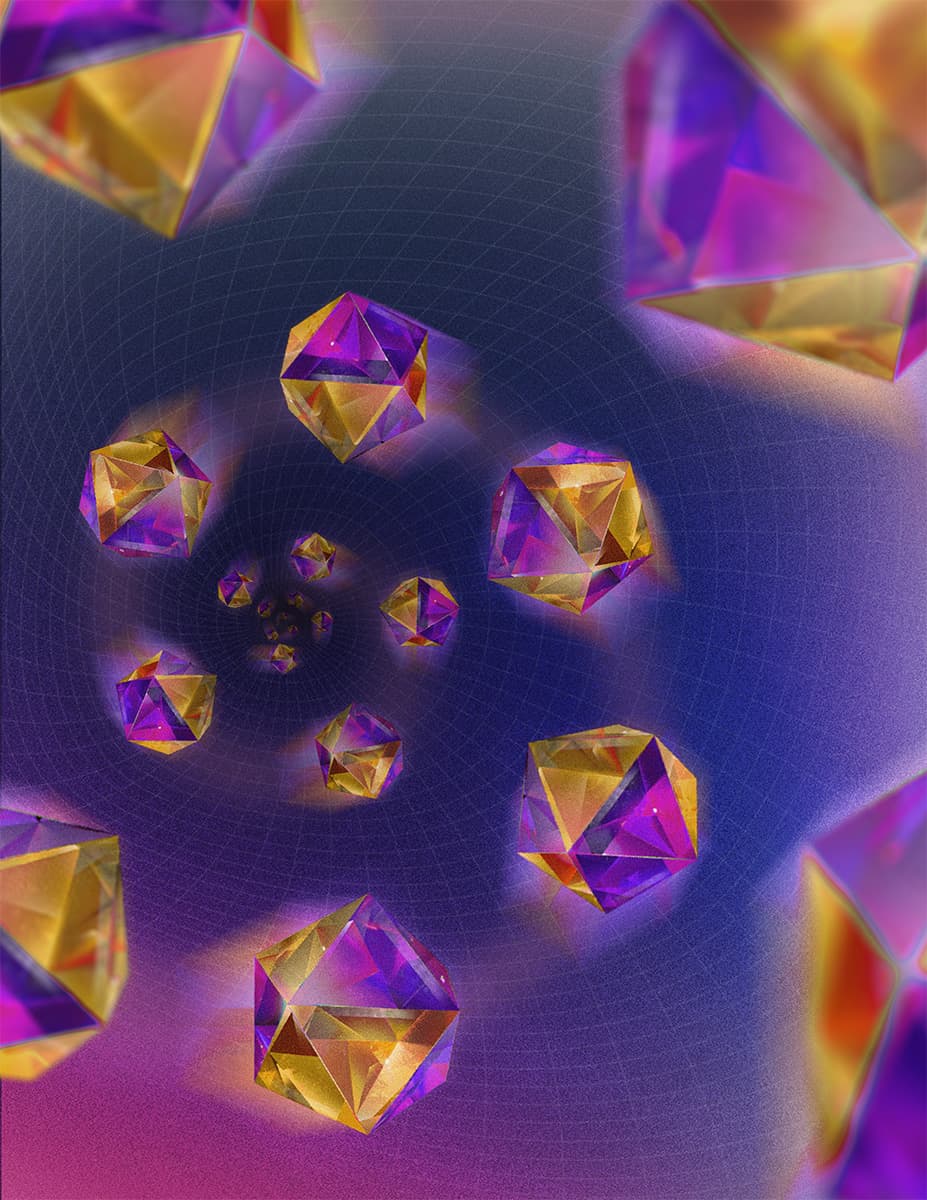
(Courtesy: Google AI Quantum)
Periodic oscillations are another ubiquitous phenomenon. They appear at all scales, ranging from atomic oscillations to orbiting planets. For many years, we used them to mark the passage of time, and they even made us ponder the possibility of perpetual motion. What is common between these periodic patterns – either in space or time – is that they lead to systems with reduced symmetries. Without periodicity, any position in space, or any instance of time, is indistinguishable from any other. Periodicity breaks the translational symmetry of space or time.
In physics, space and time are often interwoven, so if a collection of many particles can show spatial periodicity, it is perhaps not so strange to wonder if the same symmetry pattern can spontaneously emerge in time. Spontaneous symmetry breaking is when the lowest-energy or ground state of a system does not respect a symmetry that, in principle, is not forbidden. The most common example of such a feat in nature is the very existence of crystals, where their continuous translational symmetry breaks and is replaced by a discrete periodic symmetry in space.
In physics, space and time are often interwoven, so if a collection of many particles can show spatial periodicity, it is perhaps not so strange to wonder if the same symmetry pattern can spontaneously emerge in time
Periodicity in space versus time
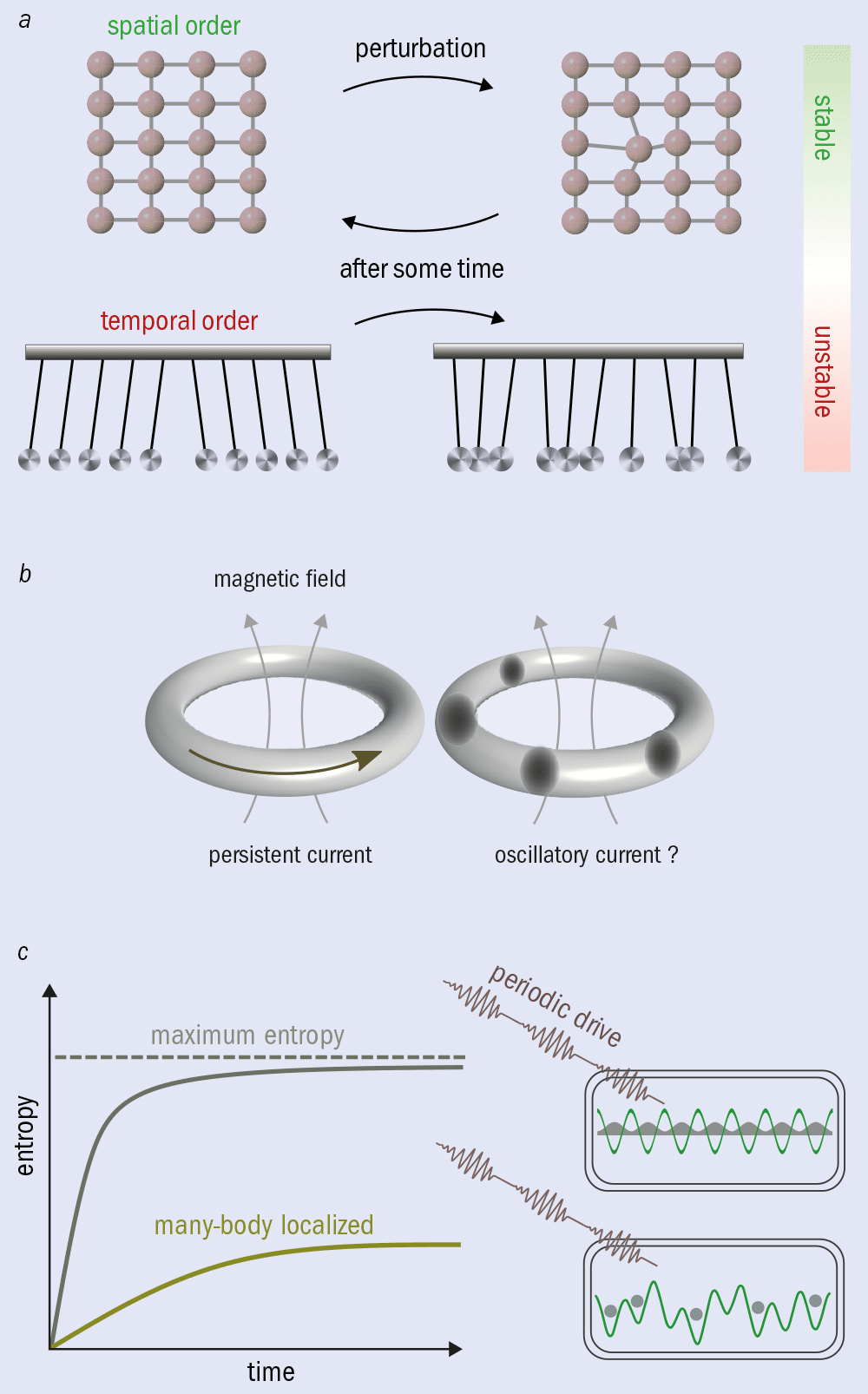
Over the last decade, physicists have been wondering whether systems with ground states where time translational symmetry is broken can exist. It seems there is a major difference between breaking spatial versus temporal translational symmetry. The common examples of spatially ordered systems consist of many interacting particles, while those with stable periodic oscillations have only a few degrees of freedom (figure 1a). Indeed, no example of periodic oscillation with many particles readily comes to mind.
It makes us wonder if it is even possible to find a large system of interacting particles that has oscillations for an indefinitely long time. In our search we arrive at many systems that almost, but not quite, fit the bill. An example could be the synchronous collective oscillations observed in a large system of particles – such as phononic oscillations or mass spring systems. These oscillations in isolated many-body systems will not persist; or if they do, it would only be for highly tuned initial configurations, and this would not constitute a new phase of matter.
The stark contrast between large interacting systems with periodicity in space (common) and time (essentially non-existent) may seem unexpected. After all, Einstein’s special relativity unifies space and time into one seamless “space–time” object. However, Lorentz transformations, which relate the space and time co-ordinates of two systems moving relative to each other, do not mean that space and time are completely equivalent, as there is causality.
Confronting the second law
All laws of physics are invariant with respect to forward or backward flow of time, or the choice of the origin of time for a given equation. The only exception is the second law of thermodynamics, which establishes the concept of entropy. The second law says that any isolated system of many particles spontaneously evolves towards its equilibrium configuration, in which one can no longer detect the passage of time by making local measurements. This homogeneity in time contrasts sharply with our desire to stabilize a temporal order, which implies heterogeneous time instances. The dichotomy poses a fundamental theoretical and experimental challenge that is the root of the elusiveness of time crystals.
Indeed, in an open system, where energy can be added to and dispelled from its surroundings, entropy can be expelled and one could, in principle, stabilize temporal ordering by balancing parameters – a challenging task, though one that can be achieved. To exclude such cases, we define time crystals as “isolated systems of many interacting particles that show oscillations indefinitely”. The existence of many particles and associated degrees of freedom in the system is the key part of this definition. With entropy not on our side, finding stable time crystals is a major pursuit.
Furthermore, these degrees of freedom should be energetically accessible. For example, oscillations observed in Josephson junctions in superconductors do not constitute a time crystal. Although such oscillations are dissipation-free and can go on forever, the entire condensate has a few degrees of freedom. Physically, all Cooper pairs – pairs of electrons bound together at extremely low temperatures – form a coherent condensate. In a sense, Cooper pairs are frozen, just as a coin can flip and all the atoms in it move together, and the energy scale required to make them move independently cannot be accessed with any reasonable definition.
1 Challenges in realizing temporal ordering(a) Spatial ordering of a system of interacting particles is stable even if perturbed, hence forming familiar crystalline phases. However, the temporal ordering (periodic oscillations) are usually stable for only single- or few-body systems. (b) When a magnetic field passes through a superconducting ring, a persistent current is developed in the ring. In 2012 the Nobel-prize-winning physicist Frank Wilczek proposed that an oscillatory current can be developed if the particles are interacting. It was pointed out later that the resulting oscillatory current is not stable in equilibrium. (c) The second law of thermodynamics indicates that entropy of a large isolated system cannot decrease. Commonly, driven systems absorb energy from the drive and their entropy does reach maximum attainable value. In many-body localized systems entropy plateaus at smaller values, allowing temporal ordering.
A decade old quest
In 2012 Nobel-prize-winning physicist Frank Wilczek first proposed a scheme for realizing a perpetual periodic oscillation (Phys. Rev. Lett. 109 160401). He suggested threading a small magnetic field through a superconducting ring, which, in response, would form a current that can circulate indefinitely. However, this spontaneously developed supercurrent would be a perpetual motion and not a perpetual oscillation. A perpetual oscillation would break the translational symmetry of time, and makes time instances distinct from each other. A perpetual current does not break this translational symmetry.
Wilczek, who coined the term “quantum time crystals’’, proposed that introducing a weak attraction between circulating Cooper pairs can make them bunch up. The resulting uneven distribution of circulating particles along the ring could then provide a clear sense of oscillation (figure 1b). However, in 2014 physicists Haruki Watanabe and Masaki Oshikawa ruled out this conclusion by considering what being “at equilibrium” implies. Going beyond local observables that are trivially time-independent, they examined temporal correlations between spatially distinct points and found that correlations also cannot show oscillatory behaviour. The pair developed a “no-go theorem” that rules out the possibility of time crystals defined as such, in the ground state or in the canonical ensemble of a general Hamiltonian, which consists of not-too-long-range interactions.
Watanabe and Oshikawa asked how to construct a physical ground state from the highly degenerate lowest-energy time-independent eigenstates of a system, and if its associated observables remain non-zero as the system size grows (Phys. Rev. Lett.114 251603). As a general property of many-body systems, Watanabe and Oshikawa show that being at thermal equilibrium is a strong constraint, and does not permit the emergence of stable, time-dependent responses.
Localization for stabilization
It seems that the search for stable temporal ordering inevitably needs to go beyond equilibrium. Arguably, periodically driven systems are the simplest modification to those in equilibrium. These are systems where the periodic application of pulses keeps them away from equilibrium. At first sight, choosing driven systems seems counterintuitive. Common wisdom suggests that these systems continuously absorb heat from the drive and approach the maximum attainable entropy state, which defies any ordering whatsoever. However, recent research indicates that this fate can be avoided when strong disorder inhibits energy exchange between the energy levels and consequently prevents the disorder from spreading – such systems are “many-body localized” (MBL).
Thanks to entropy, most systems achieve thermal equilibrium, via an exchange of energy with their external environment, thereby erasing local memory of the initial conditions. But MBL systems, due to disorder, fail to reach thermal equilibrium, thereby retaining a memory of their initial states for infinite times. The entropy plateaus at smaller values, allowing for temporal ordering.
Therefore, in spite of the periodic drive, the net flow of energy becomes zero and entropy plateaus below the maximum value (figure 1c). Saturation below the maximum attainable entropy does not violate the second law, which states that the entropy of an isolated system cannot decrease in time. This law does not demand the entropy of an isolated system to reach the maximum possible value, although it is difficult to avoid. It only states that the rate of change of entropy cannot be negative, it can be positive or zero.
Observing oscillations The time crystal was simulated using Google’s Sycamore quantum processor. (Courtesy: Google AI Quantum)
Relying on MBL stability
When a stable phase is in equilibrium, it does not exchange net energy with its surroundings and no new entropy is generated. Many theoretical and experimental works suggest that the MBL systems also have these properties, while staying far from equilibrium. They are therefore the only viable contender that could host stable time crystalline phases. To date, all known classical systems cannot sustain oscillations indefinitely.
So how stable are MBL systems, and how can we be confident that they are not reaching maximum entropy and equilibrium? The stability of 2D- or 3D-MBL systems has in fact long been a matter of debate, while evidence for their stability is limited. In 2006 researchers in the US (Ann. Phys. 321 1126) showed that 1D-MBL systems retain their localization for all orders of perturbation expansion. However, this cannot fully rule out the possibility of metastability, meaning that the system only appears localized, while actually thermalizing on long time scales. But in 2016 John Imbrie at the University of Virginia, Charlottesville, made significant progress towards a conclusive proof of an MBL phase, by essentially ruling out all nonperturbative effects for certain systems (Phys. Rev. Lett. 117 027201). It is important to note that his proof is not fully general, but assumes “limited level attraction”. While this is a realistic assumption; it is balanced on a very fine edge.
Even if we were to observe evidence of temporal ordering, establishing it as a phase of matter has its own formal requirements
Establishing a phase of matter
Even if we were to observe evidence of temporal ordering, establishing it as a phase of matter has its own formal requirements. This is because we need to distinguish it from transient behaviours or fine-tuned corner cases. To do so, we examine the rigidity of the temporal response with a checklist that takes into consideration four factors. (i) To establish a nonequilibrium phase, we are required to consider the infinite time limit as well. (ii) In statistical mechanics, phases are only well defined in the infinite system size limit. (iii) Proving the stability of any phase requires that its signatory pattern is stable to perturbation of its equations of motion, and seen over a range of parameters, and (iv) that it emerges for all initial configurations.
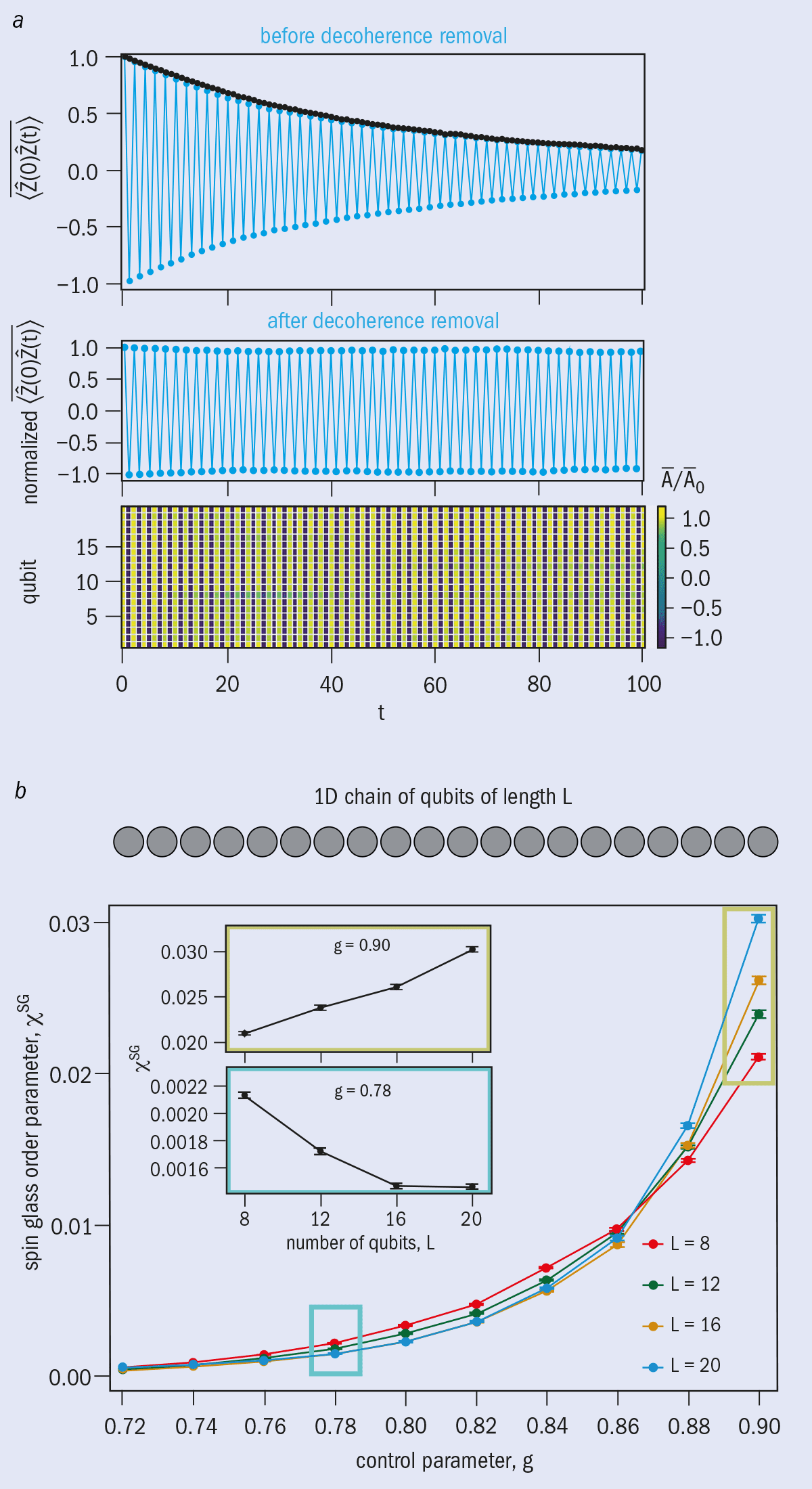
2 Observing persistent oscillations in time Using a chain of 20 qubits, Google’s AI Quantum researchers verify all the requirements for establishing the emergence of a stable phase. In particular, (a) they provide strong experimental evidence that observed oscillations are not transient and oscillate persistently – the sign of a time crystal – by devising an experimental method to remove the effect of decoherence. The lower panel shows that all qubits are showing synchronous oscillations persistently. (b) They consider chains of various lengths and show that the order parameter becomes smaller on one side of the transition (g < 0:86) and but becomes larger on the other side (g > 0:86). The other two steps to establish phase rigidity can be found in their manuscript. This step-by-step verification of this phase was absent in previous experimental works. (Adapted from Nature601 531)
Using Google’s Sycamore quantum processor, we recently provided the first convincing experimental observation of a time-crystalline phase on a Noisy Intermediate-Scale Quantum (NISQ) drive by going through the above mentioned criteria (Nature601 531). (i) To investigate the infinite time response, and show that the observed oscillations are not transient and oscillate persistently, we devised a time-reversal protocol that discriminates external decoherence from intrinsic dynamics (figure 2a). This enables us to observe stable ordering for many cycles across a chain of 20 qubits. We found that all our qubits showed synchronous oscillations. (ii) To show that the oscillations we observed survived even if we had much longer chains, we performed what is known as the finite-size scaling, which also allowed us to locate the phase transition control parameter (figure 2b). (iii) We showed that the ordering survives over an extended range of parameter variation, and that the system is indeed localized.
Last, (iv) we make use of the concept of “quantum typicality”, to establish that indeed there are oscillations for all initial states. Typicality asserts that ensemble averages can be accurately approximated by an expectation value with respect to a single state, randomly drawn from the Hilbert space. Remarkably, typicality applies to thermalizing, integrable and many-body localized systems. Therefore, using typicality we could circumvent the exponential cost of sampling the entire spectrum and effectively verify the response for all initial states.
Realizing a dynamical phase
Our effort to realize a time crystalline phase uses quantum processors in a unique way. That’s because computations are usually carried out on these processors with a set of logical operations called quantum gates. The computation has no relation to the underlying governing dynamics of the system – in technical terms, the desired Hamiltonian is not realized on the processor. In such computations, the processor is used in roughly the same way as in a classical computer.
However, this quest of establishing a dynamical phase is fundamentally different. Here, the question is whether a stable phase can emerge in a many-body driven isolated system. For such questions, our processor and our setting is indeed the natural platform to explore such questions. Our implementation is on the direct path toward realization of this dynamical phase. The challenge that makes our result fall short of a full realization is extrapolating the response to infinite time and system size, which are all ultimately rooted in the finite coherence time of the system. The core of our work and achievements is to devise experimental methods to provide a basis for making such extrapolations.
As our results show, the protocols developed here are general and establish a scalable approach to studying non-equilibrium phases of matter on NISQ processors.
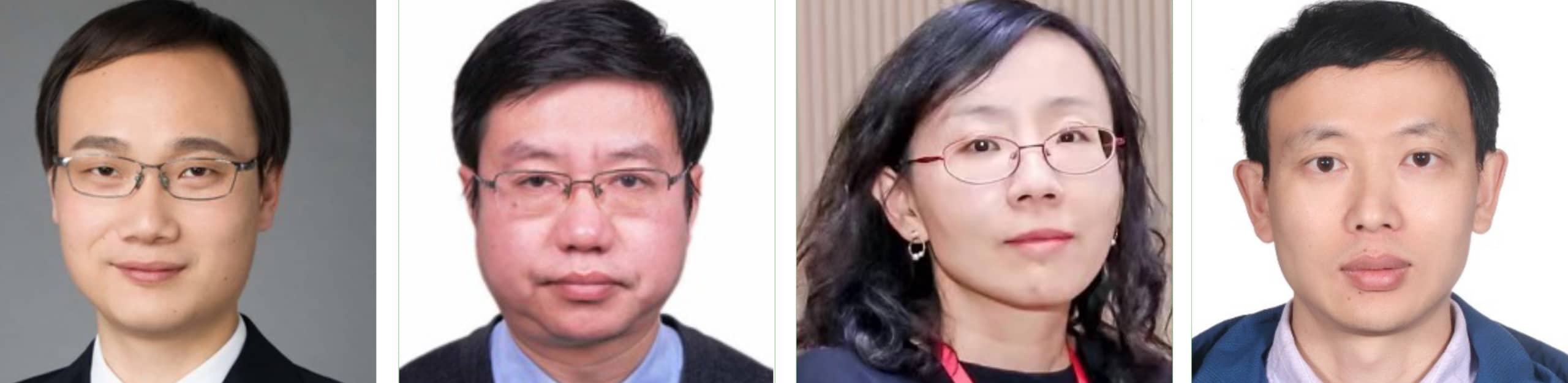
IOP Publishing’s open access journal Materials Research Express (MRX) will host a webinar on materials sciences. Prof. Yi Cao, professor of Nanjing University and editor-in-chief of MRX will be the chair for the webinar.
Join the webinar to hear from our three invited speakers: Prof. Zhishan Bo from Beijing Normal University, Prof. Guosong Chen from Fudan University and Prof. Di Wu from Nanjing University, who will be discussing their recent research in materials science and perspectives.
Please note: this webinar will be in Chinese.
Yi Cao is a professor at Nanjing University and the editor-in-chief of Materials Research Express. He focuses his research on the physical and mechanical properties of biomolecular materials.
Zhishan Bo is a professor at Beijing Normal University and Qingdao University. His research focuses on the synthesis of conjugated polymers, optoelectronic molecules, polymer solar cells and self-assembly of conjugated molecules.
Guosong Chen is a professor at the Department of Macromolecular Science, Fudan University in Shanghai. She focuses her research on carbohydrate-based macromolecular self-assembly and its biological functions.
Di Wu is a professor at Nanjing University. His main research areas are organic spintronics and metal-oxide heterojunction.
About this journal
Materials Research Express is an open access, rapid peer-review journal publishing high-quality research on the design, fabrication, properties and applications of all classes of materials.
Editors-in-chief: Yi Cao, Nanjing University, China and Judy Wu, University of Kansas, USA.
Researchers in the US report that they have observed the so-called “fourth signature” of superconducting phase transitions in materials known as cuprates. The result, obtained via photoemission spectroscopy of a cuprate called Bi2212, could shed fresh light on how these materials, which conduct electricity without resistance at temperatures of 77 K or higher, transition into the superconducting state.
The superconducting transition occurs when a material loses all resistance to an electrical current below a certain critical temperature Tc. At this temperature, bulk materials exhibit four characteristic “signatures” – electrical, magnetic, thermodynamic and spectroscopic – indicating that transition has occurred. The electrical signature is the development of zero resistance. The magnetic signature is the onset of the Meissner effect – that is, the material expels magnetic fields. And the thermodynamic signature is that the material’s heat capacity (the amount of heat required to increase its temperature by a given value) displays a distinctive anomaly.
According to the conventional theory of superconductivity (known as BCS theory after the initials of its authors), the fourth signature is that electrons in the material overcome their mutual repulsion and join up, forming so-called Cooper pairs that then travel unimpeded. The spectroscopic manifestation of this signature is the opening of a gap in the material’s photoemission spectrum at Tc. This gap serves as a parameter that characterizes the type of superconductivity present.
BCS theory does not, however, apply to the cuprates in a straightforward way. In these materials, which are highly doped copper oxides, electrons pair up in an unconventional “d-wave channel” rather than the usual “s-wave” one. A further quirk is that electrons in these unconventional cuprates may pair up at one temperature, only to condense at a substantially lower one. It is thus only at this second temperature that the materials actually become superconducting.
Characterizing electron behaviour
Researchers led by Zhi-Xun Shen at Stanford University and the SLAC National Accelerator Laboratory have now identified this fourth signature using high-resolution measurements made with a technique called angle-resolved photoemission spectroscopy (ARPES). In this laser- or synchrotron-based method for studying the electronic band structure of solid materials, photons with enough energy to eject electrons from a material are fired at a sample. The energy and momenta of the electrons emitted from this sample are then measured, revealing the structure of the electronic bands in terms of the energy and momentum of the electrons within them. By measuring these parameters, researchers can characterize how the electrons behave.
Shen, his then-PhD student Suidi Chen (now a postdoctoral fellow at the University of California, Berkeley) and colleagues confirmed that electrons in the cuprate material they studied, Bi2212, pair up at around 120 K. “With further decreasing temperature, we found that the ARPES signal inside the already-existing energy gap, which opens at a higher temperature near 120 K, shows the most rapid drop across 77 K,” Shen tells Physics World. This, he adds, “is exactly the superconducting transition temperature determined by magnetic susceptibility measurements on the same crystals we studied”.
Importantly, estimates of the entropy indicated by the spectral intensity inside the gap led to a similar anomaly at Tc as the one the researchers observed in the material’s specific heat, Shen adds. This pins down the “second step” in the transition and the fourth signature of bulk superconductivity.
The methodology developed in this work, which is detailed in Science, might also be used to study phase transitions and correlation effects in other novel systems. For the moment, the researchers hope to unearth the microscopic mechanisms that determine the two temperature scales in the cuprates. “This knowledge will ultimately help us make better superconductors in the future,” Shen says.
One of longest-running physics jokes is that, despite numerous promising breakthroughs, practical nuclear fusion will forever be 30 years away. Earlier this year, there was an exciting result in the UK that suggests that – sooner or later – fusion scientists will have the last laugh. The Joint European Torus (JET) nuclear-fusion experiment based in Oxfordshire, UK, more than doubled the amount of sustained fusion energy produced in a single “shot” – smashing a previous record that JET has held since 1997.
In this episode of the Physics World Stories podcast, Andrew Glester catches up with two engineers from the UK Atomic Energy Authority to learn more about this latest development. Leah Morgan, a physicist-turned-engineer explains why JET’s recent success is great news for the the ITER project – a larger experimental fusion reactor currently under construction in Cadarache, France. Later in the episode, mechanical design engineer Helena Livesey talks about the important role of robotics for accessing equipment within the extreme conditions inside a tokamak device.
To hear from more scientists about the quest for practical nuclear fusion, you can also listen to this episode from Physics World’s 30th anniversary podcast series.
Cancer cells thrive by competing with normal cells for survival. Now, researchers are employing living bacteria to fight back against the cancer. This so-called bacteriotherapy – the deployment of bacteria to fight cancer – has sparked interest in the fields of immunotherapy and bioengineering.
While conventional ways of treating cancer with drugs can suffer from insufficient deposition of the therapeutic substance into tumours, the move towards bacteriotherapy ensures maximal deposition of therapeutic molecules into the tumour by genetic manipulation of the bacteria. This process, however, requires complex chemical reactions to increase the bacterial toxicity towards tumour cells.
Solving this challenge, scientists at the Japan Advanced Institute of Science and Technology (JAIST) report a straightforward system that enables living bacteria carrying nanoparticles to be used for photothermal cancer immunotherapy.
Living bacteria carry functionalized nanoparticles
A bacterium in a petri dish will not behave in the same way as a living bacterium in a cancer cell due to their different environments. Bacteria can deliver therapeutic signals to tumours, but when they are engineered to carry foreign molecules such as nanoparticles, the genetic stability of the engineered bacteria in the recipient cells must be carefully considered.
Senior author Eijiro Miyako explains that combining a non-pathogenic bacterium with a functional nanoparticle can help control immune response in host cells, while also maintaining its genetic stability. In developing this technology, he combined a non-toxic fluorescent dye, indocyanine green (ICG), with a solubilizing agent, Cremophor EL (CRE), to form ICG-CRE nanoparticles. Incubating the resultant nanoparticles with Bifidobacterium bifidum produced the modified bacteria.
Writing in Nano Letters, Miyako and co-author Sheethal Reghu describe several characteristics of the engineered bacteria, which have an average diameter of 100 nm and can be detected in cancer cells by using near infrared light to generate ICG fluorescence.
Photothermal cancer therapy
To deploy the nanoengineered bacteria for therapeutic use, Miyako and Reghu harnessed the potential of ICG to convert light into heat when irradiated by near infrared light. As such, the bacteria simultaneously serve as both a photothermal and a tracking agent.
The researchers tested the nanoengineered bacteria in a mouse model bearing colorectal cancer, as well as in human cancer cell lines, and found no severe toxicity in either. On the other hand, when they introduced natural bacteria into the cells, they observed higher cytotoxicity compared with the engineered counterpart.
Furthermore, they examined the killing capacity of the engineered bacteria on cancer cells after exposure to infrared radiation. This triggered a thermal effect from the ICG-dye that effectively eliminated the heat-sensitive cancer cells. The engineered bacteria also proved promising as a diagnostic tool, as traces of the ICG dye remained visible in the mouse tumour for three days after intra-tumoural injection.
To assess the anticancer efficacy in the mouse model, the researchers injected solid tumours with either natural or engineered bacteria. After laser irradiation, the photothermal conversion of the engineered bacteria caused the solid tumours to disappear before the 45-day mark, with the help of immunological responses. They note that although tumour suppression was also seen with the natural bacteria treatment, its efficacy was lower than that of the engineered bacteria.
The diagnostic and therapeutic potential of the nanoengineered bacteria opens avenues for their use as future theranostic agents. The authors believe that by using up-to-date microbial technology, living bacteria can be exploited to trigger tumour suppression and contribute to the battle against cancer.
A gas of photons with nearly infinite compressibility has been created by Julian Schmitt and colleagues at the University of Bonn in Germany. The experimental first was achieved in a nanostructured, dye-filled optical cavity where the team created an ensemble of photons in a quantum degenerate state. Their experiment appears to confirm a peculiar prediction of quantum theory and could lead to the development of sensors that can measure tiny forces.
For familiar gases such as air, the pressure of a gas increases as its volume is reduced – which is how a hand-operated bicycle pump works. This means that compressing a gas becomes increasingly difficult as its volume is reduced. The situation, however, is much more complex in quantum gases. When the density becomes high enough, the wavefunctions describing the possible positions of individual atoms begin to overlap. At this point the gas enters the regime of quantum degeneracy and it becomes very important whether the atoms have integer or half-integer spin.
Atoms with integer spin (bosons) can occupy the same quantum state as their neighbours and at low temperatures a large fraction of the atoms will occupy the system’s lowest-energy state. This creates a distinct state of matter called a Bose–Einstein condensate (BEC), which is a macroscopic quantum state that extends across the entire system. One of the many peculiar properties of a BEC is that it is predicted to have an infinitely large compressibility.
Uniform distribution
Photons are also bosons, and in their experiment Schmitt’s team created a BEC from a 2D gas of photons contained within an optical microcavity. To avoid thermal fluctuations in the gas, which would prevent the photons from remaining in the same quantum state, the team filled the cavity with dye molecules. These absorb photons and then emit them at a uniform temperature of around 300 K. Using a specialized nanostructuring technique to manufacture the cavity, the team also ensured that the photons were uniformly distributed within it.
The team exerted a small compressive force on the gas by tilting one of the cavity mirrors. At lower densities, the team observed that the photons behaved much like a classical gas, becoming increasingly hard to compress as new photons were added to the system (adding photons has the same effect as reducing the volume). Yet strikingly, once the gas entered the quantum degenerate regime, it put up very little resistance to the compressive force. This implied that the gas had become almost infinitely compressible. As a result, Schmitt’s team hope that their microcavity setup could provide a way to measure tiny forces.
Written by Pedram Roushan from Google’s AI quantum team in California, the article describes this elusive form of matter and how it could be simulated on the company’s Sycamore quantum processor.
You can also read the article on the website from Monday 4 April 2022.
• AI keeps fusion plasma in check – A reinforcement-learning algorithm has managed to manipulate and control a high-temperature plasma in a tokamak. Edwin Cartlidge reports
• Physics community condemns Russia – The Russian invasion of Ukraine has been met with an unprecedented response from the international scientific community, which will have far-reaching repercussions for science. Michael Banks investigates
• Crisis in Ukraine – Russia’s invasion of Ukraine is a test for those who want science and politics kept apart
• The problem with renewables – Peter Edwards, Peter Dobson and Gari Owen say that net-zero targets can only be met if renewable energy can be stored cost-effectively
• Supercool thinker – James McKenzie looks back at the remarkable life of the late Sir Martin Wood, who was a pioneer in the commercialization of physics research
• The laser physicist unlocking navigation technology – Lia Li is an award-winning start-up founder bringing optomechanical sensors to consumers. She talks to Laura Hiscott about a childhood spent in university labs, the switch from academia to business and using LIGO-style technology to help us navigate where global navigation satellite systems can’t
• Time crystals: the search for a new phase of matter – Pedram Roushan, from Google’s Quantum AI team in California, describes this elusive form of matter – and how it could be simulated on the company’s Sycamore quantum processor
• Letting demons do the teaching – Smart and rebellious, demons have a long and rich history in both science and culture. Robert P Crease explains how these little creatures have inspired him to create a university course that should appeal to humanities and science students alike
• Racing to save the planet – Diandra Leslie-Pelecky reviews Racing Green: How Motorsport Science Can Change the World by Kit Chapman
• A giant of nanoscience – Jess Wade reviews Carbon Queen: the Remarkable Life of Nanoscience Pioneer Mildred Dresselhaus by Maia Weinstock
• Using physics to patent inventions – Having originally done a PhD in quantum computing, Katherine Brown is now a patent attorney at international law firm CMS. She describes what a job in patent law entails and explains why a scientific background is an asset in this area
• Ask me anything – Martin Weides is head of the quantum-circuits group at the University of Glasgow, UK, and also consultant technical director to the UK-based firm Oxford Instruments Nanoscience
• Walking on the Moon – John Hardwick tries to work out how much energy you’d need to move around on the lunar surface
It has long been known that fish can count, at least to four, but new research shows they can apparently do much more. Researchers led by Vera Schluessel from the Institute of Zoology at the University of Bonn showed cichlids and stingrays a collection of geometric shapes such as four squares. If these objects were coloured blue it meant “add one”, while yellow meant “subtract one”. The animals were then shown two new pictures – one with five and one with three squares. If they swam to the correct picture (i.e. to the five squares in the “blue” arithmetic task), they were rewarded with food. If they gave the wrong answer, they went away empty-handed. Over time, the creatures learned to associate blue with an increase of one and yellow with a decrease of one.
To see whether they had internalized this mathematical rule, the researchers then set the fish calculations they had never seen before – and in most cases the fish gave the correct answer. “Overall, it’s a feat that requires complex thinking skills,” says Schluessel. The researchers say it is not known what the animals need this mathematical ability for or where the acquired it from. Perhaps they learned about it in their, er, schools?
Closing the lid to your favourite board game box can take a while as it slides down the base to close (sometimes also making a rude noise that can amuse any child present). This so-called “telescoping” cardboard box is commonly used to hold or ship a variety of objects from board games and footwear to mobile phones. Such boxes – where the lid barely overlaps with the base – are cheap to make and while the economic and environmental aspects have been well-studied, the physics hasn’t – until now, that is.
Many experiments
Jolet de Ruiter from Wageningen University and colleagues carried out 32 experiments on 13 commercially available boxes and 50 experiments on 11 different 3D printed models to investigate the fluid dynamics of the sliding box lid. When the lid moves over the base, its motion is largely controlled by the flow of a thin film of air in the gap. The researchers derived a theory based on low-Reynolds-number fluid flow to explain this and compared it to their experimental findings. They discovered that the fastest way for the box lid to close was not based a conventional straight lid-base configuration but for the lid to have a slight angle — just a few degrees — relative to the vertical base. If this design ever hits the shelves, then you can thank the researchers for at least thinking outside the box.
Finally, researchers at the Ecole Polytechnique Federale de Lausanne (EPFL) have created a silicone raspberry that could lead to raspberry pickers being replaced by robots. Apparently, shortages of labour are causing lots of raspberries to go unpicked, much to the chagrin of farmers and consumers alike. Robot pickers could be the solution, but raspberry picking requires great skill, which has proven difficult to recreate mechanically.
That is why Josie Hughes and colleagues have created a silicone raspberry for training harvesting robots (see video). “Our sensorized raspberry, coupled with a machine-learning program, can teach a robot to apply just the right amount of force,” explains PhD student Kai Junge. “The hardest part is training the robot to loosen its grip once the raspberry detaches from the receptacle so that the fruit doesn’t get squashed. That’s hard to achieve with conventional robots.” Let’s hope that the silicone raspberries don’t get mixed up with the real ones – that would make a very chewy pavlova.