Freeze–thaw battery could help store solar and wind energy

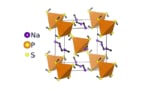
Freeze-thaw battery figure

A battery that “freezes” its stored chemical energy for several months has been developed by Minyuan Li and colleagues at Pacific Northwest National Laboratory in the US. Their battery uses a molten salt electrolyte, which remains solid at room temperatures, and thaws out when heated.

Our capacity to generate electrical energy using wind and solar energy is growing in leaps and bounds, but our ability to store this energy has not kept pace. This is a problem because seasonal trends in wind and solar generation often do not coincide with the energy needs of consumers. At higher latitudes, for example, abundant solar energy can be harvested in the summer, when requirements for heating and lighting are low. Conversely, solar energy can be scarce in the winter when energy demand can be high.

This problem could be solved by storing energy for several months and releasing it when demand begins to outpace supply. While lithium-ion batteries could do the job (while losing as much as 5% of their energy in the first month), there are supply and geopolitical concerns regarding materials used in their manufacture. Other battery types have different challenges that would have to be overcome.

Reduced mobility

To develop a better storage technology, Li and colleagues explored the use of molten salt as a battery electrolyte. When their aluminium-nickel salt was heated to 180 °C, its ions were allowed to flow freely between electrodes immersed in the liquid. But when cooled to room temperature, the salt froze into a solid. This drastically reduced the mobility of its ions – which locks in the chemical energy of the battery. After an indefinite period, the salt could then be heated and thawed, allowing the battery to be discharged.

To ensure that their battery could be a practical storage system, a key concern for Li’s team was to use low-cost, widely available materials wherever possible. This involved choosing a suitable material for their battery’s inert, porous separator – which separates the anode and cathode while allowing ions to pass through. So far, separators have typically been made from ceramics, but these materials are costly, and could be easily damaged during the battery’s freeze-thaw cycle.

As an alternative, the researchers used porous fibreglass as a separator, which fares far better at widely varying temperatures. In addition, they doped their electrolyte with sulphur – another easily attainable material. This addition both boosted the battery’s energy retention further, and activated its nickel cathode.

So far, Li’s team has developed a small prototype of the battery, around the size of a hockey puck. After a storage period of up to eight weeks, the device retained over 90% of its stored energy, following a single freeze-thaw cycle. In the future, the researchers hope that the low cost and simplicity of their design will allow them to ramp up its size and capacity. If achieved, this could allow electricity grids to store energy and eliminate differences between supply and demand.

The battery is described in Cell Reports Physical Sciences.
Oscillating temperature gradient boosts heat flow in fluids

Physicists in the Czech Republic have shown that heat flows more efficiently through a fluid when the fluid’s temperature gradient oscillates over time. The discovery by Ladislav Skrbek at Charles University and colleagues could help climate scientists to better understand the flow of heat through Earth’s atmosphere, and may also lead to better designs of heat exchangers.

From tidal ocean currents to the pumping of blood through our veins, many processes in nature are affected by turbulent flows that are driven by periodically oscillating forces. However, these flows have not been studied to the same extent as those driven by continuous forces. Now, Skrbek’s team has examined a simple example of an oscillating flow by doing an experiment first developed by the British physicist Lord Rayleigh in 1916.

In his experiment, Rayleigh set up a closed, fluid-filled cell; and then established a temperature gradient across the fluid by heating a plate at the bottom of the cell, while cooling another plate at the top. Over time, he observed that the fluid rises and falls in alternating columns: a pattern now known as Rayleigh-Bénard convection (RBC).

Efficiency booster

In a theoretical analysis carried out in 2020, physicists led by Detlef Lohse of the University of Twente in the Netherlands examined a more complex version of this set-up, where the fluid’s temperature gradient is made to oscillate periodically. Surprisingly, their simulations predicted that this oscillation would increase the efficiency of heat transfer between the plates – due to changes in RBC flow patterns.

In their study, Skrbek’s team tested this prediction by doing an experiment involving a cylindrical cell of helium gas, which they cooled to just 6 K. To establish an oscillating temperature gradient, they periodically varied the temperature of the cell’s bottom plate over time. They examined different oscillation frequencies in the range 0.006–0.2 Hz. By constructing the plates out of copper, which is particularly responsive to temperature changes, they could also induce oscillation amplitudes as high as 0.4 K.

By placing temperature sensors throughout the cell, the researchers examined the RBC convection patterns that developed inside. Just as the 2020 study predicted, they found that oscillating the temperature of the bottom plate boosted the heat transfer efficiency by as much as 20%. This enhancement occurred because thermal waves were able to propagate through the helium gas with virtually no attenuation.

Climate models

The discovery could have widespread implications for our understanding of heat transfer in many natural systems. Among the most important is the heat exchanged between Earth’s surface – which oscillates in temperature throughout the day – and outer space, where temperatures sit at just 2.7 K.

Accounting for this oscillating temperature gradient could help researchers to better understand how heat flows through the atmosphere – enhancing the accuracy of existing climate models, and potentially even improving our understanding of other planetary atmospheres. Elsewhere, the results could inform designs for more efficient heat exchangers, which are vital components of heating and cooling systems in many engineering applications.

The research is described in Physical Review Letters.

Quantum physics sets a speed limit for fastest possible optoelectronic switch

Optoelectronic switches can operate up to 1000 trillion times a second – a rate of 1 petahertz – before quantum processes wreck their effectiveness, say researchers in Germany and Austria. The result places a fundamental speed limit on classical information processing, while the experimental techniques used to achieve it could help physicists obtain a better understanding of a wide range of phenomena with applications in coherent electronics.

While today’s computer chips are faster than ever before, the laws of quantum physics limit how much faster they can get. Traditionally, increases in processing speed have come from shrinking transistors and other chip components so that data has a shorter distance to travel. The physical limit here is the size of an atom.

Another approach is to increase the switching rate. One way to do this is to use light rather than a transistor to control the flow of current – for example, by applying a laser pulse to excite the electrons from the valence band of a semiconducting material into the conduction band so that the material becomes a conductor. The energy required for this excitation depends on the semiconductor and corresponds to light frequencies in the infrared to visible range, which ultimately sets the maximum switching speed possible with these materials.

Higher-frequency light

In the new work, a team led by Martin Schultze of Austria’s Graz University of Technology studied a dielectric, lithium fluoride, rather than a semiconductor because the excitation energy of dielectrics is much higher. This enabled the researchers to use higher-frequency light and thereby achieve even faster data transmission. However, as team member Marcus Ossiander explains, there is a drawback: most dielectric materials cannot conduct electricity without breaking.

To overcome this problem, the researchers increased the frequency of the switching light pulse to the extreme ultraviolet range and decreased its duration to one femtosecond (10-15 s). This is so short that the dielectric does not have time to break. By bombarding a sample of the dielectric with this ultrashort laser pulse, they excited the electrons into the conduction band where the particles can move freely. They then applied a second, slightly longer pulse to accelerate these excited electrons in the desired direction, creating an electric current that they could detect thanks to electrodes connected to both sides of the material.

“The method we employed – sampling ultrafast currents injected by extreme ultraviolet radiation and then driven by light fields – allows us to follow what electrons do when the dielectric switch is operated,” explains Ossiander, who is now a postdoctoral researcher at Harvard University in the US. “Our technique allows us to push electrons from the valence band to the conduction band in a dielectric within one femtosecond – that is, we switched the dielectric from an insulator to a conductor at the speed needed to realize a petahertz switch.”

Combination of two rules in physics

By tracking what the electrons do after they are put in the conduction band, Ossiander and colleagues showed that if switching times got any faster, the electrons would be pushed into regions of the band structure where they would “harm” the signals the researchers were trying to transmit. Ossiander attributes this result to a combination of two factors: the band structure of the material and the Fourier limit. As the light pulses used in switching become shorter, the Fourier limit means that the pulses must stretch across a broader range of wavelengths. As such, the pulses end up promoting electrons into regions where they have undesirable effects.

“Switching beyond one petahertz could cause the electrons to go to band structure regions in which they would suddenly begin to move in a direction that opposes the electric field we apply, which is of course terrible for the switching performance,” Ossiander explains. “By comparing the band structure of lithium fluoride with that of other materials, we were able to show that we pretty much reached the maximum of what is theoretically possible for any existing material before these reversal effects occur.”

A switch the size of an apartment

Real-world applications of the new maximum-speed switch are still a long way off, notes Ossiander. “Currently, the experimental set-up we used for this experiment is roughly the size and cost of a one-bedroom apartment – and this to realize a single switch,” he says. “It will still take us a while to miniaturize the lasers and other parts of the apparatus and construct the millions of parallel switches required for a processor at a size and cost that can be integrated into a smartphone, for example.”

The good news is that according to Ossiander, the technique developed in this work can be applied to study most materials. This should ultimately allow researchers to analyse phenomena such as ultrafast charge carrier transport, elastic and inelastic electron scattering and cooling of (quasi-) free charge carriers that are important for implementing coherent electronics. Ossiander tells Physics World that because the team has already demonstrated the approach for lithium fluoride, which has the largest band gap (the distance between the valence band and conduction band) of all known materials, applying it to other materials “will be relatively straightforward”.

And that is not all: Ossiander adds that the method should enable researchers to measure the electromagnetic field of laser pulses – coveted information that only a handful of techniques can currently provide. The way the laser field evolves after interacting with materials can reveal the time-resolved nonlinear polarization light created in them and therefore can also reveal how bound carriers behave in solids, explains Ossiander. “It will thus provide the full picture of the comportment of electrons interacting with light,” he concludes.

The research is detailed in Nature Communications.

Researchers exploit astronomy technology for biomedical imaging

<i>In vivo</i> imaging

In vivo imaging plays an essential role within medicine, pharmaceutics and biology. Imaging with fluorescent tracers is one promising approach, as multiple tracer types are available to simultaneously visualize the distribution of numerous molecules. Biological tissues, however, will scatter and attenuate visible light, making image reconstruction and quantitative measurements of fluorescent dyes difficult.

Instead, researchers can employ X-ray-emitting radionuclides for in vivo imaging, using techniques such as single photon emission computed tomography (SPECT) and positron emission tomography (PET) to image tracers deep inside the body. Multi-radionuclide imaging, however, is tricky. There are far fewer radionuclides available for imaging compared with the number of fluorescence dyes, and the energy ranges of some of their emission lines can be similar, or even overlap.

What’s needed is a high-sensitivity detector, with high spatial resolution and good enough energy resolution to resolve potential overlaps between multiple radiotracers. To achieve this, biomedical researchers in Japan have teamed up with their colleagues in astronomy to adapt technology used in space observations for biomedical research.

Led by Atsushi Yagishita, from Kavli IPMU and the National Cancer Center Japan, the researchers developed the IPMU imager – a biomedical imaging system based on a cadmium telluride detector originally developed for hard X-ray and gamma-ray space observations. The imager exhibited high spatial and energy resolution, but could not completely eliminate all noise, especially when imaging radionuclides with similar emission lines. So the researchers improved it further by employing a spectral analysis method used in X-ray astronomy.

Spectroscopic analysis

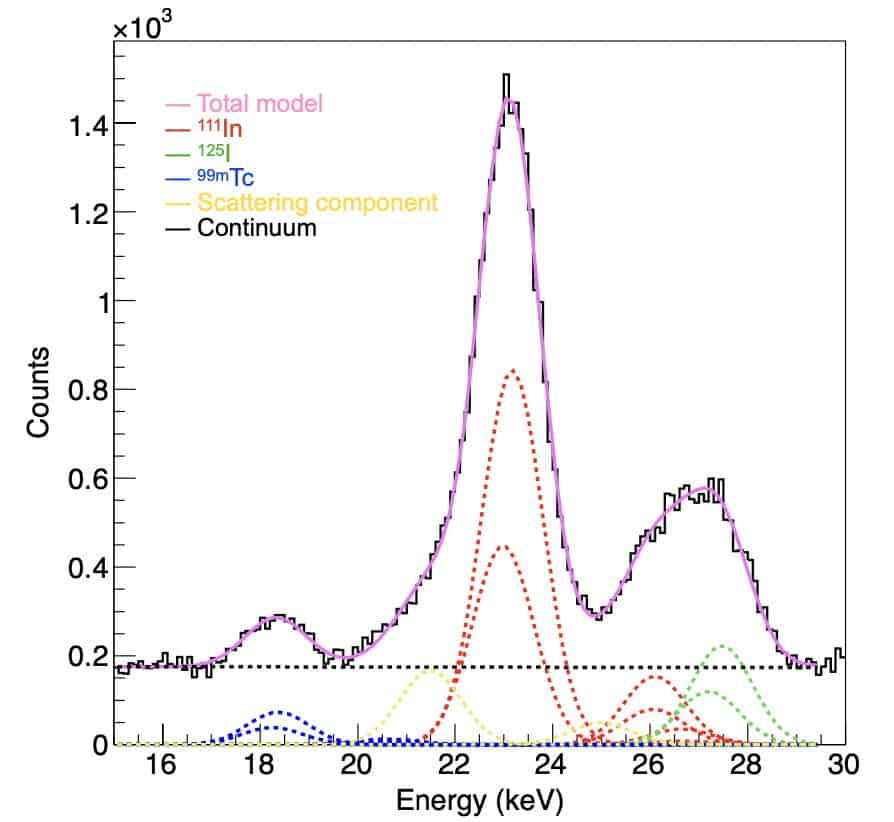
When imaging multiple radionuclides, the goal is to generate spectra and images from individual radionuclides, without contamination from other emitters in the sample. The spectroscopic analysis method involves fitting the observed spectra to a model of radionuclide emission lines in specific energy bands. Then, using the determined intensity ratios between the nuclides, any contamination in the image can be calculated and eliminated. The researchers, also from RIKEN and the Institute of Space and Astronautical Science/JAXA, describe the new imaging technique in Nature Biomedical Engineering.

System tests

To verify their new approach, the researchers measured solutions of the gamma-ray emitters iodine-125 (125I) and indium-111(111In). They examined a pure 125I sample, and a sample with the same activity of 125I mixed with 111In. Their analysis method completely separated spectra from the individual radionuclides and the background component. After processing, 125I images from both samples exhibited the same signal intensity, demonstrating the ability to remove noise from other radiation sources and obtain accurate images of only the target radionuclide.

“We assessed the quantitative performance of the images when using multiple radionuclides and confirmed that the intensity of the images correctly represented the radioactivity,” Yagishita tells Physics World.

The researchers also evaluated the spatial resolution of the IPMU imager, by imaging a phantom containing various sized holes filled with solutions of 111In, 125I or technetium-99m (99mTc) and reconstructing images in the 21–25, 26–29 and 135–143 keV energy bands, respectively. For all samples, the images clearly showed the 350 and 500 μm holes, while some of the 250 μm holes were also distinguished. The team note that this spatial resolution of roughly 300 μm is similar to that of state-of-the-art small-animal SPECT systems.

In vivo experiments

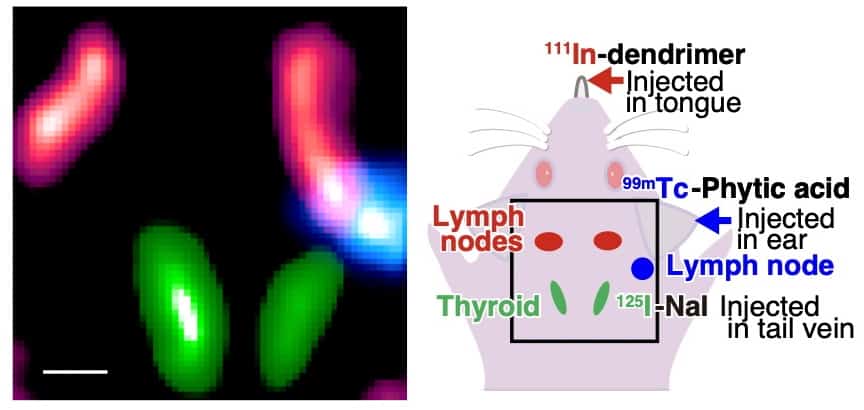
Finally, Yagishita and colleagues used the IPMU imager to simultaneously visualize thyroid tissue, mandibular lymph nodes and parotid lymph nodes in mice, using 125I, 111In and 99mTc, respectively. The spectrum obtained with the IPMU imager clearly showed the separate emission lines from the three radionuclides.

The team then reconstructed images of the three tracers in the relevant energy bands. While the raw images contained noise and ghosting caused by emission from the other radionuclides, the fitting technique identified unwanted radiation sources and produced separate images of each radionuclide in vivo.

In images of 125I (in the 26–29 keV energy band), the thyroid gland where iodine accumulates could be accurately delineated by subtracting background noise and 111In contamination. The researchers note that the processed image showed no activity in the lymph nodes, where 125I does not accumulate.

For comparison, they imaged the same mouse using a conventional small-animal SPECT/CT scanner. The low-energy-resolution spectrum only showed a single peak, while SPECT images in the 125I energy window showed the lymph nodes more clearly than the thyroid. These results suggest that the IPMU image is of higher quality than the SPECT image.

In future studies, the team hopes to use the IPMU imager to visualize targeted radionuclide therapy (TRNT) drugs in vivo. “TRNT drugs target specific landmarks on cancer cells and accumulate in cancer cells,” Yagishita explains. “Although the drug pharmacokinetics is ordinarily invisible, it is theoretically possible to visualize TRNT drugs because some emit gamma rays or X-rays. So currently, we are focusing on visualizing the pharmacokinetics of TRNT drugs.”

Why we need to tackle renewable energy’s storage problem

On 16 September 1910 the Canadian inventor Reginald A Fessenden, who is best known for his work on radio technology, published an article in the journal The Electrician about energy storage. “The problem of the commercial utilization, for the production of power, of the energy of solar radiation, the wind and other intermittent natural sources is a double one,” he wrote. “The energy of the sources must first be charged so as to be suitable in form, it must next be stored so as to be available in time.”

As we attempt to lessen the impact of climate change, Fessenden’s comments remain just as pertinent today – if not more so. That’s because many countries are reducing their reliance on fossil fuels by boosting renewable-energy output, whether solar, wind or hydro. And given that so many European nations rely on fossil fuels from Russia, this trend towards green energy is likely to speed up following the invasion of Ukraine that began in late February, having already resulted in a raft of economic sanctions and measures against Russia’s economy.

We can expect that future electric power generation in the UK will be based on variable renewables. This will be primarily wind and solar, possibly supported by nuclear. Unlike fossil fuel and nuclear generation, such renewables will, by their very nature, often produce less power than required – an extreme case being the lack of solar electricity generated at night. One of the biggest challenges for renewables will therefore be to deal with the periods when “the Sun doesn’t shine and the wind doesn’t blow”.

This situation is beautifully captured by the German word Dunkelflaute (meaning dark doldrums). It is critical that we store enough renewable electrical energy that has been produced during periods of excess generation – such as those during favourable wind conditions – for the inevitable Dunkelflaute periods that follow. But this is far from easy. And thanks to detailed studies on future electricity storage requirements and cost, we know it is not cheap either.

We will need adequate excess renewable generation capacity pre-Dunkelflaute to ensure that stored electricity is available over any such period. On a cold winter’s day in the UK, for example, the country requires at least 40 GW of electricity, which equates to about 1 terawatt-hour (TWh). If half of that comes from variable renewables, then on a challenging Dunkelflaute day we will need to have stored 0.5 TWh – assuming that the other 50% is composed of non-renewable sources of gas, nuclear and biomass.

The situation is starker still for a period of 10 successive Dunkelflaute days – a not-uncommon situation in a typical British winter – where we would need some 5 TWh of battery storage. To get an idea of the price tag, we know that the energy company InterGen is currently building a 1 GWh lithium-ion battery-storage facility at DP World London Gateway, a new port on the Thames Estuary in south-east England. It will cost about £300m to build, so a simple extrapolation would mean that having a 5 TWh capacity would be £1.5 trillion. If we depended entirely on renewable electricity, the corresponding battery storage cost would be £3 trillion. This is clearly unfeasible, so what else could we do?

Keeping the lights on

Lithium-ion technology has remained the benchmark for batteries since its discovery four decades ago. Some hope that battery costs will continue to drop – as they have done for the last two decades – or that a new, cheaper kind of battery technology will surely emerge over the next few years. However, there is a worldwide shortage of lithium for building battery storage at scale, while cobalt mining – the material that provides a stabilizing effect in lithium-ion batteries – comes at a heavy environmental price.

Another possibility for storage is hydrogen, which is produced by electrolysis from excess renewable energy generation. It can be converted into electricity through fuel cells or internal combustion engines and can also be used for a range of industrial processes. There are several major hydrogen projects under way in the UK, but it is hard to directly compare the cost of hydrogen with other large-scale storage technologies given the unknown costs of associated conversion technologies and the diverse range of applications.

It is possible, however, to make some qualitative estimates for Dunkelflaute events. If we assume that the storage mechanism is hydrogen and it is converted into electricity by a combination of fuel cells and internal combustion engines with an overall efficiency of 50%, then we would require 10 TWh of stored energy if we are to generate half our electricity from renewables. Using a value of 50 kilowatt hours per kilogram for electrolyser efficiency, that’s equivalent to about 200 million kilograms of hydrogen. So, at a cost of £2 per kilogram that would be about £400m. If we assume an equivalent cost for the process of converting hydrogen to electricity, then the cost of storage and generation in each 10-day Dunkelflaute period would be about £800m. If there are two periods annually and the electrolysers and engines last for 30 years, the total cost would be about £50bn.

Net-zero carbon targets require almost all energy to be provided by renewable electricity. It is essential therefore that we find ways of storing renewable energy during Dunkelflaute periods, but this rather obvious issue is all too often neglected by governments around the world. The costs of either battery storage or energy storage via hydrogen are huge – and even if the costs of batteries can be reduced, big questions about the space, security and safety of such storage installations remain. Decisions are urgently required about the way forward since electricity storage must evolve alongside plans for variable renewable energy.

Honeycomb-like nanopatterning boosts efficiency of ultrathin solar panels

HUD solar cells

While solar farms offer clean and reliable energy production, they are space-consuming and remain unfeasible for use in urban centres and outer space. An alternative solar solution for the near-future rests in micron-thin photovoltaics. These devices couple the low-cost manufacturing of silicon with the low weight and flexibility of thin films.

Led by Marian Florescu and Esther Alarcon-Llado, researchers from the University of Surrey, Imperial College London, and AMOLF’s Center for Nanophotonics partnered to address the shortfalls of existing thin film solar panels. Their newly released paper in ACS Photonics describes the properties of the photovoltaic device they devised and tested.

Absorbance through light trapping

The primary issue with increasingly thin solar cells is that with lower thickness comes lower light absorbance efficiency — a majority of light either reflects off the surface or passes through entirely. “Nearly a third of light bounces straight off [the material] without being absorbed and the energy harnessed,” says Florescu, adding, “a textured layer across the silicon slab helps tackle this problem.”

By texturing the surface of the silicon, incident sunlight is instead diffracted into the plane of the silicon thin film, “trapping” the light in the material. Regular ordered patterns are insufficient for this task, as they only diffract sunlight at specific wavelengths and angles of incidence. Alternatively, disordered patterns can scatter a broad range of wavelengths into the film but are not particularly efficient.

Instead, the team employed a specific surface design called hyperuniform disordered (HUD) patterns. HUD media have constrained randomness, which causes them to behave like ordered solids rather than amorphous materials. As such, they are particularly useful in engineering light scattering and diffraction.

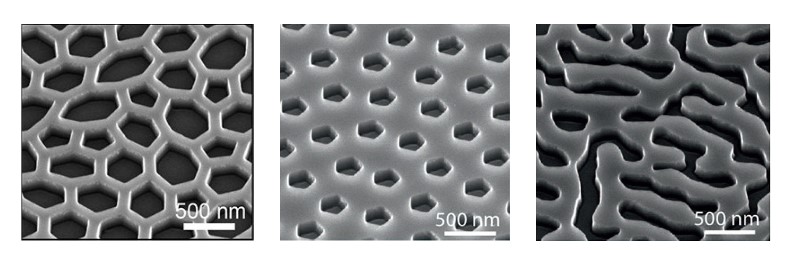
HUD solar cells figure 2

The researchers etched HUD patterns into the top 200 nm of a 1-micron-thick silicon film (see above figure). Then they topped the film with a spin-coated polymer resist, which reduced its reflectance by making its index of refraction closer to that of air. Through this combination of techniques, the team recorded a solar absorbance of 66.5% – a staggering increase from the 25.5% absorbance of unadulterated films. This improvement resulted in an absorption equivalent photocurrent of 26.3 mA/cm2, which tops the next-best reported result of 19.72 mA/cm2 for a cell of similar thickness.

Which HUD pattern?

The team tested multiple HUD patterning designs, including a HUD network, HUD holes and a spinodal pattern (left to right, above image). Each design far improved upon the efficiency and light absorption of unetched native films, with the spinodal pattern slightly edging out the others in efficiency. However, the large-scale implementation of a spinodal texture requires further technological developments to increase patterning resolution of its aperiodic structures. On the other hand, HUD holes and network patterns arise naturally in many physical systems, pointing to their simpler and more scalable fabrication. The team estimates that using similar patterning, researchers will be able to achieve photovoltaic efficiencies above 20% for a 1-micron-thick crystalline silicon cell.

Alarcon-Llado adds, “thinner silicon absorbers are more tolerant to electronic defects compared to the thick counterparts. This means that thin silicon cells with high efficiency could also be made from lower grade silicon, thereby reducing the energy needs for raw silicon purification and reducing their energy pay-back time.” Pairing these qualities with the team’s texturing breakthrough provides hope for future applications where heavier, more rigid bulk-silicon cells are not feasible, including on buildings, cars and in outer space.

Tricks learnt from eye imaging enable video-rate LiDAR

Using lessons learnt from eye imaging, researchers at Duke University have developed a high-precision, high-speed LiDAR (light detection and ranging) system that they claim is 25 times faster than previous LiDAR demonstrations. This provides the system with a frame rate comparable to that of video cameras, greatly improving its potential for use in imaging systems for autonomous technologies such as driverless cars and robots.

Real-time, high-resolution 3D imaging is desirable in many fields, including biomedical imaging, robotics, virtual reality, 3D printing and autonomous vehicles. Currently, a lot of the attention for autonomous systems focuses on LiDAR. Most LiDAR systems are based on time-of-flight: they send out laser pulses and measure the time it takes for reflections to return, using that information to map their surroundings.

In recent years, to try to improve the speed of LiDAR and reduce errors caused by ambient light, researchers have been looking at frequency-modulated continuous wave (FMCW) LiDAR. This technique is like traditional LiDAR, but the system continuously changes, or modulates, the frequency of the laser. When the reflected light returns, as well as measuring the time taken, the system also analyses how its phase has shifted. This provides a far more accurate measure of distance. The frequency pattern created by the modulated laser also makes it easier for the system to distinguish the reflected laser light from other light sources.

FMCW LiDAR shares similar working principles with the medical imaging technique swept-source optical coherence tomography (OCT). Swept-source OCT is primarily used in ophthalmology to obtain high-resolution cross-sectional images of the retina. The technique uses a laser that sweeps over a range of frequencies to achieve 3D volumetric imaging of the back of the eye with a depth of several millimetres.

In recent years, several developments have helped increase the range, speed and resolution of swept-source OCT. In their latest work, biomedical engineer Joseph Izatt and his colleagues applied some of the lessons they have learnt with OCT to create high-speed and high-precision FMCW LiDAR. They discuss their results in Nature Communications.

First, the researchers used an akinetic all-semiconductor sweep source. This does away with any form of mechanical movement in the mechanism that creates the sweep of laser frequencies. In the past, techniques like this have been shown to extend the imaging range of OCT and FMCW LiDAR.

Many FMCW LiDAR systems have a limited scanning speed due to the mechanical mirrors, or other electromechanical systems, that are used to move the laser beam across the field-of-view. One way to address this, and enable high-speed imaging, is to again shift away from mechanical systems to non-mechanical beam scanners with no moving parts. Izatt and his team used a diffraction grating, which separates the laser into multiple beams of different wavelength, all travelling at different angles away from the source. Along with the sweep source, this creates a laser that scans its environment much faster than is possible with mechanical systems.

While these techniques can improve the range of imaging systems, they impact the depth resolution. OCT systems combat this by using more sampling points, faster photodetectors and longer acquisition times. But LiDAR systems do not need the same depth resolution, as they are not probing structures several millimetres deep in a patient’s retina. They just need to scan an object’s surface.

The researchers found that by reducing the number of spectral sampling points and narrowing the laser’s range of frequencies, they could achieve real-time 3D imaging, with a frame rate as high as 33.2 Hz. With this compressed sampling approach, they demonstrated video-rate imaging of various everyday objects, including a moving human hand, with an imaging range of up to 32.8 cm.

The system currently has a few limitations, particularly the short imaging range. This is due to the bandwidth of the available components, but could be extended to about 2 m using a higher-specification commercial photodetector and digitizer. The researchers emphasize, however, that their approach shows the great potential of FMCW LiDAR for a number of imaging applications.

“The biological cell-scale imaging technology we have been working on for decades is directly translatable for large-scale, real-time 3D vision,” Izatt says. “These are exactly the capabilities needed for robots to see and interact with humans safely.” In a 3D world, he explains, “they need to be able to see us as well as we can see them.”

Soft medical robots show promise for performing wireless surgery

Scissoring device

Wireless miniature soft robots that can safely navigate confined spaces in response to an external magnetic field are highly desirable for medical applications such as minimally invasive surgery. In addition to locomotion, soft robots must be able to perform other complex tasks if they are to replace conventional rigid tools. Such tasks, however, require high force or torque outputs that softer materials alone cannot produce. Instead, a combination of different materials, ingenious mechanics and structural optimization is required to store and release the large amounts of mechanical energy needed to wirelessly perform complex surgical tasks.

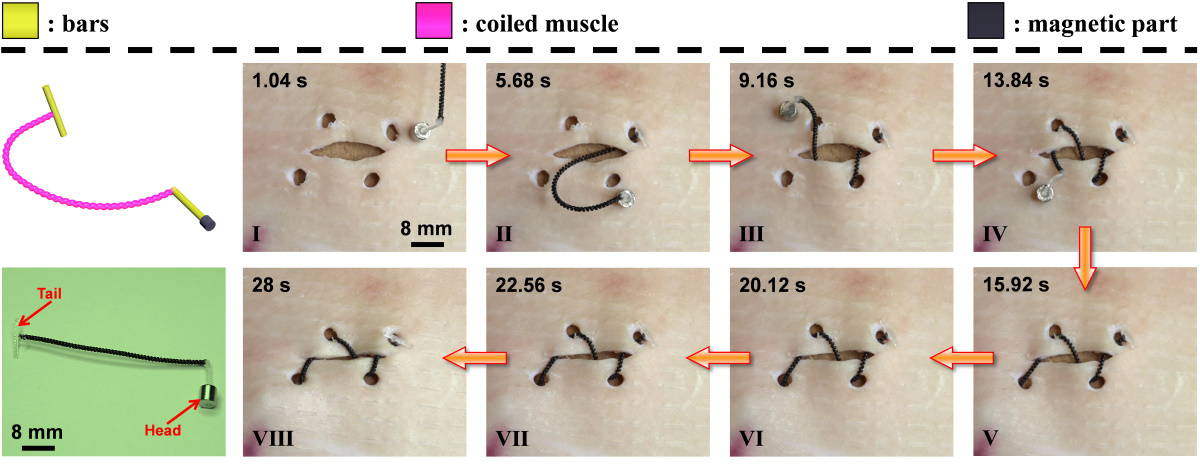
To achieve this, scientists from the Max Planck Institute for Intelligent Systems in Stuttgart have developed a small-scale coiled muscle actuator that relies on tunable mechanical properties and radiofrequency magnetic heating to perform surgical tasks that require a high force output and work capacity, including suturing, cutting, drilling and clamping tissues. The researchers describe the capabilities of the miniature soft medical robots in Science Advances.

Coiled artificial muscles

Artificial muscles in soft robotics aim to reproduce the mechanical versatility of natural muscles – contracting, expanding, rotating or bending to efficiently generate motion or perform tasks. To fabricate the muscle actuator, the group used a high-strength nylon fibre as the stiff muscle core and covered it with a polymer layer to insulate it from external mechanical and thermal stimuli.

Between the core and the outer cover, the researchers embedded a high-toughness resin matrix layer containing superparamagnetic Fe3O4 nanoparticles and graphene oxide platelets. These magnetic nanoparticles produce heat when exposed to radiofrequencies, actuating the muscle core and enhancing the mechanical strength of the actuator. Finally, they twisted the resulting structure into a coil to form artificial muscle with an approximate diameter of 1 mm.

The researchers applied an external radiofrequency magnetic field to wirelessly heat the embedded nanoparticles. The artificial coiled muscle then contracts if the fibre ends are free but cannot rotate, or twists if one end of the fibre is fixed and the rest can rotate. The team systematically optimized the concentration of graphene oxide platelets and thickness of the active layer to achieve an actuation force and work capacity of roughly 3.1 N and 3.5 J/g, respectively. These values are more than five and four orders of magnitude greater than those previously reported for magnetic soft actuators.

“Thanks to the muscle actuators integrated to wireless soft medical devices, we can now achieve surgical functions that require high force outputs, such as suturing, cutting, clamping and drilling. Such functions have not been possible so far for wireless soft medical devices,” explain senior authors Wenqi Hu and Metin Sitti.

Performing surgery with soft robots

To fully exploit the potential wireless applications of their coiled artificial muscles, the researchers devised five proof-of-concept surgical scenarios to demonstrate their utility.

Wireless suturing device

First, they sutured a previously punctured ex vivo pig skin sample by attaching two nylon fibre bars and a cylindrical permanent magnet to the ends of the coiled muscle. By using precise magnetic field control and leveraging the large output force of the coiled muscle, the team showed how the device magnetically reorients itself to suture around the wound and contracts to close it.

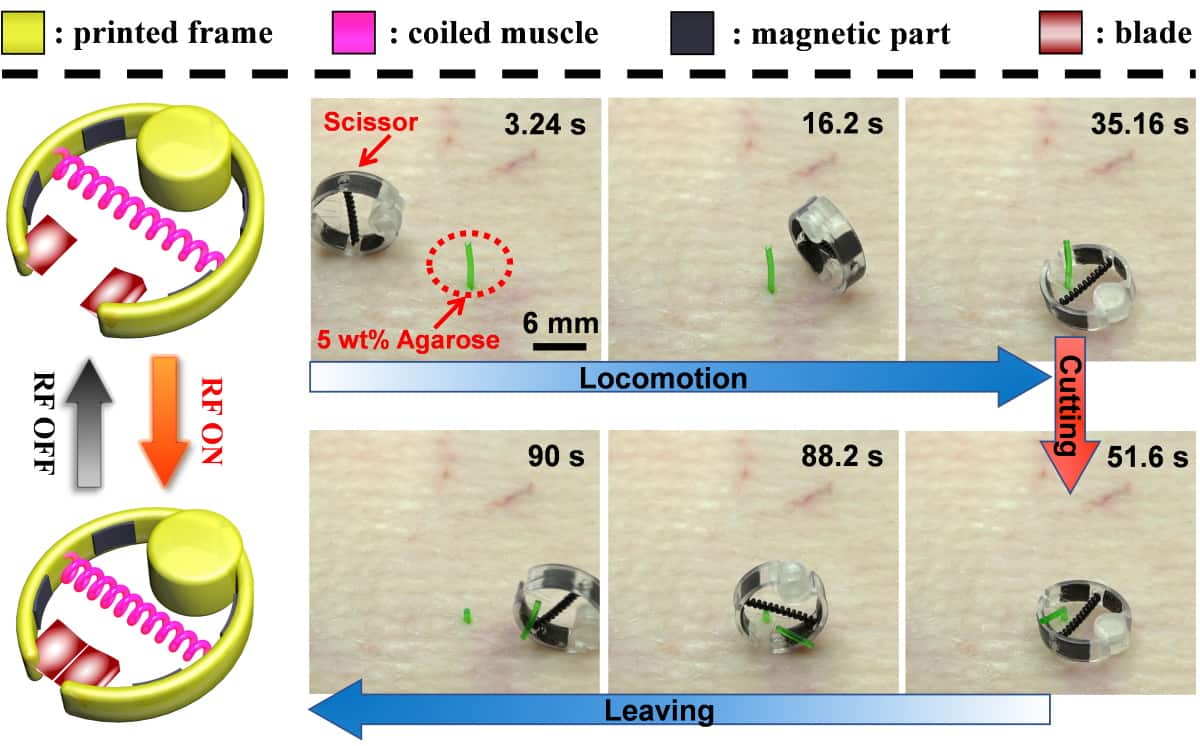
Second, they 3D printed a circular polymer frame and embedded magnetic microparticles in a silicone elastomer distributed throughout the frame circumference. This enabled the frame to perform rolling locomotion and positioning using a teleoperated magnet. In the demonstration, the researchers used the force generated by contracting the coiled muscle to cut a synthetic tissue-like material in half using two glass blades located at the opening of the frame.

Next, to test the torque performance, the team leveraged the high energy-release of the artificial coiled muscle and combined it with a 3D-printed driller frame and screw to wirelessly penetrate a synthetic tissue-like material by applying radiofrequency magnetic heating to untwist the coil.

The researchers then engineered a bistable clamper that uses coiled muscle contraction and stored mechanical energy to rapidly pinch tissues during surgical operations. The continuous contraction of the coiled muscle drives the clamper from a stable to an unstable energy state. This triggers the snap-through, amplifying the output force of the coiled muscle up to 14 N – allowing the researchers to clamp an ex vivo chicken tissue wound.

Finally, to showcase the versatility of multiple coiled muscles, the team coated an additional polymeric layer with a spatially varying magnetization profile in the coil, and linked four coiled muscles together using softer connectors to amplify the magnetic deformation. This new structural configuration allowed the multi-linked coils to “walk” forwards, backwards or move axially by combining magnetic torque and magnetic gradients. This could enable the device to perform more complex manipulations as well as the high force output demonstrations.

“Our new approach extends the capabilities of wireless medical soft robots to surgical applications. As next steps, we will demonstrate such functions in small animal surgeries in in vivo conditions,” Hu and Sitti tell Physics World.

Anomalous Josephson effect appears in a topological insulator

Researchers at the Institute of Physics, Chinese Academy of Sciences in Beijing, say they have found unambiguous evidence for a condensed-matter phenomenon known as the anomalous Josephson effect (AJE). The phenomenon emerged in structures called Josephson trijunctions, which the researchers constructed from a material that acts as an electrical insulator in its bulk while conducting electricity on its surface. Members of the team say that the discovery could aid the development of quantum computers that exploit similar topological effects to shield their quantum bits, or qubits, from environmental noise.

Josephson junctions consist of two superconducting layers separated by a thin insulating gap. Pairs of electrons in the superconductor can tunnel across this gap thanks to their quantum properties, meaning that current flows through the junction even without an applied voltage. The theory for how this happens was developed in the early 1960s by the British physicist Brian Josephson, who went on to receive the 1973 Nobel Prize for Physics for his work.

Since then, Josephson junctions have found numerous applications. Superconducting quantum interference devices (SQUIDs), for example, are highly sensitive magnetometers, and use either one or two Josephson junctions depending on their design. Josephson junctions are also key components in superconducting qubits, which have at their heart a loop of superconducting material broken by one or two such junctions.

The Josephson effect

The supercurrent Is in an ordinary Josephson junction follows the relation Is=Ic sinj, where Ic is the critical supercurrent of the junction and j is the phase difference across it. However, this straightforward version of the Josephson effect does not apply to certain situations. For example, if the supercurrent in the junction is mediated by special bound states in materials with spin-orbital coupling (a relativistic interaction between an electron’s spin and its motion), the supercurrent can acquire an additional phase shift j0, explains Li Lu, who led the Beijing team’s research. This phase shift leads to the appearance of the AJE, in which Is is instead equal to Ic sin(j+j0).

The AJE is difficult to study because distinguishing which part of the total phase shift is caused by the conventional Josephson mechanism and which part is caused by the AJE is no easy task. One way to do it, Lu explains, is to tune the spin-orbital coupling using an applied gate voltage and therefore identify the j0. Another is to use a reference apparatus on the same device to tease out the relative contributions of the normal and anomalous phase shifts.

In the new work, Lu and colleagues identified the existence of such an anomalous phase shift in a three-way Josephson junction, or trijunction, based on bismuth selenide (Bi2Se3). This material is a topological insulator, meaning that while the bulk material is an electrical insulator, it conducts electrons extremely well on its surface thanks to special, topologically protected electronic states. Electrons in these states travel forward without backscattering, which allows them to carry electrical current without dissipating much energy. For this reason, topological materials are promising candidates for future energy-efficient electronic devices.

Anomalous phase shift

The trijunction studied by Lu’s team contains two single junctions aligned in one direction and third junction aligned perpendicular to the first two, forming a T shape. The researchers found that in this junction, exotic particles known as Majorana bound states behave differently when an in-plane magnetic field is applied parallel to the two inline single junctions, compared to when it is applied parallel to the third. From this behaviour they were able to unambiguously identity the anomalous phase shift and hence the AJE.

The behaviour of these Majorana bound states was predicted back in 2008 by Liang Fu and Charles Kane, who suggested that Josephson trijunctions based on topological insulators could serve as the building blocks for braiding so-called “Majorana zero modes”. Such modes should show up as peaks (technically termed zero bias conductance peaks) in the spectra of electrons tunnelling across the junction. They are also the core ingredient of topological qubits, which could provide a stable and fault-tolerant building block for quantum computing because these special modes are resistant to disturbances caused by external noise.

Lu says that the AJE he and his colleagues have observed could serve as an additional knob for controlling the Majorana zero modes via an in-plane magnetic field. In their work, the researchers fabricated Josephson trijunctions based on three-dimensional Bi2Se3 and connected the terminal of the junctions with the superconducting loops in the structure. They then used the out-of-plane magnetic flux in the loops to control the phase difference in the trijunctions.

“With this approach, we were able to experimentally verify the behaviour of the Majorana phase diagram predicted by Fu and Kane,” Lu tells Physics World. “We further found that by applying an in-plane magnetic field, the whole Majorana phase diagram shifts in phase space thanks to the AJE induced by the in-plane magnetic field.”

The researchers, who detail their work in Chinese Physics Letters, are now looking into possible applications of the AJE in manipulating the Majorana zero modes in the trijunctions they studied.

Mirror nuclei shed light on mysterious EMC effect

The internal structures of nuclei containing mirrored numbers of protons and neutrons have been studied to a high degree of precision. The research has revealed that neutrons are more prone than protons to modifying their internal structure when bound up in nuclei, and it could help resolve an important mystery of nuclear physics.

The study was done by the international Jefferson Lab Angular Momentum (JAM) collaboration using data from the MARATHON experiment, which is at the Thomas Jefferson National Accelerator Facility in the US. The team’s results could help physicists better understand how quarks are distributed inside protons and neutrons and why these distributions are different when protons and neutrons are incorporated within nuclei.

The proton comprises two up quarks and a down quark, whereas the neutron contains two down quarks and an up quark. Since 2018, MARATHON has used beams of high-energy electrons to probe how these quarks are distributed within protons and neutrons. When fired at ultra-cold targets, these electrons undergo deep inelastic scattering as they interact with quarks. Afterwards, the scattered electrons are detected by a pair of high-resolution spectrometers.

Structure functions

By measuring the change in momentum of the electrons as they scatter, physicists can determine the arrangements of quarks inside protons and neutrons within the target nuclei. These distributions are described by the structure function of the proton or neutron.

For several decades physicists have known that the structure functions of free protons and neutrons are different from those of protons and neutrons bound up within nuclei. This is called the EMC effect – named after the European Muon Collaboration, which discovered it in 1983 – and it remains an important mystery of nuclear physics.

In their latest study, the MARATHON team measured the ratio of the structure functions of protons and neutrons in the simplest pair of mirror nuclei: helium-3 – which contains two protons and one neutron – and tritium (hydrogen-3), which has one proton and two neutrons. Studying mirror nuclei meant that several theoretical uncertainties were eliminated from their measurement of the ratio.

Stronger for down quarks

The team used a 10.59 GeV electron beam, which is the highest energy ever used to measure nucleon structure functions. Using a new error correction technique, they extracted the structure function ratio from their scattering data. They found that the EMC effect is stronger for down quarks than up quarks, which means that it has a greater effect of the structure of neutrons compared to protons.

While the results are in broad agreement with theoretical calculations and previous experimental work, they offer a significant improvement in accuracy.

In future studies, the team will aim to fine-tune their approach, allowing them to study nucleon structure functions within larger, more complex nuclei. Their results could open promising new routes to enhancing our knowledge of the strong nuclear force, which binds quarks together, as well as the mysterious origins of the EMC effect.

The research is reported in two papers in Physical Review Letters. One paper describes the Marathon experimental results and the other describes the JAM analysis.

Copyright © 2026 by IOP Publishing Ltd and individual contributors