PRISMAP consortium to fast-track nuclear medicine research

The PRISMAP consortium

Nuclear medicine plays a vital role within healthcare, with over 40 million procedures performed each year worldwide. This includes molecular imaging techniques used for diagnostics, as well as targeted therapies that treat diseases such as cancer. All of these procedures rely on medical radionuclides – the radioactive elements used to visualize or irradiate the disease target. But the ongoing progress of nuclear medicine is hindered by limited access to such radionuclides and, in particular, difficulties in introducing new radionuclides into the clinic.

Sean Collins

The recent launch of PRISMAP, the European medical radionuclides programme, could change all this. PRISMAP, a consortium of 23 academic and research institutions, aims to create a sustainable source of new, high-purity radionuclides for research and medical applications.

Tami Freeman talks to Sean Collins, higher research scientist at the UK’s National Physical Laboratory (NPL), about PRISMAP and the impact that this new programme could have on nuclear medicine.

How are radionuclides currently used in hospitals?

In nuclear medicine, radioactive substances are introduced into the patient and, depending upon the carrier molecule they are attached to, find their way to specific biological targets in the body. The particular use of a medical radionuclide depends on its physical characteristics, such as its radioactive half-life and the type of radiation it emits.

Some radionuclides, such as 99mTc or 18F, emit gamma rays that can be detected with external detectors to visualize their distribution in the body, as employed in SPECT or PET imaging. Others, such as 223Ra or 177Lu, emit alpha or beta particles that deposit their energy in a localized region (microns to a few millimetres), such as within a cell or a cancer metastasis.

What are the challenges in creating medical radionuclides?

Over 3000 different radionuclides have been synthesized in the laboratory, but only a handful are regularly used for medical procedures and mainly only for imaging. The range of radionuclides is limited by their radioactive decay properties and the ability to produce them in sufficient quantities and at the required purity level to ensure patient safety.

There are two main paths for producing these radionuclides: neutron irradiation in a nuclear research reactor, or alpha or proton irradiation with a particle accelerator. The size and energy of the accelerator determines which radionuclides it can produce. Small, compact machines found in many hospitals create the radionuclides used today. However, higher energy machines are needed to produce novel radionuclides that are currently not available.

And production of these novel radionuclides creates new challenges: the co-production of unwanted radioactivity that may induce adverse effects to a patient, cause waste management difficulties for the hospital or make the medicinal product unfit for use. In particular, the presence of co-products that are isotopes of the same element has been a major stumbling block as they cannot be removed through radiochemistry techniques.

How can PRISMAP help?

PRISMAP aims to produce, develop and disseminate a range of novel medical radionuclides. To achieve this, the collaboration will include nuclear reactors and medium- and high-energy accelerators that will produce these radionuclides, along with radiochemical laboratories and the CERN MEDICIS mass separation facility.

The CERN MEDICIS facility

PRISMAP will drive development of new techniques for efficient and effective purification through radiochemistry. But the biggest development will be the introduction of physical mass separation as a standard technique to remove unwanted co-isotopes of the target isotope. This introduction of mass separation will open up a whole new range of radionuclides that were previously unavailable.

What is NPL’s role in the project?

Before any radiopharmaceutical can be used clinically, its administered activity must be determined. This is typically performed using a radionuclide calibrator with traceability to a national metrology institute. Primary activity standards of a radionuclide combined with accurate nuclear decay data measurements underpin its clinical use by providing confidence in the data that researchers are using. NPL will be leading the definition of each radionuclide’s activity in becquerels, to provide that important traceability link for the producers and researchers.

Many of these radionuclides being considered have not been investigated since the 1960s and the underlying nuclear decay data are questionable. NPL will employ its metrology expertise to help determine the fundamental constants of radioactive decay with a high level of accuracy and precision. This will ensure confidence in the nuclear decay data being used across the various fields of research. NPL will also develop radiochemistry techniques to isolate and purify the novel radiopharmaceuticals being produced by PRISMAP.

Why is there a need for new medical radionuclides?

The study of novel radionuclides will lead to additional treatment possibilities and improve outcomes for patients. One example is targeted radionuclide therapy, a growing area of interest for cancer treatment, where there is an ongoing search for new radionuclides that can be used. Some estimates predict that this market will grow to $13.8 bn by 2028.

There is also significant interest in the development of theranostic techniques, where the same targeting vector is used to deliver both diagnostic and therapeutic radionuclides. This will enable personalized treatments via quantitative imaging. PRISMAP is currently investigating a unique terbium quartet – 149Tb, 152Tb, 155Tb, 161Tb – for such theranostic applications. 152Tb and 155Tb can be used for PET and SPECT imaging, respectively, while 149Tb and 161Tb will provide the therapeutic component, with 149Tb emitting alpha particles and 161Tb emitting a relatively high proportion of conversion electrons and Auger electrons.

What other radionuclides will PRISMAP produce?

PRISMAP will focus on novel radionuclides identified as having significant potential for medical applications, but where development is hampered by the difficulty in accessing research-grade materials. Importantly, PRISMAP will be able to offer researchers access to an extensive range of radionuclides from day one of the project.

As well as the terbium quartet, new radionuclides will include 67Cu,169Er and 225Ac. The alpha emitter 225Ac is of particular importance as a growing body of research shows its potential for targeted cancer treatment. This radionuclide is particularly rare, with the purest material coming via the separation of 225Ac from a 229Th generator. But there’s not sufficient pure 229Th worldwide to provide enough material for researchers and it will not be available at a commercial scale. The use of high-energy proton accelerators to produce 225Ac has been shown to be a solution to this problem. Using its network of accelerators across Europe, PRISMAP will aim to give researchers easy access to this exciting radionuclide.

And how will PRISMAP provide this access?

Access to radionuclides during the early biomedical research phases is one of the main obstacles when developing novel radiopharmaceuticals. PRISMAP will enable this development phase by providing access to high-purity radionuclides. We are establishing an access platform on our website that presents production and support capabilities. Any interested party can apply for access to radionuclides and, if necessary, to our complementary network of biomedical facilities that will host external researchers close to the point of production. The first call for proposals will be launched before the end of 2021 for applications in the first quarter.

Ultimately, how will the advances made by PRISMAP help cancer patients?

The European Commission has expressed its commitment to tackle cancer through the Europe’s Beating Cancer Plan and the SAMIRA Action Plan unveiled earlier this year, which includes the establishment of a European Radioisotope Valley Initiative. As well as upscaling the production of novel radionuclides using innovative production technologies and new purification methods, PRISMAP will enable proof-of-concept investigations of new treatments, from test bench to patient care, directly feeding into this European-wide plan.

Quantum imaging techniques could help find exoplanets

Astronomers in Australia and the UK have shown how exoplanets could be observed directly by using quantum hypothesis testing methods to analyse telescope images. Zixin Huang at Macquarie University, and Cosmo Lupo at the University of Sheffield have shown that the techniques can be used to discriminate between light emitted by a star-planet system and a star with no planets.

So far, astronomers have discovered nearly 5000 exoplanets, which are planets that orbit stars other than the Sun. The vast majority of these have been observed indirectly: by either measuring the dimming of starlight that occurs when they pass in front of their companion stars (the transit method); or by the effect that they have on the radial velocity of their companion stars.

While the direct detection of light reflected from an exoplanet can sometimes be made – especially when the exoplanet is in a relatively large orbit – the faint light from an exoplanet surface is extremely difficult to distinguish from the much brighter host star. As a result, only around 1.2% of all exoplanet discoveries have been made through direct imaging.

Two possible states

Now, Huang and Lupo have shown that quantum imaging techniques can be used to improve direct detection. In their model, the light picked up by a telescope can exist in two possible states: either being emitted by a star on its own, or by a star-planet system.

In this second case, a small fraction of the star’s light is scattered from the planet, creating a second source of light in the image – an effect that may normally be imperceptible. Nonetheless, the presence of the exoplanet creates a distinct signature in the spatial distribution of the photons captured by the telescope, whereby the optical “centre of mass” of the image lies between the star and exoplanet.

The researchers have shown that two existing quantum imaging techniques can be used to determine whether the optical centre of an image corresponds to the centre of a star, or the centre of mass of a star–planet system. One quantum technique is based on interferometry and the other involves describing the image in terms of orthogonal spatial modes of light.

Three key factors

Through their analysis, Huang and Lupo determined that the probability of error when discriminating between these two states depends on three key factors: the separation between a planet and its star; the difference in brightness between the two objects; and the number of photons collected by the telescope.

As these variables are changed, the duo showed how this error probability scales in a different way from the classical approach to direct imaging. This means that their technique could reach a fundamental quantum limit in error. This could allow astronomers to detect dimmer exoplanets, lying closer to their host stars, than currently possible using a classical approach.

Although the transit and radial velocity methods have so far dominated exoplanet discovery, these techniques only work if the orbit of the planet crosses the star when viewed from Earth. This restriction does not apply to direct imaging, which thanks to quantum techniques could soon be used to discover more exoplanets.

The research is described in Physical Review Letters.

William D Magwood IV: still fighting for nuclear

William D Magwood IV

William Magwood’s aunt once asked him what he did all day. “I fight,” answered Magwood, who at the time directed the Office of Nuclear Energy, Science and Technology at the US Department of Energy (DOE). “I fight over money, I fight over people, I fight over office space, I fight over programmes.” Currently the director-general of the Nuclear Energy Agency (NEA), Magwood continues to have to fight despite the fact that he does so in the service of planetary wellbeing.

Magwood grew up in Pittsburgh, Pennsylvania, which was then a centre of US nuclear technology thanks to the Westinghouse Electric Corporation, which in 1957 had built America’s first commercial nuclear power plant at Shippingport, about 40 km north-west of the city. But that reactor closed in 1982, the same year that Magwood got his bachelor of science degree in physics from Carnegie Mellon University. Nuclear energy appeared on the way out, people were losing their jobs, and it seemed a terrible career choice.

I was a nuclear guy in the middle of the action, while they were in the process of shutting everything down. I saw my job as trying to preserve as much as I could

William D Magwood IV

“Initially I tried to avoid it,” Magwood told me via Zoom from the NEA’s headquarters in Paris. He considered aerospace as a possible career, then computer technology. “But I found myself coming back.” He worked first at Westinghouse, before joining the DOE in 1994. “I think they chose me because I could spell ‘neutron’,” he jokes. “It was a strange time. I was a nuclear guy in the middle of the action, while they were in the process of shutting everything down. I saw my job as trying to preserve as much as I could.” But the amount of research money for nuclear programmes at the DOE kept dropping, and in 1998 was zeroed out. Magwood then became director of the office, making him the senior nuclear technology official in the US government.

Frustratingly, he had responsibility only for the technical, rather than the political, aspects of nuclear energy. A particularly painful episode occurred in 1997, when a leak of tritium-containing water was discovered during a routine maintenance shutdown at the High Flux Beam Reactor at Brookhaven National Laboratory. The reactor produced neutrons for scientific research and although the leak was of no danger to health or safety, it created a political and media firestorm.

“It was the finest high-beam neutron source anywhere,” Magwood recalls. “From the technical standpoint it was clear that the reactor was safe, very well operated, in excellent condition, and that the neutron-science community wanted it very badly. I don’t think that it was in anybody’s imagination that it could lead to the reactor being shut down.”

Except that, in 1999, it was. While there were no technical issues with restarting the reactor, the then DOE secretary Bill Richardson confronted plenty of political concerns. “Maybe his judgement was that this wasn’t a battle worth fighting,” says Magwood. “We didn’t like the decision. But it was Richardson’s to make.” For Magwood, it was an important lesson. “Governments make decisions for all sorts of reasons. Sometimes it’s not because of the technical arguments.”

A clearer understanding

In September 2014 – exactly seven years before our conversation – Magwood moved to Paris as the NEA’s director-general. The NEA, which has 34 member nations, does not promote nuclear energy, but provides analysis and understanding of how it fits in with other energy sources, trying to ensure that governments make energy decisions on a sound technical basis rather than just on hearsay. Rhetorically, he said, it’s easy for politicians to promise that one can run the entire energy system with 100% renewables, but when you look carefully that idea evaporates. “People don’t want to look at the situation realistically. When you do, it means you have to make real choices. Nobody likes to do that, especially politicians.”

The NEA, though, tends not to play a big role at meetings such as the upcoming COP26 climate summit. “There’s a dynamic in a lot of multinational venues when it comes to climate change,” says Magwood. “Most countries recognize that nuclear likely will play a role in the future. But a few nations have strong opinions to the contrary, and to avoid complications the organizers tend to leave it out. So you can go to ministerial meetings on climate and rarely hear talk about nuclear with any substance.”

You can go to ministerial meetings on climate and rarely hear talk about nuclear with any substance

William D Magwood IV

But Magwood hopes that will change. “The closer we get to the net-zero 2050 target, the more clearly nations will see they are not meeting their targets, and the more they may ask themselves, ‘What tool have we not been using to get us there?’ The obvious answer is nuclear. That will bring it back into the conversation.”

Magwood considers much of the NEA’s success at promoting energy realism is due to its international status. “In many countries, if domestic scientists say that something is the right thing to do, people are sceptical, but if it comes from an international source the statement acquires greater credibility. It’s sort of the opposite reflex in the US, where people tend to believe what their own people say, and distrust it if it comes from overseas.”

The critical point

Nuclear energy is at a crossroads, Magwood believes. Most of the projects to develop innovative nuclear systems – such as high-temperature gas or molten salt reactors – will, he points out, come to fruition in the next five years. “Then we’ll know if they solve the issues and technical challenges. If successful, they could be game-changers. If not, the future gets dimmer. For I’m not sure the existing technologies will be able to be built in sufficient quantities to make a big difference.”

But as far as Magwood is concerned, if you want to keep the lights on at the same time as reducing greenhouse-gas emissions, there aren’t many options. “People who run electric systems understand that, and eventually policymakers will catch up,” he concludes.

Though not, clearly, without a fight.

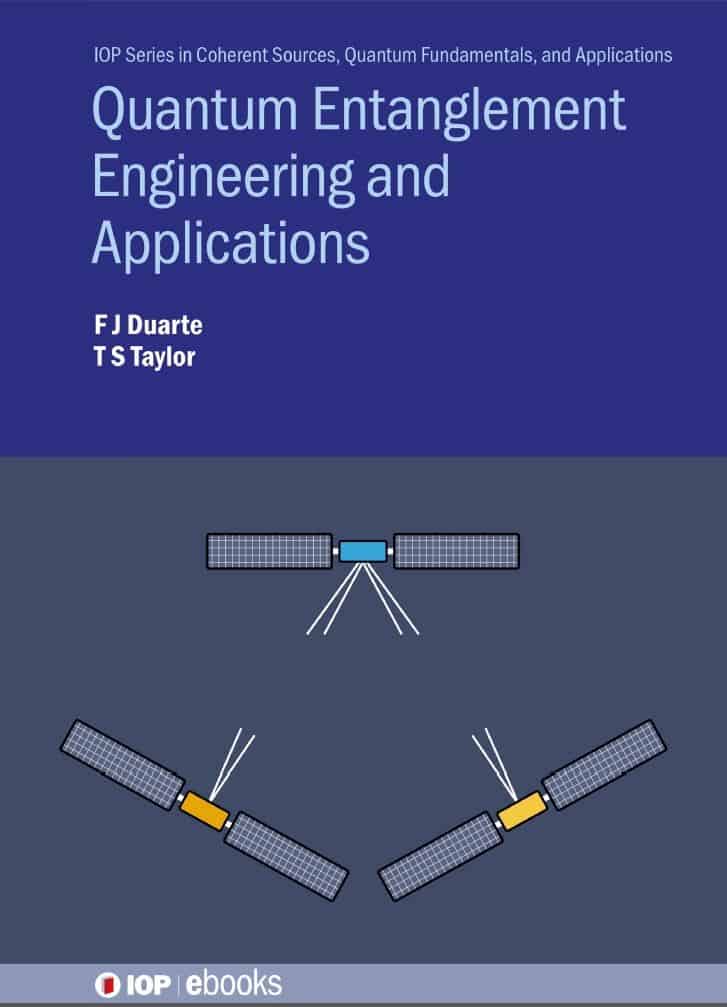
Quantum entanglement in the real world: IOP Publishing’s 600th ebook

I remember sitting in a meeting here at IOP Publishing about a decade ago when the idea of an ebooks programme was first mooted by one of our directors. With so much in the publishing world switching from print to online, it struck me as a timely and sensible concept. After much hard work, the IOP Publishing ebooks programme was launched in 2013.

The programme has expanded since then, now featuring general-interest titles about burgeoning new fields, overviews of specialist topics that provide a route into the primary literature, as well as texts for students. There are also ebooks partnerships with the American Astronomical Society, the Biophysical Society and the Institute for Physics and Engineering in Medicine. You can even find a set of super-short Physics World Discovery ebooks.

Cover of IOP Publishing's 600th ebook

Recently we’ve passed a milestone with the publication of the 600th IOP Publishing ebook. Entitled Quantum Entanglement Engineering and Applications, it’s been written by F J Duarte – a laser physicist based in Western New York, US – and Travis Taylor, who’s principal scientist at the Quantum Entanglement and Space Technologies Laboratory at the US Army Space and Missile Defense Command in Huntsville, Alabama.

In the video above, you can see Azahara Perez, IOP Publishing’s senior marketing executive for ebooks, talking to Duarte about his book. Often viewed as one of the strangest and most mysterious parts of physics, quantum entanglement refers to the fact that particles can be linked even if they are physically a long way apart.

Albert Einstein famously didn’t like the idea that the quantum state of one entangled particle in a pair can change instantly when a measurement is made on the other particle, dismissing it as “spooky” action at a distance. However, these days quantum entanglement has real-world applications in everything from fibre communications (both from Earth and via space) to quantum computing.

And its emergence as a real-world technology is where Duarte and Taylor’s ebook comes in, by providing scientists and engineers with practical mathematical tools to handle entanglement and to design functioning optical systems.

The book is part of a wider IOP Series in Coherent Sources, Quantum Fundamentals, and Applications. If you have an idea for an ebook of your own, do get in touch via the IOP ebooks website.

Glacier tables reveal their secrets

Researchers in France have pinned down the conditions under which “glacier tables” – large rocks perched atop thin columns of ice – form within retreating glaciers. Their results, which highlight the importance of the rocks’ surface area and heat conductance, could give scientists an alternative way of estimating the rate at which glaciers melt.

Glacier tables can appear strange, even unnatural, when seen for the first time. They form when a rock lying on top of a glacier shields the ice directly underneath it, decreasing the rate at which the ice melts. The un-melted ice then forms a column that can grow up to two metres tall as the rest of the glacier melts around it. When the column can no longer support the rock’s weight (usually after a few months), the rock topples over.

Miniature glaciers

Glacier tables are mainly found on low-altitude glaciers, where summer temperatures are high enough to melt ice. Only large rocks can create them since smaller ones invariably sink into the ice as it melts. Beyond these rough rules, however, little was known about the details of how they form. To better understand this phenomenon, physicists led by Nicolas Taberlet from the University of Lyon created miniature glaciers consisting of slabs of clear ice inclined at various angles. They left these slabs on a bench in their lab and measured the rate at which the slabs melted by monitoring how their thickness decreased over time. Under these circumstances, the main drivers of ice melting were infrared radiation coming from the walls of the lab and natural air convection.

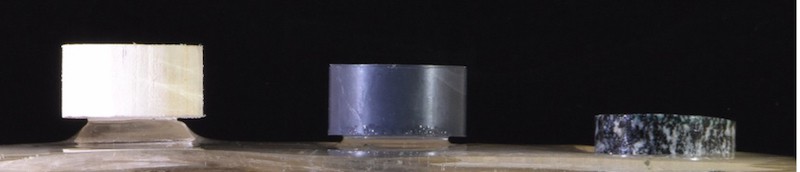
Taberlet and colleagues then repeated the experiment using fresh slabs of ice, but this time they placed cylinders measuring between 4 and 14 cm in diameter and between 0.5 and 7 cm in height on top of them. These “rocks” were made of materials with different thermal conductivities and included polystyrene and granite.

The researchers observed that while some of the cylinders formed tables, others did not. For example, ice columns formed readily under cylinders made of polystyrene, but never under those made of granite. This is because polystyrene is a much worse heat conductor than granite, so it acts as an insulator, shielding the ice from the warmer environment.

glacier table formation

Taberlet and colleagues also observed that thinner cylinders formed tables more easily than thicker ones. This is because a thicker structure has a greater surface area in contact with its environment, allowing it to absorb more heat, which causes the ice underneath to melt at a faster rate than the ice under a thinner cylinder.

One-dimensional conduction model

By inputting these observations into a one-dimensional conduction model that determines how quickly ice under a rock will melt relative to uncovered ice, the team estimated that the minimum size for a table-forming rock is between 10 and 20 cm. This is on par with the size of glacier tables observed in nature.

The model shows that ice-melting rates under different types of cylinders are controlled by a competition between two effects: the size and shape of the cylinder and a reduction in heat flux due to the higher temperature of the cylinder relative to the ice. The model also takes into account the transition between the two regimes and identifies a dimensional number, heffR=λ (where heff is the effective heat transfer coefficient between the cylinder and the ice, R is the radius of the cylinder and λ is its thermal conductivity) that controls the onset of glacier table formation.

This model might make it possible to develop new “benchmarks” for glaciology, Taberlet tells Physics World. For instance, glaciologists might be able to visit a site once a year, at the same time each year, and estimate glacier melting rates by measuring the height of the glacier tables, rather than by making repeated trips in a single season. He and his colleagues now plan to extend their study to the entire lifetimes of glacier tables and compare the results of their model with new field measurements.

The present study is detailed in Physical Review Letters.

Ask me anything: Ciara Muldoon – ‘I love being part of a project that is making such a positive difference’

Ciara Muldoon

What skills do you use every day in your job?

Being very organized, decisive, co-operative, creative and mindful are important in my daily life. For over a decade, my husband and I have enjoyed the flexibility of working together from our home in Devon.

As expected, my work–life balance became more focused on family after our daughter was born four years ago. Among other things, I have become more skilled at multi-tasking: moving from role-playing, reading or painting with our daughter, to liaising with our content creators, and discussing website design and marketing strategies with my husband and our PR team. We often work late, so developing some mindfulness skills has helped to prevent burnout.

What do you like best and least about your job?

I have been feeling some eco-anxiety in recent years, as the world burns, floods and heats up. So I like that our latest project, SearchScene.com, has the potential to donate millions of pounds to environmental and humanitarian charities that are working hard to address the causes and effects of climate change.

SearchScene.com is a charitable search engine that we have spent the past few years building, with a small team of amazing people. Like Google, SearchScene makes money from search ads but, unlike Google, it donates 95% of its profits to charities that fight the causes and effects of climate change. Users can choose which of our nominated charities they prefer to support when they search the web. SearchScene also has great privacy features, and beautiful scenery on its homepage that changes regularly, reminding us of the precious things we can still protect if we make some changes, both individually and collectively. I love being part of a project that is making such a positive difference.

What I don’t like is that my job now includes dealing with climate-change deniers online.

What do you know today, that you wish you knew when you were starting out in your career?

I wish I had known that I was making a wise choice when I left an academic path that I had followed for many years and dearly loved, to become an Internet entrepreneur with my husband, and then a work-from-home mother. If people are willing to accept uncertainty, and take a leap into the unknown, there are often some wonderful new paths to explore.

Small-world networks regulate transcription in cells

DNA modelled as beads

The regulatory patterns that underpin gene expression may originate from the spatial organization of the genome, according to a new study reported in Nature Communications. A collaborative research team, from the universities of Edinburgh, Göttingen and Oxford, has used simulations of a simple DNA model to provide insight into the mechanisms of this genetic control.

At the interface of cellular information storage and protein synthesis lies transcription: the process of copying DNA for subsequent translation into proteins. With more than 20,000 genes present in human cells, however, there is a need for tight regulation of this process. One mechanism for regulation involves transcription factors, which bind to promoters and initiate transcription by coupling to distant enhancers, forming a structural loop.

Experimentally, researchers employ genome-wide association studies to establish correlations between thousands of genes. Computer simulations can help link this whole-genome perspective to observations from classic experiments, for example by rationalizing how the addition of just a few proteins can drastically alter cell physiology.

“This is where the experience with this [DNA] model in the past helped a lot,” says corresponding author Davide Marenduzzo, referring to the representation of DNA as beads and springs. In this model, 3000 base pairs are each grouped into spheres, some of which act as promoter-like transcription units (TUs), which represent genes to be transcribed, or as transcription factor complexes (TFs).

Davide Marenduzzo and Chris Brackley

“We spent some time to develop the force field in the past, starting from the work where we uncovered the bridging-induced attraction,” Marenduzzo tells Physics World, referencing a core component of the model. The multivalent interaction between TUs and TFs leads to their clustering and strongly affects the patterns of observed transcription. “The link comes from a surprisingly simple assumption…as transcriptional activity is measured computationally as the fraction of time a [transcription] factor spends close to a transcription unit,” he explains.

First, the researchers looked at the behaviour of fragments comprising 1000 beads with randomly distributed TUs, interspersed by TFs. TUs that lie close together will cluster, which increases transcription locally but also leads to negative correlations of TUs that are further apart. In the case of a saturating number of TFs, the correlations remain local because there are enough TFs to bind all TUs without engaging in multivalent interactions. If, however, there are fewer TFs than TUs – as is the case in biological systems – the competition for TFs produces a well-linked, “small-world” network.

Within this framework, the researchers qualitatively recovered several characteristics of gene expression, such as short transcription bursts or a high variability between cells. Furthermore, they observed a rewiring of the network following the mutation of TUs or the introduction of fixed DNA loops.

Going beyond this so-called “toy system”, the authors succeeded in modelling entire human chromosomes based on experimental locations of the TUs. Marenduzzo reports that he was “very pleased we could get a significant agreement with transcriptional activity in human chromosome 14: while the correlation is not that large, what is good there is that there is no fitting [of the model parameters to match experimental data] in the model.”

Encouraged by these results, the team intends to “take these ideas forward by using much more sophisticated models…to build a compendium of 3D structures of all human genes and predict their transcriptional activities”.

The research groups of Marenduzzo and co-author Nick Gilbert have been awarded a Wellcome Trust grant to continue this collaborative work.

NASA’s Lucy mission launches to Jupiter’s Trojan asteroids

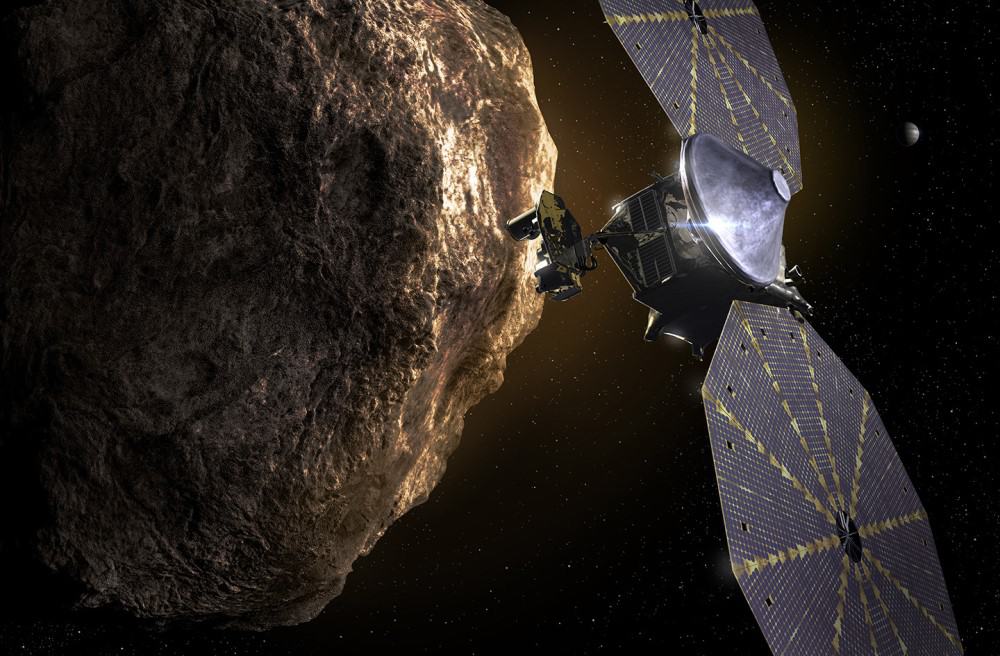
Artist's impression of Lucy mission

NASA has launched a $1bn mission to study Jupiter’s Trojan asteroids – two large clusters of rocks that are believed to be remnants of primordial material that formed the solar system’s outer planets. The probe, dubbed Lucy, lifted off from Cape Canaveral Air Force Station in Florida at 5:34 a.m. local time on Saturday aboard an Atlas V rocket.

The 12-year mission will consist of several close-up fly-bys of Trojan asteroids to yield clues about these so-called “fossils” of the solar system. Given this link, the mission is named after the 3.2-million-year-old “Lucy” hominid fossil that was discovered in 1974 in Ethiopia and which is thought to be one of our earliest known ancestors.

The Trojans orbit the Sun “in front of” and “behind” Jupiter’s orbit. Both groups are located roughly at the same distance from Jupiter as the distance from Jupiter to the Sun. While Jupiter is large enough that it would scatter away nearby asteroids, due to the combined gravitational influences of the Sun and Jupiter, the Trojan asteroids have been trapped on stable orbits for billions of years.

The 14 m craft contains four payloads that include a suite of cameras, imagers and spectrometers. Lucy’s first target in 2025 en route to the Trojans will be a small body in the main asteroid belt. Lucy’s first Trojan asteroid encounter will happen two years later in the Trojan swarm that is in front of Jupiter. Lucy will then carry out remote sensing on four bodies – ranging from 20 to 60 km in diameter – that will include mapping their surface geology such as shape and crustal features as well as investigating their composition and searching for rings or satellites accompanying the bodies.

After four fly-bys in the front swarm, Lucy will then travel back to Earth to undergo further gravitational manoeuvres to travel to the Trojan swarm behind Jupiter, arriving in 2033. It will then carry out a fly-by of a Trojan binary asteroid pair that are both around 100 km in diameter.

Time capsule

Lucy was chosen as a NASA Discovery mission for launch in 2017. As well as the main payloads, Lucy also carries a plaque as a time capsule, which includes quotes from Albert Einstein and Carl Sagan as well as a diagram showing the positions of the planets and the date of Lucy’s launch. Indeed, it is expected that once the mission is complete, the craft will remain in a stable orbit for hundreds of thousands of years.

“Lucy embodies NASA’s enduring quest to push out into the cosmos for the sake of exploration and science, to better understand the universe and our place within it,” says NASA administrator Bill Nelson. “I can’t wait to see what mysteries the mission uncovers.”

Climate realism: the solutions that might work at scale

Bill Gates begins How to Avoid a Climate Disaster: the Solutions We Have and the Breakthroughs We Need by acknowledging that he is an “imperfect messenger”. The Microsoft co-founder knows he is a billionaire technophile with a legacy carbon footprint the size of a small planet. Gates admits he flew into the 2015 Paris climate conference by private jet and wolfs down his share of Seattle beef burgers. For some readers, these facts may be too much to stomach.

But realistically, Gates’ influence and investment power are hugely significant. The book offers a pragmatic look at renewable energy and climate mitigation options from someone who profoundly understands how to innovate for mass markets. An alternative strapline could have read: “I’m ploughing my cash into these technologies because some might work at a meaningful scale.”

A key theme is that the green transition should not reduce living standards, especially in developing countries where the right to economic growth is sacrosanct. Gates’ priority is reducing the “green premiums” that customers pay for alternatives to carbon – because they will only help if average earners can afford them.

He professes his love for Sustainable Energy – Without the Hot Air, the 2008 book by the late University of Cambridge physicist David MacKay. Indeed, Gates shares MacKay’s knack for cutting through the hype to estimate scales, be they power outputs, costs or the amounts of land required. He insists that nuclear should remain in the mix because of renewables’ intermittency and the absence of a Moore’s law for batteries, wryly noting how much he has lost on battery start-ups.

Recent reports suggest Gates might not be the affable nerd he was once marketed as. But anyone who believes we should tackle the climate crisis while leaving the lights on would be naive to ignore this tech magnate’s opinion.

  • 2021 Allen Lane £20hb 272pp

Meddling to mend the planet: techno-fixes to environmental problems

Environmental writers walk a tightrope. Offer relentless despair and readers may drift away; be too upbeat and you’re almost certainly downplaying the issues. Fail to offer an opinion and you can leave readers cold, but come across as preaching and critics will shout “hypocrisy!” In Under a White Sky: the Nature of the Future, Pulitzer-prize-winning author and journalist Elizabeth Kolbert masterfully traverses this tightrope, combining curiosity with an acerbic wit to explore humanity’s obsession with controlling nature.

The book’s title imagines the skies if they were sprayed with vast quantities of particles – a potential climate solution for which people including Harvard physicist David Keith (who is interviewed in the book) want more investment in feasibility studies. In theory this could seed clouds that reflect sunlight back into space – counteracting the greenhouse effect. Through a series of trips to projects trying to rectify problems created by humanity (a novel type of disaster tourism) Kolbert shows that this far-fetched suggestion is just one idea in a long history of environmental techno-fixes.

As we discover, even the best-laid plans frequently return to kick us in the teeth. The book’s recurring theme is that nature is always more fine-tuned and complex than we think, though we never seem to learn. As the author writes, “If control is the problem, then, by the logic of the Anthropocene, still more control must be the solution.”

Blending scientific reportage with literary flair, Under a White Sky presents a series of case studies written partly as a travelogue, as Kolbert meets scientists and engineers reshaping the natural world. Their projects range from diverting the Mississippi river to protect New Orleans from flooding, to breeding “super coral” resistant to bleaching in warming oceans. In one story we learn about the increasingly elaborate efforts to save the few remaining pupfish at the Devils Hole geothermal pool in the Nevadan desert. Humans have driven these metallic-blue creatures to the point of extinction – first with nuclear bombs in the 1950s at the nearby Nevada test site, then later by property developers draining a nearby aquifer.

Conservationists have recently created a multi-million-dollar replica of Devils Hole a mile from the real one. It quickly became infested by larvae-eating beetles that thrive on the artificial environment. “I was struck, and not for the first time, by how much easier it is to ruin an ecosystem than to run one,” remarks Kolbert. As a funny aside we hear how one Devils Hole scientist was brooding because a local newspaper had recently described him as “potbellied and stern”. When he asks Kolbert for her opinion, she suggests he might be better described as having a “paunch”. These moments of human banality help to keep you sane as the narratives of environmental destruction unfurl.

On a separate trip Kolbert visits Australia to hear about the giant cane toad imported from the Caribbean in the 1930s to deal with beetle grubs in sugar plantations. Unfortunately, the toads are tasty but toxic, so they’ve become the last supper for vast numbers of Australia’s native animals. To cut toad numbers, people “bash them with golf clubs, purposefully run them over with their cars, stick them in the freezer until they solidify”, but it’s done little to stem the toad tide. The latest proposal: genetically engineer “detox toads” that will make marsupials ill but not kill them, training them to develop a distaste for the toads. What could possibly go wrong this time?

Tales of toads and fish serve as an appetizer for the closing part of the book, when we finally get our teeth into engineering the atmosphere. Kolbert runs through the smorgasbord of negative-emissions technologies designed to sequester carbon dioxide. She visits a “direct air capture” facility in Switzerland where CO2 filtered from an industrial incinerator is piped into a neighbouring greenhouse to boost the growth of fruits and vegetables. The tomatoes were “perfect, in that greenhouse tomato-y way,” reports Kolbert. She also travels to Iceland to see a project that pumps waste gases including CO2 from a geothermal plant into volcanic rocks, forcing it to rapidly mineralize (see our recent feature that looks at this carbon-capture project).

To understand the mindset of geoengineers, Kolbert meets physicist Klaus Lackner, founder of the Center for Negative Carbon Emissions at Arizona State University. In Lackner’s view we need to move away from moral debates that equate carbon usage with blame and virtue. Carbon emissions, in his opinion, should be regarded in the same way as sewage. “Rewarding people for going to the bathroom less would be nonsensical,” is one comment that certainly evokes the senses.

One thing the book lacks is important detail on the economics of the interventions. As things stand, there is little agreement over who should pay for carbon-capture projects. Unless that changes – for instance with the establishment of a global carbon market – these technologies are never likely to scale up. Throughout the book Kolbert quotes eye-watering sums involved in human interventions in nature. But with little context or comparison, the figures are meaningless. What is the cost of doing nothing?

Kolbert’s skill is in presenting compelling stories from the Anthropocene and letting us judge for ourselves

Kolbert’s skill is in presenting compelling stories from the Anthropocene and letting us judge for ourselves. She’s unafraid to question our track record of interfering with natural systems, but never lectures her audience about what is right or wrong. Kolbert clearly empathizes with the motivations of the scientists and engineers seeking technical solutions, and there is an underlying sense of resignation that perhaps we’re already in far too deep to row back. We’ve reshaped the planet to such an extent that it might now be inevitable that we have to keep doing so. It’s a bleak message, beautifully told.

  • 2021 Bodley Head £18.99hb 256pp
Copyright © 2026 by IOP Publishing Ltd and individual contributors