Car passengers could soon listen to personalized audio using a new acoustic algorithm

Multiple occupants of a car cabin could soon listen to different audio programmes without the need for headphones, thanks to an acoustic algorithm developed by researchers at the carmaker Stellantis and France’s Le Mans University. Lucas Vindrola colleagues designed their system to smartly adapt to changing seat positions, allowing two listeners sitting next to each other to hear entirely different sounds, while maintaining audio quality.

Personalized sound zones (PSZs) have been the subject of research for over 20 years. They allow multiple listeners sharing the same space to hear different sounds, without the need for headphones or insulating panels. The technology works by first filtering input audio signals using a specialized algorithm, then playing them simultaneously through strategically-placed arrays of loudspeakers.

This filtering generates specially tuned acoustic paths called transfer functions, which create specific patterns of constructive and destructive interference. Contained within these patterns are “bright” zones personalized to each listener, where their desired audio programme can be clearly heard; surrounded by “dark” zones, where the intensity of that particular signal is greatly reduced.

Changing acoustic environment

PSZs are of great interest to the auto industry, with the aim of allowing each passenger in a car cabin to listen to different audio programmes. However, this has proven extremely challenging because factors such as seating positions, car temperature, and passenger numbers can vary widely between journeys. Within this constantly changing acoustic environment, it can be incredibly difficult for algorithms to adapt transfer functions accordingly – potentially blurring the boundaries of each passenger’s PSZ.

To address this problem, Vindrola’s team created a new algorithm, capable of adapting a car cabin’s PSZ system when seating positions are changed. Using an array of microphones, their system first monitors the characteristics of the sound emitted by an array of headrest-mounted loudspeakers in real time. From these data, the algorithm adapts the system’s filters whenever seating positions change; adjusting the position of each passenger’s PSZ accordingly.

In their experiments, the team evaluated their algorithm’s performance in a system of two front car seats. The acoustic frequencies they tested were between 100–1000 Hz, which range from bass notes to human speech. Their study focused on several key aspects of improving PSZ technology, including the quality of separation between different zones, the sensitivity of the system to external noise; and the possibility of reducing the number of microphones used to monitor the sound.

Even when one seat was moved forwards by 15 cm, while the other stayed fixed, the algorithm could reliably maintain a 30 dB difference between their two PSZs. This is similar to the difference between whispering, and normal conversation. In the future, the team hopes to extend their algorithm to accommodate frequencies as high as 10 kHz; and may adapt its capabilities to operating in other highly variable acoustic environments, including homes and museums.

The research is described in The Journal of the Acoustical Society of America.
Ferroelectricity goes asymmetric

A team of researchers from the University of North Florida’s Atomic-LEGO laboratory together with researchers at the University of Illinois are the first to have observed asymmetric ferroelectricity in engineered crystals made from oxide heterostructures. The effect could be used to design nanostructured materials with tailored electronic properties.

Ferroelectricity was discovered a hundred years ago and occurs in some naturally occurring crystals. It is now exploited in a wide range of technology applications, including digital information storage and neuromorphic computing.

Ferroelectric materials have permanent electric dipole moments in the same way that their ferromagnetic cousins have permanent magnetic dipoles. The advantage of ferroelectrics is that their dipole moments can be oriented using electric fields, which are much easier to create than the magnetic fields used to manipulate ferromagnetic materials.

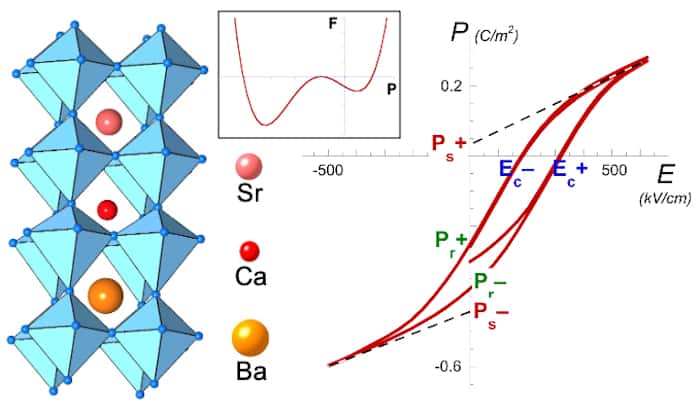
Ferroelectrics usually have two stable states with two equal and opposite electric polarizations. A team of researchers led by University of North Florida’s Maitri Warusawithana has now discovered a completely new phenomenon, however, in which there are two unequal stable polarization states. They found this asymmetric ferroelectricity, as they have dubbed it, in engineered crystals made from oxide heterostructures with three atomically-thin molecular components stacked on top of each other.

Breaking inversion symmetry

The researchers observed the new effect by arranging the stacking order of the molecular layers in a way that breaks inversion symmetry. While the high-temperature crystal structure of any naturally occurring ferroelectric preserves inversion symmetry – the coordinates of the crystal lattice are unchanged when reflected over a symmetry centre – the new engineered crystals break inversion symmetry at all temperatures.

“Breaking inversion symmetry is a necessary condition for electronic polarization,” Warusawithana tells Physics World. “We find that these crystals, by-design, are polarized even at high temperatures. As the temperature is lowered, our electrical measurements reveal that they display an unusual bistable response with two unequal polarization states – an asymmetric response governed by their built-in lack of symmetry at high temperatures.”

asymmetric ferroelectricity

Symmetry is a very important concept in physics and is a fundamental way of expressing its laws since it is related to the conservation of quantities such as energy, momentum and charge. Symmetry breaking is equally as important though and can make a system more complex. An everyday example of symmetry breaking is water, which looks the same in all directions in its liquid state but the same in only six directions when it undergoes a phase transition and becomes a snowflake.

In their experiments, Warusawithana and colleagues introduced strain into a “superlattice” made of stacked dielectric and ferroelectric titanate phases of CaTiO3 (CTO), SrTiO3 (STO), and BaTiO3 (BTO). In their bulk form these materials all have different lattice constants (the physical dimensions of unit cells in a crystal lattice) and the sequence in which they are stacked controls the symmetry of the strain field along the stacking direction. This leads to an asymmetric energy versus electrical polarization relation.

A different class of material

The researchers monitored the strain in their superlattice using X-ray diffraction and found that it causes the different phases in the system to be clamped in-plane to the lattice constant of an underlying substrate. This produces changes to the out-of-plane lattice constant of each constituent phase, which is what creates a broken inversion symmetry in the stacking direction, they explain. Indeed, both the degree and direction of the polarization asymmetry in these artificial crystals can be tuned by the stacking architecture of the molecular components.

“The new asymmetric ferroelectricity that we have observed describes a different class of material, which may have unexpected applications,” they say. “We hope this work will trigger further experimental and theoretical investigations that will not only lead to a quantum understanding of this asymmetric state but also harness the potential of symmetry breaking at the atomic scale to obtain nanostructured materials with tailored electronic properties by design.”

The new discovery is detailed in Physical Review B.

Research by women shared less than work by male colleagues, study finds

Female academics are less successful at disseminating their research online according to an analysis of the activity of over half a million scientists. The imbalance, the authors of the study suggest, is probably due to women doing less self-promotion as well as biased perceptions of the quality of their work.

Led by network and data scientist Emőke-Ágnes Horvát from Northwestern University in the US, the study examined the gender of scientists who had at least one research article shared online in 2012 according to Altmetric, which tracks mentions of journal papers across social media, news sites, blogs and other sites. Overall, the authors found that less than a third (28.6%) of the 537,486 scientists whose articles were mentioned online in 2012 were women.

The imbalance in the recognition of the work done by female scientists versus male scientists is still an issue

Emőke-Ágnes Horvát

In physics, women accounted for just 16% of authors whose work was disseminated online. Mathematics, astronomy, engineering and computer science did not fare much better, with female representation ranging from 17 to 19%. Psychology almost reached parity, with women accounting for 47% of scientists whose work was mentioned online.

To take into account gender differences across  scientific disciplines, the authors then compared online dissemination with the proportions of men and women who had papers indexed in Clarivate Analytics’ Web of Science in 2012. But even once publication activity was factored in, the online representation of women was still lower than expected in all research areas.

Women were most under-represented online in chemistry, biological sciences and geosciences – being at least 7% lower than expected based on publication activity. In physics, the difference between the percentage of female authors tracked on Altmetric and listed in Web of Science was 5.2%. Online representation was best in computer science with only a 1.6% difference between article mentions and publication trends.

Biased perceptions

The researchers also analysed authors’ academic networks and the scientific impact of their work in the five years prior to 2012. They found that for men, scientific impact, “social capital” of co-authorship networks, and collaborations with both men and women was strongly associated with online success.

But no such correlations for success could be found among women. Even in fields with the highest female representation, there were no universally identifiable factors associated with successful online dissemination for women.

Horvát speculates that the imbalance in online success is likely a result of less self-promotion by women and biased perceptions making their research shared less by others. “Men seem to benefit more from traditional measures of success,” Horvát told Physics World, adding that there is a “reinforcement of these dynamics” that makes them succesful when it comes to promoting their research online.

“If we compare the populations who are successful online then we see that the online successful male populations have a higher overlap with the folks that are successful in traditional offline spaces,” she adds.

So while it might be thought that the lack of traditional barriers and gatekeepers online would allow women could be more successful, the research found otherwise. “The imbalance in the recognition of the work done by female scientists versus male scientists is still an issue,” says Horvát, adding that the team is now examining the reasons behind such differences.

Liquid flow is steered on surface inspired by conifer leaves

Inspired by a conifer leaf, researchers at City University of Hong Kong have developed an artificial surface that causes different liquids to flow in different directions, depending on their surface tension. The team, led by Zuankai Wang, based their design on Araucaria leaves, which feature periodic arrangements of tilted structures that resemble the teeth of a ratchet. Their discovery could lead to the development of systems that intelligently guide liquids to precise targets.

When a liquid is deposited onto a surface, it should always move along directions that will reduce its overall surface energy. Normally, these directions are determined by the properties of the surface, not the properties of the liquid.

Theme park visit

When team member Shile Feng visited a theme park in Hong Kong, he became fascinated with the leaves of Araucaria, which is a genus of conifer trees widely found in gardens. He realized that liquids of different surface tension should move in different directions along the leaves.

Araucaria leaves are made up of periodically arranged, millimetre-sized, pointed structures, which Wang and colleagues refer to as ratchets (see figure). Each ratchet tilts towards the tip of the leaf. While the upper surfaces of these ratchets are relatively flat, the lower surfaces are curved, both in the transverse and longitudinal directions.

Without the ratchets, a liquid droplet placed onto a needle-shaped leaf would minimize its energy by moving towards the tip. The team found that that if a liquid with high surface tension (such as water) is placed onto an Araucaria leaf, capillary action – whereby a combination of surface tension and adhesion draws certain liquids through narrow spaces – causes the liquid to move away from the tip.

The researchers found that water droplets became pinned at the tips of single ratchets. Due to capillary action, the droplets then travel through the space between an adjacent ratchet, against the direction of the ratchet tilt. When they repeated the experiment using droplets of ethanol – which has a far lower surface tension than water – the team found that capillary action did not occur, and the liquid instead moved along the ratchet tilting direction towards the tip of the leaves.

Printed polymer

To further study this effect, the team created “Araucaria leaf-inspired surfaces” (ALISs), using a 3D-printed polymer to make surfaces covered in ratchets (see figure). Across several different designs, they varied factors including the sizes, curvatures, and tilting angles of the artificial ratchets, as well as the spacings between their pointed tips.

The team showed that the directions and speeds of liquid transport across the ALISs could be adjusted, using different mixtures of water and ethanol. When a droplet contained less than 10% ethanol, it continued to move away from the ratchet-tilting direction; but a droplet with over 40% ethanol, moved towards it. In between these concentrations, the mixture moved in both directions at the same time.

With further improvements, the researchers say that ALIS systems could achieve the intelligent, long-distance transport of liquids to target destinations. This could present new opportunities for applications including microfluidics, heat transfer, and the smart sorting of liquids.

The surface is described in Science.

Free and open-source software is driving physics forwards

In this episode of the Physics World Stories podcast you will hear from scientists and software engineers at the vanguard of developing free and open-source software for physics research. Guests talk about the role of open software in astronomical imaging, the search for dark matter, medical physics and other fields. Software also plays a big role in the wider open-science movement but there are ongoing debates around how to provide suitable recognition to software developers who have contributed to scientific breakthroughs.

Featuring the following guests:

  • Kirstie Whitaker, director of the Tools, Practices and Systems research programme at the Alan Turing Institute in London
  • Tim Smith, head of collaboration, devices and applications group at CERN
  • Katie Bouman – computer scientist at Caltech, whose algorithms helped to transform data from the Event Horizon Telescope into the first ever image of a black hole
  • Suchita Kulkarni, a particle physicist at the University of Graz, Austria
  • Juanjo Bazán, an astrophysicist from the Center for Energy, Environmental and Technological Research in Madrid, Spain.

Find out more by reading “Standing on the shoulders of programmers: the power of free and open-source software“, originally published in the September issue of Physics World.

Ask me anything: Joanne O’Meara – ‘there is nothing better than sharing your passion for science and seeing it ignite in someone else’

What skills do you use every day in your job?

Communication is very important. I do a lot of outreach with different groups from little schoolchildren to the general public, so knowing how to modify what you’re saying for the target audience is really important, as is knowing how to make connections with them. Also, I don’t know if this is a skill, but in my teaching work empathy is hugely important for connecting with my students. Time management is also essential for organizing what I’m doing in my daily life.

What do you like best and least about your job?

What I like best is interacting with my students and doing outreach with the community. There is nothing better than sharing your passion for science and seeing it ignite in someone else. That is truly the best part of the job. The thing that I like least about my job is anything oriented towards administration – the endless forms and paperwork that need to be done in the university setting. That’s probably a common answer among academics.

What do you know today, that you wish you knew when you were starting out in your career?

You shouldn’t be afraid to try something new, and be open to opportunities that come along. I was trained as a medical physicist, but I’ve done research relating to a wide range of different fields, from veterinary sciences to planetary exploration. You can really benefit from just being open to ideas and being ready to jump into something, even if it’s a bit outside your comfort zone. The amazing thing about physics is that it applies to so many different things and has such scope, so you never know where it’s going to take you. That’s what makes careers in physics so interesting and ever‑changing.

Moiré superlattice makes magic-angle laser

A team of researchers from Peking University in China has fabricated an optical analogue of “magic-angle” graphene bilayers in a photonic nanocrystal. They have used the structure to create a completely new type of highly-efficient nanolaser.

Graphene is a flat crystal of carbon just one atom thick. When two such sheets are placed on top of each other with a small angle misalignment, they form a Moiré superlattice. At a twist angle of 1.08°, the material becomes highly correlated and begins to show properties such as superconductivity at low temperatures.

At this so-called magic angle, the way in which electrons move in the two coupled sheets changes because they are now forced to organize themselves at the same energy. This leads to “flat” electronic bands, in which electron states have exactly the same energy despite having different velocities.

This flat band state makes an electron dispersionless – that is, its kinetic energy is completely suppressed and it cannot move in the Moiré lattice. The result is that electrons slow down almost to a halt and become localized at specific positions along the coupled sheets, where they can strongly interact with one another. This is the effect that gives rise to the abovementioned superconductivity, as well as producing many exotic and unexpected phenomena such as correlated insulator states and orbital magnetism.

Stopped-light nanolasing

Nanolasers are key to developing integrated photonics. They work by confining light in a nanocavity and emitting coherent light within a very narrow spectral range through optical amplification, after passing through the cavity multiple times to increase its gain.

Researchers have designed many nanolaser schemes over the years, with very different optical cavity designs, including nanodisc lasers, nanowire lasers, plasmonic nanolasers and photonic crystal nanolasers. However, the cavities of these nanolasers require materials with highly differing properties or disorder/defects to localize a light field.

The laser developed by Ren-Min Ma and colleagues works in a very different way. The new device makes use of dispersionless light stopping in an optical magic-angle graphene-like lattice of nanoholes in a semiconductor membrane. The membrane consists of InGaAsP multi-quantum wells, which act as the active gain medium.

No need for a “cavity”

The researchers introduced two graphene-like photonic crystals into the same semiconductor membrane. When they twisted one with respect to the other at an angle of 2.65°, they found that the coupling between the two photonic crystals created a completely flat-band dispersion, which stops and localizes light – just like magic-angle twisted graphene. This effect does away with the need for a conventional laser cavity.

Ma and colleagues optically pumped their laser to induce gain in the structure. They say they unequivocally observed lasing at around 1.5 µm, a wavelength that is important for telecommunications applications.

A completely new design for nanolasers

As well as representing a completely new design of nanolaser, the device also has many advantageous properties. For one, it has a threshold of only 0.037 mW in pump power. This is much lower than nanodisc lasers, nanowire lasers or plasmonic nanolasers and is on a par with state-of-the-art photonic crystal defect nanolasers made from the same gain materials. It also boosts a higher “quality factor over mode volume” (a figure of merit usually used to characterize laser cavity quality) compared with the types of lasers mentioned above. Indeed, at more than 400 000, its quality factor is among the highest of all kinds of nanolaser cavities, says Ma.

“Our scheme provides a novel flexible and robust platform to construct high-quality nanocavities for lasers, nanoLEDs, nonlinear optics and cavity quantum electrodynamics,” he adds. “It could be used in applications in integrated photonics, near-field spectroscopy and sensing.”

The researchers say that they will now be studying the exotic light–matter interaction in their new platform. “We will also be pushing forward applications for the device,” Ma tells Physics World.

The new laser is detailed in Nature Nanotechnology.

Head-mounted magnetic device shrinks brain tumour

A team of US-based researchers has used an innovative head-mounted device to shrink a brain tumour – potentially paving the way for a powerful new non-invasive therapy for glioblastoma.

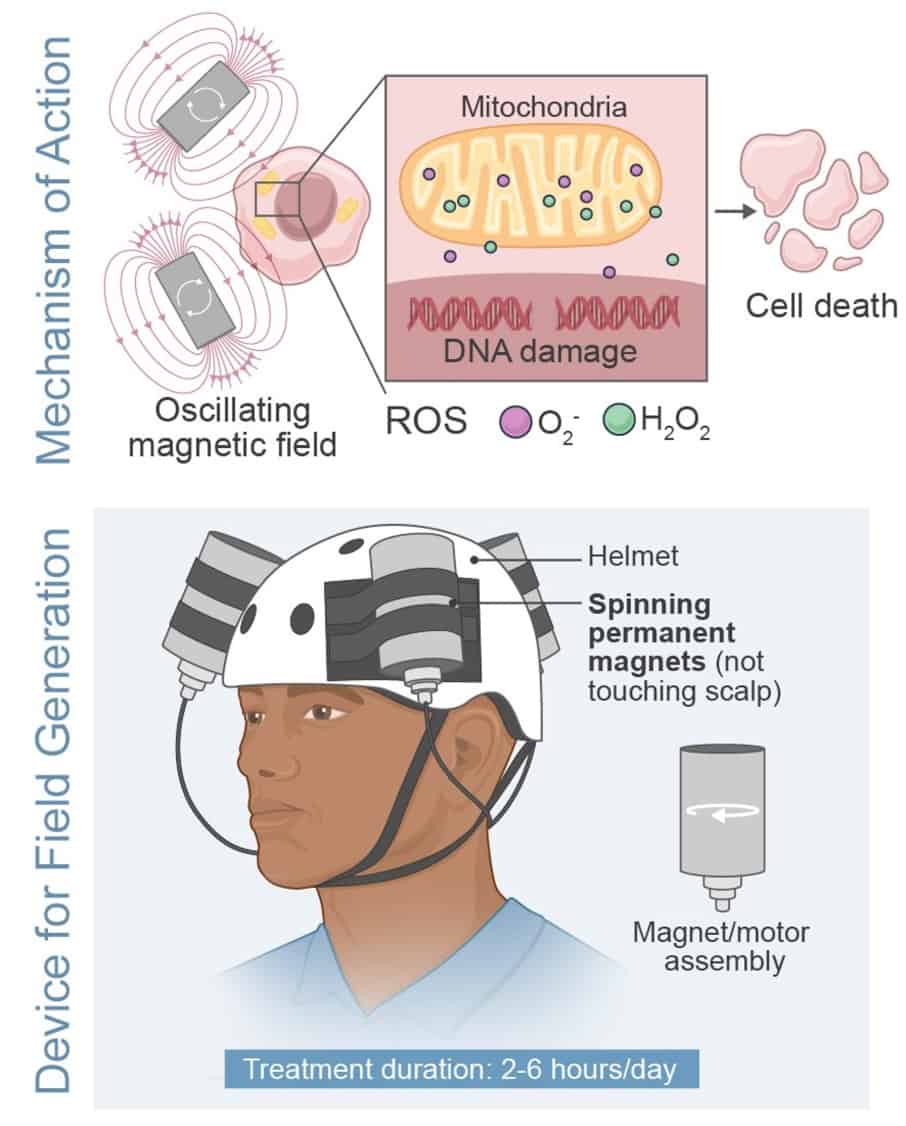
In recent studies, the team – which includes researchers based at the Peak Center for Brain and Pituitary Tumor Treatment and Research at Houston Methodist Neurological Institute – found that the oscillating magnetic field-generating device, dubbed an “oncomagnetic device”, was able to rapidly kill glioblastoma cells in culture and shrink human glioblastoma tumours implanted in mice, prolonging their survival. The device was also used to shrink an end-stage recurrent glioblastoma in a patient without access to any other approved treatment option. The researchers describe the results of this case study in Frontiers in Oncology.

As co-author Santosh Helekar from Houston Methodist Research Institute explains, the portable, wearable device consists of “strong permanent magnets rapidly spun by high-speed electric motors, whose rotation and timing are controlled by a programmable microcontroller operated by a rechargeable battery”.  The magnet and motor assemblies are housed in vibration-, sound- and heat-insulated enclosures mounted on a helmet worn by the patient. A treatment-specific pattern of rotation frequencies and timings is then used to stimulate the brain to treat glioblastoma.

Glioblastoma is the most common cancer of the brain. Helekar observes that advances in its treatment have prolonged the median survival of patients newly diagnosed with the disease only slightly – from nine months four decades ago to “about 15 to 20 months today”.

Promisingly, this single-patient case report demonstrated that a month-long course of oncomagnetic treatment – during which the oscillating magnetic field was applied for two hours, up to three times a day on weekdays – reduced the volume of end-stage recurrent glioblastoma by more than 30%.

Helekar notes that the new technique is currently being used in both research and clinical settings under the auspices of an ongoing research project supported by the Translational Research Initiative of the Houston Methodist Research Institute.

Oncomagnetic device’s proposed mechanism of action

“Our recently published laboratory research findings show that the oncomagnetic device kills glioblastoma and other cancer cells in culture by increasing reactive oxygen species [ROS] in the mitochondria and cytoplasm of these cells, while sparing non-cancerous cells, such as neurons, astrocytes and bronchial epithelial cells,” Helekar explains.

“We hypothesize that the increase in reactive oxygen species is at least in part due to magnetically induced disruption of the electron flow in the mitochondrial electron transport chain,” he continues. “The rotating magnetic fields influence the spins of unpaired electrons exchanged by free radical intermediates in the chemical reactions taking part in the unmovable transmembrane protein complexes of the electron transport chain. Confirmation of some of the predictions of this hypothesis are going to be published shortly.”

Next steps

One key advantage of the new device is that, in contrast with existing treatments for glioblastoma, it does not have any known serious side effects. Moreover, it does not involve drug treatment nor require shaving of the head.

“The total duration of daily treatment on weekdays is only up to six hours,” Helekar says. “It is likely to be much less expensive because of the low cost and simplicity of the device. The device is very easy and convenient to use because it simply involves the wearing of a helmet up to three times a day.”

Moving forward, the team is currently undertaking laboratory-based preclinical studies of the device to test its biophysical, cellular and molecular mechanisms of action on cells in culture, as well as its safety and efficacy in mouse models of glioblastoma.

“With David Baskin, Peak Center director and vice-chair of neurosurgery as the principal investigator, we are also continuing the FDA-approved compassionate use treatment of patients with end-stage recurrent glioblastoma, like that reported in the recently published case report,” says Helekar. “Our plans are to obtain regulatory approval for a pilot clinical trial to test the safety and efficacy of the device for the treatment of glioblastoma.  Furthermore, we plan to collaborate with other institutions nationally and internationally to conduct similar trials in other cancers.”

Coughed particles float for longer in cold air, study suggests

When the temperature drops, turbulent puffs caused by coughs and sneezes become more buoyant and travel further and last longer, scientists in Japan and Italy have discovered. The researchers say the results of their modelling study could help improve our understanding of the airborne transmission of viruses like SARS-CoV-2.

A turbulent puff occurs when a mass of fluid is ejected from a localized source. In an undisturbed environment, the cloud of fluid – the puff – moves freely and evolves over time. Puffs are important in environmental and health sciences, chemistry, and other fields. How they travel and change over time has implications for the dispersal of pollutants, such as those from chimneys, and the transmission of disease droplets in coughs, for example.

Despite their importance, current theory on puff dynamics is based on work conducted almost 50 years ago, in the 1970s. But that work only focuses on the large-scale dynamics of the puff, such as how fast it moves and its size. It provides scaling laws that explain how a puff increases in size and slows down over time. It does not, however, consider the small-scale dynamics of the turbulent fluctuations inside the puff, and our understanding of these remains elusive.

Complex characteristics

Turbulence in puffs has more complex characteristics than turbulence in continuous ejections of gas or liquid, making it more challenging to study, explains Marco Rosti, an expert in fluid dynamics at the Okinawa Institute of Science and Technology Graduate University in Japan. “But it’s of vital importance – especially right now for understanding airborne transmission of viruses like SARS-CoV-2,” he adds.

To fill in the gaps in the previous theory, Rosti and Andrea Mazzino, a physicist at the University of Genoa in Italy, developed a mathematical model that includes the small-scale structure of turbulence fluctuations in a puff. Their model looked at how both the small-scale and large-scale dynamics of a puff change over time, and how this is affected by temperature, humidity and velocity fluctuations. The researchers used a supercomputer to verify their models against state-of-the-art numerical simulations that could resolve the behaviour of puffs at the large-scale and the small-scale run. They report their results in Physical Review Letters.

Rosti and Mazzino initially found that their results fitted with the previous model of puff dynamics, with turbulence in the puff dictating how it behaved. Over time the puffs expanded and slowed down in a predictable way that was linked to their initial speed, size (radius) and fluid density. But they discovered that if the environment cooled these scaling laws changed, as the temperature difference between the warm puff and the cooler ambient air increased.

Buoyancy matters

At cooler temperatures buoyancy starts to play a role in puff dynamics, their results show. The gas or liquid in the puff is significantly warmer and therefore less dense than the environment. Because of this the puffs rise higher, last longer and travel further. “The effect of buoyancy was initially very unexpected. It’s a completely new addition to the theory of turbulent puffs,” says Rosti.

These findings could improve our understanding and modelling of the airborne transmission of viruses and how it changes with environmental conditions. The researchers write that they expect their results to have “a profound impact on developing evaporation models for virus-containing droplets carried by a turbulent puff, with benefits to the comprehension of the airborne route of virus contagion”.

“How fast the droplets evaporate – and therefore how small they are – depends on turbulence, which in turn is affected by the humidity and temperature of the surroundings,” explains Rosti. “We can now start to take these differences in environmental conditions, and how they affect turbulence, into consideration when studying airborne viral transmission.”

Rosti and Mazzino now plan to study how puffs behave when made of more complex non-Newtonian fluids. “For COVID, this could be useful for studying sneezes, where non-Newtonian fluids like saliva and mucus are forcefully expelled,” explains Rosti.

Nobel-prize-winning astronomer Antony Hewish dies aged 97

The British Nobel-prize-winning astronomer Antony Hewish has died at the age of 97. He was awarded one half of the 1974 Nobel Prize for Physics for his research in radio astrophysics and his “decisive role in the discovery of pulsars”. He shared the other half with Martin Ryle who bagged the award for the invention of the “aperture synthesis” – a type of interferometry that mixes signals from a collection of telescopes to produce images having the same angular resolution as an instrument the size of the entire collection.

Hewish was born in Fowey, Cornwall, on 11 May 1924 and went to the University of Cambridge in 1942 before joining the war effort working at the Royal Air force Establishment in Farnborough, although he was seconded to the Telecommunications Research Establishment in Malvern working on airborne radar-countermeasure devices. It was at Malvern where he first met Ryle.

Returning to Cambridge in 1946, he graduated two years later and in 1952 was awarded a PhD in physics. He remained at Cambridge throughout his career, becoming head of the Cambridge radio-astronomy group in 1977 and head of the Mullard Radio Astronomy Observatory from 1982 to 1988.

A ‘scruff signal

As part of the search for mysterious sources of radio waves known as quasars, in the mid-1960s Hewish designed and constructed the Interplanetary Scintillation Array at Mullard. The array was built on a patch of land two-and-a-half times the size of a football pitch a collection of around 4000 dipole antennas that operated at a radio frequency of 81.5 MHz. Taking around two years to build, it was initially operated by Jocelyn Bell Burnell, who was doing a PhD under Hewish’s supervision.

In the autumn of 1967 Bell Burnell noticed a 0.5 cm-long “scruff” signal showing a series of regular peaks in luminosity. Hewish thought that it may have been a radio flare star – or the product of humans or even aliens – and it was dubbed “LGM-1” for Little Green Man. Yet further observations revealed that it had a pulsed nature and turned out to be the first observation of a pulsar – a rotating neutron star that emits a regular ticking signal of radio waves.

In January 1968 the team submitted a paper about the work – “Observation of a rapidly pulsating radio source” – to Nature (217 709). For the discovery, Hewish was awarded the Nobel prize in 1974, although many felt that Bell Burnell should also have been recognized – an omission that Bell Burnell herself attributes to being a student at the time.

Hewish enjoyed listening to music and sailing and during his undergraduate days was a keen rower. He died on 13 September.

Copyright © 2026 by IOP Publishing Ltd and individual contributors