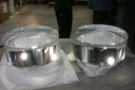
LIGO mirrors have been cooled to near their quantum ground state

LIGO is designed to detect gravitational waves, but it is also proving to be a fantastic laboratory for pushing the limits of quantum physics. Now, an international team of researchers has cooled the interferometers’ large mirrors close to their quantum ground state. By cooling objects massive enough to potentially feel a detectable gravitational force, the researchers hope to open a new window into gravity’s possible effects on quantum mechanics. The work could also potentially lead to future enhancements in the sensitivity of LIGO to gravitational waves.

The two LIGO observatories (one in Louisiana and the other in Washington state) are famous for their pioneering detection of gravitational waves. In 2015, within days of being switched on, they spotted a signal from merging pair of black holes. Since then, LIGO has detected dozens of black-hole mergers and other events and has been joined in its search by similar instruments in Italy and Japan

Each LIGO detector is laser interferometer with arms 4 km long. Gravitational waves are ripples in space–time that change the relative path lengths in the arms of an interferometer, creating a tiny optical signal. The interferometers must have incredibly low noise to see these signals, which makes them great places to study quantum physics on a macroscopic scale.

Kilograms instead of nanograms

Elsewhere, several groups have published work describing the laser cooling of macroscopic oscillators to their motional ground states, but these have involved trapped objects on the nanogram or picogram scales. In this latest work at LIGO, researchers have looked at a composite object comprising four of an interferometer’s 40 kg mirrors, which together behave as an oscillator with a mass of 10 kg.

Laser cooling would not work for LIGO’s mirrors because the huge optical power required to trap such large objects would itself induce heating. Moreover, the mirrors’ low resonant frequencies would render laser cooling inefficient.

Instead, during what LIGO member Evan Hall of the Massachusetts Institute of Technology (MIT) in the US describes as “some extra time with the instrument when LIGO was on but not actively taking data”, researchers implemented a feedback cooling protocol. They measured the displacement of a mirror from sources such as the radiation pressure from the interferometer laser, before calculating the exact force needed to suppress these oscillations. This force was applied through the silica fibres to keep the mirror almost completely still.

Heisenberg compliant

As radiation pressure comprises the recoil from a stream of photons, applying active feedback to cancel this recoil might seem to involve violating Heisenberg’s uncertainty principle — which forbids knowing both the position and momentum of a particle simultaneously. “It’s not something physicists used to believe was possible 20 years ago,” explains Hall’s MIT colleague Vivishek Sudhir.

The key to experimental success was that the researchers could calculate the force from any given photon by measuring just its phase on impact: “You’ve got a complete record of all the disturbance caused on the mirror, and at that point nothing prevents you from using feedback to suppress the total motion of the mirror,” says Sudhir.  This allowed the researchers to cool the mirror from room temperature to 77 nK – which is almost at its motional quantum ground state.

The team now wants to push towards even colder temperatures. “The low hanging fruit in our experiment is to find what we can say about extraneous sources of decoherence that might prevent extremely large objects from being in pure quantum states,” Sudhir says.

Some theoreticians such as Roger Penrose have proposed mechanisms whereby gravitational fields lead to the collapse of quantum states: “One way to test [collapse theories] would be to have a massive system prepared in a pure quantum state, expose it to a gravitational field and see whether it decoheres,” says Sudhir; “With our work, it becomes possible to think of an experiment where you have an object in a pure, or at least reasonably pure quantum state, which is still massive enough to respond appreciably to gravity.”

Beyond this, he says, it might be possible to enhance the sensitivity of LIGO to gravitational waves, for example by placing the mirrors in entangled states. “It is not out of the question, but not any time soon.”

“Very cool”

“I think it’s a very cool [experiment],” says Hendrik Ulbricht of the UK’s University of Southampton; “The LIGO consortium have really studied this system over such a long period of time and they have such a good understanding of this experimental system and how it works.” He is “struggling”, however, with the idea that the system will be sensitive to gravitational effects on quantum mechanics: “If you want to look at quantum evolution, it is a dynamical measurement,” he says; “You need a system that is evolving according to quantum mechanics, and not according to the feedback you’re doing.”

Markus Aspelmeyer of the University of Vienna, whose group is testing for deviations from expected quantum behaviour in increasingly large objects – is more receptive to the notion of quantum behaviour being visible with the feedback switched on. “You constantly measure the system,” he says “The information you get you compare with a model of the system; the model is actually a stochastic Schrödinger equation.” Any deviations from the behaviour predicted by the Schrödinger equation should, therefore, be detectable immediately. He concludes that “it would be so cool to finally lay to rest all these collapse theories”.

The research is described in Science

James Peebles: a life in cosmology

How has life changed since you won the 2019 Nobel Prize for Physics?

When I got the call from Stockholm, they said that my life will change forever. I am rather unnerved that many people now consider me a god-like figure and that I somehow know everything. I receive many messages from people insisting that their situation could be improved if only I would give attention to their new idea. Maybe among all these theories there are some that are interesting, but who has the time to look?

Throughout your career, you have contributed enormously to several areas of cosmology including the big bang theory, but you dislike the term. Why is that?

The problem I have is that a “bang” connotes an event in space–time. It occurs at a place, at a time. Yet the universe has no special place. There are galaxies everywhere that we can observe. There is no place or time involved, no beginning of time anyway. Instead, this is a theory of what happened as the universe evolved from a dense, hot early state. We do not know with any assurance what the universe was doing before it was expanding.

My new book is an attempt to see the commonality around science, sociology and philosophy

So why then do you still use the term “big bang”?

The name is so embedded in our consciousness that I think there is no chance of changing it. No-one ever said science is logical. Oh, everyone says science is logical, but it’s not true. After all, it is done by people and people are notoriously illogical.

What do you think of current ideas about what the universe was doing before it started expanding?

The standard thinking is that cosmic inflation – a period of accelerated expansion – happened during the universe’s earliest stages. But I believe we need alternative theories about what the universe was doing before it was expanding. In my opinion, inflation is given more weight than it deserves because we have precious little evidence that something like inflation happened, so we should treat it with caution, and we should pay attention to alternative pictures. One is Paul Steinhardt’s ekpyrotic universe, which considers a cyclic universe: expansion, regeneration and expansion again, maybe repeating indefinitely.

If the BICEP2 team’s 2014 detection of gravitational waves had turned out to be correct, would that have convinced you of inflation?

Perhaps not totally convinced, but it would have made a very good case. I am not arguing against inflation, I am only saying we must be cautious because we don’t have a lot of evidence. And in physics evidence is the name of the game.

What do you say to people who believe that disagreement among scientists means that science is not to be trusted?

I think that scientists by and large tend to overestimate the power of their theories. On the other hand, it’s difficult to underestimate them. My favourite example is the mobile phone. It’s an object I hate but you must pause to consider the knowledge of physics that went into its design – it is just gorgeous. How could you distrust science if it could give you such a thing?

On the other hand, although we are right to celebrate the power of science, we should more commonly recognize that all our theories are incomplete.

Does that include Λ-CDM – the current cosmological model?

Yes, absolutely. Λ-CDM is incomplete. We should admit more clearly that although our theories are powerful, they are limited and they are incomplete. That, of course, is why we still have jobs.

Do you think our theories will ever be complete?

No, and that is not a popular opinion. My colleague Steven Weinberg, who wrote the book Dreams of a Final Theory, does not like it when I say that we will never know if we have a final theory because knowledge that a theory is good depends on empirical evidence. And when it comes to the economics, we cannot afford to fund arbitrarily complicated tests of arbitrarily complicated theories.

Last year you wrote Cosmology’s Century: an Inside History of Our Modern Understanding of the Universe. What makes it different from other books of its type?

It’s different for one reason: it is my personal experience. The book is not a popular exposition, which I regret, but I wanted to get the story straight, so I had to be technical. I consider cosmology a good example of how natural science is done because it is relatively simple compared, say, to quantum physics.

I have just finished another book, which is closer to popular science.

Can you tell us more about your new book?

In the late 20th century some sociologists took the position that physical science is a social construction, made up by authority figures who impose their will on students and require students to suspend disbelief and to accept their dogma. Physicists, naturally, were incensed at this proposal. The result is a very serious disconnect between sociology and physical science.

There is a real role for sociology of science, and there is a big role for philosophy in its connection to science, so my new book is an attempt to see the commonality around science, sociology and philosophy. The science, you will not be surprised to learn, is that of cosmology. So I attempted to interweave thinking by sociologists about the way we do science, thinking from philosophers as to what they consider to be science, and how science is really done. It all fascinated me.

You were part of a team in the 1960s, led by Bob Dicke, searching for evidence of a cosmic microwave background. What was the feeling on that day when it was announced by another group – Arno Penzias and Robert Wilson?

I have been asked many times whether I was chagrined at being scooped but the reaction in our group was one of excitement, not chagrin. Here was evidence of something new and for me something to analyse, so it was exciting!

Do you believe that Dicke should have shared the 1978 Nobel Prize for Physics with Penzias and Wilson?

I have never made a secret of it that I was annoyed at the decision to exclude Dicke. The strange thing about that year’s prize was it artificially joined two fields, given that Penzias and Wilson shared the award with Pyotr Kapitza for his work in low-temperature physics. The obvious choice was Penzias, Wilson and Dicke.

When I answered the phone call from Stockholm in 2019 concerning my own Nobel prize, it began very formally: “Are you Professor Phillip James Edwin Peebles?” I said, “Yes,” to which they responded: “We have voted to award you the Nobel Prize for Physics. Do you accept?” At that point I could have been tempted to say, “But first let us discuss the omission of Bob Dicke.” But I did not. I meekly said: “I accept,” and the conversation became a lot more friendly.

Novel sources of tunable laser light

Want to learn more on this subject?

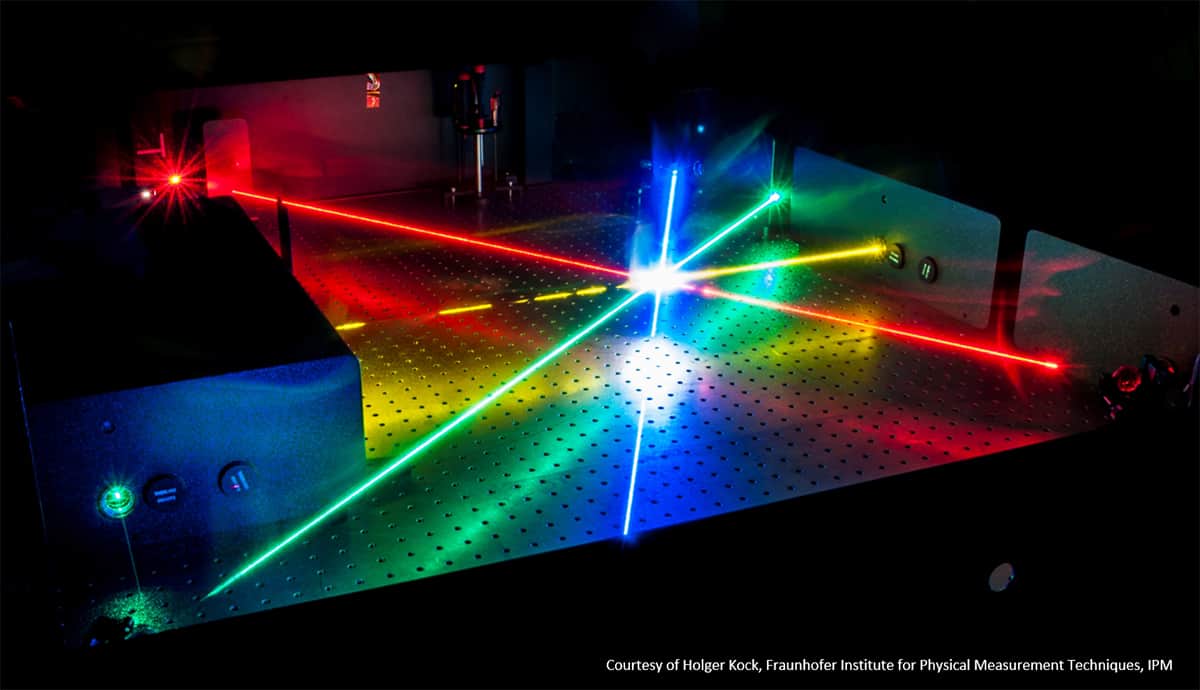
Widely tunable continuous-wave optical parametric oscillators (CW OPOs) are gaining recognition as novel sources of tunable laser light with great potential – not least due to their unprecedented wavelength coverage. Yet, the overall experimental requirements remain often challenging for the performance of turnkey OPO devices.
In this webinar we will discuss the characteristics of state-of- the-art tunable CW OPO designs and describe tuning schemes that have been tailored for applications like colour centre research and other quantum technologies, nanophotonics, holography, high-resolution spectroscopy, and experiments alike. Several recently published studies in these fields will be discussed in an illustrative fashion to showcase the performance of CW OPOs in the real-world laboratory.

Want to learn more on this subject?

Jaroslaw Sperling is global productline sales manager for HÜBNER Photonics. He joined the company in 2016, bringing his passion and experience gained in several sales and marketing-related roles across photonics research and industry. With a background in laser spectroscopy, he holds a PhD in physical chemistry from the University of Vienna, Austria.

Korbinian Hens is a product manager for HÜBNER Photonics. He joined the company in 2015, specializing in terahertz spectroscopy and tunable laser systems based on OPO technology. With a background in laser-induced fluorescence spectroscopy for atmospheric research, he carried out his PhD thesis at the Max Planck Institute for Chemistry in Mainz, Germany.

Ole Peters is applications engineer at HÜBNER Photonics. He joined the company recently and has previous experience in terahertz imaging and spectroscopy systems.

Niklas Waasem is regional sales manager and applications specialist for HÜBNER Photonics. He joined the company in 2014, bringing in profound photonics knowledge gained during his PhD thesis at the Fraunhofer Institute for Physical Measurement Techniques in co-operation with the University of Freiburg, Germany.

Galactic ‘bridges’ could be the largest rotating structures ever discovered

The universe is full of spinning objects. Galaxies, the stars within galaxies, the Earth, the Earth around the Sun, the Moon around the Earth – all rotate around an axis. An international team of astronomers has now added to this list by uncovering evidence that cosmic filaments – tendrils of matter that stretch across hundreds of millions of light years – are also spinning. Rotation on such gigantic scales has never been observed before and the new finding could help explain why galaxies (and indeed every other structure in space) are so prone to rotating.

The origins of cosmic-scale rotation are poorly understood. In the standard model of cosmological structure formation, regions of the early universe with a relatively high matter density grew over time as matter flowed into these denser regions from sparser ones. This type of flow is not, however, associated with rotation (it is curl-free), which means there was no primordial rotation in the early universe. Any rotation we observe today must therefore have been generated as structures formed.

Largest objects known to have angular momentum

One way to understand why this happened is to try to find out where the spinning stops. A team led by Noam Libeskind at the Leibniz Institute for Astrophysics Potsdam (AIP) in Germany set out to do this by investigating whether filaments of galaxies (not just the galaxies themselves) might spin. With lengths in the hundreds of millions of light years and diameters of a few million light years, these filaments are like huge bridges that connect clusters of galaxies to each other, says Peng Wang, a member of the team and lead author of a study published in Nature Astronomy. The filaments also funnel galaxies towards and into the large galactic clusters that sit at their ends.

Previous research had suggested that these clusters might be where spinning ceases, but Libeskind, Wang and colleagues in France, China and Estonia have now turned this idea on its head. “They [galaxies] move on helixes or corkscrew-like orbits, circling around the middle of the filament while travelling along it,” Libeskind explains. “Such a spin has never been seen before on such enormous scales, and the implication is that there must be an as yet unknown physical mechanism responsible for torquing these objects.”

Survey results

The astronomers mapped the motion of galaxies in filaments using data from the Sloan Digital Sky Survey, which recorded the light from hundreds of thousands of galaxies. Since rotation cannot be measured directly on such scales, the astronomers looked for patterns by examining the galaxies’ redshift and blueshift – that is, how quickly the galaxies are moving away from us or towards us.

To do this, they stacked thousands of filaments together and studied the velocity of the galaxies perpendicular to the filaments’ axes. When the majority of galaxies on one side of a filament were redshifted and the majority on the other side were blueshifted, they concluded that the entire filament must be rotating. In some of the filaments they analysed, the velocity of the spin was nearly 100 km/s. From this, the researchers conclude that angular momentum “can be generated on unexpectedly large scale”.

Gravitational effect

Another important finding, Libeskind adds, is that filaments at the end of more massive clumps of galaxies appear to rotate faster. While the full reason for this is unclear, he thinks the relationship between filament rotation and the clusters at either end may indicate a gravitational effect. “It could be that the tidal or gravitational field of these clusters is triggering or somehow causing this spin,” he tells Physics World. “One thing we would like to check in the future is if the galaxies inside the filaments are spinning with the same chirality (‘handedness’) as the filament itself. That would point to a coupling of scales on which spin is generated and endowed that is as yet unknown and could hint towards the origin of cosmic spin in general.”

Physics tracks changes in English dialects, machine learning confused by COVID-19

This episode of the Physics World Weekly podcast features an interview with the physicist James Burridge and the linguist Tamsin Blaxter, who have teamed up to study how local dialects in England have changed during the 20th and 21st centuries. The duo has used probability and statistical physics to chart the evolution of language between two English dialect surveys – one done in the 1950s and the other done in 2016 – and they talk about the factors that change the way we speak.

This podcast also looks at some exciting developments in astronomy that have happened over the past week; and we find out why machine learning algorithms developed to diagnose COVID-19 from chest X-rays are not suitable for clinical use.

How to spark an interest: advice for giving engaging physics presentations to pre-university students

Research may be a mixture of 10% inspiration and 90% perspiration but there is no doubt that it is exciting and rewarding. Sharing the thrill and the intellectual fruits of your work with the next generation of potential physics undergraduates brings its own benefits, not least of which is that it is good fun. Here’s my best advice for how to give an inspiring presentation about physics to school students who are in that all-important 16–18 age range when they may well be deciding whether to study the subject at university.

Your talk

Talks that score highly with pupils are informative and entertaining. Even though your presentation should make links to the exam specification that the students are following (teachers will be happy to advise) they expect that a talk will be different from a lesson. The latter are often presented as logical expositions. However, scientific problems often appear as puzzles and solving a puzzle is an excellent way to stimulate and maintain interest. 

Avoid jargon and acronyms at all costs. Split your story into self-contained chunks rather than one extended narrative. Recapitulate as you go along and keep referring to basic concepts. At the end, summarize the main points and conclusions.

Make sure you prepare thoroughly – even basic definitions of phenomena need rehearsing at least once as they appear in your script. Know your script inside out – ideally your delivery needs to be ad lib.

When you are presenting, try hard to keep eye contact with the audience for as much of the time as possible. Talk to them, not to the slides on the screen. 

Your audience

School or college venues are more intimate than a university lecture hall. Your average audience member will recognize more of what they have already studied than they actually fully understand.

Regularly check your listeners sitting either side of the middle centre of the audience. In my experience, they are usually the ones who will be trying hardest to follow what you are saying. If they look confused you have probably lost most of your audience.

Consider audience participation. It could be as simple as asking them to vote, for example, on which outcome they expect from an experiment. Avoid passing things round as this can be a distraction. Similarly, any handouts are probably best left until the end, otherwise the listeners’ attention is divided.

Your PowerPoint

When composing PowerPoint slides, it is all too easy to put too much information onto each slide as you are by necessity sat close to your computer screen. Check each slide by viewing the screen from about 2.5 m away. Anything unreadable to you at this distance will also be unreadable to your audience when projected onto the average school’s screen. A good rule of thumb is to include no more than 25–30 words per slide.

The type of slide least liked by audiences is a list. So the golden rule is to keep it simple. PowerPoint works best when it adds visual material to punch home what you are saying. Pictures are worth a thousand words and are a genuine visual aid – but do not use clip art just for the sake of having an image. 

Redraw and simplify complex diagrams and graphs from scientific papers. Remove all but essential text. Make sure that important features such as lines on graphs are clearly visible. Always tell an audience what is plotted on each axis. Build up diagrams and formulae one element at a time. An easy way to do this is to compose the last slide in a sequence first. Decide how many steps are needed, and make that number of copies of the last slide, plus an extra. Then edit backwards to the start of the sequence. This ensures that no information or steps are left out. The extra copy of the slide is there in case things go wrong, and can be deleted when you are satisfied with the sequence you have composed.

Keep the slide transitions simple. Cartwheeling text entering stage left is just a distraction. Avoid using the slides as a set of crib sheets for what you want to say. If necessary, use separate notes or the computer screen notes facility in PowerPoint. Insert a blank slide wherever you have something to say and don’t want the audience looking at the last or the next slide.

Don’t just rely on PowerPoint. Holding up a relevant physical object has much more impact. If you plan to do a demonstration, do make sure that it will be easily seen by the audience, and practise it beforehand to make sure it works reliably. Consider designing a demonstration that seems to go wrong in a way that emphasizes the point you are trying to make – this can be a real attention grabber and is likely to be memorable.

Your timing

Unless you invite questions, or encourage audience participation as you go along, 45 minutes is the benchmark. Any more and you will be pushing your audience’s attention span. Experience shows that questions at the end of a talk fill another 10 minutes or so, giving a total time of around one hour.

Giving a talk is a performance, so be a bit larger than life. Dramatic pauses raise expectations. Five seconds may seem like a long silence to you, but it’s not perceived like that by your listeners. Dwell on and talk about a slide for enough time for it to be taken in. Edit your talk in real time rather than rushing to cram it all in. Beware of speeding up as you get more practised at giving the talk.

Your response

Do be tolerant of inexperienced student chairpersons, regarding things like their introductions and votes of thanks. 

Keep notes on what goes down well and what doesn’t (for example, whether the audience laughed at any jokes), and modify your subsequent talks accordingly. Aim to give your talk three or four times a year for at least two years, to make the effort of preparing it worthwhile. Actively seek out opportunities to present. When you feel you have a successful story to tell, why not consider turning it into an article for a magazine such as Physics Review so that it can reach a wider pre-university audience?

Finally, giving talks to young audiences is not something you necessarily learn to do well just by doing it. Feedback on your efforts is vital and should be solicited. You can do this by composing a short e-mail questionnaire and sending it to the organizer of your talk, asking, for example, whether the pace was too slow or too fast, whether the slides were suitable and visible, and whether you could be easily heard. Good luck.

Temporary pacemaker regulates heart rhythm then completely disappears

Dissolving pacemaker

Temporary cardiac pacemakers provide essential pacing for patients with short-term heart rhythm disorders following cardiac surgery or while waiting for a permanent pacemaker. Such devices typically require external hardware with leads inserted through the skin, risking infection and limiting patient mobility. In addition, when the implanted device is no longer needed, its removal risks damage to heart tissue.

To overcome these limitations, researchers in the US have devised an implantable cardiac pacemaker that operates without external leads and completely dissolves in the body after completion of therapy. The device is made from materials that fully resorb through natural biological processes in a time-controlled manner, eliminating the need for surgical removal.

Such a bioresorbable, leadless, cardiac pacemaker could provide postoperative control of heart rate and rhythm without the risks associated with traditional temporary pacing systems. The research team – headed up at Northwestern University and The George Washington University – describe the innovative device in Nature Biotechnology.

Device design

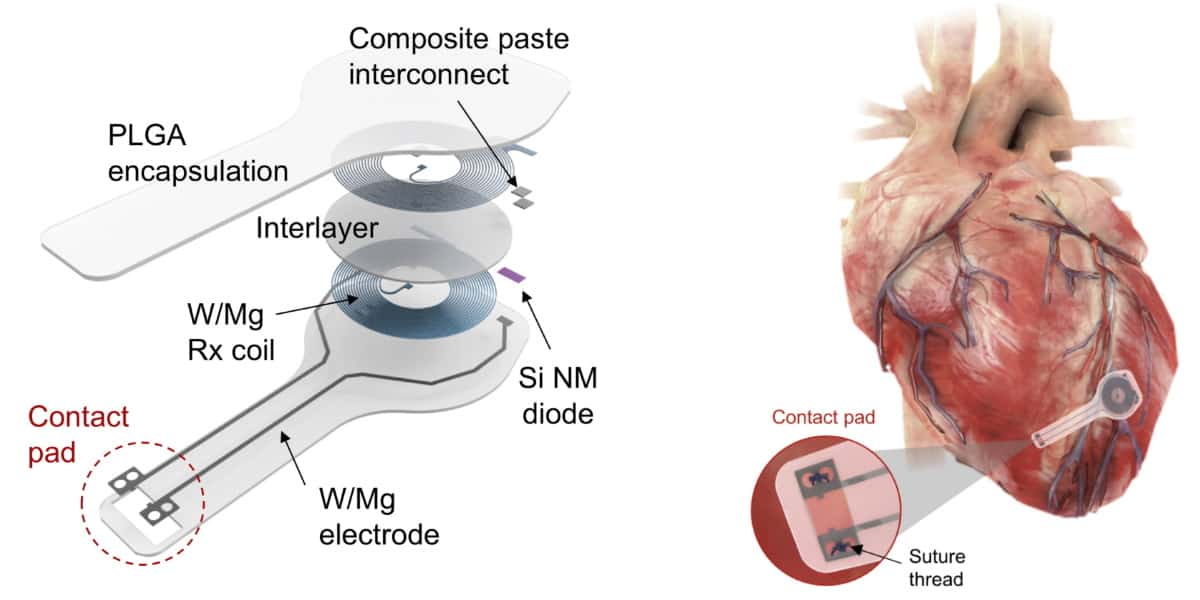
To eliminate the need for batteries and thus miniaturize the device, the researchers used wireless energy transfer to deliver power and control commands to the pacemaker. The device’s power-harvesting receiver comprises an inductive coil made from tungsten-coated magnesium (W/Mg), a radiofrequency PIN diode based on a silicon nanomembrane, and a dielectric interlayer of the biodegradable polymer PLGA. The pacemaker also includes flexible W/Mg extension electrodes connected to dissolvable metallic contact pads, which attach to the myocardium to deliver the electrical stimuli.

Device structure

The entire system is just 16 mm wide and 250 μm thick, and made entirely of bioresorbable materials: PLGA dissolves into its monomers, glycolic and lactic acid, while W/Mg and the silicon nanomembrane degrade into nontoxic products. The flexibility of these materials also enables the device to conform to the curved surface of the heart and adapt to its movements.

“Significant advances in materials science and organ conformal bioelectronics made this work possible,” explains Igor Efimov, who led the study along with John Rogers and Rishi Arora. “Wireless battery-free pacemakers were developed a while ago. But they suffered from mechanical mismatch between the rigid device and soft tissue of a beating heart, which resulted in high mortality of animals and was not easily translatable to humans.”

“The development of soft organ-conformal electronics by Rogers’ group solved this problem,” says Efimov. “The next step was the development of bioresorbable electronics. This was a game changer for many clinical needs of temporary implantable devices.”

Proof of pacing performance

The team first tested the pacemaker on ex vivo mouse and rabbit hearts, using RF power from a nearby transmitting antenna to initiate pacing. Tests in slice of human cardiac tissue also demonstrated successful pacing.

Next, the group used the pacemaker to treat AV block (impaired signal transmission from the atria to the ventricles) in an ex vivo mouse model. Electrocardiogram (ECG) recordings and measurements of optical action potentials confirmed that the device could deliver effective ventricular pacing, driving the rhythm of the heart to treat the AV block.

The researchers also demonstrated in vivo pacing in an adult dog during open-chest surgery. They recorded a maximum pacing distance (between skin and transmission coil) of 17 cm, validating the pacemaker’s capability for long-range wireless energy transfer. These findings suggest that the device can achieve the necessary power transfer for operation in adult human patients.

Lastly, the team surgically implanted biodegradable pacemakers in rats and performed daily pacing trials on awake or lightly sedated animals. Changes in the ECG signal indicated successful ventricular capture. The device successfully performed pacing for four days after implantation, then its performance started to degrade until after six days the pacing failed. The timescales for stable operation and complete bioresorption can be tailored to meet specific clinical requirements. “Devices can be coated with materials that have a slow rate of resorption, which would ‘program’ the lifetime before the device is resorbed,” explains Efimov.

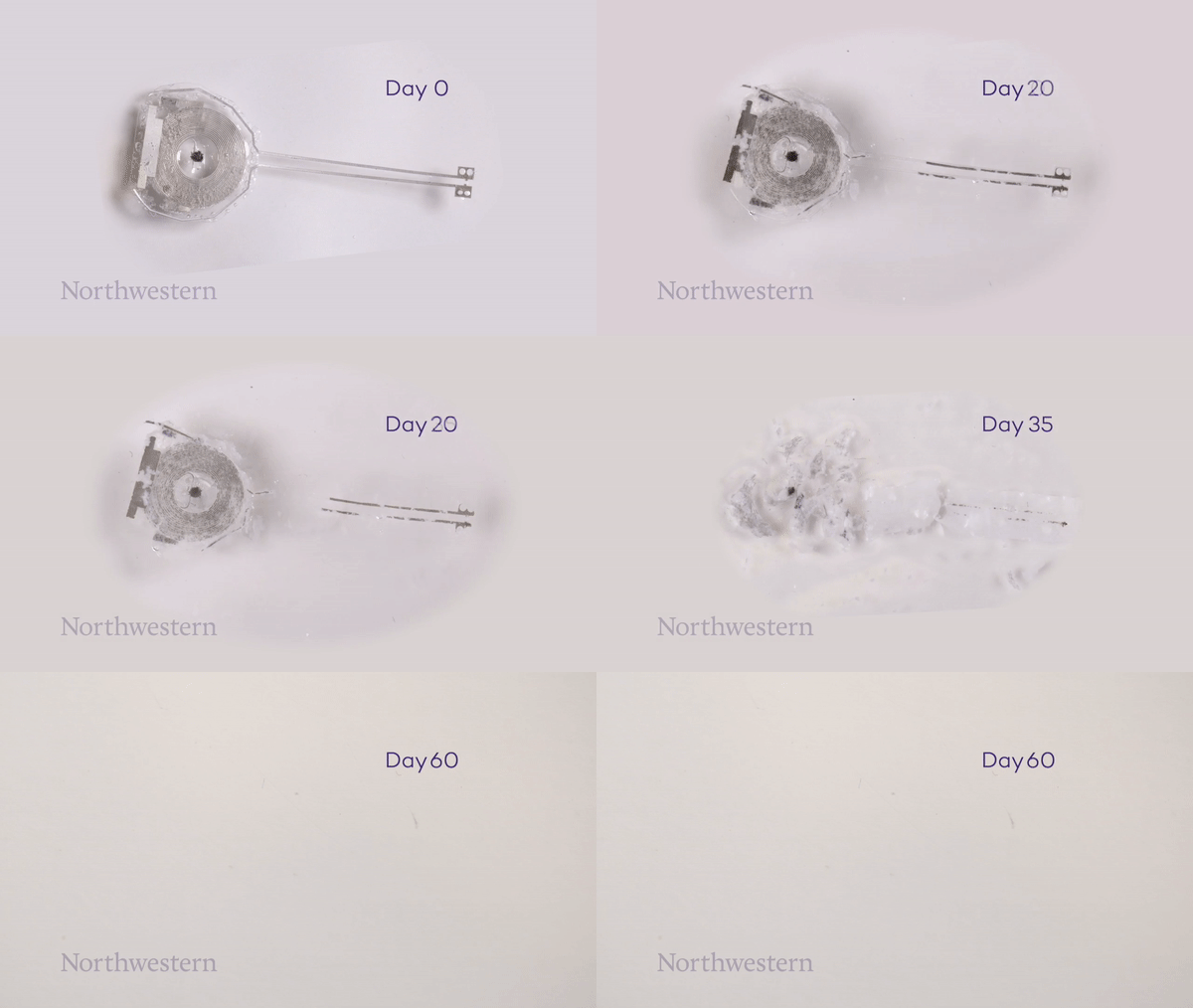
To monitor the bioresorption process, the researchers recorded CT images of the rats over seven weeks. One week after implantation, the pacemaker maintained its shape and contact with the heart. The device then shrank and collapsed over time, largely dissolving within three weeks, with the remaining residues completely disappeared after 12 weeks. They note that the implantation and resorption of the bioresorbable pacemaker did not impact the rats’ natural physiology.

The researchers are now planning to develop bioresorbable pacemakers for paediatric patients with AV block following septal defect repair, who require a temporary pacemaker for several days after surgery. They will also design devices for adult patients who also frequently experience temporary AV block after valve repair.

“A similar approach can used for many other cardiac, neural and muscle applications,” Efimov tells Physics World. “We also believe that this approach can be used to design a temporary defibrillator to treat post-operative atrial fibrillation, which occurs in 30% of CABG [coronary artery bypass graft] patients and after other cardiac surgeries.”

Exploiting dual-energy CT and DirectSPR software to reduce range uncertainty in proton therapy

From collaboration comes innovation: that’s certainly the mantra of an ambitious, multicentre German R&D initiative which is leveraging the cross-disciplinary expertise of academic researchers, clinicians and industry to deliver game-changing advances in the radiation oncology clinic – enhancing the accuracy, safety and tissue-sparing capability of proton therapy systems in the process. The breakthroughs in question stem from the clinical deployment of dual-energy CT (DECT) for proton treatment planning and the application of so-called DirectSPR software1,2 for the more accurate prediction of proton range in the patient’s body. All part of a unifying vision – think translational research meets clinical application – to reimagine the planning, delivery and management of proton treatments tailored to the unique requirements of individual cancer patients.

The clinical roll-out of DirectSPR is being pioneered by a translational team headed by Christian Richter at the Dresden-based OncoRay. The OncoRay researchers work closely on algorithm development and validation with their colleagues at the German Cancer Research Center (DKFZ) in Heidelberg – the two institutes together form the National Center for Radiation Research in Oncology (NCRO) – while industrial support comes from the Cancer Therapy Business Line at Siemens Healthineers.

OncoRay itself is a publicly funded research centre that focuses on translating new technologies and treatment methods in radiation oncology into clinical application, pooling the strengths of its three founding institutions: Carl Gustav Carus University Hospital Dresden, Technische Universität Dresden and the Helmholtz-Zentrum Dresden-Rossendorf. “While OncoRay’s principal driver is to improve treatment efficacy and patient outcomes,” explains Richter, “we also seek partnerships with leading medical technology manufacturers to ensure that our R&D reaches the wider radiation oncology community – with DECT-based DirectSPR a notable success story in both respects.”

Innovation unpacked

If that’s the back-story, what of the specifics underpinning this new paradigm in proton treatment planning – and in particular, the basis for the more accurate predictions of proton range and stopping behaviour in different tissue types? Key to success is the innovative application of DECT technology and its spectral imaging capability to the prediction of proton range for treatment planning. Unlike conventional CT, this imaging modality involves the acquisition of two separate X-ray energy spectra – an approach that, in turn, allows the characterization of tissues exhibiting different attenuation properties at different energies (though, crucially, without exposing patients to a higher X-ray dose).

DirectSPR, meanwhile, is an algorithm for post-processing of DECT images – and specifically the determination of the individual stopping behaviour of protons in different tissue types. At the same time, DirectSPR maximizes the quantitative quality of the stopping information by using sophisticated noise reduction and by tailoring the application to the scanned body region of interest. In this way, DirectSPR makes it possible for medical physicists to better resolve differences in tissue composition across a given patient cohort – as well as in the same patient – and to take these differences into account during treatment planning. (For completeness, SPR is the stopping-power ratio and expresses the energy loss of the protons versus distance travelled through the patient relative to the energy loss in water.)

See the difference

In Spring 2019, Richter and his colleagues at OncoRay became the first team to deploy DECT-based DirectSPR as part of the routine clinical workflow for proton therapy – a key step in the improvement of treatment planning of static tumour sites at University Proton Therapy Dresden (part of Carl Gustav Carus University Hospital). Since then, for more than 300 patients, DECT-based DirectSPR has enabled the Dresden clinic – on a sustained and repeatable basis – to reduce the volume of irradiated healthy tissue surrounding the target volume (the safety margin) by approximately 35% for prostate cancer and brain tumour treatments.

Clinical impact, of course, is defined along multiple coordinates, not least the accuracy of SPR calculations and related proton-range predictions – both of which dictate the safety margin around the tumour and, by extension, the degree of tissue sparing. Thanks to the clinical introduction of DECT-based DirectSPR, OncoRay has realized significant reductions in the uncertainty of its proton-range calculations (now <2%) versus traditional CT-based planning approaches (where uncertainties have been set at 3.5% of total proton range for the past 30 years). The result: proton-range reductions on average of 3.6 mm for pelvic treatments and 2.6 mm for treatments in the head. “For individual brain tumour treatments,” says Richter, “we are therefore able to reduce dose to critical structures like the brain stem by 16% as well as the optic chiasm and optic nerve by 7%, with 4% reduction overall in mean dose to the brain as shown in a representative patient case. That’s relevant progress in minimizing the patient’s risk of post-treatment side-effects.”

Translation in action

The timeline for translation of DirectSPR into a clinical product can be traced back to early 2015, when scientists from OncoRay and the DKFZ began work on the development and optimization of the DirectSPR approach. Their aim: to minimize the uncertainty associated with proton-range predictions in the patient’s tissues and thereby enhance targeting accuracy and dose distribution accuracy for proton treatments. This four-year, NCRO-funded project – carried out in close collaboration with Siemens Healthineers – began with the introduction of DECT for clinical proton therapy planning at University Proton Therapy Dresden in 2015 – a world-first that made it possible to retrospectively evaluate the DirectSPR approach on a growing database of therapeutic DECT patient scans (rather than just using phantoms or computer simulation).

“Even in the formative stages of DirectSPR algorithm development, OncoRay and DKFZ were focused on translational outcomes,” says Richter. The definition of a sophisticated algorithm early on – and especially the subsequent focus on comprehensive stepwise validation in different scenarios (including an anthropomorphic phantom and biological tissues) – was fundamental to successful translation. “This convinced us, the community and the responsible clinicians of the superiority of the approach,” adds Richter. “Siemens Healthineers came on board in 2016, with the early conversations building trust and understanding around our mutual clinical and research goals.”

It was at this point that the collaboration shifted gears into the preclinical product development phase, with OncoRay, DKFZ and Siemens Healthineers working together on optimization and calibration of the DirectSPR algorithm. With the commercial launch of DirectSPR software in spring 2019, Siemens Healthineers now ensures compatibility of DirectSPR across its full portfolio of DECT scanners with dedicated calibrations for each CT model.

The clinical roadmap

In terms of next steps, Richter and colleagues at OncoRay – as well as their industry counterparts at Siemens Healthineers – are focused on accelerating clinical acceptance of DirectSPR within the proton therapy community (see “Proton perspectives: the DirectSPR opportunity”). OncoRay, for its part, maintains bilateral collaborations with many European proton therapy centres and is also active within the European Particle Therapy Network, a subgroup of the European Society for Radiotherapy and Oncology (ESTRO). “A consensus paper is in preparation to define best-practice guidelines and standardization for the clinical implementation of DirectSPR in the proton therapy clinic,” explains Richter. That document, he hopes, will be brought forward during discussions at the upcoming ESTRO workshop on Clinical Translation of CT Innovations in Radiation Oncology.

Meanwhile, the OncoRay and DKFZ teams are already working with Siemens Healthineers to explore new translational pathways, including the use of DECT-based DirectSPR for proton treatment planning on moving targets – for example, tumour sites in the lung and abdomen. “Our task at OncoRay and DKFZ is to support further improvement of DirectSPR for next-generation CT scanners in a radiotherapy setting,” concludes Richter.

Proton perspectives: the DECT-based DirectSPR opportunity

There’s growing clinical appetite to deploy DirectSPR as a core component of the proton therapy workflow. Here Physics World talks to medical physicists at some of the early-adopting proton facilities to assess progress, next steps and anticipated clinical upsides.

Tianyu Zhao, Washington University School of Medicine in St Louis, Missouri

We are recruiting patients into a National Institutes of Health (NIH)-sponsored study, collecting data using DECT scanners to improve estimates of tissue composition accuracy for tumour sites and surrounding organs. The goal: to reduce the discrepancy between the actual dose delivered versus the planned dose in proton therapy. We plan to quantify the accuracy of DirectSPR for mass density and proton SPR predictions by using phantoms scanned with clinical protocols. This site-specific accuracy information will be used to adjust the uncertainty setting in robustness optimization for proton patients scanned with DECT. Ultimately, the hope is that our work will reduce the range uncertainty for protons and lead to better planning quality and fewer dose prediction errors in proton therapy.

Ming Yang, MD Anderson Cancer Center, Houston, Texas

We are currently upgrading our institutional syngo.via server (from Siemens Healthineers) to VB40 – a prerequisite for implementing DirectSPR. Upon completion, we will start the commissioning process as soon as DirectSPR is available to us. Initial priorities will be to test DirectSPR’s compatibility with our existing treatment planning system and to evaluate the uncertainties associated with the software’s estimation of proton stopping power. Personally, I believe DirectSPR will benefit our patient population in multiple ways. One immediate impact will be a reduction in normal tissues receiving high dose close to prescription dose – so a reduction in normal-tissue toxicity. A smaller range uncertainty parameter will also make it easier to achieve a robust treatment plan meeting the planning objectives. Finally, the reduced range uncertainty might also give us more choices of beam angle to take full advantage of the Bragg peak.

Benjamin Ackermann, Heidelberg Ion Beam Therapy Center (HIT), and Friderike Longarino, Heidelberg University Hospital

HIT completed clinical validation of DirectSPR using a free-of-charge test licence – a convenient and low-risk option for clinics interested in finding out more. The validation process included a complete radiotherapy workflow and dosimetric tests in anthropomorphic phantoms, consisting of a multitude of different tissue-equivalent materials. We are now installing the purchased software licence and looking forward to performing the first patient scans using DirectSPR, starting with body regions like the head and pelvis which exhibit little or no intrafractional movement. With DECT scans and DirectSPR image processing, we expect to achieve better SPR predictions and, in turn, better range prediction in ion beam therapy compared to SECT. Another anticipated benefit is a reduction in safety margins for enhanced sparing of healthy tissue from unwanted irradiation.

Sina Mossahebi, Maryland Proton Treatment Center, US

In our initial DirectSPR study, we aim to quantify dose-calculation discrepancies between conventional SECT and DECT in vivo and on patient plans, with the objective of reducing range uncertainty in the planning of intensity-modulated proton therapy (IMPT). Both SECT and DECT scans are acquired from the same patient and used to evaluate dosimetric differences between treatment plans generated on each image set. The primary goal of the study is to quantify and compare the target coverage and dose to organs at risk (OARs) as well as the plan robustness between SECT and DECT scans obtained for patients undergoing IMPT. In addition, we will validate SECT and DECT dose calculations using patient-specific QA, while exploring practical advantages of DECT with respect to target delineation and implants.

Gabriel Fonseca and Frank Verhaegen, Maastro Clinic, The Netherlands

Our evaluation of DirectSPR is proceeding along multiple fronts. Through extensive phantom testing, we have investigated the SPR information used in the dose calculations by the TPS, comparing SPR predictions obtained via the DECT-based DirectSPR and SECT approaches. The former is more accurate, exhibiting differences of less than half of those obtained by SECT. Another focus is the calibration procedure, which will likely require a range of phantom sizes to match variations in patient size – i.e. extra work in the clinic. Although DirectSPR can provide more accurate SPR values, the treatment plan uncertainties depend on several factors. As such, the Maastro team is evaluating the effect of improved SPR maps on robust optimized plans for a cohort of more than 50 patients. In summary: while we expect DirectSPR to yield improved proton range accuracy from 1 mm up to several mm (for some deep-seated tumours), it’s clear that all sources of uncertainty and risk need to be quantified thoroughly prior to routine clinical deployment. Long term, strict QA procedures will need to underpin the clinical workflow.

Ole Nørrevang, Danish Centre for Particle Therapy, Aarhus University Hospital, Denmark

We’re taking a phased approach to the roll-out of DECT-based DirectSPR here in Aarhus. We started out by implementing virtual monoenergetic images and optimizing the use for both organ and target delineation and stopping-power estimation. With DirectSPR software now available to us, our investigations are proceeding on three fronts: validation of the SPR values produced by DirectSPR; studying the effect of reduced range uncertainty in terms of reduced dose to OARs in the brain; and understanding the workflow, patient safety and transition issues associated with the use of SPR images in the treatment planning of brain tumours. Our focus for now is on the treatment of brain tumours, because we can exclude the effects of motion artefacts in the DECT image. Over time, though, we will develop plans to apply DirectSPR for other treatment sites.

Koen Salvo, PARTICLE Proton Therapy Center Leuven, Belgium

We are currently in the process of defining our DECT simulation protocols, with the adult protocols complete and conversations in progress with Siemens Healthineers on the child protocols. Once those protocols are finalized, we will activate our DirectSPR software and validate it using proton radiography on animal phantoms. With DirectSPR, we hope to calculate the proton range more accurately. If so, we can reduce our target margins and, in turn, reduce the dose to OARs near the target – a significant advance when treating chordomas near the brain stem.

End note: the statements by Siemens Healthineers’ customers described herein are based on results that were achieved in the customer’s unique setting. Because there is no “typical” hospital or laboratory and many variables exist (e.g. hospital size, sample mix, case mix, level of IT and/or automation adoption), there can be no guarantee that other customers will achieve the same results. 1) DirectSPR is an optional feature. 2) DirectSPR calculations require Dual Spiral Dual Energy, Twin Spiral Dual Energy or Dual Source acquisition; TwinBeam Dual Energy data are not supported for DirectSPR calculations. More information on DirectSPR and its requirements can be found here.

Online training attracts new generation of peer reviewers

Peer review is an essential component of scientific learning and progress, and yet researchers who are just starting out on their career are rarely schooled in the skills needed to provide a useful and constructive review. Academic publishers have sought to fill the gap with workshops and training materials that offer guidance to newcomers on how to critique research work that has been submitted to their journals. But IOP Publishing has gone one step further by launching a free online training programme that enables early-career researchers anywhere in the world to gain the skills and confidence they need to achieve excellence in peer review.

“I believe that peer-review training is crucial for experienced and non-experienced reviewers to improve the quality of reports, and eventually, the quality of publications,” says Marijan Beg, a recent graduate from the programme and a teaching fellow in computational data science at Imperial College London, UK. “Most often, we begin peer reviewing in the early stages of our careers without any training. Our understanding of the peer-review process is based solely on the reviews we received for the manuscripts we wrote as PhD students.”

To anyone who may be jaded by the prospect of yet another online training course, the Peer Review eLearning Hub exploits the latest innovations in training software to offer participants an engaging and interactive learning experience. The interface is also fully responsive, allowing trainees to access the training platform on any device and from any part of the world. “It is easy for anyone to sign up and register for the programme,” comments Laura Feetham, reviewer engagement manager at IOP Publishing. “The training portal is free for anyone to use, and registrants gain immediate access to the learning resources.”

The impetus for the project came from an extensive survey of IOP Publishing’s existing pool of peer reviewers, conducted in 2020, as well as in-depth interviews with researchers at all stages of their career. “We know that peer review is not perfect, and we wanted to find out how we could improve it,” comments Feetham.

One of the main themes to emerge from the research was the need for more training in peer review. While that focus was particularly evident in the responses from early-career researchers, Feetham says that even senior academics still remember the stress of writing their first review. “It’s just bizarre that you might typically be invited to write a review towards the end of your PhD, and are just expected to know how to do it,” she says.

To address that need, in September 2020 IOP Publishing launched a series of online workshops under the banner “Peer review excellence: IOP training and certification”. Building on previous experience of delivering live presentations at key conferences and research institutions, Feetham developed an interactive curriculum that engages participants through discussions and practical exercises. “We only include about 50 people in each session, and nearly all of the sessions have been oversubscribed,” she comments. “It has shown us that there is a real appetite for this type of training.”

Based on that success, Feetham sought to recreate the same learning experience in a more scalable and accessible format. To deliver a similar level of interaction and engagement through a purely online portal, she worked closely with Laura Lee Gibbs, a learning consultant at Learn Fox Consultancy, who was able to translate the curriculum into interactive elements that enable participants to learn specific skills. “Laura is an expert in cognition and learning software, and she was brilliant at telling us the most engaging way to get each point across,” explains Feetham.

The comprehensive training programme includes three modules that together take around two hours to complete. The first module focuses on the fundamentals of peer review, including its evolution since it was first introduced in 1665. The second teaches participants how to write a meaningful and constructive review, with clear guidance on how to structure the report and what information to include. And the third one focuses on peer-review ethics, ensuring that new reviewers can spot and report any signs of research misconduct.

Photo of Yuchun Sun

“Before this training I didn’t even know what peer review reports should include, or the most important criteria for evaluating a work,” comments Yuchun Sun of the California Institute of Technology. “I have learned that when I review a manuscript, I need to critically read the article and think about many aspects of the work.”

Each module is taught through a series of elements, which might consist of a few lines of text followed by an interactive exercise such as a flip-card game. “It’s a way of learning that isn’t just about absorbing information and regurgitating it,” explains Feetham. Beg agrees: “I found the experience of using the online training platform concise, enjoyable, and well-structured,” he says.

Trainees must engage with all the elements and pass an assessment at the end of each module to progress to the next one, with a final assessment determining whether they pass the course. Since launching the hub in March, some 900 people have registered for the course and 300 have graduated. Feetham has also been encouraged by the geographic diversity of the participants, with plenty of sign-ups from under-represented communities in Asia, South America and Africa.

But it’s not just about delivering the training. Another important theme to emerge from the initial research is the need for more recognition for peer reviewers. “In physics, at least, researchers see peer review as a way of giving something back to their community,” explains Feetham. “But they do want to be recognized for their work.”

As a result, last year IOP Publishing introduced the concept of a Trusted Reviewer. To kick-start the scheme, this special status was given to anyone who had submitted an outstanding review – as scored by the journal editors – within the past two years. Less than 15% of all reports achieve this highest possible grade, lending an air of prestige to the Trusted Reviewer title, and later this year IOP Publishing plans to provide more public recognition through an external database and badges that Trusted Reviewers can use on their professional profiles.

With the launch of the online training hub, Feetham was keen that graduates from the scheme should also have the opportunity to gain Trusted Reviewer status. Participants who have completed the training have the option of a fast-tracked process, in which the IOP Publishing team helps them to develop a searchable selection of research interests that enables them to be matched to a manuscript in their area of expertise. If the graduate submits a review that is graded as being outstanding or excellent, they are awarded Trusted Reviewer status.

“What’s really impressive is that more than half of those who opt for fast-tracking immediately become an IOP Trusted Reviewer, compared with less than 15% for our general reviewer pool,” comments Feetham. “That suggests we are doing something right. The scientific quality of their reviews is really high, and we are giving them the skills and confidence they need to critique a manuscript in a meaningful way.”

Which brings us to the third element of the ecosystem that Feetham is aiming to create. Graduates who don’t quite make the grade for Trusted Reviewer status are given clear and honest feedback on how to improve, and are then given the opportunity to try again. While that constructive criticism is currently offered on an informal basis, in future there will be an automated system that provides graduates with more structured feedback on the quality of their review and, if necessary, how to improve.

Feetham believes that this powerful combination of training, recognition and feedback will engage a new and more diverse generation of researchers in the peer-review process. “One of the reasons that it’s getting harder to source high-quality reviews in a timely way is that publishers are overburdening a relatively small group of people,” she says. “We want to find early-career researchers who have the time and energy to engage with the process, and give them the skills and expertise they need to produce good reviews.”

And, judging by the response from recent graduates from the programme, that approach appears to be working. “Through the whole training process, I learnt a lot about peer review and how to write a high-quality assessment,” says Nergui Nanding of Sun Yat-sen University in China, who has recently become an IOP Trusted Reviewer. “It will bring long-term benefits to my career, and the Trusted Reviewer status will provide me with more opportunities to review papers in high-quality journals and to build better relationships with the editors and the wider community.”

Plant pioneers, cosmic computer concerns and tips for school presentations: the July 2021 issue of Physics World is now out

Photo of the Cape sundew plant, which is inspiring a robotic limb

With 29 bones, 123 ligaments and 34 muscles pulling the strings, the human hand is a feat of nature’s engineering. It lets us write, touch, hold, feel and interact in exquisite detail with the world around us.

To replicate the wonders of the human hand, researchers in the field of “soft robotics” are trying to design artificial structures made from flexible, compliant materials the can be controlled and programmed by computers.

Trouble is, the hand is such a complex structure that it needs lots of computing power to be properly controlled. That’s a problem when developing prosthetic hands for people who have lost an arm in, say, an accident or surgery.

Designers seeking to make their structures move are, however, finding inspiration from a surprising source: the study of movement in plants. As Daniel Rayneau-Kirkhope explains in the July 2021 issue of Physics World magazine, one strange-looking plant – the Cape sundew – could hold the key to soft, robotic limbs.

If you’re a member of the Institute of Physics, you can read the whole of Physics World magazine every month via our digital apps for iOSAndroid and Web browsers. Let us know what you think about the issue on TwitterFacebook or by e-mailing us at pwld@ioppublishing.org.

For the record, here’s a run-down of what else is in the issue.

• Beware of the “alliars” – While some people claim to want to support under-represented groups, Anya Lawrence says it can be difficult to determine whether they have the right motives

• Bridging the language divide – Pruthvi Mehta says more support should be given to  non-native English-speaking scientists who can feel isolated and disadvantaged in what to them is an unfair system

• Tax breaks – In the second of a series of articles on how to start and fund a business, James Mckenzie looks at government tax incentives, which can be more useful than they first sound

• Vaccination reluctance – Robert P Crease explores the range of factors that turned him from vaccine sceptic to believer

• Replicating how plants move – Once studied by Charles Darwin, the Venus flytrap is perhaps the most famous plant that moves at high speed. But as Daniel Rayneau-Kirkhope explains, researchers are still unearthing new scientific insights into plant motion, which could lead to novel, bio-inspired robotic structures

• Supercomputers face a cosmic challenge – Fast neutrons from cosmic-ray showers can cause significant errors in supercomputers. But by measuring the scale of the problem, physicists hope not only to make such devices less prone to cosmic corruption but also protect everything from self-driving cars to quantum computers, as Rachel Brazil finds out

• How to spark an interest – Rick Marshall shares his advice for giving an inspiring and engaging presentation about physics to pre-university school students

• It’s the little things – Angela Saini and her son Aneurin review Nano: the Spectacular Science of the Very (Very) Small by Jess Wade, illustrated by Melissa Castrillon

• No man is an island – Chanda Prescod-Weinstein reviews Helgoland by Carlo Rovelli

• Stephen Hawking: cosmic commodity – Laura Hiscott reviews Hawking Hawking: the Selling of a Scientific Celebrity by Charles Seife

• Making the switch – Changing career path can be daunting but there are big rewards for those who are brave enough to switch. M S Zobaer describes his unexpected journey from dusty plasmas to neuroscience

• Ask me anything – Mariya Lyubenova is an astronomer researching galaxy evolution at the European Southern Observatory (ESO). She is also head of media relations at ESO

• Sporting chance – With the Olympic Games due to get under way in Tokyo this month, Laura Hiscott brings you 10 physics-related sporting questions about the 10 different events in the decathlon – one of the highlights of the athletics programme.

Copyright © 2026 by IOP Publishing Ltd and individual contributors