Ice microfibres are super flexible and springy

Scientists in China and the US have created extremely flexible and elastic microfibres from ice. These fibres, which defy the usual rigid and brittle nature of ice, exhibit excellent optical quality and have mechanical properties that are near ice’s fundamental limits. They could be used for optical applications, environmental sensors and to study ice physics, the researchers claim.

Limin Tong, at Zhejiang University in China, and his colleagues have been working on optical microfibres for a couple of decades. Typically, these microfibres are made from silica glass, purified from natural minerals such as sand, but as Tong tells Physics World, “we’re always exploring new opportunities in microfibres”.

Like the sand used for silica, ice – or water – is extremely abundant on Earth. It is also clear and transparent, so the researchers wondered if it could be made into optical fibres. They also thought, Tong explains, that as many of the physical behaviours and properties of ice are poorly understood, ice microfibres could be good for exploring ice physics.

In their latest research, published in Science, the researchers grew multiple ice microfibres using a technique known as electric field-enhanced growth. They applied a 2000 V charge to the tip of a tungsten needle in a cold chamber at –50°C. Single ice microfibres then grew along the electric field direction from the needle tip. These single-crystal microfibres were generally a few micrometres in diameter, but ranged from 10 µm to less than 800 nm.

The microfibres were highly flexible, could be easily bent and readily returned to their original form. The team found that the fibres’ maximum elastic strain increased as the temperature dropped. At −70 °C, an ice microfibre with a diameter of 4.7 µm could be bent into a curve with a radius of 63 µm, suggesting an elastic strain of around 4.6%. When the temperature was lowered to −150 °C, the maximum elastic strain increased to about 10.9%, allowing a 4.4-µm-diameter microfibre to be bent almost into a circle with a radius of 20 µm. These strains are near the theoretical elastic limit of ice of roughly 15%.

When the researchers shone light into one end of the ice microfibres, they observed an ultralow optical loss – of a similar magnitude to state-of-the-art on-chip waveguides. After further analysis, they concluded that the fibres could potentially be used as flexible waveguides with much lower loss of light in the visible spectrum than other waveguides.

Cool and ultraclear

Tong tells Physics World that the need to keep the fibres below –30 °C is not a big issue. “Many other low-temperature technologies, such as high-temperature superconductors and quantum calculation, usually require a temperature much lower than this,” he explains.

According to the researchers, the microfibres’ exceptional mechanical properties and optical quality can be attributed to their lack of defects. Electron and ion beam microscopy showed that these single-crystal ice microfibres had very smooth surfaces and an extremely uniform cross section along their entire length.

The team believes that such ice microfibres could be leveraged to create environmental sensors, to study pollution on ice, environmental changes and structural variation, for example. Tong explains that their superior optical properties makes the microfibres extremely sensitive to changes in light transmission caused by surface changes, such as the adsorption of pollution particles.

As well as optical applications, the fibres could also be used to study ice physics. For example, the researchers found that when bent sharply, the fibres transitioned from the usual hexagonal crystal structure of ice to a rhombohedral crystal structure. This could allow the study of ice-phase transitions, not just from hexagonal to rhombohedral, but also through some of the other almost 20 known crystalline phases of ice.

Tong says that the team is now trying to improve the experimental setup to grow better ice microfibres and push towards the limits of their mechanical and optical properties.

Changing research field from astrophysics to neuroscience

What do our brains have to do with dusty plasmas in outer space? Such a question had never occurred to me when I embarked on my BSc in physics at Jahangirnagar University, in my home country of Bangladesh. To me, physics meant particles, mechanics and electricity. As a child I had been curious about how things work, breaking my electric toys to get to the motor and making my own bicycle rearlight. This fascination never went away, which is why I decided to study the subject to a higher level.

My introduction to the world of research came in the form of an MSc course at Jahangirnagar University under the supervision of the plasma physicist Abdullah Al Mamun. I worked on modelling nonlinear wave propagation under various conditions in dusty plasmas – clouds of ions, free electrons and charged dust particles in space. While learning about nonlinear wave dynamics, I developed several skills: advanced mathematical techniques, developing computer simulations with the correct parameters, and writing research papers. I enjoyed my MSc project, and felt inspired by my supervisor to continue in academic research.

After completing my MSc, I took a job as a lecturer in physics at the Bangladesh University of Textiles in Dhaka, while looking for a suitable PhD. I had my heart set on doing a theoretical project in astrophysics, plasma or nuclear physics, as I wanted to continue working in a subject closely related to my MSc thesis. PhD programmes are competitive already, but an additional complication for me was that I needed to find one that was fully funded, because my family could not support me financially. In fact, I had to decline the first two PhD offers I received because they came only with a partial scholarship.

Casting the net wide

I began to reach out to different professors, hoping that I could be put in touch with a potential PhD supervisor. Peter A Robinson, a neuroscientist at the University of Sydney, Australia, replied to me suggesting that I could consider other fields besides astrophysics. He talked about nonlinear dynamics in neural models, which are based on physical principles and mathematical derivations.

That reply spurred me to think deeply about my options, as my goal was really to become a researcher in astrophysics. I therefore decided to apply for an International Postgraduate Research Scholarship (IPRS), which is an Australian programme to support international students. As the application for the scholarship; and the application for admission to the PhD programmes were combined in one form, I ticked all the programmes offering scholarships that could cover full tuition fees and living costs in Australia.

I was fortunate enough to receive an IPRS, which was my next step to becoming a researcher, but one thing made me hesitate: the offer was to do a PhD in theoretical and computational neuroscience. Despite my conversations with Peter Robinson, I was still not completely convinced I could move into neuroscience. I had always thought of it as a field of medicine, and I was confused about how I could contribute to this area with a background in physics. My parents had similar concerns and were not sure how I could advance my career by starting a project that seemed unrelated to what I had studied so far.

A fresh start

I did some research of my own, and I was surprised to learn that in 1963 the Nobel Prize for Physiology/Medicine had been awarded to scientists for elucidating the transmission of electrical signals along neurons – essentially underpinned by physics principles. I found out that many physicists are involved in neural modelling, and I began to see how I could take the knowledge and skills I had gained while modelling plasma systems and apply them to modelling brain dynamics.

I began to see how I could take the knowledge and skills I had gained while modelling plasma systems and apply them to modelling brain dynamics

I sought advice from my MSc supervisor who told me that, across all disciplines, being a successful researcher requires dedication and time. He advised me to think hard about what I wanted to do and whether I could commit myself to this new topic, as would be necessary to give myself the best chance of success. Peter Robinson encouraged me, saying that he had also done research on plasmas before moving to neuroscience, and described similarities between the mathematics and physics underpinning both topics. This gave me more confidence to accept the PhD offer, because he knew my background and believed that I could succeed in neuroscience. The positive advice I had received from my MSc supervisor and my prospective PhD supervisor also convinced my parents that it was worth trying. I told myself and my parents that I would give myself four to five years to see if I could succeed and then, if it hadn’t worked out after this time, I would return to an office job in Bangladesh.

With this fresh outlook, I moved to Australia to begin my PhD at the University of Sydney. This was the first time I had moved abroad. I had no close relatives in Australia, and it meant starting a completely new life, in a city where people of different cultures from all over the world live. I learned to adapt to a new way of living, and how to meet people and make friends in a new environment. Australia is full of natural beauty, and I loved exploring the beaches and parks while I was there.

Connecting the dots

As I began my PhD research, I learned that the basic brain signal is made up of sine and cosine waves, and the processing is based on fundamental physical and mathematical laws, where potential, amplitude and wavelength play important roles. I studied a neural model of evoked potentials, which are electrical signals produced in specific patterns in response to certain stimuli.

In my first project, I compared evoked potentials and the corresponding brainwave characteristics during sleep and wake. I found that my physics studies had already taught me about many of the important concepts: voltage, current, peak value, frequency, superposition, overlapping, envelopes, threshold value, fluid flow and ion channels were all familiar to me.

In my second project I used the same neural model to investigate how the evoked potentials were affected when the level of neural connectivity is varied. The idea was to find out which conditions reproduced the evoked potentials that we see in abnormal electroencephalograms. While mathematical modelling of every system is unique, with its own conditions and assumptions, I found that each neural model was based on physical laws and developed through mathematical equations. Surprisingly, my work comparing brainwaves under different conditions reminded me a lot of my MSc thesis work, when I had compared the properties of nonlinear waves in plasma models with different densities of charged dust particles.

Each neural model was based on physical laws and developed through mathematical equations

In my last project, I studied the circadian rhythm and light-sensitive proteins called opsins, which are found in the photoreceptors of eyes. In addition to the computational modelling skills I had developed, my physics knowledge about light properties was invaluable during this project. I combined physical equations that I had learned during my BSc with neuroscience concepts and unified them in a model of the interactions between opsins and different wavelengths of light. One difficulty I noticed during this project was that the same physical property is defined differently in different fields of science. For example, scientists from some disciplines used the term “spectral power” to describe something that physicists would call “spectral irradiance”. In physics, these two terms mean very different things and have different units, so I needed to clearly define the concepts I was using to allow researchers from all backgrounds to easily understand my work.

Looking to the future

Shortly after attending my PhD graduation ceremony in Sydney, I received my first postdoctoral offer, funded by the Postdoctoral International Exchange Programme, to work on mathematical modelling of seizures. The programme was at Xi’an Jiaotong University in China. I moved to Xi’an, another beautiful city, and worked there for almost seven months.

Soon after, I got an offer of another postdoctoral position, this time to work on a project funded by the National Institutes of Health in the US. To take up this position, I moved to the University of Texas Health Science Center at Houston, which is part of Texas Medical Center, the largest medical centre in the world. Since then, I have been working on a long-term research project on sleep–wake neuroscience under the supervision of Yuri A Dabaghian, another great mentor in my career. I still use ideas I first learnt in physics, such as Fourier transforms and other advanced mathematical techniques, to analyse the oscillations of different brainwave frequencies. Although I am the only physicist working on my current project, I now know several other researchers working on neuroscience projects who have come from other related disciplines such as biochemistry and pharmacy.

Looking back on my career path so far, I can say that the future is unpredictable, with an infinite number of influencing factors called “luck”. But with hard work, we can take advantage of the opportunities that come our way and may surprise ourselves by succeeding in a field we had never considered. Changing topic might be a challenge, but one thing that is common to all research fields is that they require dedication and patience. If we are willing to work hard and invest time in establishing a research career, these are the main attributes that will help us to succeed, no matter which topic we end up researching.

M S Zobaer’s tips for switching research topics and moving abroad

  • Think about whether there are any similarities between your new topic and what you were studying before, and think about whether you can commit yourself to the new field
  • Take time to read literature reviews of your new topic before you start your research
  • Make sure you clearly define all the terms you use, so that the researchers you work with who have different backgrounds can understand your work
  • Try not to compare the food, culture and life in your new home with that in your home country – just think of it as different, not better or worse
  • Always keep hard copies of your passport, visa and documents in your bag in case of an emergency

Stopwatch rounding errors, flower-like bursting bubbles, student pens children’s book

The Tokyo Olympics officially began today with the opening ceremony lighting up the Tokyo sky. Tomorrow also marks that start of the swimming schedule and with it countless photo finishes and races determined by mere fractions of a second.

Obtaining such split-second measurements relies on rounding a raw time recorded by a stopwatch or electronic timing system to a submitted time. Yet David Faux and Janet Godolphin from the University of Surrey have discovered that certain stopwatches can suffer from rounding errors.

Stopwatches and electronic timing systems use quartz oscillators to measure time intervals, with each oscillation calculated as 0.0001 seconds. These times are then processed for display to 0.01 seconds, for example, to the public.

The duo simulated roughly three million race times, finding that most raw times met the race times, but some, however, had rounding errors. For example, one raw time of 28.3194 was converted to a displayed time of 28.21. “The question we really need to answer is whether rounding errors are uncorrected in electronic timing systems used in sporting events worldwide,” says Faux.

Bubble bursting

The physics of the humble soap bubble has been keeping physicists occupied for centuries. But bubbles can also be a pain for industry where they crop up during the manufacturing or transport of various liquids.

An international team of researchers have turned their attention to bubbles that have proteins embedded on their surfaces — a common occurrence in the pharmaceutical industry and in bioreactors used for cell cultures.

Using high-speed cameras, the physicists discovered that when popped with a needle, the protein bubbles opened up like flowers. The researchers then created a mathematical model that could simulate the pattern seen in the expeiments. “What really strikes me is that even after all these years of research, bubble physics keeps surprising us with unexpectedly beautiful phenomena,” notes Vinny Chandran Suja from Stanford Univeristy.

Loving physics

Getting school students interested in physics is a perennial problem, but one student wants to convey that wonder of the subject to even younger children.

Jasmine Buzby, a 14-year-old from Camden County, New Jersey, US, has self-published a book describing what she loves about physics. Written as a poem, with colourful illustrations on every page, the 24-page tome is a fun way to introduce “kids aged three and up” to what physics is and how it help us understand the world.

Despite being just 14, Buzby says she wishes she had realised earlier how cool physics is and hopes that her book can help others to discover it sooner. “I didn’t know what physics was “, Buzby told the Burlington County Times. “To me, that seemed unacceptable because I had all this time to learn about something amazing and no one told me about it.” Loving Physics can be bought online.

An interactive play where quantum physics and psychology collide

Promotional photo from The Mirror Trap

When an event is labelled as a “play/ experience/ installation/ horror story”, it’s hard not to be intrigued. Trickier still when its organizers dare (rather than invite) you to take part. The event in question is The Mirror Trap, a one-person online show that took place in June as part of the Edinburgh Science Festival.

Adapted for the online space during the pandemic, the show is written and performed by Simon Watt, a science communicator who runs the stand-up comedy show The Ugly Animal Preservation Society and who has co-presented TV science documentaries including Inside Nature’s Giants. The premise is that Paul Gato, a quantum physicist, “has mysteriously disappeared, leaving behind a diary filled with ramblings and Feynman diagrams”, and that you have been invited to take part in his final experiment.

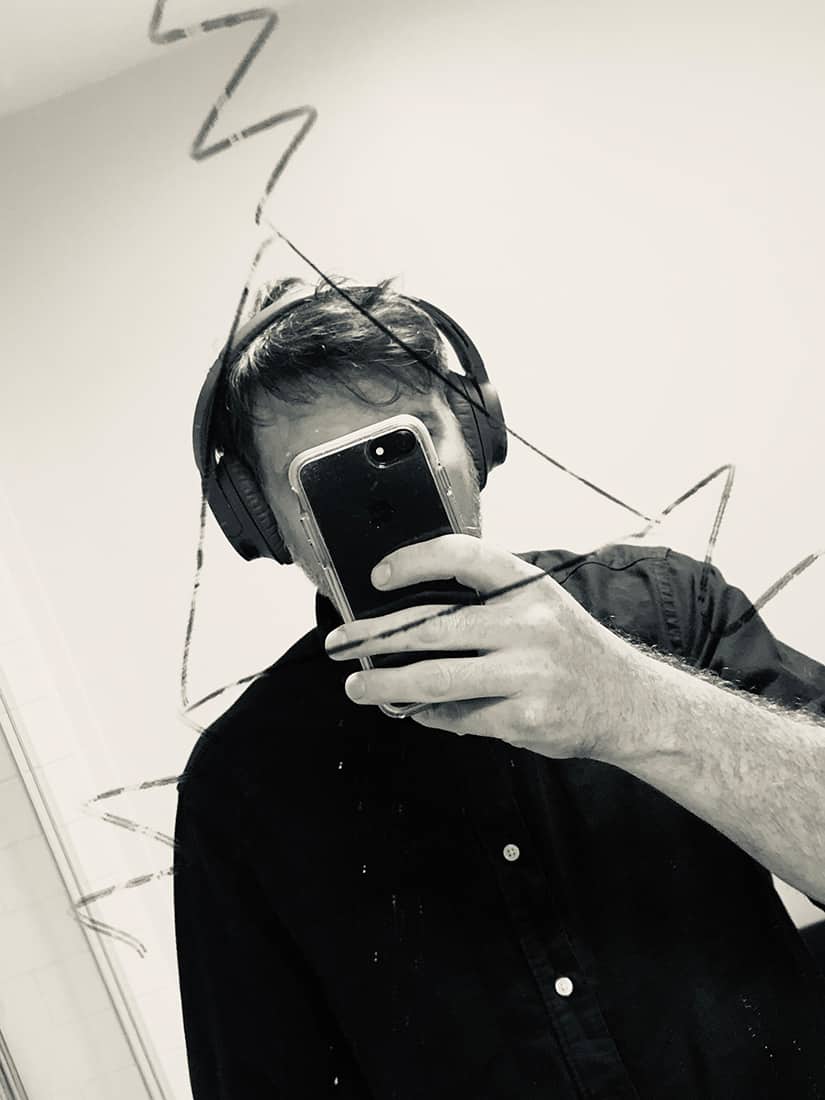
I’ve never been good at handling horror stories, but my curiosity overcame my apprehension and I joined online from my bedroom on the evening of 30 June. I was instructed to bring along headphones, a washable whiteboard marker and a mirror large enough to see my whole face.

When I followed the Zoom link, I was greeted with the familiar box saying that “the host will start the webinar soon”. I didn’t realize that I had been subconsciously expecting some kind of preamble until I and other audience members were plunged straight into the experience.

The only other character (besides you) in the show is Gato himself. You can’t see him (his camera is turned off) but, in any case, you aren’t going to be looking at the screen. Instead, he shows some Feynman diagrams and then tells you to pick up your marker and draw them on your own mirror. As he starts talking about the significance of the diagrams, he weaves in his personal backstory. But this is far from a dry physics tutorial – the idea of the show is that participants begin to experience optical illusions as they look in the mirror.

It is hard to add more without giving the game away, but suffice to say that the show is an immersive exploration of the spookiness of quantum mechanics and its various interpretations. While this is not untrodden ground in fiction, I found the show truly original in the way it paired physics with psychology.

One parallel that the play drew between the two sciences is the idea that we do not perceive reality as it is. We cannot properly comprehend bizarre quantum effects, as we are not adapted to perceive things on that scale. Similarly, illusions demonstrate that our senses are not infallible even on our own scale.

The show is minimalist and atmospheric. Watt delivers the narrative convincingly, with only an eerie background hum accompanying him. It’s an example of a Shepard tone, which sounds like it is descending in pitch infinitely, even though it is not. This again ties in with the fallibility of our senses, and also with the theme of infinities, which recurs elsewhere.

I didn’t time the show, but I would guess it lasted about 20–25 minutes. Watt then hosted a discussion with physicist Jenni Smillie and psychologist Kate Storrs (the experts are different in each post-show discussion), with the audience invited to ask questions. This is an integral and thought-provoking part of the experience. It is probably also necessary for many people as a way of “resurfacing” after any illusions they have experienced.

I’m glad to say The Mirror Trap didn’t trigger any disturbing visions for me (as I had been warned it might), but I found myself still pondering the meaning of the story days later.

I therefore spoke with Watt to find out more. Warning: this interview contains mild spoilers.

What inspired you to write this play?

Several years ago I heard about the strange-face-in-the-mirror experiment, where people see strange things when they look in a mirror for a long time. It reminded me of folklore and stories, from Alice Through the Looking Glass to the film Candyman. I later came across the “quantum suicide hypothesis” in the book The Never-Ending Days of Being Dead: Dispatches from the Front Line of Science by Marcus Chown, and I saw the film Kill List, in which one of the characters scratches an emblem in a mirror, and it gets horrific from there. 

I was also interested in how Feynman diagrams have this aesthetic quality to them, and they have a meaning reflecting deep forces of the universe. When you remove context, I think they look similar to occult symbols. These things rolled around into something, and my friend Alex Wood who is a fantastic playwright helped me refine it.

What were the challenges of incorporating an illusion that the audience participates in?

It has to be sufficiently long that the illusions take effect. They get stronger and the audience gets used to it, but it cannot be so long that people lose patience with staring at their reflection. Especially as the visual illusions could be at their most pronounced in the first minute or the 15th minute. It meant that the crescendo had to be in the story rather than in the special effects.

Genre-wise, the play is closest to horror. Did you set out to write a horror story, or was that choice dictated by the themes you were writing about?

A quote that has always stuck with me is “form is never more than an extension of content”. I make lots of things and some things feel like a sculpture, or documentary, or comedy. Hearing about a thought experiment where you kill yourself in lots of different universes is a horrific idea. Seeing monsters in the mirror also fits the horror genre. I mainly work in public engagement, and I think we have got very good at making science fun, which is great for young audiences, but people are more than just fun. There’s a whole rich tapestry of other colours we could be painting with. “Frightening” is one of them.

The play explores the interpretations of quantum mechanics, in particular the multiverse theory. Are you drawn to that one?

Not in the sense that I believe it’s correct or incorrect. I’m not qualified to make that judgement. I find the multiverse interpretation most fascinating because of how it led from Schrödinger’s cat to the quantum suicide thought experiment. I don’t think the other interpretations have led to anything weird like that. The other interpretations – that something happens and it collapses – are more vague. They don’t offer a compelling story. But I find them all interesting because they are not provable. I also find it interesting that these thought experiments were originally conceived to show absurdity, not to show that the idea was correct.

Your physicist consultant Harry Cliff said that nothing in the play is incorrect, but that he doesn’t agree with it. Did he elaborate on why or in what way?

He doesn’t like the multiverse theory because it’s an untestable thing. He finds the other arguments more compelling, partly by virtue of being more boring. The multiverse theory is a good story, but there’s a phrase that “science is the destruction of a beautiful idea by an ugly fact”. So therefore he’ll assume the ugly one for now.

The one-loop Feynman diagram is featured in the show. Why did you choose it?

It will probably seem arbitrary, but the main reasons are that I think it looks good, I like the symmetries it has, and the fact that it is a closed loop.

The show can trigger illusions and hallucinations in audience members. What has been the strangest reaction so far?

Normally about 10% of people see very little, about 10% see extreme things, and most people fall somewhere in between. 

The weirdest thing someone has told me after the show was that they saw the mirror bleeding. Lots of people have seen monsters, and at least two have seen someone appear behind them. It goes to show there’s a real phenomenon behind myths and legends.

It is left up to each audience member to decide what they think happens at the end of the play. Do you have a fixed idea of what happens?

I think that all of the possibilities happen. If the multiverse theory is correct, then all of them would be true. But it’s also an individual thing. In the same way that what everyone sees in the mirror is true for them, the ending that they believe is also true for them.

In the play, the scientist seems to be driven mad by thinking about the interpretations of quantum mechanics. Is there a sense that it might be dangerous to try too hard to comprehend these bizarre phenomena?

That isn’t something I intended. The “scientist crippled by knowledge” is a common trope, but I try to avoid it because I don’t think most scientists are like that. A scientist could find out the theory of everything, and say “oh that’s interesting”, and then move on. I don’t think there’s very much knowledge that actually has a massive impact on personal philosophies.

I was talking with a friend who thinks it will change everything if we find aliens. I think it will change nothing, that we’ll say “oh there are aliens, oh cool” and then tomorrow’s news will come. The dark side of the play is the personal story – the content is about physics and psychology, but the story is about grief.

  • The next two performances of The Mirror Trap are scheduled to take place in October, during the Swansea and Norwich science festivals (dates to be confirmed). The Mirror Trap is an ongoing project and Watt is always looking for people to collaborate with. If you’re interested in getting involved, you can contact him via his website

Fizzy water droplets levitate at room temperature

If you’ve ever thrown water into a red-hot frying pan and watched the droplets roll around the pan like tiny glass marbles, you’ve seen the Leidenfrost effect in action. The effect occurs because an insulating cushion of water vapour forms between the droplets and the pan, which allows the liquid to behave in ways it normally wouldn’t – including some that might have practical uses, were it not for the high temperatures required.

Researchers at the Massachusetts Institute of Technology (MIT) have now put forward an alternative, room-temperature way to levitate liquid droplets. While their initial experiment focused on carbonated water placed on a strongly water-repellent surface, the technique could be extended to other liquids such as oils, clearing the way for applications in industrial processing.

Lowering the Leidenfrost temperature

In 1756, the German scientist Johann Leidenfrost described how water droplets levitate on their own vapour when placed on a hot solid surface. The vapour acts as a repulsive layer, preventing the droplets from evaporating rapidly and allowing them to hover above the surface. Since there is virtually no friction between the droplet and surface, the droplet glides quickly and effortlessly across it. The droplet can also be made to accelerate in different directions by changing the texture of the solid surface – something that could be useful for making self-propelling devices.

The high temperatures required for the Leidenfrost effect somewhat limits its applications, however, and in recent years researchers have been trying to reduce the temperature required from 200 °C to 100 °C or below. A team led by Kripa Varanasi and Gareth McKinley has now succeeded in doing so, reporting liquid levitation at ambient temperatures.

Entering the levitating regime

In their experiments, the researchers prepared their “fizzy” water by pumping gaseous carbon dioxide (CO2) into deionized water. They then deposited millimetre-sized water droplets supersaturated with the dissolved gas on a superhydrophobic solid – that is, one that strongly repels water. They imaged the interface underneath the drop using an optical microscope and also deposited the droplets on a curved solid surface to study their high mobility.

McKinley and colleagues found that the fizzy droplets generate a carbon dioxide gas cushion that keeps them levitated for up to a minute. During this time, droplets that are initially just sitting atop rough, air-trapping surface structures on the solid – the Cassie-Baxter state – enter a levitating regime once the COconcentration reaches a certain value. This critical concentration is analogous to the Leidenfrost temperature, but instead of being driven by external energy sources such as heat or mechanical forces, the researchers explain that it reflects the excess chemical energy stored inside the droplet in the form of dissolved gas.

Application areas

According to the team, applications for this new, frostier Leidenfrost effect include frictionless transport of drops; sorting droplets by varying the level of carbon dioxide within them; developing heat transfer technologies that benefit from air insulation; and being able to “de-pin” droplets on demand. “Our result is of practical interest as it extends the benefits of levitating liquids to room temperature and avoids the energetic cost of heating a surface,” team member Philippe Bourrianne explains. “It is exciting to see that levitation can be achieved under ambient conditions with a common liquid such as fizzy water.”

Team member Divya Panchanathan adds that the effect could be extended to oil and other organic liquids by using appropriate textured surfaces and soluble gases. Extending the effect to such non-volatile liquids will bring out the full potential of this fizzy levitation effect, she tells Physics World.

The research is detailed in Science Advances.

Transfer-learning models detect COVID-19 from lung CT images

A new deep-learning framework to diagnose COVID-19 from patient lung scans – called KarNet – has been developed by researchers in India. The system, which uses transfer learning rather than needing a large training dataset, can achieve up to 97% accuracy in detecting SARS-CoV-2 infection.

As the coronavirus pandemic continues across the globe, faster and more reliable techniques for identifying COVID-19 cases are much sought after to help reduce transmission – especially given the broad shortages of the gold-standard real-time reverse transcription polymerase chain reaction (rRT-PCR) testing kits. One diagnostic approach that has attracted considerable scientific interest lies in the use of lung CT scans, which can reveal early changes associated with the SARS-CoV-2 virus.

To accelerate the rate at which such scans can be processed, various researchers have turned to deep-learning techniques with a mind to automating image analysis. But it is here that a problem is encountered. Machine-learning tools require huge pre-labelled datasets on which to train themselves, especially if they are to be capable of operating to a clinical standard. Such datasets, however, are not readily available at present – due in part to concerns over patient confidentiality, but also due to the fact that the medical professionals who would be needed to annotate such images are presently occupied in the treatment of patients with COVID-19.

To get around this issue, computer scientists Arpita Halder and Bimal Datta of the Budge Budge Institute of Technology in Kolkata turned instead to transfer learning. In this machine-learning technique, a model developed for one task is then repurposed as a starting point towards tackling a different problem. This reduces the amount of time required for, and the complexity involved in,  training of the new system.

In their study, the duo developed a software architecture that they have dubbed KarNet, which they can use on top of four existing deep-learning models: DenseNet201, MobileNet, ResNet50V2 and VGG16. All four models were originally trained to classify 1000 different object categories based on data sourced from ImageNet, an online visual database containing more than 14 million hand-annotated pictures grouped into categories based on what they depict. The team first trained their system on a set of non-modified lung CT images, before moving to using so-called “augmented” images that had been distorted to provide a more realistic challenge.

“We used deep-learning technology for the classification of COVID-19 positive and COVID-19 negative patients effectively,” Halder tells Physics World. “We used four transfer-learning models and concluded that our architecture KarNet on top of DenseNet201 gained a maximum accuracy of 97% with an excellent diagnostic ability having 0.99 AUC [area under the curve] score.”

Robust, fast, adaptable and precise

While DenseNet201 performed the best – a feat Halder attributes to it being a convolutional neural network that is 201 layers deep – the other models fell not far behind, with ResNet50V2, MobileNet and VGG16 achieving accuracies of 96%, 95% and 94%, respectively.

“Despite being trained on the ImageNet dataset, the transfer-learning models have feature-independent benefits of the pre-trained weights, such as scaling and convergence speedups,” Halder explains.

One of the particular benefits of the MobileNet model, Halder says, is that it has a light architecture – meaning that it could easily be deployed onto devices like smartphones and tablets for diagnosis of lung scans in various clinical settings. Given all this, she concludes that the KarNet framework is “robust, fast, adaptable and precise”.

“Currently, there exists some concern on the efficiency of diagnosis in regional hotspots worldwide and the effectiveness of traditional rRT-PCR working on COVID-19 variants. Hence, research interests in lung CT scan-based AI diagnosis are rising,” comments Yu-Dong Zhang, a machine-learning researcher from the University of Leicester who was not involved in the present study. “The method in this paper does not use the most state-of-art AI methods,” he adds, “but the accuracy on the open-access dataset is rather promising at 97%. I hope that their method can go through strict clinical verification.”

With their initial study complete, the researchers are now looking to move to three-dimensional lung segmentation to facilitate better classification of COVID-19 positive and negative cases. Similarly, they will also be training their deep-learning models on larger datasets in order to secure improvements in diagnostic ability.

The study is described in Machine Learning: Science and Technology.

NASA craft provides an insight into Mars’ interior

The interior of Mars has been mapped with seismic waves for the first time revealing tantalizing details about how Mars may have formed across billions of years. The work was done by NASA’s Interior Exploration Using Seismic Investigations, Geodesy and Heat Transport (Insight) craft that landed in Elysium Planitia, close to the Martian equator, in November 2018. Since then, its seismometer has detected more than 500 marsquakes produced by tectonic stresses, albeit none stronger than magnitude 4 on the Richter scale.

The quakes send seismic waves reverberating through the interior of the red planet. Their strength and their velocity depends upon the composition of the material they are passing through, and hence they provide a window into Mars’ inner structure. Now three new papers show that Mars’ interior has crucial differences to Earth’s. “Mars is smaller and therefore cools faster than Earth,” says Amir Khan of the Institute of Geophysics at ETH Zurich, who is the lead author of one of the papers that studied the upper mantle.

The seismic findings show that Mars’ core, where most of the planet’s heat originates from, is slightly larger than expected, with a radius of about 1800 km against the Mars’ full radius of 3390 km. With a larger size comes a low density, the core enriched with light elements such as sulfur, which remains with the iron, and acts to reduce the temperature at which the core solidifies. Consequently, Mars’ core remains completely liquid, despite the amount of heat escaping.

This heat escape is exacerbated by the lack of a bridgmanite layer in Mars’ lower mantle. Bridgmanite is the most common mineral on Earth, but because it is buried 660 km below the surface where the temperatures and pressures are high enough for it to form, it is rarely seen. However, the seismic data collected by InSight implies that Mars lacks a bridgmanite layer. “Bridgmanite acts as a barrier to convection inside Earth,” says Simon Stähler, also of ETH Zurich and lead author of a paper that describes Mars’ core and lower mantle. Rising mantle plumes have their progression slowed by this layer, reducing the exchange of heat between the core and the surface.

A thick, layered crust

Mars’ surface lies on top of a crust that is, on average, thicker than Earth’s crust, and is composed of several layers according to Brigitte Knapmeyer-Endrun, who is the lead author of a seismic study that shows two, or possibly three, crustal layers. The uppermost layer extends to a depth between 6 and 11 km, while a second layer goes down between 15 and 25 km. A third layer, if it exists, would then extend to 39 km below the surface at InSight’s location, but the measurements made so far are unable to distinguish between the two- and three-layer scenarios.

Waves travel through Mars after a marsquake and arrive at Insight’s seismometer

“The rather low seismic velocities that we find for the uppermost layer is probably due to a significant amount of porosity, which could mean rocks that have been fractured due to repeated meteorite impacts, and chemical alteration,” Knapmeyer-Endrun told Physics World. The other layers are probably less fractured and altered but could have a different composition.

Earth’s crust also has multiple layers, but is much thinner on average, being “roughly 30 km thick below continents but only 7 km thick beneath oceans,” says Sanne Cottaar, who is a global seismologist from the University of Cambridge. “The differences [between Earth and Mars’ interior] have much to do with Mars having a single, stable lid, while Earth has plate tectonics.”

Mysteries of Mars

Between 4.5 and 4.7 billion years ago, Mars had a global magnetic field, generated by a thermal geodynamo driven by heat exchange between the core and the mantle. This geodynamo somehow switched off when too much heat had leaked from the core. This differs from Earth, where the geodynamo is created by heat emitted by the ongoing solidification of the inner core.

InSight’s initial results have provided a rough guide to the interior of Mars, and it is also the first time that a rocky planet other than Earth has had its interior mapped in such fashion. Further detections of seismic waves will provide greater resolution, and the results can be fed into models of how Mars – and indeed other planets – formed and developed.

“Mars presents unique questions,” says Cottaar. “There’s the mystery of the early magnetic field that died, the strange topography where the southern hemisphere is high and the northern hemisphere is low, and the very localized volcanism. The new constraints provided by the seismic data can now be used to model whether these are caused by Mars’ thermal and dynamical history.”

The three papers are published in Science.

The physics of Olympic sports, searching for continuous gravitational waves

Have you ever wondered why some long-jumpers cycle their legs in the air after take-off, why the 400 m race can have no more than nine lanes, or what’s the optimal stride length that athletes should aim for between hurdles? With the Tokyo Olympics beginning this week, our reviews and careers editor Laura Hiscott has put together a physics-related quiz based on the 10 different events in the decathlon. In this episode of the Physics World Weekly podcast, Laura quizzes Physics World’s Matin Durrani to find out what he can tell us about the physics of Olympic sports.

Also this week, we talk with three astrophysicists from OzGrav, the Australian Research Council’s Centre of Excellence for Gravitational Wave Discovery. They are part of a team using the LIGO and Virgo interferometric detectors to look for continuous gravitational waves from neutron stars.

Highly programmable quantum simulator operates with up to 256 qubits

Physicists have demonstrated a large-scale, programmable quantum simulator, featuring a precisely-arranged two-dimensional array of 256 quantum bits (qubits). Designed by a team headed up at Harvard University, the system uses arrays of highly focused laser beams to trap individual atoms and drag them into desirable arrangements. The design, which the researchers describe in Nature, marks a key step forward in the global race to design larger, more reliable quantum computers, and could significantly improve their applicability in the near future.

Through the latest advances in quantum computing, researchers have recently demonstrated the potential for programmable quantum systems, capable of performing deeply complex simulations and computations. A promising platform for this technology can be found in arrangements of neutral, ultracold atoms individually trapped within arrays of optical tweezers. As their quantum states interact, these atoms can be used in operations including large-scale entanglement, quantum logic gates and realizing optical atomic clocks.

In 2017, the team developed a platform containing 51 ultracold rubidium atoms, arranged in a specific order using a one-dimensional array of optical tweezers. Building on this achievement, in their latest study the researchers aimed to develop a far more powerful two-dimensional arrangement of qubits. Although large numbers of atoms have already been trapped and rearranged in both two- and three-dimensional arrays, the coherent manipulation of programmable, strongly interacting systems containing over 100 qubits has remained far more challenging.

To overcome these difficulties, lead author Sepehr Ebadi and colleagues used a spatial light modulator to shape an optical two-dimensional wavefront, transforming the light into a uniform, two-dimensional array of highly focused laser beams that act as optical tweezers. After loading the beams with a random arrangement of ultracold rubidium atoms, they then used a second set of adjustable optical tweezers to drag the atoms into a defect-free antiferromagnetic arrangement – where the magnetic moment of each atom was exactly opposite to that of each of its neighbours.

Finally, the researchers used coherent optical beams to excite the atoms into their Rydberg states. In these states, the outer electron of the atom orbits at a large distance from its host nuclei, ensuring strong, highly tuneable interactions between individual qubits. In addition, they arranged the atoms in arrays of several different shapes, including square, honeycomb and triangular lattices. Each of these configurations featured a different type of interaction between qubits.

Altogether, the technique allowed the team to produce a highly programmable quantum simulator, containing up to 256 qubits – which together could occupy a vast number of possible quantum states.

In their future research, the physicists will aim to upgrade their setup even further, through a better control over each individual tweezer beam and making the system more programmable. These improvements could pave the way for a diverse range of applications: including advanced new ways to study strongly-correlated quantum matter, designing hardware suitable for running efficient quantum algorithms, and solving challenging real-world problems in computation and measurement.

Soft electronics self-heal

A new type of self-healing liquid metal composite could be used to make soft, recyclable, electronic circuits. These composites do not break even when punctured and can be repeatedly stretched without losing their electrical conductivity.

Most electronic circuits are made from semiconductors such as silicon or gallium arsenide shaped into nanometric-sized structures that are soldered together via wires. These structures are rigid and opaque, however, and cannot be easily incorporated into soft electronics applications. Such applications include smart textiles, biomedical devices that need to be integrated with the body, patches worn on the skin to monitor health and robotic skin. All require materials that are robust to wear and tear, are stretchable and remain electrically conductive even when damaged. Ideally, they need to be recyclable, too.

Replacing inflexible circuits

Led by Michael Bartlett, researchers from Virginia Tech in the US have now proposed replacing conventional inflexible circuits with micron-sized, electrically-conducting liquid metal droplets dispersed in a soft, protective elastomer called styrene-isoprene-styrene (SIS), with polybutadiene (PBD) added as a plasticizer.

Bartlett and colleagues used a technique known as embossing to fabricate connected liquid metal networks with high electrical conductivities. This approach creates connections between the droplets that allows them to reconfigure (self-heal) even if they become damaged, meaning that they continue to function. For example, a circuit made from the composite will continue to transfer power even if a hole is punched in it. This is because the droplets make new connections around the hole, maintaining the flow of current. In comparison, a hole in a traditional wire would cut the electrical connection completely. The polymer network can also be stretched to over 10 times its original length without suffering much change in its electrical conductivity.

Reprocess, reuse, recycle

Another advantage of the new approach is that if the circuit needs to be reconfigured, the droplets are easy to break apart by using a solvent to “erase” them. Their constituents can then be used to form new conductive channels, thanks to the thermoplastic nature of the SIS copolymer matrix and the liquid nature of the metal.

The researchers, who report their work in Communications Materials, showed that they could reconfigure a circuit in this way by rapidly dissolving the composite sheets in toluene in a shear mixer to make a SIS/PBD/toluene solution. As the liquid metal droplets dispersed in the solution are similar to those in the initial pristine composite, the solution can then be re-cast into films with mechanical proprieties like the originals. The recycled samples are electrically insulating after casting, meaning that all the previous electrical connections have been deleted.

Bartlett says that he and his colleagues are “excited with their progress and envision these materials as key components for emerging soft technologies”. “This work gets closer to creating soft circuitry that could survive in a variety of real-world applications,” he says.

Spurred on by their findings, the researchers now plan to integrate their stretchable circuity into wearable devices and soft robotics. “Systems in which soft components are integrated with traditional microchips provide some great opportunities, but also some significant challenges,” Bartlett says. “Merging these technologies presents a challenge in design, optimization, and manufacturing, but it could also open up new device possibilities that do not exist today,” he tells Physics World.

Copyright © 2026 by IOP Publishing Ltd and individual contributors