‘Slidetronics’ makes its debut

Researchers have discovered a novel way of switching the polarization of an ultrathin ferroelectric material. The mechanism, dubbed “slidetronics” because it occurs when adjacent atomic layers in the material slide across each other, could be an efficient alternative way of controlling tiny electronic devices.

Being able to switch electrical polarization over small areas is key for modern technologies such as hard disk drives that store and retrieve large volumes of information. The dimensions of individually polarizable domains (that is, regions with a fixed polarization) within the silicon-based devices commonly used for information storage has dramatically decreased in recent years, going from roughly 100 nm thick to the atomic scale.

The main challenge to making these structures even tinier is overcoming long-range interactions between neighbouring domains, which tend to cause the polarization of individual domains to align. Surface effects also become more important as domain sizes become smaller because the surface-to-volume ratio increases.

Breaking the symmetry

To address these difficulties, researchers have begun to explore alternatives to silicon in the form of two-dimensional materials such as hexagonal boron nitride (h-BN) and the transition metal dichalcogenides (TMDs). These materials, which can be made just one atom thick but remain crystalline with a well-defined lattice and symmetry, are made up of stacked layers held together by weak van der Waals (vdW) interactions. However, polarization in naturally-grown h-BN and TMDs is limited because it is energetically favourable for these materials to adopt a so-called “centrosymmetric” vdW structure that looks the same when the crystal is flipped.

Researchers led by Moshe Ben Shalom at Israel’s Tel Aviv University have now broken this undesirable symmetry by controlling the angle, or twist, between two stacked h-BN layers. In the process, they discovered a multitude of permanent and switchable polarizations – oriented perpendicular to the material’s surface – at the interface between the layers.

“The stacking arrangement that breaks the symmetry and hosts polarization is one out of five possible configurations in bilayer h-BN,” Ben Shalom explains. “We divided these into two groups: ‘antiparallel’ and ‘parallel’ twist orientations.”

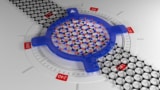
triangle-shaped domains

In the optimal antiparallel (AA’) configuration the nitrogen atoms of one layer and the boron atoms of the adjacent layer overlap fully. In the unstable parallel (AA) orientation, bulky nitrogen atoms are forced to sit atop each other, producing a repulsion between the layers. To solve this problem, the layers shift laterally, sliding past each other until they can form a metastable stack in which only half of the atoms overlap with each other (the AB configuration).

“A beautiful ‘Moiré’ pattern”

In the experiments, team member Maayan Vizner Stern used sticky tape to separate individual atomic layers from a multilayer bulk crystal of h-BN and transfer them onto a flat surface. (Andre Geim and colleagues at Manchester University in the UK used a similar technique to isolate layers of graphene from bulk graphite in 2004.) Stern then picked up the layers using a microscope slide covered with a soft, transparent polymer and placed one crystalline layer on top of another such that the lattices of both were oriented parallel to each other in an AB stack.

“The artificially stacked parallel structure we made results in a tiny interlayer shift with only half of the nitrogen or boron atoms eclipsed and is not symmetric when flipped,” Ben Shalom tells Physics World. “What is more, when we scanned the local surface potential with the tip of an atomic force microscope, we observed a beautiful ‘Moiré’ pattern of triangle domains in which the (out-of-plane) polarization flips.”

Domain wall sliding

Most importantly, the researchers found that scanning an electrically-biased tip across the surface makes the domain walls in the material slide across each other. This sliding allows the polarization orientation to be switched locally, as desired.

Thanks to extensive numerical calculations by team member Wei Cao, the researchers were able to follow how the charge on the different lattice sites in h-BN reorders due to the broken symmetry. Led by another member of the collaboration, Eran Sela, they used this information to build an intuitive model that explains the phenomenon. According to Ben Shalom, it turns out that there is a competition between the Coulomb attraction and the vdW forces in the pairs of fully-eclipsed atoms versus the separated pairs. This mechanism could be used to predict similar polarization behaviour in other hexagonal diatomic crystals.

Ben Shalom observes that the presence of such a stable polarization in a two-atom-thin system could be very useful for efforts to miniaturize non-volatile electronics devices. At the atomic scale, the electrons can efficiently quantum-tunnel across the two layers, and this tunnelling mechanism can be used to rapidly read and write the polarization. Looking longer term, he suggests that the lateral mechanical sliding and perpendicular polarization switching mechanisms observed in this study, which is detailed in Science, may even have applications beyond what we can predict today.
CERN physicists measure mass oscillation of neutral charm mesons

The LHCb collaboration at CERN in Geneva has observed and measured a crucial oscillation in the measured mass of neutral charm mesons arising from the particles changing into their antiparticles and back again. Although the detection is fully consistent with the Standard Model of particle physics, it could provide a “very clean” window into physics beyond the Standard Model in future experiments, the researchers say.

Mesons are particles comprising bound states of a quark and an antiquark. They are vital to nuclear binding, as they mediate the strong interaction between protons and neutrons, but in nature, free mesons exist only as the short-lived decay products of cosmic-ray interactions. However, they can be readily produced in particle accelerators and have been studied intensively for decades.

Just as protons and neutrons have heavy counterparts such as sigma baryons, in which one or more of the up or down quarks is replaced by a heavier cousin, so do mesons. The Standard Model predicts that some of these heavy mesons exist as superpositions of both particle and antiparticle, with a quantum wavefunction that evolves as the particles propagate. As a result, the probability of detecting either the meson or the anti-meson should also evolve too.

Mass difference

For complex reasons governed by quantum mechanics and the weak interaction, there is a difference in the lifetime – or width – and the mass between the two allowed superpositions. Both these differences can affect the proportion of mesons and anti-mesons detected.

“The width difference just allows for a slow time evolution from the meson to the anti-meson,” explains LHCb spokesperson Guy Wilkinson of the University of Oxford. “Only the mass difference allows the particle to turn into another particle and back again.” Evolution due to the difference in width was first confirmed in 2007 in data from the Belle collaboration in Japan and the BaBar collaboration in California. The sinusoidal oscillation due to mass difference had been seen in other particles such as strange-beauty mesons, but never before in charm mesons.

Both the width and mass differences could be crucial for probing violations of charge-parity (CP) symmetry. This is the hypothesis that, if both charge and parity are interchanged simultaneously, the laws of physics look identical. This is equivalent to probing matter-antimatter asymmetry and therefore studying CP violations could explain why there is much more matter than antimatter in the universe.

“Great place to look”

“CP violation can be accommodated within the Standard Model,” says Wilkinson, “but it can’t be explained. The reason that the charm system is a great place to look is that the level of CP violation you expect in the Standard Model is tiny. If there’s CP violation coming from some source outside the Standard Model, it should manifest itself much more clearly…”

LHCb did observe CP violation in a 2019 measurement of neutral charm mesons’ decay into other mesons. Whether this was consistent with the Standard Model, however, was disputed: “You had some theorists saying ‘This is remarkable: it’s much higher than we expect’ and many others saying ‘We can just about accommodate this’,” says Wilkinson; “If you look for CP violation in these mixing-related phenomena, people are much more confident of their calculations.”

It was unclear, however, whether the oscillation arising from the mass difference between the neutral charm mesons would be detectable. “It could have been way beyond our sensitivity, but it turns out that, though it’s a small parameter, it’s not ridiculously small,” says Wilkinson.

No firm evidence

The researchers’ observations to date show no firm evidence of CP violation. However, they are now installing an upgraded version of their experiment ready for the startup of the high-luminosity LHC next year. “If we see any CP-violation in the next 10 years it would be very difficult for a theorist to explain it in any other way but to say this is physics beyond the Standard Model,” Wilkinson concludes.

“It’s very important,” says Tom Browder of the University of Hawaii, who was part of the Belle collaboration’s 2007 measurement of the lifetime parameter and now works on its successor Belle II. “I and many others have been working for decades to observe neutral charm mixing and LHCb has finally succeeded in measuring this mass parameter.” He hopes the results will be confirmed by other experiments such as his own and says that, if the researchers were to see any evidence of CP violation in the results at current levels of sensitivity, “that could very well be a smoking gun for new physics”.

“It certainly has a way to go before seeing CP violation in this process, unless the CP violation is much larger than the standard model predicts,” says Jonathan Rosner of the Enrico Fermi Institute in Chicago; “It’s just showing the versatility of the LHCb detector: that’s been a huge success story.”

The research is described in a preprint on arXiv.

Measuring up: how our search for the speed of light led to our current understanding of physics

It is arguably the most important constant in physics, it is easily visualized by anyone and its symbol is widely known among the public: c, the speed of light in vacuum. If your neighbour knows an equation, it’s probably Albert Einstein’s E = mc2, and even schoolchildren learn that light takes about eight minutes to travel from the Sun to the Earth. Light and its speed have shocked physicists time and again – in 2001 it was even brought to a complete standstill in a cloud of supercooled atoms – and perhaps it is not finished yet.

In his highly informative and entertaining book Lightspeed: the Ghostly Aether and the Race to Measure the Speed of Light, John Spence, who is Richard Snell Professor of Physics at Arizona State University, recounts the history of humanity’s attempts to understand light and measure its speed. This may seem like a narrow focus, but light is so fundamental to the nature of the universe that this history encompasses most of the essential developments in physics, and features all of the giants – from Galileo to Einstein to today’s quantum computer scientists.

Light is so fundamental to the nature of the universe that this history encompasses most of the essential developments in physics

Spence begins with the story of Ole Rømer, a Danish astronomer who in 1676 established that the speed of light was finite. Showing ingenuity typical of the long string of methods that would follow over the centuries, Rømer used previous eclipse observations to predict a 10-minute delay in an upcoming eclipse of Jupiter’s moon Io as seen from Earth. This prediction was confirmed, bringing him instant recognition and suggesting that, according to the astronomical numbers of the day, light took about 11 minutes to travel from the Sun to the Earth. Today we know it to be 8 minutes 19 seconds on average.

This chapter is characteristic of the delights of the whole book; it not only thoroughly explores the science, but is also full of interesting diversions, making for a rich and engaging narrative. The biographical information, historical insights and personal stories combine into a hearty stew of a book, spiced with knowledge from Spence’s own long, luminous career as an optical physicist.

The anecdotes sprinkled throughout bring the famous scientists to life in their interactions with one another. One humorous story describes how, in his elder years, the eminent physicist William Thomson, Lord Kelvin, became highly opinionated and not much of a listener. He lived until 1907, when physics was quite a mess (though Einstein was beginning to straighten some of it out). Spence recounts how J J Thomson, discoverer of the electron, quipped that “[Kelvin] was a counter-example to the idea that a good emitter is a good absorber.”

I’ve always been a sucker for stories like this; in part they were what drew me into physics. But then I’m a romantic, and I think Spence is too. He skilfully covers the great Michael Faraday and James Clerk Maxwell of the 19th century, one an intuitive experimentalist and the other a magical theorist, whose work fit together like hand and glove.

Spence includes a story about how Maxwell derived his formula for the speed, v, of oscillating electromagnetic waves in a vacuum during a summer stay at his Glenlair residence in Scotland. Maxwell came up with the formula v = 1/√ε0μ0, but didn’t have the numerical values of the constants ε0 and μ0 to hand – they were in documents at his apartment in London. So he had to wait the rest of the summer until a 400-mile return on a steam train to evaluate the result, after which he found that he had indeed predicted the speed of light from his theory of electricity and magnetism.

Spence shows how our knowledge of light was filled in piece by piece as astronomers and physicists worked through observational clues like the transit of Venus, where geometry allows an estimate of the Earth–Sun distance to be made. (Hilarity ensues as British and French ships fan across the world to measure – or attempt to measure – the 1761 transit.) By the late 19th century physicists had worked themselves into a befuddled lather over the “aether”, the substance that they believed must fill the universe to allow the transmission of light. The towering figures of that era – Lord Rayleigh, Kelvin, Henri Poincaré – and nearly everyone else, simply could not conceive of light’s transmission through vacuous space.

Albert Michelson and Edward Morley’s eponymous experiment in 1887 – “the most famous negative result in physics” – cast serious doubt on the aether’s existence, confounding everyone. It took the singular genius of Einstein to cut through the imbroglio by assuming, correctly, that the velocity of light is independent of the velocity of its source, at once rewriting the human understanding of time and space.

Even in the telling of this profound shift, we are treated to another humanizing story. At a dinner at Caltech in 1931, Einstein asked Michelson why he had spent so many years doing tedious measurements with interferometers like the famous one he and Morley had used in the 1877 experiment. “Because,” Michelson simply replied, “I think it is fun.”

Spence ends his book with a chapter on faster-than-light schemes and nonlocal influences arising from the Einstein–Podolsky–Rosen paradox and the now well known “spooky action at a distance”. He also touches on discussions of the nature of quantum reality as deduced from the violation of Bell’s theorem. This last chapter feels rushed, taking on too many mind-blowing topics while not explaining anything in enough detail to grasp.

It doesn’t change my overall opinion of the book, though. This volume will work for everyone from a high-school student (just ignore the few equations, although they aren’t that difficult anyway) to anyone more well versed in physics who’s interested in an entertaining history of how we came to our current understanding. On finishing the book, I can’t help wondering how close to complete this understanding will turn out to be. Is there light at the end of the tunnel? Who knows?

  • 2019 Oxford University Press £25hb 256pp

Optical links help superconducting quantum computers keep their cool

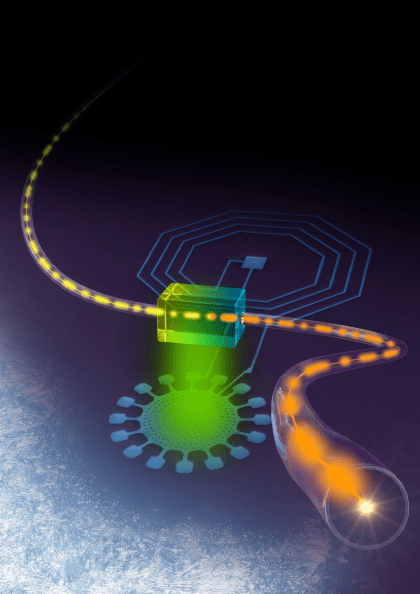
Artist's impression of an electro-optical interconnect, showing an electronic wiring diagram with a beam of light shooting through it

Scientists from the Swiss Federal Institute of Technology Lausanne (EPFL) and the Indian Institute of Science Education and Research have demonstrated that commercially available devices known as electro-optical modulators can be used to read the output of superconducting quantum computers at extremely low temperatures. Using an optical signal instead of an all-electrical approach addresses the high heat-load contribution of electrical components, which is known to reduce the overall efficiency of devices. By demonstrating that an optical system can operate at a fraction of a degree above absolute zero, the result could open a new route to scaling up quantum computers.

Optical fibres transmit light via the highly efficient process of total internal reflection and are widely employed in the telecommunications industry. Because fibre networks carry a great deal of information with low signal losses, they are well suited to transferring data over long distances. As fibre technology improves, these benefits are increasingly being applied to data transfer over shorter distances as well, such as the connections between homes and optical fibre networks and optical connections in chip-scale devices.

Optical components are smaller and lighter than bulky, thermally conductive electrical cables, and their low heat loads make them especially attractive to developers of quantum computers that use superconducting quantum bits (qubits) to store information. At present, these devices require extremely low temperatures to operate, which poses questions about how to add more qubits while managing the thermal contributions of additional components.

Cryogenic electro-optical interconnects

To tackle this problem, Tobias Kippenberg and colleagues developed an integrated optical solution that eliminates the noise associated with the heat-load of electrical components by replacing these components with less thermally conductive optical devices. Currently, electrical amplifiers based on so-called high-electron-mobility transistors are used to read the microwave signal produced by superconducting devices. The new optical approach replaces these amplifiers with off-the-shelf electro-optical modulators, which use an electrical signal to control the phase of light. This means that the microwave signal produced by the superconducting device can be converted to the optical domain to be read at the output.

Crucially, this change enabled the researchers to use optical fibre connections instead of electrical coaxial cables, which were a source of heat in the original system. To realize this benefit, however, the researchers needed to demonstrate that the modulators could operate at the very low temperatures required by the superconducting device. After testing the performance of the modulator down to 800 mK, they showed that the device was indeed suitable as an interconnect between the microwave signal of the superconducting device and an optical detection scheme.

The researchers then compared their new optical design, which they describe in Nature Electronics, with the existing electrical version in two important tests. In the first test, they used coherent microwave spectroscopy, where a laser acts as a mechanical pump to produce a microwave signal in the superconducting device, to confirm that the modulator was able to convert the signal into an optical readout. In the second test, they used the optical modulator to link the superconducting device, which operates at 15 mK, to a room temperature detector. This made it possible to measure the microwave signal produced by the superconducting device directly.

The authors compared the output of the optical device with that of a traditional transistor to show that, whilst there are still improvements to be made in reducing optical noise, the new system nevertheless performs the function of the transistor amplifiers with a vast reduction in heat loss. This result highlights the promise of the optical approach for achieving efficient devices that can provide scalability in superconducting quantum technologies.

A new avenue for scalability

Amir Youseffi, a PhD researcher at EPFL and co-author of the paper, describes the work as “a proof-of-principle experiment using a novel optical readout protocol to optically measure a superconducting device at cryogenic temperatures”. He adds that the design “opens up a new avenue to scale future quantum systems” and says that the next step is to improve the design of the optical modulator, with the aim of reducing the noise the researchers saw in the tested system. This would open the way for scaling the number of qubits achievable in superconducting quantum devices.

Physics of pouring Guinness, Ising model backs social distancing, Einstein quiz

Pint of Guinness

Pouring a proper pint of Guinness beer takes practice. It should be done in two stages to allow the bubbles to create the perfect head. Indeed, it is the behaviour of the bubbles that give Guinness and similar stouts their lovely creamy texture.

This way of texturing beer was developed at the Irish brewer over the past 60 years, and now, physicists in Japan have worked out the physics of how it is done. Instead of simply moving upwards like the bubbles in most poured glasses of beer, Guinness bubbles tend to continue moving downwards and flow collectively in a “bubble cascade”.

Led by Tomoaki Watamura at Osaka University, the team created a computer model that was able to reproduce the bubble cascade observed over a range of glass sizes and other conditions. The observations were made in the lab using a transparent “pseudo-Guinness fluid” as well as the real thing.

The good news for brewers is that the team concludes that bubble cascades should be possible in beers other than stouts – or even in other beverages. The team reports its findings in the paper “Bubble cascade may form not only in stout beers”.

Old model

The Ising model was first developed 100 years ago to describe magnetic phase transitions. Atoms in a solid can have one of two spin states (up or down) and interact with their neighbours. This interaction can be ferromagnetic – encouraging neighbouring spins to point in the same direction – or antiferromagnetic, encouraging the spins to point in opposite directions. Despite the simplicity of the Ising model, it displays a richness of behaviours and has proven very difficult to solve at dimensions higher than one.

Over the years, researchers have used the Ising model to describe other systems – and now researchers at São Paulo State University in Brazil have used it to explain the importance of quarantine and social distancing in the battle against COVID-19. Mariano de Souza and colleagues modelled infected people as being spin-up and the rest of the population as spin-down. The team added other concepts from physics to their model, including the Bethe lattice and percolation theory. While this is not the first time that these concepts have been applied to epidemiology, the team say that their formulation clearly illustrates why people should keep their distance during a pandemic.

You can read more about their research in the paper “Epidemics, the Ising-model and percolation theory: A comprehensive review focused on COVID-19”.

Canada’s Perimeter Institute for Theoretical Physics is asking “Are you an Einstein about Einstein,” to encourage people to take their quiz about the great physicist. They say the quiz celebrates 2021 as the hundredth anniversary of Einstein receiving his Nobel Prize – but we don’t need an excuse for a quiz here at Physics World.

The questions will test your knowledge about Einstein’s work, his early life, and his last words.

New electron accelerator combines laser and plasma wakefield techniques

Laser wakefield acceleration and plasma wakefield acceleration have the potential to boost the energy of particle accelerators, but implementing the techniques is challenging. Now, an international team has accelerated electrons using a “laser plasma wakefield accelerator” that combines the merits of both techniques. Such accelerators could increase the number of high-energy particle physics facilities around the world, or be used to create free electron lasers that are used by a wide range of scientific disciplines.

Particle accelerators have been responsible for some of the most important discoveries in physics but the need to collide particles at ever higher energies is pushing existing technology to the limit. Conventional accelerators use radio-frequency electric fields, but the risk of damaging components through arc discharge, or even simply melting them by overheating, limits the maximum field one can apply. As a result accelerator facilities are becoming large, expensive and inaccessible to the vast majority of physicists. Indeed, there are only a handful of facilities around the world – such as the Large Hadron Collider at CERN — that can do cutting-edge particle physics research.

Wakefield accelerators are a novel alternative that use a pulse of energy to create an electric-field wave in a stationary plasma – much like a ship leaving a wake as it ploughs through water. If a trailing bunch of particles is timed properly, it can surf this wave and be accelerated much more steeply than possible in a traditional accelerator. The problem, however is creating this pulse of energy.

Pulse problems

One option is to use a laser, but laser wakefield accelerators have serious limitations: “The maximum energy that you can get from laser-driven acceleration is limited by the so-called dephasing,” explains accelerator physicist Arie Irman of Helmholtz-Zentrum Dresden Rossendorf in Germany; “The plasma wave is simply too slow compared to your accelerated electrons.” An alternative possibility, called plasma wakefield acceleration, is to inject a large bunch of high-energy “drive” particles, using the plasma as an energy-transfer mechanism to accelerate each particle in a much smaller trailing bunch to much higher energies than those in the drive bunch. However, these “plasma wakefield accelerators” still need a traditional particle accelerator to generate the drive bunch.

In 2010, Bernard Hidding – then at Heinrich Heine University in Düsseldorf and now at the University of Strathclyde – proposed combining the advantages of both by using a laser to create a plasma, which could, in turn be used to send a beam of particles through another plasma. Subsequently, several research groups have realized approximations to such a device, and now Irman, Hidding and colleagues have, for the first time, demonstrated a machine that can actually accelerate electrons.

The researchers’ accelerator is divided into two (see figure). On one side, a high-power laser pulse passes through a gas, ionizing it and sending a plasma wave into a sheet of steel foil. This reflects the laser light, but is momentarily ionized, allowing the charge from the plasma to pass through into a pre-ionized gas on the other side. A large wakefield is created in the plasma, allowing the researchers to accelerate electrons to 128 MeV in just a few millimetres – an acceleration gradient of 100 GV/m. This is at least 1000 times steeper than can be achieved by traditional accelerator.

University facilities

Although a specialist high-power laser facility was required to perform the experiment, such lasers are much more common than large particle accelerators: “For example, in the UK there are a couple of laser facilities, but no RF-driven plasma wakefield acceleration facilities, says Irman; “In the coming years, I think it will become fairly standard that even universities can afford such 100 TW lasers.”

“This [work] is fantastic because these guys have accomplished something the field has been thinking about for years, which is to do electron-beam driven plasma-wakefield accelerator research at a university scale rather than having to rely on these very few research facilities in the world,” says plasma accelerator physicist Michael Litos of the University of Colorado in Boulder.

He believes one of the first applications may be producing X-ray free-electron lasers, which require high energy electron bunches. “Right now, the only places you can get these high-brightness X-ray laser pulses are from facilities like at SLAC, where they have the Linac Coherent Light Source…They have thousands of uses and they’re in huge demand. Before we even get to a collider, I would have said one of the dream applications for plasma accelerator technology is to produce a university-scale free electron laser.”

The research is published in Nature Communications.

Machine-learning models that detect COVID-19 on chest X-rays are not suitable for clinical use

Machine learning models

Last year, the scientific community built thousands of machine-learning models and other artificial-intelligence systems to identify COVID-19 on chest X-ray and CT images. Some researchers were sceptical of the results: were the models identifying COVID-19 pathology or were they instead making decisions based on confounders such as arrows and other medically irrelevant features?

To answer this question, two medical students working toward their doctorates in computer science in Su-In Lee’s laboratory at the University of Washington rigorously audited hundreds of machine-learning (ML) models intended for classifying chest X-rays as COVID-19-positive or COVID-19-negative. Results of their audit are reported in Nature Machine Intelligence.

The domain shift problem

The University of Washington researchers wanted to know whether or not published ML models were generalizable. A generalizable ML model will classify chest X-rays as COVID-19-positive or COVID-19-negative correctly no matter where the chest X-rays came from. A model that isn’t generalizable won’t perform well, for example, when it sees chest X-rays that were acquired at a different hospital.

Computer scientists call this drop in performance domain shift. ML models affected by domain shift pick up on minute, systematic differences between datasets that are stronger and more obvious to the model than subtle indications of COVID-19 infection. These ML models then adopt shortcut learning, training on confounders like arrows and text labels and making spurious associations that emerge even when models are trained and tested on other datasets.

In this way, an ML model that uses shortcut learning will demonstrate domain shift and will not be generalizable, while an ML model that relies on medically relevant features to make decisions is more likely to be generalizable and maintain its performance across datasets.

Auditing, machine learning style

While ML models designed to classify chest X-rays tend to use similar architectures, training methods and optimization schemes, the first hurdle that the University of Washington researchers faced was recreating the published ML models.

“Models can differ in subtle ways…And instead of distributing trained models, researchers give out directions for how they made their models,” says Alex DeGrave, co-first author on the University of Washington study. “There’s a whole range of models that you could end up getting out of that set of directions due to randomness in the [model] training process.”

To reflect possible variations that might emerge during training, co-first authors DeGrave and Joseph Janizek, with their adviser and senior author Su-In Lee, first designed an ML model representative of those introduced in dozens of studies and then made minor adjustments to the representative model. They ultimately created and audited hundreds of models and classified thousands of chest X-rays.

Is it COVID-19 or just an arrow?

After introducing their models to new datasets and observing drops in classification performance indicative of domain shift and shortcut learning, the researchers decided to pinpoint the shortcuts themselves. This is challenging because the decisions made by ML models come from a “black box” – exactly how these models make classification decisions is unknown even to model designers.

DeGrave and Janizek deconstructed this “black box” with saliency maps that highlight regions that a model deems important, applying generative methods that transform images, and by manually editing images. Some saliency maps showed medically relevant areas like the lungs, while others pointed to text or arrows on an image, or to an image’s corners, suggesting that the ML models learned and decided COVID-19 status based on these features rather than pathology.

To validate these results, the researchers applied generative methods to make COVID-19-negative chest X-rays look like COVID-19-positive chest X-rays and vice versa.

“We found that if we went back and fed these [altered] images into the original networks we were auditing, it would typically fool those networks into thinking that they were images from the opposite class,” DeGrave explains. “So that means that the things these generative networks were changing were indeed things that the networks we were auditing looked at.”

The researchers again found that model performance depended upon text markers when they swapped written text on pairs of images (one COVID-19-positive and one COVID-19-negative chest X-ray). The researchers’ experiments also revealed that model architecture had little impact on model performance.

“There’s a lot of focus in the literature, I think, on ‘we have the nicest, most interesting new architecture’. We found that actually has a limited impact…whereas working with the data, and changing the data, collecting better data, had a very sizable impact,” Janizek says.

Building and auditing trustworthy AI systems

The researchers’ results indicate the gravity of shortcut learning. They also point to a need for explainable artificial intelligence, which requires that decisions made by ML models be understandable and traceable by humans, going forward.

So, how can researchers build machine-learning networks that learn from medically relevant features and are generalizable?

DeGrave and Janizek provide several suggestions. First, researchers should collect data prospectively and with the model’s goal in mind, and datasets should be balanced with good overlap. For example, each institution involved in a study should collect COVID-19-positive and COVID-19-negative data, not one or the other. Second, clinicians should be involved in study design and data collection, and researchers should work with clinicians to identify different kinds of confounders that the ML model might rely on. Third, ML models should be audited before they are applied elsewhere.

These suggestions alone are not enough to overcome shortcut learning, the researchers say, and more research is needed. For now, they hope that this study will spark a broader dialogue about the importance of auditing ML models and the need for explainable artificial intelligence. They also want people to be more aware of the kinds of mistakes ML models can make.

“There are methods to explain models and detect shortcuts, there are methods to try to improve models…Researchers need to be really thinking about how all of these methods connect to each other to build not just better methods, but a better ecosystem of methods that connect with each other and make it easy for model developers to build a model that we can trust and rely on,” says Janizek.

Contact electrification explained at last

An apparently simple physics phenomenon known as contact electrical charging turns out to be far more complicated than was previously thought, according to new experiments by researchers at the University of Duisburg-Essen in Germany. The result could shed fresh light on the mechanisms by which one macroscopic metal object, such as a doorknob or key, becomes electrified through contact with another – an effect that is still not fully understood despite being observed and studied for more than 2000 years. These new insights could, in turn, drive improvements in technologies that rely on triboelectricity, which is the form of contract charging responsible for most everyday instances of static electricity and is widely employed in devices such as photocopiers and laser printers.

Contact electrification can occur whenever two surfaces touch. It is common in nature and is responsible for lightning in thunderstorms, sandstorms and volcanic plumes. It is also a known industrial hazard since the electric discharges it produces can destroy electrical contacts and even cause explosions in flammable powders or liquids.

Contradiction to established theory

For metal-metal contacts, contact electrification was thought to be relatively well understood. The established theory, articulated by the physicist W R Harper in 1951 and expanded upon by J Lowell in 1975, predicts that the kinetic energy (or impact velocity) of two metal objects that contact each other does not affect the charge transferred between them via contact electrification.

However, researchers led by Rolf Möller and Hermann Nienhaus of Duisburg-Essen’s Faculty of Physics and Center for Nanointegration have now found something else entirely. Their experiments show that the charge transferred as a particle bounces off a surface is related to the impact velocity and is also much higher than predicted. This result is important, Möller says, because the underlying mechanism will apply to insulator-metal and insulator-insulator contacts, too.

Astrophysical inspiration

Möller’s team became interested in this topic after discussions with a colleague working in an entirely different field: astrophysics. “Our colleague told us about an unsolved problem in planetary formation that might be explained if particles just millimetres in size acquired electrostatic charges when they collide,” Möller explains. “To shed more light on this hypothesis, we designed an experimental scheme to study the charging of particles in detail.”

The team’s experimental design rests on a familiar principle: charges of opposite sign attract each other. Hence, if a positively-charged object approaches the surface of a conductor along which negatively-charged electrons move freely, the object will attract those negative charges to its surface – a phenomenon known as electrostatic induction.

By measuring the charge that remains on the conductor, Möller notes that it is possible to detect the presence of the positively-charged object without making electric contact with it. Since this effect depends on the distance between the object and the conductor, it can also be exploited to analyse the object’s motion. This, Möller says, is the fundamental principle of the new experiments. “The idea was to detect the charge before and after a collision between a gold sphere and a copper plate,” he explains. “We found we could resolve the charge transfer process with an unprecedented temporal resolution of down to just 1 microsecond.”

Deviation from ideal geometry

In the calculations accompanying their experiment, which they detail in Science Advances, the researchers included the tiny deformation of both the sphere and the plate when they collide. This deformation, they suggest, allows the surfaces of the sphere and plate to fit almost snugly during contact, producing a larger area of contact and a larger capacity. The latter is crucial because the amount of charge transferred is equal to the potential difference multiplied by the capacity at the very moment when the contact breaks. “Even if the contact area decreases when the contact breaks, the capacity will still be larger than for the case without deformation. That is why the transferred charge increases with increasing impact velocity,” Möller tells Physics World.

Surface deformation may also play an important role in contact electrification for insulator-metal and insulator-insulator contacts, leading to an increase of transferred electric charge, he adds. “Preliminary tests have shown that our experimental techniques work equally as well for these kinds of contacts too and this one of the directions of research we want to pursue in the near future.”

Huge Oort Cloud object has been spotted entering the outer solar system

Astronomers sifting through data from the Dark Energy Survey (DES) have spotted a large Oort Cloud object approaching the outer regions of the solar system.

The discovery has caused ripples of excitement within the planetary science community because of the object’s unusually large size – initial estimates suggest it may be as big as 130–160 km across, substantially bigger than some of the largest comets. Studying the object could also give researchers insights into an enigmatic process in the solar system.

Catalogued as C/2014 UN271, the wandering visitor was found in archival data captured by the DES project, which investigates the cosmological mystery of dark energy by photographing distant galaxies.

Recognized instantly

“The object appears in about 30 images out of the [approximately] 80,000 that were taken over six years for the survey,” Gary Bernstein of the University of Pennsylvania, who co-discovered C/2014 UN271 along with PhD student Pedro Bernardinelli, tells Physics World. “Pedro instantly recognized it as being of special interest because of its nearly escaping orbit and the great distance at which it was first seen,” he adds.

C/2014 UN271 seems to have come from a region some 10,000–20,000 times farther from the Sun than Earth. This is within the Oort Cloud – an immense shell of icy objects thought to envelop the entire solar system. On its current trajectory, the object takes nearly 5.5 million years to complete just one loop of its orbit.

The object is probably rich in ice like a comet and is currently around three billion kilometres from the Sun. It will reach its closest point, known as perihelion, in 2031. At that time, it will be positioned below the plane of the solar system, near the orbit of Saturn.

Long period comets

Part of the interest in C/2014 UN271 is that it may be something of a transition object. Astronomers believe that many of the long period comets, that occasionally appear with bright tails, actually come from the Oort Cloud. Stars wandering near the Sun can nudge these objects from their positions and over millennia they work their way inwards, with the gravity of the giant planets tweaking their paths on each visit until they reside where we see them today.

“The fact that [C/2014 UN271] has a perihelion so far away from the Sun might be telling us that it’s done this a couple of times but is still in that process of eventually becoming some of those long period comets we know and love,” explains Meg Schwamb a Kuiper Belt and Oort Cloud expert at Queen’s University Belfast.

Scientists will be keen to see how C/2014 UN271 behaves on its long journey. Will it, for example, exhibit outbursts in activity, or even disintegrate? The Vera C Rubin Observatory, due to begin its ground-breaking survey from Chile in 2023, should be in a prime position to record whatever happens. “With Rubin Observatory coming back and imaging the sky every three nights we’re going to get an effective movie of how this object has evolved over a decade,” says Schwamb.

Coma spotted

Initially, C/2014 UN271 did not appear to have a cloud of material – called a coma – around it. However, astronomers using the Las Cumbres Observatory network announced in an Astronomer’s Telegram bulletin on 22 June that they have detected such a feature using a large telescope in South Africa. The emergence of a coma could be the result of ices sublimating from the body’s surface.

“There’s a complex range of processes involved, with much yet to understand, and this is the biggest of the small worlds on an orbit from the Oort Cloud that we’ve seen go through that start-up of activity,” says Michele Bannister, an outer solar system specialist based at the University of Canterbury.

Some researchers have suggested C/2014 UN271 could be a destination for a sample-return mission. However, Stephen Lowry, a comet expert at the University of Kent says “There wouldn’t be enough time. It can take decades to develop such a spacecraft mission.” C/2014 UN271 is also likely to be out of reach of Europe’s upcoming Comet Interceptor mission due to its distance from Earth’s orbit, he adds.

Nevertheless, astronomers will likely have much to scrutinize as C/2014 UN271 creeps closer to the Sun. “More heat should mean more activity, but its perihelion is still really distant from the Sun, out beyond Saturn’s orbit,” says Bannister. “It’ll be exciting to see just how much it brightens over the coming years.”

Zeolites detect toxic lead in water

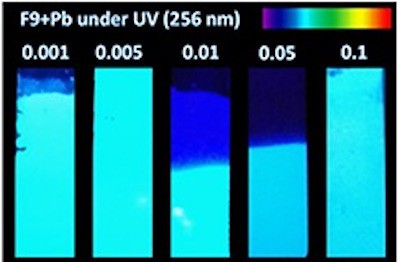
lead-exchanged zeolites

Researchers in Mexico have used zeolites – porous aluminosilicate minerals widely used in water purification – to detect toxic lead in water for the first time. The team’s new one-step technique, which can rapidly detect lead concentrations as low as 1.248 parts per billion, could be extended to other heavy metals.

Lead causes serious health problems for humans and poses a hazard for the environment. Together with mercury, arsenic, chromium and cadmium, it is one of the five most common heavy-metal contaminants in water. Although many highly sensitive spectrometry and spectroscopy techniques exist for detecting it, most require sophisticated instruments and complicated sample preparation methods.

Zeolites are hollow 3D structures made from aluminium, oxygen, silicon and alkali or alkaline-earth metals such as sodium, potassium and magnesium. They contain large, regularly arranged micron-sized pores that can absorb water and remove heavy metal ions from it thanks to a mechanism known as ion exchange, which occurs when one type of ion in a solution is reversibly exchanged with another type of ion that has the same electrical charge. Zeolites’ pores also make ideal “cages” in which to stably isolate sub-nanoscale clusters of metals.

Thanks to the electrons that easily jump from one discrete energy level within the metal clusters to another, these “metal-exchanged” zeolites make efficient light emitters. As such, they already have applications as fast, highly sensitive optical sensors for environmental monitoring. However, zeolites had not been used to detect toxic metal ions until Eduardo Coutino-Gonzalez and colleagues at the Centro de Investigaciónes en Óptica in Guanajuato set out to exploit their ion-exchange properties for this purpose.

Synthesizing fluorescent clusters

The researchers made their metal-exchanged zeolites using an aqueous lead acetate solution containing different concentrations (0.001, 0.005, 0.01, 0.05 and 0.1 M) of lead (Pb). They then thermally activated the structures by heating them to 450 °C. This process produced fluorescent lead clusters within the zeolites via reduction and migration of the lead ions.

In a series of photoluminescence measurements (detailed in Journal of Physics: Photonics), Coutino-Gonzalez and colleagues found that the intensity of the light emitted from the materials depends strongly on the concentration of lead in the sample being analysed. Remarkably, they observed maximum emission intensities at low lead concentrations. This, they say, shows that lead-exchanged zeolites make efficient and highly-sensitive fluorometric sensors for Pb2+ ions.

Simpler, cheaper, faster

“Our method provides a simpler, cheaper and faster approach to detect lead ions in water at very low concentrations compared to conventional analytical techniques used for quantitative detection of lead ions, Coutino-Gonzalez tells Physics World. Unlike other recently developed fluorescent chemosensors, he adds, the team’s method requires only a single step. “In our proposal, zeolites are used as adsorbents to confine lead ions and, at the same time, as scaffolds to convert lead ions into highly luminescent lead clusters,” he explains.

The researchers now plan to explore the limits of their method by testing for even lower lead concentrations and comparing their results with those obtained using established techniques. “We will also be trying to detect different types of heavy metal ions in water as well as investigating other zeolite frameworks, such as natural zeolites,” Coutino-Gonzalez says. “These would further reduce the cost of sensors based on these structures.”

Copyright © 2026 by IOP Publishing Ltd and individual contributors