Low-loss, highly-reflective “supermirrors” – that is, those that scatter and absorb very few photons – are a key technology for many research fields and are used to make optical resonators for a variety of optics and photonics applications. Until now, however, it has been challenging to make such mirrors for the technologically important mid-infrared (mid-IR) range of light wavelengths between 3‒8 microns.
Researchers at the University of Vienna, Austria; its spin-off Thorlabs Crystalline Solutions; and the US National Institute for Standards and Technology (NIST) have used a new optical coating technology to construct such a mirror from single-crystal gallium arsenide/aluminium gallium arsenide. The mirror has a record-low excess optical loss below 10 parts per million and might find use in applications such as cancer detection, environmental sensors and high-resolution spectroscopy.
Less than 10 in a million photons
The supermirror made by Georg Winkler, Lukas Perner and colleagues is extremely smooth and contains low levels of contaminants. It absorbs and scatters less than 10 in a million photons from its surface. In comparison, the researchers note that an ordinary bathroom mirror loses around 104 times more photons, while even high-quality mirrors used in top-class research lose 10 to 100 times more.
Rather than directly depositing the mirror components onto an optical substrate, as is usually the case when fabricating such structures, the researchers made crystalline coatings using a new epitaxial layer transfer process. In their experiments, they deposited alternating multilayers of high refractive index gallium arsenide (GaAs) and low refractive index ternary aluminium gallium arsenide (Al𝑥Ga1-xAs) alloys. They then transferred these monocrystalline multilayers onto curved silicon optical substrates to make the mirrors. This crystalline coating was developed by Thorlabs Crystalline Solutions.
A new loss mechanism
To determine the optical losses of their mirrors, Winkler, Perner and colleagues directed a beam of weak laser light onto them and measured how much light they absorbed. At low levels of light absorption, they made use of a battery of optical measurements, including cavity ring-down and transmittance spectroscopy, as well as direct absorption tests.
During these measurements, they also observed a hitherto unobserved loss mechanism: a very distinct and unexpected change in absorption loss that depends on the polarization of the incident laser light. According to Hartwin Peelaers, a condensed-matter physicist at the University of Kansas, US who also worked on the mirror, this effect could come from the anisotropic elasticity of the crystals when they are strained.
The researchers, who report their work in Optica, say they are now developing ways to expand the optical bandwidth of their mirrors and improve their reflectivity even further so that they can be used in different applications. One promising area is high-resolution molecular spectroscopy, which is used to detect minute amounts of substances in gas mixtures – including extremely small concentrations of biomarker molecules in the exhaled breath of patients with early-stage cancer. Other possibilities include precisely detecting leaks of greenhouse gases such as methane from large-scale natural gas production plants and measuring light-matter interactions in fundamental physics research.
This edition of the Red Folder has gone to the birds – or more precisely, to the raptors.
First up is the news that peregrine falcons have evolved the natural equivalent of eyeliner to help them hunt.
Fans of American football know that players will smear dark makeup below their eyes to reduce glare when they are trying to catch fast-moving balls. Peregrine falcons have similar patterns of dark feathers below their eyes — called malar stripes – and it had been long thought that they perform a similar function. However, definitive proof had been lacking.
Now, Michelle Vrettos, Chevonne Reynolds and Arjun Amar of the University of Cape Town have found good evidence that these stripes did indeed evolve to reduce glare. The trio studied over 2000 photographs of peregrines taken in 94 locations around the world by citizen scientists. They found a strong correlation between the strength of sunlight in a location and the size and darkness of malar stripes of birds at that location.
“The solar glare hypothesis has become ingrained in popular literature, but has never been tested empirically before,” says Vrettos. Amar points out that the falcons were ideal subjects for such a study because they are widespread throughout the world and therefore have evolved in a wide range of sunlight conditions.
The combination of lightweight electronics like GPS and ubiquitous mobile phone networks have been a boon to researchers studying the behaviour of some animals in the wild. In a recent study, scientists in the US used such a tagging technology to closely monitor the flight of a golden eagle as it travelled along the Appalachian Mountains from Alabama to New York. As well as logging the bird’s location, the instruments measured the bird’s altitude, groundspeed and triaxial acceleration.
After taking local wind conditions into consideration, Kasey Laurent and Gregory Bewley at Cornell University and colleagues found that the eagle’s inflight accelerations have a highly irregular, fluctuating pattern that resembles particle trajectories in turbulent flows. The team then used a simple linear model explain the relationship between the eagle’s acceleration and the intensity of the turbulence it experienced.
Instead of being a hindrance to efficient flight, the team believes that eagles could use turbulence as a source of energy while flying. They also say that the performance of some aircraft in turbulence could be improved by studying the flight of birds such as the golden eagle.
In radiation therapy, patient safety starts and ends with independent QA, a comprehensive programme of machine, patient-specific and workflow checks for identifying – and mitigating – human and system errors in an expanding universe of complex treatment variables. By putting a forensic focus on the quality and accuracy of treatment planning, delivery and management, independent QA gives the radiation oncology team confidence that treatment is being delivered to the tumour site as intended while minimizing collateral damage to healthy tissues and organs at risk (OARs).
Here, Physics World talks to Jeff Kapatoes, senior director for regulatory and research at Sun Nuclear Corporation, a US-based manufacturer of QA solutions for radiotherapy and diagnostic imaging providers, about the enduring – indeed growing – importance of independent QA for patient safety, continuous improvement and clinical innovation in the radiation oncology workflow.
Why is independent QA fundamental to the successful delivery of radiotherapy treatments?
Independent QA provides an essential audit of the evolving radiotherapy delivery system, complementing the integrated “self-checks” on the treatment machine. There will always be residual risk from unforeseen failure modes in today’s complex treatment systems – a risk that is best addressed through independent QA to avoid any conflict of interest. Put simply: QA that is not independent is a self-check, and self-checking is inherently biased and driven by familiarity contamination or “group think” – both in design and risk assessment.
What’s more, as radiotherapy systems become more interoperable – knitting together hardware and software subsystems from multiple vendors – the likelihood of testing and verifying every configuration as part of a comprehensive self-check becomes ever-more remote. The bottom line: independent QA not only maintains the desired quality of treatment delivery, it drives continuous improvement in patient safety by rooting out systematic errors and simultaneously highlighting opportunities for machine/workflow optimization.
So independent QA and continuous improvement go hand-in-hand?
Correct – though that improvement proceeds along a couple of distinct coordinates. Upstream patient safety, for example, is shaped by the quality of the core radiotherapy technology.
Jeff Kapatoes, Sun Nuclear Corporation.
Progress has been rapid in this regard over the past decade, with wide-scale deployment of advanced modalities – including MR-guided radiotherapy (MR/RT), stereotactic radiosurgery/stereotactic body radiotherapy (SRS/SBRT) and volumetric modulated-arc therapy (VMAT) – all of which enhance treatment delivery and dose distribution accuracy when implemented correctly.
Meanwhile, independent QA (or downstream patient safety) is shaped by our ability to monitor and improve the quality of radiotherapy treatments. In other words: to ensure that the treatment system is delivering radiation to the patient as intended. Here too, capabilities are progressing dramatically, with once abstract concepts such as anatomical dose verification and in vivo monitoring becoming routinely available, improving our ability to detect myriad intra- and interfraction patient and machine errors.
In what ways do independent QA vendors like Sun Nuclear and its peers benefit the medical physics team?
Sun Nuclear’s QA solutions are used in many ways to deliver enhanced treatment outcomes and improved operational efficiencies in the radiation oncology clinic. That could mean commissioning a new treatment machine or clinical workflow; daily, weekly or monthly machine QA checks; as well as all aspects of patient-specific QA. In short, we give medical physicists the QA tools they need to do their job better as the independent auditors of radiation treatment and patient safety.
As such, Sun Nuclear is part of the collective QA conversation with the medical physics community, whether that’s requirements-gathering at scale for our product development roadmap or collaborating with clinical scientists directly on advanced QA technologies. It’s also worth noting how a dynamic and innovative QA ecosystem supports the commercial objectives of the radiotherapy equipment manufacturers, providing them with independent insurance and security regarding the safety of their treatment systems in the clinic.
What role does independent QA play in early-stage R&D and clinical translation of next-generation radiotherapy technologies?
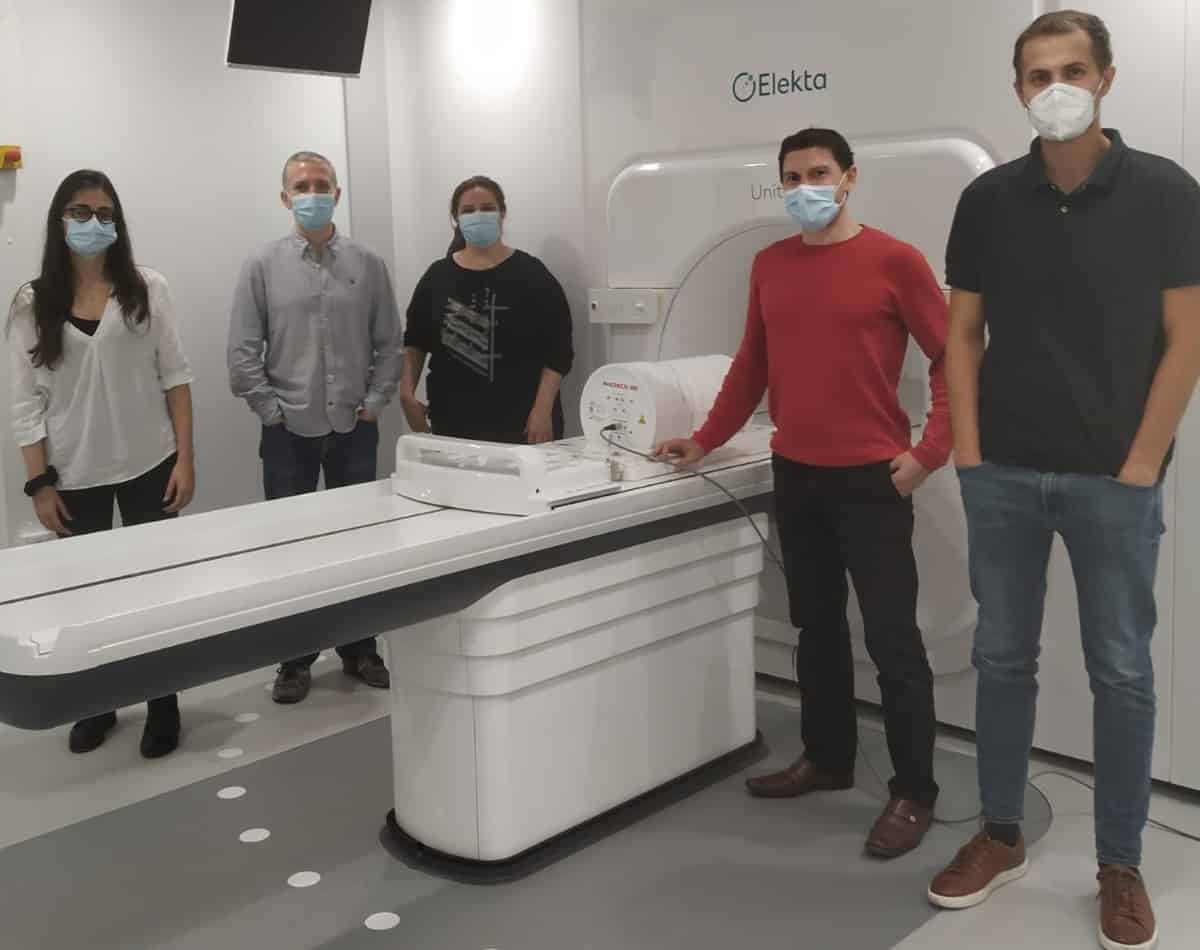
QA tools from Sun Nuclear and other product vendors are fundamental for successful technology innovation and clinical translation of advanced radiotherapy modalities. The commercial introduction of the Elekta Unity MR-linac is a case in point. Back in 2012, Sun Nuclear supported the early-stage clinical evaluation of this pioneering MR/RT breakthrough, providing an MR-compatible ArcCHECK (a 4D diode array for patient QA) to Elekta’s university research partner UMC Utrecht in the Netherlands.
Easing adoption: with the aid of Sun Nuclear’s proven ArcCHECK-MR and IC PROFILER-MR solutions, Madrid’s Hospital Universitario La Paz recently completed installation of a new Elekta Unity MR-linac. (Courtesy: Hospital Universitario La Paz)
Right now, we have around a dozen academic partners and university research hospitals using our products for preclinical research on novel treatment delivery systems. At the same time, established radiotherapy system manufacturers, as well as new-entrant technology start-ups, commonly deploy a suite of our QA solutions across the organization to support product development, manufacturing and their installation and service teams.
Do you see any threats to the culture of best practice and continuous improvement regarding patient safety in radiotherapy?
As one of several companies focused exclusively on independent QA, we see various structural “issues arising” that give cause for concern – and pause for thought. For starters, there’s a concerted move by radiotherapy equipment makers to integrate more and more downstream patient safety checks into their delivery systems. While there are operational benefits for sure, self-checking on its own is not enough and should not be a replacement for a rigorous, independent QA programme. Today’s radiotherapy systems are so complex that it is simply not possible to mitigate every potential risk internally – hence the need for independent evaluation and verification as a default setting.
There are also concerns around data – especially open access to the data generated by the treatment planning system, the linac (machine log files) and electronic portal imaging device (EPID) during treatment. While there have already been attempts to restrict access and monetize this data, it’s worth restating that the data is “owned” by the clinic and must remain freely accessible to enable independent analysis of radiotherapy fulfilment. A research study presented at the ESTRO 2020 Meeting by Iridium Kankernetwerk, Belgium, is instructive in this regard, with independent downstream QA – predicated on full data access at a single clinic over the course of two years – identifying 4000 actionable errors and opportunities for improvement within 56,000 delivered fractions. Just one example among many of the role that independent QA plays in the detection of random and systemic errors, the prevention of future errors, and the identification of opportunities for improved treatment delivery.
Where next for independent QA?
The independent QA community is in robust health. In fact, two of our more recent innovations – the SunCHECK platform (for integrated machine and patient QA) and SRS MapCHECK (a high-density diode array for SRS patient QA) – have seen tremendous clinical uptake because of the efficiency gains they provide when embedded in the treatment workflow. Proof-positive of the enduring demand for independent QA solutions – even with the blurring of boundaries that follows from more integrated self-check features being rolled out by the radiotherapy equipment vendors.
The competition is welcome in any case and will only accelerate product innovation and the introduction of enhanced QA solutions for medical physicists and the cross-disciplinary radiation oncology team. Right now, for example, there are exciting opportunities taking shape around automation, integration and machine learning within current treatment modalities. Longer term, innovative QA products and services will also be needed to support the clinical translation of next-generation treatment technologies such as FLASH radiotherapy and biological IGRT.
Black holes are nature’s fastest data-scramblers, and new research suggests that secrets thrown into them may be more secure than previously thought. In a paper published in Physical Review Letters, researchers at Los Alamos National Laboratory (LANL) in the US show that once a message has been scrambled by a black hole or another system with similar properties, not even a quantum computer can put it back together.
Scramblers are quantum systems that take local information and spread it across the entire system, generating quantum entanglement between distant regions. They crop up in various contexts in physics. While black holes are perhaps the most famous example, scramblers also exist in simple systems such as spin chains – 1D arrangements of quantum particles with coupling between nearest neighbours – and in “strange” metals, in which resistivity depends atypically on temperature.
Although the scrambling process is deterministic – a fixed input yields a fixed output – scrambling systems can give rise to tremendously complex behaviour, distributing information in seemingly random fashion. This emergence of apparent randomness is known as quantum chaos, in analogy with classical chaos theory, where similarly simple systems produce equally intricate dynamics.
A shred of hope for message recovery
Physicists working at the intersection of quantum mechanics and gravity are interested in scramblers in part thanks to the so-called black hole information paradox. The paradox revolves around the ultimate fate of information that falls past the event horizon and into a black hole: after a message is scrambled across the surface of a black hole, is its information trapped in the black hole forever, or does it somehow manage to escape? One school of thought holds that information does escape from black holes in the form of photons emitted via a process known as Hawking radiation. This theory received some corroboration in 2019, but the jury is still out.
Studying scramblers Lead author Zoe Holmes is a postdoctoral scholar at Los Alamos National Laboratory. (Courtesy: Zoe Holmes)
In 2007, while investigating this paradox, physicists Patrick Hayden and John Preskill came up with a thought experiment. Assuming that black holes do encode information in Hawking radiation, they showed that when a message is sent into a black hole, its pieces can be rapidly recovered by capturing a few of the emitted photons – a process akin to recovering the slices of a shredded document from the heat given off by the shredder. However, while the black hole’s scrambling behaviour makes such a recovery possible, the Hawking radiation alone doesn’t tell you how to unscramble a scrambled message. Other approaches are needed to, in effect, reassemble the shredded document from its paper strips.
Scramblers beset by barren plateaus
Enter machine learning algorithms. These powerful pattern-identifying tools “learn” how to best approximate a physical system by comparing outputs of the real system to their own outputs (given the same inputs for both), tweaking their internal model, and then rinsing and repeating until reality and approximation align. The central quantity in this learning process is a mathematical quantity known as the cost function, which captures the degree of deviation between the model and the real system.
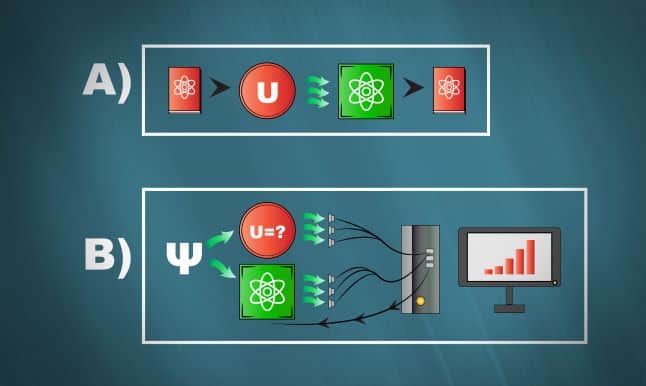
Scrambler schematica A scrambler, represented by unitary U, disperses input information. b A proposed protocol for learning how to unscramble a scrambled message using a quantum computer. The researchers found that this protocol suffers from the problem of barren plateaus. (Courtesy: Los Alamos National Laboratory)
In classical machine-learning methods, the cost function is like a mountain range, replete with peaks and troughs that represent its higher and lower values. Minimizing the cost function – and learning a model for the system – is like finding a descending path and following it down to base camp. When the model is a quantum system modelled on a quantum computer, however, the cost function landscape isn’t always so rich. In fact, the LANL researchers showed that when the algorithm is asked to model a scrambler, it suffers from the problem of “barren plateaus”. “The cost function is essentially flat everywhere, with a needle-sized hole that is the base,” says Zoe Holmes, a postdoctoral scholar at LANL and lead author on the paper.
This absence of features in the cost function renders quantum machine learning ineffective, because finding the “hole” from a random starting point within the landscape is almost impossible without a downward path to follow. “If you’re learning using a cost function evaluated on a quantum computer, no matter how many training pairs you have, you won’t be able to learn the scrambler,” Holmes says, “at least without prior knowledge”. This flaw rules out the possibility of reconstructing a message, which would entail inverting the scrambling process.
A hard lesson to learn
The LANL researchers conclude that even if the pieces of a scrambled message are known, putting them back together poses a problem that quantum computers cannot help us solve. “You could perhaps (ambitiously!) try to use the fundamental physics of the black hole to put a message together,” says Holmes, cautioning that no such method is currently known, “but any learning method looks pretty doomed”. Nature, it seems, is a pretty good confidant.
Water molecules on cold surfaces require some additional heat before they can form ice, an international research team has discovered. Their novel experiment found that water molecules on a cold graphene surface initially repel each other, until additional energy allows them to reorient themselves and form electrostatic bonds. The findings fill an important gap in our knowledge of ice formation – and could lead to new ways of controlling the freezing process.
When liquid water encounters a cold surface, ice can quickly form through the process of nucleation whereby individual water molecules coalesce bond with each other to form ever larger solid crystals. While nucleation has been widely studied on the macroscopic scale, it is difficult to study on the molecular scale because it occurs on a timescale of tens of picoseconds, which is too fast for conventional instruments.
Now researchers led by Anton Tamtögl at the University of Cambridge (now at the Graz University of Technology) and Marco Sacchi at the University of Surrey have observed nucleation on the molecular scale using a technique called helium-3 spin echo. First developed at Cambridge, the technique involves scattering a beam of spin-polarized helium atoms from molecules on a surface. The atoms arrive at the surface in wave packets that are separated by regular time intervals on the picosecond scale. The motions of molecules on the surface causes differences in the phases of successively scattered wave packets, which is detected using a spin-echo technique.
Dipolar repulsion
The experiments revealed that water molecules initially attach to a cold graphene surface with the same orientation: the two hydrogen atoms are close to the surface while the oxygen atom is elevated above the surface. Water molecules are electric dipoles (the oxygen end is negatively charged, and the hydrogen end positively charged) so there is a dipolar electrostatic repulsion between these similarly oriented molecules and this suppresses nucleation. The team found that this barrier can only be overcome by heating the molecules to change their orientations so that their oppositely charged poles can attract each other, initiating nucleation.
To understand their observations, Tamtögl and colleagues did computer simulations of the interactions between adsorbing water molecules at varying energies. As they hoped, altering the amount of applied heat switched nucleation on and off – agreeing with experimental observations.
The team’s results could lead to new techniques for controlling ice formation on wind turbines, aircraft and telecommunications equipment. They could also provide important insights into ice formation and melting in glaciers and ice sheets – allowing researchers to better quantify the effects of climate change on the cryosphere.
We’re a quantum computing software and algorithm company, and we’re just over six and a half years old, so we’re in early adolescence. We’re trying get the most out of quantum computers both now and in the future, and in that respect, there are two sides to the coin. On one side, we work with the hardware companies to make sure that whatever hardware they’ve got is put to best use. There’s a long history of this in classical computing, where for 70 years we’ve had great algorithms and great software making hardware even better. And then on the other side of the coin, we work with users – people who have problems that might be solved by quantum computing. That side is obviously in its infancy, but what we do in these early days is to make sure that whatever is available can be useful.
You’ve developed software for applications in quantum chemistry and you’re working with PhD students in pharmaceuticals. Can you tell us more about that?
The point that’s probably worth making first is that there’s an informed consensus (and it has been an informed consensus for some time) that one of the great applications for quantum computers lies in materials discovery. At the most profound level, discovering new materials is a quantum mechanical simulation because it’s ultimately about understanding the stability of different molecular systems.
At Cambridge Quantum, we decided that this was extremely important a while back, when we decided to look at some of the biggest problems the world might face. One example of such a problem might be drug discovery in fields such as Alzheimer’s research, where there are few treatments available. Another might be carbon sequestration, where a material that could lock away carbon safely would be hugely beneficial. Other examples might include extending battery life, developing better surfactants for hydrocarbon extraction, or making refrigerants that don’t impact on the ozone layer.
We looked at a handful of these big problems, and we decided to partner with clients who knew more than anybody else about these areas. We’ve now got an enterprise-level software platform for that partnership, and it is beginning to do things that people have been dreaming about doing with quantum computers for a long time. It’s really exciting.
There is still a lot of academic work to be done, so we are working with (for example) the pharmaceutical firm GlaxoSmithKline in sponsoring PhD studentships. But the spectrum of what we do includes real applications, too. In 2020 we announced that we would be working with the oil company Total on a carbon sequestration solution based on metal-organic frameworks.
You’ve got an agreement with Honeywell for access to its quantum computer. Do your customers use other quantum computers as well?
Quantum computers are still somewhat restricted in their availability and, frankly, in their performance. But this will change quickly. Already, over the course of the last year, the changes are incomparable. Large corporations now have the resources and relationships to access machines directly, and those machines are available from IBM, from Honeywell, and from other companies as well. It’s also now possible to subscribe to these machines, because some of the big cloud providers (Amazon Web Services and Azure are two examples) have taken initial steps towards offering what we might describe as quantum processing units alongside regular high-performance computing. Those early access agreements are now available for subscription, sometimes on a daily or even an hourly basis. And then beneath all of that, there is a clutch of start-ups like IQM in Finland, Alpine Quantum Technologies in Austria and Oxford Quantum Computing in the UK that are all on a very steep trajectory. Their processors will be available in a variety of ways.
All of this means that a large corporate entity has a variety of ways of accessing quantum processors, and what we do is to pull all of that together. We have two distinguishing features. We have a software development platform called Ticket that is platform-agnostic, meaning that people can reserve the right to use any machine. We also have access to the Honeywell machine, and we’re a client of the IBM quantum computers (of which there are rather more at the moment than there are of the Honeywell machines). So we have access to at least two of the world’s leading quantum computers.
In November 2020 you announced a partnership with the UK’s National Physical Laboratory (NPL) that involves using quantum computers to generate truly random numbers. Can you tell us more about that?
This is an area that people often take for granted, but ultimately all methods for protecting data or communications are about scrambling information in a random fashion and then unscrambling it later. Up to now, all those methodologies have been deterministic. People have used algorithms. But thanks to announcements and amplifications by authorities in the US, UK, Japan, China and Russia, among others, it’s becoming clear that the “post-quantum” environment will be one where quantum devices can offer randomness that has no pattern, and where if a hack did take place, there would be an alert at a basic level.
The NPL is moving towards offering this randomness in a standalone device, one that could be used in areas such as switches, network optimization and even artificial intelligence as well as cybersecurity. So that’s our project with the NPL. But in September 2020 we announced a complimentary project with IBM, where we do the same thing, except that instead of doing it in a device, we do it via an IBM or (more recently) a Honeywell quantum computer. So if you want an unhackable seed for your cryptographic key, then you can either take one that we will provide from a quantum computer, or – soon – one that is delivered by a device, using the expertise that NPL will help us to develop.
Unlike some chief executives of quantum firms, you don’t have a background in physics. Does that mean that quantum technology has matured to the point where you don’t need to be a physicist to start a quantum computing company?
While I think the quantum sector is maturing, it certainly could not be said that quantum computing was mature back in 2014 when Cambridge Quantum was established. But we set up the business anyway, and within our team we have some of the most talented quantum computing and quantum scientists around. These are people who know more than I ever will. They’re among the leading experts in the world, but they’re scientists – they don’t run the business.
The other part of your question – the implied part, if you like – is perhaps more interesting. I’m on a mission, and my mission for the last three years has been to demystify quantum computing. I am of the very clear view that we shouldn’t create mystery in this field. While it’s perfectly fine to have people who are deep on the scientific side, just as you would in pharmaceutical companies or biotech companies or artificial intelligence companies, I think it’s also possible for quantum computing to be understood by the general public. So in that sense, I think the maturity of the sector makes it possible for us to unravel and unpackage what Cambridge Quantum (and quantum computing more broadly) does.
What are your goals for the company’s future?
We have a very simple and straightforward view, which is that we want to do things that matter for people that matter. And we believe very strongly that quantum computing will end up being one of the largest segments of the global economy. We buy into what people like the German chancellor Angela Merkel have said, and what the US Congress said when it passed the National Quantum Initiative Act, which is that it is essential to be at the leading edge of using quantum technologies in everyday life.
Now, if that comes to pass – whether it’s in five years, or 10 years or 20 years – we want Cambridge Quantum to be at the forefront of companies involved in the industry. This is not dissimilar to what I would have said if I’d had a crystal ball in, say, 1994 and 1995, when I might have looked forward to 2020 and the prevalence of Internet firms such as Google and Apple among the world’s largest companies.
Underneath that mission, of course, we have to take care of what’s going to happen tomorrow and next month and next year. And in that context, we’re very, very scientific and technology-focused in building tools. So it’s a dichotomy of visions: for the short term, get the best product; for the longer term, be the leader.
What’s your advice for someone who wants to get into the quantum computing industry?
We were recently involved in a careers event where computer scientists, mathematicians and quantum information theorists were all looking at ways to get into the industry. And the fantastic thing about that is that for the last 25 or 30 years, the main careers available to those people would have been in academia. People who studied those subjects would have ended up either teaching or getting jobs elsewhere.
Now, companies such as Google, Microsoft, Amazon, IBM, Honeywell and a hundred new start-ups are looking for talent in those areas. We’ve grown too – we’ve been hiring new people every single month. It’s not difficult to find vacancies if you have that background and training.
As for getting into the industry from an entrepreneurial standpoint, I think that is more challenging. There are a number of people who are “native” to quantum technology, as opposed to being a mathematician or a computer scientist. However, there are only a small number of people who combine being a quantum-native scientist with being the chief executive of a company. Examples might be Jeremy O’Brien at PsiQuantum or Mikko Möttönen from IQM, but they are rare. Most people who are quantum native are working within the organization.
So my advice from the business standpoint is to think very carefully about who you’re backing. I was lucky: I landed on my feet because there was a confluence of circumstance where I found people who know more than I ever will about quantum computing and I was able to work with them, trust them and give them the tools to build what is now Cambridge Quantum.
This June we will bring you Quantum Week – a series of free-to-attend scientific presentations in the field of quantum science and technology. Presentations will be on topics including quantum processors, the ethics of quantum computing and computational advantage. Find out more and register today.
Even if you’re not able to join the live events, registering now enables you to access the recordings as soon as they are available.
Iron Man, Doctor Octopus, Wolverine, even Geordi LaForge. Body augmentation has been fantasized by writers for decades. Many readers have questioned how realistic the development of such technologies might be in today’s world, as this futuristic vision relies on the human brain’s ability to interface with external devices and learn to use them. Researchers from University College London are investigating the use of motor augmentation with the development of a “Third Thumb,” publishing their findings in Science Robotics.
The Third Thumb augmentation device, designed by Dani Clode, is a 3D-printed robotic digit that is worn on the hand, opposite the user’s natural thumb. Its motion is actuated by two motors mounted on a wrist strap that are controlled by pressure sensors under the user’s big toes.
The researchers trained study participants to use the Third Thumb for five days. During these training sessions, the participants completed a series of reaching, grasping and manipulation tasks designed to present them with a wide range of use scenarios. For example, they used the additional thumb to extend their natural grip, holding a cup while stirring with the remaining natural fingers. In order to test the success of augmentation, the team required participants to multitask, performing arithmetic operations while using the Third Thumb to build a block tower. Across pre- and post-test assessments, all trained participants demonstrated an increased sense of embodiment over the device.
After the training, functional MRI scans showed significantly reduced inter-finger distances of the augmented hand’s representation in the participants’ sensorimotor cortices. That is, the brain activity patterns elicited by moving their individual fingers became more similar. This result corresponds with less distinctiveness between biological fingers in motor areas of the brain after training. When these participants returned to lab after a week of not using the Third Thumb, these changes in the brain had largely subsided, demonstrating the need for regular use of augmented devices for success.
The significance of the results lies in the change: researchers found that use of the Third Thumb changes both motor control of the hand and how the hand is represented in the brain. Furthermore, they observed this effect even when participants were not wearing or using the device – the change occurred as a result of training and remained when the Third Thumb was removed.
The study demonstrates the feasibility of motor augmentation, showing that users embody the augmented device and use it fruitfully with proper and regular training. What’s more, the Third Thumb changed the way the user’s body is represented in the brain. These results are important as they open the door for further characterization of the mechanisms by which augmented motor performance takes place. The researchers call for further exploration of body representation and motor control, which will be crucial for wide implementation of the technology.
In short: watch out, Tony Stark. Soon you might not have the only mechanized suit in town.
The astrophysicist Catherine Heymans has made history by becoming the first female Astronomer Royal for Scotland, an office that was created in 1834. In this episode of the Physics World Weekly podcast, she talks about her new role and how she will use it to show that science is relevant to everyone. One initiative she has planned will ensure that every primary school pupil in Scotland has the opportunity to peer at the sky through a telescope.
Our other guest this week is the physicist and educator Joanne O’Meara, who is at Canada’s University of Guelph. She shares her strategies for engaging students who are intimidated by physics including the use of fun experiments and humour in lectures. O’Meara also explains how she uses the “flipped classroom” strategy to encourage her students to become more engaged during lectures.
NASA has announced it will send two missions to Venus to study the planet’s atmosphere and geological features. Planned for launch between 2028 and 2030, the missions have each received $500m and will become part of the agency’s discovery programme. They represent the first dedicated NASA missions to Earth’s nearest planetary neighbour in over 30 years.
NASA says that the two new missions were chosen based on their potential scientific value and the feasibility of their development plan with the two project teams now working to finalize their designs.
We’re revving up our planetary science program with intense exploration of a world that NASA hasn’t visited in over 30 years
Thomas Zurbuchen
The Venus Emissivity, Radio Science, InSAR, Topography and Spectroscopy (VERITAS) mission will study the planet from orbit, observing primarily with a synthetic aperture radar. It will map Venus’ surface to determine the planet’s geologic history and understand why Venus developed so differently than the Earth. It will use the radar to chart surface elevations over the planet to create 3D maps of topography and confirm whether processes, such as plate tectonics and volcanism, are still active on Venus.
The Deep Atmosphere Venus Investigation of Noble gases, Chemistry, and Imaging Plus (DAVINCI+), meanwhile, will be a probe that will dive through Venus’ atmosphere to precisely measure its composition down to the surface. It will analyse Venus’ atmosphere to understand how it formed and evolved and determine whether Venus had an ocean.
A hothouse
The last dedicated NASA mission to Venus was the Magellan spacecraft that launched on 4 May 1989 to map the surface of Venus. Since then the European Space Agency launched Venus Express in 2005 and more recently JAXA’s Akatsuki craft took off in 2010, although it only arrived in 2015 after failing in its first attempt to enter Venus’s orbit, spending five years circling the Sun.
“We’re revving up our planetary science program with intense exploration of a world that NASA hasn’t visited in over 30 years,” says Thomas Zurbuchen, NASA’s associate administrator for science. “We’re ushering in a new decade of Venus to understand how an Earth-like planet can become a hothouse. It is not just understanding the evolution of planets and habitability in our own solar system, but extending beyond these boundaries to exoplanets, an exciting and emerging area of research for NASA.”
The two craft missions were selected from four mission concepts that were chosen for further study in February 2020. The two probes to have missed out are the Io Volcano Observer to explore Jupiter’s volcanically active moon, Io, as well as the Trident mission to map Triton – a highly active icy moon of Neptune – to determine if the predicted subsurface ocean exists.
As I strode across campus to teach my second-year electricity and magnetism class, it suddenly struck me that I had the makings of a fantastic opportunity tucked under my arm. My teaching assistant (TA) had just returned the last assignment of the semester to me, so I quickly formulated my plan. Projecting a stern and serious air as I entered the room, quite unlike my usual friendly self, I told my class that I was disappointed to hear from our TA that a lot of copying had been spotted in the submissions, which was completely unacceptable. I asked everyone to take out a piece of paper immediately and work through the solution to one question again, this time entirely on their own.
There was much muttering and sharing of furtive looks, but everyone complied as I projected the question onto the screen. After a few minutes, I said: “Please make sure you write your name and the date on the page…today is 1 April.” As my students slowly looked up at me, realization dawning on their faces, I shouted: “APRIL FOOL’S!” It took a good 10 minutes before we were all settled down and ready to discuss the physics of magnetic materials, but I maintain that it was 10 minutes well spent.
Study after study has demonstrated the value of a “flipped” classroom, in which students engage with each other and the instructor in meaningful and deep learning activities. This little April Fool’s prank was certainly not such an activity, but it is a good example of the value of being a little silly with your students: it can incentivize lecture attendance. After all, as a lecturer you go to great lengths to fine-tune your pedagogy based on current physics-education research, but unless your students actually get out of bed and into the classroom your hard work will never pay off.
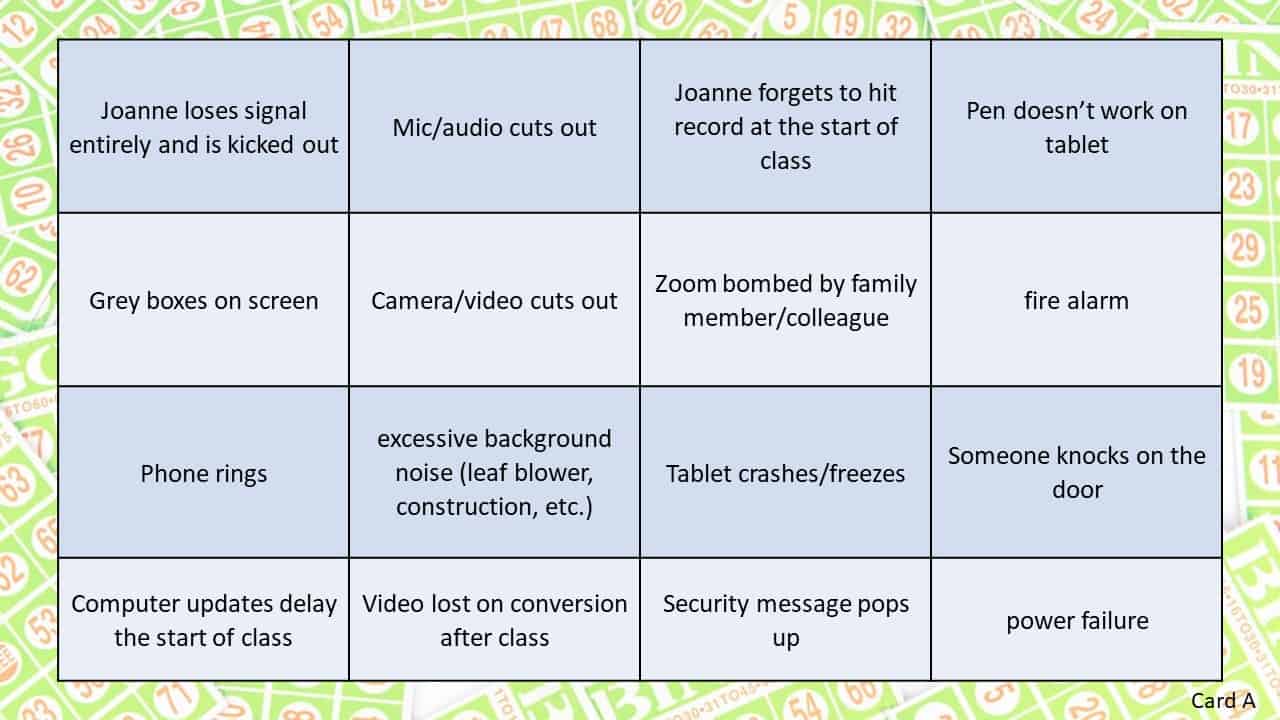
This is something I have struggled with while teaching remotely during the pandemic. Being jokey and improvisational with my students has been difficult when only a tiny fraction of the class turns their camera and/or microphone on – it is almost impossible to “read the room” in Zoom. So, after grumbling about the countless ways in which technology foils my best-laid plans for an engaging virtual class, I decided to take advantage of the humour in the situation: my students and I created a bingo game based on the myriad ways in which our online sessions go wrong, from excessive background noise to screens freezing.
(Courtesy: Joanne O’Meara)
Injecting humour also helps to break down barriers between my students and me. I want my classroom to be a haven, where students can ask questions (to each other and to me) without worrying about being judged. No-one, including me, has all the answers or is right all of the time; mistakes are the best opportunities for learning.
Rather than projecting an air of unassailable authority, I celebrate these moments with my students. I want them to try to follow along with each step during class, rather than passively writing it all down to figure out later. As we work, everyone is on high alert because the first person to catch a mistake, such as that inevitable loss of a negative sign, is rewarded with a box of chocolate Smarties.
With remote teaching I obviously can’t hand out sweets on the spot, so instead I keep a running tally of students who have noticed mistakes and then I post the prizes to the students at the end of term. I even add a personalized Smarties certificate to this special delivery. Students seem to really appreciate this touch – one even stuck it to their fridge – so I plan to keep this new tradition going even after we are back in the classroom.
(Courtesy: Ashley Geddes)
I am not a stand-up comic in academic regalia. But you don’t have to be hysterical to make good use of humour in the classroom, and humour is a great way to improve students’ attitudes to the course, which can in turn improve performance. One recent study, which looked at the effect of a positive attitude towards maths on the brain’s ability to learn and remember, concluded that children with poor attitudes towards maths rarely performed well in the subject. While that finding might not be as relevant for the physics students in my second-year electricity and magnetism class, it’s crucial for students who aren’t taking physics out of choice. I frequently find myself, for example, in front of hundreds of first-year biology students, which is like being an emissary to a hostile nation. In my first lecture, I ask them to tell me how they are feeling about this course – the choices being “excited”, “ambivalent” or “terrified”.
Humour is a great way to improve students’ attitudes, which can in turn improve performance
Unfortunately, there are times in a room full of 400 students when there are precisely zero responses in the “excited” category. Making a concerted effort to help shift our students’ attitudes towards the subject is important to opening the door for them to do well, as that positive attitude results in enhanced memory and more efficient engagement of the brain’s problem-solving capacities.
Every teacher develops their own style with practice and guidance, and I had the good fortune to be mentored by exceptional educators as I began to shape mine. I learned from some of the best in the business that humour is a powerful tool in the lecture hall for incentivizing class attendance, creating a welcoming environment and improving student attitudes. To my mind, when it comes to teaching physics, a little tomfoolery goes a long way.
This is an edited version of an essay that was originally published in the collection Teaching Physics with a Sense of Humor.