Without sound and fury, signifying something: acoustics and batteries

Want to learn more on this subject?

Although classic battery engineering is firmly rooted in chemical engineering and chemistry, the last decade has seen a significant increase in research on mechanical and chemo-mechanical properties of batteries for both reversible and irreversible behaviours. Characterization of structural evolution and degradation on a cycle and calendar basis is necessary to increase the lifetime of high-energy density cells while decreasing cost, and a range a chemistry-specific methods have been applied to probe chemical mechanical couplings. In theory, and increasingly in practice, acoustic interrogation reveals mechanical correlations across any chemistry and cell form factor due to its exploitation of the required mass balances for cell operation. Beyond being generalizable to all battery chemistries, acoustic methods are scalable, high rate and readily operando: sub-ms acquisition times are possible on full cells using desktop equipment.

In this webinar, the physical principles of electrochemical acoustic interrogation will be introduced, and example experiments will be described for lithium ion, lithium metal, and zinc alkaline systems. Statistical correlations of acoustic behaviour and “battery state” will be discussed (state of charge, state of power, state of safety, state of health), as will newer studies on structure and property extraction, with emphasis on degradation due to thermal and fast-charge events. Current spatial and temporal limits will be discussed, as will asymptotic capabilities.

Want to learn more on this subject?

Daniel Steingart is the Stanley Thompson Associate Professor of Chemical Metallurgy and Chemical Engineering, and the co-director of the Columbia Electrochemical Energy Center. His group studies the systematic behaviours of material deposition, conversion and dissolution in electrochemical reactors with a focus on energy-storage devices.

His current research looks to exploit traditional failure mechanisms and interactions in batteries, turning unwanted behaviours into beneficial mechanisms. His efforts in this area over the last decade have been adopted by various industries and have led directly or indirectly to five electrochemical energy-related start-up companies, the latest being Feasible, an effort dedicated to exploiting the inherent acoustic responses of closed electrochemical systems.

Steingart joined Columbia Engineering in 2019 from Princeton University where he was an associate professor in the department of mechanical and aerospace engineering and the Andlinger Center for Energy and the Environment. Earlier, he was an assistant professor in chemical engineering at the City College of the City University of New York. Even earlier, he was an engineer at two energy-related start-ups. He received his PhD from the University of California, Berkeley, in 2006.



‘Hell-like’ exoplanet experiences rocky rain and supersonic wind

A fiery exoplanet located barely a million kilometres from its parent star is covered by magma oceans and has an atmosphere of vapourized rock on its “day” side, whilst its “night” side remains cold enough for glaciers to form. This is the finding of scientists at McGill University and York University in Canada who, with colleagues at the Indian Institute of Science Education, performed computer simulations using data from NASA’s Kepler Space Telescope and Spitzer Space Telescope to investigate the atmospheric dynamics of the exoplanet K2-141b. The scientists say that the complex interactions they uncovered reveal new information about the early years of other rocky planets – including Earth, which likely passed through a similar molten phase as it formed.

At just 0.00716 AU (astronomical units, the distance from the Earth to the Sun), the orbit of K2-141b is so small that the exoplanet’s parent orange dwarf star blots out a 50-degree chunk of its sky, compared to 0.5 degrees for the Sun as viewed from Earth. This close proximity means that the exoplanet most likely has a tidally locked orbit such that its host star never moves in its sky. It therefore has a permanent day side where temperatures soar to 3000 °C, and a night side where they plunge below –200 °C.

A magma ocean and rocky rain

In a study published in the Monthly Notices of the Royal Astronomical Society, researchers led by Nicolas Cowan and Giang Nyugen show that K2-141b’s extreme temperature difference causes large pressure gradients. Consequently, supersonic winds sweep across its surface, transferring material from one side of the exoplanet to the other. This transfer process exists alongside evaporation and sublimation, which – much like the water cycle on Earth – help to circulate material through the lava planet’s atmosphere.

When heat on K2141b’s day side evaporates the molten rock at its surface, the resulting cloud of mineral vapour is blown to the night side at a rate of 5000 km/hr. There, it falls onto the exoplanet’s magma ocean and beyond the shore as rain or snow. From there, the material will eventually arrive back at the day side via ocean circulation, but the researchers predict, based on their simulations, that the return flow will be very slow. They also predict that conditions on K2-141b, as on other terrestrial planets, will change over time. Further constraining the composition and dynamics of K2141b’s atmosphere could therefore help determine the evolution of other exoplanets, and suggest ways of observing them, they say.

Candidate for further study

Because K2-141b is so close to its host star, the researchers conclude that it would be a perfect candidate for transit spectroscopy. This technique relies on the fact that when an exoplanet passes in front of its parent star, the starlight must travel through the exoplanet’s atmosphere to get to Earth. In the process, molecules in the atmosphere absorb certain light wavelengths whilst letting others pass through unhindered; hence, a careful analysis of the star’s spectrum reveals information about the composition of the exoplanet’s atmosphere. The fraction of stellar light that reaches Earth after such transits is, however, extremely small, which restricts the telescopes and instruments that can be used to observe it. Studies like this one therefore help constrain which systems are best-suited to transit spectroscopy.

Arecibo Observatory will be decommissioned, says US National Science Foundation

Officials at the US National Sci­ence Foundation have decided to decommission the iconic Arecibo Observatory in Puerto Rico after a second cable failure caused fresh damage to the telescope’s metal platform, which is suspended above the 305 m-wide reflecting radio dish. According to a statement from the University of Central Florida, two of the remaining main cables seem to have wire breaks, increasing the like­lihood of the tower platform falling and destroying the telescope.

Opened in 1963, the observatory is currently the world’s second-largest single-dish telescope. On 10 August one of the six 8 cm-wide auxiliary steel cables added in a 1990s upgrade failed. This tore a 30 m gash through the main reflector dish. Then on 6 November one of the dish’s four main cables snapped, transferring the load onto the remaining cables and so making them more likely to fail. The observatory has also suffered hurricane and earthquake damage in recent years.

Yesterday, the National Sci­ence Foundation – one of the organi­zations that manages the observatory together with the University of Cen­tral Florida (UCF), Universidad Ana G Méndez and Yang Enterprises – announced that the damaged areas could not be stabilized safely.

Safety a priority

“NSF prioritizes the safety of workers, Arecibo Observatory’s staff and visitors, which makes this decision necessary, although unfor­tunate,” NSF director Sethuraman Panchanathan said in a statement.

Ralph Gaume, director of NSF’s Division of Astronomical Sciences, adds, “Leadership at Arecibo Observa­tory and UCF did a commendable job addressing this situation, acting quickly and pursuing every pos­sible option to save this incredible instrument”.  “Until these assessments came in, our question was not if the observatory should be repaired but how. But in the end, a preponderance of data showed that we simply could not do this safely. And that is a line we cannot cross.”

Astronomers and members of the public have been sharing their thoughts on the closure using the Twitter hashtag #WhatAreciboMeansToMe. The Planetary Society posted, “We are sad to say goodbye to Arecibo but we’re grateful for its phenomenal contributions to space science and planetary defence,” referring to the observatory’s role in tracking near-Earth asteroids.

Hollywood star

Many people have been highlighting Arecibo’s role in the 1997 film adaptation of Carl Sagan’s novel Contact, which is about humanity’s first contact with an extra-terrestrial civilization. Others have referred to the 1974 “Arecibo message” – an interstellar radio signal carrying basic information about humanity that was sent from a radar transmitter at the observatory to the globular star cluster M13.

Some have posted personal messages on Twitter, including the educator, physicist and former astronomer Emily Alicea-Muñoz who got married at the telescope and shared some of her wedding photographs (see below).

Gold nanotubes and infrared light could treat asbestos-related cancer

Gold nanotubes can destroy cancer cells, according to physicists and medical researchers at the University of Cambridge and the University of Leeds. They found that their nanotubes, which were tuned to have strong near-infrared absorption, can enter mesothelioma cells and destroy them when heated with laser light.

Every year, more than 2700 people in the UK are diagnosed with mesothelioma. This cancer usually grows in the pleural membrane, a thin lining that surrounds the lungs. The vast majority of cases are caused by exposure to asbestos dust. When damaged, asbestos releases microscopic fibres that can be inhaled. These fibres can then migrate through lung tissue into the pleural membrane and cause mesothelioma to develop. Asbestos has been banned in the UK since the late 1990s, but mesothelioma can take from 15 to 60 years to develop.

“Mesothelioma is one of the ‘hard-to-treat’ cancers, and the best we can offer people with existing treatments is a few months of extra survival,” says Arsalan Azad at the University of Cambridge. “There’s an important unmet need for new, effective treatments.”

To develop a potential treatment, the researchers turned to gold nanotubes. They hypothesized that if absorbed by mesothelioma cells and then heated using near-infrared light, these hollow tubes – one thousandth the width of a human hair – would destroy the cancer cells.

Tests in an aqueous solution showed that, when heated with a laser at a wavelength of 875 nm with a power density of 1.9 W/cm2, the nanotubes increased in temperature by up to 9°C, high enough to cause localized killing of cancer cells. Next, the team added the nanotubes to mesothelioma cell cultures and tracked them using various microscopy techniques, observing that the nanotubes were absorbed by the cells.

The researchers then exposed mesothelioma cell cultures with and without the gold nanotubes to the near-infrared light for 10 min. Laser irradiation alone did not cause cell death, but laser exposure combined with the nanotubes killed roughly half of the cells. They report their results in Small.

Key to the nanotubes’ potential to destroy cancers within the human body is their tunability. Stephen Evans, a physicist at the University of Leeds, says that there are two near-infrared windows in which light has good optical penetration through tissue. He explains that you need to tune the nanoparticles so that they best absorb – and convert to heat – light at those wavelengths.

The optical properties of gold nanomaterials are controlled by the density of free electrons that the light couples to and causes to oscillate, Evans explains. “That is dependent on the size, in our case, the thickness of the wall of the gold,” he says. “If we made thicker walled gold, we would shift the absorbance wavelength, and if we made the walls thinner, we would shift it in the opposite direction.”

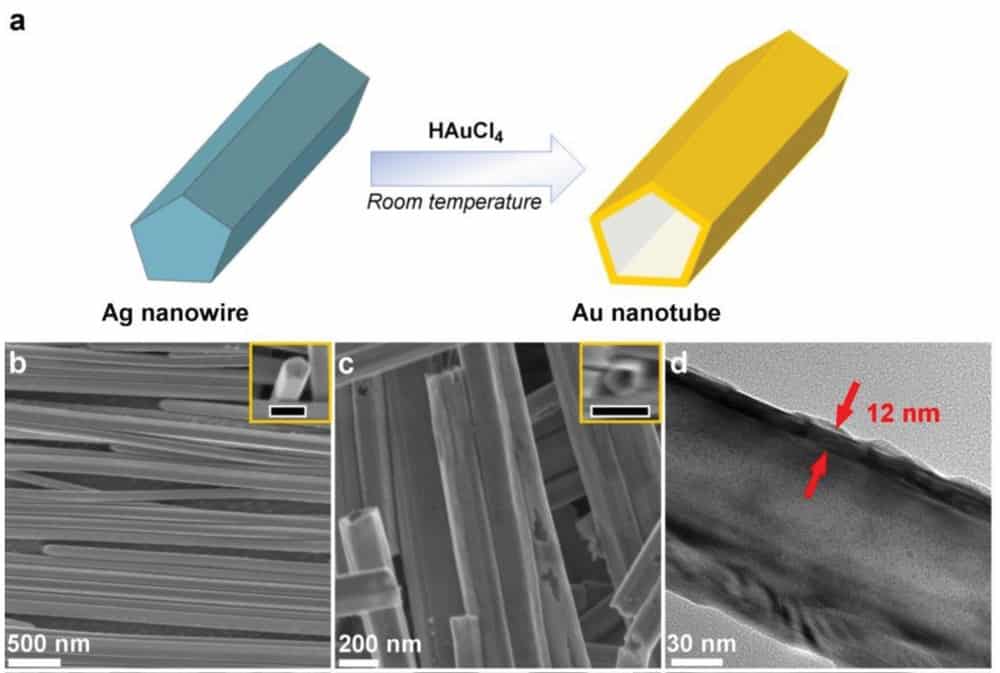
The nanotubes are created using a solution-based technique. First, a silver seed particle is grown into a silver nanowire, and then a gold salt is added to the water-based solution. The gold deposits onto the surface of the silver, which oxidizes and becomes water soluble. The silver then dissolves away leaving the gold nanotube.

Gold nanotubes from silver nanowires

Evans tells Physics World that the thickness of the gold is tuned by controlling the size of the silver nanowires. In the study, the silver nanowires were around 100 nm in diameter, which led to a gold thickness of 12 nm. The team also used nanowires with average diameters of 65 and 193 nm as templates to prepare gold nanotubes with thinner and thicker walls. “We showed that we could make silver nanowires of different diameters and thereby produce gold tubes with different wall thicknesses,” Evans says.

Part of the attraction of using these gold nanoparticles to treat mesothelioma is that they have similar dimensions to asbestos fibres. The hope is that that they will also get trapped in the same part of the body, aiding the delivery of treatment. “We are sort of mimicking what causes the disease so we can use that as a treatment,” Evans explains.

Optical clock sets new constraints on dark matter

An optical clock has been used to set new constraints on a proposed theory of dark matter. Researchers including Jun Ye at JILA at the University of Colorado, Boulder and Andrei Derevianko at the University of Nevada, Reno, explored how the coupling between regular matter and “ultralight” dark matter particles could be detected using the clock in conjunction with an ultra-stable optical cavity. With future upgrades to the performance of optical clocks, their approach could become an important tool in the search for dark matter.

Although it appears to account for about 85% of the matter in the universe, physicists know very little about dark matter. Most theoretical and experimental work so far has been focussed on hypothetical dark-matter particles, including WIMPS and axions, which have relatively large masses.  Alternatively, some physicists have proposed the existence of “ultralight” dark matter particles with extremely small masses that span many orders of magnitude (10−16–10−21 eV/c2).

According to the laws of quantum mechanics, the very smallest of these particles would have huge wavelengths, comparable to the sizes of entire dwarf galaxies – meaning they would behave like classical fields on scales we can easily measure.

Atomic energy levels

If these fields coupled to normal matter, these ultralight particles would generate oscillations in the values of fundamental physical constants. This includes the mass of the electron and the fine structure constant, which defines the strength of the electromagnetic interaction between charged particles. Both constants affect the energy levels of atoms, which are used in the operation of atomic clocks. Therefore, subtle variations in these fundamental constants would affect the timekeeping of an atomic clock.

In their study, Ye and colleagues measured the ratio between time signals produced by a strontium optical lattice clock (a type of atomic clock) and a resonant optical cavity made of silicon. This ratio should be extremely sensitive to the effects of ultralight dark matter particles. They also compared the frequency of the silicon cavity to that of a hydrogen maser – a microwave device that is used as a very precise frequency standard and has been used in previous dark-matter searches.

As expected, the maser was the noisiest device, and the team has concluded that the optical clock and silicon cavity combination is best for searching for dark matter. Indeed, they have set new constraints on the masses of ultralight particles, which they hope will improve as optical clocks get better. With suitable modifications, the detectors could even be integrated into satellites, producing the first global-scale telescopes for dark matter.

The research is described in Physical Review Letters.

  • In the Physics World Weekly podcast, Andrei Derevianko explains how atomic clocks and other quantum sensors could be used to detect dark matter.

Hunting dark matter with quantum sensors, working abroad brings career advantages

Dark-matter detectors usually conjure up images of large underground facilities, but relatively small quantum sensors such as atomic clocks and magnetometers have also joined the search for the elusive stuff. In this episode of the Physics World Weekly podcast, Andrei Derevianko at the University of Nevada, Reno explains how it is done.

We are also joined this week by Physics World columnist Caitlin Duffy, who is doing a PhD on superconductivity at the High Field Magnetic Laboratory in the Netherlands. Duffy talks about the benefits of moving country to pursue career opportunities and the professional and personal challenges of working abroad during the pandemic.

Finally, Physics World editors chat about the medical benefits of focused ultrasound and a new way of creating materials for twistronics.

This podcast is sponsored by Oxford Instruments NanoScience.

Organic photodiodes rival silicon devices

Although silicon photodiodes are widely employed in a host of light-detection technologies, scaling them up is difficult and expensive. Researchers at the Georgia Institute of Technology (Georgia Tech) in the US have now compared the performance of these diodes with that of organic polymer-based diodes, which are easy to fabricate over large areas. Somewhat to their surprise, the researchers found that the organic devices match their inorganic counterparts in all areas apart from one: response time. “The result goes against conventional wisdom that switching to organic materials that can lead to scalable devices would mean giving up on performance,” says team member Bernard Kippelen.

Silicon photodiodes (SiPDs) are very efficient detectors of ultraviolet, visible and near-infrared light. One of the metrics that quantifies their performance is noise equivalent power (NEP), which is defined as the optical power that produces a signal-to-noise ratio (SNR) of one. Since a photodiode’s performance varies with its area and the bandwidth over which measurements take place, researchers also use another parameter, the specific detectivity, to compare the performance of different devices. Higher values of specific detectivity mean that the photodiode can detect fainter levels of light.

Small-area, low-noise SiPDS fare well against these metrics. They boast specific detectivities of around 1012 cm Hz1/2W-1 in the visible and infrared parts of the electromagnetic spectrum when evaluated at a low bandwidth. However, maintaining this performance when the devices are fabricated over larger areas requires stringent control of crystal defects in the photodiode material. This can be difficult to achieve, and team leader Canek Fuentes-Hernandez notes that knowledge of how well SiPDs actually perform can be patchy. “Unfortunately, these metrics are seldom measured, and unverified approximations can lead to large errors when estimating their values,” he tells Physics World.

By directly measuring these key metrics, Fuentes-Hernandez, Kippelen and colleagues found that low-noise, large-area solution-processed flexible organic photodiodes are just as efficient as small-area SiPDs at detecting faint light in the visible range. The organic devices also show electronic noise current values in the range of tens of femtoamperes and noise equivalent power values of a few hundred femtowatts. Both values compare well with silicon when measured at a low bandwidth.

Organic electronic devices

In their work, members of the Georgia Tech team studied P3HT:ICBA organic photodiodes on indium tin oxide/polyethylenimine ethoxylated and MoOx/Ag electrodes. The polyethylenimine electrodes are stable in air and also allowed the researchers to produce photovoltaic devices that exhibit low levels of dark current (the electrical current that flows through a device even when no light shines on it). These low dark currents mean that the material can be used in photodetectors designed to capture faint signals of visible light.

Like other organic polymer-based electronic devices, these photodiodes can be made using simple solution-processing and inkjet printing techniques. That makes it possible to coat them onto a variety of surfaces, including flexible ones like those employed in displays and solar cells. Organic thin films also absorb more efficiently than silicon, so the overall thickness of the active light-absorbing layer in organic photodiodes is very small. Indeed, the active layer of the Georgia Tech team’s photodiodes is just 500 nm thick. “A gram of the material could coat the surface of an office desk,” Fuentes-Hernandez says.  “Even if you scale their area up, the overall volume of your detector remains small with organics. If you increase the area of a silicon detector, you have a larger volume of materials that at room temperature will generate a lot of electronic noise.”

Direct measurements revealed that a device based on these materials can detect as little as a few hundred thousand photons of visible light every second – equivalent to the magnitude of light that reaches our eye from a single star in a dark sky, explains Fuentes-Hernandez. This sensitivity, combined with their ability to be coated onto large, arbitrarily-shaped substrates, means that organic photodiodes “now offer some clear advantages over state-of-the-art SiPDs in applications requiring response times in the range of tens of microseconds,” he adds.

Expanding the range of applications

According to the team, organic photodiodes could be used in medical applications like pulse oximeters, which use light to measure heart rate and blood oxygen levels. The flexibility of these photodiodes might also allow multiple such devices to be placed on different areas of the body, and the researchers say they could detect a tenth of the light that conventional devices require. This would make it possible to build wearable health monitors that yield better physiological information.

There is just one snag: at 35 microseconds, the organic devices’ response times are significantly longer than those of SiPDS, which typically have response times of picoseconds or nanoseconds. The researchers, who report their work in Science, say they are working to improve response times to expand the range of possible applications for the devices. “The slower response time of our current devices comes from the fact that we use materials that are processed from inks using printing or coating techniques that are not as ordered as crystalline materials,” Kippelen explains. “As a result, the carrier mobility and the velocity of the carriers that can move through these materials are lower, so you can’t get the same fast signals you get with silicon. But for many applications you don’t need picosecond or nanosecond response time.”

Focused ultrasound treatments target childhood cancers

Focused ultrasound is an emerging therapeutic technology that uses ultrasonic energy to target tissue deep in the body, precisely and non-invasively. The potential applications are wide-ranging: from ablation of tumours and other lesions to blood–brain barrier opening, immunomodulation and neuromodulation, to name just a few.

At last week’s 7th International Symposium on Focused Ultrasound, AeRang Kim from the Children’s National Hospital in Washington, described the latest developments in focused ultrasound applications for paediatric oncology.

AeRang Kim

“We’ve made a lot of strides in paediatric cancer, now more than 80% of our patients are long-term survivors,” Kim explained. “However, this has come at a significant cost – the acute and late effects of current multimodal therapy in children are substantial.” What’s more, treatment success is not distributed equally. “The prognosis for metastatic, recurrent solid tumours is dismal and has not significantly improved over the past three decades,” she added.

As such, there’s still a vital need for improved treatments for paediatric cancers. Addressing this goal, Kim and colleagues at Children’s National set up the multidisciplinary IGNITE (image guided non-invasive therapeutic energy) team. The group aims to develop and clinically translate focused ultrasound applications that will minimize treatment side effects and increase efficacy, thereby improving the care of paediatric cancer patients.

Kim explained that focused ultrasound offers a range of advantages over other therapies – it is non-invasive, involves no ionizing radiation, is image guided for accuracy and produces multiple biological effects. It also offers the flexibility for combination with other treatments. “These characteristics make focused ultrasound ideal for development in paediatric cancer,” she said.

The IGNITE team opened its first trial in 2015 – a study of MR-guided high-intensity focused ultrasound (MR-HIFU) for treating painful osteoid osteomas (a benign bone tumour) in children. This was followed by a trial of MR-HIFU for paediatric solid tumours.

“We learned that MR-HIFU ablation of osteoid osteomas and solid tumours appears to be safe and feasible,” said Kim, noting that most of the osteoid osteomas exhibited complete responses to the therapy. Osteoid osteomas, however, have an ideal location and size for HIFU ablation, while many solid lesions are larger, harder to reach and could only be partially ablated.

The researchers thus turned their attention to combinations of focused ultrasound with other therapies, such as chemotherapy. Their next clinical trial was a phase I study of MR-HIFU with LTLD, a heat-activated form of the cancer drug doxorubicin, to treat paediatric solid tumours. After systemic administration of the drug, ultrasonic heating to above 42 °C rapidly releases the encapsulated doxorubicin in the targeted tumour vasculature.

“The results are too early to state, but MR-HIFU ablation with LTLD may overcome some of the limitations of ablation in terms of incomplete treatment,” noted Kim. “However, it still doesn’t address that some tumours still not targetable and some are located in metastatic sites that are not reachable.”

To tackle this so-far untreatable subset of paediatric cancers, the team next considered combining HIFU with immunotherapy. “There’s growing evidence of modulation of immunity through HIFU,” Kim explained. “We know that paediatric cancers are typically considered non-immunogenic; so how can we make them immunogenic?”

The researchers performed a pre-clinical study of mouse neuroblastoma treated using HIFU combined with immune checkpoint inhibitors (αCTLA-4 and αPD-L1). They found that the combination caused significant intra-tumour infiltration of macrophages and helper T cells, leading to prolonged survival of the mice. HIFU or checkpoint inhibitors alone did not have the same effect. The study established that HIFU can effectively induce immune sensitization in a previously unresponsive tumour, promising a novel modality to overcome therapeutic resistance.

“We think that focused ultrasound has potential to replace current local control mechanisms,” Kim concluded. “However, there are limitations. The future for most paediatric cancer applications will be combination approaches using the various bioeffects of focused ultrasound. We have ongoing pre-clinical and clinical applications that really have the potential to change treatment paradigms in paediatric cancer medicine.”

Terahertz laser leaves the lab

A new type of high-power quantum cascade laser that works without bulky cooling equipment could usher in a host of novel imaging applications by making it easier to generate terahertz radiation outside the laboratory. The laser, which was developed by researchers at the Massachusetts Institute of Technology in the US and the University of Waterloo, Canada, can operate at temperatures of up to 250 K – some 40 K higher than the previous record, and attainable with a compact cooler rather than a specialist cryogenic system.

Terahertz (THz) radiation falls between the infrared and microwave regions of the electromagnetic spectrum, with wavelengths in the range of 3 mm – 30 µm. While many molecules absorb light at these wavelengths (making it possible to use THz radiation to identify their molecular “fingerprint”), THz radiation passes straight through everyday materials such as paper, cloth and plastics. This means that THz radiation, like X-rays, can be used to “see” inside objects that are opaque to visible light. Unlike X-rays, however, photons in the THz region have relatively low energies, making THz radiation non-ionizing and therefore safe for biological and medical use. A further benefit is that THz radiation has a shorter wavelength than microwave radiation, which means it can create higher-resolution images.

Underused

While all of this sounds good on paper, radiation between 0.1 and 10 THz is underused in practice due to the lack of practical sources and detectors in this range. Generating THz beams that are intense enough to be useful is also a challenge. Quantum cascade lasers (QCLs) are one option, as their microscopic structures can be tuned to produce coherent THz radiation. However, these lasers must be kept at very low temperatures to function.

Researchers led by Qing Hu and Zbig Wasilewski have now partially overcome this barrier by developing a QCL that produces light in the THz region with only a modicum of cooling. At 250 K, the new laser’s maximum operating temperature is significantly higher than the previous maximum of 210 K that Jérome Faist’s group at ETH Zurich in Switzerland achieved in 2019 – a record that was itself much higher than the 2012 record of 200 K.

Quantum cascade lasers

The temperature-sensitive nature of QCLs stems from the way they are constructed. Unlike standard semiconductor lasers, which generate photons when electrons and holes combine inside a material with a given electronic energy band gap, QCLs consist of tailor-made quantum wells and barriers made of thousands of thin layers of semiconductors. Each electron that travels through the device “cascades” through a series or “staircase” of these quantum wells (QWs) as it passes through the semiconductor layers. In the process, the electron emits multiple photons at frequencies that are set by the structure of the layers.

At higher temperatures, electrons tend to “leak” over the barriers of the QWs, disrupting the laser’s output. Hu and colleagues’ breakthrough came after they managed to reduce this leakage by developing new semiconductor band structures – an improvement which, in turn, enabled them to double the height of the barriers. They also devised a novel configuration in which lower lasing levels of each step of the quantum-well staircase are quickly depopulated of electrons by scattering phonons (vibrations of the quantum lattice) into a ground state. This state then serves as the “injector” of electrons into the upper level of the next step, Hu explains, and the process repeats so that lasing can occur.

Complex structures

The structures the team created are very complex and contain close to 15 000 interfaces between QWs and barriers, half of which are less than seven atomic layers thick, Wasilewski explains. The quality of these interfaces is, he adds, paramount to the THz laser’s performance.

One near-term application for the new THz source would involve the real-time imaging of skin during skin-cancer screenings, Hu says. Cancer cells show up “very dramatically” in THz light, he explains, because they contain more water and blood than normal cells, and water strongly absorbs THz signals. The technology could also be used to detect drugs like methamphetamine and heroin and explosives like TNT since these molecules have a spectral fingerprint within the THz frequency range too.

The researchers, who report their work in Nature Photonics, say that in the future it should be possible to generate THz radiation with a QCL without the need for a cooler at all. They now plan to further increase their device’s maximum operating temperature while also lowering its lasing threshold to reduce heat dissipation. “This will enable a compact and portable laser system operating in a continuous way, which is more useful in applications,” Hu tells Physics World. “For example, a single-frequency continuous laser based on a distributed feedback structure is essential for high-resolution spectroscopy and sensing.”

Hu and his colleagues are also developing compact THz imaging systems with a high dynamic range, which is required to penetrate thicker layers of material and allows for faster imaging. “We are also developing broadband THz radiation amplifiers, akin to the amplifiers used at the front end in cell phones and radio receivers,” he says. “Since most THz signals are quite weak, be they from the universe (90% of photons in the universe are in the THz range) or from earthly sources, amplification will greatly ease the demanding requirements for detection and subsequent signal processing.”

Benford’s law and the 2020 US presidential election: nothing out of the ordinary

You may have noticed that not everyone agrees with the outcome of the 2020 US Presidential election. But looking beyond the ALL CAPS TWEETS of Donald Trump, one claim circulating on social media is that some of Joe Biden’s votes look suspicious because they don’t adhere to “Benford’s law “.

So do the claims stack up? In short, no – but the reasons are interesting.

Named after the US physicist Frank Benford, the law relates to frequencies of first digits in large sets of numbers. Benford described the law in a 1938 paper, though it had been observed in 1881 by Canadian astronomer Simon Newcomb.

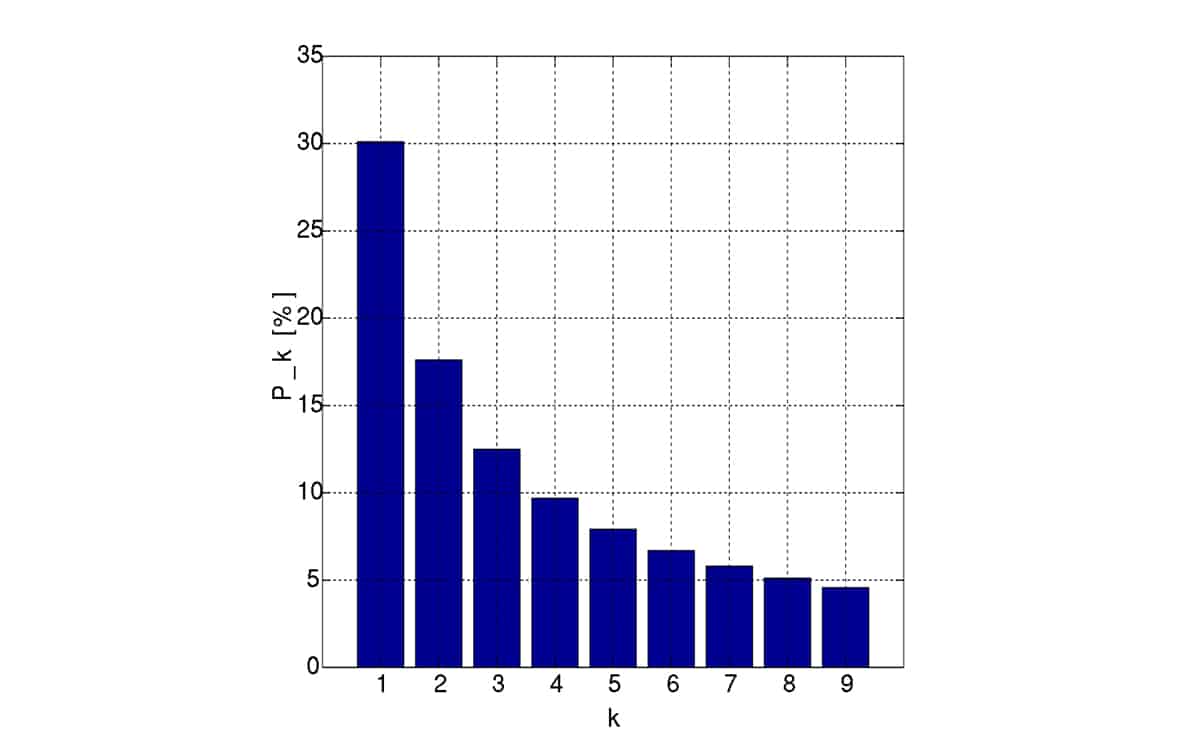
According to the law, in many big, natural datasets far more numbers begin with a 1 than any other digit. Numbers start with 1 for roughly 30% of the data, followed by the digit 2 for 17.6% of the data, whereas 9 is the leading digit just 5% of the time. Remarkably, this rule applies to everything from distributions of river lengths and volcano sizes to molecular weights.

Benford's curve

Benford’s curve is also observed in human systems. Take a huge random sample of streets of varying sizes, for example, and you’d expect more addresses starting with 1 than those starting with 9. It can even shed light on financial fraud: with a legitimate tax return you might expect profit and expense totals to approximate a Benford curve, but if the books have been cooked, you might see more figures rounded off to 0 or 5.

But back to elections. Data scientists have previously analysed vote tallies from elections in Iran, Ukraine and elsewhere – examining the first, second and final digits of vote tallies. However, the efficacy of using Benford’s law to identify electoral fraud is contentious, with one 2011 study concluding that finding meaningful patterns is like “seeing cats, dogs, and crows in clouds”.

One proponent of “Benfordizing” election results is Walter Mebane, a political scientist from the University of Michigan, but he sees no signs of foul play in the recent US election.

In the latest episode of the Radiolab podcast, Mebane explains why the US electoral vote counts don’t follow the law. Essentially it is because the US has a two-party political system and voter precincts are drawn up to be roughly the same size within a given district. If precincts register 1000 votes, for example, and are split roughly evenly between Trump and Biden, you’d expect most tallies to start with 4s, 5s and 6s, not 1s and 2s.

In a working paper published on 10 November, Mebane looks deeper at the US election data using a 2BL test, based on the second digits and Benford’s law digit probabilities, along with other statistical tools.

The bottom line: there are no signs of irregularity in the officially declared precinct vote counts data from Fulton County, GA, Allegheny County, PA, Milwaukee, WI, and Chicago, IL, as some have claimed.

You can find more information in this blog post by data scientist Jenifer Golbeck and this video by mathematician and author Matt Parker.

Copyright © 2026 by IOP Publishing Ltd and individual contributors