The ability to control the direction in which a signal travels – without external switching, without added circuitry – is a longstanding goal in the design of compact magnetic devices. Magnetochiral anisotropy offers exactly that: a material-level asymmetry in which magnetic waves (known as magnons) travelling in opposite directions are physically inequivalent, opening a route to magnetic logic operations and memory that retains data without a continuous power supply.
The effect has been understood in principle for decades, but always felt like a phenomenon that nature deliberately made inconvenient. Accessing magnetochiral anisotropy required materials that are chiral at the crystalline level – compounds like Cu2OSeO3, where the Dzyaloshinskii-Moriya interaction (DMI, a quantum mechanical force that pushes neighbouring magnetic moments to twist relative to each other) emerges only from a non-centrosymmetric crystal lattice that takes considerable effort to synthesize.
And even after synthesis, the device still needs cooling to cryogenic temperatures and application of an external magnetic field just to function. As a result, a phenomenon with genuine technological promise has spent most of its life confined to fundamental research, perpetually interesting and perpetually out of reach.
A research team headed up at École Polytechnique Fédérale de Lausanne (EPFL) has come up with a way to move this technology closer to real-world application. The idea is deceptively simple: stop asking which material can provide chirality, and start asking whether the shape of the structure itself can do the job instead. It turns out it can – as the team demonstrated, not just in a theoretical prediction, but as an actual measurement, at room temperature and with zero applied magnetic field.
Dirk Grundler, head of EPFL’s Laboratory of Nanoscale Magnetic Materials and Magnonics, and collaborators showed that a structural twist, in the form of a helical surface relief printed onto an otherwise ordinary polycrystalline nickel nanotube, is sufficient to induce chirality. The torsion and curvature of the twist generate a shape anisotropy and force the magnetic ground state into a spiralling spin texture. Its toroidal moment does exactly what the DMI does in a natural chiral crystal – it breaks the symmetry of the magnon dispersion relation, which describes how the energy of a magnetic wave depends on its direction of travel.
These twisted structures, termed artificial chiral magnets (ACMs), satisfy three conditions that no natural chiral magnet has jointly met: room temperature stability, zero field operation and realization in polycrystalline nickel – a material that is naturally achiral.
ACM outperforms a natural chiral crystal
The researchers used two-photon lithography to write the twisted polymeric scaffold and atomic layer deposition to coat it with a conformal 30-nm thick nickel shell. The handedness of the design is directly inherited by the magnetic ground state – as confirmed by X-ray magnetic circular dichroism microscopy – and can be flipped by field history, producing opposite helicity states in the same structural device on demand.
The team also performed microfocused Brillouin light scattering spectroscopy to resolve the magnon dynamics. At zero field and room temperature, the intensity non-reciprocity parameter (the difference in signal strength between waves travelling in opposite directions) reached 35.7%, switching reproducibly between two stable configurations (spin texture spiralling clockwise or anticlockwise) under field cycling without drift or degradation. At ±250 mT, the frequency non-reciprocity parameter (how much the frequency of a magnetic wave changes depending on which way it travels) peaked at 5.4×10⁻², nearly three times the value reported for the bulk chiral material Cu2OSeO3 at cryogenic temperature.
Overall, the geometrically engineered nickel tube at room temperature outperformed a natural chiral crystal at low temperature. Using micromagnetic simulations and analytical modelling, the team traced the origin of this non-reciprocity to two cooperating mechanisms, both of which are tied to the geometry of the tube rather than the chemistry of the material, and both of which scale with decreasing tube radius. This implies that the numbers reported in this study are not a ceiling – they are a starting point.
A scalable blueprint for chirality-engineered magnonics
The most important factor in this result is not the nickel. While nickel was the material used, the principle does not belong exclusively to nickel. Because the chirality here is geometric – written into the shape of the structure rather than the chemistry of the lattice – it is transferable to any ferromagnet that can be deposited conformally over a three-dimensional scaffold.
Analytical calculations predict that permalloy, a nickel–iron magnetic alloy with higher saturation magnetization and exchange stiffness than nickel, should produce stronger non-reciprocity in an identical geometry. And since non-reciprocity scales with decreasing tube radius, sub-100-nm geometries accessible through next-generation two-photon lithography represent a direct route to significantly amplified effects.
Moreover, this ACM structure is multifunctional by design. Spin waves travelling through the helical magnetic structure behave differently depending on their characteristics. Some move quickly and directionally, making them suitable for carrying signals. Others are nearly stationary and strongly asymmetric – they travel in one direction and are blocked in the other, which is the defining behaviour of a diode.
The twist of the magnetic texture (clockwise or anticlockwise) can also be set by a magnetic field pulse and held indefinitely without requiring any power, functioning as a memory that stores information in the handedness of the spin arrangement rather than in a voltage or a charge. Because this directional asymmetry of magnetochiral anisotropy is a property of the geometry and not just of the spin waves, electrical current passing through the same structure is expected to experience the same effect – flowing more easily in one direction than the other.
In other words, a single nanoscale helix could simultaneously route signals, switch them, remember them and rectify them. One structure, four functions, no exotic material – the chirality was never in the crystal, it was in the geometry.
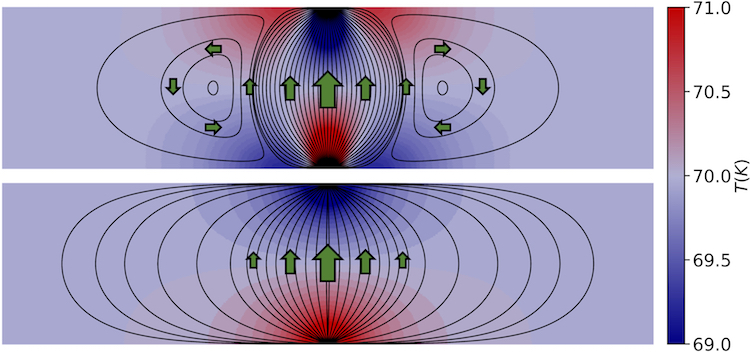
Controlling the flow Vortex-induced heat backflow (top) in a simulated 2D graphite strip, compared with conventional heat flow (bottom). (Courtesy: 2026 THEOS EPFL CC BY SA)
We are all familiar with the fact that heat flows from warmer regions to colder ones. A team of researchers at the EPFL in Switzerland has now shown that the reverse can happen in many highly ordered materials, without violating the laws of thermodynamics. Besides the fundamental scientific appeal of this finding, the researchers say their work could help in the design of electronic devices in which heat flow could be guided, potentially minimizing heat losses.
Scientists have always thought of heat as following Fourier’s law of diffusion, explains physicist Nicola Marzari, who led this new study. Fourier built his law on earlier work by Newton and established that heat transfer through a solid depends on an intrinsic material property (how easily the material conducts heat) and on the temperature difference (more precisely, the gradient) between a hot and a cold region. “The minus sign between the heat current and the temperature gradient in his equations captures the fact that heat always flows from hot to cold regions,” Marzari explains.
In the 1960s, however, theory argued – and experiments in solid helium revealed – that heat could also propagate like a wave; this behaviour was called “second sound”, in analogy with an acoustic wave travelling through a solid. “At the time, the phenomenon was considered fairly exotic and could only occur at very low temperatures – just a few Kelvin above absolute zero,” says Marzari. “But, in 2015, we showed that this behaviour could be found in many materials – from two-dimensional monolayers to graphite and diamond – and at much higher temperatures. Indeed, experiments on graphite in 2019 and 2022 confirmed these predictions at 100 K and 200 K.”
“Directing heat as we want”
This mode of heat propagation, which could also occur at room temperature, is known as phonon hydrodynamics because heat is now considered as moving like a fluid, Marzari adds. Phonons are the extended atomic vibrations that transport heat. Normally, interference or collisions between these cause heat to dissipate slowly, following Fourier’s law. “However, the emergence of fluid-like behaviour means that vortices can appear and that obstacles can send fluid backwards – from a cold region to a hot one,” he explains. “This is very counterintuitive, but doesn’t break thermodynamics. It also means we can start thinking of guiding and directing heat as we want, or maybe build thermal diodes in which heat can only flow in one direction.”
Back in 2020, the researchers derived a unified theory of heat propagation that encompassed Fourier diffusion and the hydrodynamic regime. This was a feat in itself, says Marzari: Fourier’s law dates from 1822 and the microscopic theory of heat (the Peierls-Boltzmann transport equation) from 1929. “Our new ‘viscous heat equations’ from 2020 are both accurate and reasonably simple to solve, so there was a lot of excitement at being able to try and look at what would they predict.”
“Simple” here is relative, he admits. “But the community has learnt a lot from the study of hydrodynamics phenomena in real fluids – for example, how ships, airplanes and even bumblebees stay afloat – and we used some of that knowledge in our new work.”
Temperature profile of a hydrodynamic system contains two contributions
Reporting their work in Physical Review Letters, the EPFL researchers showed how they could maximize hydrodynamic flow in a strip of graphite using a Fourier-space framework. They knew that the temperature profile of a hydrodynamic system contains two contributions: vorticity (how heat flow swirls) and compressibility (how heat flow is squeezed). They were therefore able to show how compressibility plays a critical role in phonon fluids. This, says team member Enrico Di Lucente, provides an explanation for why heat backflow is at a maximum when compressibility is minimized: incompressible heat flow cannot be squeezed when it encounters resistance, but is instead redirected backwards.
In such hydrodynamic heat backflow, heat flows from cooler regions to warmer ones, leading to a negative temperature difference and overall negative thermal resistance across the device. While the effect observed is very small, Di Lucente says that he and his colleagues could now design experiments to maximize it, “potentially changing how we think about energy loss in electronic systems”. For example, “you could imagine a smartphone with a hydrodynamic shield to direct thermal energy away from the battery, so it doesn’t overheat”.
Looking ahead, the researchers are now working with experimental colleagues who are able to carve very precise microscopic structures that could confirm the predicted phenomena . “We will also explore novel geometries and architectures, to make the effects we have observed larger and larger,” says Marzari. “These comes with fancy names – such as Christmas trees and Tesla valves – so, stay tuned.”
When Scott Waitukaitis set out to understand a puzzling aspect of static electricity, he didn’t expect to find the answer in a substance colloquially known as “schmutz”. But after a painstaking series of experiments, Waitukaitis and colleagues at the Institute of Science and Technology Austria (ISTA) have strong evidence that carbon-based surface contaminants – in other words, schmutz – are, in fact, the determining factor in how electric charge flows when certain types of insulating materials come into contact. By clearing up this mystery, the ISTA scientists say that their findings, which are published today in Nature, could shed fresh light on phenomena such as lightning and protoplanetary disk formation where static electricity plays a significant role.
If you’ve ever felt a shock after rubbing your hair with a balloon or shuffling across a carpet, you’ll know that static electricity can be a real pain. But for the scientists who study it, the pain runs much deeper. “Experimentally, it’s really hard,” Waitukaitis says. “There’s just a tonne of problems with this topic.”
During his talk at the APS Global Physics Summit in Denver, Colorado this week, Waitukaitis listed a few of these problems. Measuring an object’s charge is tricky. You can’t tell whether surface charge is coming from electrons or ions. And whenever you touch the object, you change its charge in unpredictable ways. Because of these complications, Waitukaitis says that even the most careful experiments are plagued by systematic effects.
Acoustic levitation to the (partial) rescue
To avoid the worst of these effects, an experimental team led by Galien Grosjean built an apparatus that uses sound waves to suspend a tiny sphere of silicon dioxide above a plate made from the same material. Turning this acoustic potential off and on again enabled the team to drop the initially neutral sphere onto the plate and “catch” it on the rebound without actually touching it. By applying a varying electric field to the sphere and measuring how it oscillates during its “catch” phase, they could also measure how much charge the sphere gained or lost via contact with the plate to within 500 electrons.
It wasn’t easy, though. “Bouncing this tiny sphere on a plate and catching it again is tricky enough to achieve once, but to understand the charging behaviour, we need to repeat this hundreds or even thousands of times in a row, without ever losing the particle,” Grosjean tells Physics World.
Preparing the samples was also challenging, he continues. “We were looking for what could possibly cause same-material samples to charge differently, so it was absolutely crucial for the samples to be prepared in exactly the same conditions.”
After these careful preparations, Grosjean, Waitukaitis and colleagues observed a curious pattern. Although every individual sphere charged in a consistent way with every individual plate, some spheres became more positively charged with each bounce, while others became more negatively charged. In effect, the spheres behaved as if they were made of completely different materials.
Spectroscopic investigations
Suspecting that surface contamination could be the culprit, the ISTA scientists tried cleaning the spheres and plates with plasma and baking them at 200 C. The results were stark: the “clean” spheres all became more negatively charged with each bounce, regardless of how they’d responded before. Then, over the next day or so, the previous pattern reemerged. Whatever they’d removed, it was obviously coming back.
At this point, the ISTA scientists started working with spectroscopists to identify what, exactly was on the surfaces of their spheres. The answer? Carbon, in the form of carbon dioxide, methane and various longer-chain carbon-rich molecules. “We never get the same cocktail of carbon on the surface twice, but the fact that it’s there really matters,” Waitukaitis says. By adding or removing carbon to their spheres, he adds, “we can make everything that was charging positively charge negatively and vice versa.”
What they can’t do – at least, not yet – is explain exactly how this carbon schmutz changes the spheres’ charging behaviour. “Everybody starts on this topic thinking, ‘I’m an awesome physicist, I can kick its butt in less than two years,’” Waitukaitis says. “That’s not the case.”
In a future experiment, the ISTA scientists plan to deliberately dope their spheres with specific functional groups of carbon, in effect creating their own, tailored versions of schmutz to study. “Schmutz is a pain, but for us, it’s the thing that matters,” Waitukaitis concludes.
The quantum physicists Charles Bennett and Gilles Brassard have been awarded the 2025 ACM Turing Award “for their essential role in establishing the foundations of quantum information science and transforming secure communication and computing”.
The Turing Award, often referred to as the “Nobel Prize in Computing,” is awarded by the Association for Computing Machinery (ACM) and carries a $1m prize. The award is named after Alan Turing, the British mathematician who formulated the mathematical basis of computing.
For over 40 years, Bennett and Brassard have played a crucial role in the foundations of quantum information science, in particular establing a quantum cryptography protocol in the 1980s.
Classical cryptography today is a vital part of computer and communication networks, protecting everything from business e-mails to bank transactions.
Information is kept secret using an encryption algorithm together with a secret “key” that the sender uses to scramble a message into a form that cannot be understood by an eavesdropper. The recipient then uses the same key with a decryption algorithm to read the message.
The issue with standard encryption is that the key must be known to both parties with the problem being how to distribute the key securely.
Quantum cryptography, or quantum key distribution (QKD), however, provides an automated method for distributing secret keys using standard communication fibres. Based on the principles of quantum mechanics, QKD is inherently secure and allows the key to be changed frequently, reducing the threat of key theft.
The first method for distributing secret keys encoded in quantum states was proposed in 1984 by Bennett working at IBM Research and Gilles Brassard at the University of Montreal.
In their “BB84” protocol, a bit of information is represented by the polarization state of a single photon – “0” by horizontal and “1” by vertical, for example. The sender transmits a string of polarized single photons to the receiver and by carrying out a series of measurements they are able to establish a shared key and to test whether an eavesdropper has intercepted any information en-route.
The BB84 protocol not only tests for eavesdropping, but also guarantees that sender and reciever can establish a secret key even if an eavesdropper has determined some of the bits in their shared binary sequence, using a technique called “privacy amplification”.
In 1993 Bennett and Brassard along with other collaborators, introduced the concept of quantum teleportation, demonstrating how an arbitrary quantum state could be transmitted between distant parties using quantum entanglement and classical communication.
Subsequent work by the duo also led the development of scalable quantum communication, an effort that continues today. “Bennett and Brassard fundamentally changed our understanding of information itself,” notes ACM president Yannis Ioannidis. “Their insights expanded the boundaries of computing and set in motion decades of discovery across disciplines. The global momentum behind quantum technologies today underscores the enduring importance of their contributions.”
A life in science
Bennett was born on 7 April 1943 in New York, US. After earning his Bachelor’s degree from Brandeis University in 1964 and his PhD from Harvard University in 1971, he moved to Argonne National Laboratory. In 1972, Bennett joined IBM Research where he has remained since.
Brassard was born on 20 April 1955 in Montreal, Canada. He earned his Bachelor’s and Master’s degrees from the University of Montreal and his PhD in theoretical computer science from Cornell University in 1979. He then joined the faculty of the University of Montreal shortly thereafter where he has remained since.
As well as the Turing Prize, both Brassard and Bennett have been awarded the Wolf Prize in Physics, the Micius Quantum Prize as well as the Breakthrough Prize in Fundamental Physics.
A collective mode of electrons predicted to exist in high-temperature superconductors, but difficult to observe in experiments has been identified by physicists at the Massachusetts Institute of Technology (MIT). The finding could advance our understanding of these materials, they say.
According to the Bardeen–Cooper–Schrieffer (BCS) theory, superconductivity occurs when electrons in a material overcome their mutual electrical repulsion to form electron pairs. These Cooper pairs, as they are known, can then travel unhindered through the material as a supercurrent without scattering off phonons (quasiparticles arising from vibrations of the material’s crystal lattice) or other impurities.
Cooper pairing is characterized by a tell-tale energy gap near the Fermi level, which is the highest energy level that electrons can occupy in a solid at absolute zero temperature. This gap is equivalent to the minimum energy required to break up a Cooper pair, and identifying it is regarded as unequivocal proof of a material’s superconducting nature.
In high-temperature cuprate semiconductors, which are layered materials, the Cooper pairs are confined to two-dimensional copper–oxygen (CuO2) planes that are only weakly coupled with respect to each other. Researchers are able to study the collective oscillations of these conduction electrons – known as plasmons – that travel perpendicular to these superconducting layers using terahertz (THz) spectroscopy at millielectronvolts energies, which is lower than the superconducting gap of the material. They can do this because the plasmons interact strongly with light.
However, doing the same for the electrons within the CuO2 layers themselves, is not so easy. This is because the collective electron behaviour occurs at energies that are much higher than the superconducting gap.
A 2D superfluid plasmon
Now, a team of physicists led by Nuh Gedik say they have succeeded in identifying a 2D superfluid plasmon in the layered superconductor bismuth strontium calcium copper oxide (or “BSCCO”) using a new THz microscope they developed in their laboratory. This plasmon has energies that are lower than the superconducting gap of the material.
THz radiation spans wavelengths from 30 μm (10 THz) in the mid-infrared part of the electromagnetic spectrum to 1–3 mm (0.1–0.3 THz) in the microwave domain. This is much larger than the size of atoms and molecules, so THz light cannot be used to resolve microscale structures. To overcome this fundamental diffraction limit, which restricts spatial resolution to roughly half of the wavelength of the light being used, Gedik and colleagues used spintronic emitters, which are devices that produce sharp pulses of THz light.
The researchers explain that when they shone this light on the multi-layered BSCCO, it triggered a cascade of effects in the electrons within each layer. By placing their sample, held at ultracold temperatures so that it became a superconductor, close to (in the near field) of the spintronic emitter, they were able to trap the THz light before it had time to spread. They were thereby able to “squeeze” it into a space much smaller than its wavelength. In this regime, the light can bypass the diffraction limit and resolve features previously too small to observe – in this case, collective THz oscillations of superconducting electrons within the material. Such a “jiggling” superfluid as the researchers have dubbed it was predicted to exist but never directly visualized until now.
“The new mode of electrons we have seen will provide a novel way of studying high temperature superconductivity in these systems,” says Gedik, “and we will now be looking into how this collective mode changes as a function of temperature, doping and sample geometry.”
The tool that we built could also be used to study the properties of 2D materials other than high temperature superconductors – for example, the optical behaviour in the THz regime for many small samples and heterostructures, he tells Physics World.
Let us mourn the demise of the American penny. With each of the one-cent coins costing about three cents to make, it was “wasteful” to keep producing them, pronounced President Trump. US pennies won’t vanish soon. While the last was minted in November 2025, about 250 billion will remain in circulation for a time despite the rising number of cash-free transactions.
The US penny has been around since 1793. Lamenting its passing is faintly obscene compared to other things that the US government has done lately, such as terminating science agencies, cutting jobs, and slashing budgets, environmental regulations and vaccine research. But I can’t stop thinking about what the penny meant to my own science education.
Science collaborators
Pennies, which until the early 1980s were 95% copper, taught me about corrosion. I learned, for instance, that the Statue of Liberty’s green colour is due to oxidized copper. At school, we were taught how to make pennies a light shade of green by immersing them in salt and vinegar; a plant food such as Miracle Gro works even better as it contains ammonia. We were then instructed to figure out how to clean off the green, discovering that an acid like lemon juice did the trick.
When I placed a drop of water on the surface of a penny, the dome-like shape it adopted – caused simply by surface tension – was an impressive sight. My first lessons on ions, meanwhile, involved placing pennies and steel nails in a bath of salt and vinegar: the nails got electroplated with copper; the pennies with zinc.
We also had to determine the density of pennies, which are 19 mm in diameter and 1.52 mm thick, by submerging them in a graduated cylinder to find their volume and then weighing them to determine their mass. From 1983 – years after my high-school career – this exercise turned more interesting still because pennies became 97.5% zinc and were only plated with copper so you had to be eagle-eyed to tell old and new apart.
Pennies were indispensable lab props too. All the kilogram weights for mechanics experiments were bags of 400 pennies (the 1983+ penny weighing exactly 2.50 g). They were great for coin-tossing in statistics classes too, although I assume other coins gave the same result, even if that was an experiment we never tried.
The humble penny wasn’t some piece of lab equipment manufactured by an educational company but a familiar part of our world
The humble penny was effective for all these uses because it wasn’t some piece of lab equipment manufactured by an educational company but a familiar part of our world. The coins were cheap and available, and nobody cared if you lost them or took a few home.
You could stick pennies under a leg to prop up a wobbly table. They made makeshift washers if you punched in a hole and inserted nails or screws. If you were bored by the hand-cranked penny-squishing machines at tourist sites and amusement parks whose results are fully predictable, a more exciting way to deface currency would be to lay pennies on railroad tracks and hunt for the results in the stones after the train passes, though never do this because it’s dangerous.
Unit value
Pennies taught me something indirectly. After a breakup, my ex left abandoning some clothing, a cat and a large bowl containing literally thousands of pennies. The clothes I could throw out and I had to learn to love the cat. But the bowl?
I tried to put it at the bottom of my closet, but the damned thing continued to haunt me. Should I toss the bowl and its contents in the garbage? Wasteful, un-environmental and avoidant. Stuff the pennies into 50-cent coin-roll holder or take them to a coin-counting kiosk in a bank, and then present them to a teller? Psychologically unsatisfying.
No, I had to deal with the pennies doing with them what they were meant for. I must spend them. At a bar one night I tried to pay the tab using all pennies. They were legal tender, right? The bouncer was summoned. One night a taxi driver furiously threw my pennies back at me, accusing me of treating him like a waiter. I was astonished that he thought I was disrespecting him rather than engaged in post-breakup, self-absorbed, infantile behaviour.
I managed to befriend a sympathetic newsstand worker who, a few times a week, was willing to let me buy the New York Times all in pennies
I could only use the fundamental unit of US currency in anomalous circumstances that I had to generate myself. In those days the New York Times cost 35 cents and I managed to befriend a sympathetic newsstand worker who, a few times a week, was willing to let me buy it all in pennies. He’d cheerfully greet me with “Here come my pennies!” and claimed I was becoming a better person now I was greeting vendors with smiles, not scowls.
I learned to work the monetary system methodically. For things that cost a little over 25 cents, I used a quarter and then pennies for what was left; for things that cost a little over a dollar I handed over a bill and the rest in pennies. I’d choreograph my purchases in advance so that I could use the appropriate lesser unit of currency plus pennies.
I often exploited the fact that sales tax in the US is only added on at the till, which means that something priced $2 with a sales tax of 6.5% will be $2.13 when you pay the cashier. So I’d hunt around in my pocket for a moment, and then in feigned chagrin say that I only had pennies, and hand the cashier the 13 of them that I had carefully calculated beforehand would be needed.
Soon, keeping exacting track of purchases, I managed to spend an average of about 200 pennies a week. From day to day and even week to week the pile in the bowl barely dwindled. But, finally, after a little less than a year only a handful remained. I was thrilled – it was better than seeing a therapist.
The critical point
You might think that the moral I’m about to draw is the need for faith in incremental change – that, penny by penny, you can move mountains. That’s certainly the lesson teachers urge on you if you’re learning a foreign language or playing a musical instrument.
No, I was instead moved by the humbler experience of valuing an entire system of units moored to a stable, familiar, simple but all-important base unit that you can literally count on.
I still value that lesson, though it’s less concrete than what I learned from corroded, nailed or squished pennies.
Topological insulators are insulators in the bulk and conductors on the surface. This behaviour is caused by spin-orbit coupling, a property that is stronger in heavier elements. Therefore, most topological insulators are made using heavy elements, such as bismuth selenide (Bi₂Se₃) and antimony telluride (Sb₂Te₃). In this research, the authors introduce orbital Chern insulators, a topological phase in which the orbital angular momentum of electrons, rather than their spin, drives the nontrivial topology. This allows topological behaviour to emerge in materials composed of much lighter elements, demonstrated using monolayer blue phosphorus, which was previously regarded as a trivial insulator.
The authors introduce a feature‑spectrum topology framework, a systematic method for identifying and characterizing materials with orbital‑driven topology. Using this approach, they show that phosphorene hosts the first pure orbital Chern insulator, where the orbital topology is fully disentangled from spin and valley degrees of freedom. As a result, the material exhibits a pure orbital Hall effect that can be experimentally distinguished from spin and valley Hall responses, unlike in transition‑metal dichalcogenides where spin-orbit coupling and valley physics are intertwined.
Because orbital Chern insulators do not rely on spin-orbit coupling, they are not constrained by the small band gaps typical of spin-orbit coupling driven topological insulators, and can potentially support larger band gaps in light‑element systems. The authors also show that orbital nontriviality is expected more broadly in Group 5A monolayers with buckled or puckered structures, expanding the landscape of candidate materials. This research opens a path for orbitronics, where currents of orbital angular momentum instead of spin currents used in spintronics, can be generated, controlled, and applied in future quantum and electronic devices.
Linear Response Theory (LRT) is a cornerstone of statistical physics. It predicts how a system at (or near) equilibrium responds to small external perturbations—an idea tied to the fluctuation-dissipation relation. Essentially, if you understand a system’s natural fluctuations, you can infer how it will react to weak forcing without running a full, computationally heavy simulation.
Traditionally, LRT was developed for systems with Gaussian noise—smooth, continuous fluctuations. While this works well for phenomena like thermal fluctuations, many real-world systems also experience sudden jumps or shocks, modeled mathematically as Lévy processes. Think volcanic eruptions, market crashes, or sudden disease outbreaks.
Incorporating these sudden shocks into LRT has been a long-standing goal for statistical physicists. A recent paper published in ROPP has made a major step forward by establishing linear response theory for a broad and fundamental class of systems: mixed jump-diffusion models, which include Lévy processes.
By generalizing the fluctuation-dissipation theorem for this class of models, their response formulas allow scientists to assess how these systems respond to structural perturbations. Crucially, this works even with respect to changes in the underlying noise law itself, allowing for much tighter uncertainty quantification.
The authors—a team of researchers from Israel, UK, USA and Sweden—note that this framework provides foundational support for “optimal fingerprinting”—a statistical methodology used to confidently associate observed changes with specific causal mechanisms. By proving this approach works even under complex stochastic forcings, their findings strengthen a key aspect of the science behind climate change, grounding and expanding Hasselmann’s seminal work on detection and attribution. Importantly, this pathway for causally linking signals with acting forcings extends well beyond climate to a massive class of complex systems.
To demonstrate the theory’s predictive power, the team applied it to complex climate scenarios, including the El Niño-Southern Oscillation (ENSO)—a large-scale climate pattern in the tropical Pacific Ocean. In a more challenging application, they used their LRT to perform accurate climate change projections in the spatially extended Ghil–Sellers energy balance climate model subject to, random, abrupt perturbations. They showed that despite strong nonlinearities in model formulations—such as the complex “if-then” decision-making structures often used to parameterize ocean and atmospheric convection—LRT can still be robustly applied. This strengthens the argument for using this approach to perform accurate climate change projections and to rigorously assess a system’s proximity to tipping points.
Ultimately, this work doesn’t just improve predicting climate models’ response to perturbations; it provides a new blueprint for understanding how any complex system reacts to sudden shocks, paving the way for better predictions in biology, finance, and quantitative social sciences.
As a freelance writer, I’m not usually one to go down rabbit holes when it comes to research funding. That changed when Physics World spotted an intriguing source of support in a paper I was covering on exotic phases in quantum materials. The study, published in Nature Materials and led by Edoardo Baldini at the University of Texas at Austin, was partially funded by Love, Tito’s – the philanthropic arm of the Texas-based distillery, Tito’s Handmade Vodka.
The link between vodka and quantum materials was a story I was eager to explore, but a quick look at the company’s website was enough to shed some light on how this connection came about. Since its beginnings in 2015, Love, Tito’s has donated tens of millions of dollars to multidisciplinary research, with no direct ties to the company’s business operations.
Much of this funding has supported projects ranging from cancer therapies to ocean cleanups – efforts whose vital importance will be immediately clear to the public. Yet the team at Love, Tito’s also demonstrates a clear appreciation for the broader, often understated relevance of physics.
New passion
As I read more about Bert “Tito” Beveridge, the roots of this appreciation became even clearer. In 1992, between jobs in oil rigging and mortgage lending, Beveridge developed a new passion: infusing affordable, high-quality vodka using fresh ingredients.
Faced with limited funding and disinterested investors, his operation encountered hurdles at every turn. But with an engaged and analytical mindset, he tackled these challenges systematically – even studying prohibition-era photographs of distillery setups, and curating advice from colleagues in the oil industry. Working with the resources available to him, Beveridge refined his process, and within a decade, his vodka was winning national awards.
“Tito Beveridge has always been a scientist at heart,” says Sarah Everett, director of global impact and research at Tito’s Handmade Vodka.
Even before achieving success, the company had committed itself to philanthropic work – finding homes for stray dogs that wandered onto the distillery grounds, and connecting local communities with volunteer opportunities. Alongside these efforts, “we have a special focus on scientific research, through our CHEERS initiative: Creating Hope and Elevating Emerging Research and Science,” Everett says.
Invaluable grant
Today, CHEERS provides grants across a wide range of disciplines, including physics. For Edoardo Baldini’s team, a $1.4 million donation from the programme has proved invaluable in advancing their discovery of exotic quantum clock states.
“The gift helped us establish a state-of-the-art sample preparation and handling station for atomically thin materials, which directly supports experiments like those in this study by improving sample quality and reproducibility. It also supported a laser system for a time-resolved momentum microscope,” Baldini says.
These resources are already enabling the next phase of the team’s research: probing ultrafast phenomena in atomically thin systems and tracking how their electronic structure evolves following photoexcitation.
“The experimental work in Baldini’s group provides the basis for developing advanced materials for a wide range of applications, with implications that will be far reaching beyond the walls of his lab,” Everett adds.
With the foresight to recognize the societal relevance of physics – beyond the fields that typically dominate headlines – a company that once defied the odds to build a vodka brand is now helping to support research that could lead to technological solutions for some of the world’s most urgent challenges.
“By supporting fundamental research on quantum materials, this gift reflects Love, Tito’s broader interest in advancing scientific discovery that can ultimately contribute to addressing major societal challenges, including the development of future energy and information technologies,” Baldini says.
Among the working satellites and telescopes orbiting our planet is a lot of rubbish. From full satellites that no longer work to tiny bolts shed as spacecraft release spent rockets, there are millions of human-made pieces of debris in the space around Earth.
The problem is a hot topic within the space community. The presence of space junk has implications for both ground and space-based astronomy; there is an impact to atmospheric science that we’re only just beginning to understand; and it also presents a threat to our highly space-reliant society.
To highlight what is being – and needs to be – done to tackle the issue of space junk, experts Katherine Courtney and Alice Gorman talked to Physics World online editor Margaret Harris as part of a Physics World Live panel discussion in November 2025.
Courtney started her career developing products and services for the telecoms industry before moving to the public sector and working in the UK government. While she was the chief executive of the UK Space Agency she came to realize the impact of space debris.
Courtney is now chair of the Global Network on Sustainability in Space (GNOSIS), which has about 1000 members from research and industry across more than 45 countries. GNOSIS aims to accelerate research and development efforts to tackle problems like space debris. Courtney also mentors start-up companies that are trying to solve these problems and does outreach with young people to educate them on the topic.
Gorman studied archaeology and for several years worked on terrestrial projects before becoming a space archaeologist. Now at Flinders University, Australia, she is known as Dr Space Junk, and focuses not just on debris in Earth orbit, but also planetary landing sites, deep space probes, terrestrial rocket launch sites and tracking stations.
Gorman’s research into space junk involves looking at objects in an environmental context, examining their cultural value and what it means to retain these objects. Along with Justin Walsh, she trained crew on the International Space Station to do what was effectively the first archaeological field survey outside Earth.
What is space junk and how much is there in orbit around Earth?
Alice Gorman: Space junk is commonly defined as any object in space that does not now or in the foreseeable future serve a useful purpose. The biggest contributors to the space debris population are the US, Russia and China.
The latest figures estimate that there are 54,000 human-made objects in orbit that are larger than 10 cm, including over 14,000 operating satellites and spacecraft. Envisat is one of the largest in that category, being 26 m long. There are also medium-size objects, which can be anything from 1 to 10 cm. Current statistical models estimate there are about 1.2 million objects of this size. At an even smaller scale, there’s an estimated 140 million objects 1 mm to 1 cm in size.
Not all these objects are tracked and catalogued – the number regularly tracked by Space Surveillance Networks is only about 44,870. But that doesn’t mean that’s everything there is – that’s just the things we can see and know are there.
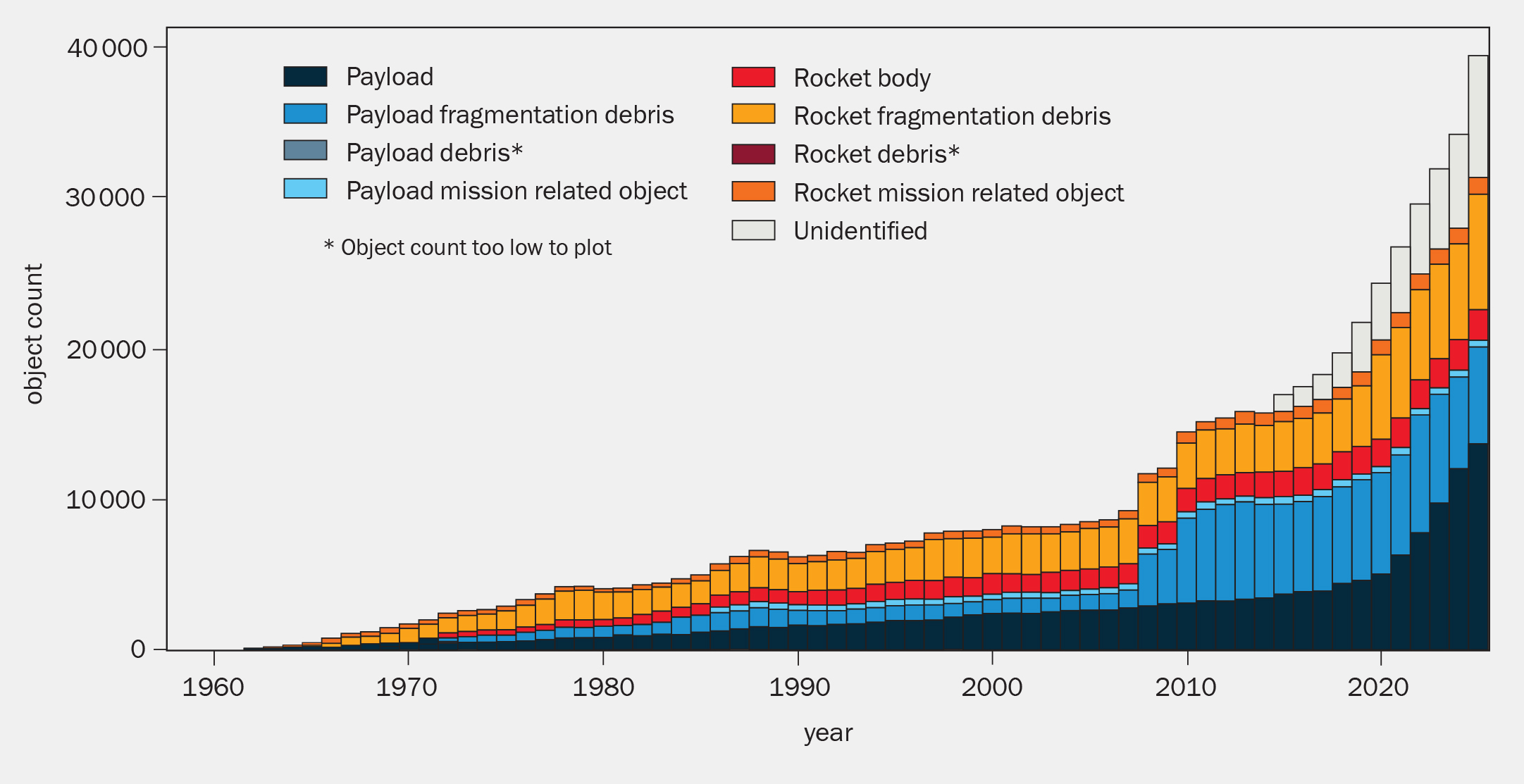
Payload– an object designed to perform a specific function in space (excluding launch functionality). This includes operational satellites as well as calibration objects.
Payload fragmentation debris– an object that has fragmented or unintentionally released from a payload as space debris with origins that can be traced back to a unique event. This class includes objects created when a payload explodes or when it collides with another object.
Payload debris – an object that has fragmented or unintentionally released from a payload as space debris for an unknown reason but orbital or physical properties allow it to be traced to a source.
Payload mission related object– an object that served a purpose for the payload and has intentionally been released as space debris. Common examples include covers for optical instruments or astronaut tools.
Rocket body– an object designed to perform launch-related functionality. This includes the various orbital stages of launch vehicles, but not payloads which release smaller payloads themselves.
Rocket fragmentation debris– an object that has fragmented or unintentionally released from a rocket body as space debris with origins that can be traced back to a unique event. This class includes objects created when a launch vehicle explodes.
Rocket debris– an object that has fragmented or unintentionally released from a rocket body as space debris for an unknown reason but orbital or physical properties allow it to be traced to a source.
Rocket mission related object– an object intentionally released as space debris that served a purpose for the function of a rocket body. Common examples include shrouds and engines.
Unidentified – an object that has not been traced back to a launch event.
What sorts of objects make up space junk?
Alice Gorman: First, there are whole satellites that no longer work. There are the upper stage rocket bodies that are left in orbit after they’ve delivered their payload – and in some cases are still attached. There are bolts, lens caps, fuel tanks – all kinds of debris that are released into orbit as part of a spacecraft’s mission or satellite launch.
Then you have the hundreds and thousands of fragments from exploded spacecraft. There have also been a number of anti-satellite tests that have added to the debris population. One notorious example was when China destroyed its own Fengyun-1C satellite using a missile in 2007. The event created around 3500 trackable objects and many more smaller pieces of debris, a lot of which are still in orbit.
There are also all the tiny fragments resulting from debris being continually bombarded by micrometeoroids and other bits of space junk. Plus, materials decay and erode when they’re in space.
Where is all this space debris?
Alice Gorman: The most congested area is low-Earth orbit – about 200 to 2000 km above sea level. Among the working satellites in this orbit are around 9000 that are part of SpaceX’s Starlink network.
Medium-Earth orbit (between roughly 2000 and 35,000 km) has a lot of stuff in it but also contains the Van Allen radiation belts so tends to be avoided. Then we get to geosynchronous and geostationary orbit at 35,786 km, where a lot of telecoms satellites are. Finally, beyond that is the graveyard orbit, where geostationary satellites that no longer work are sometimes boosted up to.
What hazards do these human-made objects pose to the space environment?
Katherine Courtney: First you have to consider just how dependent we are on the infrastructure that is orbiting the planet. The Internet, mobile telephones, banking networks, utility grids, emergency services, food distribution, climate change monitoring, stock markets – all of these things and so many more depend on space.
In 1978 American astrophysicist Donald Kessler proposed that if certain orbits get too congested with debris and active satellites there could be a collision that triggers a chain reaction of further collisions, making those areas of space unusable for generations. It’s what’s known as the Kessler Syndrome.
Kessler and UK astronautics engineer Hugh Lewis recently released an update to that original paper. Using European Space Agency (ESA) data on space debris, they determined that Kessler Syndrome is actually already happening at some orbits, and there are a whole range of other orbits that are now considered unstable and potentially at risk.
We don’t know for sure that we’re at that catastrophe scenario where the orbits become too congested with objects that can’t be controlled by humans. But the modelling suggests we are well on our way to that situation.
Even tiny debris can make a satellite inoperable. Satellites often just stop working, and nobody knows if that’s because they’ve had a debris strike, an electrical malfunction or some other fault. In ESA’s latest annual report on the debris population, they say that even if no further launches occur, the debris population will continue to expand because of the decay and fragmentation of those legacy rocket bodies and big defunct objects that we have no way of retrieving, reusing or controlling.
Debris isn’t the only hazard. There’s quite a complex system up there where hazards are impacting each other. Some orbits are now getting so congested that it’s getting very difficult for operators to avoid collisions, and they are having to manoeuvre satellites daily to avoid them. Starlink publishes their collision manoeuvre statistics and – when you plot it – you can see how it’s going up and up as they increase the size of their constellation.
But debris doesn’t advertise where it is. As Alice described, we only have a certain number of trackable objects – the other million plus are not trackable. So there’s an interplay between how crowded inoperable things are and how crowded manoeuvrable things are.
Distribution of space debris
Debris distribution An ESA animation released in 2019 showing the distribution of debris in orbit around Earth. The colours represent different object types – functional and dysfunctional satellites (red), rocket bodies (yellow), mission-related objects (green), and fragments (blue).
What impact does space weather have on debris?
Katherine Courtney: Every time we see an aurora in the night sky, it might look pretty but it means that the satellites in orbit around the Earth are being washed with some serious magnetic particles from the Sun. Along with the risk that a massive solar storm could knock out satellites if it was blasted in Earth’s direction, the influx of these particles increases the atmospheric drag and moves the debris in unpredictable ways. Space weather interacts with both active satellites and debris in a way that increases the uncertainties about just how many things we can safely operate up there.
This is also becoming more hazardous because constellation operators in low Earth orbit have started to introduce artificial intelligence and automated manoeuvring systems. They’ve done that because if you have 9000 satellites, you can’t employ (or don’t want to employ) 9000 people to operate them from the ground. So they have all developed automated station keeping, which is a good idea if the idea is to keep the satellite in place.
But there isn’t really a system in place whereby operators announce in advance these automated manoeuvres. Yes, they will try and contact other operators on a sort of “best efforts” basis if they are going to do planned manoeuvres, but unplanned ones are a whole new hazard.
What impact can space junk have on astronomy?
Katherine Courtney: Space junk is quite a challenge for astronomers. They have facilities that have taken 10 years to build and cost billions, but they are getting streaks in their imagery and they are losing data points. It’s a real challenge to deal with that because when these telescopes were designed, we didn’t have 13,000 satellites flying around and more than 10,000 of them moving fast in low Earth orbit.
Radio astronomy is also being interfered with because satellites are transmitting signals all the time. There is some evidence they are also leaking unintentional emissions from their electrical systems, which – again – interferes with astronomy.
And what impact does space debris have on the environment?
Katherine Courtney: There is emerging evidence that when debris re-enters the Earth’s atmosphere, it deposits particulate matter into the atmosphere that we have never experienced before. Naturally occurring matter from meteorites and micrometeorites don’t carry the metals we’ve extracted from Earth and launched into space, which are now burning up on their way back down.
And not all objects burn up. You can find some quite scary pictures of very large things that have landed on Earth – thankfully not on anybody’s head as far as we know. They usually land in places like Australia, a long way from inhabited areas, or in the middle of the Pacific Ocean – but they’re not being controlled as they descend.
A couple of years ago, a Chinese Long March rocket body re-entered the atmosphere uncontrolled. If it had arrived 15 minutes earlier, it would have landed on New York City. All you can do is cross your fingers and hope that when objects come down, they’re not landing on a bunch of people somewhere.
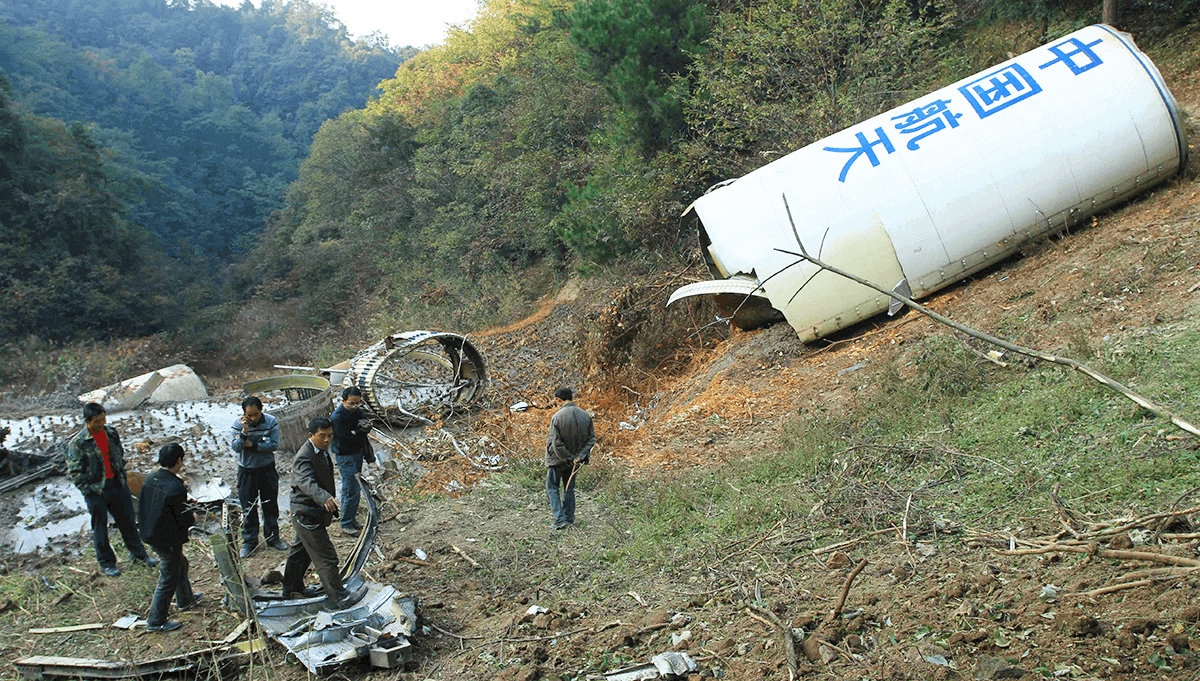
Close encounters On 1 Nov 2010 villagers found debris from the first stage of a Long March-3C carrier rocket in Jiulongshan Village, Shibing County, Guizhou Province, China. (ZUMA Press Wire/Shutterstock)
What is being done – or could be done in the future – to reduce the hazards of space junk?
Alice Gorman: This is an urgent problem that we need action on. At the moment, there are many proposals and missions in testing or development to actively remove debris from orbit, but none are actually working. For new missions, however, there has been a really interesting shift.
We used to look on the atmosphere as a natural incinerator, and all the plans to get rid of stuff in orbit involved tipping them back into the atmosphere to mostly burn up. It was considered to be the logical and most harmless way to dispose of space junk. But objects don’t always burn up, and stuff still makes it to the ground.
We also now know that these aluminium and soot particulates [created by objects burning up] in the upper atmosphere are affecting the ozone layer. We thought we had solved that problem with the 1987 Montreal Protocol, when the world came together to stop the ozone layer being destroyed.
People now realize you can’t just let satellites burn up. In fact, there are now proposals, like ESA’s Zero Debris Charter, for new missions to not create any new debris – to be “debris neutral”. That’s great for current and future missions but are people actually going to do it?
There used to be a rule – don’t leave anything in orbit for 25 years and have an end of life strategy to get rid of it. That’s now down to five years, which is good. But apparently only 40 to 60% of satellite operators followed that protocol – the rest would simply do nothing to prevent their spacecraft from contributing to the debris problem.
We rely on satellite operators and launch operators complying with these international standards and norms. And when profit is at stake, I don’t think we can have any guarantee that they will actually do that.
Katherine Courtney: When I first began focusing on space debris, I sometimes felt there was just the United Nations (UN) long-term sustainability guidelines. They were voluntary, but people are now bringing that into their national space law. There is increasing awareness of the issue and satellite operators are beginning to engage in those conversations differently.
ESA’s Zero Debris Charter is a great initiative because it sets timed targets and detailed technical specifications for how not to create additional debris with your missions. Unfortunately, it still calls for five-year design-for-demise as best practice, which maybe isn’t the answer. Missions should be designed for reuse and recycling. Or we need to not only not create debris, but use new materials that have less impact when they re-enter the atmosphere.
The International Telecommunication Union (ITU) [the UN agency for digital technologies] are really the only multilateral body that have any sort of binding powers. They allocate global radio spectrum and satellite orbits to ensure telecommunication operations run smoothly. They have started holding an annual sustainability conference where they get ITU delegates together to talk about how to fix the problem of space debris.
As Alice described, we can’t see the vast majority of the debris, but we also collect the data about debris through lots of non-standardized observations that are not interoperable and are made by different space agencies around the world. There are competing models that give different estimates and different forecasts.
We need to come up with a standardized way of monitoring the space environment and modelling what impact increasing numbers of spacecraft is having, so it’s great to hear that COPUOS has decided to encourage that.
There is also hope from the UN’s Summit of the Future in 2024. Action 56 in the resulting Pact for the Future proposes a fourth UN Conference on the Peaceful Exploration of Outer Space (UNISPACE IV) in 2027. It will focus on debris, debris mitigation and management, space traffic management, and how the world can cooperate more effectively in this area.
So what do we need to make these initiatives work?
Katherine Courtney: We currently don’t have an international treaty with binding rules. Different countries require different things of their licensed operators, don’t necessarily keep other countries informed of their activities, and some space objects don’t even go into the intended orbits at all. We need something like the ITU – a non-military, cross-border independent authority – that could monitor and enforce standards internationally.
A little ray of light for me is that NASA recently received an e-mail from the Chinese National Space Administration to warn them of a potential collision between a Chinese object and a NASA mission. It was the first time that had happened. Communicating to avoid collisions should be the bare minimum to ensure a more sustainable space environment.
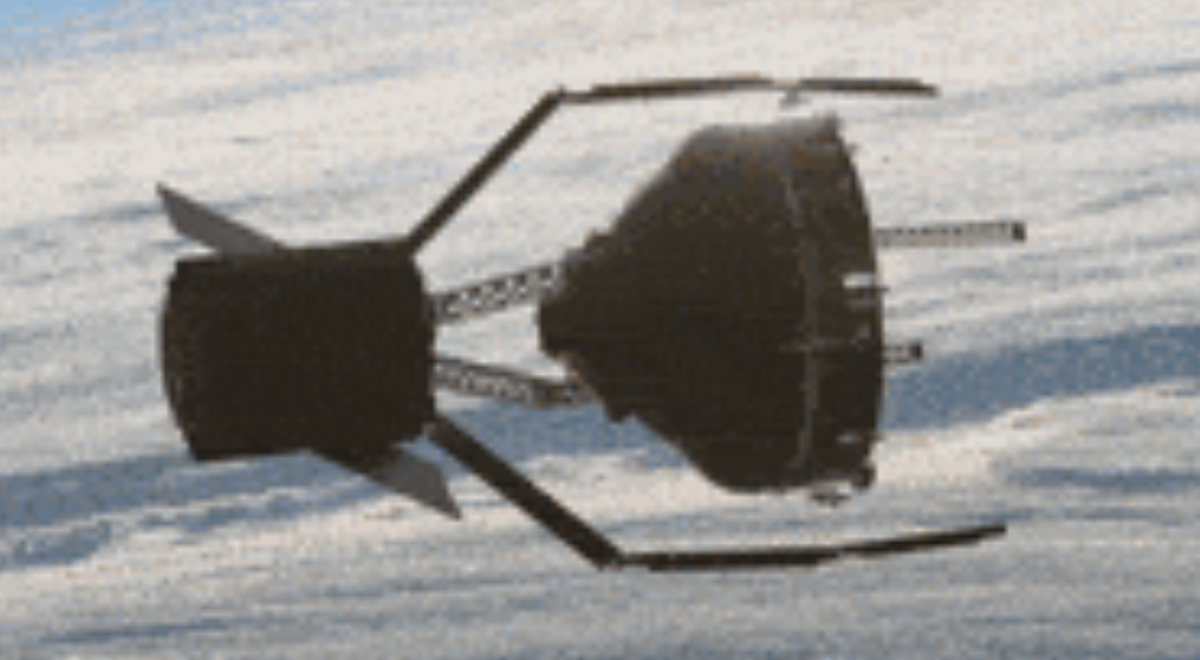
Cosmic litter-picker The European Space Agency is preparing active debris removal missions (including its ClearSpace-1 mission) and design for removal (D4R) technologies that can be used to ensure the safe disposal of satellites that are unable to move on their own at their end-of-life. (Courtesy: ESA)
What missions and tests have happened or are in the pipeline to deal with individual pieces of debris?
Katherine Courtney: The most advanced to date has been Japan’s AstroscaleADRAS-J mission, which has demonstrated its ability to safely approach a target object and examine it closely. Meanwhile, ESA is launching its ClearSpace-1 mission in 2029 to clear an old PROBA-1 satellite from low-Earth orbit.
These missions are tricky because the first rule is don’t make any more debris – but you have an object that is tumbling, maybe fragmenting and could be carrying fuel. You have to be very careful to prove that you have the technology that can safely capture that object. For ClearSpace-1, they are going to use a sort of robotic grappling mechanism, while Astroscale will use a magnetic solution to grab things.
The UK government has also announced further funding to not just remove one UK licensed object from orbit, but go back and remove a second. This is quite a technical feat – you have to safely take an uncooperative debris object, lower it to a point where Earth’s gravity will cause it to deorbit, and then go back and get another one, all without bumping into anything on the way.
China and Russia have also demonstrated their ability to safely approach objects but they haven’t published the outcomes of those missions. China’s efforts have been defence-focused but they have also started to look at commercial operations in that area. In fact, there are quite a few companies now really interested in being involved in this space.
Do some craft have heritage value?
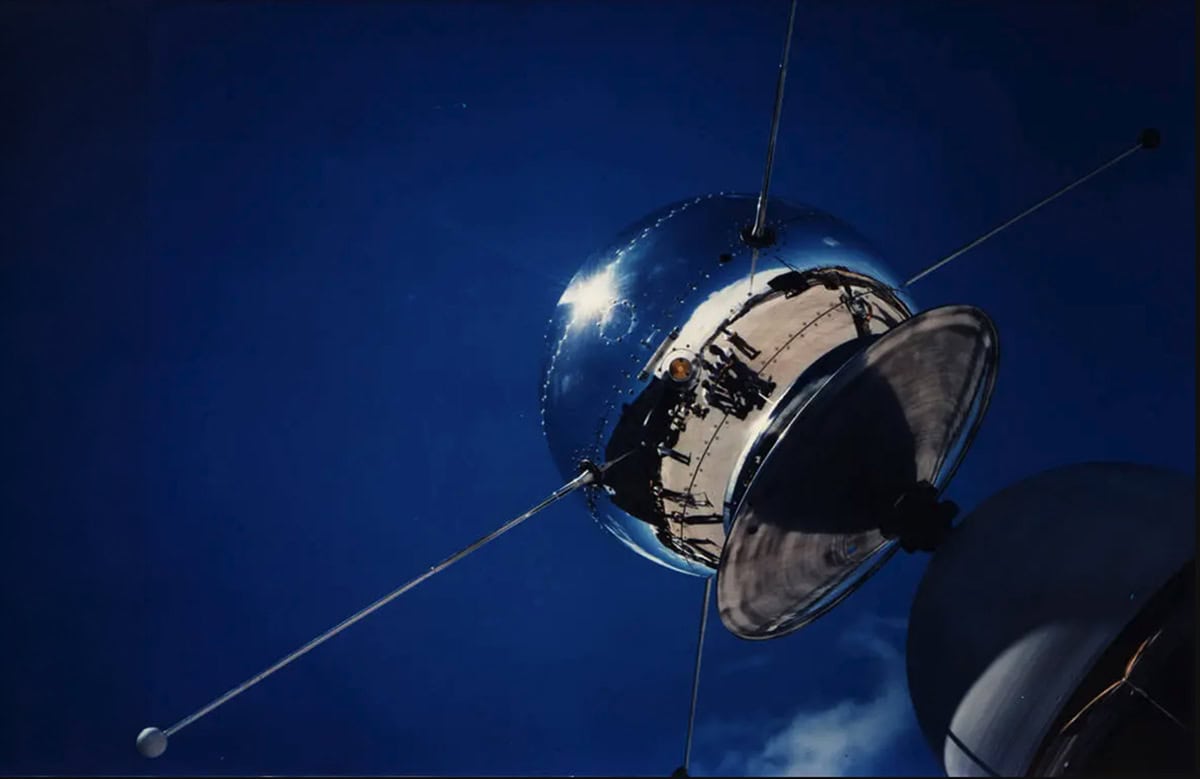
A shining example Vanguard 1, the world’s first solar-powered satellite, launched on 17 March 1958. It was the second US satellite in orbit, following Explorer 1, and remains the oldest artificial object orbiting Earth to this day. (Courtesy: NASA)
Alice Gorman: There have been proposals to test some debris removal technologies on older spacecraft on the basis that they might one day be a risk and they’re old so nobody cares. But to me many such craft have incredible heritage value.
People sometimes say to me, “But Alice, we can’t leave them there, they’re junk”. However, if they’re not currently collision risks, we don’t have to do anything about them. Instead we can assess their cultural heritage value. We can rank the objects so we can say, if something has to be removed, this object has a lower value than this one.
So, from my perspective, every nation needs to have a look at its heritage assets in orbit, assess their significance, and from that point decide what needs to be done. And in heritage terms you don’t do anything until you need to – the place where something is, is an important part of its cultural significance.
You could argue that the definition of space junk is something which has no use, but these objects actually do have a purpose. Their purpose is to connect people to their history in space and to space as a place. I want to see all proposals for active debris removal incorporate cultural heritage management.
How long might it take before the orbits get so crowded that we really just can’t put anything else into orbits?
Katherine Courtney: I’ve not seen a forecast on how long this will take, but currently people are launching satellites weekly and in batches. According to ITU filings, there are over a million permissions to operate in certain spectrum on file now. So, over the next 10 years, a million more satellites could theoretically be launched, which could be problematic.
Imagine a motorway where everybody can drive at whatever speed they want with no indicator lights. If your car broke down and you just left it in the middle of the road, that would soon become an unusable environment. Space orbits would soon be like that.
But we can use orbital capacity more efficiently. It’s just that it requires a great force of global collaboration to solve that problem because space, by definition, is a place without national borders.
My view is that 90% of space activity today is commercial. Businesses have to manage these hazards and risks or else they will close down. In fact, I see a day where something happens that makes everybody sit up. I call it the Exxon Valdez moment, a disaster that is small enough to hurt some operators financially, but not big enough that we have a Kessler syndrome and we all have to wait 200 years before we can use that space again. I think that’s when the economic incentives will be there for people to actually start collaborating.
Five years ago you never heard an operator say regulation was a good thing – I now regularly attend events where operators ask for regulation. So I think we can solve these problems.
Are there any alternative approaches to avoid more space debris?
Alice Gorman: Although we depend on space, we are in fact neglecting terrestrial infrastructure. The Starlink satellites, for example, have been strongly pushed in because they promise to provide communication to remote places – but only because there has been no investment in terrestrial infrastructure. We can choose to pull some functions back from space. We’re not completely committed to space for all these functions, and we shouldn’t be so dependent on space.
This article is based on the 10 November 2025 Physics World Live event, which you can watch on demand here