Physics in the pandemic: ‘Experiments might have stopped, but thinking won’t’

The moment has arrived: the UK is officially in lock-down to curb the spread of COVID-19. I have been waiting impatiently for this to come. Being Italian, I have many loved ones back home who have been staying home for weeks now. I have been split between the harrowing images coming from Italian hospitals and the almost surreal hesitation and dithering I perceived here in the UK in the past few weeks.

Luckily, things evolved quickly in the last few days. Last Tuesday, I was in the lab running what I knew was going to be my last experiment for an unknown period of time. It was with a veil of sadness and uncertainty that I tidied up the lab bench at the end of the day and went home. At that time, we were already applying social distancing measures by limiting the number of people in the lab at same time.

The day after, we were strongly advised to work from home, which for an experimental research group, basically implies lab shutdown. Indeed, rumours had already started to circulate that all research facilities would have been closed by the end of the week. And so it was. We were told to shut everything down by the end of last Friday.

My research is strongly experimental and requires the use of specialized equipment: a cleanroom, an optical lab, incubators and microscopes. Now my work is restricted to the use of a 13” laptop and maybe an external screen to make it easier. At first, I felt lost, frustrated and doubtful. I certainly cannot culture bacteria and build a microscope to do experiments in my living room.

However, being a chronic optimist, I tried to look at the bright side. Over the last few days I have realised that there is still a lot I can do from home and I will take the occasion to try answer some very important questions.

Is there anything I can improve in my experiments? Am I interpreting my data correctly? Is there anything else I can learn from the existing literature? What are my next experiments going to be? These are questions that I normally ask myself. However, I feel that I am always too busy supervising new students, attending meetings and jumping between different labs to properly dive into such questions. When was the last time I sat down and seriously brainstormed about my work? I am not sure I can remember.

Staying at home will inevitably “force” me to really concentrate on these points. In practice, I am aiming to concretise this by working on at least one review paper, by reading the great number of papers that have been piling up and that I kept procrastinating and just by sitting at my desk and thinking. Experiments might have stopped but thinking won’t.

As a group, we have moved our daily 11 am coffee break to Google Hangouts to keep our spirits up and feel connected like in our common room on campus. We have changed our bi-weekly group meetings to online weekly group updates, where everyone is expected to update the group about their ways of coping with the different way of working.

I am hopeful that the situation will come back to almost normal in a few months. I am convinced that by then I will have learned a lot more about my research. Maybe I will even impose myself one day a week of quarantine-style work. Labs will be busy and thriving again, full of people eager to try out the ideas they mulled over during these months. And some of those ideas will be winning ones that will make this lock-down worth it.

Ask me anything: Chao-Yang Lu

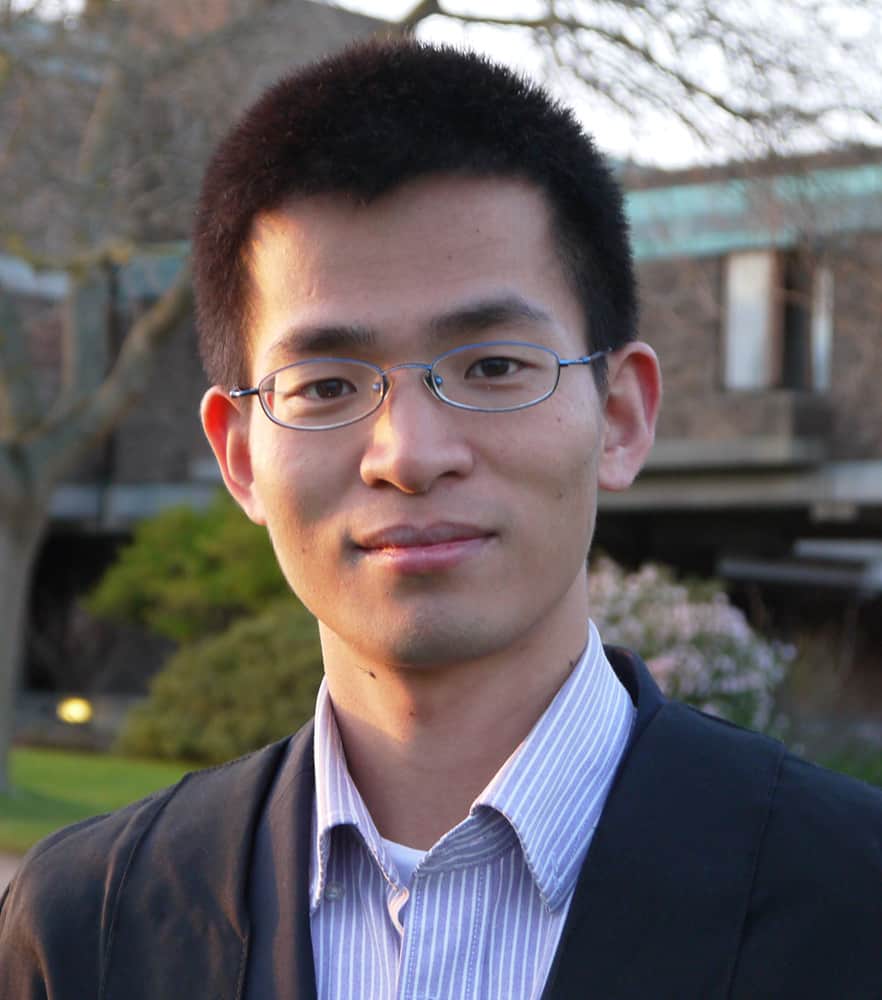
Chao-Yang Lu

What skills do you use every day in your job?

As an independent researcher, the most important skill is to find the “interesting” problems that I know I would be thrilled to solve, and potentially have the ability to solve. The skill required in finding such problems to solve improves with time, as your research experience grows, and you interact with senior scientists. Other skills include keeping up to date with new research by finding and reading (at least at a glance) new papers regularly. I have weekly group meetings to manage projects, to get an update on each student’s progress, and to solve problems together. I encourage my students to think critically and train their writing skills to make their thoughts more visible and clearer.

What do you like best and least about your job?

What I like the most is the freedom to explore the unknown. I get happiness from solving scientific problems that were thought to be insurmountable before – but we now have the answers for. And there is nothing more fulfilling than seeing my students graduate and flourish in their own careers.

What do you know today that you wish you knew when you were starting out in your career?

Direction and vision. Pick research topics that are either very fundamental and have a long-lasting impact, or have practical applications that can benefit society and the world at large.

Ask me anything: Giulia Thompson

Giulia Thompson

What skills do you use every day in your job?

Every day, I’m asked questions or presented with issues to solve that require me to apply the problem-solving skills I learnt during my physics studies – such as the ability to quickly analyse and act on information using logic and experience. My physics training also equipped me with an appreciation for clarity of thought and accuracy of terminology, which I believe are very important for communicating effectively with others at all levels, in any organization.

I still use my scientific skills to review commercial or patent material and to solve technical problems, especially in the areas of radiation and medical physics, enabling me to interact with peers inside and outside Elekta. As a technical leader and people manager, my physics knowledge helps me to better understand the challenges faced by the team, so that I can offer the necessary support and help the team to deliver within given time and budget constraints. This understanding also helps me to ensure that the necessary competencies are developed and maintained within the team, and that opportunities are offered for people to grow technically and personally within the organization.

What do you like best and least about your job?

The best thing about my job is that I’m surrounded by talented people who are all working together towards a common goal of delivering better cancer care for patients all over the world. I enjoy the variety of work – not only am I involved with the development of various technologies, but I also interact with the different stages of the lifecycle of the product. I very much enjoy the aspect of people development – it’s extremely rewarding to see members of the team grow over time and take on increased responsibilities. I love the global working environment that Elekta offers; it is stimulating to work with international colleagues and encounter a diversity of cultures.

Given the scale and complexity of the activities involved, my job requires a constant team mindset, working towards common objectives and managing interdependencies; an aspect that those with a strong preference for independent work may not enjoy. This type of career also requires a flexible attitude; while in academia the work may be shaped by individual scientific interest, in industry it is driven by priorities in business needs, which can change. The medical-device industry has stringent regulatory requirements, which involve documented evidence of processes and meeting compliance standards. Finally, work in industry usually follows a faster pace than academia or other non-commercial organizations.

What do you know today that you wish you knew when you were starting out in your career?

When I look back at my career, there was certainly a lot that I did not know at the start, but learned along the way. Actual experience was the most valuable form of training, but in the early days of my career I did not fully recognize that making mistakes is part of learning. So, I wish that I knew that everyone (including your boss) makes mistakes, and we should not be afraid to fail. I would also tell my younger self to keep an open mind about possible career paths. When I entered the industry, I was very much focused on science and technology. I only contemplated a career as a hands-on technical expert and had absolutely no interest in people management. But once I came across the opportunity to lead a team, my view changed completely and my career took a new direction, which enabled me to use and develop a different set of skills.

How do fiducial markers affect particle therapy dose distributions?

Precise patient positioning is an essential stage in any radiation treatment, but is particularly critical for particle therapies, which are highly sensitive to range uncertainties. If large tumour motion is expected, fiducial markers can be implanted into the tumour to verify target position prior to each radiotherapy fraction. These markers are generally made of high-atomic number materials to ensure that they are visible in X-ray images. They can, however, cause artefacts on the planning CT and can also induce dose perturbations due to edge-scattering during treatment.

To investigate the latter effect, a research team headed up at the GSI Helmholtz Centre for Heavy Ion Research has evaluated the severity of dose perturbations created by four small commercial markers with different geometries and materials. The team conducted experiments using carbon ion beams with three different energies at the Marburg Ion Therapy Center (Phys. Med. Biol. 10.1088/1361-6560/ab762f).

State-of-the-art detector

Previous studies using simulations and radiochromic film measurements showed that larger fiducials and heavier materials caused greater edge-scattering effects. With film measurements, however, it is difficult to predict exactly where to position the films along the beam axis to find the maximum dose perturbation.

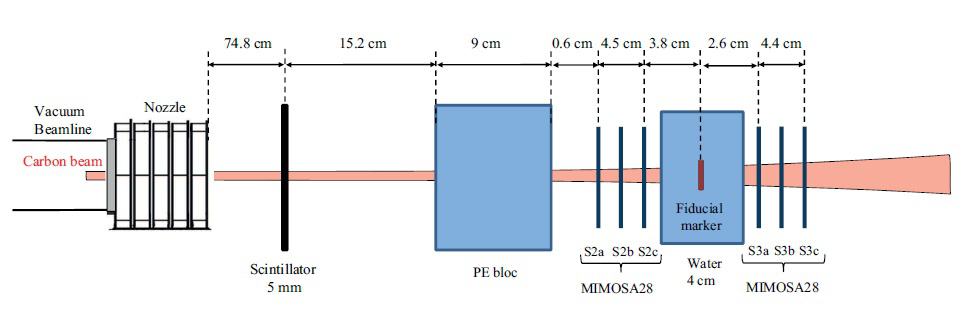
To address this limitation, the GSI team developed a measurement system comprising six MIMOSA28 pixel sensors, CMOS-based detectors with a high spatial resolution. “The collaboration between GSI and the IPHC in Strasbourg was a good opportunity to use a state-of-the-art particle physics detector like the MIMOSA28 for clinical applications,” notes first author Claire-Anne Reidel.

The system measures the trajectory of every particle and reconstructs each individual track, which are then used to generate a 3D fluence distribution. From this, 2D fluence maps can be extracted to determine the position of the maximum dose perturbation along the beam axis. The magnitude of the maximum perturbation is computed by comparing the beam profile at its position with that of a non-disturbed beam.

“In contrast to the use of films, this CMOS technique delivers a continuous fluence distribution (map), where the maximum perturbation can be determined easily and much more information can be extracted than for the films,” Reidel explains.

To validate the tracking system, the team used the MIMOSA28 sensors to measure a 294.97 MeV/u carbon ion beam traversing a small water tank and/or a tissue-simulating polyethylene block. Comparing beam profiles from MIMOSA28 sensors with those measured by radiochromic films revealed good agreement between the two.

Experimental set-up

The researchers next benchmarked the MIMOSA28 sensor profiles against films with fiducial markers inserted in the water tank at the beam isocentre. They studied four fiducial markers currently used for image guidance during ion beam therapy, including three small (below 0.5 mm in diameter) gold markers (Visicoil, Gold Anchor #1 and Gold Anchor #2), and a 1-mm diameter carbon-coated ZrO2 marker

The results confirmed the validity of using CMOS sensors for fluence perturbation measurements. For example, beam profiles for a 294.97 MeV/u carbon ion beam with the Gold Anchor #1 in place showed a cold spot of 2.4% measured by the CMOS sensor, and a cold spot of 2.5% measured with the film.

Cold spot comparisons

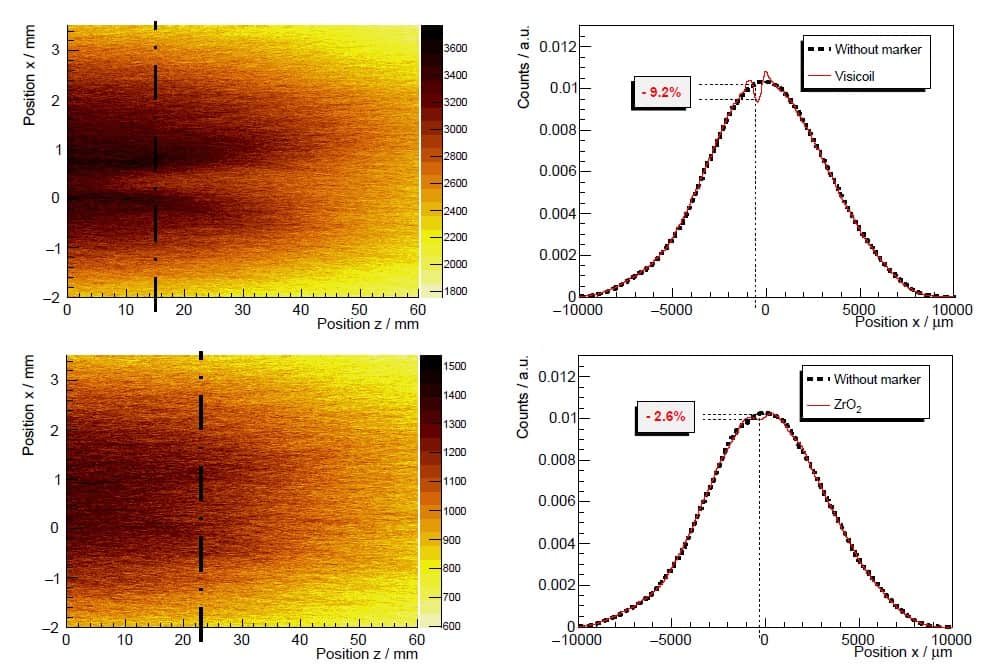
Reidel and colleagues next used 2D fluence maps to compute the size and position of maximum cold spots generated by the various fiducial markers. They first examined the Gold Anchor #1, Visicoil and carbon-coated ZrO2 fiducial markers at carbon ion beam energies of 278.84, 294.97 and 310.61 MeV/u.

The maximum cold spots and their position downstream of the fiducial marker varied as a function of beam energy, with smaller energies generating greater effects. Markers with higher density and atomic number created stronger and larger cold spots. For example, at 278.84 MeV/u, the maximum cold spots were 2.8%, 6.6% and 9.2% for the ZrO2, Gold Anchor #1 and Visicoil markers, at distances downstream of the fiducial marker of 23, 12 and 15 mm, respectively.

Fluence maps

The team also analysed the Gold Anchor #2 marker, which is more complex since it is folded in a random shape. For 310.61 MeV/u carbon ions, the cold spot created by the Gold Anchor #2 was about 4.4%, compared with 4.2% for the Gold Anchor #1 and 7.3% for Visicoil.

Reidel notes that in particle therapy, two opposing fields are typically used per irradiation to minimize the impact of any cold spots, and that treatment fractionation will also smear out any effects. “Cold spots will be a lot more severe in cases where high doses per fraction and a low number of fractions are prescribed or rare treatments using a single-field irradiation,” she adds.

Despite having the thickest diameter, the carbon-coated ZrO2 marker induced lower perturbations (less than 3% for all energies) than gold markers, due to its lower density and atomic number. This could make the ZrO2 marker a preferred candidate for image guidance during carbon ion therapy, though its lower density may make it hard to see on X-ray images.

The researchers conclude that the MIMOSA28 pixel sensors can evaluate fluence perturbations due to edge-scattering effects for small fiducial markers used during ion-beam therapy. They note that the tracker system can determine the maximum cold spots without knowing their position along the beam axis in advance, providing a distinct advantage over radiochromic film.

“In the future, these measurements could be performed with different ion beams, such as protons – which should be more sensitive to perturbations by the markers – or helium beams, and with a more human-like phantom,” says Reidel.

Physics in the pandemic: ‘I am in a very privileged situation’

My research group of about 10 people works on emerging concepts in photovoltaics and sensors. We use spectroscopic tools to study material properties and develop new device architectures. We are an interdisciplinary group, working at the interface between physics, chemistry, and materials science, and our work is aimed at answering fundamental questions in the context of real-world applications in energy conversion and sensing.

I have been at home since Monday the 16th of March, and I am adjusting to my home office. My workday starts at the same time as it used to, 8:30 – 9:00. While some deadlines (on grants, for example) have been extended, other more urgent things have come up, like how to organize an online class. I have been Skyping quite a lot of course. So, my day consists of grant/paper writing, e-mails, and Skype meetings – similar to what it used to be. I do try to go out a bit more during the day, though, which is something I didn’t do in the office.

The VU Amsterdam has been very flexible and communicative. I am receiving constant updates, and things are transparent. My department has been very clear about encouraging people to work at home and offering to cover any costs or help solve any problems that arise because of this. The building is still technically open, but all staff and students have been told to stay at home unless there is really a reason to go to the university (for example lab equipment that has to be maintained). Things are still somewhat relaxed in the Netherlands. Schools, restaurants, bars are closed, but the rest remain open for now. However, when you do see people out and about, they are maintaining a good distance from each other.

Planning for an uncertain future

My plans are to finalize two grant proposals and a paper, while keeping in regular touch with my group to ensure that their projects move forward, and that we find a suitable solution. This is probably too ambitious, but I will try! We are an experimental physics group, so a lab shutdown could be a disaster, but we are finding that everyone has some data to analyse, some text to write, some reading to do. For the next few weeks, we have a good plan for how to proceed.

I am not worried about myself at all. I have a stable job, and I can work from home if I have to. The silver lining for me is that I can get a lot of my to-do list done without many distractions. But it is clear to me that I am in a very privileged situation. I am worried about my students (some of whom come from other countries and are here on their own); colleagues with short-term contracts; people who are caring for others now; and generally about people in less stable financial, social, or personal situations. In the short term, it will be very stressful. As for the long term, it is very unpredictable, and no one knows how long it will last and what the direct and indirect consequences will be. It is indeed a strange situation.

Ask me anything: Priyamvada Natarajan

What skills do you use every day in your job?

My research revolves around building testable physical models of cosmic phenomena that are guided by current observational data, and can be tested with robust verifiable predictions. A strong foundation in physics and mathematics, combined with a systems approach to problem solving, are the crucial skills that I honed as an undergraduate at the Massachusetts Institute of Technology, and use every day on the job. The systems-thinking approach to a problem helps me pare down complex ideas and sift out critical ingredients – I first solve a simple version that captures the key features, before gradually adding back the complexity.

Thanks to my interdisciplinary career trajectory (I also have a graduate degree in the history and philosophy of science), I care deeply about expressing my ideas and processes and I aspire to write clearly and communicate effectively. I am a people person, and have cultivated emotional intelligence that stands me in good stead when working collaboratively in science. Adventurous and curious by nature, I have always enjoyed learning with an open mind and have been receptive to radical new ideas – and this has over time given me the courage and confidence to take intellectual risks.

What do you like best and least about your job?

What I love best about my job is the continuing thrill and joy of figuring things out when problem-solving. There is a sense of unadulterated joy that I derive from understanding something that seemed out of reach just an hour, a day, a week or a month ago. I enjoy the collaborative nature of research, interacting with other scientists from around the world, and working with others who may think very differently and bring new perspectives and insights. I also love the contact with the students I teach and mentor, who continually expose me to fresh ways of engaging with the world.

There are aspects of academic culture that I am not a great fan of, such as the emphasis on relentless self-promotion, the chasing after rapidly declining resources to fund basic science research like my own, and the competitiveness that occasionally descends to the petty. I know that science is a human endeavour and appreciate it deeply for that very reason, but the clash of ideas, which gets unnecessarily fierce sometimes, bothers me greatly. Another aspect that I find irksome is the growing level of bureaucracy and, in particular, inefficient meetings.

What do you know today that you wish you knew when you were starting out in your career?

There are a couple of things that I wish I had understood better when I was starting out in my career. The first is that each one of us gets to define success in our own terms, and create our very own personal collage of what matters to us – in our career, family, community, passions and interests – that collectively drives and catalyses us. Second, when I was young, I often felt like an outsider and this caused a sense of unease. Now, I have come to realize that being caught in this tussle between feeling like an insider and outsider is actually an empowering place to be, as it is freeing.

Finally, I wish I had known and understood that perseverance and persistence really come in handy for those intending to (and often compelled to) take intellectual risks – there will be resistance and one needs to accept that and be prepared to tackle it. Most of all, though, I am super grateful for having had the advantages, privilege and opportunities that have enabled me to pursue my personal dreams in my career and life.

Physics in the pandemic: ‘Routines are important’

Usually I ride my bike to work. From my front door to my office at the Danish Centre for Particle Therapy it takes me about ten minutes. These days I walk. The trip can take anywhere from five to thirty minutes and it takes me from my front door and back to my front door.

A friend and fellow PhD student told me about this habit in one of our recent “I can’t believe this is real” phone conversations. It’s supposed to be a way of separating at-work time from at-home time when your workplace is in your home. Ever since the Danish state mandated that all non-essential public employees must work from home, my workplace has become a little desk about a metre away from my bed. And while I am happy to stay home and keep from inadvertently spreading this scary new virus to all the doctors, nurses, radiation therapists and – most importantly – cancer patients I normally share the building with, this situation takes some getting used to.

Routines are important when every day could easily become a lazy Sunday at home. So I get up at 6:30, shower, have breakfast, walk to work, make coffee, go sit at my desk, and log on to my research group’s newly established office chat. In the afternoon I walk home from work, and in theory the desk should be off-limits for the remainder of the day. This doesn’t always work out, but that’s not really a new issue. Even in pre-coronavirus times I often took my work home with me in the evenings. Any PhD student will understand: You just need this last bit of code to run, to fine-polish this last figure, to rehearse your presentation for tomorrow one last time. In that way not much has changed.

I am one of the fortunate ones. My work does not demand that I be in a laboratory and perform experiments. I only need my computer and access to the right drives and databases. My biggest problem was getting permission to establish a VPN connection to our hospital systems (not as simple as one should think).

I have friends who were forced to shut down experiments and postpone critical work, though. The shutdown of all Danish universities was announced on a Wednesday evening around seven. That evening, the friend I mentioned earlier stayed at her lab until two in the morning, feverishly collecting data so she would have enough to keep her occupied for at least a few weeks’ worth of forced home office work.

I guess in the end all I can say is that, for me personally, it could really have been much worse. Yes, a few conferences were postponed, as was my planned six months’ research stay abroad in the Netherlands. But I can still do my work, my PhD probably won’t have to be extended, and I guess I can use the quiet and isolation to finally get around to writing up that paper I’ve been meaning to get around to for the last few months… In any disaster it’s important to look for the silver lining. Stay safe out there (hopefully at home, if you can)!

Ask me anything: Sadik Hafizovic

What skills do you use every day in your job?

The fundamental concepts that I acquired in academia, during my engineering and physics studies, PhD and postdoc time, are the foundation upon which I judge technological decisions. This understanding is priceless and feels indispensable to me. Zurich Instruments participates in government-funded projects such as OpenSuperQ, where we are helping build an open superconducting quantum computer. Even though I am not personally much involved in the project, I do need to understand where it can take us.

Communication is a skill that I wouldn’t say I lacked, but as the company now has 100 people, with offices in China, France, Italy, South Korea and the US, it is becoming pivotal and the requirements on communication are growing. Likewise, organization development and change-management are topics that I wasn’t confronted with in my education, but are key for me in mastering today’s challenges.

What do you like best and least about your job?

An outstanding feature of my job that I enjoy is getting to help, and learn from, many scientists all over the world, in many different disciplines. Over time, I have built up lasting relationships that go beyond the provider–customer relationship, which I find very rewarding. My circle of outreach seems much bigger than the one I had during my postdoc days in my research community. Of course, this also has a flip-side: in a research community one can strive for in-depth knowledge; now my technical knowledge has become shallower, as I cannot afford to go into too much depth in technical and scientific matters anymore. Nonetheless, the fact that I can be entrepreneurial and still stay close to science is wonderful.

What do you know today that you wish you knew when you were starting out in your career?

I can share what has worked for me: if you want to start a company, don’t do it by yourself; find one or two friends to embark on that adventure together. If possible, don’t do it as a side project, make it your main job. If you are currently in academia, build your company outside of the university if possible. Don’t be afraid of competition. The world is a large place with many niches – find yours.

Thread-like defects in 3D active crystals get a closer look

Flocks of birds, schools of fish and swarms of insects are all examples of “active matter” – systems of particles that move on their own without recourse to external forces. Scientists have long sought to replicate such behaviour in the laboratory, with the aim of producing synthetic materials that mimic biological functionalities such as self-healing or cell mobility and division. A team of researchers in California, US, has now moved closer to this goal by obtaining the first detailed, three-dimensional views of a type of active matter known as nematic liquid crystals.

The team made their observations using a technique called light-sheet microscopy, which was originally developed to visualize how living organisms acquire their shape and architecture. According to co-team leader Zvonimir Dogic of the University of California, Santa Barbara, these observations represent the first step towards real-world applications for active crystals, as previous studies had mostly focused on simpler two-dimensional systems.

Non-equilibrium state

Nematic liquid crystals get their name from the Greek word nema, meaning “thread” – a reference to their characteristic thread-like topological defects. These defects are called disclination lines, and they can be made of elongated molecules or colloidal particles. Within a given area, they will on average point in the same direction, along a localized preferential axis known as the director.

In ordinary, passive, nematics, homogenously aligned states are favoured over deformations that cause the material to bend. In active nematics, however, the situation is different, because the active components provide energy on the microscale throughout the structure. This energy drives internal stresses that distort the fluid, with the result that even the smallest deformations can amplify exponentially.

This non-equilibrium state cannot be described in the framework of conventional thermodynamics, and it leads to unsteady, active turbulent flows in the bulk of the material. In contrast to turbulence in normal fluids, the chaotic flow in active nematics does not contain regular patterns and can give rise to large-scale coherent motion, producing emergent structures, such as phase boundaries and topological defects, in which local order has broken down.

Bending instabilities and bulk flows

In their new work, Dogic and his colleagues, together with a team led by Daniel Beller from the University of California, Merced, made their active nematic fluids from bacteriophage virus particles. The rigid rods of the virus provide the nematic liquid crystal phase at room temperature.

Building on earlier work in Dogic’s lab, the teams dispersed two basic components of biological cells – microtubules and kinesin motors – into the nematic phase to create their active material. Microtubules are filaments of long, semi-flexible protein assemblies, while kinesin is a protein that can convert chemical energy (in the form of adenosine triphosphate, or ATP) to mechanical energy.

When fuelled with ATP, the molecular motors elongated the microtubule bundles, which in turn induced active stresses that created bending instabilities and bulk flows throughout the entire sample, including the nematic phase.

Tracking the motion of defects in real time

To study this behaviour, the team turned to light-sheet microscopy. In this technique, a micron-thin sheet of light is used to image a sample of molecules labelled with a fluorescent marker. By rapidly scanning the sheet along the z-direction of the sample, the researchers could image their active nematic crystals with molecular-scale resolution and track the motion of defects in real time. This approach provides a quantitative measure of the local director field over the entire 3D volume of the active material.

The researchers found that their nematics contain both disclination lines and loops, including Möbius-strip-like objects that can nucleate, shrink, open and merge to form spatially extended structures. These disclinations can be thought of as rubber-band-like loops that are continuously being pulled and stretched by internal forces, they say.

To understand how the dynamics of these loops depends on the material’s local topological structure, Dogic says that he and his colleagues will need to develop visualization techniques with improved temporal resolution as well as new methods to isolate single loops. “We would also like to gain a detailed appreciation of how an isolated loop appears in a perfectly aligned material,” he tells Physics World.

The new work, which is detailed in Science, is an important example of how to make and study 3D active crystals, Dogic adds. In a related Perspectives article, Dennis Bartolo, a researcher at the University of Lyon, France, who was not involved in the work, called it “a formidable experimental platform” for future observations of these complex materials.

Gamma rays and gravitational lensing provide hints of dark matter

A comparison of data from gravitational lensing and gamma-ray observations has revealed that regions of the sky with greater concentrations of matter emit more gamma rays. The researchers who carried out the work conclude that much of the correlation is likely due to the action of supermassive black holes, but they say that some of the emission may be due to dark matter.

When light travels to Earth from a distant object it can be affected by the warping of space caused by the gravity of massive objects that it passes on the way. This results in a distortion of the image of the object that we see — and the type and degree of distortion reveals the distribution of mass along the light’s path. After accounting for all the visible foreground objects, what remains in the mass distribution is assumed to be dark matter – a still undetected substance that is reckoned to make up about 25% of the universe’s energy/mass content.

Astrophysicists also study emissions of gamma rays from places that are believed to contain lots of dark matter – such as the centre of the Milky Way. This radiation could be generated when hypothetical dark matter called weakly interacting massive particles (WIMPs) collide and annihilate one another. To date, however, those studies have been inconclusive as to the existence of WIMPs.

Unresolved sources

The latest work scrutinizes nine years’ worth of gamma-ray data from the Large Area Telescope onboard NASA’s Fermi satellite. Those data have previously revealed many individual gamma-ray sources, such as the remnants of supernova explosions or blazars – jets of ionized matter produced when supermassive black holes at the centre of some galaxies accrete surrounding material. However, those sources cannot account for all the detected radiation. Instead, objects too faint to be revealed individually generate what is known as the unresolved gamma-ray background.

The study was done by Simone Ammazzalorso at the University of Turin in Italy and colleagues, who have compared gamma-ray background measurements with the first year of data from the Dark Energy Survey – optical snapshots of 40 million galaxies obtained by the Dark Energy Camera on the 4 m Victor M Blanco Telescope in Chile. Their aim was to establish whether there is any correlation between the positions of gravitational lenses – deduced from the stretching of distant galaxies – and gamma-ray photons, as is predicted. As they report in Physical Review Letters, the answer is yes.

Scrutinizing the two sets of data for common patterns, the researchers found that regions of the sky containing more matter also emit more gamma rays and that, conversely, there are fewer gamma rays from less dense regions. Specifically, they confirmed the existence of such a correlation at high energies and small angular scales – less than 0.3°– with statistical significance of greater than 5σ, a value that is generally considered to indicate a discovery.

Blazars in the frame

To establish what might be responsible for that emission, the team plugged the data into computer models that simulate how various celestial objects generate gamma rays. Doing so, they concluded that most of the correlation is likely due to blazars, which are essentially point-like objects.

However, the researchers found that an extra ingredient was probably needed to account for a second, weaker, correlation at larger angular scales. They established at the level of 3σ that their models reproduce the observed data, including energy and red-shift components, more faithfully when they include dark matter among the gamma-ray emitters than when they don’t.

“This result is exciting as it marks one of the few hints at the existence of dark matter via indirect detection methods, and it opens up new possibilities for probing dark matter particle models,” according to Francesca Calore, an astroparticle physicist at Annecy-le-Vieux Theoretical Physics Lab in France, who wrote a commentary piece to accompany the paper describing the research.

However, Calore cautions that scientists do not completely understand the physics of blazars, arguing it is still possible that even the correlation at large angular scales “comes entirely” from these objects. Getting a firmer idea of dark matter’s contribution to the unresolved gamma-ray background, she says, will require fresh data.

Indeed, the Dark Energy Survey is due to release an enlarged data set, containing observations of 100 million galaxies, in the summer. Beyond that, the Legacy Survey of Space and Time at the Vera Rubin Observatory in Chile should provide data on billions of galaxies over a larger area of the sky after it opens for business in 2022. That year should also see the launch of the European Space Agency’s Euclid telescope, designed to better understand dark energy and dark matter by comparing the shape and redshift of galaxies.

“With deeper redshift coverage and a better angular resolution, future instruments will enable scientists to better understand the sources behind the universe’s gamma-ray glow and, potentially, uncover the nature of dark matter,” says Calore.

Copyright © 2026 by IOP Publishing Ltd and individual contributors