Physics in the pandemic: ‘Work will always be there’

I’m writing this on my typewriter. She’s a trusty Corona Standard that has seen everything from the Great Depression to the rise of the Internet. And I’m writing on her today (20 March) because my screen time is through the roof.

I’m one week into an isolation of indeterminate length to limit the spread of the novel coronavirus and its resultant disease, COVID-19, and it’s been hard for me to ignore the incessant barrage of media updates.

This time last week, I was loading books from work into my car. I had a feeling that I wouldn’t be returning to my cubicle anytime soon.

Two days later, in part a response to Wisconsin Governor Tony Evers’ declaration of a public health emergency, University of Wisconsin-Madison chancellor Rebecca Blank announced that university employees should work from home, when possible. Two days after that, Blank said that in-person classes, which had originally been cancelled through 10 April, would remain online through semester’s end.

In the days that followed, cancellations and closures piled up. University buildings closed to all but essential personnel, and research activities involving human participants were suspended until further notice. Life as I knew it had ground to a halt.

Like many PhD students, I am now reflecting on my priorities and research project. To be honest, I hadn’t truly felt connected to my project – developing quantitative ultrasound imaging parameters for stroke risk assessment – until a few months ago, when I returned to Madison from an internship and received my committee’s OK to defend in fall. With that “OK”, I felt a renewed determination to finish my project, complete the degree.

Earlier today, I realized I can’t start my final aim until the university reopens…Does it really matter?

My advisers say that the university closure is temporary, that it won’t last more than two months, that my degree is not on hold. I disagree…Does that matter?

I’m more fortunate than many graduate students. I have a reliable Internet connection, computer workstation and an office space at home, and I have enough food and supplies to last a while. I have a car. I don’t have to prelim or defend virtually.

But I’m also concerned: for my friends and family, friends’ families, colleagues and their families, myself. We’re spread out across the globe, some still trying to make it home. Some of us are considered essential and are working throughout this pandemic in hospitals and clinics, bakeries and law offices.

I’m tired. I’m frustrated at those who do not heed requests to stay home. I’m angry at those who hoard supplies and spread misinformation. I’m disappointed and grieving for events and conferences that were cancelled. I wonder what will happen if people, desperate for necessities and actionable change, start looting.

Needless to say, finding a routine hasn’t been in the cards. Not this week, at least. In spite of external pressures to continue working, I’m treating myself gently and encouraging my friends and colleagues who can afford to, to do the same. Work will always be there.

For now, I read, cook, watch my neighbours’ dogs play outside, and chat and vent frustrations with friends. For now, it’s finally the weekend, although it doesn’t feel like it. For now, I’m going to watch Avenue 5 on HBO. Space cruise escapism, anyone?

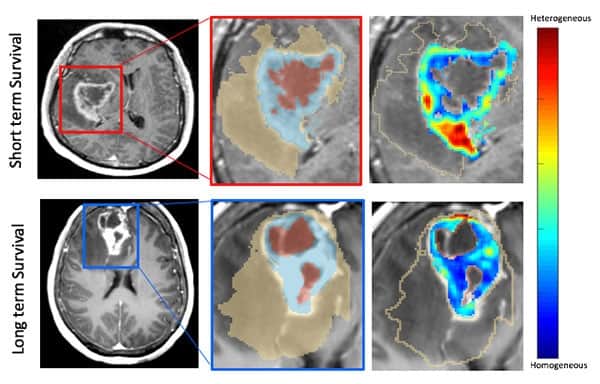
Radiomics-based MR image analysis can predict brain tumour prognosis

MRI prognostic features

Glioblastoma is the most common primary malignant brain tumour. It is aggressive and rapidly fatal, with a median survival time of only 15 months after diagnosis. Glioblastoma cells’ genetic profiles are extremely heterogenous, which is one reason for the generally poor prognosis. It also means that disease progression and response to treatment can vary greatly between patients.

A group of researchers from Case Western Reserve University has now developed a model that links radiomics features to tumour biology. This could greatly improve prognostic accuracy and help in the design of patient-specific treatments for glioblastoma (Clin. Cancer Res. 10.1158/1078-0432.CCR-19-2556).

Gene expression as a prognostic tool

In recent years, researchers have identified several characteristic genetic markers in glioblastoma that influence the disease prognosis. These markers can be used as predictors of a patient’s survival time or even to predict which treatment a patient is most likely to respond well to. Discovering a tumour’s gene profile requires a biopsy, however – an invasive procedure that carries risks of its own.

MRI provides a non-invasive way of analysing a tumour and its surroundings. Using radiomics methods, one can extract image information, so-called “features”, that are hard or impossible to detect by the naked eye. The group, led by Pallavi Tiwari, has developed a prognostic model based on pre-treatment MRI radiomics features – and, importantly, connected the features used in this model to biological processes in the tumour. In this way, the researchers not only show that their model can predict survival, but they also explain why it does.

Niha Beig and Pallavi Tiwari

Tiwari and colleagues built their model using pre-treatment MR image sets of 130 patients. For each of these, they extracted 2850 radiomics features and finally identified 25 as being especially prognostic of a patient’s progression-free survival. These features describe image properties such as “wavy, ripple and spot-like patterns”, the authors explain, or the sphericity of the oedema (swelling) surrounding the tumour. They combined these features into a model to calculate a radiomic risk score (RRS) and validated the model’s prognostic ability in an independent patient cohort.

Tiwari’s team then showed that these radiomics features correlate with certain gene expressions in the tumour. These genes control biological processes such as the rate of cell division or the growth of new blood vessels to transport nutrients to the tumour. In this way, the researchers established a direct connection between the radiomics features and the biological processes leading to disease progression.

Towards personalized treatments

Despite being the most common primary brain cancer, glioblastoma remains a relatively rare disease. It would likely take a prohibitively long time to collect enough patients for a study such as this in a single institution. Tiwari and her colleagues circumvented this issue by using open-source data sets from The Cancer Imaging Archive and the Ivy Glioblastoma Atlas Project, in addition to data from their collaborating institution, the Cleveland Clinic. Data pooling efforts such as these are essential for building increasingly stronger predictive disease models.

In the future, the group will work on extending the image correlates found to be prognostic of overall survival and demonstrate that the RRS model can be predictive of response to chemotherapy in particular, says Tiwari. “This could have huge clinical implications in terms of identifying glioblastoma patients who may not respond favourably to chemotherapy and may be more suited for genomically-driven treatments to improve their quality of life as well as overall survival times,” she explains.

Ask me anything: Helen Margolis

Helen Margolis

What skills do you use every day in your job?

As the UK’s national metrology institute, NPL’s mission is to provide the measurement capability that underpins the UK’s prosperity and quality of life. In my department, we operate the national time scale, using it to contribute to global timekeeping and to disseminate accurate time and frequency to users across the UK. This work underpins many technologies that are part of our daily lives, such as mobile phones, the Internet and satellite navigation systems. Of the topics I studied during my undergraduate physics degree, I have probably made most use of the atomic physics, laser physics and optics. The practical and coding skills developed during my doctoral research have also been vital to me during my career at NPL. Equally important is being inquisitive and curious, not being afraid to ask questions, and paying attention to detail. This last point is absolutely critical to succeeding as a metrologist.

As I have progressed into more senior roles, skills such as planning, prioritization, communication and collaboration have become increasingly important. I am currently co-ordinating a three-year European project that involves 15 organizations from eight countries. This is a challenge at times, but one I enjoy. Mentoring is also an important part of my job, and for this effective listening is key.

What do you like best and least about your job?

One of the best things about my job is its variety, which means I am always learning new things, and never get bored. One day I might be deep in detailed discussions about the development of an ultra-stable laser source, or drafting a paper describing the results of an international clock comparison campaign. The next I might find myself discussing the future strategic direction of my department with a member of NPL’s executive team, or giving a lab tour to a government chief scientific adviser. I also work with a diverse and dedicated team of people who are passionate about what they do, and bring a wide range of skills and experience to the team. As head of science my role is to maximize their potential by inspiring them to work effectively together to achieve our goals.

My job does involve quite a bit of international travel, which may not appeal to everyone, but it has taken me to some interesting places that I would probably never have visited otherwise.

What do you know today that you wish you knew when you were starting out in your career?

I wish I’d known that there were places like NPL. I started my research career as a DPhil student at the University of Oxford, working on spectroscopic experiments to test the theory of quantum electrodynamics. This taught me many important things, not least the importance of setting ambitious goals, which increases the likelihood of generating significant results, even if you don’t achieve everything you originally set out to. While I enjoyed my time in Oxford, I always felt challenged when friends asked, “but what is the point of your research?”

Once I moved to NPL, which sits at the intersection between academia, government and industry, this became a much easier question to answer, as the work we do has a direct impact on people’s lives. As in academia, we carry out leading-edge, fundamental research – our work on next-generation optical atomic clocks and related technology fits into this category. However, a key difference is that we always have an end use in mind, even if it is many years away.

Blue energy: innovative ways of harnessing energy from the oceans

This three-minute video introduces two innovative approaches to harnessing energy from ocean waves from Eco Wave Power and AW Energy. Water covers about 70% of the planet, and much of it, driven by the Sun, is in constant motion. For at least 200 years, visionaries have dreamt of harnessing this “blue energy” and using it to power the world. But engineering challenges in these environments – especially at sea – can be vast. Another big hurdle is convincing investors to back these projects in the face of current uncertainty.

Find out more about the researchers and hi-tech business pioneers offering ways to harness blue energy – read this feature by science writer Stephen Ornes, originally published in the March 2020 issue of Physics World.


Ask me anything: James McKenzie

James McKenzie

What skills do you use every day in your job?

Communication of ideas is one of the main skills I am using at the moment. The challenge is to communicate complex ideas simply without them becoming misleading. Given I work in a physics-based business that has rather complex markets and technology, this is a challenge – keeping it to a level that doesn’t baffle the audience, bore them or patronize them is difficult. I think I have learnt this from explaining to my mother, who is very smart but is a historian, what I am doing over a number of years.

In the past I have run some large and diverse teams as chief executive and in this role you need to know enough about everything to be respected, or have people around you whom you trust and are able to cover the gaps. Communication skills therefore include asking the right questions. The skills and knowledge gained from studying physics represent a solid foundation to build on. Much of the detail of the physics I learnt at university is gone, but the logic and framework remains and that’s key to your view of the world. When working in industry, rapid problem-solving is about knowing what to focus on and how to eliminate dead ends. People management is by far the biggest challenge in my job: how to motivate and encourage is tricky and something that comes with practice.

What do you like best and least about your job?

One of the things I like most is taking scientific ideas and turning them into business ideas in the form of products or services. To do this, you need to do an in-depth study and weigh the pros and cons of any idea, to build confidence in it. That’s the fun part for me, but there are a number of necessary evils – paperwork, documentation, referencing and report writing – which are less fun but need to be done.

Travelling to meet customers, investors and suppliers is part of the job. In my early career I liked it – it gave me a chance to see the world – but now I am less bothered about it, as it’s easier to communicate via e-mail and video conferencing. Legal paperwork is my least favourite thing in the world. I used to run a public company that was AIM listed and on the London stock exchange. This sounded impressive but the amount of paperwork and regulation was overwhelming. Everything was audited, annual reports were 100 pages long. One investment I was involved in had five legal teams working on it and took five months to finalize from the offer of money to getting the money in the bank, and the legal fees were £250,000.

Being at the top of a company is a really lonely place – everything you say has consequences. You are never really able to have many friends in the businesses you work in – it’s best to build a network of peers and mentors you can talk to about challenges and issues.

What do you know today that you wish you knew when you were starting out in your career?

Have confidence in your abilities – you are probably better equipped to deal with things than you think. There are plenty of options out there – you may as well do something you enjoy (rather than do it for just the money). Getting out of bed every day with a love of what you do is the secret to a happy life and you are more likely to be successful doing what you love.

Pitch of birdsong is determined by body size

The characteristics of the white-tipped plantcutter’s song are directly linked to its body size, a new study shows. A team of physicists and ornithologists in Argentina and Germany, including Gonzalo Uribarri at the University of Buenos Aires, discovered the relationship through a detailed analysis of recordings and museum specimens of the birds. Their findings could lead to new insights into the intriguing acoustics of birds that develop their songs independently.

Birds can convey a rich array of sounds through their song. Around half of species are “vocal learners” that develop their complex, specific songs by copying older members of their species. In contrast, “non-learners” develop their vocal characteristics by themselves. These birds have evolved a diverse variety of biomechanical mechanisms for enriching the sounds they make.

Uribarri’s team has explored these mechanisms in detail and have concluded that the physical characteristics of non-learners – particularly their body sizes – can impact their songs.

Rusty door hinge

The researchers tested this idea by analysing recordings of the white-tipped plantcutter: a non-learner native to South America, whose song resembles a long, rough creak like a rusty door hinge. To predict the sizes of the birds making the recordings, the team used museum specimens to show that the bird’s body size tends to increase with altitude, making them better adapted to colder environments. This then allowed the team to plot the frequencies of the recordings against the altitudes at which they were made – confirming that the larger the bird, the deeper their song.

Uribarri’s team also performed acoustic analysis on the recordings to create mathematical models of the bird’s call. This revealed that their songs begin with sudden, sharp vibrations, and then taper off exponentially. Therefore, the researchers deduced that rather than pushing air straight through its vocal folds, as is the case for most birds, the white-tipped plantcutter builds up air inside its vocal folds, which escapes in sudden, explosive energy pulses when the pressure becomes high enough.

After a burst, the sound resonates inside a cavity in the oesophagus of the bird. The cavity then dissipates these vibrations, producing the exponential decay in sound. Ultimately, the frequency of the resulting song depends on the fundamental frequency of this cavity, which directly depends on its size. Uribarri and colleagues now believe that this mechanism is likely to apply to other non-learner bird species. With future research, this could lead to a better understanding of the rich variety of sounds such birds produce.

The research is described in Physical Review Letters.

Emergence of crucial interphase in lithium-ion batteries is observed by researchers

What happens in a lithium-ion battery when it first starts running? A complex series of events, it turns out – from electrolytic ion reorganization to a riot of chemical reactions. To explore this early part of a battery’s life, researchers in the US have monitored a battery’s chemical evolution at the electrode surface. Their work could lead to improved battery design by targeting the early stages of device operation.

The solid-electrolyte interphase is the solid gunk that materializes around the anode. Borne from the decomposition of the electrolyte, it is crucial for preventing further electrolyte degradation by blocking electrons while allowing lithium ions to pass through to complete the electrical circuit.

The solid-electrolyte interphase does not appear immediately. When a lithium ion battery first charges up, the anode repels anions and attracts positive lithium ions, separating oppositely charged ions into two distinct layers. This electric double layer dictates the eventual composition and structure of the solid-electrolyte interphase.

Recent observation

Vital as it may be, the electric double layer had only been speculated and rarely observed until recently. Now team of researchers at the Pacific Northwest National Laboratory and the Army Research Laboratory led by Zihua Zhu has provided direct experimental evidence for the double layer using a homebuilt secondary ion mass spectrometer, a tool that analyzes ionized particles ejected from surfaces.

The patented instrument can identify the chemical makeup in layers as thin as several nanometres. Moreover, it can probe liquids — such as battery electrolytes — under vacuum conditions.

To carry out the measurement, the researchers assemble a vacuum-compatible battery by encapsulating a liquid electrolyte with a copper electrode followed by a silicon nitride barrier. Mass spectrometric analysis begins when a focused beam of bismuth ions drills into the silicon nitride layer, kicking up ions and leaving behind a small hole. The hole depth can be precisely controlled, and the corresponding ejected material is monitored as a function of depth.

No geysers

When the bismuth ion drill reaches the underlying liquid layer, the liquid surface tension and the small hole size prevent the electrolyte from “geysering” into the high vacuum environment. However, a few liquid particles do escape to be detected and analyzed.

“Our technique has excellent depth resolution and molecular recognition right at the solid-liquid interface,” says Zhu. “These are the advantages over rival techniques, such as transmission electron microscopy.”

The measurements paint a picture of how the solid-electrolyte interphase emerges. The electric double layer of positive and negative ions morphs into the solid-electrolyte interphase comprising a dense, lithium oxide-rich inner layer and a loose, organic outer layer.

Understanding the electric double layer provides insight into how to manipulate the solid-electrolyte interphase. For example, to incorporate fluorine into the inner layer for higher lithium ion mobility, adding fluorine-containing anions into the electrolyte will not work well because the anions will be repelled away from the anode. Zhu’s experiments suggest that introducing neutral, fluorinated solvent species instead of anions can bypass the electrical repulsion.

This study of the initial formation of the solid-electrolyte interphase “allows scientists to design new interphases to improve battery performance,” says Zhu. In the future, the researchers want to apply the same liquid-based mass spectrometry to study the cathode, as well as different electrode materials such as silicon.

Moreover, the close-up discovery of layers in the solid-electrolyte interphase presents new electrifying possibilities for further exploration in the same battery system. Several fundamental questions still remain, and Zhu and his team are already on the chase.

This work is reported in Nature Nanotechnology.

Physics in the pandemic: ‘The quarantine is taken very seriously’

I work as a senior research scientist at a company called Atomionics. We are developing cold atom-based quantum sensors for gravimetry and navigation. We’re an early-stage start-up, and most of my effort is in developing our prototype device along with a small interdisciplinary team. Nearly all our work is lab-based, and it involves a mix of optics, spectroscopy, vacuum work, electronics and mechanical engineering.

The situation in Singapore is presently well-controlled, although things are changing fast: over the past weekend, the country shut its borders to short-term visitors and people on working visas who are not doing essential jobs. However, the health system appears to be designed to cope with an outbreak of this nature, and my impression is that the government had a solid outbreak response plan from before Day One. A test for detecting COVID-19 was developed early, and every confirmed case – mild or not – is hospitalized. Patients are only discharged once they test negative for the virus. This ensures that an infected person cannot infect others in the community. Additionally, contact tracing is quickly performed, and anyone deemed at risk is issued a “stay home” notice, meaning they are quarantined in their home for two weeks. If they develop symptoms during this time, they are immediately taken to the hospital via ambulance.

The quarantine is taken very seriously. The authorities will check in with you every day, and you can be fined, jailed and/or deported if you don’t comply. This has severely limited community spread of the virus. The government quickly implemented measures to support people who are quarantined, such as ensuring that they get extra sick leave and don’t lose their jobs if they can’t work from home, plus there are some big stimulus packages planned. Additionally, COVID-19 tests and hospitalization are free for residents. So far, only two people have died – although again, things are changing fast.

A number of social distancing measures have been put in place, including banning large gatherings of people. This includes large religious services, which were the source of two local disease clusters. Universities have been doing some distance teaching since February, but schools remain open. Travellers from a growing list of countries have been issued “stay home” notices, but as of this week, everyone coming into Singapore must self-isolate for two weeks. This is a good move, considering that around 75% of our cases at the moment are imported. Other than that, most places seem to be open and in business, but there are far fewer people in the usual tourist hotspots.

Local responses

As for how people have responded, there was initially some panic in the city (lots of panic-buying of hand sanitizer, masks and rice, though not toilet paper) back in early February, but my neighbourhood is pretty relaxed, and the local shops weren’t particularly depleted. The government took quick action to reassure people that there is no danger of running out of food and other essentials, and I think it did a good job. People take your temperature everywhere! You get scanned when you go to the gym, before commencing cosmetic appointments, when entering large office buildings, and so on. Everything is being disinfected constantly and there is hand sanitizer available everywhere now.

We have a number of people lined up from different countries, but now we have no idea when or if they’ll be able to join us.

The impact to me personally has been minimal. It’s been business as usual for the most part. However, after the recent spike in imported cases, my husband and I decided to quit going to the gym for the time being and avoid any busy local attractions that might attract crowds. The infection numbers here could easily explode, particularly because of the out-of-control outbreaks in Europe and the US. We’ll know in a week or so if Singapore was too late in increasing travel restrictions, so we’re laying low until then at least.

My workplace has also not been affected on a day-to-day level; we are a small company, so the local population density is not high. However, we’ve had major supply chain problems. First, with China, where several orders got stuck in limbo – they were ready to ship, but there was no one to ship packages and no one to deliver them. Many local suppliers also heavily rely on China, so we were unable to use them. We turned to manufacturers in India, and things were going well until the second week of March, when they also started shutting down. We’ve been hurriedly trying to procure all we need for the next few months because although we expected more global shutdowns, I personally didn’t expect it to happen so fast.

Over the last several days, some European suppliers have gone from saying they expected no delays to suddenly shutting down their facilities. I think things will continue to be unreliable for months, since there is no way that two-week shutdowns will be enough to stem the spread of the pandemic. We will have to find some creative solutions. One thing that’s extremely uncertain is the recruitment of new staff and interns. We have a number of people lined up from different countries, but now we have no idea when or if they’ll be able to join us.

Keeping perspective

If we’re lucky, the present measures to stem a widespread local outbreak will work, and we can carry on with our current levels of social distancing. There’s always a lot to do in the lab, so unless there’s a city-wide shutdown, it’ll be work as usual and quiet weekends. I have a trip to Portugal booked for mid-May for a friend’s wedding, but I suspect that it’s not going to happen. If we do have a full lock-down and I run out of work I can do from home, I’ll take up a few creative projects I have on the go.

Professionally, much of the world is in the same boat. To put things in perspective, the world is collectively trying to stop millions of people from dying, so if careers and businesses suffer a bit, it’s a price I’m happy to pay. You can always rebuild economies, but you can’t bring people back.

If we’re lucky, the present measures to stem a widespread local outbreak will work

On a personal level, I’m worried for my family in Europe. My sister is in lock-down in Barcelona, and I have other family in Germany. I have many friends in the US and UK, and I seriously worry for their safety and well-being, given the slow government responses to the outbreak. As for me, I have asthma, which puts me in a higher-risk category if I contract the virus, but I feel confident in the health system here (as long as it doesn’t get overwhelmed).

As for a silver lining? I hope that essential workers start getting treated better, in the form of much higher pay and benefits, and also respect. It’s obvious that without supermarket staff, sanitation workers, carers, and so on, society simply cannot function. Not to mention nurses, who are underpaid and overworked in so many countries, but are literal lifesavers. Maybe we’ll see some improvement to society, if we’re lucky.

Another silver lining for me is morbid glee every time a politician who dismissed coronavirus as a non-threat gets diagnosed with coronavirus. Naturally, I hope all these people make a full recovery – but I also hope they get voted out at the next opportune moment. Some of them deserve criminal charges for causing widespread death by negligence, and I look forward to seeing their (political) demise.


Ultrasound assessment of tumour oxygenation could guide cancer therapy

The centres of tumours often experience oxygen deprivation as the blood supply struggles to keep up with demand from uncontrollably proliferating tumour cells. Patients with tumours in this hypoxic state are known to have poorer outcomes, but until now, there’s been no viable non-invasive way to accurately measure tumour hypoxia within tissues.

Computer and biomedical engineers at the Beckman Institute, the University of Illinois at Urbana-Champaign and the Mayo Clinic have leveraged new ultrasound tracking technology to reveal the hypoxic status of tumours. In their Scientific Reports publication, the researchers emphasize their data processing technique’s clinical potential (Sci. Rep. 10.1038/s41598-020-59338-z).

“This study is unique because we can image tissue that is deeper inside humans without losing image resolution,” says Pengfei Song. “Ultimately, we want to be able to use this technique in a clinical setting for cancer detection, diagnosis and therapy evaluation.”

Tracking microbubbles

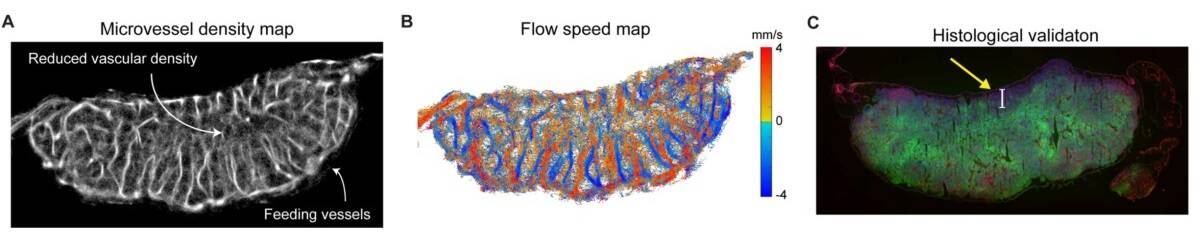
Ultrasound localization microscopy (ULM) is a relatively new technique, recently demonstrated to safely map tiny blood vessel structures (microvasculature) deep within tissue. ULM works by using contrast-enhanced ultrasound to track the path of microbubbles (which are the same size as a red blood cell) within a tumour’s intricate microvasculature. These images are then processed using an algorithm and carefully filtered to produce a high-resolution microvasculature map, of much higher quality than achieved by traditional ultrasound.

“Although this technique requires us to inject these microbubbles, they do not have toxicity problems as other imaging agents,” says Song, pointing out that microbubbles are already utilized in clinics worldwide.

The researchers wanted to take the use of microbubble tracking further. They applied advanced data processing to calculate vascular tortuosity and blood flow – useful metrics in revealing a tumour’s hypoxic status.

“Red blood cells can flow through straight blood vessels quickly and efficiently,” explains Matthew Lowerison, a postdoctoral research associate in the Song Research Group. “In contrast, the blood vessels in tumours are twisted onto each other. It is chaotic and disorganized, and the delivery of oxygen is inefficient.”

Testing the theory

The researchers examined an in vivo model, engrafting laboratory-grown renal tumours onto the chorioallantoic membrane (which experiences minimal tissue motion) of six chicken embryos. They injected microbubbles into a vein on the membrane surface and recorded ULM images at five cross-sections per tumour. From these images, super-resolution data processing calculated the microvascular structure, vascular perfusion and hypoxic state of the tumours.

Super-resolution imaging

Unsurprisingly, the tumours displayed reduced blood flow in the central tumour region compared with the more vascularized tumour periphery. This finding correlated with conventional super-resolution quantification of blood velocity.

ULM measures of microvascular structure and hypoxia also significantly correlated with histological probing for proteins associated with hypoxia on fixed tumour sections.

Hypoxia as a clinical biomarker?

The researchers are quick to point out that although their comparisons are promising for ULM, there isn’t a gold standard method for quantifying tumour hypoxia. To prove that the ULM metrics produced are robust and reproducible, a larger study will be necessary.

Disruption of imaging due to tissue motion is another challenge posed by clinical application of this approach. Such motion is likely to occur in the long acquisition times required to gather sufficient data, especially in large animal and clinical imaging scenarios. Further development of the technique is required to robustly garner hypoxic metrics in these scenarios closer to the true clinical setting.

“We are starting to see good results when we use artificial intelligence and machine learning with these technologies, which can help to make this process faster,” Song says.

Views from the top: career questions answered by leading physicists

Are you at the start of your career in physics, and do you wish you could get a little advice? Experience, as they say, is the best teacher and it always helps to consider a diverse range of views and opinions before picking your pathway. But who can you turn to for advice if you haven’t yet got going?

To help you along the way, I interviewed 10 of today’s top physicists, in the hope of providing you with some sage advice. We will be publishing their answers throughout this week, and we will add links to all the interviews to the box below.

I asked my interviewees the following three questions:

  • What skills do you use every day in your job?
  • What do you like best and least about your job?
  • What do you know today that you wish you knew when you were starting out in your career?

Take a look at their responses over the course of this week. You may find some of their tips rather obvious; but you’ll definitely come across some eye-opening suggestions, unexpected home truths and, most importantly, words of comfort and encouragement.

Ask me anything

Our 10 top physicists offering career advice are:

Crystal Bailey, head of career programmes at the American Physical Society

Philippe Blondel, senior lecturer and deputy director of the Centre for Space, Atmospheric and Oceanic Science at the University of Bath, UK

James McKenzie, vice-president of business at the Institute of Physics, and chief executive of Crossfield Fusion

Helen Margolis, head of science for the time and frequency department at the UK’s National Physical Laboratory (NPL), and an NPL Fellow in Optical Frequency Standards and Metrology

Sadik Hafizovic, chief executive and founder of Zurich Instruments, which provides instruments for quantum computing

Priyamvada Natarajan, theoretical astrophysicist, professor and director of the Franke Program in Science and the Humanities at Yale University, US. She is the author of Mapping the Heavens

Giulia Thompson, head of system physics within global linac engineering at Elekta, a medical-device company that manufactures radiotherapy solutions for cancer care

Chao-Yang Lu, physics professor at the University of Science and Technology of China, focusing on quantum foundations, computation and communications

Libby Jackson, human exploration programme manager at the UK Space Agency

Cather Simpson, professor of physics and chemical sciences at the University of Auckland in New Zealand, and chief science officer of Engender Technologies

Copyright © 2026 by IOP Publishing Ltd and individual contributors