

Innovations power the physics of the future at the APS March Meeting

The world’s largest meeting of physicists will get underway in Denver, Colorado, at the beginning of March. More than 10,000 attendees will gather for the March Meeting of the American Physical Society, which promises to deliver a packed scientific programme as well as plenty of opportunities for networking, exploring options for careers and professional development, and catching up with colleagues and friends.

One highlight this year will be the Kavli Foundation Special Symposium on machine learning and quantum computation. Speakers include John Preskill from Caltech, Michelle Girvan from the University of Maryland, Google’s Patrick Riley, and Roger Melko from the University of Waterloo. During the session Eun-Ah Kim from Cornell University will also describe how machine learning has been used by her group to analyse complex experimental data derived from quantum matter.

All the exciting new research presented at the meeting would not be possible without the latest generation of experimental instrumentation, and the meeting’s technical exhibit will enable delegates to discuss their specific requirements with representatives from more than 150 companies. Many equipment vendors will be introducing new devices and systems designed specifically for cutting-edge physics research – some of which are detailed below.

A modular approach to next-generation cryogenics

Oxford Instruments, a pioneer in the development of cryogen-free dilution refrigerators, has released a next-generation system that provides a step change in modularity and adaptability for ultralow-temperature experiments in condensed-matter physics and quantum computing.
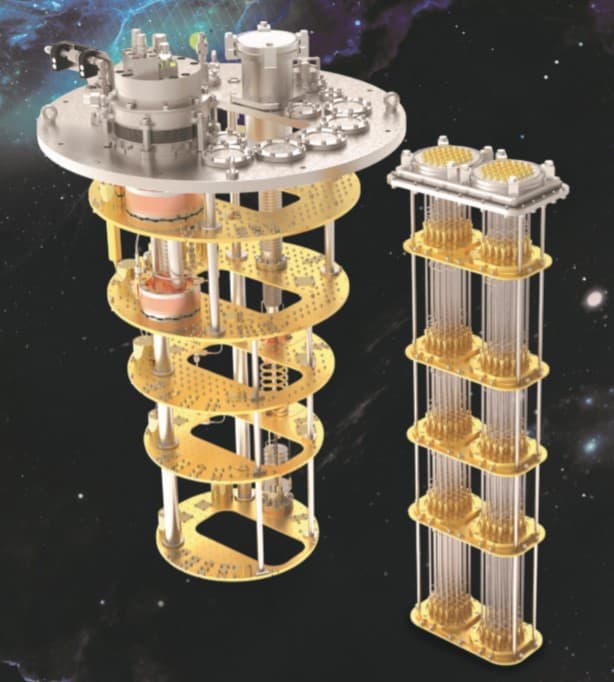
Proteox

The Proteox system has been fully redeveloped to provide a single, interchangeable, experimental unit that can support multiple users and a variety of experiments. This is achieved by a side-loading “secondary insert” module that allows samples, communications wiring and signal-conditioning components to be installed and changed whenever necessary.

“Our development team has recognized that to optimize for such a wide range of applications, adaptability needs to be designed in as the very foundation of the system,” says Matt Martin, engineering director at Oxford Instruments NanoScience. “This configurability allows us to offer more tailored solutions and experimental set-ups on standard lead times, and also provides our customers with maximized future-proofing against changing requirements in a dynamic research landscape.”

The system features a web-based software control system to provide remote connectivity as well as powerful visualization capabilities. Improved control is achieved by a patented gas-gap heat-switch system that actively adjusts the thermal conductivity between experimental plates.

This is the first release of a new family of Proteox dilution refrigerators that will all share the same modular layout to provide cross-compatibility and added flexibility for cryogenic installations.

Visit Oxford Instruments at Booth #1611 to find out how the Proteox system could help your research.

Ultracold experiments made simple

ICEoxford offers a range of cryogen-free cryostats that have been designed to take large experimental heat loads, which makes them perfect for everyday research and low-temperature experiments with quantum-based technologies.
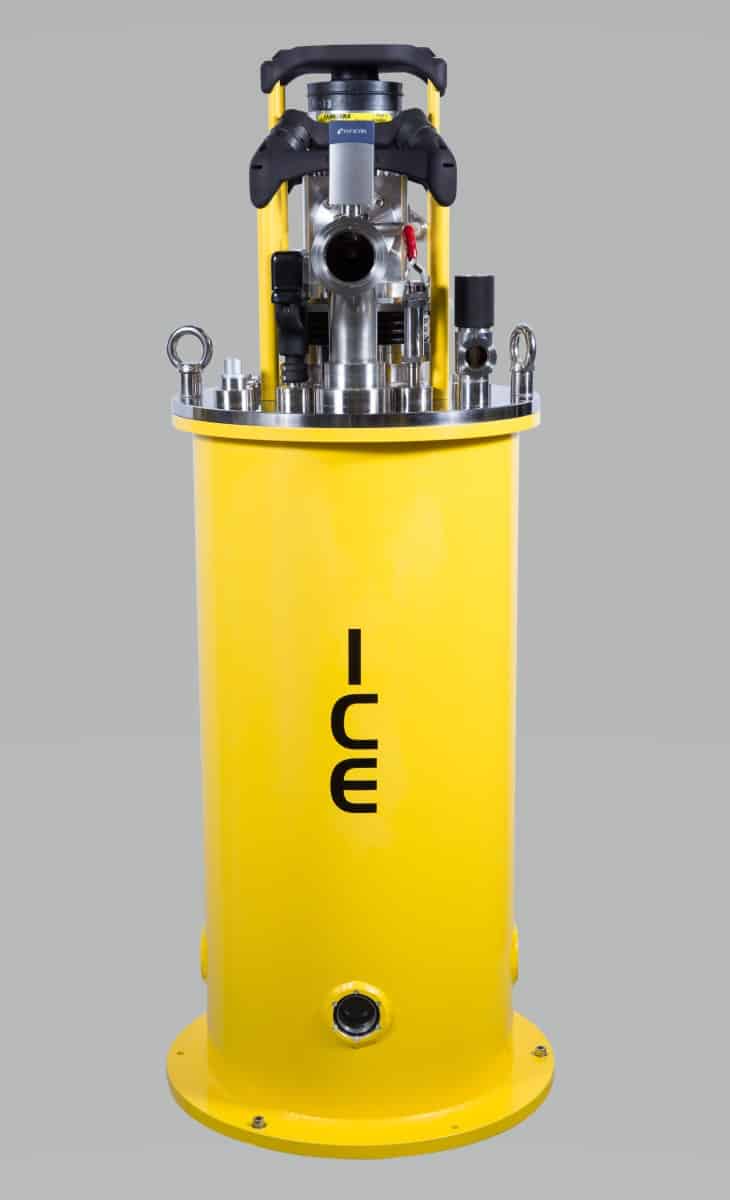
ICEoxford

The latest addition to the range is the DRY ICE 0.8K Benchtop Cryostat, an upgrade from the DRY ICE 1.2K Benchtop. The new model combines continuous operation over the temperature range of 0.8 K to 425 K with a large sample space and a compact benchtop design.

With a cooling power of more than 400 mW at 2 K and above 80 mW at 1.7 K, the cryostat can reach its base temperature within 12 hours.

Various options are available, including five different window materials for optical access, custom wiring, and several alternative magnet technologies. Piezo-driven XYZ positioners, stacks and rotators can also be integrated into the cryostat.

Visit the ICEoxford team at Booth #1510 to explore their full range of research cryostats.

Complete solution delivers easy Hall analysis

Lake Shore Cryotronics will be demonstrating a new tabletop station for rapid, convenient Hall analysis that exploits the company’s patented FastHall measurement technology. The FastHall Station is a complete solution for researchers who are looking for a cost-effective way to add state-of-the-art Hall measurement capabilities to their lab.
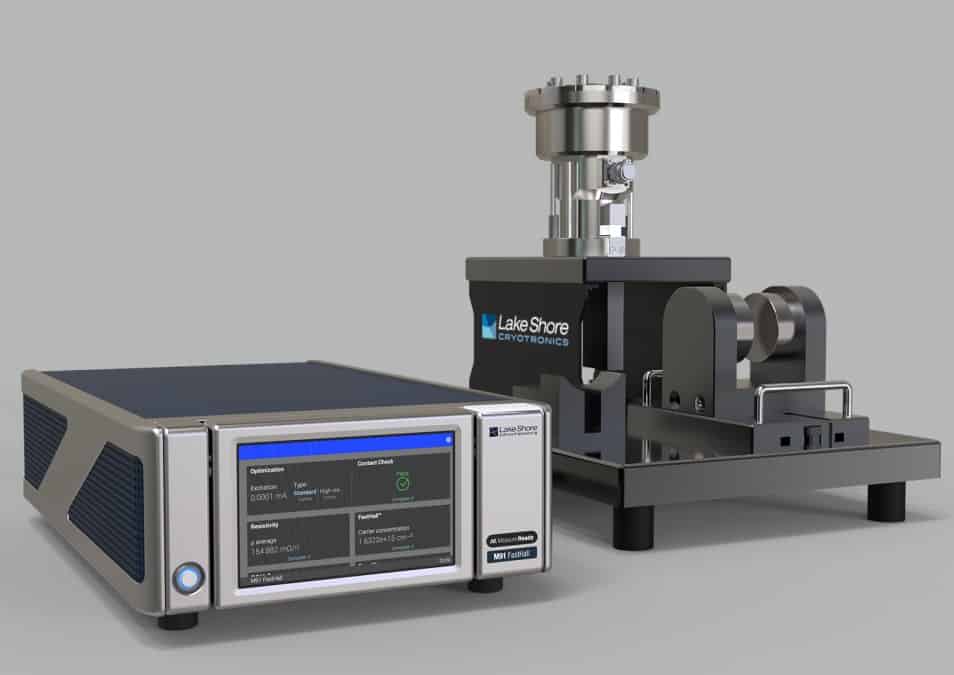
FastHall Station

In addition to a 1 T permanent magnet, high-precision sample holder, and a PC with application software, the station includes Lake Shore’s unique MeasureReady M91 FastHall measurement controller, which the company says is faster, more accurate and more convenient than traditional Hall solutions.

The M91 automatically executes measurement sequences, and provides better measurements more quickly – up to 100 times faster in many cases – especially when working with low-mobility materials. The M91 controller is also available as a standalone instrument for integrating into Hall measurement systems with existing electro or superconducting magnets.

You can find out more about the M91 at Booth #1101, along with Lake Shore’s full range of measurement and control solutions for low-temperature and magnetic-field conditions.
China’s rover probes deep below the surface of the far side of the Moon

China’s Chang’E-4 mission has given us the first detailed view of the subsurface geology on the far side of the Moon. Using ground penetrating radar on the mission’s rover, scientists observed layers of dust and boulders formed by debris from past impacts on the lunar surface. The radar was able to probe about four-times deeper than previous studies on the near side of the Moon.

Much of the surface of the Moon is covered in a lunar regolith – a loose layer of pulverized rock and dust created by billions of years of meteorite impacts. While the regolith in parts of the near side of the Moon has been studied in detail by several missions, it had not been clear whether the surface geology is similar in underexplored regions of the Moon. The far side of the Moon, most of which is not visible from Earth, is of particular interest because this hemisphere has a thicker crust and consequently less volcanism. Until Chang’E-4, only relatively low-resolution satellite-based radar measurements have been made of far-side regolith.

In early 2019, the Chang’E-4 lander of the Chinese National Space Administration made history by being the first spacecraft to survive a landing on the far side of the Moon. Its landing site lies in the east of the Von Kármán impact crater, which is in the South Pole–Aitken Basin.

Two lunar days

The mission’s rover Yutu-2 was deployed after the landing and it scanned the lunar subsurface with its on-board radar. In a new study, a team of researchers from China and Italy present the results of Yutu-2’s first two lunar days (about 58 Earth days) probing the geology of the lunar far side.

The team found that the Chang’E-4 landing side sits atop a layer of loose deposits reaching up 12 m in thickness. Beneath this, the radar found a second layer of progressively coarsening material with embedded boulders that endures to a depth of around 24 m. This is underlaid by alternating layers of both fine and coarse materials down to a depth of at least 40 m.

“The most plausible interpretation [of the subsurface geology] is that the sequence is made of a layer of regolith overlying a sequence of ejecta deposits from various craters, which progressively accumulated after the emplacement of the mare basalts on the floor of the Von Kármán crater,” the Chang’E-4 scientists write in Science Advances.

“Very high resolution”

“We can see for the first time at very high resolution an ejecta deposit on the moon — how it’s made, the main characteristics, the thickness of the regolith,” team member Elena Pettinelli of the Roma Tre University tells Physics World.

The far-side regolith differs in some ways from the regolith studied on the other side of the Moon. Apollo-era work had suggested that regolith is typically only a few metres thick and sat atop lava flow surfaces. In 2013, a similar radar system used by the Chang’E-3 mission to the near side was only able to probe down to a depth of 10 m. These limits on probing depths on the near side suggest that the regolith on the far side is more porous and contains less ilmenite, which is a radar-absorbing mineral commonly found in the Moon’s volcanic basalts.

Geophysicist Wenzhe Fa of Peking University — who was not involved in the study — notes that the “exciting” Chang’E-4 radar data shine a light on the geological evolution of the far-side landing site. The regolith structure, he adds, “is the combined result of volcanic eruptions and multiple impact catering events. All of these show that the geological history of the Moon’s far side (especially the South Pole–Aitken Basin) is complex”.

“The tentative identification of buried regolith layers developed on top of ancient crater ejecta deposits is especially interesting,” adds planetary scientist Ian Crawford, of Birkbeck College London, who was not involved in the study. While accessing buried material is a task for future missions, he says these layers “may preserve ancient solar wind and galactic cosmic ray particles which could potentially provide information on the past evolution of the Sun and the solar system’s galactic environment”.

With their initial study complete, the Chang’E-4 researchers will be applying the lessons they learnt in optimizing the processing of the Yutu-2 data to revisit those collected by the earlier Chang’E-3 mission on the near side of the Moon. They will also continue to study the ongoing readings from the far side. Pettinelli is hopeful that the rover may pass over an area of thinner regolith, where it might be possible to see more layers and even the underlying lava deposits.

The science of sand and snow, and a novel take on the double-slit experiment

In this latest episode of the Physics World Weekly podcast, we discuss the science of sand dunes, and find out how dunes interact with each other as they move across the landscape.

After that, we have a chat about our recent skiing trips and examine the physics underlying the formation and migration of moguls on the piste. We also take a look at snowmaking cannons, and whether the recent “warm” weather in ski resorts could preclude their use.

Finally, we talk about a new variant of the classic Young’s double-slit experiments, which uses photoelectrons emitted via two different paths from rubidium atoms, and the implications of this research.

Getting the film physics right

Whenever bad science appears on screen, a physicist is likely to declare “that’s wrong!”, making it hard to just sit back and enjoy the action along with your popcorn. As a physicist who writes about science on screen, I myself have pointed out Hollywood’s errors in physics and other sciences. But now, having reviewed some 150 science-based films, I’ve learned that the usual rationale for distorting the science is to maintain the flow of the story, which does not automatically make these films scientific disasters. They can still provide vivid teaching moments, publicize real science–society issues, and point young people toward science. Ideally though, the science should receive its proper weight too.

Fortunately, despite Hollywood’s tendency to put “story” over “science”, there are a number of independent filmmakers who make science an integral part of their stories. Without the publicity and distribution machinery that brings Hollywood features to many millions around the world, however, such independent films typically reach far smaller audiences. But in compensation there are lots of these films, supported by organizations that value their fresh approaches – and some indie efforts become films that are indeed seen by millions.

Physics is well represented among these independent films. With roots in a film festival held by scientist-filmmaker Alexis Gambis in 2006 at The Rockefeller University, his New York-based Imagine Science Films (ISF) is a successful non-profit devoted to merging science and film. ISF sponsors varied festivals that show independent science-based films around the world, and encourages scientist-filmmaker collaborations. In 2016, Gambis began Labocine, an online digital platform with 3000 science-based fiction, documentary and animated films, accompanied by curated comments.

Many of the films at Labocine.com convey what physics is really like. For example, The Researcher’s Article (2014) entertainingly shows the process of publishing a physics paper, and how important this is to its authors. Conservation (2008) dramatizes what happens when credit for a physics breakthrough is stolen. In Strange Particles (2018), a young theoretical physicist, frustrated by his lack of research progress and inability to inspire students, faces a hard question: is there any point in being a scientist if you’re not brilliantly talented?

Some films express physics ideas. Stuck in the Past (2016) shows how the finite speed of light brings us cosmic history, as an astrophysics student looks down the length of Manhattan and imagines historic moments carried by light that has been travelling since New York City was founded. Touching on general relativity, in Einstein–Rosen (2017) two brothers with a soccer ball show that a wormhole allows travel in time as well as space. In (a)symmetry (2015), quantum theorist David Bohm talks about the deep meaning of quantum physics; and in Bien Heureux (All is Well, 2016), a young physicist has no luck in explaining quantum entanglement to a friend, but educates us, the viewers.

The Alfred P Sloan Foundation also supports independent science films. Doron Weber, who directs Sloan’s programme in Public Understanding of Science, Technology and Economics, sees film as one way to bring science to people. As he describes it, film, together with books, theatre and other media, “support and reinforce each other to showcase stories about science and scientists”. The programme has provided more than 600 screenwriting and production grants to develop science films, and presents awards to outstanding science films. Weber also works with the Sundance Film Institute and other film schools to “influence a generation of aspiring filmmakers to integrate science and technology” into their work by exposing them to science. He finds that most of the 263 Sloan film school awardees continue to work in entertainment media and include science and tech in their creative efforts.

Many of the Sloan-supported films can be viewed online at scienceandfilm.org. Since 2000, about 140 of these have covered physics, astronomy and space science, and mathematics. They include documentaries such as Particle Fever (2013), about the first experiments at CERN’s Large Hadron Collider, and Chasing the Moon (2019), covering the early days of the Space Age. Biographical films include Dear Miss Leavitt (2018), about the pioneering astronomer Henrietta Leavitt, and Adventures of a Mathematician (2019), the story of Polish mathematician Stanislaw Ulam and his contributions to designing the hydrogen bomb and to early computation. Some films with roots in Sloan support have reached millions through wide theatrical release, such as the Oscar-nominated hit Hidden Figures (2016), which started as a Sloan book grant.

These films have another special value: view one, and you just might learn something new about your science and yourself

Asked about the importance of supporting independent films outside the Hollywood mainstream, Gambis and Weber give remarkably similar answers. Gambis notes the varied scientific fields that Labocine films cover and their cultural diversity. For instance, the nine films I described represent five different countries and include four women among their writers and directors. Weber also cites the range of subject matter and genres, and the varied ethnicities and nationalities and high proportion of women among Sloan filmmakers.

For us as physicists, these films have another special value: view one, and you just might learn something new about your science and yourself.

Solving challenges in medical device design

Can you describe your early career in physics?

I am a semiconductor physicist by training – though this is very different to where I ended up. For my PhD, I studied the optical response of semiconductors in high magnetic fields and at liquid helium temperatures. I did a postdoc in quantum optics at KTH in Stockholm, then I went back to semiconductor physics at the University of Toronto.

You next worked in the film industry, that sounds intriguing, how did that happen?

I applied for what I thought was a software job in the film industry. I went into this Victorian ex-workhouse in Soho, only to find that the guys there were making world-leading celluloid film scanners. I saw the enormous film scanner, and thought ‘this is cool, I want to do this’. We were designing film scanners using military-grade satellite image sensors to scan celluloid film with extremely high resolution and supplying these scanners to all the major studios. That role took me all over the world, including Hollywood and South America.

But in 2008, Sony produced a new type of CMOS image sensor that was head and shoulders above the rest. Suddenly, what you could capture digitally was equivalent to, if not better than, what you could capture onto film. The whole motion picture industry changed – the post-production that used to take months now had to be turned around in weeks. The market for film scanners died overnight.

So what prompted your move into medical imaging?

That was an end of an era and I had to find another job. As an expert in imaging, I thought about areas where imaging will always be relevant – and chose medical imaging. I ended up at a medical imaging company as the engineering manager for their CMOS detector line. The irony being, of course, that it was CMOS that destroyed my motion picture career. I did that for about two years, but I thought I’d be more comfortable in a small business, so I decided to set one up myself.

What was the idea behind Unitive Design and Analysis?

I’d seen a lot of the challenges that large companies face in terms of performing technology development while also trying to deliver a product. I thought we could help people like that to explore new technologies.

Another issue is the regulatory landscape for medical devices. This changed a great deal in the last 10 years and I had learnt a lot about designing for compliance. You’ll see a lot of SMEs design a product and then try to get it through regulatory compliance. Suddenly they realise that they need evidence and feasibility data from the early design stages, and they end up having to redo all their design work.

So we can benefit large companies in terms of exploring new technologies. And small companies who don’t have the product development experience can leverage the expertise of those who have already done that. And for the investors who are investing in these technologies, it means that they can get a return-on-investment faster. That was why I set up the company, these three opportunities.

While 60% of our business is consultancy and contracting, we also perform product development and sponsor a biochemical engineering student at UCL. We are completely self-funded, so the money we make in consulting and contracting is reinvested in our own product development.

How did you get involved with the IOP’s Medical Physics Group?

I’ve been an IOP member since 1993, and was most active when I was an academic. As I started working within medical devices, I became a member of the Medical Physics Group. When I started my own business, I realised that I needed to strengthen my networks and meet more people. So I got involved in the group again, joined the committee in 2016 and in 2017, I was elected as its chair.

The remit of the group is to raise awareness of medical physics and medical physicists. People don’t realise there’s a huge team of medical physicists in every hospital making sure that everything works, to the standard that you expect, and that this standard is the same across clinics, hospitals and trusts — they are the unsung heroes. There are a lot of radiotherapy machines across the UK, and with techniques like proton therapy becoming more popular, the number of medical physicists is actually increasing. Our role as a group is to promote that.

How does the group achieve this?

We organize five or six meetings a year. The December meeting is always focused on clinical translation – looking at the enormous challenges required to translate technologies into the clinic. There are clinical pathway challenges, regulatory challenges, just getting technology into the NHS is a challenge. It’s an enormous task to bring medical devices to market.

The other thing that we do as a group, which I think we do quite well, is bring together a community that’s normally quite siloed. Medical physicists don’t just work in hospitals, there are a huge number of academic and industrial medical physicists as well, the people designing kit and producing big systems like accelerators, as well as devices like surgical lasers. Then there are those between the boundary of healthcare engineering and medical physics, who repair and service these systems. We all have the hat of medical physicist, but work in very different environments. We want to bring all these together and become a core community to discuss the evolving challenges.

Quantum secrets can be teleported and shared between multiple senders and receivers

A novel “decentralized” protocol makes it possible to share secret information among multiple senders and receivers using quantum teleportation. According to the South Korea-based team of researchers who developed it, the new method is the first of its kind, and might be used to make the first networked quantum computers.

Quantum teleportation – a way of instantly transferring a quantum state between distant parties without actually sending a particle in that state through space – is a fundamental building block of quantum computation and communication and works thanks to quantum entanglement. This “spooky action at a distance”, as Albert Einstein called it, allows two or more interacting particles to remain linked in a manner not possible in classical physics – no matter how far apart they are.

Conventional quantum teleportation begins when the sender and the receiver share a pair of entangled particles (for example, photons). The sender then interacts her half of the entangled pair with a third particle in an unknown state. Next, she measures the outcome of this interaction and then communicates the result to the receiver via a classical channel. Armed with this information and a measurement on his half of the entangled pair, the receiver is thus able to recover the state of the unknown state that has been teleported.

From one party to many

The first experimental demonstration of quantum teleportation came in 1997, when researchers succeeded in teleporting the spin (or polarization) of a photon. Since then, various groups have teleported the states of atomic spins, nuclear spins and trapped ions – to cite but three examples.

According to the South Korea team, however, there is no scheme that allows quantum information to be teleported to (and securely shared by) multiple parties at the same time. The researchers – Sang Min Lee and Hee Su Park of the Korea Research Institute of Standards and Science in Daejeon; Seung-Woo Lee of the Quantum Universe Center at the Korea Institute for Advanced Study in Seoul; and Hyunseok Jeong of the Department of Physics and Astronomy at Seoul National University – now propose such a protocol. Importantly, their scheme involves teleporting these “quantum secrets” in a decentralized way, so that the information does not have to be concentrated at a single location (a so-called “trusted node”).

“Unlike all previous teleportation protocols, our scheme allows quantum information shared by an arbitrary number of senders to be transferred to another arbitrary number of receivers,” they tell Physics World. “If any unauthorized group or individual tries to access the hidden secret, this break-in attempt is detected by the other parties.”

Proof-of-principle experiment

The researchers say they have already performed a proof-of-principle experiment between two senders and two receivers using a four-photon entanglement network. Unlike previous techniques, no single- or sub-party of senders and receivers can fully access the secret information, they explain. The results clearly indicate that the full information cannot be owned by individual parties and remains hidden until everyone involved agrees to reveal it.

The scheme facilitates quantum information relay over a network without requiring fully trusted central – or even intermediate – nodes, and the researchers say it could be further extended to include error corrections against photon losses or even quantum bit- or phase-flip errors. Such “decoherence” phenomena must be accounted for if quantum computation is to succeed. The work could thus eventually become a building block for a distributed network of quantum computers.

The researchers report their scheme in Physical Review Letters.

IceCube identifies four galaxies as likely sources of cosmic rays

A huge observatory at the South Pole has identified four galaxies as likely sources of cosmic rays. Rather than detecting cosmic rays, the team analysed a decade’s worth of data gathered by the IceCube Neutrino Observatory to pinpoint the sources, which are expected to also emit huge numbers of neutrinos. The team says that this is the best-ever identification of cosmic ray sources.

Cosmic rays are high-energy charged particles that originate outside the solar system. They are thought to be created by violent astrophysical processes capable of accelerating particles to near the speed of light. However, working-out exactly where cosmic rays come from has proven very difficult because their trajectories are deflected by the magnetic fields permeating interstellar space. Cosmic neutrinos offer a solution because they should be produced in the same places as cosmic rays but are not deflected by magnetic fields.

IceCube comprises of strings of photomultiplier tubes that are suspended within a cubic kilometre of ice at the South Pole. Occasionally a muon neutrino will collide with an atom in the ice, creating a muon that will then emit Cherenkov light as it travels through the ice. This light is detected by the photomultipliers and the signal can be used to work-out where the neutrino came from.

Atmospheric background

Locating neutrino sources in the cosmos is not easy because the IceCube detector is swamped by signals from muons and muon neutrinos created by cosmic ray collisions with the atmosphere. These create a large and diffuse background signal and the challenge is to pick-out point sources of cosmic neutrinos within this background.

The IceCube team used a new data-analysis technique that could process all full-sky observations made between April 2008 and July 2018 – something that was not possible before for software-related reasons. The quasar-like galaxy NGC 1068 emerged as a particularly likely source of cosmic ray neutrinos, standing out of the background with a 2.9σ statistical significance. When combined with three other galaxies that were identified, the four sources collectively stand above the background at a statistical significance of 3.3σ.

Although this remains well short of the 5σ that is normally considered a discovery, the IceCube analysis is strongest evidence that these four galaxies are cosmic-ray emitters. The researchers now hope that their results will motivate further studies of these sources by looking for more neutrinos as well as gamma rays and X-rays – which are also associated with cosmic-ray sources.

The study is described in Physical Review Letters.

A nanosensor to detect epileptic seizures

A new, highly sensitive nanosensor can detect changes in potassium ion levels in the brains of mice as they undergo induced epileptic seizures. The device, developed by researchers at the Institute for Basic Science (IBS) in South Korea and Zhejiang University in China, can record changes in multiple brain regions at the same time, and could thus further our understanding of the mechanisms behind epilepsy and other neurological disorders.

The presence of potassium ions (K+) outside the confines of nerve cells, or neurons, affects the electric potential difference between neurons’ interior and exterior membranes. When the concentrations of these extracellular ions change, the neurons’ ability to transmit signals changes with it. Some such changes are known to be related to chronic neurological disorders such as epilepsy – a condition that affects 1 in 100 people worldwide, and is characterized by recurrent and unpredictable seizures that often have no apparent external trigger.

Sensing small changes in the levels of K+ is important because it might make it possible to predict an imminent epileptic seizure, but most such sensors today cannot do this – particularly in freely-moving animals. They are also susceptible to interference from sodium ions (Na+) because the efflux of K+ is preceded by an influx of Na+ when electric impulses travel along the membrane of a neuron.

Potassium selective

The new nanosensor, which was developed in a team led by Zhong Chen and Daishun Ling at Zhejiang University and Taeghwan Hyeon at the IBS, overcomes these problems. The device consists of an optical potassium indicator (a dye molecule that fluoresces in the presence of K+) embedded in mesoporous silica nanoparticles shielded by an ultrathin layer of a potassium-permeable membrane. This membrane is very similar to the potassium channel in brain cells, and the pore size of the nanoparticles prevents other cations (including Na+) from reaching the indicator. This means the device captures K+ ions exclusively, and can detect their presence at concentrations as low as 1.3 micromoles per litre. Thanks to this high sensitivity, the researchers were able to spatially map sub-millimolar variations of extracellular K+ in three different regions of the mouse brain: the hippocampus, amygdala and cortex.

After injecting the nanosensors into various locations within the brain of a test mouse, the team electrically simulated the mouse’s hippocampus to induce an epileptic seizure and recorded the nanosensors’ optical responses. They then compared these readings with those obtained from simultaneous measurements made using conventional electroencephalography (EEG). They found that in localized epileptic seizures, the extracellular K+ concentration increases from the hippocampus to the amygdala and cortex over time, while in generalized seizures it increases almost simultaneously in all three brain regions.

The researchers say that these results back up the widely-accepted view that electrical stimulation in the hippocampus first involves the adjacent brain area and then propagates through the entire brain. “We expect that our multipoint K+ measurements in freely-moving animals will be a useful technique in neuroscience for examining the functional connections between sub-regions of the brain, as well as neuronal activities occurring in disorders like epilepsy,” they tell Physics World.

Towards whole-brain imaging

The team plan to use their device to detect how seizure activity spreads through the entire brain during an epileptic seizure. Looking further ahead, they would also like to develop tissue-penetrating near-infrared emission-based Ksensors that could be used to precisely detect epileptic foci. “Such a device might help in the diagnosis and treatment of epilepsy and even reduce the need for surgery,” they explain. “If loaded with antiepileptic drugs and coated with nanocomposites that can be disrupted by elevated K+ levels, these nanosensors might even allow for highly localized and on-demand drug release at the point of a seizure,” they say.

The device, which is described in Nature Nanotechnology, might also be adapted to detect cations other than K+ with high sensitivity and specificity, they add.

Microneedle patch combines cold plasma and immunotherapy to treat melanoma

An inter-disciplinary research team headed up at the University of California, Los Angeles (UCLA) has pioneered a new, minimally invasive approach to skin cancer treatment. The technique uses a novel microneedle patch to facilitate the delivery of cold plasma to tumours – and could make immunotherapy more effective for treating melanoma (PNAS 10.1073/pnas.1917891117).

Prolonged survival

As part of the work, the researchers engineered a thumb-sized patch containing more than 200 hollow-structured microneedles. They used the patch to deliver cold atmospheric plasma, a unique type of ionized gas that can kill cancer cells, to tumour tissues in mice with melanoma. The microneedles also deliver immunotherapeutics – immune checkpoint inhibitors – directly to the tumour.

Treatment with the patch significantly delayed tumour growth in the mice and prolonged survival. In addition to inhibiting growth of the targeted tumour, the researchers found that the technique was also capable of reducing the growth of tumours that had already spread to other parts of the body.

As senior author Zhen Gu explains, through this thumb-sized device, cold plasma can efficiently trigger cancer cell death, which initiates a tumour-specific immune response. This immune response is further augmented by the immunotherapeutics released from the device.

“We found that this local device can inhibit the growth of the tumour and prolong the survival of the mice,” says Gu. “More importantly, it could also trigger the systemic immune response to inhibit the growth of distant tumours. The study is also the first to demonstrate that cold plasma can be used in synergizing cancer immunotherapy.”

Clinical potential

Although Gu believes that immunotherapy shows great promise in treating cancers, he stresses that several challenges still remain – for example, the fact that immune checkpoint blockade therapy “overall has low objective response rates and is also associated with systemic toxicities”. In response to these ongoing limitations, he reveals that he and the rest of the research team were motivated by a desire to engineer approaches capable of boosting the overall efficacy of cancer immunotherapy.

“The local device we reported could enhance the anti-tumour efficacy and potentially minimize the side effects related to immune checkpoint blockade therapy,” Gu says.

Moving forward, Gu is confident that the new strategy holds potential for clinical treatment of cancer. However, on a more cautious note, he stresses that although the research team obtained several promising results in preclinical models, the new technique will have to go through further testing and approvals before it could be used in humans.

“Factors to be considered in the future study are the control of the cold plasma – such as time, intensity and frequency – and optimization of the microneedle device, as well as the dosage of cancer immunotherapeutics,” he says.

And this strategy could potentially be extended beyond melanoma treatments. “Integrated with other treatments, this minimally invasive method could be extended to treat different cancer types and a variety of diseases,” Gu adds.

Once a physicist: Julie Bellingham

Julie Bellingham

What sparked your initial interest in physics?

I’d always been interested in physics and how the world worked, and this was encouraged by my parents and some good teachers at school. My dad was always keen on space and astronomy and on one memorable holiday, we visited Kennedy Space Center and saw a shuttle launch, which was amazing. This strengthened a lifelong fascination with astronomy. I’d also always loved art and design too, but while choosing my A-levels I felt like I had two possible life paths: whether to pursue design-led subjects like architecture, or physics. I chose the latter.

You studied at the University of Warwick – what did your MPhys and PhD focus on?

Initially I focused on astronomy, but broadened in my undergraduate degree as I got interested in other areas of physics. By the time I chose my PhD, I was more interested in practical applications, and also thinking of future job options, so I studied surface science, using analytical techniques to study semiconductors.

What made you leave academia, especially after eight years at the STFC?

After my PhD, I decided that pure research wasn’t for me. I had found doing my own research a little isolating as I was often checking on experiments at antisocial hours and working alone. I had spent a lot of time looking at ways to make the PhD students in the department interact more, and learn about each other’s work, so I was looking for ways to bring people together with science, and I found that at the Science and Technology Facilities Council.

My first role there was managing EU projects, working with people across Europe who were developing new technologies for particle accelerators. Later I became the industry liaison for CERN and other European facilities.

How did you get interested in art, design and gardening?

I really enjoyed working at the STFC, but I always felt that there was a deep interest in design which I hadn’t fully explored. Making the change happened quite suddenly. One night I woke up at about 2 a.m., turned to my husband and said I wanted to retrain as a garden designer. A year before this, he had swapped from physics to making films, so he was an enthusiastic supporter of my new direction.

I spend a lot of time sketching, making things and exploring art museums. Garden design is a great way to bring these three things together, but at school I even didn’t know that it was a career option. I use specific artists as inspiration for designs – I love the work of Sol LeWitt, Olafur Eliasson and Dan Flavin to name a few.

What were some of the challenges in setting up your own business?

Getting to grips with being self-employed and the time it takes to retrain was the first challenge. I graduated from the Cotswold Gardening School with a distinction and a prize for being the top student of the year. But a big problem with something like garden design when you start out is the lack of a portfolio. It can take a year to redevelop a garden, and longer still for the plants to reach their full potential. I decided a way around this was to design and build a show garden, so I applied to the Royal Horticultural Society Malvern Spring Show. I felt like the design was a merging of my old career and new career, as the garden showcased astronomical redshift and the role of telescopes in our understanding of the universe. It featured sculptures representing telescopes, and I used swathes of colour to represent the redshift as the flower colours merged from yellows, through orange, to reds. The garden was part-funded by the Institute of Physics and the Royal Astronomical Society, and had a huge reach. I won a silver medal for the garden and was able to use that experience to attract new clients.

How has your physics background been helpful in your current work, if at all?

With garden design, some people think I’m a gardener, but actually most of my time is spent at a drawing board and it can be quite technical. For example, working out how to manage gradient changes while keeping the design intact and working precisely to scale in a technical way is definitely easier thanks to my physics training. Though I’ve been inspired by art, I’m also inspired by science in my designs. My own garden design layout is based on CERN data, and another project was inspired by constellation patterns. I definitely have a different perspective thanks to my background.

Any advice for today’s students?

Physics provides a great grounding and is such an interesting subject. Despite my dramatic career change, I’m pleased I studied physics. Don’t worry if you’ve not decided on a future career path, as there are many options open to you. Keep your eyes open for opportunities. When thinking about your career, don’t just think about the type of work you like, but also what lifestyle you’d like and where you might like to live. Certain careers can open (or close) doors to lifestyle options, so I would recommend considering everything as a whole when looking for work.

Copyright © 2026 by IOP Publishing Ltd and individual contributors