Electron scattering experiment is first to point to a small proton radius

For nearly a decade the size of the particle that makes up the bulk of the universe’s visible matter has been in dispute, with experiments yielding two very different values for the radius of the proton. This disagreement may soon be resolved now that an electron scattering experiment has, for the first time, favoured the smaller of the two values.

Since the 1950s, nuclear physicists have been doing scattering experiments to measure the proton radius – or more precisely, the spatial extent of the proton’s electric charge. This involves aiming a very narrow beam of electrons at either gaseous or liquid hydrogen and measuring the tiny deflection of the electrons caused by their interaction with the hydrogen nuclei (which are protons). The idea is that the nature of the deflections reveals just how far each proton’s charge extends into space.

The proton’s size can also be gauged by measuring a feature of atomic spectroscopy called the Lamb shift. This is a minute difference in energy between two excited states of hydrogen that depends on the proton’s charge radius.

Muonic hydrogen

At the start of the 21st century, dozens of results from both types of experiment were used by The Committee on Data for Science and Technology (CODATA) to establish a very precise figure for the proton’s radius: 0.8768 fm, give or take just 0.0069 fm. But then in 2010, Randolf Pohl of the Max Planck Institute of Quantum Optics in Garching, Germany, and colleagues reported spectroscopic measurements carried out not on ordinary hydrogen but on muonic hydrogen in which the electron has been replaced by a muon.

Incredibly, the new work yielded a value of 0.84184 fm, which is nearly 4% lower than the CODATA radius. What is more, because the muon is heavier it draws closer to the proton and so undergoes a bigger Lamb shift. This increased the measurement’s sensitivity, so squeezing the error bars – to just 0.00067 fm.

The vast discrepancy with the then accepted value threw up the tantalizing possibility that some previously unknown force shaped interactions between protons and muons but not between protons and electrons. However, hopes of new physics were knocked back following spectroscopic measurements of ordinary hydrogen that yielded a proton radius consistent with that from the muonic tests – first in 2017 and then more recently in September this year. The latest work, relying on scattering rather than spectroscopy, provides independent support for the smaller radius.

Small-angle scattering

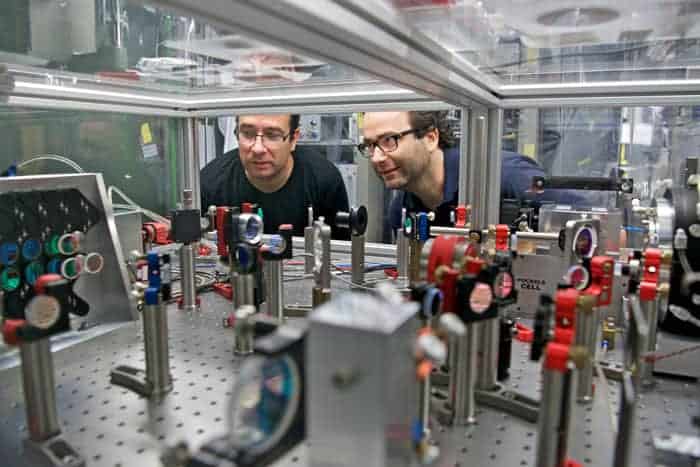
The new research has been carried out by a roughly 60-strong collaboration at the Thomas Jefferson National Accelerator Facility in the US. Collaboration leader Ashot Gasparian of North Carolina A&T State University explains that he and his colleagues replaced the magnetic spectrometer usually used in such experiments with an electromagnetic calorimeter in order to detect scattered electrons at very small angles and thereby reduce uncertainties in the measured proton radius. They also used a target chamber without windows to limit background noise and improved calibration by measuring scattering off hydrogen electrons as well as nuclei.

The measurements were made in 2016, and after a very careful analysis of the data, the team has concluded that the proton has a radius of 0.831±0.014 fm. This is consistent with the 2010 muonic hydrogen result and another muonic measurement carried out three years later, as well as the two recent hydrogen spectroscopy experiments.

Krzysztof Pachucki, a theoretical physicist at the University of Warsaw in Poland, says that the Jefferson Lab result “makes the small value of the proton radius the more likely to be the right one”. However, he says the case is not closed yet, pointing out that a group in Paris measuring the 1S-3S transition in hydrogen last year reported a radius of 0.877 ±0.013 fm – in agreement with the old value.

In fact, Gasparian maintains “it is still too early to tell” which is the true radius, insisting that more experiments are needed to settle the issue once and for all. He points out that researchers at the Paul Scherrer Institute in Switzerland are doing scattering experiments using both electrons and muons, with results, he says, due “in perhaps a year or two”. Other electron-proton scattering experiments using low-energy beams are also due to start up in Japan and France.

The research is described in Nature.
First solar system solids formed much more rapidly than previously thought

The first solid materials in the solar system could have formed in a matter of days, rather than the few thousand or tens of thousands of years estimated previously. This is the conclusion of a team of researchers who used secondary ion mass spectrometry (SIMS) to measure the isotopic composition of minerals in chondritic meteorites – primitive objects left over from the era when solid material was just beginning to condense around the Sun. The result sheds new light on conditions in this era and provides additional data for modelling the formation of planetary systems.

Both stars and planets are believed to form via the gravitational collapse of discs of hot gas and dust. In our solar system, material in this protoplanetary disc began accruing around 4.5 billion years ago, and scientists had thought that the accretion process took place over many thousands of years, as dust particles condensed and collided together.

There is, however, some uncertainty about exactly when the materials began to condense. Theories based on the cooling rates of igneous materials refer only to melting and crystallization rates of solids, rather than the original gas-solid condensation. An alternative method based on the radioactive decay of 26Al into 26Mg (a process characterized by a half-life of 730,000 years) places an upper bound of a few tens or hundreds of millennia for the so-called condensation epoch but gives hardly any information about how long individual condensates took to solidify.

Fairly pristine

In the new work, a team led by Yves Marrocchi of the University of Lorraine in France studied chondritic meteorites, which are known to incorporate some of the oldest solids in the solar system. Among other substances, these meteorites typically contain calcium- and aluminium-rich inclusions (CAIs); millimetre-to-centimetre-sized high-temperature complex assemblages of refractory oxides and silicates; and amoeboid olivine aggregate (AOAs), which are fine-grained aggregates of olivine containing varying amounts of CAI-like materials.

AOA formation

The team focused on AOAs because these materials have never undergone any melting, and they experienced only slight thermal annealing during the formation of the solar system. The researchers therefore believe that they represent fairly pristine condensates. AOAs are also valuable in that they record how olivine condensed. This is important because olivine is not only the main component of the Earth’s upper mantle and a common mineral in its subsurface, it also represents a third of all chondritic matter – the most abundant material by mass after ice.  AOAs are thus more representative of the protoplanetary disc than CAIs.

Marrocchi and colleagues characterized the oxygen, silicon and magnesium isotopic compositions of magnesium-rich olivine grains in AOAs in small sections of three carbonaceous chondritic meteorites. These meteorites were the Kaba N4705 (kept at the Natural History Museum in Vienna), the Northwest Africa 5958 (from the Muséum National d’Histoire Naturelle in Paris) and the Miller Range 07342 (from the NASA Antarctic Search for Meteorites Program). The method they used, SIMS, works by firing a beam of positive ions onto the sample surface, thereby liberating secondary, negative, ions. These ions are then accelerated into an analyser and separated according to their mass, producing a spectrum of the sample’s chemical and isotopic composition.

The researchers sputtered their olivine samples with a primary Cs+ beam accelerated to an energy of 10 kV. This generated secondary Si ions, which the team accelerated to 10 kV and analysed in metallic cups that can catch charged particles in vacuum. They then measured the resulting current and used it to calculate the number of ions hitting the cup.

Negative silicon isotopic composition

In such experiments, stable isotope compositions are expressed as delta (δ) values that vary from a standard value by parts per thousand and represent the proportion of an isotope in a sample. Higher (or less negative) δ values indicate increases in the proportion of the isotope relative to the standard, while lower (or more negative) δ values indicate decreases. Marrocchi’s team employed standards of San Carlos olivine, synthetic forsterite, quartz and diopside.These were chosen because they show variable silicon isotope compositions that can be used to tune the mass spectrometer and check its stability, explains Marrocchi.

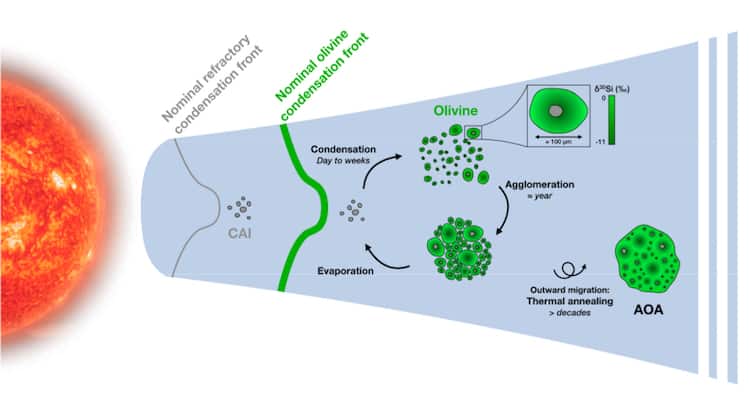
The researchers say they found large mass-dependent silicon isotopic variations in the AOA samples with δ29Si values ranging from −5.1 to −1.0‰ and δ30Si values ranging from −9.7 to −0.2‰. This negative silicon isotopic composition can only be explained if the primordial dust of the solar system formed rapidly – within a few days, Marrochi tells Physics World.  “We would not have observed these negative values if formation had been slow (at a few thousand or tens of thousands of years),” he adds. This is because a slower cooling process would have given the three isotopes of silicon, 28Si, 29Si and 30Si, time to come to equilibrium in the solids. In rapid condensation, on the other hand, 28Si, which decays faster than 29Si or 30Si, would impinge on the solids more rapidly and would thus be enriched relative to the other isotopes. Subsequent thermal annealing produced the AOAs as we see them today, homogenizing their Mg compositions without affecting their Si isotopic compositions.

Jan Render, a researcher at the Institute for Planetology at the WWU Münster, Germany, says that while refractory components of chondritic meteorites were believed to have formed within short time-frames, the lack of temporal resolution in previous studies made it difficult to pin down exactly how short. “Marrocchi and co-workers circumvent this by combining quantitative isotope measurements with physical modelling,” says Render, who was not involved in the study. “The brief formation timescales they infer also suggest a highly turbulent disc, which provides important insights into the dynamics during the earliest period of our solar system. It will be very interesting to see how this numerical model approach compares with future studies on meteoritic materials and experimental testing.”

The team reports its work in PNAS, and its members plan to repeat the SIMS measurements on other types of meteorites.

Nanomagnets control shape-morphing micromachines

Micron-sized soft robots that can be made to quickly morph into different shapes using an applied magnetic field have been created by researchers in Switzerland. Their work could help in the development of intelligent micromachines that can be reprogrammed in situ to adapt to complex environments.

Microbots made of soft or flexible materials could find a wide range of uses, including in biomedical devices that can be introduced into the body to do tasks such as biopsies, surgery and drug delivery. Until now, most of these robots had fixed shapes and cannot easily change their forms once in place.

Now, researchers led by Laura Heyderman and Bradley Nelson at ETH Zurich and the Paul Scherrer Institute have developed a technique to make a microrobot that incorporates arrays of single-domain nanomagnets on connected, folding panels. The shape of the microbot can be programmed by applying a specific sequence of magnetic fields of varying strengths to the nanomagnets to encode their magnetic configurations.

Origami inspirations

The transformations are based on origami, which is the Japanese art of paper folding. The folding is actuated in a predefined way using a controlling magnetic field, explain team members Jizhai Cui and Tian-Yun Huang. The nanomagnets are made from cobalt and are 100-500 nm long and 60-110 nm wide. Individual nanomagnets are magnetized in the long direction. By arranging the nanomagnets on a panel, the magnetization of a panel can be pre-set (or encoded) in one of two possible perpendicular directions in the plane of the panel (signified as “0” and “1”).

nanomagnetic encoding

The researchers designed their micromachines with two types of elements: rigid magnetic panels and soft springs that act as hinges connecting the panels. They made their devices using a technique called electron-beam lithography, which allows them to prepare arrays of nanoscale magnets on the panels, which are made of a thin layer of silicon nitride.

Four-panel micromachine

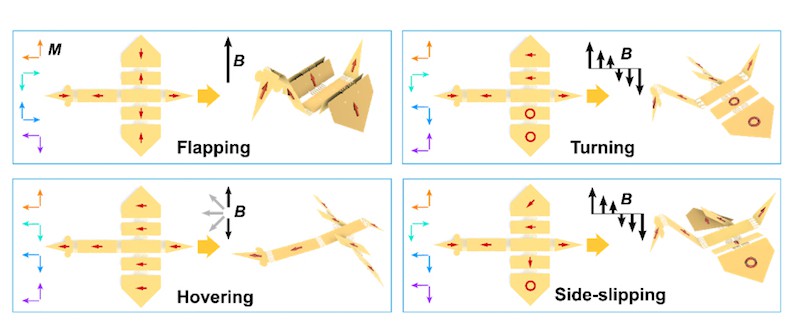
To demonstrate their encoding concept, the team began by building a simple four-panel micromachine, with each panel patterned with 60 nm thick nanomagnets. They then built an assembly of these panels and showed that they could programme them to morph into the shapes of the different letters of the alphabet. They also made a microscale “transformer bird” carrying the nanoscale magnets that can flap, hover, turn and side-slip.

This concept of nanomagnetic encoding could be useful for many scientific and engineering applications, including biomedical robots, smart sensors, actuators, active metamaterials and flexible electronics, say Cui and Huang .

Reporting its work in Nature, the team says that it is now trying to build magnetic coils to apply pulsed magnetic fields to the devices. This will allow them to be reprogrammed in situ after they have been released for operation, Cui and Huang tell Physics World.

Much work still needs to be done to unleash the full potential of magnetic soft robots, but the advanced fabrication platforms used by the team will be crucial for implementing future designs of these devices – according to Xuanhe Zhao and Yoonho Kim of the Massachusetts Institute of Technology, who comment on the research in a Nature “News & Views” article.

Going against the flow

“A battery will do for the electricity supply chain what refrigeration did to our food supply chain.” That is the claim of Donald Sadoway from the Massachusetts Institute of Technology in an interview with Grist in 2017. This still seems to be the received wisdom today. The use of battery systems is certainly growing at all scales and uses, including electric vehicles, with a massive 55% growth per annum expected for lithium-ion batteries until 2022.

A report by Bloomberg in 2018 predicted that the overall global market for battery storage in the power sector would be worth $548bn by 2050. And in its latest report, Bloomberg New Energy Finance says that there could be 1 TW of energy storage in use by 2040 — up from under 10 GW now.

Batteries are fine for a few hours or maybe days, but not for weeks or months

Battery storage is one way to deal with variable renewables, so as lithium-ion battery costs fall – by almost 85% since 2010 — they are seen as the way ahead. Especially at domestic level where they are an ideal match with photovoltaic (PV) solar. However, there is still a way to go to get prices down below $100 per kWh, and although some are hopeful that this can be done, not everyone thinks that batteries can or should be the main way ahead.

Storage has limits

Batteries have low storage capacities and can only provide energy for relatively short periods — unless you have a lot of them. They are fine for a few hours or maybe days, but not for weeks or months. Indeed, not many of the storage systems we have at present can do that. Even large pumped hydro plants can only provide power for a day or so at most, depending on the size of their reservoirs.

A study by the European Academies Science Advisory Council claims that storage “will not substantially reduce EU needs for back-up generating capacity in the short to medium term”, while adding that storage has traditionally been used to smooth out peaks in demand. “[Storage] can similarly be used to smooth out peaks in supply,” the report notes. “However, where over-capacity exists, it is difficult to justify significant additional investments in storage”.

That has certainly been the experience — for good or ill — with the UK capacity market, which was set up to stimulate investment in balancing technologies. Storage has hardly featured in it with most of the contracts heading to gas plants.

Not everyone is convinced that storage, and batteries especially, will necessarily be the main way ahead

Some power companies are now using large arrays of batteries, although mainly for short-term frequency support. Some domestic “prosumers” are using batteries to allow them the use PV power captured during the daytime to provide power at night — although few can rely just on PV and batteries to do this thought the year. There will be times when power companies must import power from the grid. Even so, from the power system point of view, the availability of a distributed network of storage batteries may help to reduce short-term demand on the grid, particularly at peak periods.

As renewables take over a majority role in power supply, we will also need longer-term grid balancing to deal with, for example, occasional long lulls in wind and solar availability. Storage is obviously part of this, but some worry that the current battery rush may be distracting us from possibly better options for storage and balancing.  There is a risk of what is called “lock in” — a premature focus on one solution.

Moreover, it is not just a question of lock-in to lithium-ion batteries, or even to batteries and storage in general. There are other options for balancing at various scale and for various durations. As the International Renewable Energy Agency put it: “Energy storage is only one of many options to increase system flexibility”. Indeed, it is not yet clear what the optimal mix of systems will be for optimized grid balancing or the role that storage can and should play in this and in frequency support. For example, supergrid imports from other countries may be easier for overall balancing and smart-grid demand-side load management measures can reduce or delay peaks, and also, it is claimed, provide frequency support.

Beyond batteries?

Not everyone is convinced that storage, and batteries especially, will necessarily be the main way ahead. Indeed, the co-ordinator of the review by the European Academies of Science Advisory Council (EASAC) notes that “there is nothing that storage can do that something else can’t do”. However, that is not to say that some new storage options might not be suited to for longer-term balancing. Compressed-air storage is one option with great potential. Liquid-air storage also has its attractions – it was claimed it might get down to £110 per MWh. Another option, with a range of flexible applications, is large-scale Power to Gas (P2G) production of green hydrogen and its storage in salt caverns underground. With costs falling, P2G is being pushed quite strongly at present.

The EASAC was, however, a bit sniffy about the P2G route to green hydrogen production. It says that the costs of this route are “far too high and their round-trip efficiencies too low” to be deployed commercially for seasonal grid electricity storage applications “within the foreseeable future”. It adds that they could “perhaps be deployed within the 2050 timeframe”.

That may be too pessimistic — there are some very efficient P2G electrolysis cells emerging. Some are less flexible than proton-exchange membrane fuel cells as used by ITM power (who are pushing ahead with a 1 GW per annum manufacturing plant in Sheffield). And while solid-oxide cells usually require high temperatures, a new enhanced system claims to have 96% efficiency. That makes hydrogen look like a good option.

Yet there may be better batteries. Indeed, the cost of “flow” batteries is falling. They mix separate chemical electrolytes to create a charge, in a reversible process. In an impressive scheme being developed by German gas company EWE Gasspeicher, two salt caverns, each of around 100 000 cubic meters in volume, will be used to store the brine based electrolyte fluids to create a redox flow battery with capacity of up to 120 MW and 700 MWh. Small above-ground prototypes are to be tested first.

Conventional batteries are fine for doing what they are good at – short-term storage. Especially for mobile applications, although ultra capacitors may yet challenge them in some of those roles, or even small hydrogen-powered fuel cells. Batteries will get even better, backing-up domestic scale PV fully overnight and, in terms of grid power, helping to provide supply to meet demand peaks, which typically only last for an hour or two. Some see electric-vehicle batteries as helping out with short-term grid balancing — the “vehicle to grid” idea, which I will discuss next week.

Certainly, the power system is changing, as it should, with batteries being part of the challenge as we move to a new more efficient smart-grid system based on renewables. But batteries are not the answer to all or even most energy storage needs or to balancing variable renewables over long periods.

Deep learning helps radiologists detect lung cancer on chest X-rays

Finding missed nodules

Chest radiography is the most common imaging exam used for lung cancer screening. However, the size, density and location of lung lesions make their detection on chest X-rays challenging. Recently, machine-learning methods have been developed to help improve diagnostic accuracy, with deep convolutional neural networks (DCNNs), showing promise for chest radiograph interpretation.

A study from four medical centres on three continents has now demonstrated that DCNN software can improve radiologists’ detection of malignant lung cancers on chest X-rays (Radiology 10.1148/radiol.2019182465).

“The average sensitivity of radiologists was improved by 5.2% when they re-reviewed X-rays with the deep-learning software,” says Byoung Wook Choi from Yonsei University College of Medicine in Seoul, Korea. “At the same time, the number of false-positive findings per image was reduced.”

In the multicentre study, two radiologists randomly selected 800 chest X-rays from the four medical centres, including 200 normal chest scans and 600 scans with 1–3 malignant lung nodules, as confirmed by CT or pathological examination. The lung cancer scans included 704 confirmed malignant nodules (78.6% primary lung cancers and 21.4% metastases), with just over half between 1 and 2 cm in size and the remainder between 2 and 3 cm.

Next, a separate group of three radiologists from each institution interpreted the 800 X-ray scans. The group included three resident radiologists, plus four chest radiologists with five years of experience and five with more than 10 years of experience. The readers independently analysed their centres’ radiographs without clinical information, prior radiographs or CT scans.

The radiologists then re-read the same X-rays with the assistance of DCNN software, which was trained to detect lung nodules. On average, the DCNN took 4.8 s to process a radiograph. When the software independently analysed the radiographs, the overall sensitivity and false-positives per image were 67.3% and 0.2, respectively.

When aided by the DCNN software, the average sensitivity of the radiologists for nodule detection improved from 65.1% to 70.3%. The number of false-positive findings per X-ray declined from 0.2 to 0.18 when the radiologists re-reviewed radiographs with the DCNN software. These trends were independent of reader experience, nodule characteristics or the vendor of the radiography system.

Use of the DCNN software resulted in a positive change (from false-negative to true-positive, or from false-positive to true-negative) in 104 of 2400 radiographs. In 54 cases, however, the decision was negatively impacted after use of the software.

“Computer-aided detection software to detect lung nodules has not been widely accepted and utilized because of high false positive rates, even though it provides relatively high sensitivity,” says Choi. “DCNN may be a solution to reduce the number of false positives.”

Carbon removal requires multiple technologies

Experts agree that efforts to remove CO2 from the atmosphere over coming decades will need to encompass a broad range of techniques. Despite this, some technologies are still overlooked by current models, and even those that have been studied are generally considered in isolation. This, at least, is the situation according to a sample of anonymous specialists, who were questioned by Wilfried Rickels and colleagues at the Kiel Institute for the World Economy and the GEOMAR Helmholtz Centre for Ocean Research Kiel in Germany.

The researchers sent questionnaires to experts in the use of either Earth system models (ESMs) or integrated assessment models (IAMs). ESMs are computer models that simulate interactions between physical and biogeochemical processes at the global scale. IAMs are simpler models used to derive optimal climate policies.

“In general, ESMs aim at representing the Earth system with as much detail as possible,” says Rickels. “IAMs, on the other hand, aim at representing the Earth system only in as much detail as necessary to answer a specific question about how the economy, society and natural systems interact.”

The idea was to get a measure of how experts rate the potential of various negative emission technologies (NETs), and to identify the approaches that need more investigation. Such technologies, which remove carbon from the atmosphere, will be crucial to fulfil the goal of reducing net carbon emissions to zero by the middle of this century. This is a necessary target if global temperature rise is to be limited to 1.5°C above the pre-industrial average.

The respondents comprised 32 experts in ESMs and 18 in IAMs, and though they agreed overall that multiple NETs are required, they disagreed about the details. As well as differing in what they chose to include in a portfolio of NETs, the two groups showed a marked divergence in the confidence that they have in their models: ESM specialists were much less likely to report that their models represent carbon fluxes and removal pathways sufficiently.

One area where this divergence was especially striking was in the panel’s consideration of one particular NET – bioenergy with carbon capture and storage (BECCS). In BECCS, plant crops are grown expressly to be burned as fuel, with the resulting CO2 captured and sequestered underground in depleted gas reservoirs. The approach is one of the most studied and widely publicized techniques, which was reflected in the IAM experts’ opinion that their models give a good account of the processes involved. The ESM group, in contrast, generally judged the geological storage component to be insufficiently represented in ESMs, and offered no consensus on the atmosphere-to-biosphere part of the process.

An aspect of BECCS that the two groups did agree on was that the approach is highly constrained by its limited cost-effectiveness, competition with other uses of farmland and the political difficulty of implementing it. Rickels and colleagues suggest, therefore, that despite featuring highly in the two groups’ favoured NET portfolios, BECCS is likely to make a smaller contribution to drawing down carbon than is commonly expected.

Perhaps the most promising NET considered by the experts – or at least the one with the fewest constraints overall – is direct air capture (DAC) of atmospheric carbon. Like BECCS, this approach would see CO2 stored underground, but in this case the gas is taken straight from the air using industrial processes. This has the benefits of avoiding competition with other land users and being much more politically acceptable. The downsides are its current high cost and the fact that, as with BECCS, the issue of long-term geological storage of CO2 has yet to be resolved.

To some extent, highlighting a single promising contributor like this illustrates one of the problems that Rickels and colleagues identified. The problem is that, so far, IAMs and ESMs have considered individual NETs in isolation, whereas a proper investigation of their prospects needs to cover a host of different approaches so that it can predict how they interact – with each other, with natural physical processes, and with various aspects of society and the economy. At the moment, integrating all of these factors into a single computer model is still very challenging, as the various interactions are not yet well studied.

Despite the absence of such integrated models, Rickels – himself an expert on IAMs – agrees with the panel that a large number of technologies will be part of the portfolio, including less widely publicized approaches like ocean alkalinity management.

Regarding the future share of specific NETs, “DAC has the strongest industrial component (i.e. offering the strongest prospects of cost reductions while at the same time allowing carbon removal to be verified without model assistance) and it does not affect natural cycles,” says Rickels. “Accordingly, I believe that the share of this technology is underestimated in current studies.”

Rickels and colleagues report their findings in Environmental Research Letters.

The real physics of fantasy

On 19 May this year, 13.6 million people around the world watched the last ever episode of Game of Thrones, the TV show based on George R R Martin’s A Song of Ice and Fire fantasy books, as it aired on HBO. That number rose to 19.3 million within 24 hours – a statistic that includes me and almost everyone I know. In the age of streaming and box sets, such large live audiences are rare outside of sports broadcasts, and the figure demonstrates both the show’s popularity and its writers’ penchant for huge plot developments that demanded immediate discussion with friends and family.

Online, fans discussed every detail of Game of Thrones, from the many war crimes committed by each character (you can refer to an excellent series of blogs by the Australian Red Cross about this), to the medieval history it roughly depicts, to whether the show was extremely sexist or extremely feminist. What physicist Rebecca C Thompson – head of the Office of Education and Public Outreach at Fermilab – particularly enjoyed were debates about the science depicted in the show. In her new book Fire, Ice and Physics: the Science of Game of Thrones, she analyses these fan theories through looking at actual physics.

But just how much physics could there be in a book series and TV show set in a fantasy universe with magic, witches, dragons and zombies? Half the battle of making a book like this work is choosing the right questions to address, and Thompson has chosen well. As physicist and science writer Sean Carroll says rather eloquently in his foreword, applying the scientific method to a fictional problem is great fun, as well as educational.

Even non-fans will have heard the series’ oft-repeated phrase “Winter is coming”, referring to the fact that the land where it is set has seasons of unpredictable duration. Thompson investigates what could possibly cause this (amazingly there is a reasonable explanation). She lays out her assumptions from the start – that Martin’s “Known World” is a planet with roughly the same physical properties as Earth, with the continent of Westeros being roughly akin to North America – and adds all the clues she can find from the books. I’ve never been so keen to truly understand precession and nonlinear dynamics – and it doesn’t hurt that Thompson has a dry sense of humour that leavens the thoroughly explained science.

Thompson moves on to the biophysics of hypothermia (whether popular character Jon Snow could have survived the season seven episode “Beyond the wall”); the materials science of an ice wall and various types of steel; zombie (or “white walker”) biology; the genetics of the Targaryen and Lannister family trees; and even the magical weapon “Wildfire”. It was fun to read about body-heat loss in physics terms – conduction, convection, evaporation and radiation – and who wouldn’t love to learn that hypothermia makes you urinate more (your metabolism increases to generate heat, which creates more waste products)? But my favourite sections of the book were about the dragons.

Of course, dragons don’t exist, but could they? Figuring out whether an animal the size of the Game of Thrones dragons could actually fly takes you from the physics of jumbo jets to dinosaur palaeontology to the biology of various non-extinct flying animals. Then there’s whether an animal could, in theory, breathe fire, which requires a physics definition of fire and its properties before getting into the biological possibilities. And as fans will know, the next question is whether an animal could produce fire hot enough to melt stone.

Fire, Ice and Physics does contain spoilers, not just of the early seasons/books but right up to the final episodes of the TV show. The book is definitely aimed at fans – those who have finished watching the final season – but the topics have broad enough interest that anyone could have a good time reading this. Thompson is herself a fan and doesn’t use this book to point out flaws or plot holes. In addition to her enthusiasm and her physics knowledge she has another card to play: she is an experienced endurance athlete. This gives her an interesting perspective when it comes to, say, survival in the extreme cold of “beyond the Wall”.

When Martin eventually finishes writing the last books in his series, I will be interested to see not only how they differ from the TV show, but also whether they resolve any of the mysteries that Thompson tackles. If there’s a better explanation for the ice wall’s existence than it being held up by sawdust and magic, then Thompson will have to publish an updated edition.

  • 2019 MIT Press 274pp £20hb

Nearby stars could reveal wormhole at the centre of the Milky Way

Gravity passing through a hypothetical wormhole at the centre of the Milky Way could alter the orbits of nearby stars – according cosmologists in China and the US who are developing new ways to search for wormholes.

A theoretical consequence of Einstein’s general theory of relativity, wormholes are “shortcuts” that link distant points in space. They can, in theory, be “dug” through space–time by the immense mass of a gravitational singularity such as a black hole. To date, wormholes have not been observed and it is not known whether they do exist in nature.

To establish if wormholes exist, astronomers need to know what observational signatures they should look for. De-Chang Dai of the Centre for Gravity and Cosmology at Yangzhou University and Dejan Stojkovic of the University at Buffalo, suggest that evidence of a wormhole could be extracted from the motions of stars around Sagittarius A*, which is the supermassive black hole at the centre of the Milky Way.

If there is a wormhole associated with Sagittarius A*, then the mouth of the wormhole would be larger than the black hole’s event horizon – the radius at which nothing can escape the black hole. This means that particles and forces could pass through the wormhole without being gobbled up by the black hole.

Gravity leaks

De-Chang and Stojkovic point out that a wormhole would be a two-way street for gravity, electromagnetic radiation and electric charge. The gravity of a star, or stars, orbiting the other end of the wormhole should therefore propagate through the wormhole, to pull on stars orbiting Sagittarius A*, and vice versa.

Over the past three decades, astronomers have been monitoring several dozen stars that orbit close to Sagittarius A*. One such star is called S2, which comes to within 130 au (about 20 billion km) of the black hole. De-Chang and Stojkovic considered a scenario in which there is a wormhole around Sagittarius A*, and at the other end of the wormhole there is another star that is in an identical orbit as S2. The gravitational force that they would exert on each other would be the same as if they were 260 au apart in normal space.

Detecting the gravitational effect of this wormhole twin on S2 would require acceleration measurements at a precision of about 10–6 m/s2, which is about 100 times better than is currently possible. As a result, astronomers will have to wait for the next generation of 30–40 m telescopes – such as the Extremely Large Telescope – which De-Chang and Stojkovic say should be good enough to detect the additional gravitational pull of stars at the other end of a wormhole.

Neil Cornish of the eXtreme Gravity Institute at Montana State University, agrees that, in principle, stars at opposite ends of a wormhole could imprint their gravitational influence on one another. “I concur with [De-Chang and Stojkovic’s] analysis that masses on the other side of the wormhole would impact the orbits of objects on our side,” he says.

Dark objects

However, Cornish points out that unseen, dark objects orbiting close to Sagittarius A*, such as stellar-mass black holes and neutron stars, could also perturb S2’s orbit by a similar amount.

“If we were to see a perturbation of a star’s orbit around Sagittarius A*, what would be the most likely explanation?” asks Cornish. “I know what I would bet on!”

There are other problems with a wormhole hypothesis, in particular how the mouth of the wormhole can be kept open and stable. “You need either negative energy or some elaborate set-up that basically does the same thing – provides repulsion to keep the wormhole open,” says Stojkovic.

Bottled dark energy

The concept of negative energy is not hypothetical. Dark energy, which is the mysterious force that is accelerating the expansion of the universe, is a form of negative energy, its repulsive force pushing the universe increasingly far apart, counteracting gravity. However, whether nature could bottle dark energy, or some other exotic matter with the same properties, into a wormhole is not known.

Cornish also flags up quantum feedback effects that would reverberate through the wormhole, “analogous to feedback when a microphone is placed close to a speaker,” rendering the wormhole unstable.

Clearly, it is a long shot to expect to find a wormhole at the centre of our galaxy. However, should one exist, something as simple as the motions of the stars might betray its presence.

The research is described in Physical Review D.

RaySearch Laboratories majors on machine-learning innovations

ASTRO showcase: Varian highlights AI-driven solutions for oncology

In this short video filmed at ASTRO 2019, Corey Zankowski explains how Varian is aiming to improve the quality of care for cancer patients by integrating artificial intelligence into the treatment planning process.

Copyright © 2026 by IOP Publishing Ltd and individual contributors