The physics of blood spatter

Joe Bryan, once a popular and respected high-school principal in a small Texas town, has been in prison for over 30 years. He is serving a 99-year sentence for the shooting and murder of his wife in 1985. The evidence incriminating him involved spots of the victim’s blood found on a hand-held torch. A witness, who was rated as expert in the forensic technique of blood pattern analysis (BPA), interpreted these spots as placing Bryan near his wife when she was shot – a testimony that was at the forefront of Bryan’s conviction. It overrode countervailing evidence that he was in fact at a conference 120 miles away – an alibi that made it nearly impossible for him to have shot his wife, as he would have had to leave the event, travel home, commit murder and return to the conference within a specific timeframe. Bryan maintains his innocence to this day.

Evidence like this, based on the physical behaviour of the blood generated at a crime scene, has roots in late 19th-century Europe. It became prominent in the US during the famous Sam Sheppard murder trial in 1955, and has played an important role in other murder trials since – including those of football player and actor O J Simpson (1994–1995, verdict of not guilty) and music producer Phil Spector (2007–2009, retrial verdict of guilty).

Police investigators use BPA to work backwards from blood traces at a crime scene, allowing them to reconstruct the locations and actions of the people and weapons involved. The traces include drips, smears and spatters, which are created when drops of blood radiate from the impact of a bullet or blunt instrument until they encounter a surface and stain it. But according to a startling 2009 report from the US National Academy of Sciences (NAS) that still resonates today, BPA lacks scientific rigour and valid accreditation for its practitioners. This is a serious concern because BPA results have convicted people later shown to be innocent, as many believe Bryan to be; and because lack of confidence in BPA analysis may allow the guilty to go free. As a result, it has become essential to re-assess the physics behind BPA.

Although the US leads the world in gun ownership – there are 120 guns per 100 people, and 64% of US homicides are gun-related – other countries have many shootings too. For instance, 30% of homicides in Canada involve guns, while a dozen nations, including Brazil, exceed the US in their rate of gun deaths per 100,000 people. Establishing the scientific validity of BPA could therefore have an international impact on dealing with the world’s 250,000 annual gun-related deaths by helping to categorize them as homicides or suicides – and, in the former case, potentially bringing the perpetrators to justice.

Bloody behaviour

In terms of physics, BPA reconstruction is a complicated problem in fluid mechanics that involves tracing the behaviour of blood, under various forces and ambient conditions. The challenge is made more difficult because blood is a complex fluid containing both liquid (the plasma) and solid (the blood cells) components. Furthermore, the properties of blood – such as its pH or the number of red blood cells – vary from person to person.

But this work is more than just an academic exercise. It can also have real effects, according to Alicia Carriquiry at Iowa State University in the US. As a statistician and director of the Center for Statistics and Applications in Forensic Evidence (CSAFE) – which is funded by the US National Institute of Standards and Technology (NIST) – Carriquiry has a broad view of forensic science. “BPA is one of those areas in which science has a lot to say,” she says. “As opposed to other forensic disciplines, in BPA we actually have physical and fluid-dynamical models that can help answer questions such as those having to do with trajectory, point of origin and similar.”

Fundamental science has, however, not been well applied to BPA, according to the 2009 NAS report, which was entitled Strengthening Forensic Science in the United States. Co-chaired by a distinguished US federal judge and an academic statistician, it included contributors from relevant scientific disciplines including physics. In general, except for DNA analysis, the report found deficiencies in virtually every forensic technique – including the analysis of hair, fibres, fingerprints and bite marks. “The interpretation of forensic evidence is not always based on scientific studies to determine its validity,” it stated. “This is a serious problem.” A separate report in 2016 from the US president’s Council of Advisors on Science and Technology – written by the director of the Office of Science and Technology Policy together with a panel of scientists – echoed this critique.

For BPA in particular, the NAS report noted the complexities of fluid dynamics and indicated that BPA analysts should understand the physics involved. But with no strict educational requirements for certification as a BPA expert – they’re trained only to follow packaged procedures – the report concluded that “The opinions of bloodstain pattern analysts are more subjective than scientific…The uncertainties associated with [BPA] are enormous.” In 2018 the Texas Forensic Science Commission reached similar conclusions about the Bryan case, calling the interpretation of the BPA evidence “inaccurate” and “scientifically unsupportable”.

Still, properly used, BPA can give valuable clues towards understanding the circumstances of a shooting. For example, drops of blood that strike the floor at an angle will create a set of elliptical stains, whose width-to-length ratio gives the impact angle (figure 1). BPA analysts are trained to draw straight-line trajectories that follow the long dimension of each ellipse at that impact angle. These paths converge, providing a position from which the blood originated. While this correctly gives the projection onto the floor of the location of a gunshot wound, the straight-line procedure overestimates the height of the wound, since the true paths under gravity are parabolas modified by aerodynamic drag. The error is typically large enough to wrongly place a victim as standing rather than sitting.

1 Geometry of blood spatter
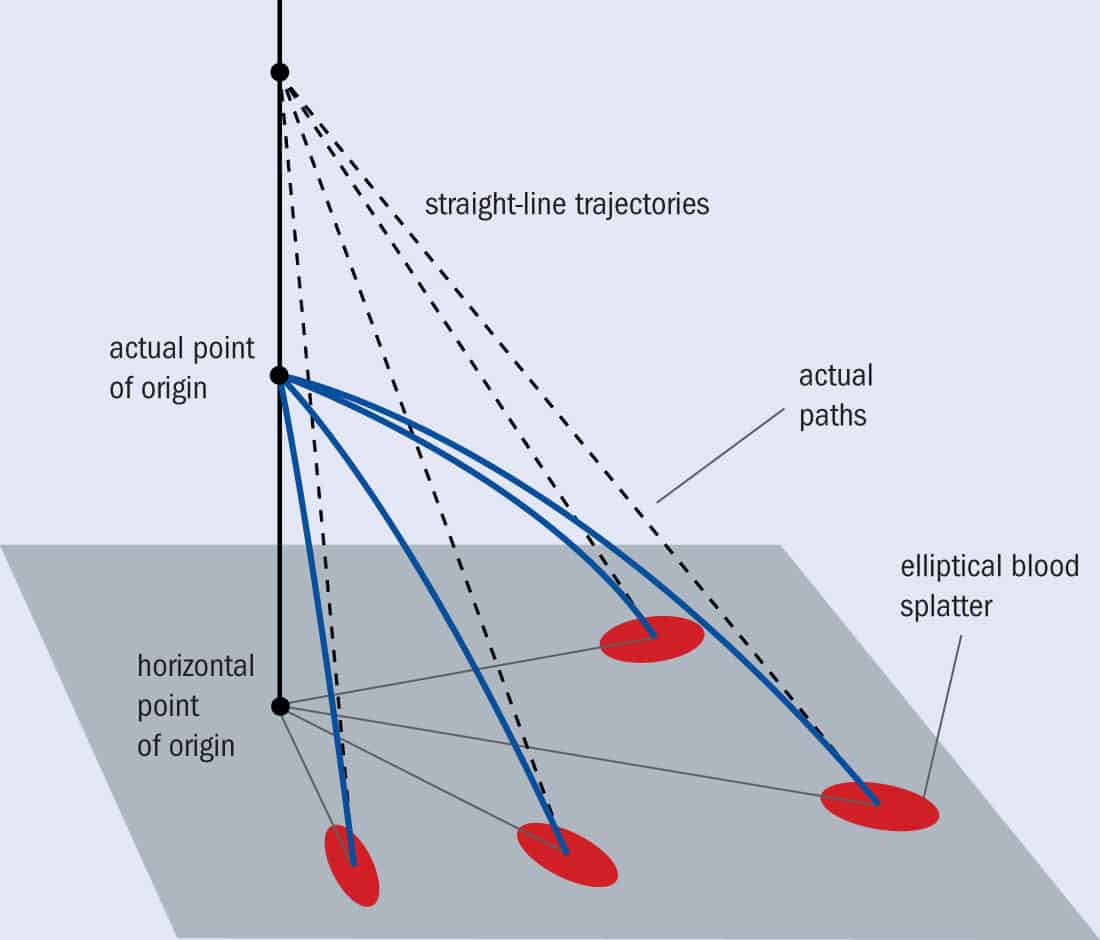
Figure 1When drops of blood hit the floor at an angle, they produce elliptical stains, where their width-to-length ratio gives that impact angle. Traditionally practitioners of blood-pattern analysis trace a straight-line from the stain at the impact angle to reveal where the blood originated. While this correctly maps the paths along the floor (grey lines), straight-line trajectories (dashed lines) overestimate the vertical height of the impact because the blood would have taken a modified parabolic path (blue) due to gravity and drag.

This is one of the established BPA methods that deeper physical analysis can improve. In 2011 physicists Christopher Varney and Fred Gittes at Washington State University put the projectile-motion equations, including gravity and drag, into a form that uses all the data inherent in a set of spatter bloodstains (Am. J. Phys. 79 838). They found that a plot of the impact angles for the stains versus the inverse of their horizontal distances from the vertical axis of impact gives a valid result for the height, provided that the launch angles for the drops are not too widely distributed. In a test that spattered a viscous blood substitute, the researchers used this approach to calculate the actual launch height of 88 cm to within 8%. For comparison, the linear trajectories overestimated the launch height by 100%.

In 2015 Nick Laan, of the University of Amsterdam and the Netherlands Forensics Institute, and colleagues instead used the fluid qualities of blood to find the height of a gunshot wound (Scientific Reports 5 11461). Earlier work had derived an equation relating the impact velocity of a liquid drop of blood to its volume and impact angle, and to the width of the dried stain it produced as determined by the known capillary and viscous behaviour of blood. To apply this method, the researchers created spatter patterns of human blood under controlled conditions. For each of 40 separate blood stains, they determined its width and impact angle, and, using a commercial 3D surface scanner, measured the volume of the stain, from which they found the volume of the original drop. These parameters yielded the impact velocity, giving enough information to solve the equations of motion under gravity with aerodynamic drag. The results for the height where each drop originated had an average value of 58.5 cm, only 8% below the true height of 63.7 cm. Meanwhile, the straight-line method gave 91.1 cm – a much larger 42% error.

A bullet’s journey

These two papers and others analyse the behaviour of blood drops after they have been formed, to enhance standard BPA. But mechanical engineers and fluid dynamicists Alexander Yarin and Patrick Comiskey from the University of Illinois at Chicago, together with Daniel Attinger at Iowa State, have gone further. They have modelled the entire process from the bullet entering the body to the final blood stain pattern.

Since 2016 these researchers have developed fluid dynamical theories for gunshot back spatter and forward spatter, where blood drops travel respectively against and with the direction of the bullet and display different characteristics. The back-spatter analysis – carried out for both regular (Phys. Rev. Fluids 1 043201) and blunt-nosed (Phys. Rev. Fluids 2 073906) bullets – is based on the well-known Rayleigh–Taylor instability. In this effect, acceleration perpendicular to the interface between two fluids of different densities – here, blood and air – creates growing turbulence and mixing between the fluids. (One remarkable example of the instability is the spectacular filaments seen in the expanding Crab Nebula, where the two fluids comprise material ejected by the Crab’s initial supernova explosion, and a plasma of relativistic charged particles powered by the Crab’s central pulsar.) Meanwhile, forward spatter, caused when the bullet exits a body after multiple disruptive encounters with blood and tissue, was treated differently. Its analysis used percolation theory, which describes available paths through randomly arranged clusters.

For both kinds of spatter, the researchers calculated the numbers, sizes and dynamical properties of the drops of blood generated by a bullet; then determined their trajectories under gravity and aerodynamic drag. Finally, the team found the number of resulting stains, their areas, impact angles and distribution with respect to distance (figure 2).

2 Shortfalls with blood pattern analysis
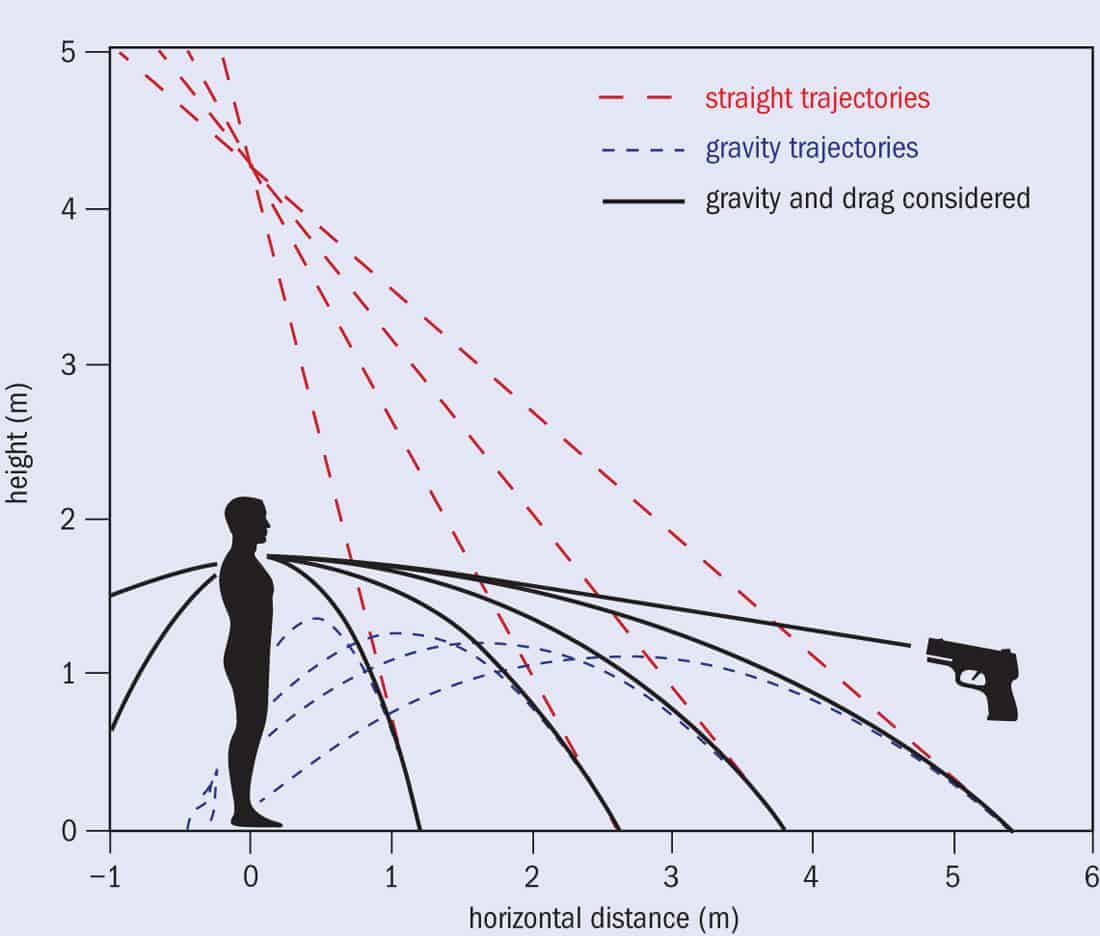
This diagram demonstrates three possible trajectories that could be mapped from back-spatter blood stains depending on what phenomena are taken into account. Straight-line paths (red), which do not account for gravity and drag, overestimate the height of impact. When drag is not considered (blue) the paths fall short. BPA needs to take into account both gravity and drag (black) to get a more accurate estimate of where the bullet impacted.

These calculated results for the blood-spatter distributions agree reasonably well with data obtained by shooting bullets into sponges or plastic foam soaked with swine blood for back spatter, and through a blood-filled reservoir for forward spatter. Although the researchers note that more experiments are needed, their results are significant steps toward a real, physics-based theory of spattering. Their work also points to new directions for study, such as how air is carried along with drops of blood in flight, which influences their trajectories, and the impact of temperature on blood viscosity.

The theoretical results so far show the value of the fluid dynamics approach but also that its complexity can add uncertainties to the analysis, for example through the variable properties of blood and blood stains. Besides temperature, the viscosity of blood also depends on the percentage of red blood cells, which varies by individual and could affect approaches like that used by Laan and colleagues. What’s more, the properties of the surface that a blood drop strikes may modify how it spreads and therefore affect the stain it leaves. Confounding elements like these should be taken into account for fully valid BPA that carries weight in court, and may limit claims about what BPA can definitively show. Certainly, there is much left to do.

From lab to crime scene

As the science of BPA progresses, a parallel challenge is to convert its results into new, practical and transparent procedures for murder investigations and courtroom presentations. But BPA practitioners have not entirely welcomed these changes, which threaten to upset established field procedures, a reaction also found elsewhere in the forensics establishment. Nevertheless, says Carriquiry, for many topics in forensic science “we have managed to make important inroads and established some meaningful partnerships with forensic practitioners who see our work as a means to make theirs more objective and ‘scientific’ ”. These partners include the Houston Forensic Science Center and the Los Angeles Police Department.

Now, with support from CSAFE and other US federal agencies, researchers are working specifically to strengthen connections between the BPA and fluid dynamics communities, and to provide practitioners with useful results. For example, Attinger and co-authors have written a tutorial paper in which they discuss the forces at play in fluid dynamics and how they determine the behaviour of blood drops at a crime scene (Forensic Science International 231 375). Attinger has also published charts based on fluid dynamics that make it simple for investigators in the field to estimate the maximum distance that a blood drop has travelled (Forensic Science International 298 97).

3 Blood and bullets in a lab
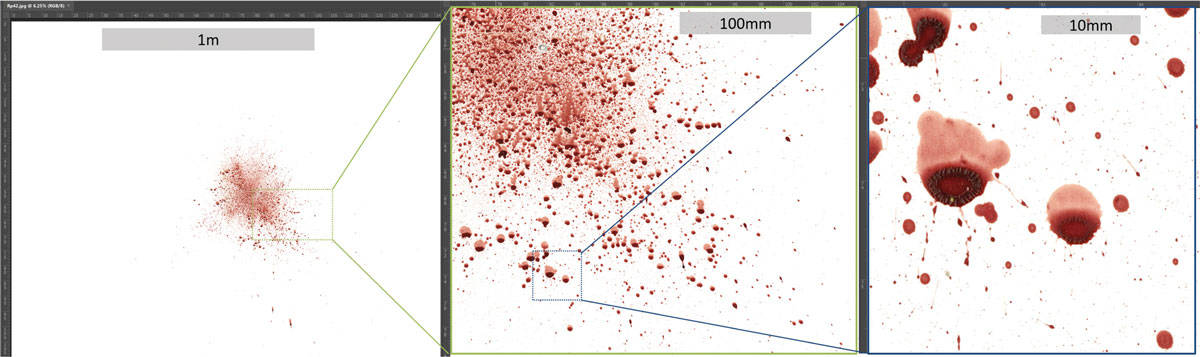
Figure 3

An example of blood back spatter on a card target, produced by researchers at Iowa State University using the set-up shown in figure 4. The bullet hole can be seen in the top left of the middle image.

In another effort, Attinger’s team has published back-spatter patterns of human blood produced in the lab by gunshot (figure 3), with rigorous control of the firearms and ammunition used and the physical arrangement (Data in Brief 22 269); and a second set of blood patterns produced by blunt instruments (Data in Brief 18 648). These provide high-resolution images of blood stains generated under varied conditions, for training and research use (figure 4). In one project, Hal Stern at the University of California–Irvine, a statistician and co-director of CSAFE, is examining the images for distinctive features that practitioners could use to distinguish among possible sources for observed spatters. In other outreach, BPA researchers also present talks and training sessions at professional societies.

4 A staged scene
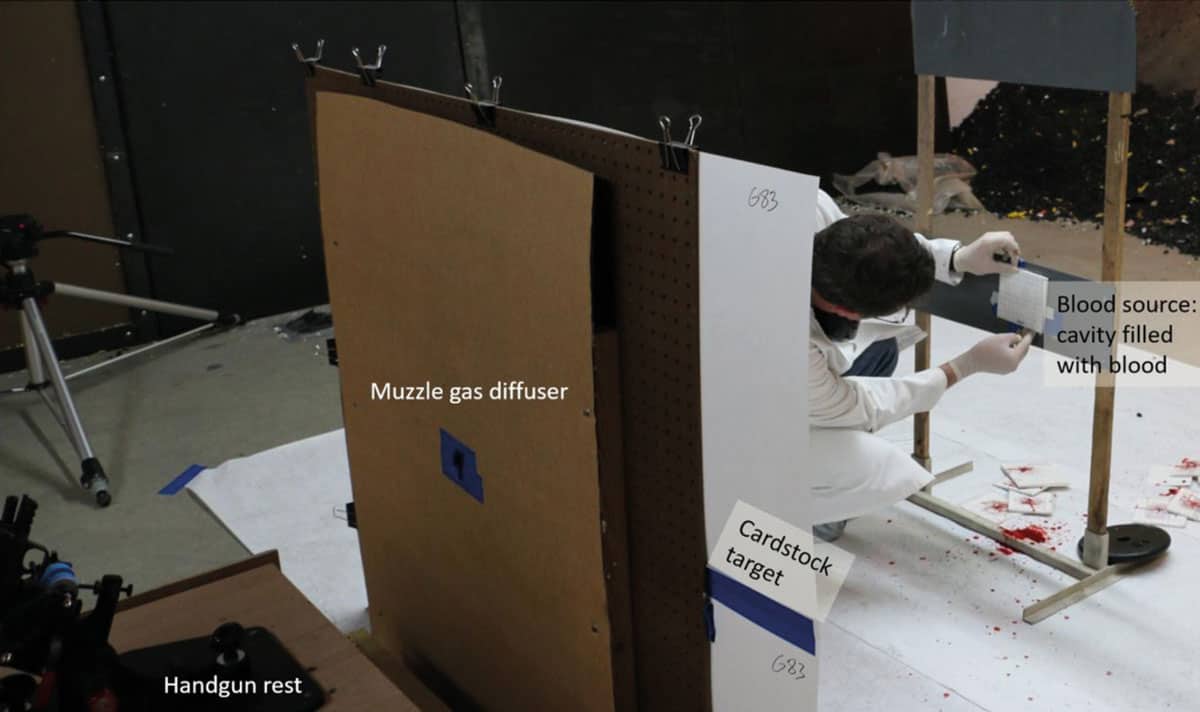
Figure 4

The experimental set-up used by Daniel Attinger and colleagues in Iowa to study back-spatter blood stains.

Unfortunately, widespread adoption of more rigorous BPA practice and training will not come quickly, or automatically erase past deficiencies that produced unreliable evidence and false accusations. Nor is it likely that the legal standards for acceptance of BPA evidence will change soon enough to affect Joe Bryan’s upcoming appeal for a new trial. That request was denied in 2018, but his lawyers are now preparing a last-ditch effort before the Texas Court of Criminal Appeals. However, Bryan is nearly 80. Even if a new trial is approved, it may not come in time to do him any good.

Whatever that outcome, the extensive coverage of the Bryan case along with the NAS report and other evaluations of BPA have uncovered its problems and motivated progress toward a better physics of blood patterns. This may at least ensure that future blood evidence will be more effective in identifying the true perpetrators without unjustly condemning people who are innocent.

Metallic tin ‘reduces’ limitations of perovskite solar cells

Hybrid organic-inorganic perovskites have garnered significant interest in the solar cell community in light of their excellent optoelectronic properties and low manufacturing cost. Meanwhile, in efforts to produce perovskite solar cells (PSCs) with yet higher efficiencies, considerable steps have been made in developing monolithic tandem solar cells. These incorporate both a wide band gap (often Pb-based) perovskite layer and a narrow band gap (for example, Pb-Sn based) one in order to absorb as much of the solar spectrum as possible.

However, a key species in the narrow band gap layer, Sn2+, is prone to oxidation to Sn4+. This is undesirable as it leads to short charge-carrier lifetimes, thus short diffusion lengths in the perovskite film, which results in a less efficient solar cell.

Metallic tin to the rescue

A group of researchers led by Hairen Tan at Nanjing University demonstrated that metallic Sn could address this limitation by reducing Sn4+ back to Sn2+ when added to the precursor solution; a fine example of a comproportionation reaction (where two reactants, each containing the same element but with different oxidation numbers, yield a single product). Not only does metallic Sn readily reduce Sn4+, but it is also insoluble in the precursor solution until it does so, at which point it is itself oxidized to Sn2+ and becomes part of the perovskite lattice. The authors described this as a “tin-reduced precursor (TRP) solution strategy.”

Characterizing the tin-reduced precursor film

Tan and his colleagues then characterized the films using optical-pump terahertz-probe spectroscopy; a time-resolved technique capable of measuring photoinduced conductivity and charge-carrier mobility. This revealed that the TRP film had an increased charge-carrier mobility and a vastly improved charge-carrier lifetime when compared with the control (non-TRP) film. These results suggest that the density of defects associated with Sn4+ had been decreased.

Subsequently, the researchers fabricated a series of narrow band gap PSCs and optimized their performance by varying the thickness of their TRP layer. As a result of the longer diffusion length, the TRP layer could be made thicker than the control due to its increased light absorption without compromising on carrier collection.

When the researchers incorporated the TRP layer into an all-perovskite tandem cell – alongside a wide band gap Pb-based perovskite layer – they attained a champion efficiency of 24.8 %; impressive for a low-cost, lightweight solar cell such as this. This result adds further impetus to the drive to make the commercialization of perovskite solar cells a reality.

Full details of the research are reported in Nature Energy.

Net losses: why net zero carbon targets may backfire

A “net zero” carbon emission targets has been set by the UK, amongst others, for 2050. The European Union (EU)’s version fudges the date, due to opposition by some coal-reliant countries to the 2050 initially specified.

But whatever the date, the net zero formulation does not usually specify how net zero emissions are achieved, so in principle any project will be acceptable if it can claim to avoid, or compensate for, carbon dioxide production. These can include carbon offset and carbon removal projects, as well as renewable energy and energy efficiency schemes. Some argue that this mixes up basically conflicting policy approaches — emission avoidance and post-generation carbon removal. Emission avoidance at source is about decarbonising energy production and use, for example by switching to using renewables or by using energy more efficiently, so less carbon dioxide is produced. By contrast, carbon removal is about compensatory post-fossil-generation carbon dioxide clean-up, for example by Carbon Capture and Storage (CCS) and Negative Emission Technology (NET).

We can’t just keep sweeping emissions under the carpet

The documentation for the Green New Deal programme backed by the UK Labour Party says: “The use of a ‘net zero’ target that integrates both goals for decarbonisation and allowances for carbon removal is an unacceptably high risk strategy ….falsely discounting the carbon reductions that are needed while weakening ambition and delaying progress toward a fully decarbonised economy.” As I noted in an earlier post, the party wants to focus on the latter and says there are problems with CCS and NETs.

That view has been backed up by a study from Lancaster University, UK, which says that many of the technologies for carbon removal from the atmosphere are speculative, and may not actually be able to deliver. In his summary for Carbon Brief, Duncan McLaren says that “net-zero plans that rely on promises of future carbon removal – instead of reducing emissions now – are, therefore, placing a risky bet. If the technologies anticipated to remove huge quantities of carbon in the 2040s and 2050s fail to work as expected – or lead to rebounds in emissions from land-use change, for example – then it might not be practical to compensate for the cumulative emissions from mitigation foregone between now and then.”

McLaren looks to a “formal separation of negative emissions targets and accounting for emissions reduction, rather than combining them in a single ‘net-zero’ goal”. That would avoid the risk of carbon removal undermining the expansion of emission avoidance: carbon removal would be additional to reducing emissions, rather than a rival, although he says we may need both: “Even if emissions were brought to net-zero by 2050, the world would likely still need to achieve ‘net-negative’ emissions for a period, to reduce atmospheric carbon dioxide concentrations back to safer levels. At least some countries and sectors will need to go ‘beyond net-zero’.”

The Labour Party paper is also not opposed to some carbon removal offset options, but says that the Green New Deal must “establish a clear delineating between targets for emissions reductions and assumptions regarding negative emissions, and must limit the ‘net’ to include only those necessary emissions which can be offset through programmes such as domestic reforestation and rewilding”. So while some specific natural carbon removal projects may be condoned, artificial sequestration approaches are not. Instead, Labour’s main priority is “rapidly phasing out of fossil fuels, countering its decline with a massive programme of investment in renewable energy”, supported with help from the government..

That is also the approach adopted in the US Green New Deal proposed by presidential hopeful Bernie Sanders, which specifically excludes CCS as well as nuclear. Earlier proposed variants of this Green New Deal also specifically rejected market-based cap and trade/carbon tax approaches, in favour of government-led regulatory and intervention approaches, and that seems to be what Sanders also has in mind — though others see it differently. Carbon pricing and carbon market trading still have US adherents, including support from those that are pro-nuclear. Certainly, that might help nuclear stay in the game, as well as renewables, by pricing fossil fuel even further out of the market.

Back in the UK, the Conservative government is also still keen on carbon pricing and emission trading, as well as on nuclear. The Department for Business, Energy and Industrial Strategy (BEIS) is planning for the future of carbon pricing in a no-deal Brexit. Under these circumstances (any day now?), the UK would cease to participate in the EU Emissions Trading System (EU ETS), and BEIS would replace emissions trading in the UK with a fixed rate tax, evidently to be called the Carbon Emissions Tax. That presumably would hit unabated gas projects hard, including any using shale gas, but would stimulate support for fossil CCS projects, and maybe NET projects, as well as nuclear and renewable energy generation. So there could be some conflicts.

In addition to the conflict between emission reduction/avoidance at source and post-combustion carbon removal, there is also a more general – but similar – potential conflict between emission avoidance/reduction, sometimes in this context called “mitigation”, and “adaptation” to climate change, which aims to reduce vulnerability to its impacts. The use of these two terms can be confusing — you might say that reducing carbon emissions at source mitigates impacts, and so do adaptative lifestyle changes. However, it is clear that, while simple physical adaptation, for example by investing in protection against sea-level rise, may reduce some local impact costs in the short term, and some emergency measures clearly will have to be taken, unlike physical emission reduction/avoidance projects, that does not deal with the cause of the problem — carbon emissions.

You might say we need to do both, avoid/reduce emissions wherever possible and adapt to their impacts where you can’t, but it has been argued that there is a fundamental social equity conflict: “investments in emission reduction benefit everyone while adaptation only benefits the party that undertakes it”. What’s more, given that there will be competition for funding for climate-related action, it’s claimed that adaptation should be treated as only the option of last resort, and that too much of a focus on adaptation, just like too much of a focus on carbon removal, may slow emission reduction/avoidance.

However, there are problems with getting the right priorities, especially in poorer countries. Adaptation may be cheaper and easier than emission avoidance/reduction and it may be all that poorer countries can afford. In any case, emission reduction/avoidance at source may not be able to reduce local climate-related problems quickly. So mitigation may be deferred, leaving emission reduction to others to deal with. This may be understandable but, if a focus on adaptation occurs on a wide scale globally, that could reduce overall emission reduction efforts, the latter being the only long-term way to limit climate change.

None of this means that adaptation or setting targets to cut carbon levels are bad ideas. We clearly need to try to reduce the impacts of climate change, and “net zero carbon” targets have wide support, even if they mean some interim carbon offsetting. Certainly, planting more trees is a good idea, whatever else we do. In a recent EU-wide Eurobarometer public opinion survey (see reports 490/492), 92% of respondents thought that greenhouse gas emissions should be reduced to a minimum, while offsetting the remaining emissions, to make the EU economy climate neutral by 2050. Going even further, in a recent UK opinion poll, 33% of respondents said the UK should aim to hit net zero emissions by 2025 in line with the Extinction Rebellion demand, 25 years ahead of the government’s target.

However, we do have to be careful about over-reliance on carbon removal. Like adaptation, capturing carbon and storing it somewhere may buy us some time but it is not a permanent solution — we can’t just keep sweeping emissions under the carpet. The climate problem will just get worse if we do not cut emission at source.

Proton arc therapy: the next evolution in proton delivery?

Dose distributions

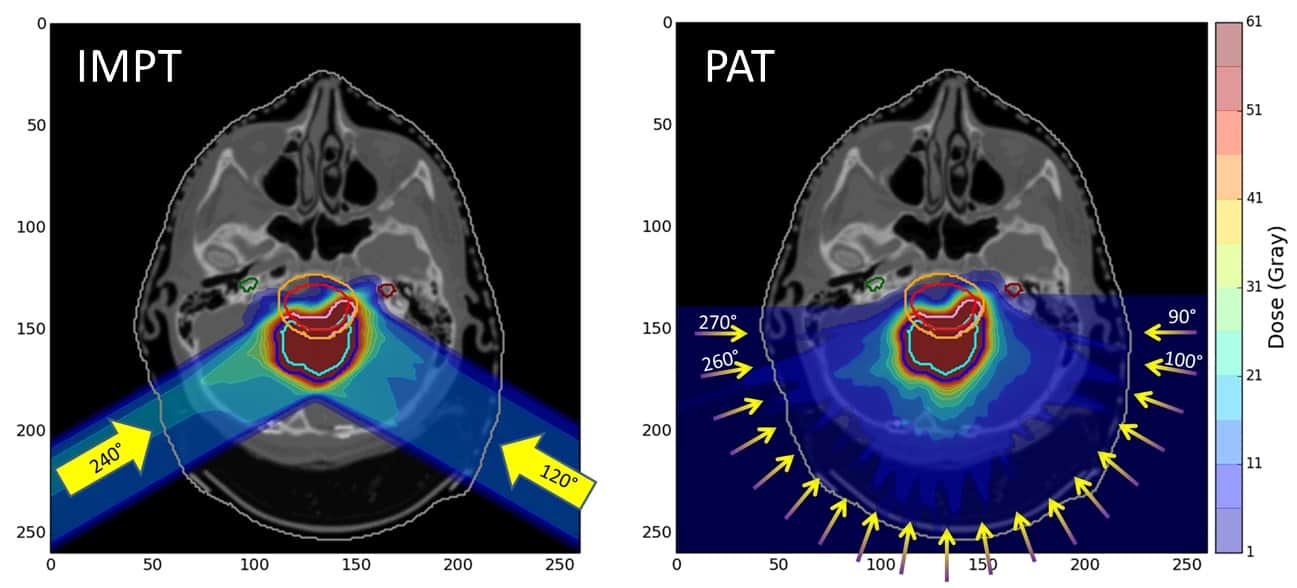
The techniques used to deliver photon-based radiotherapy have advanced over the years, from 3D conformal radiotherapy, to intensity-modulated radiotherapy (IMRT) and volumetric-modulated arc therapy (VMAT). Each progression aims to confer higher conformality, faster delivery and increased plan robustness. Proton therapy technology has also evolved, from passive scattering to scanned pencil beams and intensity-modulated proton therapy (IMPT). But what’s next?

According to Yunzhou Xia from the University of Manchester, the next evolution in proton delivery is proton arc therapy (PAT). “Arc therapy is treatment with the radiation continuously on as the gantry rotates around the patient,” she explained. “It is different to IMPT, where the beam is switched off between gantry movements.” Unlike VMAT, however, PAT has only been studied since 2016 and is not yet part of routine clinical practise.

Speaking at the recent Medical Physics & Engineering Conference (MPEC), Xia described how the Bragg peak could make proton treatments sensitive to range uncertainties and set-up errors, and suggested that the greater number of control points in PAT compared with IMPT might increase the  robustness of PAT treatment plans to uncertainties.

To assess the potential benefits of this approach, Xia created IMPT and PAT plans for one brain cancer and two head-and-neck cancer cases, with equivalent prescriptions for each pair of plans. She simulated range errors in the plans, including +/-3% over/undershoot and set-up errors of up to 3 mm in all directions. She then evaluated the dose distribution of each plan.

Xia first showed the audience the dose distributions for the brain tumour case, an ependymoma, for error-free IMPT and PAT plans. “In terms of target coverage, the two plans are very similar,” she said. “In the medium dose region, PAT delivers a more conformal dose to the target. However, in the lower dose region, PAT has more coverage.”

She then presented the values of conformity index (CI) and homogeneity index (HI) – tools used to quantitatively assess treatment plan quality – for pairs of plans with various uncertainties. PAT resulted in improved CI and HI values (closer to 1), for both range and set-up errors. This finding demonstrates that, for the ependymoma case, the PAT plans were more robust to errors than respective IMPT plans.

For the unilateral head-and-neck case, Xia showed that with no errors present, the PAT plan exhibited higher conformality and spared parts of the parotid gland compared with the IMPT plan. For plans with range errors, the CI and HI values were better with PAT than for IMPT, but PAT performed less well in plans with set-up errors.

Finally, Xia showed a bilateral head-and-neck case, with two target volumes: the first with a higher dose prescription than the second. Again, in the error-free instance, the PAT plan showed higher conformality than the IMPT version.

For the second, lower-dose, head-and-neck target, HI and CI values were closer to 1 for PAT plans than for IMPT, under both range and set-up errors. For the higher-dose target, CI was improved in the PAT plan while HI was better in the IMPT plan.

“Proton arc therapy has the potential to improve target robustness for certain brain and head-and-neck cases,” Xia concluded. “The narrower distribution of metrics in some cases may be beneficial  for robust optimization.” Xia now plans to repeat this analysis using more cases in order to draw a statistical conclusion.

Meet the pup stars

Cigarette case with image of Laika

Part art book, part popular science, Space Dogs: the Story of the Celebrated Canine Cosmonauts evolved from a private collection of objects, which turned into a photography project. Not so surprising, considering that the collector and artist in question is Martin Parr, a celebrated photographer based in Bristol, UK. But why did he spend 20 years collecting memorabilia related to the Russian space dogs of the 1950s and 1960s?

Aside from the quirkiness factor, the objects form a record of a less-well-known story from the history of space travel, which is here told by science journalist Richard Hollingham, alongside Parr’s photos of his memorabilia collection and original press photos of the doggy heroes and heroines (mostly the latter).

A night lamp decorated with porcelain figures of Belka and Strelka

From the dozens of dogs used in secret early experiments in low-pressure chambers and in suborbital flights, to the media furore surrounding the Soviet Union’s famed mongrel Laika and her successors, Hollingham packs plenty of fascinating detail into a small space. He explains why there were so many stray dogs on the streets of Moscow and the criteria for which strays were selected by Soviet scientists – including the requirement that they be light-coloured to show up well on TV cameras.

Hollingham doesn’t shy from including the sad deaths of some dogs, or the suffering that many survivors endured, though he also includes details of how well-loved they were by their team of scientists, doctors and engineers. The book devotes most of its pages to Laika, Belka and Strelka – the most famous and celebrated space dogs – but does find room for other canine characters. For example, the book talks about Ugolek and Veterok, the dogs whose mission lasted for 22 days in 1966 (they held the record for the longest spaceflight of any creature until 1971); and Tsygan and Dezik, the first dogs to experience suborbital flight, in 1951.

Parr’s photographs are equally revealing. In a Soviet Russia where individualism was deterred and celebrity shunned, the state not only deliberately turned its animal cosmonauts into superstars, but it did so through an array of commercial products. There are clocks, stamps, plates, books, confectionary boxes, pen holders and much more. And did you know there was a Russian-made “Laika” brand of cigarettes that lasted until 1990?

This small book is stylishly designed, striking a balance between humour, pathos, historical facts and adorable photos of dogs. What more could you want?

  • 2019 Laurence King 128pp £12.99

Compact high-voltage electron microscope overcomes coherence problem

A high-voltage transmission electron microscope (HVTEM) small enough to fit inside a university lab has been built for the first time by researchers in Japan. The team, led by Takumi Sannomiya at Tokyo Institute of Technology, used radio-frequency (RF) cavities to chop and accelerate electrons into coherent beams. Their achievement comes five decades after researchers first attempted to use RF linear accelerators for electron microscopy – and could lead to a wide range of new sub-nanometre imaging applications.

TEM uses the wave-like properties of electrons to obtain images of thin samples (100 nm or thinner) with spatial resolutions better than 1 nm. TEM has allowed scientists to visualize objects as tiny as single hydrogen atoms.

Most TEMs use beams of electrons in the energy range 60-300 kV but higher energy electrons offer two advantages. First, higher-energy electrons have shorter wavelengths and therefore will reveal smaller features. Second, higher-energy electrons can pass through thicker and denser samples, increasing the types of samples that can be imaged.

Much too large

One barrier to boosting the energy of TEMs is the size of conventional electrostatic electron accelerators.  A room-sized implementation is limited to about 300 kV, whereas a HVTEM running at 1 MV must be housed within a building-sized space.

Since the 1970s HVTEM designers have tried to overcome this problem by using RF cavity accelerators, which in principle can deliver high-energy electrons in a much smaller space. However, the lack of coherence of the electron beams from such accelerators has made this difficult.

Synchronized chop

Sannomiya’s team have solved this problem by using a series of RF-cavity components that maintain the coherence of the beam. The beam is created at 100 kV using a standard TEM accelerator. It then passes through the two RF-cavity choppers where it is cut into  pulses that are synchronized for the next stage of the journey, which is a 400 kV RF-cavity accelerator. This synchronization ensures that coherent pulses pass through the sample. The transmitted electrons are then decelerated to 200 kV using a final RF cavity accelerator so that they can be focused and detected using a standard TEM set-up.

The team’s instrument is small enough to fit comfortably in their lab, but can still accelerate electrons to 500 kV, which is around half the energy acheiveable at much larger facilities. Sannomiya and colleagues demonstrated the efficacy of their HVTEM by imaging sub-nanometre features within micron-thick samples – much thicker than the 100 nm limit of most TEMs.

The team now hopes to improve their microscope further using superconducting cavities, which would accelerate electron beams to even higher voltages, while making the device more compact and energy efficient. With these upgrades, the HVTEM could find a diverse range of new imaging applications, including atomic-scale tomography for biological tissues and whole cells, as well as in situ observations of liquid and gas environments.

The HVTM is described in Physical Review Letters.

Does saving water mean cutting rice yields?

Traditional paddy fields are flooded with a shallow layer of water for around 80% of the growing season. In response to rising demand for water, rice farmers have experimented with less water-thirsty methods in recent decades, including alternate wetting and drying, and mid-season drainage of the field. Short-term studies indicate that these methods can maintain yields. But whilst the new techniques save water, they may reduce soil fertility in the long run, according to a recent study.

John Livsey from Stockholm University in Sweden and colleagues conducted a meta-analysis to assess the effect of common water-saving techniques for rice agriculture on soil organic carbon and greenhouse gas emissions. They identified twelve studies that contained relevant data on soil carbon balance in both flooded and water-saving conditions. Analysing this data revealed that water-saving irrigation practices reduced methane emissions by over 50% and carbon-dioxide equivalent emissions by 18%.

At the same time the alternative irrigation techniques reduced soil organic carbon by 5% compared to traditional irrigation. That’s because soil moisture plays an important role in regulating soil organic carbon.

“In flooded conditions oxygen within the soil quickly becomes depleted and respiration switches from aerobic to anaerobic,” says Livsey, whose findings are published in Environmental Research Letters (ERL). “This results in a much slower breakdown of organic matter and accumulation of soil organic carbon.” Under drier conditions the faster breakdown of organic matter releases other nutrients, including nitrogen, that were chemically bound to the organic matter.

In the short term, the changes in soil organic carbon are negligible but over the longer term they may degrade soil fertility, potentially reducing yields and limiting future yield increases. Rice is a staple food for around half the world’s population.

Livsey and his colleagues suggest that water-saving practices receive tweaks to minimize their impact on soil fertility. “These could include restricting the extent to which soils are allowed to dry, or the number of times that fields are dried and re-flooded within a growing season,” he says.

What’s more it may be possible to mitigate impacts by leaving plant residues on the field after harvest or adding organic matter such as manure. For now though, the priority has to be more long-term data to understand the effects of water-saving practices better, with initiatives like the Sustainable Rice Platform playing a vital role.

‘Crisis point’ reached as Trump administration weakens safeguards for government research

The integrity of US government research is under siege and has been significantly weakened during the current administration of Donald Trump. That is according to a report by National Task Force on the Rule of Law and Democracy, which notes that recent presidential administrations have not only manipulated the findings of government scientists and researchers but also “retaliated against career researchers for political reasons”. It calls for Congressional legislation to protect the independence of government science data.

The report states that — along with manipulating findings and retaliations against scientists — US governments have also invited “outside special interests” to shape research priorities; “undermined and sidelined” advisory committees staffed by scientists; as well as suppressed research and analysis from public view – often material that had previously been made available. In many cases, the report adds, the administrations “have appeared to pay little political price for these missteps”.

We are at a crisis point, with almost weekly violations of previously respected safeguards

The task force, based at New York University’s Brennan Center for Justice, lists a number of issues that occurred under the two presidents who preceded Donald Trump. In the George W. Bush administration, for example, a politically appointed public-affairs officer prevented NASA climate scientist James Hansen from talking to the media in order, he said, to make the president look good. And political officials in the Obama administration’s Environmental Protection Agency (EPA) tried to downplay the risks to drinking water in a report on fracking, although scientists managed to reverse the decision.

‘Weekly violations’

Although previous presidents injected some politics into science, the report states that the Trump administration has tried both to politicize scientific and technical research on a range of topics and to undermine the value of objective facts themselves. “Now, we are at a crisis point,” the report declares, “with almost weekly violations of previously respected safeguards”.

Recent events, for example, include the “Sharpiegate” affair, in which the National Oceanic and Atmospheric Administration excoriated its weather forecasters for disagreeing with President Trump’s incorrect assertions about the path of Hurricane Dorian. The EPA also prevented academic researchers from serving on its scientific advisory boards in favour of industry-connected individuals. Another issue cited is the relocation of economists at the agriculture department from Washington after they revealed the harmful impact of the administration’s trade policies on farmers.

Writing in the Washington Post, panel members Christine Todd Whitman, who served as EPA administrator during George W Bush’s presidency, and former US attorney Preet Bharara note that Trump’s presidency “has exposed serious fissures in our system of government that require repair – especially when it comes to the integrity of government research”.

Tiny radiation beams tackle radioresistant melanoma

Immune cell infiltration

Microbeam radiation therapy (MRT) uses synchrotron X-ray beams to deliver spatially fractionated radiation, with extremely high peak doses deposited in the microbeam path and tissue located between the microbeams receiving only a small fraction of this dose. MRT has proved highly effective in treating various tumours in small animals, while selectively sparing normal tissues. However, the mechanisms underlying the therapeutic efficiency of MRT are not well understood.

To shed light on these processes, a research team headed up at the University of Bern has evaluated the anti-tumour efficacy of MRT on a radioresistant melanoma, in comparison with the effects of uniform irradiation (Int. J. Radiat. Oncol. Biol. Phys. 10.1016/j.ijrobp.2019.08.027).

Marine Potez

Malignant melanoma is one of the most aggressive cancers and is often radioresistant. “Although the main treatment for melanoma is surgery, in some cases resection is impossible due to the location of the tumour,” explains first author Marine Potez. “We wanted to find an alternative treatment for these tumours.”

With this aim, Potez and colleagues implanted radioresistant melanoma cells into the ears of mice. Roughly 10 days later, they divided the mice into three groups: 47 to be treated with MRT; 28 treated with conventional broad beam irradiation; and 26 non-irradiated controls. They performed all experiments using synchrotron X-rays produced at the European Synchrotron Radiation Facility.

The researchers treated the conventional group using a homogeneous 7.5×15 mm beam to deliver 6.2 Gy to the tumour. For the MRT treatments, the 7.5×15 mm irradiation field was covered by 37 quasi-parallel, 50-μm wide microbeams, with a peak dose of 407.6 Gy and a valley dose of 6.2 Gy.

Measuring tumour size before irradiation, on the day of treatment and then daily showed that both types of radiotherapy impeded melanoma growth compared with controls. Tumour volume doubled in 2.1 days in the control group, 3.7 days in the conventional group and 6 days in the MRT group. MRT significantly attenuated growth, with tumours shrinking from days 4 to 8 and then slowly growing again. Conventional irradiation, however, could not stop progression even temporarily, with tumours in this group exhibiting almost exponential growth throughout the study.

Irradiation set-up

Underlying mechanisms

To investigate why MRT offers better tumour control than conventional radiotherapy, the researchers first examined the impact of radiation on tumour blood vessels. They found that MRT altered blood vessel integrity and significantly reduced blood perfusion into irradiated tumours. At day 5 after irradiation, for example, 68.5% of vessels in the MRT group were perfused, compared with 86.3% and 81.5% for conventional and control groups, respectively.

Irradiated tumours also exhibited a reduced tumour cell proliferation index compared with controls, from day 2 in the MRT group and day 5 in the conventional group. MRT resulted in lower proliferation rates, with maximum divergence on day 9 when the proliferation indices were 14.5% and 70.9%, for MRT and conventionally treated tumours, respectively.

Immunostaining excised tumour slices for senescence – in which cells no longer divide but are still metabolically active – revealed a marked increase in senescence after MRT from days 2 to 9, compared with the other groups of mice.

This MRT-induced senescence significantly enhances the production of chemokines involved in recruitment of monocytes (a white blood cell involved in immune processes) in tumour tissue, which the team confirmed using Bio-Plex immunoassays. This led to a massive influx of immune cells (macrophages, natural killer cells, CD4+ and CD8+ T lymphocytes) in MRT-treated tumours from day 5 to day 12, which can induce inflammatory and anti-tumour immune responses.

“We observed that the first tumour response after MRT was vascular damages and senescence,” says Potez. “We hypothesized that the high influx of immune cells, recruited by the senescence-associated secretory factors, caused the vasculature impairments.”

The researchers suggest that MRT represents a promising candidate for new clinical trials to explore the clinical relevance of these anti-tumour effects. Currently, however, MRT is in the pre-clinical stage, including trials on pets with spontaneous tumours and on pigs, which provide a good intermediary between small lab animals and human patients.

Potez notes that due to the particular irradiation geometry of MRT, positioning and treatment planning are still under development for patients. “Also, MRT can only be performed at third-generation synchrotrons to fulfil the requested parameters, such as the dose rate and parallel-non divergent microbeams,” she says. “To be more accessible for patients, the development of compact sources is ongoing.”

In the next stage of this project, the researchers are characterizing the infiltrating immune cells. “We are also testing different treatment protocols with multiple irradiations and ports, and we are combining MRT with nanoparticle injection,” Potez tells Physics World.

Going the extracurricular mile

Office presentation

Gaining a degree in physics is no mean feat. As a student, you’re busy completing lots of assignments in many different modules, and tackling experiments in the lab too. So it isn’t surprising that, for most students, extracurricular activities often fall into a black hole of “things you don’t have time for”. However, having a rich life outside your core academic activities is vital when it comes to helping you figure out what you want to do after you graduate, and getting the right job.

While good grades are important, students also need a broad range of transferable skills. This includes learning prioritization, communication, teamwork and problem solving; taking initiative, showing resilience and leadership; and developing business acumen and skills such as negotiation and persuasion. The need for transferable skills isn’t limited to jobs in industry – you’ll need these skills even if you want to build an academic career.

Indeed, in my experience of working with companies that hire physicists, the most employable graduates are those who engage in extracurricular activities. By doing so, students are exposed to new and challenging environments, which builds their confidence, and often leads to further opportunities.

Such extracurricular activities includes not only part-time jobs, summer placements and internships, but also everything from coaching, tutoring and managing your physics society to sitting on a committee, contributing to a special interest group, organizing events or volunteering. By participating in these activities, you are, consciously or unconsciously, preparing yourself for the next stage in your life, wherever this takes you.

Taking up a placement or internship, especially in a field or company that you may want to work for, is a particularly good idea. There are many ways to go about this. While you can find a placement or internship under your own steam, there are many resources in place to help. For a start, speak to your careers adviser or tutor, who can point you in the right direction. The Institute of Physics (IOP) also offers a number of opportunities to help you gain experience and develop those all-important transferable skills (see box below). A handful of graduate training programmes have even been officially accredited by the IOP, all of which combine dedicated events, training modules, professional development, mentoring and on-the-job experience.

The IOP currently works with 21 companies, from Atkins and Leonardo to EDF and Sellafield, which deliver graduate training programmes for physics students, through the Accreditation of Company Training Schemes (ACTS). Accreditation indicates that the training scheme has the appropriate criteria for physicists working towards gaining professional registered status.

The message is clear – transferable skills are essential. But instead of trying to convince you any further myself, here are some case studies of physics graduates who have taken up a host of placement and volunteering activities.

Molly Burkmar

Molly Burkmar

I’m currently studying for an MPhys in physics, astrophysics and cosmology at the University of Portsmouth, UK.

During my second year I decided to apply for South East Physics Network (SEPnet) placements, after learning about the organization at a careers day at university. SEPnet links university physics departments in south-east England and organizes summer placements for physics undergraduates and PhD students to develop their employability skills and raise awareness of their career options in business and industry. I looked through the profiles of more than 60 placements and applied for five, but it was the placement at Winchester Science Centre that caught my eye, as I’m thinking about going into teaching. Thankfully, the interview went really well and I was offered the job. I was really nervous to start with as this was my first job in the science industry, but the team was very welcoming, and I got settled in quickly.

My placement at Winchester was split into two parts: being an “inspirer” and evaluating an exhibit. Most of my time was spent on the former, which involved science busking, floor walking around the exhibits and presenting the live science show. My project involved evaluating a display known as “Stem Cell Mountain” and recommending how to improve it.

My confidence has increased from presenting shows. I was nervous about doing them to begin with, but I started by teaming up with another member of staff to deliver them and presented my first solo show in front of the head of the planetarium. This was really helpful to gain confidence and get constructive feedback before doing them solo and it became my favourite part of the job. I have gained so much experience being an educator too. I picked up tips on how others presented and taught around the centre, which helped me to successfully communicate to a wide range of ages and science backgrounds. Seeing children learning and getting excited about science has been the most rewarding part of the job.

I used skills from my laboratory module at university during the project, such as keeping a lab notebook, but I’ve also learnt a lot about evaluation. I’ve taken observations, semi-structured interviews and surveys as well as analysed both quantitative and qualitative data. I then used the data to make small modifications to the exhibit to see if they were successful so I could make recommendations on how to improve it. My study was one section of a bigger project to modify Stem Cell Mountain, but it was really interesting to see the evaluation side from start to finish.

By undertaking a placement, I’ve gained so much experience that I can use to help me with the rest of my degree and when applying for jobs. I would really recommend completing a placement in an area you’re interested in as there are a lot of job-specific skills that can’t be taught at university.

Adam Powell

Adam Powell

I am a graduate student with the University of Calgary, Canada, as a member of the Antihydrogen Laser Physics Apparatus (ALPHA) collaboration at CERN.

During the foundation year of my physics degree at Swansea University, UK, when the opportunity to lead the university’s physics society arose, I leapt at the chance. I had begun my degree at a disadvantage, not having taken maths past the age of 16, so I was all the more motivated to find my place. A few months after taking on the society, I had helped to organize the first in a number of careers events to help my peers (and myself) see the vast number of possible pathways through physics. This was also my first interaction with IOP Wales, and my first outreach event came soon after – eventually I became a campus ambassador and nations committee member.

As my network started to grow, I was offered an internship with the university’s employability academy. I spent a summer focusing on the softer skills that are incredibly important in an increasingly competitive workplace. I was encouraged to apply for the Undergraduate of the Year awards sponsored by Target Job and was shortlisted in the men’s category. The reward for this was an interview at L’Orèal UKI. I was aware of the brand but had no experience in the beauty industry. Determined to show what I could do for them, I took the sample data provided and set to work on analysis. After combining skills learnt through my studies with some impromptu market research (questioning the unfortunate travellers on a Swansea to London train about the various products) I was offered a summer placement in the business development team. While my time with L’Orèal was full of very valuable learning experiences and wonderful people, it wasn’t for me long-term. I learnt the most valuable lesson of all – that it is just as useful to know what you don’t want to do, as what you actually want to do.

I returned for my final year at Swansea, now as an MPhys student, with a desire to focus on research. I was then incredibly fortunate to be sent to CERN to carry out my final-year project with the ALPHA experiment. I spent three months working in an environment that pushed me every day, and I was hooked. Knowing that I wanted to return after my MPhys, I set about trying to find a postgraduate position. A few discussions later, I was hired as a research assistant by the TRIUMF laboratory in Vancouver to help in the construction of the new ALPHA-g experiment at CERN. This then led to my current place as a graduate student with the University of Calgary as a member of the ALPHA collaboration and I currently hold a Leverhulme Trust Study Abroad Studentship.

Despite now being based outside Wales, I’m still a regular volunteer and committee member, and played a role in organizing the IOP-sponsored Conference of Astronomy and Physics Students 2019 at Swansea.

Srinidhi Rajagopalan

Srinidhi Rajagopalan

I’m currently pursuing a physics (Euromasters) MSc at Royal Holloway University of London.

After the first year of my Master’s degree, I was looking for opportunities to gain some experience working in professional labs, which I saw as necessary for my career plan. I found many of the adverts on GRADnet interesting, but was particularly keen on working at the National Physical Laboratory, because most companies advertised for data science internships, whereas NPL’s placement was focused on experimental physics.

I worked on a project to build a method to reconstruct the spectrum of a 2D material using photoluminescence imaging techniques. This involved using the LabView platform, which is an indispensable tool in experimental physics. I also worked in an optics lab where I learnt not only how to work with several instruments, but also how to approach a new and unfamiliar instrument. While it was a struggle to transfer my bookish knowledge to real-life experiments, I learnt what experimental physics actually entails.

The placement helped me sharpen both my technical and professional skills. The standard of professionalism expected of a student is not that expected in a real working environment and I learnt a lot by just watching my superiors and peers every day. Indeed, I believe this placement was one of the most important learning experiences of my career so far, and will help me work on future projects more efficiently.

I also made many friends who were mostly PhD students. From them, I was able to get a great insight into how the organization worked and all its activities. They were then able to give me advice about what they would have done differently before starting their PhD.

The placement was an invaluable learning experience. I would highly recommend anyone who has the chance to take up a summer placement with SEPnet, GRADnet or the IOP, and to utilize it to its fullest.

Holly Stemp

Holly Stemp

I am currently a PhD student in quantum computing at the University of New South Wales (UNSW) in Sydney, Australia.

During the second year of my MPhys degree in physics at the University of Surrey, UK, I began to think more seriously about what I wanted to do after I graduated. Pursuing a career in research had always interested me, so I figured that a research-orientated placement would be the perfect opportunity to discover first-hand what it is like to work in a research environment. This led to me applying for an eight-week SEPnet summer placement at the National Physical Laboratory in Teddington. There, my role was to evaluate a phenomenon known as “non-uniqueness”, associated with standard platinum resistance thermometers used to realize the International Temperature Scale of 1990.

Non-uniqueness is a very subtle form of uncertainty associated with temperature measurement that, as a result of the ever-improving precision to which we can perform temperature measurements today, is becoming a fundamental limiting factor in the accuracy we are able to achieve. My task during the placement was to try to quantify the uncertainty associated with this non-uniqueness in the thermometers. The first half of the placement was spent performing measurements in the lab, where I determined the resistance ratios of the thermometers in temperature-controlled oil baths, liquid nitrogen and fixed-point cells, over a range from –196 °C to 232 °C. I then plotted and analysed the data collected in order to gain a clearer picture of how non-uniqueness affects our most accurate temperature measurements.

This was my first experience of not only collecting high-quality experimental data but also of performing careful data analysis, both of which are absolutely invaluable skills for a career in research. Conducting research during my placement was a very different experience to studying at university, as many of the questions we were asking didn’t have a known answer. This aspect of exploring the unknown is something I found really exciting and it led to me developing a wide range of useful skills, from critical thinking to problem solving.

Working at NPL definitely confirmed my desire to work in a research environment and showed me the wide variety of opportunities available. I was constantly asking the staff at NPL about their research and everyone was very happy to share their work with me, so I got to learn a lot about metrology/traceability of measurement and its importance in every aspect of our lives.

For any undergraduate interested in expanding their skill set and experiencing the real-world implications of what they are taught in lectures I would highly recommend carrying out a placement. Not only does it look great on your CV, it also provides some invaluable tools for a potential career in research in the future. Don’t be put off applying if you don’t have a lot of direct knowledge about the placement subject area, as plenty of help and support are provided. I knew nothing about the world of metrology before my placement, but I found the scheme to be a fantastic opportunity to extend my knowledge of a given area.

How the IOP can help you

The Institute of Physics (IOP) is here to support you in building a successful career through our programme of activities. Members of the IOP can:

  • Become a part of the IOP student community and participate in a host of activities to develop skills: iop.org/student-community
  • Volunteer for IOP-led physics engagement activities to practice your communication, organizational and teamwork skills: iop.org/volunteer
  • Plan and organize scientific meetings, working in collaboration with other IOP groups and sister societies. Promote events through your institutions and networks, and coordinate and generate digital content for your chosen group(s): iop.org/groups
  • Gain an advantage in the job market by attending our employer-led careers events and participate in career-themed webinars. You can also participate in events and conferences, at exclusive member discounted rates, to keep up to date and network with peers and experts in academia and industry: iop.org/events
  • Make use of the IOP careers hub, which will support you in writing your CV, practising for interviews, delivering presentations, and effective time management, among many other useful resources to support your future career choices: iop.org/member-services
  • Take advantage of our international travel grants to attend conferences, such as the Research Student Conference Fund, the C R Barber Trust and Early Career Researchers Fund: iop.org/grants
  • Following graduation, join the Member grade and use the designatory letters MInstP after your name, to demonstrate your commitment and professionalism: iop.org/member

Copyright © 2026 by IOP Publishing Ltd and individual contributors