Breath test detects opioids

A test to detect opioid drugs in exhaled breath has been developed by engineers and physicians at the University of California, Davis. Such a breath test could be useful in caring for chronic pain patients, as well as for checking for illegal drug use (J. Breath Res. 10.1088/1752-7163/ab35fd).

“There are a few ways we think this could impact society,” says Cristina Davis, who led the research along with Michael Schivo from the UC Davis Medical Center.

Patients suffering chronic pain are commonly prescribed opioids and other analgesic drugs. Monitoring opioids and their metabolites in such patients is important to ensure that they are taking their drugs correctly, the prescribed drugs are being metabolized properly and that they are not taking any confounding medication. Blood testing is the gold standard for this, but it is invasive and requires specialized personnel to collect. Breath testing could provide a reliable, easily available and non-invasive alternative.

In this study, the researchers used a simple and non-invasive technique to collect exhaled breath condensate (EBC) from a small group of chronic pain patients at the UC Davis Medical Center. The patients received infusions of pain medication including morphine and hydromorphone, or oral doses of oxycodone.

The patients were asked to breathe normally for 15 min into a specialized collection device: a glass tube surrounded by dry ice. The droplets in breath condense and are stored in a freezer until testing. The researchers also washed the collection device with an ethanol solvent after EBC extraction to retrieve any compounds stuck to the glass surface. They analysed all of the samples using liquid chromatography coupled to mass spectrometry to identify metabolites present in the sample and  quantify the drugs being used.

After each EBC collection, blood samples were taken immediately, enabling the researchers to compare opioids and metabolites in breath with levels in blood samples and with the delivered doses. “We can see both the original drug and metabolites in exhaled breath,” Davis explains.

In this pilot study, the researchers were able to detect, quantify and identify several opioid metabolites in EBC and the subsequent ethanol solvent wash. This confirms that infused opioid drugs are present in exhaled breath, albeit in low amounts. They also found promising correlations between concentrations in blood and breath for some of the main opioids and their metabolites.

Davis notes that fully validating this breath test will require more data from larger groups of patients. Her team is now working towards real-time, bedside testing.

My favourite Nobel prize: opening a new chapter in low-temperature physics

Liquid helium is an essential component in experimental physics. It is used to chill materials to near absolute zero allowing their fascinating properties to be studied as well as cool superconducting magnets that are used in many big-science facilities such as CERN’s Large Hadron Collider and the ITER fusion reactor, which is currently being built in France.

Away from basic science, helium plays a critical role in healthcare by cooling the magnets that used in magnetic resonance imaging machines.

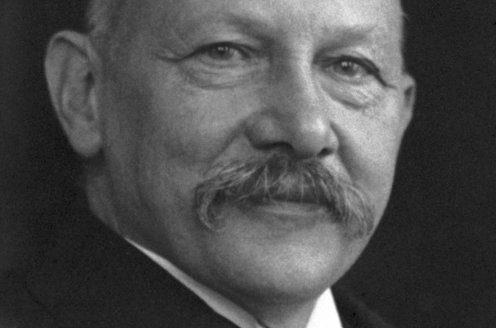
Heike Kamerlingh Onnes

This is why my favourite Nobel prize goes to liquefying helium — a breakthrough that has not only paved the way for so many discoveries in physics but saved lives too.

The feat to liquify helium — the most stubborn of the “permanent” gases — was achieved in 1908 by the Dutch physicist Heike Kamerlingh Onnes from the University of Leiden. He used ingenious apparatus to cool helium to a liquid, which happens at 4.2 K.

The ability to liquify helium is a worthy achievement in itself, but it also heralded the discovery of new phases of matter, particularly superconductivity and superfluidity.

Indeed, in 1911, Onnes was the first to discover superconductivity when he saw the resistance in a sample of mercury drop to zero, or as he put it “near-enough null”. This breakthrough is noted in the 1913 prize citation and over 100 years on we still do not have a complete understanding of the phenomenon. Onnes also later saw the onset of superfluidity in helium, which happens at 2.17 K — a phase of helium that later led to other Nobel prizes.

The 1913 prize also resonates with me because Onnes’ work happened at a time when physics itself was in state of transition, moving on from the world of classical physics towards the advent of quantum mechanics. The prize is also a timely reminder of the crucial role that experiment plays in physics, or as Onnes himself once said: “Door meten tot weten” (through measuring to knowledge).

Oxford Instruments logo

Physics World‘s Nobel prize coverage is supported by Oxford Instruments Nanoscience, a leading supplier of research tools for the development of quantum technologies, advanced materials and nanoscale devices. Visit nanoscience.oxinst.com to find out more

Record breaking fusion reaction could transform medical isotope production

Nuclear technology companies Phoenix and SHINE Medical Technologies have achieved a new world record for a nuclear fusion reaction in a steady-state system, the strongest of its kind ever produced on Earth. The reaction yielded 46 trillion (4.6×10¹³) neutrons per second, eclipsing the previous record by nearly 25% and setting a new standard for neutron generator technology.

This breakthrough could prove great news for the field of nuclear medicine. SHINE was founded in 2010 to create a safe, cost-effective and environmentally-friendly technology to produce medical isotopes. And it’s using Phoenix’s high-flux neutron generators to achieve this.

In particular, the companies aim to resolve the ongoing global supply issues of molybdenum-99 (Mo-99), a radioisotope that decays into the diagnostic imaging agent technetium-99m (Tc-99m). The most prevalent nuclear medicine agent, Tc-99m is employed in tens of millions of medical diagnostic procedures each year, primarily in stress tests to diagnose heart disease or to stage cancer.

Mo-99, however, is currently generated using a handful of ageing nuclear reactors, shutdowns of which have led to serious supply shortages in the past. SHINE plans to replace the nuclear reactor with Phoenix’s low-energy, accelerator-based neutron generator.

The Phoenix system works by accelerating positively-charged deuterium ions into a target of tritium gas to induce a fusion reaction. This reaction results in the production of high-energy neutrons and helium. These neutrons then pass into a tank and strike their target: low-enriched uranium (LEU) dissolved in an aqueous solution. This causes the uranium nuclei to split and create multiple elements, including Mo-99 and other useful isotopes.

As well as eliminating the need for nuclear reactor facilities, the technology’s use of LEU (containing less than 20% U-235) confers a major security advantage. Until recently, most Mo-99 production used targets of weapons-grade highly-enriched uranium (HEU), which contains 20% or more U-235. LEU, however, cannot be used to create nuclear weapons weaponized without highly sophisticated modifications and is thus considered far less of a risk.

Preparing for production

The record-breaking fusion reaction was achieved during a demonstration of Phoenix’s third-generation neutron generator, as part of ongoing preparation for full-scale operation of the medical isotope production facility. “The higher neutron yield from the Phoenix system will increase the efficiency of the whole production process,” notes Phoenix’s president Evan Sengbusch. “Additionally, the demonstration of such a strong neutron source opens the door to other high-flux neutron applications in materials characterization, imaging and fusion energy.”

The companies have also performed a 132-hr test run on the neutron generator, which demonstrated more than 99% uptime. These successful tests validate the performance and reliability of the Phoenix neutron generator technology and confirm its status as a “steady-state system” than can operate at high output for long stretches of time. This sets it apart from other high output fusion systems, which have only operated in a pulsed mode over short durations.

SHINE anticipates that isotope production will begin in 2021. “Before that, the production facility needs to be built and the target solution needs to be tested,” explains Greg Piefer, SHINE’s CEO and founder, and founder and former CEO of Phoenix. The company began construction of its commercial facility in spring of this year. It will contain eight Mo-99 production units, each with its own Phoenix neutron generator, and once operational will be capable of producing enough isotope to satisfy one-third of global demand.

“The world-record proves the accelerator technology is suitable to produce medical isotopes at the scale required to support a robust business case,” says Piefer. “It is also a stepping stone toward advancing fusion for other, more ambitious applications, including the recycling of nuclear waste and ultimately the creation of cleaner, safer and more abundant energy.”

Drought may hit half world’s wheat at once

The planet’s daily bread could be at risk as the global thermometer creeps up and climates begin to change. New research has warned that almost two-thirds of the world’s wheat-growing areas could face “severe, prolonged and near-simultaneous droughts” by the century’s end.

Right now, 15% of the world’s wheat producing regions are at risk of severe water scarcity at the same time. Even if the 195 nations that agreed in Paris to stop global average temperatures from rising beyond 1.5 °C by 2100 keep that promise, the chance of simultaneous water stress across continents would still double between 2030 and 2070.

But if nations fail to mitigate the climate change and extremes of heat and rainfall that would inevitably follow runaway global heating, then the chances of devastating failure of wheat harvests in both Europe and North America, or both Europe and Australia, or Russia, Ukraine and Kazakhstan, begin to soar.

Wheat provides one-fifth of all the calories for humankind. It is the world’s largest rain-fed crop and the global wheat trade matches the traffic in rice and in maize combined. Ten regions account for 54% of the planet’s wheat fields, and 57% of the world’s wheat.

Scientists from Europe, the US and China report in the journal Science Advances that they worked with computer simulations to model the future global weather for water scarcity with changes in temperature for the next eight decades.

Wheat is a successful crop partly because its water needs are relatively low, but it can’t flourish without reliable rainfall before and during growth. And the new simulations confirm earlier fears: that extremes of heat and devastating drought could happen in more than one continent at the same time.

When this happened in the 19th century, global famine followed. Forecasts already warn that with each 1 °C rise in temperature, global wheat yield will fall by between 4% and 6.5%. Researchers have repeatedly warned that extremes of heat can slash yields and limit the vital nutrients in cereal harvests. Other teams have found that climate change may already be making this happen.

Worse could follow as one heat wave is pursued promptly by another. And all this could happen in a world in which, as population grows, demand for wheat could increase by at least 43%.

Continued checking

Scientists tend not to take the research of others for granted: they keep on checking. The latest simulation analysed 27 different climate models, each with three different scenarios.

The scientists looked at evidence from the near-past to find that between 1985 and 2007, the impact of drought on world wheat production was twice that between 1964 and 1984.

They included developing countries and low-income nations in eastern and southern Asia in their survey, because these are where half of the already hungry and under-nourished live, and where bread is an important part of people’s diet.

“The results indicate a severely heightened risk of high-impact extreme events under the future climate, which would likely affect all market players, ranging from direct influences on subsistence farmers to price-mediated changes in international markets,” they write.

  • This article first appeared at Climate News Network

Exciton condensation breaks new temperature record

Bose-Einstein condensation (BEC) is normally limited to temperatures near absolute zero but researchers have now seen it at a much warmer 100 Kelvin for excitons (electron-hole pairs) in atomically thin double layers of semiconductors. The finding will be important for coherent optoelectronics applications and perhaps even high-temperature superconductivity, they say.

BEC happens when a gas of bosonic atoms or particles is cooled until the de Broglie wavelength of the atoms or particles becomes comparable to the distance between them. The atoms or particles then collapse into the same quantum ground state and can therefore be described by the same wavefunction.

The phenomenon, which allows the atoms or particles to become a superfluid (in which they flow without friction) was predicted nearly a hundred years ago by Albert Einstein and Satyendra Nath Bose. The first such condensate (made from rubidium atoms) saw the light of day in 1995. It has since also been observed in particles including polaritons, photons and magnons.

Excitons should Bose condense at much higher temperatures

BEC is normally only seen at extremely low temperatures – not more than a few kelvins – and researchers would dearly like to increase this BEC “transition temperature”. Theory predicts that excitons (bound states of a negatively charged electron and a positively charged hole – or electron vacancy – that have a much smaller mass than atoms and can be packed to a much higher density) might be good particles to study in this context. This is because they should Bose condense at much higher temperatures.

Electrons and holes on their own are classified as fermions and so cannot form Bose-Einstein condensates, but a bound state of two fermions is a boson, so excitons can condense. Until now, however, experiments (on semiconductor quantum wells and graphene, for example) have shown condensation temperatures of only up to about 1 K because of the small exciton binding energy in the material systems studied.

Huge exciton binding energy

In this new work, researchers led by Zefang Wang, Jie Shan and Kin Fai Mak of Cornell University together with co-workers at Columbia University and NIMS in Japan did their experiments on the 2D semiconductors molybdenum diselenide (MoSe2) and tungsten disulphide (WSe2). These materials belong to the transition metal dichalcogenide family of semiconductors, which become direct band gap semiconductors when made into monolayers. One of their unique features is their huge exciton binding energy, which is almost two orders of magnitude higher than that of conventional semiconductor quantum wells.

“This huge exciton binding energy means that the excitons in these materials can, in principle, undergo high-temperature condensation, but the short exciton lifetime in monolayer materials means that it is difficult to achieve in reality,” says Mak.

Double layer boosts exciton condensation to 100 K

“One solution to this problem is a double layer system (which was first put forward by researchers in 2014) instead of a single layer one. This system significantly increases the exciton lifetime and favours exciton condensation without comprising the strong exciton binding. It is thus an ideal platform in which to realize high-temperature exciton condensation.

“By building an electron-hole double layer based on MoSeand WSe2, we have now shown that we can boost the exciton condensation by nearly two orders of magnitude – to about 100 K.”

Electroluminescence depends on the exciton density at a critical threshold density

When electrons and holes find themselves in the same region in a semiconductor, they can recombine and release energy in the form of electroluminescence (EL). In their experiments, Mak and colleagues found that the intensity of this EL has a threshold dependence on the exciton density, which they discovered quite by accident in devices made using monolayers of MoSeand WSeseparated by an insulating layer of hexagonal boron nitride (hBN). hBN serves to limit electron and hole tunnelling between the two semiconductors and thus supresses electron-hole recombination.

“We applied a bias voltage to this device via contact electrodes (made from graphene),” explains Mak. “As we cranked up this voltage, we first observed the creation of an electron-hole gas in the double layer. As we further increased it – and thus increased the exciton density – the EL suddenly increased by nearly two orders of magnitude.

“This phenomenon reminded us of laser diodes, in which a threshold increase in the light emission intensity emerges with a small increase in electrical pumping (similar to the bias voltage we apply). In fact, exciton condensation is closely related to lasing, which can itself be regarded as a non-equilibrium BEC of photons in a single optical cavity mode.”

Electron and hole densities need to be equal

Accompanied by this dramatic phase transition is the enhanced photon noise at the threshold, also known as critical fluctuations in phase transition theory, he tells Physics World. “The so-called super-Poissonian photon statistics we observed at this threshold are very similar to the enhanced photon noise at the lasing threshold for lasers. Although quite distinct from lasing, this enhanced photon noise does nonetheless provide important evidence for exciton condensation.”

We found that EL enhancement occurs when the density of electrons and holes in the system is the same, he adds. “This observation backs up theory calculations that predict that exciton condensation indeed requires almost perfect electron-hole ‘Fermi surface nesting’, which means that the condensate quickly falls apart if the electron and hole densities are not equal.”

Towards coherent optoelectronics applications and perhaps even high-temperature superconductivity?

The study will have implications for coherent optoelectronics applications in which the excitons in the condensed phase couple to light cooperatively – instead of independently of each other as in classical devices like light-emitting diodes, explains Mak. It might also be important for high-temperature superconductivity.

“In 1976, theoretical physicists Lozovik and Yudson put forward a route to achieving such superconductivity via exciton condensation. Instead of trying to pair up like-charged particles in a single material (as researchers are trying to do in existing superconductors), they proposed pairing up oppositely charged particles (such as electrons and holes) spatially separated in two layers. Superconductivity might emerge in each individual layer of the system when the electron-hole pairs condense. The physicists predicted that the maximum superconducting temperature in this case would be limited by a fraction of the exciton binding energy, which could approach room temperature.”

The team, reporting its work in Nature 10.1038/s41586-019-1591-7, says that it would indeed like to experimentally demonstrate such superconductivity in each of the individual layers of MoSeand WSein the future. Such experiments are feasible thanks to the simplicity of the set up.

“We are also working on measuring the exciton correlation length, which can become macroscopic in the condensed phase,” says Mak. “This is a unique feature of macroscopic quantum coherence.

“Finally, we also wish to combine our exciton condensates with moiré superlattices, like those recently demonstrated in twisted bilayer graphene, to realize a Bose-Hubbard model in a solid-state system,” he reveals.

UK announces £220m to design a ‘commercially viable’ fusion power plant

The UK Government has announced £220m over the next four years towards the design of a commercially viable fusion power station. Known as the Spherical Tokamak for Energy Production (STEP), it will be based on “spherical” tokamak technology that is currently being pioneered at the UK’s Culham Centre for Fusion Energy (CCFE). The design effort – led by the CCFE – will involve over 300 people and be complete in 2024.

The CCFE is owned and managed by the UK Atomic Energy Authority (UKAEA) – which is located at the Culham Science Centre in Oxfordshire. It already houses two world-leading fusion tokamaks – the Mega Amp Spherical Tokamak (MAST) and the Joint European Torus (JET).

Nuclear fusion has the potential to be an unlimited clean, safe and carbon-free energy source and we want the first commercially viable machine to be in the UK

Andrea Leadsom

Built in 1983, JET is designed to study the conditions approaching those in a fusion power plant and is the only device that can use a deuterium-tritium fuel mix of the kind that will be used for commercial fusion power. The ITER fusion reactor, which is currently being built in Cadarache, France, is similarly based on such a donut-shaped plasma.

However, since 1999 the UK has been pioneering the use of spherical tokamaks through research on MAST, which contains a spherical plasma, much like a cored apple. This “compact” tokamak allows it to confine highly pressurized plasmas with a lower magnetic field that those used in JET, which could allow for a more cost-effective fusion device.

The UK government has now announced £220m towards a conceptual design report for a fusion power plant based on the spherical tokamak design. To be complete by 2024, the effort will involve the creation of around 300 jobs. “This is a bold and ambitious investment in the energy technology of the future,” notes Andrea Leadsom, UK secretary of state for business, energy and industrial strategy. “Nuclear fusion has the potential to be an unlimited clean, safe and carbon-free energy source and we want the first commercially viable machine to be in the UK.”

It is expected that the money will be used for research that will go into the final integrated design. This will include prototyping components, carrying out materials research and robotics development, as well as computer modelling. The cash will also be used to construct test facilities. “There are a whole series of technical areas that need to be investigated and brought together to reduce risk for the actual power plant,” a spokesperson for the UKAEA told Physics World. “There will also be market analysis and site selection work to make the design as practical and viable as possible”.

The heat is on

The design for a fusion power plant based on a spherical tokamak will take into account the results from MAST. Indeed, the tokamak has just completed a major £45m upgrade with scientists hopeful that the first plasma will be injected into the tokamak by the end of the year. Work on the upgraded facility – known as MAST-U – will also allow scientists to study plasma conditions relevant to ITER.

MAST-U will be able to create a plasma of deuterium with a timespan of around 2–4 s, compared with just 0.5 s before. Indeed, it is hoped that a new exhaust system – known as a divertor – will show that it is able to handle the intense exhaust heat emerging from the plasma more effectively than existing designs, including that used on ITER. The divertor will aim to take a 50 MW/m2 heat load and reduce it to just 5 MW/m2. “The divertor on MAST is truly unique,” says Andrew Kirk, head of MAST-U.

The CCFE has also secured an additional £21m from the European Fusion Research Consortium and the UK’s Engineering and Physical Sciences Research Council to further enhance the upgrade. This will include doubling the neutral beam injection into the plasma from 5 MW with MAST-U to 10 MW. This is expected to be complete around 2022.

UKAEA chief executive Ian Chapman says that the UK has a proud heritage of pioneering developments in fusion research. “This announcement demonstrates the UK government’s commitment to translating that leadership into a working fusion reactor,” he adds. “We are excited to work with our partners to take the next step towards a fusion-powered future.”

Analysis: the race to commercial fusion will likely be won by China

“Fusion is always 30 years away.” Fusion researchers have had that comment flung at them for decades now, but in recent years there seems to be some optimism within the community that things are about to change — and that the promise of nuclear fusion could be fulfilled sooner than we think.

This is in part due to the ITER fusion reactor, which is finally nearing competition at Cadarache, France, following years of delays and cost hikes. When ITER turns on in 2025, it will first use a deuterium plasma to test all the systems and plasma performance and then only in 2035 use a deuterium-tritium fuel mix to finally demonstrate fusion on a commercial scale. If this is all a roaring success, then the race to build the world’s first fully-fledged fusion power plant will be on. Still, given these timescales, an actual power plant is unlikely to be built before 2040 at the earliest.

With the announcement of £220m to design a “commercially viable” fusion power plant, which is a serious amount of money, the UK is firmly entering the race. But rather than basing a design on ITER it is hoping that innovations in “compact” fusion reactors will pay dividends in the coming years.

This may come from the spherical tokamak design — being pioneered by the UK and the US – that would allow for much more compact and cheaper power plants. But there is still much more research that needs to be carried out, some of which will be done on the upgraded Mega Amp Spherical Tokamak in the UK and the National Spherical Torus Experiment in the US.

For now, though, most eyes in the fusion community will be on ITER, especially from the seven member states of the project that have provided billions in funding for the facility.

What will an actual fusion power plant look like? No one knows for sure, but if, or when, ITER is a success then you can expect China to design and build a scaled-up version of ITER and then drive the cost down through volume. They have the energy demand, the know-how and the money to make that happen.

This approach, however, won’t work for many other energy markets, including the UK. This is why building a more compact and cheaper design via the spherical tokamak looks promising, although still likely to be decades away.

Artificial intelligence and cloud computing: the future for scientific research

The buzz surrounding artificial intelligence (AI) is hard to ignore. Huge data sets and large amounts of compute are the perfect match for deep learning, wowing us with algorithms that have beaten grandmasters at games of chess and Go. Today, with access to no more than a web browser, the benefits enabled by breakthroughs in image and speech recognition – not to mention machine translation and more – are just a few clicks away.

There’s the growth of the cloud to consider too. We’re depositing more and more of our data on virtual drives that make it easier to share, back-up and transfer information – providing us with new opportunities both in the office and at home.

But what do machine learning and cloud computing mean for scientific research? How can these tools help researchers to manage and navigate the vast datasets generated by increasingly sophisticated detectors and experiments? At big science facilities, data streams that used to be megabits per second are now hundreds of times faster, sometimes even more, as detector upgrades come online and new instruments are installed. That’s a lot of data to analyse and verify.

At the same time, scientific discovery is increasingly a multidisciplinary endeavour that is changing the way that scientists work together. Even if researchers manage to carry their data back to their desktop loaded on armfuls of portable hard drives, how are they going to collaborate on the analysis?

We examine some of these questions in a two-part series produced by Physics World on behalf of Tessella – an international data science, analytics and AI technology consulting services provider with years of experience in partnering with leading research organizations. In the first, we find out how cloud computing is allowing scientists to collaborate on research projects by providing easy access to shared resources. The second article explores the potential of artificial intelligence to accelerate the process of scientific discovery and extract meaningful information from increasingly large datasets. We hear from experts across a variety of scientific fields to examine what it takes to deploy effective cloud and AI solutions, highlighting the challenges, rewards, and trends that will shape the research of the future.

Richard Layne is Head of Big Science at Tessella

The full report, “Artificial intelligence and cloud computing: the future for scientific research”, is available for download from the Tessella website.

Donna Strickland: life as a new Nobel laureate

Photo of Donna Strickland

What was your immediate reaction when you first heard you’d won a Nobel Prize for Physics?

At first, I was simply stunned that I would get that 5 a.m. call. I texted only four people: my sister, brother, son and daughter. Then I got dressed and fed so I would be ready for the 6 a.m. press conference. I really didn’t have any idea what was coming after that.

What practical advice would you offer to this year’s new laureates when it comes to dealing with the media?

We can’t be experts at everything. Get help handling the many media requests that will come in from people who know the business and can give you good advice.

What sorts of demands do you have on your time – and what’s your way of dealing with them all?

Early on, the people who support me set up a system for handling and responding to incoming requests. Invitations still come in every day. If dates align, we try to group events together geographically. It’s important to give yourself down time at home as well. Don’t forget that.

What are your tips for laureates attending the Nobel-prize ceremonies in Stockholm?

I was lucky I had a great support team, both from Sweden with a wonderful attaché and driver, but also from the University [of Waterloo]. I let them worry about the details and I concentrated mostly on soaking up the experience and trying to enjoy the moment. It is such an exciting but very tiring week.

The one mistake I made was that I forgot the invitations to the medal ceremony for my husband and me, which caused some delays right before the event. So I would recommend remembering your tickets, because who would even think that laureates and their spouses need tickets.

How has the prize affected your day-to-day life as a researcher at the University of Waterloo – do you still have much time for research?

I am in my lab at every opportunity. There has been so much travel this year, so my work life has changed accordingly. I did do some teaching for the senior-level lasers course because I thought students would want to take a lasers class from the Nobel laureate and I was right about that. A colleague was actually in charge of the class because I had to be away so often.

Has it got easier to attract money and people to your research group?

I would say it has been easier to get money. I think that I haven’t taken the time needed to find new members for my group. I wouldn’t say that more students are contacting me because of the Nobel prize, though.

How has the prize benefited the field of ultrafast optics overall?

I think that may be too soon to tell, but certainly both Gérard [Mourou, who shared the 2018 Nobel Prize for Physics] and I are much more in demand as speakers, and so far more people are learning about the work and hearing about the possible applications. Hopefully this will lead to new cross-discipline research that had not been considered before.

What’s the best thing you’ve been invited to do since winning the prize?

Oh, dinner with the royal family of Sweden was fantastic. I was also probably most in awe when Gérard and I had an audience with the pope.

And the most unusual?

I opened a pier in Lindau, Germany, when I was there for the Lindau Nobel meeting [in July].

Do you ever get recognized in the street?

Not very often. Sometimes it happens on campus because there is a large banner with my photo on the physics building. But mostly I can be anonymous, which I like.

From Guelph to Stockholm

Born in 1959 in Guelph, Canada, Donna Strickland completed a degree in engineering physics at McMaster University in 1981 followed by a PhD in optics at the University of Rochester in 1989. Strickland was a research associate at the National Research Council of Canada until 1991 before spending a year at the Lawrence Livermore National Laboratory. In 1992 she moved to Princeton University’s Advanced Technology Center for Photonics and Opto-electronic Materials before joining the physics department of the University of Waterloo in Canada in 1997, where she has remained since.

Strickland shared the 2018 Nobel prize for the discovery in 1985 of “chirped pulse amplification” (CPA) with Gérard Mourou, who at the time was her PhD supervisor at Rochester. The research, published in Optics Communications (56 219), was Strickland’s first published paper. CPA involves taking a short, low-energy laser pulse, stretching it to make a long, low-energy pulse, amplifying it to get a long, high-energy pulse, before finally compressing it to get a short, high-energy pulse. Today, it has numerous applications, being used in industry for high-precision micromachining and in medicine for repairing damaged corneas.

Oxford Instruments logo

Physics World‘s Nobel prize coverage is supported by Oxford Instruments Nanoscience, a leading supplier of research tools for the development of quantum technologies, advanced materials and nanoscale devices. Visit nanoscience.oxinst.com to find out more

Labour politicians unveil bold climate policies for the UK

Delegates at the UK Labour party’s annual conference, which took place at the end of September, have backed some radical moves on energy and climate policy. The Momentum campaign group led calls for Labour – the country’s main opposition party — to adopt a much more ambitious timetable than the “zero net carbon by 2050” policy of the government itself, instead seeking to reach zero carbon by 2030. Proponents justified the faster timetable on the grounds that since the UK had benefited in the past from massive use of fossil energy, the country ought to now shift more quickly and give poorer countries time to catch up with their transitions. 

Rebecca Long-Bailey, Labour’s shadow business secretary, said she would support the more ambitious aim if there were a “credible plan with trade unions and industry”, and a “just transition” that did not adversely affect workers. Speaking to BBC Radio 4’s Today programme, Long-Bailey said: Provided we have a plan, I am happy to work as quickly as possible. I know we have got to act faster and we’ve got to push people to do that.” In the event, radical motions to that end got through, and are likely to shape Labour’s election manifesto, as part of its commitment to a “green industrial revolution”. 

That commitment was already apparent at conference itself, when it was announced that Labour would invest £6.2bn from its proposed £250bn national transformation fund in 37 new offshore wind farms, taking wind to 52::GW. A matching amount would be invested by Labour’s proposed regional energy agencies, which would replace a renationalised National Grid, details of which were revealed earlier this year. The remaining £70bn would be sought from private-sector investors, with 51% of the new wind farms owned by the public. 

Labour also intends to spend a projected £600m to £1bn a year in profits on coastal communities for amenities such as harbour fronts, parks, leisure centres and libraries, with the rest invested in improvements to the energy system and measures to combat global warming. It also outlined a £11bn Electric Vehicle investment and charging infrastructure support plan, coupled with a purchase loan scheme for such cars.

Target 2030

With Extinction Rebellion (XR) climate activist and young climate strikers much in evidence in recent weeks – XR is pushing for an even earlier zero-carbon date of 2025 – politicians were clearly keen to be seen to be doing something. In parallel with the Labour conference, the Green MP Carolyn Lucas and Labour’s Clive Lewis set out a Green New Deal Bill, which also has a zero carbon by 2030 target, along with social equity and justice criteria. 

It has been produced by the independent Green New Deal Group, which calls for up to 5% of Gross National Product to be allocated every year up to 2030 in meeting carbon targets – that’s roughly £100bn annually. That figure is more specific than what appears in a background paper produced for Labour’s Green New Deal campaign, and also more than the £42bn that Greenpeace and Friends of the Earth have called for. That amounts to about 2% of Gross Domestic Product, which is in line with what was proposed by the Government’s advisory Committee on Climate Change (CCC). 

There is obviously much to resolve, and specific allocations will no doubt get fought over in the months ahead.

Dave Elliott
 

There is obviously much to resolve, and specific allocations will no doubt get fought over in the months ahead, but the underlying programme now seems clearer. The main focus in the Green New Deal proposal is a massive expansion of renewables, with electricity generation “more than tripling”, with over 26 GW of new plant needed each year. The emphasis will be mainly on wind (both on and offshore) and solar power, although with a presumption against hydroelectricity schemes and ground-mounted photovoltaics unless proved environmentally appropriate. 

Labour proposes adding wave and tidal schemes if they get cheaper, but, although the party seems keen on “green hydrogen” produced from renewables, there will be a move away from biomass energy crops and biofuels, given their dubious carbon balances. Moreover, background documents produced by the Labour for a Green New Deal group opposes any reliance on “unproven carbon removal technologies or problematic offsetting schemes, as is currently the case under the net-zero 2050 plan set forth by the CCC”. What that means is no carbon capture and storage (CCS), carbon offsets or negative-emission technologies to compensate for continued emissions — and no to “net zero”. 

That’s an increasingly popular view. “The use of a ‘net-zero’ target that integrates both goals for decarbonisation and allowances for carbon removal,” the Labour plan argues, “is an unacceptably high risk strategy that leads to ‘mitigation deterrence’ — falsely discounting the carbon reductions that are needed while weakening ambition and delaying progress toward a fully decarbonised economy.” Labour therefore wants the Green New Deal to clearly distinguish between “targets for emissions reductions and assumptions regarding negative emissions”. In other words, it wants to “limit the ‘net’ to include only those necessary emissions which can be offset through programmes such as domestic reforestation and rewilding”. So to ensure “global climate justice”, Labour wants its Green New Deal to “aim for zero carbon wherever possible”.  

Carbon-capture problems 

The Green New Deal’s background documents note that many existing government strategies – and most emission scenarios from the Intergovernmental Panel on Climate Change – assume that fossil-fuel will still be used albeit with CCS technology to reduce the associated emissions especially when it comes to using to using CCS with methane (natural gas) for centralised power generation and for producing hydrogen for industry, shipping and lorries. However, the documents warn of “high levels of uncertainty over the rates of carbon capture that can be achieved with life-cycle emissions perhaps only reduced by 60%, risking high residual emissions from the use of fossil fuels”. Additionally, they note, “the technical and economic viability of large-scale CCS is not proven and [is] lagging behind the large scale use of renewables”. This, in turn, will “increase risks of delays in decarbonisation, with drastic consequences”. What’s more, CCS technology “does not fully mitigate the other polluting impacts of fossil fuels, including air pollution and release of toxic by-products into the aquatic and terrestrial environment”.  


The background documents also point out that many strategies propose the use of Negative Emission Technologies (NETs), such as Direct Air Capture, to remove carbon from the atmosphere, merely in an attempt to justify the continued burning of fossil fuels. “These technologies are unproven, likely high cost and would require massive expansion of the electricity network beyond that already required for green transport and heating,” the documents warn. “Other NETs such as Bioenergy with CCS are similarly unproven at scale and require huge areas of land to produce feedstocks, with significant ecological impacts, competition for land with food production and natural habitats, and air pollution when burned.” 


Labour’s conclusion is clear. It says that the continued use of fossil fuels reliant on new technology is risky, expensive and has a high environmental impact. Carbon-capture technologies, it believes, will not remedy the “grave political consequences of allowing the fossil fuel industry to continue exerting political and economic might to obstruct progressive climate legislation”. It therefore wants the Green New Deal to prioritise the rapid phase-out of fossil fuels, countering its decline with a “massive programme of investment in renewable energy”.  

Nuclear uncertainty 

When it comes to nuclear power, however, Labour is less clear. Nuclear is still backed by some trades unions, such as the GMB, but the Green New Deal documents point out that per-person emissions in countries like France and Sweden are similar to those in the UK despite them having low-carbon power sectors mainly through the many nuclear stations there. “There are currently no examples of high-income countries with genuinely low carbon economies,” Labour warns. “To correct this, the Green New Deal must extend its vision beyond the decarbonisation of the power sector into buildings, industry and transport’.  

When it comes to nuclear power, however, Labour is less clear.

Dave Elliott
 

Fair enough, most countries in the world do well without nuclear. And those promoting the Green New Deal do have to go beyond power, to heat and transport, not least to see off assertions about the plan made by the likes of Neil Derrick from the GMB union, who claimed it would “require the confiscation of all petrol-fuelled cars still on the road, the state-rationing of meat, limiting families to one foreign flight every five years [and] the closure of whole industries.” 

One perceived advantage of the Green New Deal, for Labour, is that “by precipitating a rapid transformation in collaboration with workers in the industries affected, the UK can benefit from first mover advantage in industries that will provide good, green jobs across the UK”. The party hopes it will create guaranteed work in the new zero-carbon economy “for those whose current roles are set to change”. But whether that includes people working in the nuclear sector isn’t clear.  

Labour admits that big challenges lie in store, “particularly with respect to the transformation of the cement, steel and chemicals industries, all of which will be key to mass deployment of renewables, expansion of the electricity supply, and the development of a green transport system”. Still, the party is hopeful, with its Green New Deal seeing rapid improvements in energy efficiency and the “mass deployment of carbon-neutral heavy industry technology to allow economies of scale, send signals to world industry and drive innovation”. 

It’s bold stuff, though even the Solar Trade Association thinks that it will be a “considerable challenge” to do all this by 2030. It certainly could be hard.


Magnetic-field cameras: mapping a path to optimal MRI performance

Magnetic resonance imaging (MRI) has become a mainstay of medical imaging facilities. Superior soft-tissue contrast versus CT scans and the use of non-ionizing radio waves to visualize a rich matrix of functional information – including blood volume/oxygenation and localized metabolic activity within tumour sites – represent a winning combination for clinicians in the diagnosis and treatment of all manner of diseases.

Underpinning that clinical capability is an array of enabling technologies, the largest and most expensive of which is the cryogenically cooled superconducting magnet that sits at the heart of today’s cutting-edge MRI scanners. Clinical MRI machines typically have a magnetic-field strength in the range 0.1 to 3.0 T – though research systems for human and small-animal applications are available at much higher fields (up to 25 T). In every case, these multimillion-dollar systems require a magnetic field that combines extreme stability with extreme uniformity (to within a few ppm) to ensure optimal imaging performance.

To service that need, Swiss manufacturer Metrolab Technology SA, a market-leader in precision magnetometers, has developed a portfolio of measurement tools and accessories to enable MRI equipment manufacturers to quantify and map the magnetic subsystems at the heart of their clinical MRI scanners. Metrolab’s products are used by MRI equipment vendors throughout the technology and innovation cycle: to support R&D on next-generation systems; in the production and assembly plant; and during the installation of new MRI machines in clinical facilities.

“The biggest application – in terms of the volume of test units we ship – is for the installation and commissioning of new MRI scanners in hospitals and clinics all over the world,” explains Philip Keller, marketing and product manager at Metrolab.

Magnetic iterations

The core product in Metrolab’s portfolio is the NMR magnetic-field camera, the latest iteration of which – the MFC2046 – provides magnetic-field measurements with a resolution of 10 ppb; overall positioning tolerances well under 1 mm; and a measurement range from 0.2 to more than 25 T (versus a 7 T limit with the previous-generation system). The camera comes with a MFC9046 probe array, a unit with up to 255 measurement points that generates detailed field maps inside the MRI magnet bore in roughly five minutes.

“With our new-generation MFC2046 camera system, we’re also optionally combining the functionalities of our single-point, wide-range magnetic probe into the probe array,” says Keller. “The former is used for magnet ‘ramping’, while the probe array offers detailed field mapping – a combination that saves MRI manufacturers time and money in the assembly plant and during MRI system installation in the clinic. It’s a win-win because technicians no longer need to swap out two test instruments to perform these different sets of measurements.”

Philip Keller

Consider a typical installation scenario in which a new MRI machine is shipped to a clinical customer. For safety reasons, the magnet is usually dispatched from the factory without any magnetic field, ahead of installation in a magnetically and electrically shielded room at the customer site. At this point, the next task for the manufacturer’s technician team is to bring the MRI scanner’s magnetic field up to the specified operating level by injecting current into the magnet’s superconducting coils.

“The wide-range probe [in the MFC9046 probe array] is used to track this ramping process from zero to say 1.5 or 3.0 T,” explains Keller. “Then, as the magnet nears the desired field level, this high-precision single-point probe enables the technicians to get the field setting just right.”

Installation of the MRI magnet continues with an iterative, fine-tuning process known as shimming. The aim here is to make the magnetic field inside the bore of the MRI scanner more homogeneous by placing pieces of iron (shims) in the appropriate place or by adjusting the current in special shim coils. “The technicians must first ramp the magnet to its nominal field, followed by detailed field mapping and the shim adjustments,” says Keller. “They then have to remap the magnetic field to make sure the shimming has had the desired effect in terms of field homogeneity.”

Think small

As well as applications in whole-body MRI, Metrolab’s magnetic-field camera and probe arrays are also suitable for use with smaller-scale MRI systems with magnet bores as small as 40 mm. Small-bore MRI scanners are used by drug companies to image a range of animal subjects  – mice, rats and guinea pigs, for example – in drug evaluation trials. These test animals serve as “human models” that allow scientists, through repeat MRI scans, to evaluate the therapeutic efficacy (as well as secondary side-effects) of new drug regimes over time. Elsewhere, small-bore MRI systems find niche applications in sports medicine – and specifically the imaging of extremity injuries to knees, elbows and ankles.

In the past, Metrolab served this specialist instrumentation market with its single-point NMR probe. To generate a map of the magnetic field, a technician had to position the probe at hundred of points within the magnet bore – a process that took several hours. Now, with the MFC9046 multiprobe array, it’s possible to generate the same field map in around five minutes. “The compressed data acquisition time represents a significant gain from a production and installation perspective,” claims Keller. It also provides better positional accuracy and minimizes inconsistencies due to magnet drift.

The MFC2046 NMR magnetic-field camera

Measurement speed aside, one of the main engineering challenges when mapping a small-scale MRI system is the size of the magnet bore. “With our new MFC9046 system we use a pulse-waved NMR measurement technique instead of continuous-wave,” notes Keller. “That means we can have the electronics remote from the probe head and in turn make the probe array a lot smaller versus our previous-generation unit.”

Another key requirement – given that the output is a map of magnetic field inside the small MRI magnet bore – is the positioning accuracy of the field measurements. “You need to have accurate magnetic-field measurements, but you also need to have accurate positions in geometric space,” explains Keller. “As you rotate the probe array inside the magnet bore, the mechanical accuracy of the positioner has to be spot on, with sub-mm tolerances.”

To extend its coverage of the small-scale MR market, Metrolab has also developed a new miniature probe array (MFC9146) for field-mapping of NMR spectroscopy systems used in materials science and applied chemistry laboratories.

Copyright © 2026 by IOP Publishing Ltd and individual contributors