Physics World joins Covering Climate Now project

Physics World Environment and Energy is pleased to announce that it is participating in the Covering Climate Now media initiative in the run-up to the UN Climate Action Summit in New York on 23 September.

More than 220 media outlets, including Physics World, have committed to increase their coverage of climate change in the eight days before the meeting. The initiative officially begins today; from tomorrow we aim to bring you two pieces of climate coverage each day, more than double our normal offering. Watch out for a physicist-led call to action, news on the latest climate research, a climate takeover of our weekly podcast, the challenges of managing retreat from climate change, and more. From university academics’ carbon footprints to what climate scientists think about Extinction Rebellion and other campaigning groups, we’ve got it covered.

At the Climate Action Summit, governments will submit their plans for reaching the Paris Agreement goal of keeping global temperature rise well below 2 °C.

“The need for solid climate coverage has never been greater,” says Kyle Pope, editor and publisher of CJR, which founded the Covering Climate Now project along with The Nation. “We’re proud that so many organizations from across the US and around the world have joined with Covering Climate Now to do our duty as journalists – to report this hugely important story.”

Outlets participating in Covering Climate Now will “run as much high-quality climate coverage as they can – and thereby signal to their audiences the paramount importance of the climate story”, according to CJR.

Recent Physics World coverage of climate change includes making labs more sustainable, a special climate edition of the Physics World Stories podcast, and the impacts of flying on academic productivity. We’re looking forward to bringing you more of the same high-quality content in the week to come. For years, climate scientists, many with a physics background, have carefully observed and modelled the changes to and outlook for our planet. Slowing and adapting to the climate change they’ve projected from our greenhouse gas emissions to date and in the future will take many minds and much innovation; we hope our audience can contribute to that story too.

Eel delivers record-breaking voltage, pricey helium grounds Boris Johnson blimp, did top journals ban quantum foundations?

Were papers on quantum foundations banned from the Physical Review series of journals in the latter part of the 20th century? That is a recurring claim by some in the field – made most recently by Sean Carroll in an article in The New York Times about quantum mechanics.

The mathematical physicist Peter Woit has investigated these claims, which seem to focus on policies set down by Sam Goudsmit – who was long-time editor-in-chief of the journal series until 1974.

Did Woit find any evidence for a banning policy? Not really – Woit seems to conclude that Goudsmit was annoyed with having to deal with poor quality theory papers in general.

You can read more in his blog post “Regarding papers about fundamental theories”.

Biologists have discovered a new species of electric eel that can deliver a whopping 860 V, smashing the previous record 650 V. Called Electrophorus voltaic, the fish lives in the Brazilian Shield, which is a highland region of the Amazon basin. The scientists reckon that the eel has evolved the capability to deliver such a high voltage because the water it lives in is a relativity poor conductor of electricity.

Much like his premiership over the past week, a satirical blimp depicting Boris Johnson has been deflating. The problem is the high cost of helium, which meant that the blimp was Earth-bound and inflated with air for a protest in London. Just as well, with a looming helium shortage I can think of better uses for the rare gas.

Planet-eating star could be lurking in nearby cluster

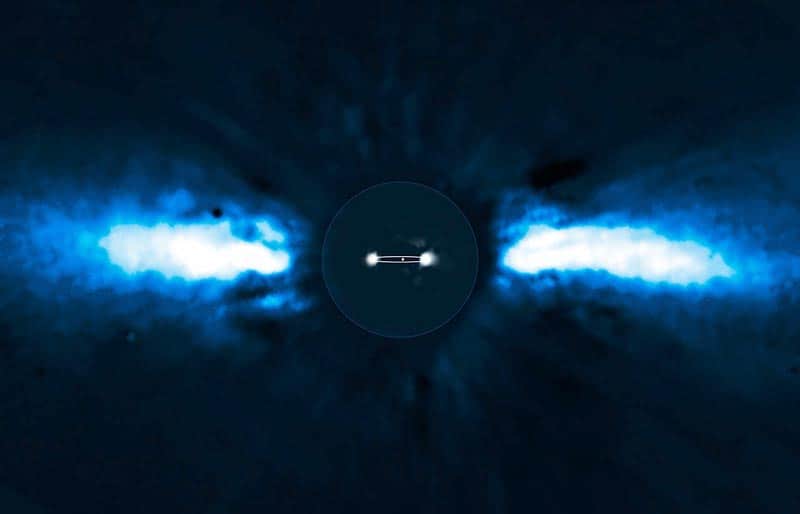
An unusual set of chemical fingerprints spotted in the light from a distant star could be the remnants of a digested planet, according to a new study by researchers in Sweden. In 2017 astronomers making spectroscopic observations of several stars in the open star cluster Messier 67 spotted one – dubbed Y2235 – with elevated levels of certain elements on its “surface”. These included carbon, magnesium and oxygen as well as heavier elements such as cerium, iron and yttrium.

Now, Ross Church, Alexander Mustill and Fan Liu at Lund University have explored how the unusual spectral signature could have arisen. Through calculating the amounts of these elements dusted over the star’s roiling surface, and then modelling how a planet could have delivered them there, Church and his colleagues conclude that what we are seeing are the scattered remains of a planet that is roughly five to six times more massive than Earth.

Chemical fingerprints of the kind detected in the light from Y2235 can be created by means unrelated to planetary destruction. These include the churning effect of a star’s rapid rotation, or gravitational interactions with another star. However, Y2235 is an ageing, Sun-like star that is not thought to spin fast enough for this mixing to take place. Furthermore, the star shows no sign of having a companion star says Church. “A third possibility is that two stars might have collided to have formed Y2235, but that is very unlikely even in a cluster like M67 – only in the richest stellar clusters are direct stellar collisions common,” he adds.

Multi-course meal

The team’s modelling of how the elements might have arrived onto Y2235’s surface suggests the process would have been something of a multi-course meal rather than a quick, stellar snack. In a typical scenario, the planet would have spiralled ever closer to Y2235 over more than six years, only being devoured in its entirety after several hundred orbits.

What could have sent the planet in towards the star is not known, but it might have been gravitational jostling with another planet in the Y2235 system. “Our Solar System is very stable, which is good for us, since the planets have remained on very similar orbits for the last 4.5 billion years or so,” explains Church. “The main reason for this is that the planets are far enough apart that they do not interact with each other much – they orbit mostly independently round the Sun. In a planetary system where planets are closer together they can interact more, and ultimately scatter off one another, and one of the effects of this can be to scatter planets into the star.”

“[The team’s] hypothesis matches the data pretty well,” says Hugh Osborn, an exoplanet researcher based at the Laboratoire d’Astrophysique de Marseille, in France, who wasn’t involved in the new study. He does add a note of caution however. “I won’t be entirely convinced we’re seeing the remnants of a planet, instead of just an anomalously metal-rich star, until we know a bit more about what the average star in M67 looks like.”

Either way, the method of looking for and examining the signs of destroyed worlds in the light from stars could teach us more about distant planets in the future. “We will never know the elemental abundances of our own planet because we can’t dig down to the core,” explains Osborn. “But for an exoplanet that’s been ripped apart and strewn across its star, we can directly measure the average composition of material that was in the planet.”

The research is described in a preprint on arXiv.

Hypofractionation: a new value proposition in radiation oncology

Hypofractionated and ultrahypofractionated radiation therapy – increasing dose per fraction to enable significantly fewer overall treatments – promises to unlock significant wins for public and private healthcare providers as well as the radiation oncology teams at the patient end of cancer treatment. While the drivers for hypofractionated procedures such as stereotactic body radiotherapy (SBRT) have been clear for some time – improved patient experience, increased patient throughput and reduced cost of care – the challenge now is to identify new treatment tools and protocols to realize these clinical and economic outcomes at scale.

For starters, clinicians need the ability to maintain submillimetre accuracy and precision throughout treatment delivery – identifying the target location in the body; automatically detecting, tracking and correcting for target motion; and accurately repointing the beam in real-time to support the clinical use of smaller margins to reduce the side-effects of treatment. Between treatment fractions, radiation oncology teams also need tools to efficiently and seamlessly rework treatment plans to account for anatomical changes (see “Adaptive planning”, below). What’s more, none of this cutting-edge functionality can come at the expense of system versatility or patient throughput.

Put another way: the new standard in hypofractionated radiation therapy will be a treatment system that can deliver the highest level of accuracy and precision to both stationary and moving targets, along with the “workhorse versatility” to efficiently treat the full range of clinical indications.

Workhorse versatility

A case in point is Accuray’s Radixact Treatment Delivery System, a helical radiotherapy platform that employs a continuously rotating gantry and unique dynamic collimation system to enable highly conformal dose delivery to diverse tumour sites throughout the body. Radixact has now been upgraded to incorporate motion-tracking and correction algorithms (collectively known as Synchrony) from Accuray’s flagship CyberKnife Treatment Delivery System, a robotic radiotherapy platform widely deployed in treating a range of disease indications using stereotactic radiosurgery (SRS) and SBRT.

We’re not waiting for the target to move and then going there – we’re going to where the target will be proactively.

Andrea Cox, Accuray

This enhanced capability means that the Radixact System with Synchrony is now able to track and synchronize the delivery beam to the target position as the tumour moves. In effect, dose is delivered continuously to the moving tumour target – with the accuracy and precision required for hypofractionated radiotherapy (i.e. tight margins and steep dose gradients) as well as for standard radiotherapy procedures.

“We are the only vendor able to detect targets during treatment, track that motion whether it is regular or irregular, and correct for it in real-time during treatment delivery, with no need for inefficient pausing or gating,” notes Andrew DeLaO, senior director, marketing, at Accuray. “What’s more, target detection and tracking is possible using either fiducial markers or without fiducials, using the patient’s anatomy.”

For targets that move unpredictably – as a result of digestion or bladder-filling, for example – intrafraction imaging detects the motion so that the Radixact System with Synchrony can synchronize the treatment beam to the detected target position as it moves. For targets that move cyclically – as a result of the patient’s breathing – the system anticipates the target’s position using predictive motion-modelling algorithms and continuously synchronizes to that position in real-time based on images captured during each treatment session.

Software aside, it’s Radixact’s unique collimation system (comprising ultrafast multileaf collimators and dynamic jaws) that enables real-time motion correction of the treatment beam. “We’re not waiting for the target to move and then going there – we’re going to where the target will be proactively,” explains Andrea Cox, senior director, product strategy, at Accuray.

She continues: “What we’ve learned over the years [with CyberKnife] is that a patient’s breathing pattern changes from moment to moment as well as day to day – i.e. their breathing actually changes as they relax during the few minutes that it takes to deliver a course of treatment. To take account of this, the model created prior to treatment is always updated in real-time with new images acquired during treatment delivery.”

Ahead of the curve

Just last month, Accuray unveiled the first clinical customer for the Radixact System with Synchrony – the Froedtert and Medical College of Wisconsin Clinical Cancer Center at Froedtert Hospital in Milwaukee, Wisconsin. Folded into that announcement was news that the Froedtert and MCW radiation oncology team has already treated the first patient – a 45-year-old man with lung cancer – using the new-look system, with Synchrony tracking the lung tumour in real-time as it moved with the patient’s breathing while automatically adjusting the treatment beam to keep it targeted on the tumour.

“In our hospital network we’ve seen an increase in the use of hypofractionation – for example, SBRT – as part of the cancer treatment, making it critically important that we are able to safely deliver the correct amount of dose precisely to the tumour, even to those that move such as tumours in the thorax, abdomen and pelvis,” explains X Allen Li, MCW professor and chief of medical physics at Froedtert Hospital.

“With Synchrony we were able to deliver a reduced-margin treatment plan through all three fractions,” he adds. “Total treatment time for a fraction of 18 Gy was 16 minutes door-to-door, similar to our conventional radiotherapy procedures.”

Without motion synchronization, Li and his colleagues point out that a larger treatment field would have been needed to treat the entire path of the tumour movement. Additionally, the treatment time would have been longer as a result of on/off gating of the radiation beam to track the tumour moving in and out of the specified treatment window.

“Our comprehensive pretreatment tests and the initial patient treatment showed us how well the Synchrony technology works in the real-world clinical practice,” Li explains. “As a result, we now have an option for precisely and accurately delivering radiation to tumours as they move, which will expand the range of tumours we can confidently treat and the patients we can help.”

What patients want

For the near term, it’s evident that clinical adoption of hypofractionated radiotherapy is set to accelerate, with a top-down push from healthcare providers towards higher dose per fraction, fewer fractions, compressed treatment times, plus significant workflow efficiencies and lower cost of care.

In parallel, says Cox, there’s growing demand from patients for the benefits associated with hypofractionated treatment schedules – in essence, fewer clinical visits and a faster return to family and friends. “If you imagine a patient with a choice of going in for 30 conventional treatments over a six-week period or going in for five hypofractionated treatments in a one-week period – and for the same clinical outcome – there have to be some pretty compelling reasons for them not to choose the latter.”

Adaptive planning

Patients are complex systems in every sense. Between treatment sessions, they gain and lose weight; their stomach, bladder and bowel contents change; their organs may shift, rotate or deform; and their tumours may shrink, move or rotate.

The holy grail of online adaptive radiotherapy (ART) is not so far away

Andrew DeLaO, Accuray

Trouble is, traditional radiotherapy regimes rely on a single snapshot of the patient at the start of treatment, with most clinics limited in their ability to reimage patients and bound by rigid-body matching that does not account for any geometric deformations in patient anatomy. A plan attuned to the initial simulation can therefore become suboptimal as treatment progresses, rendering it unusable for hypofractionated or ultrahypofractionated radiotherapy.

“The holy grail is online adaptive radiotherapy (ART) and what we’ve done with the Radixact System with Synchrony is to take significant steps in that direction – a level of automation that allows the user to ‘set and forget’ to some degree,” says Andrew DeLaO, senior director, marketing, at Accuray.

He adds: “After every treatment, the Radixact System with Synchrony actually takes the dose that was delivered, deconstructs that dose and puts it back on the daily image so that you can see what that dose looks like versus the original plan. Offline planning tools automatically identify cases for review and possible plan adaptation using a red-yellow-green flag scheme.”

Equally significant is the use of automatic recontouring to accelerate plan adaptation, while maintaining the integrity of the original treatment plan versus tumour coverage, dose limits for organs-at-risk and overall toxicity.

“The online ART future is not so far away,” says DeLaO. “Where we’re heading is radiation oncology teams able to dynamically change the treatment plan in real-time during a treatment session while the patient is on the table.”


Proton therapy continues to show promise for children with cancer

The finite range of a proton beam confers high dose conformality to the tumour, while minimizing irradiation of non-target normal tissues. As such, proton therapy is proposed as a preferred irradiation technique for treating childhood cancers, particularly those affecting the radiosensitive developing central nervous system.

Two newly published research papers add to the growing body of evidence showing the potential benefits of proton therapy for paediatric patients. Both studies were led by Christine Hill-Kayser from the Perelman School of Medicine at the University of Pennsylvania and the Children’s Hospital of Philadelphia.

Improving survival outcomes

The first study focused on children with newly diagnosed medulloblastoma, a cancer at the base of the skull (Pediatr. Blood Cancer 10.1002/pbc.27972). Older children with this disease generally receive radiation to the entire brain and spine. This approach, however, can be highly toxic to the developing brains of children aged four or younger, who are typically treated with intense chemotherapy regimens instead. Unfortunately, these young children often relapse, with the highest risk of relapse in the posterior fossa where the tumour is primarily located.

The researchers evaluated 14 patients aged five and under who received proton therapy just to the tumour bed following surgery and chemotherapy. Four patients relapsed after treatment: three within the central nervous system outside of the posterior fossa and one within the tumour bed after subtotal resection. Across all patients, the five-year overall survival was 84% (48–96%) and the recurrence-free survival was 70% (38–88%). In nine children with available performance status follow‐up, the researchers saw no significant changes in their Lansky performance status.

While the study only examined a small cohort, the findings demonstrate great improvement over historical survival rates of 30–60% in very young patients who received intense chemotherapy without radiotherapy.

“Our study, while small, shows promising outcomes when we use proton therapy to target just the area of surgery in these cases as opposed to irradiating the whole brain and spinal areas,” explains first author Amardeep Grewal, chief resident in radiation oncology at Penn. The researchers suggest that this approach should be investigated further in young children with medulloblastoma.

Reducing risk of brainstem damage

In the second study, the research team evaluated the rate of brainstem necrosis in 166 children with central nervous system tumours treated with pencil-beam scanning (PBS) proton therapy (Acta Oncologica 10.1080/0284186X.2019.1659996). The median maximum brainstem dose in the treatment course was 55.4 Gy(RBE). In four patients who had received prior radiation, the cumulative median maximum brainstem dose was 98.0 Gy(RBE).

The researchers found that patients treated with PBS experienced significantly less brainstem toxicity than those treated with older techniques such as double-scattered proton therapy. One patient who had previously received twice-daily radiotherapy and chemotherapy experienced brainstem necrosis. At 24 months, the rate of patients experiencing brainstem tissue damage from PBS was 0.7%.

“The effect of proton therapy on the brainstem has been a subject of much debate, but our data show that pencil-beam scanning proton therapy does not increase the risk compared to conventional photon techniques,” says first author Jennifer Hyatt Vogel, who completed this work whilst a resident at Penn.

The authors say that these data warrant further study, especially in high-risk patients and those who have had prior radiation therapy. “Regardless of technique, expertise in proton therapy planning and strict adherence to safety constraints is essential, particularly in treatment of tumours near the brainstem,” adds Hill-Kayser.

Nanocapsules deliver gene-editing payload

Researchers have developed a new non-viral nanocapsule to deliver a gene-editing payload into biological cells. The capsule, which is made of a biodegradable polymer, is a version of the CRISPR-Cas9 with guide RNA. The structure could help overcome some of the problems associated with viral vector delivery of gene editing tools.

sarah_gong

CRISPR-Cas9 (clustered regularly interspaced short palindromic repeats) genome editing could potentially be used to treat many genetic diseases, including those currently without a cure. Most delivery technologies for CRISPR require viral vectors, however.

Although viral vectors are very efficient (viruses have, after all, billions of years of experience in invading cells), they can cause undesirable immune responses in the body. They also need to be altered to carry gene editing-machinery, rather than their own viral genes, into cells to alter their DNA (to correct a problem in the genetic code, for example, that causes a disease). This process, which needs to be adapted to each type of new cell target, can be time-consuming and complex.

In recent years, researchers have begun developing non-viral vectors, which are typically easier and cheaper to produce and scale up. Many of these are based on cationic liposomal components or polymers and can successfully encapsulate CRISPR-Cas9. They are beset with problems though, including the fact that they are relatively large (more than 100 nm across), can only accommodate a low gene-editing payload, are unstable and, most importantly, highly cytotoxic.

The Cas9/sgRNA ribonucleoprotein nanocapsule

A team led by Shaoqin (Sarah) Gong of the University of Wisconsin-Madison in the US has now developed the Cas9/sgRNA ribonucleoprotein (RNP) nanocapsule (NC) to address these challenges. The RNP NCs are very small (around 25 nm in size) and are very stable in the extracellular space, including the bloodstream, thanks to their covalent nature. They also have high RNP loading content, good biocompatibility and high editing efficiency.

“Unlike other previous RNP delivery nanosystems that typically contain multiple copies of the RNP, the RNP nanocapsule we report on normally contains just one RNP per nanoparticle,” explains Gong. “What is more, we can conveniently modify the surfaces of the RNP NCs with various targeted ligands, such as peptides, so that they can be used to target different organs/cells and treat different types of diseases.”

The RNP NCs are also relatively straightforward to make and they can be lyophilized (freeze-dried), which makes it easier to purify, store, transport and dose them, she adds. And last but not least, the Cas9 protein and sgRNA are present in a 1:1 molar ratio. The RNP only survives for a short time within the target cell, thus producing less off-target effects.

“This is important since editing the wrong tissue in the body after injecting gene therapies is of grave concern,” says team member Krishanu Saha, who co-chairs a steering committee for a consortium on gene editing in the US. “If reproductive organs are inadvertently edited, the patient would pass on the gene edits to their children and every subsequent generation.”

The researchers made their nanocapsules by enriching monomers with different charges and functionalities around the Cas9 RNP complex. They then polymerized the structure to form the nanocapsule. “As mentioned, this polymer coating is stable in the bloodstream/extracellular space, but it falls apart inside cells so that the RNP can edit the cell genome,” explains Gong.

krishanu_saha

Gene editing experiments

She and her colleagues tested out their delivery capsules in gene editing experiments on murine retinal pigment epithelium (RPE) tissue and skeletal muscle. “We locally injected our nanocapsules into subretinal spaces or skeletal muscles. We found that the capsules efficiently delivered their gene-editing machinery and modified the appropriate target genes in the tissue in question. Furthermore, by functionalizing the surface of the nanocapsules, we were able to modulate the extent and efficiency of the gene-editing process.”

Xiaoyuan (Shawn) Chen, senior investigator at the National Institute of Biomedical Imaging and Bioengineering (NIBIB) at the US National Institutes of Health (NIH), who was not involved in this work, says that the new technique is a “cool” way of using relatively small sized nanocapsules for high efficiency loading. “The crosslinking the researchers employed makes the particles stable during the delivery phase but readily releases the payload inside the cytosol thanks to cleavage of the linkers by a molecule called glutathione. The imidazole groups present also allow efficient endosomal escape through a proton sponge effect.

“Although the current study has only attempted local delivery for RPE cells and skeletal muscle cells, the same principle may be used to deliver RNP targeting to other organs.”

Broadening the applications of CRISPR-Cas9 gene-editing technology

The Wisconsin-Madison team believes that its work will facilitate the development of safe and efficient delivery nanosystems for the CRISPR-Cas9 genome editing tools, for both in vitro and in vivo applications. “In particular, it will broaden the applications of this gene-editing technology and so help us better understand and treat various genetic diseases,” Gong tells Physics World.

“We now plan to apply this technique to deliver various CRISPR genome editing machineries to treat brain and eye diseases and are currently working with several clinical collaborators to this end.”

Full details of the current study are reported in Nature Nanotechnology 10.1038/s41565-019-0539-2. The researchers have also filed a patent on the nanoparticles they have made.

Study offers verdict for China’s efforts on coal emissions

Researchers from China, France and the US have evaluated China’s success in stemming emissions from its coal-fired power plants (CPPs).

CPPs are one of the main contributors to air pollution in China, and their proliferation over the last 20 years has had significant impacts on air quality and public health.

These impacts led authorities to introduce measures to control emissions from CPPs and reduce their effects.

Writing today in Environmental Research Letters (ERL), researchers examined if these policies have been effective, and measured their benefits.

Dr Qiang Zhang, from Tsinghua University, China, is the study’s lead author. He said: “Between 2005 and 2015, the coal-fired power generation of CPPs in China grew by more than 97 percent. In 2010, CPPs’ sulphur dioxide, nitrogen oxide and fine particulate matter (PM2.5) emissions accounted for 33 per cent, 33 per cent and 6 percent of China’s total national emissions, respectively. The large amount of air pollutant emissions from CPPs causes fine particulate air pollution, which contributed 26 percent of the fine particulate nitrate and 22 percent of the fine particulate sulphate ambient concentration in 2012.

“To combat this, China introduced three primary policies for CPPs during 2005-2020. They aimed to improve efficiency energy by promoting large CPPs and decommissioning small plants during 2005-2020; brought in national emission cap requirements by installing of end-of-pipe control devices during 2005-2015; and introduced ultra-low emission standards between 2014 and 2020.”

To measure the effect these policies had on emissions, the team developed two retrospective emission scenarios based on a high-resolution coal-fired power plant database for China.

They also developed two emission prediction scenarios to forecast the CPPs’ emission changes associated with the implementation of ultralow emission standards and power generation increments during 2015-2020.

Finally, they evaluated the air quality and health impacts associated with CPPs’ emission changes during 2005-2020, using a regional air quality model and the integrated exposure-response model.

Dr Fei Liu, from the Universities Space Research Association, Goddard Earth Sciences Technology and Research, US, is the study’s corresponding author. She said: “Our results show that overall, China’s efforts on emission reductions, air quality improvement and human health protection from CPPS between 2005 and 2020 were effective.

“We found that the upgrading of end-pipe control facilities could reduce PM2.5 exposures by 7.9 μg/m3 and avoid 111,900 premature deaths annually. Meanwhile, the early retirement of small and low-efficiency units could reduce PM2.5 exposures by 2.1 μg/m3 and avoid 31,400 annual premature deaths.

“This suggests similar measures could be taken in countries such as India, to enable the reduction of emissions alongside rapid economic development.”

Cosmic clash over Hubble constant shows no sign of abating

A new way to measure absolute distances in the universe has allowed scientists to work out a new value for the Hubble constant, which tells us how quickly our local universe is expanding. The latest expansion rate is consistent with other direct measures obtained from relatively nearby space, but in conflict with others that rely on the universe-wide spatial features of primordial radiation. This disparity has become more pronounced in recent years and suggests that our current understanding of cosmic evolution may need an overhaul.

Evidence for the universe’s expansion emerged in the 1920s, when Edwin Hubble first observed that galaxies move away from us more quickly, the farther they are from Earth. Since then, there have been ongoing disputes about just how rapid the expansion is. While astrophysicists have measured the Hubble constant with increasing precision, a gap remains between the values of the constant obtained using two different types of observation. What is more, this discrepancy cannot be explained away by known sources of error.

Establishing the velocity of objects receding in space simply involves measuring the redshift of their emission spectra, but pinning down their distance from Earth is much more complicated. One approach is to create a “distance ladder” that starts from Earth and moves outwards in a series of steps. This usually involves calibrating the absolute brightness of far-flung supernovae by observing other supernovae in galaxies closer to us that also contain pulsating objects of known brightness called Cepheid variables. The first step, or “anchor”, is to measure the distance from Earth to nearby Cepheids.

The most precise distance ladder to date has been created by Adam Riess at the Space Telescope Science Institute in Baltimore, US, and colleagues. They used the Hubble Space Telescope to measure the distance to Cepheids lying in the Large Magellanic Cloud, some 150,000 light-years away. Their figure for the Hubble constant is 74.0±1.4 km s–1 Mpc1 is an improvement on earlier measurements of their own and on the 72±81.4 km s–1 Mpc–1 obtained by Wendy Freedman of the University of Chicago and colleagues in 2001.

Cosmic clash

However, those results clash with values based on how quickly the universe expanded shortly after the Big Bang. Measuring the length of temperature fluctuations within the cosmic microwave background (CMB) and then extrapolating forward using the standard cosmological model, researchers working with data from the European Space Agency’s Planck Satellite in 2016 reported an expansion rate of 66.9±0.6 km s–1 Mpc1. That value in turn is consistent with a figure of 67.8±1.3 km s–1 Mpc1, obtained using data from the Sloan Digital Sky Survey to measure a characteristic length scale between galaxies containing supernovae – with the length scale also set by the CMB (in this case via density fluctuations).

The latest work was carried out by Inh Jee, Sherry Suyu and Eiichiro Komatsu of the Max Planck Institute for Astrophysics in Garching, Germany, alongside colleagues in Germany, the Netherlands and the US. It provides an independent way of checking distance-ladder calculations using gravitational lenses. These are massive galaxies that can create multiple images of more distant luminous objects by bending the objects’ light rays gravitationally.

As a first step, Jee and colleagues recorded the time delay when detecting different images from a flickering quasar. Because the lens bends the light from each image along a different path through space, these delays reveal how massive the lensing galaxy is. Next, the researchers measured the velocity of stars within the lens to estimate the lens’s gravitational potential, which can be used to calculate the radius of the galaxy. By comparing this size with the apparent separation between different quasar images, they were able to work out the distance from Earth to the lens.

Robust and independent

Jee and colleagues used this approach to measure distances to two lensing galaxies. Using this information, they converted previously-measured relative distances to 740 type 1a supernovae into absolute distances. Reporting in Science, they calculate the Hubble constant to be 82.4±8.4 km s–1 Mpc1. “This is one of the first works to give a robust, independent distance to a gravitational lens,” says Suyu.

Although the figure is less precise than previous results, the researchers – working in a collaboration called H0LiCOW – have since gone on to combine their approach with an earlier type of lensing measurement based purely on timing delays. After analysing six lenses, the collaboration arrived at a Hubble constant of 73.3±1.8 km s–1 Mpc1, which is very similar to that of Riess’s group. The collaboration describes this result in a preprint on arXiv.

That figure, however, is at odds with a recent result Freedman and colleagues, who calibrated the distance to supernovae using the steady intrinsic brightness of heavy stars known as red giants. Using data from the Hubble telescope, they calculated that the Hubble constant should be 69.8±0.81.8 km s–1 Mpc1, which is midway between results from the two rival camps.

Radek Wojtak at the University of Copenhagen reckons that the tension between the two approaches means “we are getting closer to the stage” when changes to the standard model of cosmology should be considered. Such changes might include new forms of dark matter or dark energy, he says. But he cautions that researchers should continue to look for hidden errors. “The stakes are high,” he says. “We do not want to be fooled by poorly understood systematics.”

Princeton University’s Lyman Page agrees, arguing that it is still “too early to say with any certainty whether new physics is needed”. But he points out that until a few decades ago there was a 50% mismatch between different values of the Hubble constant. The current 5% discrepancy, he thinks, “is a mark of how precisely we know the universe”.

Battle of the Elements finale, how to succeed in the space industry, a very hot superconductor

In this episode of our weekly podcast we talk about the remarkable career of Libby Jackson, who is human exploration manager at the UK Space Agency.

Sparks fly when carbon meets oxygen in the grand finale of the Battle of the Elements, which features a guest appearance by Chemistry World’s Patrick Walter.

The discussion heats-up when we ponder the significance of a material that could be a superconductor at temperatures well above the boiling point of water – and other hot physics news this week.

Healthcare can worsen global climate crisis

If the global healthcare sector were a country, it would be the fifth-largest greenhouse gas (GHG) emitter on the planet, according to a new report. Its authors, who argue for zero carbon emissions, say it is the first ever estimate of healthcare’s global climate footprint.

While fossil-fuel burning is responsible for more than half of the footprint, the report says there are several other causes, including the gases used to ensure that patients undergoing surgery feel no pain.

It is produced by Health Care Without Harm (HCWH), an international NGO seeking to change healthcare worldwide so that it reduces its environmental footprint and works for environmental health and justice globally. It was produced in collaboration with Arup.

The report says the European Union healthcare sector is the third largest emitter, accounting for 12% of the global healthcare climate footprint. More than half of healthcare’s worldwide emissions come from the top three emitters – the EU, the US and China. The report includes a breakdown for each EU member state.

An earlier report, published in May this year in the journal Environmental Research Letters, said the healthcare sectors of the 36 countries sampled were together responsible in 2014 for 1.6 GtCO2e (gigatonnes of carbon dioxide equivalent), or 4.4% of the total emissions from these nations, and 4.4% is the total used in the HCWH report.

(Carbon dioxide equivalency is a simplified way to put emissions of various greenhouse gases (GHGs) on a common footing by expressing them in terms of the amount of carbon dioxide that would have the same global warming effect, usually over a century.)

HCWH says well over half of healthcare’s global climate footprint comes from fossil-fuel combustion. But it identifies several other causes for concern as well. One is the range of gases used in anaesthesia to ensure patients remain unconscious during surgery.

These are powerful greenhouse gases. Commonly used anaesthetics include nitrous oxide, sometimes known as laughing gas, and three fluorinated gases: sevoflurane, isoflurane and desflurane. At present, the greater part of these gases enter the atmosphere after use.

Research by the UK National Health Service (NHS) Sustainable Development Unit shows the country’s anaesthetic gas footprint is 1.7%, most of it attributable to nitrous oxide use.

The UN climate change convention (UNFCCC) found that in 2014 a group of developed nations with 15% of the global population, 57% of the global GDP and 73% of global health expenditure was also responsible for 7 MtCO2e (megatonnes of carbon dioxide equivalent) of medical nitrous oxide use.

The UNFCCC concluded that the full impact of the gas’s global use in anaesthesia “can be expected to be substantially greater”.

Use is growing

For fluorinated gases used in anaesthesia, global emissions to the  atmosphere in 2014 were estimated to add 0.2% to the global health care footprint. Because of the growing use of these gases, increasingly chosen  in preference to nitrous oxide, the footprint from anaesthetic gases is also likely to increase.

In measured tones, HCWH says: “Wider adoption of waste anaesthetic capture systems has the potential to be a high impact healthcare-specific climate mitigation measure” – or in other words, trap them and dispose of them carefully before they can just escape through an open window to join the other GHGs already in the atmosphere.

But HCWH adds a warning: “For many individual health facilities and systems of hospitals the proportion of the contribution of both nitrous oxide and fluorinated anaesthetic gases to their climate footprint can be significantly higher.

“For instance, Albert Einstein Hospital in São Paulo, Brazil found that GHG emissions from nitrous oxide contributed to nearly 35% of their total reported GHG emissions in 2013.”

Its report said choosing to use desflurane instead of nitrous oxide meant a ten-fold increase in anaesthetic gas emissions.

Other remedies available

The HCWH report also sounds the alert about metered-dose inhalers (MDIs), devices which are typically used for the treatment of asthma and other respiratory conditions, and which use hydrofluorocarbons as propellants. These are also highly potent greenhouse gases, with warming potentials between 1480 and 2900 times that of carbon dioxide.

Again, though, the report says the full global emissions from MDIs will probably be much greater than today’s figure. Alternative ways of using MDIs, such as dry powder-based inhalers, it says, are available and provide the same medicines without the high global warming potential propellants.

The report argues for the transformation of the healthcare sector so that it meets the Paris Agreement goal of limiting temperature rise attributable to climate change to 1.5 °C.

HCWH says hospitals and health systems should follow the example of the thousands of hospitals already moving toward climate-smart healthcare via the Health Care Climate Challenge and other initiatives.

Welcoming the report, the director-general of the World Health Organization, Tedros Adhanom Ghebreyesus, said hospitals and other health sector facilities were a source of carbon emissions, contributing to climate change: “Places of healing should be leading the way, not contributing to the burden of disease.”

Copyright © 2026 by IOP Publishing Ltd and individual contributors