Antarctic snow yields interstellar iron

Scientists in Germany have found traces of a very rare isotope of iron within freshly fallen Antarctic snow and say that the radioactive material must have arrived on Earth in the form of interstellar dust. The finding backs up previous research revealing that iron-60 was generated by supernovae within the last few million years. But unlike those earlier observations, the iron-60 in this case has only just arrived – having reached our planet no more than 20 years ago.

In the mid-1990s, John Ellis, Brian Fields and David Schramm proposed that small quantities of iron-60 and other radioisotopes ought to be present in geological formations on Earth after being forged by exploding stars. Iron-60 has a half life of 2.6 million years, so any of it that existed when the Earth formed would have decayed long ago. But fairly recent and nearby supernovae would have provided fresh supplies, the researchers argued.

That prediction was subsequently confirmed by scientists at the Technical University of Munich (TUM), who found iron-60 within sediments beneath the ocean. Further research by that and other groups then showed the material to have been deposited 2-2.5 million years ago. The idea of a supernova origin was also bolstered after iron-60 was discovered in samples from the Moon and in cosmic rays, though experts disagreed as to when precisely the material was deposited and which specific supernovae were responsible.

Local Interstellar Cloud

In the latest work, part of the original Munich group has got together with colleagues in Germany and Austria to find out whether any of the iron-60 created in the stellar explosions continues to reach the Earth from space. Dominik Koll and colleagues reasoned that some of the radioactive isotope should be contained in dust particles within the Local Interstellar Cloud, a region of relatively dense interstellar space through which the Solar System is currently travelling at some 26 km/s. Any of those particles lying along Earth’s path should rain down on our planet’s surface as it speeds forward.

To put their idea to the test, the researchers needed material from a very uncontaminated site. TUM’s Gunther Korschinek asked a colleague if he could shovel up about half a tonne of snow near Kohnen Station, which is several hundred kilometres from the Antarctic coast. The still frozen snow was shipped to Munich and melted. A particle accelerator was then used to carry out extremely sensitive mass spectrometry to extract single iron-60 atoms from the thousands of trillions of atoms of stable iron present in a small sample. Scaling the results up, the team worked out that they had bagged about 73,000 atoms of iron-60 altogether – equivalent to just 1.2 atoms passing through each square centimetre of Antarctic snow per year.

The researchers then had to show that the iron-60 could not have had a more mundane origin. They were able to rule out a source from within the Solar System by comparing the abundance of iron-60 with that of manganese-53 and finding that the ratio was far higher than would be expected had the two types of nuclei been created by cosmic rays irradiating objects such as asteroids or comets. They also showed that the iron-60 is not related to fall-out from nuclear weapons tests, by comparing the reactions that yield iron-60 and another radioactive isotope (iron-55) for which the amount produced in weapons tests is known.

Interstellar origin

“By ruling out terrestrial and cosmogenic sources, we conclude that we have found, for the first time, recent iron-60 with interstellar origin in Antarctica,” they write in a paper published in Physical Review Letters.
Korschinek says the find is important because it provides strong evidence that at least some of the Local Interstellar Cloud must have been generated by supernovae. To make that evidence even more robust the team plans to analyse very old samples of Antarctic ice that have been dug up during the drilling of deep boreholes. The idea is to look for an abrupt rise in iron-60 concentrations when comparing ice from about 40,000-50,000 years ago with older ice – since it is believed that the Solar System entered the cloud at about that time.

Dieter Breitschwerdt of the Technical University of Berlin, who was not involved with the research, agrees that such measurements would be interesting to carry out. He says that the Antarctic results “give new impulses to nuclear astrophysics research” and “strong support” to the idea that supernovae were responsible for the iron-60.

According to Jeffrey Linsky at JILA in Boulder, Colorado, the local cloud may have formed after a supernova shock wave compressed and ionized the gas in the interstellar medium. As such, he says, iron-60 atoms could be concentrated at the edge of the cloud. He adds that any future change in the rate of deposition of iron-60 in the Antarctic might indicate that the Earth is crossing this boundary. “The timescale for the Sun leaving the local cloud is less than about 3000 years,” he says, “but it could be only a few years”

John Ellis says that the Antarctic measurements also help to establish the background level of iron-60 injected into the interstellar medium by supernovae spread out in time, with the latest results constraining the type and number of supernovae involved. “The picture so far is incomplete because there are relatively few data,” he says. “This result is important because it gives us new kinds of data to work out the origin for the iron-60.”

Moon of many faces

A familiar face

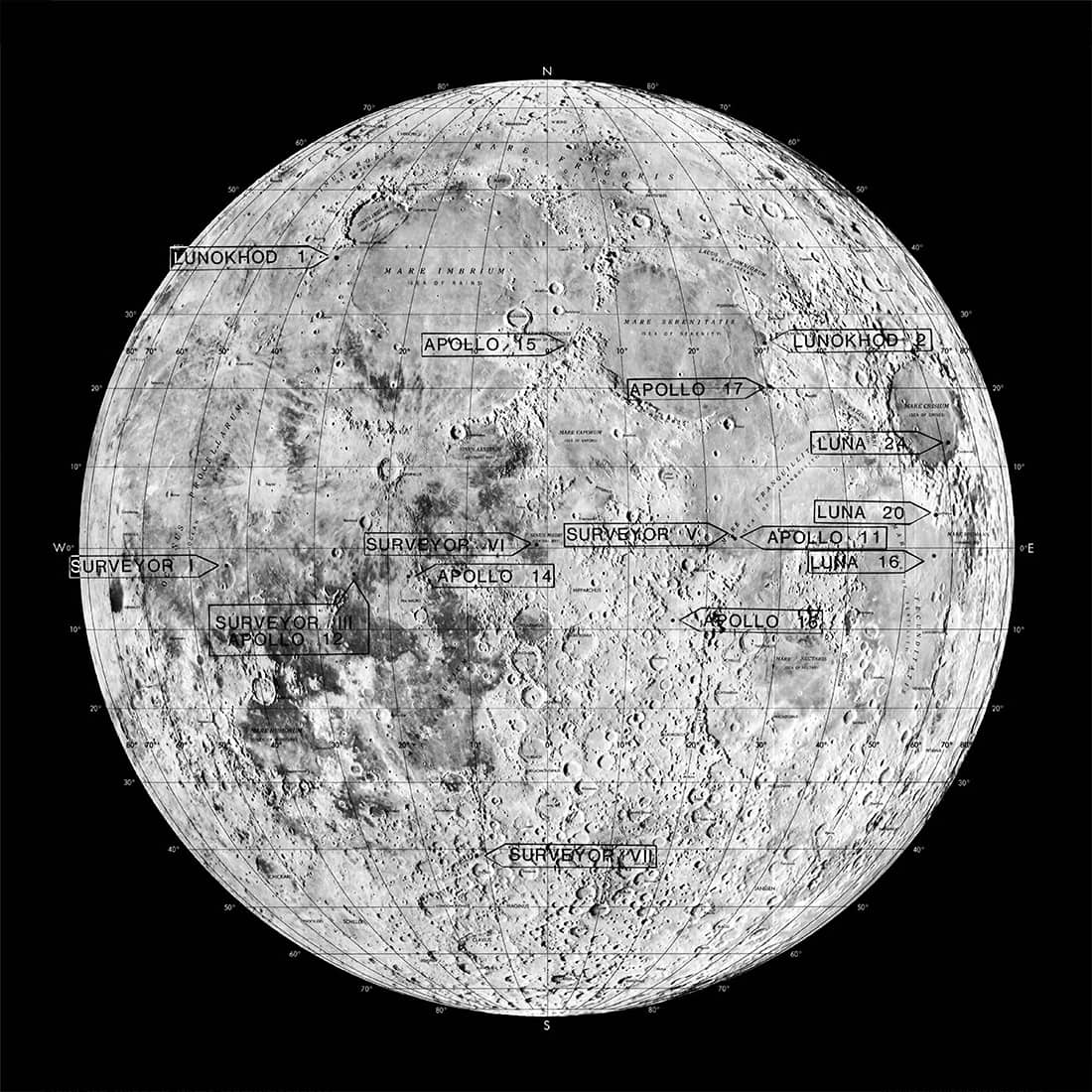
Apollo landing sites

Until this year (see “Exploring the far side“), humankind had only ever landed spacecraft on the near side of the Moon – the side that is tidally locked to always face Earth. A total of 20 craft have touched down on this familiar grey visage – including the six Apollo manned missions – though many others have intentionally (and unintentionally) crashed into it. From Earth it is possible to see the Apollo landing sites, rover tracks and leftover experiments. Indeed, our constant neighbour is littered with more than 187 tonnes of artificial objects, ranging from the remains of rockets, spacecraft and the Apollo ascent and descent stages, to Apollo’s commemorative plaques, US flags and even golf balls.

Lunar highs and lows

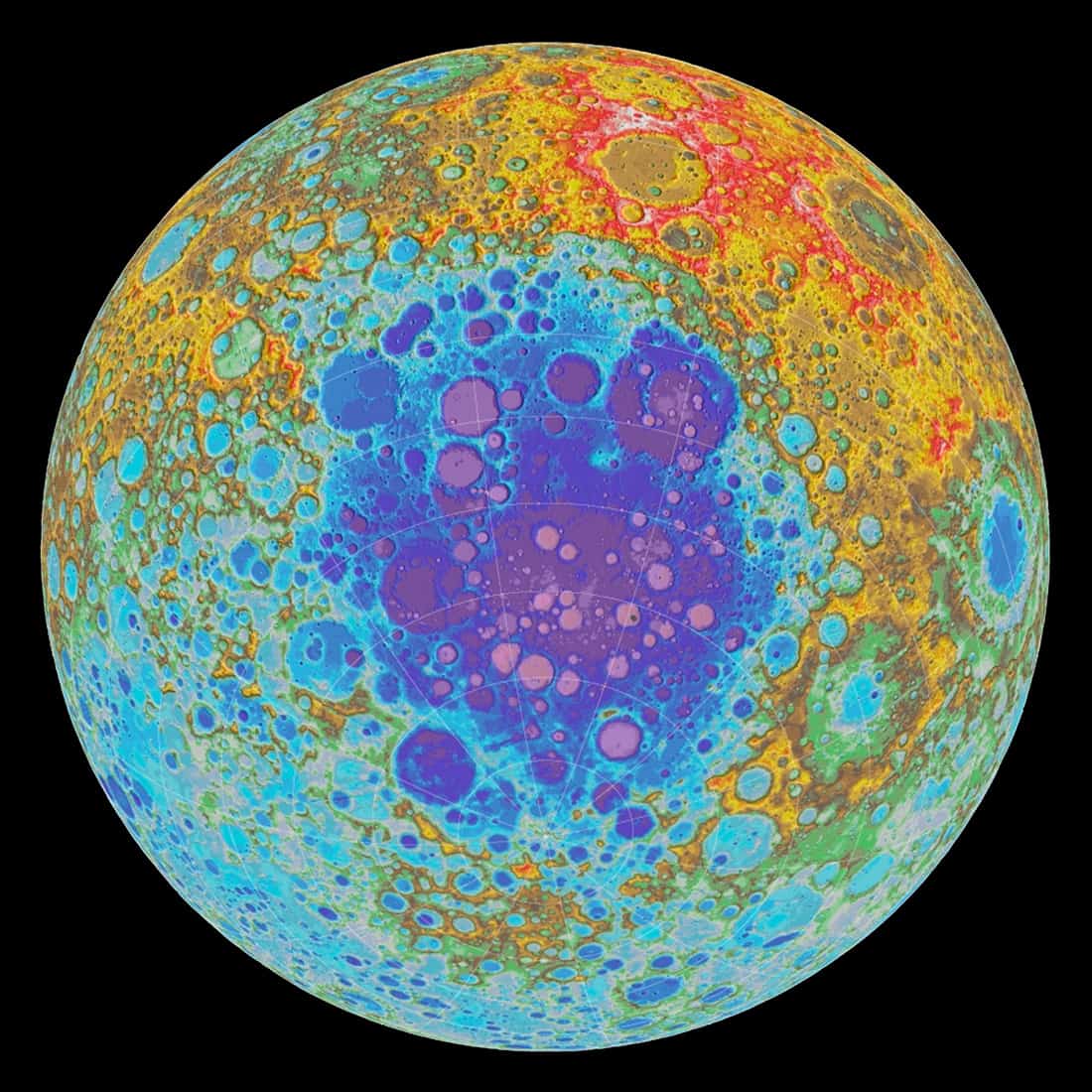
topographic map of the Moon

The Moon’s largest observed impact structure is the South Pole-Aitken (SPA) basin – a region of low altitude roughly 2500 km in diameter, depicted by blues and purples in this topographic map. The feature stretches between the south pole and the Aitken crater on the far side of the Moon. It boasts the Moon’s deepest craters, reaching lows of around –8 km, while the highest elevations (red and white) are within the mountains to the north-east reaching more than 8 km. Although scientists have shown that SPA is the oldest impact basin on the Moon, we do not know its age or what impact created it. Its shadowed areas have potentially useful deposits of hydrogen or water.

Ebb and Flow

GRAIL map of Moon

In 2012 NASA’s two Gravity Recovery and Interior Laboratory (GRAIL) spacecraft – Ebb (GRAIL-A) and Flow (GRAIL-B) – produced the most detailed lunar gravity map to date (shown). Like the Earth-orbiting GRACE missions, GRAIL measured the Moon’s gravity by tracking the distance between Ebb and Flow using microwaves – a distance that altered depending on the strength of the gravitational field. The resulting data have provided scientists with clues to the Moon’s interior, revealing, for example, that the crust is less dense than originally thought, and that there may be stable lava tubes beneath the lunar surface.

KREEP on tracking

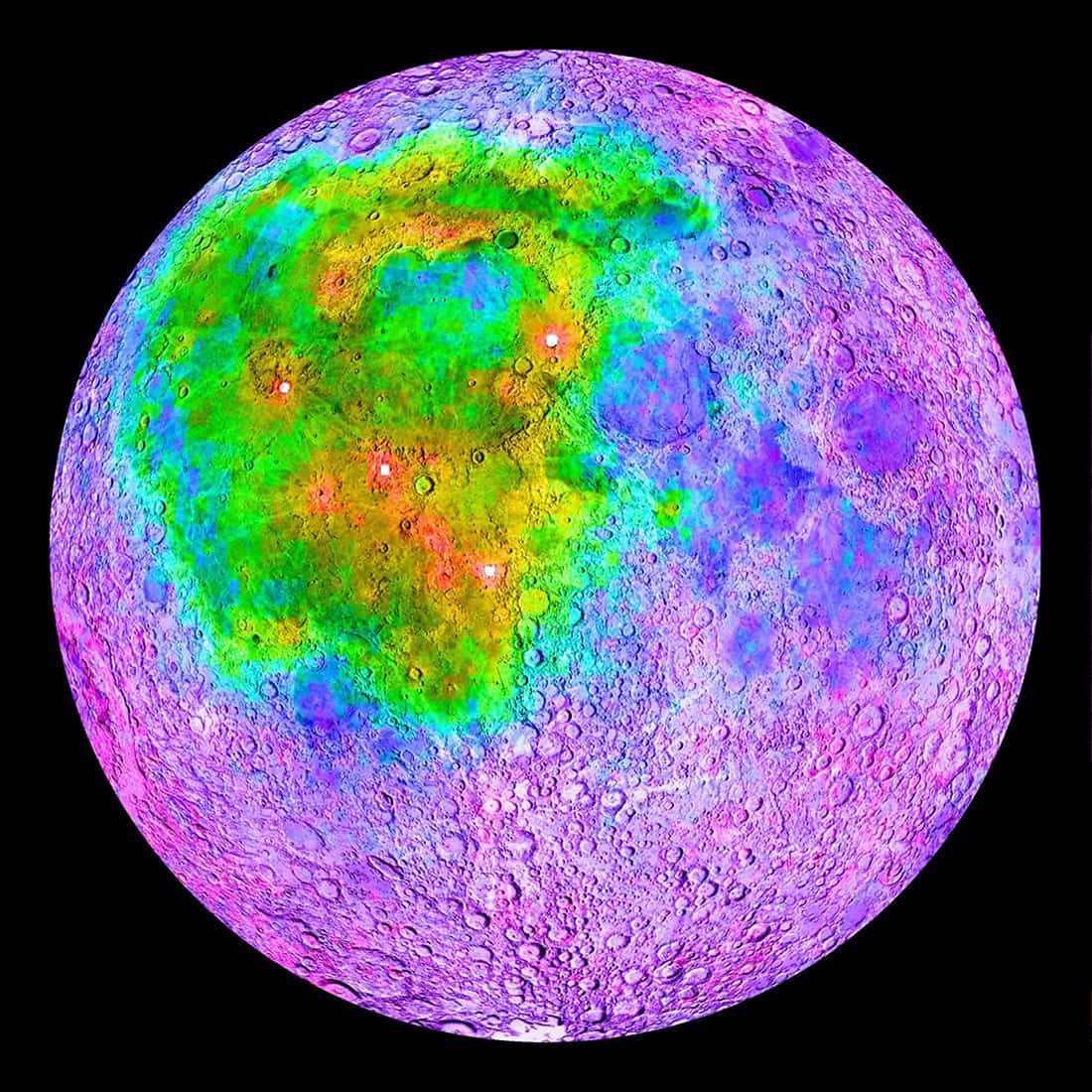
gamma-ray emissions of the Moon

KREEP is lunar rock containing potassium, rare earth elements and phosphorus, and was some of the last material to solidify when the Moon cooled from its molten state. Scientists assumed it was evenly distributed, sandwiched between the lunar crust and mantle. However, in 1998–1989, NASA’s Lunar Prospector mapped the gamma-ray emissions of the Moon, looking for radioactive thorium – a common companion of KREEP. Thorium, and thus KREEP, appears concentrated in the Imbrium basin on the near side (green-white), and, to a lesser extent, in the South Pole-Aitken Basin on the far side. The unevenness is assumed to be related to the Moon’s asymmetric volcanism.

Greening gas is not so easy

There has been much talk about green gas. It comes in various forms, the most obvious being biogas — biomethane made by the anaerobic digestion of bio-materials, including wastes. But there are also synthetic gases, for example hydrogen made from fossil gas by steam reformation (SMR), backed up by carbon capture and storage to make its production lower carbon. As yet less developed, there is also zero-carbon hydrogen made using renewable electricity, via electrolysis, that can be converted into methane and other synfuels — the so-called “Power to Gas” route (P2G).

In previous posts, I have looked at the ongoing debate over which route to take for delivering home heating: the SMR + CCS route is favoured at present but only as a back-up to direct electricity supply, used to run heat pumps. Biogas supplies are thought to be insufficient and P2G is seen as too expensive although, as I have reported, both those views have been challenged — there are already 1 million domestic biogas users and P2G hydrogen is being talked up. There are also other less developed routes. A German company is looking at high-temperature pyrolysis of fossil gas.

There is also a debate as to whether green gas, from whatever source, delivered via the gas grid is a viable alternative to delivering power via the electricity grid for home heating. It does have some key attractions — the gas grid in the UK handles around four times more energy than the power grid. The latter would have to be expanded significantly if we were to try to use it for heating. Gas is also much easier to store than electricity; the gas grid itself acts as a store so it can deal with variable demand more easily. And energy losses in transmission are lower.

Gas leaks

However, there are problems. Gas grids can and do leak (this amounting, for example, to over 2% of US gas production) and releasing methane into the air is a major climate issue – methane is a much more powerful greenhouse gas than carbon dioxide. It has a half-life of about seven years in the atmosphere before it is oxidized to carbon dioxide. Hydrogen is also a problem. H2 is a smaller molecule than methane (CH4) and can find its way through cracks and seals relatively easily; it can also lead to embrittlement of metal pipes. The UK has replaced most, but not yet all, of its old iron gas pipes with plastic pipes. So the gas grid system may not be able to safely or securely handle even medium levels of hydrogen mixed in with the methane (e.g. a 20% mix), much less 100% hydrogen as some, like the H21 project in Leeds, want. At least, not yet. A new report from the UK Institution of Engineering and Technology claims that, when the gas grid has been fully upgraded, full conversion to 100% hydrogen delivery should be viable in safety terms, but it does not address the leaks issue, apart from saying they would not occur near homes.

Safety apart, the potential for leaks matters. Hydrogen has a much lower greenhouse gas impact potential than methane, which has around 86 times the impact of carbon dioxide on a 20-year timescale, but its impact is still, I’m told, around 4-9 times that of carbon dioxide. So switching from methane to hydrogen will help but it is still an issue if it leaks more, e.g. via seals and fractures.

As the use of shale gas has expanded in the US, there has been more work done on the emissions it involves, including so-called fugitive emissions and transmission losses, so now we know more about the problems of methane distribution and use. It is certainly sobering — natural gas no longer looks like a clean interim energy option. But as yet it’s not clear what exactly we would be faced with if hydrogen is used as a new energy vector and distributed via a gas grid. Although it said more research was needed, a recent short UK government Department for Business, Energy and Industrial Strategy (BEIS) review saw hydrogen release as potentially having low impact on the atmosphere/climate, and the leakage issue may not be too significant relative to methane; it ought to be possible to limit it by installing better seals and pipework. However, that may add costs, and if pipe leaks turn out to be a major issue, it may be better to focus more on local hydrogen generation, storage and use where possible, so minimizing long pipe use. For example, for balancing purposes, it may be possible to have large P2G plants near major renewable sources such as wind farms, tidal farms and hydro, with local large-scale hydrogen storage in salt caverns, and to use the hydrogen to make power when needed for distribution elsewhere by the power grid. That may be credible in some locations but not for many – not everywhere will have large renewable sources and although large underground storage is cheaper than tank storage, it is very site-specific and there are limited sites. However, liquid air storage might help as it is not location-defined.

So we might have some local P2G/gas storage power hubs. We might also even have some SMR+CCS power hubs, if there is enough fossil gas and we can accept the lower SMR conversion efficiency, and if there are carbon stores reasonably nearby. However, that seems to add yet another constraint and another layer of complexity. P2G is more location-flexible and doesn’t need gas or CCS. It also circumvents the issue of methane leaks that would be associated with SMR. So, in parallel with large hubs, we could also have smaller local hydrogen generation and storage, closer to users, with shorter dedicated hydrogen grid links, circumventing the issue of hydrogen leaks.

Does all this mean that we should abandon long-distance gas or hydrogen transmission? No, since the energy losses in power grid transmission are high – so, if it was green power being used, we would be losing valuable carbon-free power.   Gas transmission can avoid much of that and, even with leaks, can still in some cases translate to better delivery of low- or zero-carbon power, with easier storage. The leakage issue does, however, need addressing if the future energy system is to depend heavily upon a gas grid. But at least for P2G hydrogen, it should not be an economic show-stopper longer term. It has been claimed that P2G will be competitive with SMR/CCS within a decade or so. If that is the case, by then, if we sort out the pipework, we should be able to pipe fully green hydrogen long distances without leaks.

Whether a green gas grid can or should replace, or just augment, an enhanced power grid transmission remains to be seen; my guess is that, along with some local heat distribution, we will always need both, with HVDC supergrids still being the best option for very long-distance transmission. But, while the SMR+CCS route to hydrogen production does look costly and inefficient in terms of greenhouse gas emissions, and P2G is moving ahead, the debate over whether hydrogen should play more of a role goes on. The alternative is, of course, to expand and upgrade the power grid beyond what the Committee on Climate Change seems to have in mind for the UK (around 600 TWh capacity by 2050), along with a bit of SMR/CCS hydrogen use for peak heating. Will that be possible, and sufficient, for achieving a balanced, zero-carbon system?

Outrage as Brazil’s president casts doubt on Amazon deforestation rate

Update 23 August 2019: Ricardo Galvão resigned as head of Brazil’s National Institute of Space Studies (INPE) on 2 August 2019 after meeeting Marcos Pontes – Brazil’s science minister. Pontes later appointed Darton Policarpo Damiã – an airforce officer who did a Master’s in remote sensing at INPE and has a PhD in sustainable development from the University of Brasília – as INPE’s provisional director.

Brazilian president Jair Bolsonaro has caused dismay among scientists in the country by questioning satellite data that shows the deforestation rate in the Amazon is increasing at an alarming rate. In comments made during a meeting with foreign reporters on 20 July, Bolsonaro accused the head of Brazil’s National Institute of Space Studies (INPE) of “acting on behalf of [a] non-governmental organization”. Bolsonaro’s remarks are the latest in a series of attacks on science made by his administration.

INPE monitors the Amazon rainforest via several satellites that alert the Brazilian environmental agency when they observe cases of deforestation. The agency then sends people to the area to stop any instances of illegal exploitation. Between 2004 and 2012 there was a steady reduction in the deforestation rate in the Amazon from around 28,000 to 4000 square kilometres per year. Yet numbers have been rising since then. In April, May and June this year the amount of deforestation reached 1907 square kilometres, compared to 1528 and 1098 square kilometres for those same months in 2018 and 2017, respectively.

The technology of monitoring biomes through remote sensing, as developed by INPE, is pioneering and has been validated over 30 years

Paulo Artaxo

Indeed, data released earlier this month by INPE showed that the devastation of the Amazon has increased 68% between 2018 and 2019. Yet, according to the newspaper O Globo, when Bolsonaro was asked about the increasing rates of deforestation, he claimed that the data was “not true” and accused the INPE’s president – the physicist Ricardo Galvão who is also based at the University of São Paulo – of “act[ing] on behalf of some [non-governmental organization].”  Bolsonaro also noted that if the level of “devastation” was true then the Amazon “would already be extinguished”.

Full support

Scientific organizations including the Brazilian Society for the Advancement of Science, the Brazilian Physical Society (SBF) and the Brazilian Academy of Sciences have released statements in defence of INPE and Galvão, who is a former SBF president. Demerval Soares Moreira, a meteorologist at the State University of São Paulo, says the episode is another case of Bolsonaro’s attempt to demoralize science. “The government seems to be interested in [assuring] profitability in detriment to the environment,” he says.

According to Paulo Artaxo, a physicist at the University of São Paulo who is a member of the Intergovernmental Panel on Climate Change, there is no doubt as to the reliability of INPE’s work. “The technology of monitoring biomes through remote sensing, as developed by INPE, is pioneering and has been validated over 30 years,” he says.

Artaxo adds that Bolsonaro’s attacks are a “new strategy of occupation” of the Amazon rainforest. “There are economic and political reasons behind these comments,” he says. “What’s at stake is the need to reduce deforestation and promote a new strategy of sustainable development in the country.” During the presidential campaign last year, Bolsonaro attacked environmentalists and promised his administration would put an end to the “spree” of environmental fines.

Indeed, Bolsonaro’s attacks against the INPE coincided with his administration’s announced plan to reform the federal high-education system. Many fear that the reform will lead to the privatization of public institutions and to less funding for research.

Compton camera simultaneously images PET and SPECT tracers in human body

Researchers in Japan are developing a medical camera that can simultaneously detect radioactive tracers used for PET and SPECT scans. The team has now demonstrated that the camera can image both tracers at the same time in a human volunteer (Phys. Med. Biol. 10.1088/1361-6560/ab33d8).

PET and SPECT scans are employed for a range of diagnostic applications. The procedure involves delivering a radioactive drug to the patient, which is then detected by the respective scanner to create an image of the patient’s internal organs. PET scans detect gamma rays with a specific energy of 511 keV, while SPECT can only detect lower-energy gamma rays because the collimators used in SPECT become transparent at higher energies.

Performing separate PET and SPECT scans is time consuming and exposes the patient to increased radiation levels. As such, a team led by Takashi Nakano at Gunma University Heavy Ion Medical Center is working to combine the two procedures. The resulting system could enable doctors to scan patients in shorter times, while reducing radiation exposure.

The enabling technology is the use of a Compton camera, which can detect gamma rays in both low- and high-energy ranges without the need for collimators. This offers the potential for dual- or multi-energy radioisotope tomography, which remains challenging for conventional nuclear imaging modalities such as PET and SPECT.

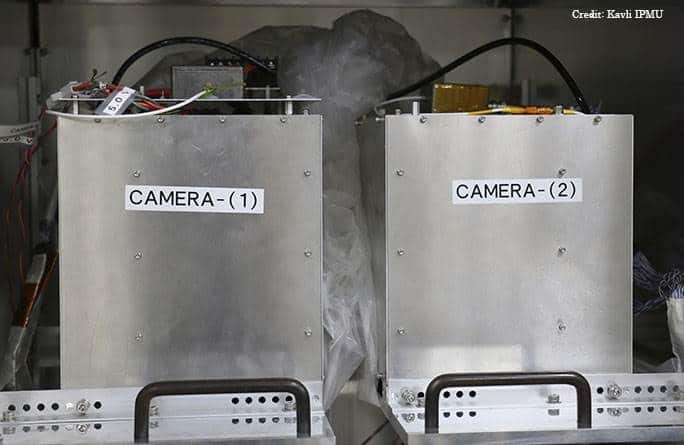
The researchers – also from Kavli IPMU, the National Institutes for Quantum and Radiological Science and Technology (QST) and the Japan Aerospace Exploration Agency (JAXA) – developed a silicon/cadmium telluride (Si/CdTe) Compton camera based on high-resolution CdTe semiconductor imaging devices. The medical camera was adapted from technology originally designed by Tadayuki Takahashi’s team at JAXA to study cosmic gamma rays.

Compton camera

In-human study

To test the Compton camera, the team imaged a volunteer using two of the most common PET and SPECT tracers: 18F-FDG and 99mTc-DMSA, respectively. On day one, they acquired CT images around the liver and kidneys. On day two, they injected the volunteer with the two tracers and recorded images from the Compton camera placed under the right side of their body.

Using a new image reconstruction algorithm to analyse the data, the researchers simultaneously created 2D images of the two radioisotopes. A map of DMSA accumulation revealed two areas of high concentration. Based on the reference CT images, these were attributed to the left and right kidneys, in agreement with the known observation that DMSA tends to accumulate in healthy kidneys. The FDG was broadly distributed over regions including both the liver and kidneys, similar to that seen in routine clinical FDG PET/CT scans.

The team points out that although the imaging resolution of the prototype Si/CdTe Compton camera is not sufficient for clinical use, the results indicate the potential of Compton cameras for future multi-energy radioisotope tomography. In addition, as the spatial resolution of a Compton camera is proportional to the detector–source distance, reducing this distance from the 300 mm used in this study would improve the resolution.

The researchers also note that the doses administered in this study (30 MBq for DMSA and 150 MBq for FDG), which were sufficient to obtain clinically useful human images in 35 min, are already below the regulatory limits. Following several more trials, they are optimistic that their imaging system will lead to new forms of medical analysis. Furthermore, it could help create completely new radioactive tracers.

“Our results indicate that the Si/CdTe Compton camera has great potential for various clinical applications in the future, and may facilitate new nuclear diagnostic procedures,” the researchers conclude. “Further improvements in its detection efficiency, spatial resolution and image reconstruction algorithms are ongoing.”

Did formation of European Union lessen severity of 2003 heatwave?

Formation of the European Union altered climate across the region, according to a recent study. And without the advent of the EU and its accompanying changes in land-use, the 2003 heatwave may have been even more severe.

The European Union came into being on 1 November 1993. Two years earlier, on 25 December 1991, independence was granted to the Union of Soviet Socialist Republics. These two changes had major political and economic ramifications, and completely altered the way that land across the region is managed. Across Eastern Europe, the Iberian Peninsula and Italy, agricultural land was abandoned, with much of it reverting to grassland.

Samuel Zipper from the University of Victoria in Canada and colleagues investigated the impact of this land-use change by simulating water and energy cycles across the region during the period of land-use change – 1990 to 2010. Around 8.5% of land in the region changed use during this time.

This land-use change may have substantially increased cloud cover and decreased incoming shortwave radiation over western Europe, the team found, even in locations where land-use change didn’t occur.

“What we think is happening is that the agricultural abandonment led to an increase in the amount of water that plants transpired into the atmosphere, which caused increased cloud formation,” says Zipper.

Overall, the simulations suggest that the land-use change across Europe decreased peak air temperatures over much of the region, and may have helped lessen the impact of heatwaves, including the devastating heatwave in August 2003 thought to have caused more than 40,000 deaths and 13.1 billion euros in damages.

“Our results suggest that if this land use change had not occurred, the 2003 heatwave may have been more severe,” says Zipper, whose findings are published in Environmental Research Letters (ERL).

The model also shows that climate feedback was reduced in regions with shallow groundwater. “Soil moisture and shallow groundwater supply water to plants, and the more water plants use the cooler temperatures will be,” says Zipper.

The study indicates that land-use decisions made now could have significant impact on future climate, particularly on air temperature and extreme heat. Zipper and colleagues suggest that we consider what kind of land-use changes will help to mitigate, rather than exacerbate, the impacts of climate change. Irrigation, they point out, can help to maintain high soil moisture levels and reduce extreme heat locally. But this mustn’t be done at the expense of depleting local streams and aquifers, they caution.

And the researchers note that the bigger the difference in land-use type, the bigger the impact on climate. “Going from forest to an urban area would have a larger effect than going from forest to a grassland,” says Zipper.

Top-cited work from China recognized by IOP Publishing

More than 170 authors from China have been recognized with a top-cited author award for 2019 from IOP Publishing. The prize is given to corresponding authors who have papers published in both IOP Publishing and its partners’ journals from 2016 to 2018 that are in the top 1% of the most cited papers. The 177 winning authors received a total of 4558 citations over that timeframe.

The IOP Publishing top-cited awards have been given out in seven categories – astronomy and astrophysics; biosciences; environmental sciences; materials; mathematical sciences; physics; and reviews. In physics, the top-cited author is Zhong-Ke Gao from Tianjin University who was the corresponding author on the Europhysics Letters paper “Complex network analysis of time series” (116 50001), which received 81 citations and has been downloaded over 9000 times.

“We know that complex network analysis of time series is an important and cutting-edge topic, especially in the time of ‘big data’,” Gao told Physics World. “We believe that this will attract increasing numbers of researchers into this area.” Indeed, Gao says that his research has several applications from analysing stock markets to detecting seizures from electroencephalograms.

World leaders

Also recognized were the top 10 most-cited reviews published in the last two years by corresponding authors from China. The top 10 review authors received a total of 551 citations and the top-cited authors for a review article from China are Han Zhang and Qiaoliang Bao from Shenzhen University and Soochow University in Suzhou, respectively. Their paper in Nanotechnology – “Photonics and optoelectronics of two-dimensional materials beyond graphene” (27 462001) – received 83 citations and has been downloaded almost 4500 times.

“We’re proud to be able to publish some of the most significant research from scientists in China, many of whom are world leaders in their fields,” says Elaine Tham, associate director (Asia-pacific) at IOP Publishing, which publishes Physics World. “These awards allow us to highlight the impact and influence their work has across the global scientific community.”

  • For the full list of top-cited authors from China, see here.

Bacterial nanostructures act as electron-microscope-compatible gene reporters

Protein structures found naturally in bacteria can be used as electron-microscope-compatible gene reporters in animal cells. Researchers in Germany have shown that enzymes carried within cage-like encapsulin nanocompartments (ENs) can concentrate iron, forming features that are highly visible on conventional transmission electron microscope (TEM) images. By engineering animal cells to express ENs with different sizes, the structures can fulfil for electron microscopy the role that fluorescent gene-reporter proteins have long performed in optical microscopy (ACS Nano 10.1021/acsnano.9b03140).

Fluorescent proteins are used routinely to indicate gene expression in animals and cell cultures. In this technique, the production of a fluorescent protein is made dependent upon the regulation of a gene of interest, so that when the targeted genes are expressed, so too are the fluorescent proteins.

Optical microscopes can detect the emission (typically red or green) from fluorescent proteins, but lack the resolution to discern subcellular features or the fine details of cellular networks. TEMs are usually the method of choice to study processes at this scale, but they are blind to fluorescence signals. And, until now, alternative genetically expressed, multi-channel TEM-visible labels have been lacking.

Bacterial solution

As the opacity of a sample under an electron microscope is governed by its atomic number, Gil Westmeyer, at the Technical University of Munich and Helmholtz Zentrum München, and colleagues knew that a TEM-compatible gene reporter would have to be based on the concentration of large quantities of metal. Iron, for its biological ubiquity, was the obvious choice.

Animal cells do already have the ability to concentrate iron, but not to the degree that would show up against the metal stains that are commonly used to prepare samples for electron microscopy. “Mammalian cells use ferritin as iron storage proteins, which are difficult to detect as they only have a small iron core,” says Westmeyer. In any case, an ideal gene reporter would not occur naturally in the organism, so that its expression is a distinct indicator of gene activity.

A better option is to use the ENs expressed by certain bacteria, which can accumulate much larger quantities of iron. These spherical protein structures carry an enzyme that oxidizes iron from the intracellular fluid, converting it to an insoluble form and trapping it on the inner surface of the cage.

Making sure that the proteins would still express and assemble at high abundances without causing toxicity, Westmeyer and colleagues engineered animal cells to produce ENs from two species of bacteria — Quasibacillus thermotolerans (Qt) and Myxococcus xanthus (Mx). Each species forms a characteristic nanostructure with a specific size, so the researchers were able to derive a pair of reporter proteins that can be distinguished when used to simultaneously indicate the expression of two separate genes.

“Differentiating ENs by these geometrical features is possible because of their defined icosahedral geometries that make the Qt variant precisely 43 nanometres, and the Mx variant 32 nanometres,” says Westmeyer. “In analogy to the different colours of fluorescent proteins, the small ENs could be regarded as green fluorescent protein, and the large ones, red fluorescent protein, so two distinct labels for a specific cell type or cell state.”

The geometries of the two EN structures are consistent enough to allow them to be distinguished reliably by an automatic, non-human observer. When the researchers trained an artificial neural network to identify the two types of reporter protein, the system achieved better-than-human performance, suggesting the possibility of a high-throughput method to measure gene expression with little human involvement.

Although Westmeyer and colleagues have demonstrated only two EN reporter structures so far, other variants undoubtedly exist, which would expand the “colour palette” available to TEM studies of gene expression. Engineering the nanocages to assemble into groups, and changing how the ENs distribute themselves within cells, would add another dimension in terms of reporter differentiation.

What investigations might benefit from this new technique? One near-term application, Westmeyer suggests, is in the study of neural circuits. “Just as the Brainbow mouse can differentiate different neurons using different colours, geometrically multiplexed ENs could differentiate several neurons by their genetic identity or cellular state. The resolution of electron microscopy would allow for tracing out (segmenting) individual neurons and their synaptic connections such that a connectome can be obtained. Fluorescence microscopy does not provide an adequate resolution to achieve this.”

Once a physicist: Louise Adams

Louise AdamsWhat sparked your initial interest in physics?

I remember always having been fascinated by astronomy and the vastness of the universe. I was especially interested in planetary science – after reading about Jupiter’s moon Io, I wrote a detailed (and accurate) description of its features while my sister was having a swimming lesson. When I showed it to my mum she thought I had made it up, so when we got home I had to show her the book, which I had read it in, to prove it. At school I had brilliant physics teachers, including most notably Dr Bradley. She really called my attention to the variety that studying physics could offer, from wave–particle duality to cosmology.

Did you ever consider a permanent academic career in physics?

Going into academia was my original plan when I chose the MSci in physics at the University of Bristol, UK. I was fairly sure that pursuing a PhD and a career in academia was for me. Then towards the end of my second year, I started to properly think about my future options and realized that I might be better suited to something else. I went and worked in a secondary school in Bristol, supporting science lessons as part of an outreach programme with the university, and while I really enjoyed it, my parents encouraged me to look at all my options.

I realized I wanted to get into business and try something new. I was concerned that if I chose to pursue a PhD I would be spending a large amount of time on my own writing and preparing my thesis, which didn’t appeal. I think you must be 100% committed to consider a PhD in your field, given the solitary motivation you will need to get you through it – if not, it would be worthwhile to check out some other options, there are so many out there.

How did you get interested in digital technologies?

I was always interested in computers, but gaming and coding were never really my interests growing up. I started a technology graduate scheme with Tesco straight after university. I thought this would be a good idea as I was interested to see how Tesco used technology systems to support its retail operations, and the scheme offered rotations around the IT department to get exposure to different areas of the business. I worked on till systems; built a prototype dashboard for stores to better understand their energy usage; built infrastructure to support services running on Tesco.com for a Christmas peak; and mapped out the interactions for a set of legacy stock systems. I was fascinated to see how integrated and essential the systems were to the smooth running of the business, and how changes and new developments were handled to ensure the company could be as reactive as possible.

I moved into consultancy to continue working on different IT systems and in new situations. I’ve been lucky to experience a variety of roles including project management, architecture and agile-coaching, all in environments using digital technologies. I have had some excellent career support and coaches along the way who have encouraged me to take risks in technology areas that I felt weak in, to help develop me into a better consultant.

What were some of the challenges in moving from academia to working in the tech industry?

You have to be prepared to continue learning – the tech industry is forever changing so you have to be ready for that. Working environments are different from academic ones, the most obvious being that you will be working in teams of people with a wider variety of ages and personalities than you would have experienced throughout school and university.

What does your current role as a management consultant in digital technologies entail?

At PA we come up with enduring solutions that make an impact for a wide range of clients. Our clients need to tackle a variety of problems associated with digital technologies such as adopting and optimizing public cloud usage; ensuring consistent digital working environments; and meeting compliance and security concerns. The work we carry out is fairly hands on. We are often brought in to support a specific challenge, and expectations are high, but we believe in the power of ingenuity to build a positive human future in a technology-driven world.

Consulting has given me excellent variety in the work that I do, and I’ve supported clients in their transformations across a range of sectors including retail, financial services, energy and utilities, and the public sector.

How has your physics background been helpful in your work, if at all?

I think there are parallels between my interest in physics and the work I do now. First, I found with studying physics that there are so many fields that are interesting and worth researching but (for me at least) it was overwhelming trying to understand everything to the level of detail I wanted, and so prioritizing key areas for my interest was essential. I’m in the same situation with my career. There is a continual pipeline of new releases and technology features, so continual learning is essential, but so is prioritization because it’s impossible to be an expert on everything.

Second, for me, studying physics was not a walk in the park, but I am motivated by challenges, and so overall it was a very positive experience. I have taken that understanding with me into my career and there are plenty of challenging situations in consulting that can be turned into opportunities. My degree experience overall set me up for a lifetime of learning, with everything I need to continue to grow and develop in my career.

Any advice for today’s students?

Find what motivates you and be true to it. Adjust your university experience to make sure that you put the most into it, and get the most out of it. This is the point in your life where you have the most time available to pursue your interests and hobbies, so it’s good to have a balanced experience. Post university, really think about what you enjoy and what you personally deem to be successful, but keep in mind that this is different for everyone so don’t feel you should just follow the crowd. Choose an option that supports continuing to develop you as a person.

Convergence science centre accelerates development of innovative cancer therapies

The new £13 million Cancer Research UK Convergence Science Centre at The Institute of Cancer Research (ICR) and Imperial College London brings together researchers from different scientific disciplines to develop a range of innovative cancer treatment techniques.

Under the leadership of cancer experts Paul Workman from the ICR and Lord Ara Darzi from Imperial, the centre integrates knowledge, methods and expertise from disciplines ranging from physics to data science and AI, and from engineering and biological sciences to medicine.

​In one project, a team of biologists, physicists, engineers and clinicians are exploring whether histotripsy, a therapeutic ultrasound technique, could be adapted to destroy pancreatic tumours located deep within the body.

​The researchers will use highly focused ultrasound to target and break apart cancer cells with the help of microbubbles. The ultrasound waves cause the microbubbles to expand and contract rapidly, putting a strain on the cancer cell and breaking it apart into harmless fragments that are reabsorbed into the body and expelled via natural processes.

“It’s fantastic to think that microbubbles could be used to blow cancer cells apart, and this is just one example of the exciting innovation we expect to see within the new Convergence Science Centre,” says Workman. “Our new centre will open exciting new frontiers in cancer research and lead to innovative treatments, tests and technologies for patients.”

“Although we are making great strides in the treatment of some cancers, survival remains stubbornly low for others, such as pancreatic cancer,” adds Michelle Mitchell, chief executive of Cancer Research UK. “If we are to make any real progress for patients, we need to take a bolder and more creative approach to research.”

In another project, researchers are fine-tuning a technique originally developed to explore autoimmune diseases, such as multiple sclerosis, to look at the activation of immune cells within a tumour in real time.

Cancer experts and bioinformaticians are working together to investigate how the delicate balance between tumour-killing and tumour-promoting immune cells can tip as cancer evolves. It is hoped that this technology could be used to gain a better understanding of why immunotherapies work for some patients but not others.

“Through this new centre and the training opportunities it presents, we will instil the importance of multidisciplinary collaboration into tomorrow’s researchers,” says Darzi. “Data science, physics and engineering are already transforming the way we treat cancer; integrating the expertise and knowledge of these disciplines is key to future-proofing our important work.”

“By creating a new generation of convergent scientists, we’re opening the door to new tools, devices and algorithms that we could never have imagined before. The combined strength of our two world leading institutions will set the standard for the future of convergence science, to transform cancer research in the UK and across the world.”

Copyright © 2026 by IOP Publishing Ltd and individual contributors