Einstein in Oxford

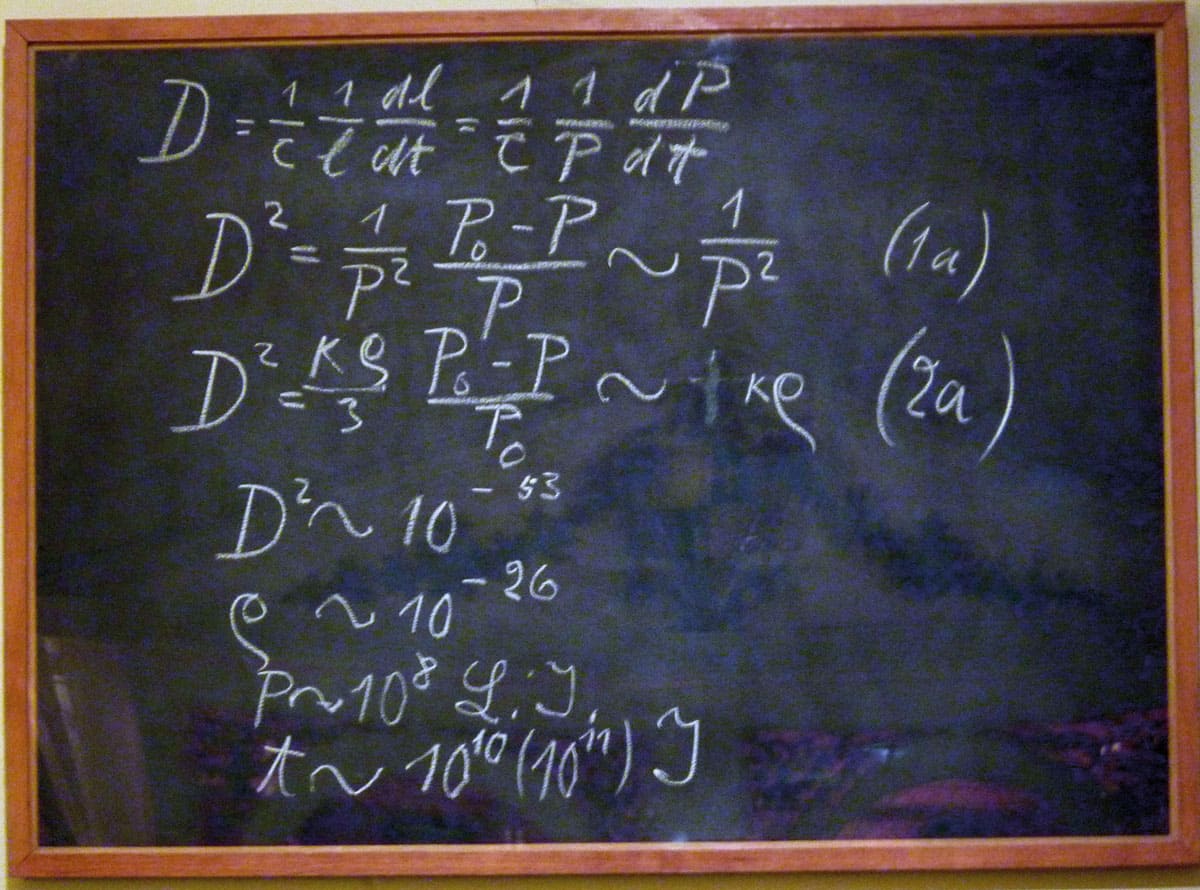
The History of Science Museum in Oxford contains 18,000 objects, ranging from an ancient Roman vertical disc sundial to an X-ray spectrometer built by the physicist Henry Moseley in 1913. Its most famous object, however, is a humble Oxford blackboard – chalked by Albert Einstein on 16 May 1931 with calculations about the size, density and age of the universe. The museum’s website describes it as “a relic of a secular saint”, adding that some visitors “treat it almost as an object of veneration, anxiously requesting its location on arrival and eager to experience some connection with this near-mythical figure of science”.

The blackboard is perhaps the most lasting legacy of a visit that Einstein paid to Oxford in the spring of 1931. He had been to the city once before, having dropped by briefly in 1921 during his first visit to Britain. That was shortly after British astronomers had observed the 1919 solar eclipse, confirming Einstein’s general theory of relativity and propelling him to fame. On that occasion, he and his second wife, Elsa, were in Oxford for just a few hours, having a guided tour of the city and university provided by Einstein’s admirer Frederick Lindemann. A fellow German-born physicist, Lindemann was at the time head of the Clarendon Laboratory at Oxford and later rose to fame as Winston Churchill’s science adviser.

Einstein’s return in 1931 was also due to Lindemann, who had been courting the great man on behalf of the Oxford-based Rhodes Trust, which wished to launch a series of lectures in memory of the businessman and South African politician Cecil Rhodes. Einstein, who hardly spoke English, had already declined a previous invitation in July 1927, in part because he felt that his poor health – triggered by overwork and an inadequate diet in Berlin during the rigours of the First World War – would make “a long stay in foreign and unfamiliar surroundings…too great a burden for me, particularly bearing in mind the language difficulty”.

But shortly afterwards he changed his mind, telling Lindemann in August 1927: “It is very important to me that in England, where my work has received greater recognition than anywhere else in the world, I should not give the impression of ingratitude.” Other difficulties intervened, but at long last, after Lindemann saw Einstein personally in Berlin in 1930, he agreed to lecture, and to stay at Lindemann’s Oxford college, Christ Church. And so it was that on 1 May 1931, Einstein arrived from Berlin at Southampton docks, where he was collected by Lindemann and driven to Oxford in his chauffeured Rolls-Royce.

Lectures, blackboards and language barriers

Einstein stayed in Oxford until 27 May 1931, giving three lectures. The first took place on Saturday 9 May at Rhodes House to an overflowing audience made up of university staff, their companions and 500 students picked from a wide range of disciplines, not just science. Given in German without notes but with a blackboard, its English title was simply “The theory of relativity”. The second lecture, on 16 May, dealt with relativity and the expanding universe: a subject then in great flux. It required “two blackboards, plentifully sprinkled beforehand in the international language of mathematical symbol”, the Times reported. Einstein’s third lecture, delivered on 23 May, tackled his constantly evolving unified field theory – or, as Nature announced it, offered “An account of his attempt to derive both the gravitational and electromagnetic fields by the introduction of a directional spatial structure.”

The lectures’ scientific content was of no lasting significance, since it either repeated Einstein’s existing published work on relativity or was quickly rendered redundant by his (and others’) subsequent ideas. More interesting is the reaction of the very mixed Oxford audience to such an unparalleled educational-cum-social occasion. In a report of Einstein’s first lecture at Rhodes House, the Oxford Times noted how the front of the hall was filled by college principals, with younger members of the university seated at the back and in the gallery. In particular, it said, “women in large numbers flocked to hear Prof. Einstein speak”.

Unfortunately, no interpreter was provided, prompting the paper to wonder “how many of those who were present thoroughly understood German, or if they could understand the language in which Prof. Einstein spoke, how many of them could follow the complexities of relativity”. Einstein appeared, though, to do his best. A second report in the Oxford Times – concerning his final lecture – noted how Einstein drew not only equations but a diagram, “gesticulat[ing] helpfully in curves with the chalk to explain it [and turning] repeatedly from his audience to the board and back”.

Although the newspaper went on to note that “the better-informed members of the audience were kept busy taking [the equations] down”, at least one less-informed member found it hard to keep up. Seated in the front row, directly opposite the speaker, was Henry Julian White – the dean of Christ Church. A biblical scholar in his 70s, he slept soundly during the entire lecture. This amused Einstein, who perhaps also learnt a lesson. After one of the lectures he reportedly remarked, in his curiously stilted English, that the next time he had to lecture in Oxford, “the discourse should be in English delivered”.

Einstein’s Oxford blackboards
Einstein's blackboard

The idea of preserving Einstein’s blackboards during his visit to Oxford in 1931 seems to have come from dons who had attended his three public lectures, notably Robert Gunther, who had founded the History of Science Museum in Oxford a few years earlier. They rescued the two blackboards from Einstein’s 16 May lecture about the expansion of the universe. Although one board was later accidentally wiped in the museum’s storeroom, the other survives.

Whether Einstein would have approved or not, this blackboard neatly summarizes his cosmology paper of April 1931. Based on Alexander Friedmann’s relativistic model of an expanding cosmos, it set the cosmological constant to zero and used Edwin Hubble’s measurements of the expanding universe to estimate three quantities: the density of matter (ρ), the radius of the cosmos (P) and the timespan of the cosmic expansion (t). Note that “L.J.” is a German abbreviation for Licht Jahre, meaning “light-years”.

However, its arithmetic is not totally accurate. According to Cormac O’Raifeartaigh, a physicist from Waterford Institute of Technology in Ireland, “Einstein stumbled in his use of the Hubble constant, resulting in a density of matter that was too high by a factor of 100, a cosmic radius that was too low by a factor of 10 and a timespan for the expansion that was too high by a factor of 10.” The correct figures should have been: ρ 10–28 g/cm3, P 109 light-years and t 109 years.

Here, possibly, was one reason why Einstein did not favour the blackboards’ preservation. He certainly resisted any publication of his 1931 lectures by an eager Oxford University Press, on the grounds that – as he frankly told the warden of Rhodes House in 1933 – “he had since discovered that everything he had put forward in the lectures was untrue”.

Einstein’s blackboards proved a source of friction between him and the university (see box above). On 16 May 1931 he told his diary (in German) with real annoyance: “The lecture was indeed well-attended and nice. [But] the blackboards were picked up. (Personality cult, with adverse effect on others. One could easily see the jealousy of distinguished English scholars. So I protested; but this was perceived as false modesty.) On arrival [at Christ Church] I felt shattered. Not even a carthorse could endure so  much!”

Dons, dinners and doggerel

A week later, on 23 May 1931, the University of Oxford awarded Einstein an honorary doctorate in a ceremony at the Sheldonian Theatre. Unlike his lectures, it passed without incident, even though Einstein did not seem too impressed with the address given in Latin by A B Poynton, an Oxford classicist and future college principal who knew little physics. Einstein noted in his diary that the speech was “serious, but not wholly accurate” – a remark he must have based on a translation, since he did not know Latin. However, Einstein’s face did light up when he heard reference to “Mercurius”, whose planetary position played a key role in efforts to confirm general relativity.

This personal reaction had been noted by Margaret Deneke, a musicologist with German roots who was associated with Oxford’s first women’s college, Lady Margaret Hall. Not only was she musical, she was also fluent in German – two characteristics that immediately endeared her to Einstein, who got to know her soon after his arrival. Indeed, following a somewhat strained formal dinner at Rhodes House the evening before his second lecture, Deneke joined Einstein and another guest in a musical trio. With his violin tucked under his chin, Einstein “threw himself wholeheartedly into the music”, according to Deneke’s diary, as the onlookers “smoked in silence, witnessing their guest of honour having a happy evening”. Einstein’s own diary was more frank, claiming “the guests hastily left the room” after the music began.

As for Christ Church, Einstein’s relationship with the college proved amiable but eccentric

As for Christ Church, Einstein’s relationship with the college proved amiable but eccentric. In his diary, he described the dinner-jacketed and gowned Christ Church dons dining in their great hall as “the holy brotherhood in tails” (“der heiligen Brüderschaar im Frack”). One of them, economist Roy Harrod, later recalled how Einstein had sat next to him at a meeting of their governing body. “We had a green baize table-cloth; under cover of this he held a wad of paper on his knee, and I observed his pencil was in incessant progress, covering sheet after sheet with equations.”

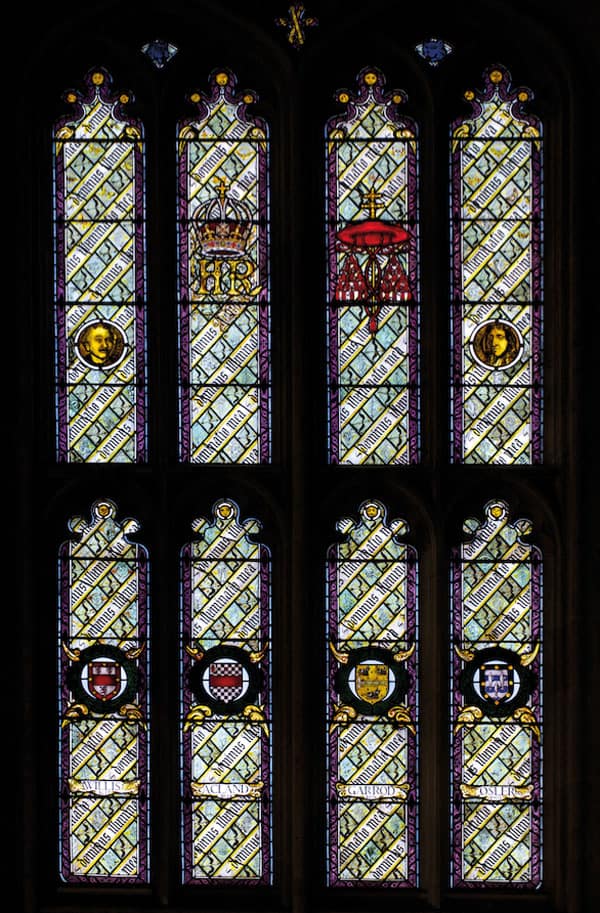
Christ Church College
Stained glass window

Einstein even wrote a poem in a don’s visitors’ book, which was later donated to the Bodleian Library in Oxford. It concerns Robert Hamilton Dundas, a classical scholar at Christ Church whose rooms Einstein occupied while Dundas was out of the country on a world tour. Dundas discovered the poem after his return to Oxford in 1932, when he got to meet Einstein. Although the poem might be dismissed as mere doggerel, it is nonetheless thoughtful and witty. It was later published in the Times following Einstein’s death in 1955, with his rhymed German having been translated by the Oxford literary scholar James Blair Leishman. The poem includes the lines:

Shelves of towering folios
Meditate in solemn rows;
Find it strange that one can dwell
Here without their aid so well.
Charisma and connections

On the whole, though, Einstein’s most fruitful Oxford meetings took place outside Christ Church, in settings ranging from other colleges and university societies to private houses and more informal gatherings. Einstein “threw himself into all the activities of Oxford science, attended the colloquiums and meetings for discussions, and proved so stimulating and thought-provoking that I am sure his visit will leave a permanent mark on the progress of our subject”, Lindemann wrote in June 1931, after Einstein had returned to Berlin.

“Combined with his attractive personality,” he went on, “[Einstein’s] kindness and sympathy have endeared him to all of us and I have hopes that his period as Rhodes lecturer may initiate more permanent connections with this university which can only prove fertile and advantageous in every respect.” What Lindemann underplayed, however, was the fundamentally experimental orientation of science at Oxford in 1931. There were hardly any theorists who could discuss physics and mathematics at Einstein’s level – if anything, he might have been more suited to the University of Cambridge, which was home to the astronomer Arthur Eddington who had led the 1919 solar-eclipse expeditions that “proved” general relativity.

Perhaps the most evocative Oxford memory of Einstein concerned simply his charisma. It was recalled by William Golding – the future author of Lord of the Flies, who started as an undergraduate in science before changing to literature (and went on to win a Nobel prize for his writing). Some time in 1931, Golding was standing on a small bridge in Magdalen Deer Park looking at the river when a “tiny moustached and hatted figure” joined him. “Professor Einstein knew no English at that time, and I knew only two words of German. I beamed at him, trying wordlessly to convey by my bearing all the affection and respect that the English felt for him.”

For about five minutes the pair stood side by side. At last, said Golding, “With true greatness, Professor Einstein realized that any contact was better than none.” He pointed to a trout wavering in midstream. “Fisch,” he said. “Desperately I sought for some sign by which I might convey that I, too, revered pure reason. I nodded vehemently. In a brilliant flash I used up half my German vocabulary: ‘Fisch. Ja. Ja.’ I would have given my Greek and Latin and French and a good slice of my English for enough German to communicate. But we were divided; he was as inscrutable as my headmaster.” For another five minutes, the unknown undergraduate Englishman and the world-renowned German scientist stood together. “Then Professor Einstein, his whole figure still conveying goodwill and amiability, drifted away out of sight.”

Refugee from Nazi Germany

After his visit to Oxford in 1931, Einstein was elected a “research student” (i.e. a fellow) of Christ Church on an annual stipend of £400, which was to run until 1937, in exchange for brief periods of residence each year more or less at his convenience. This arrangement had been proposed by Lindemann, probably in the hope that Einstein would settle in Oxford, though in the event he returned on only two further occasions.

Einstein’s next visit, from April to May 1932, was less eventful. He avoided giving any Oxford lectures, though he did travel to Cambridge to deliver the Rouse Ball lecture on mathematics on 5 May, which provided a welcome opportunity to meet Eddington.

Back home in Germany, however, May 1932 was proving dangerously eventful, with a secret deal struck between an influential German military leader and the upcoming Adolf Hitler. It was the start of the slide towards the Nazi seizure of power, and in March 1933 Einstein found himself permanently exiled from his native country – an event that propelled him back to Oxford for his final stay in May–June 1933. As he informed his fellow-physicist Max Born – who had just escaped from Germany himself and would soon settle in Britain – in a letter written on 30 May from the cloistered calm of Christ Church: “I’ve been promoted to an ‘evil monster’ in Germany, and all my money has been taken away from me. But I console myself with the thought that the latter would soon be gone anyway.”

During a public event at Oxford’s University Museum of Natural History on 2 June 1933, Einstein appeared sorely in need of public reassurance. He had been invited to offer a vote of thanks for a lecture given by Ernest Rutherford to the Junior Scientific Society. Not only was Rutherford a Nobel laureate, like Einstein, he was also a peer of the realm, the 1st Baron Rutherford, and, in addition to his honours, a big booming extrovert. According to an Oxford undergraduate present, C H Arnold, Einstein seemed “a poor forlorn little figure” beside Rutherford. While Einstein was delivering his speech of thanks, somehow coping with English, “it seemed to me that he was more than a little doubtful about the way in which he would be received in a British university”.

However, the moment he sat down, Einstein was greeted by thunderous applause. As Arnold recalled more than three decades later: “Never in all my life shall I forget the wonderful change which took place in Einstein’s face at that moment. The light came back into his eyes, and his whole face seemed transfigured with joy and delight when it came home to him in this way that, no matter how badly he had been treated by the Nazis, both he himself and his undoubted genius were at any rate greatly appreciated at Oxford.”

Mathematics, physics and reality
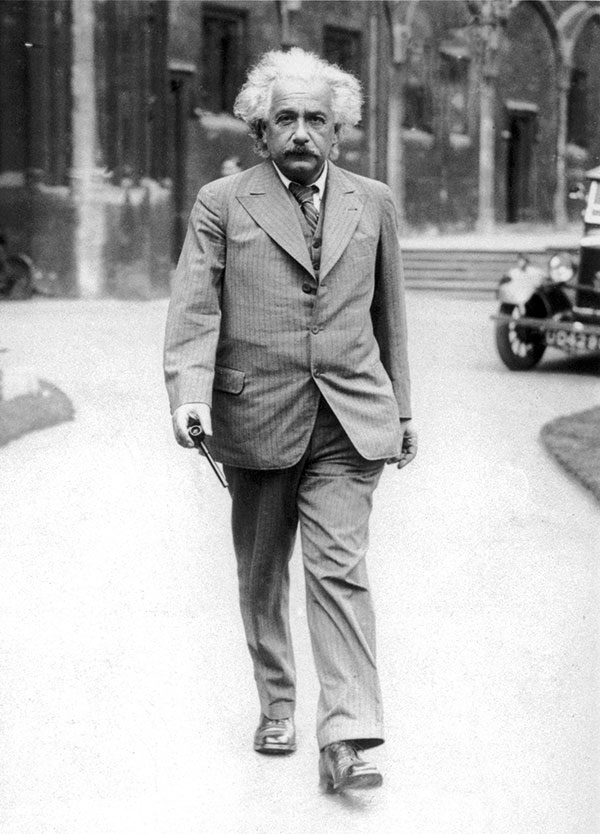
Einstein

The psychological strain seems to have expressed itself in Einstein’s scientific thinking as well as his personal behaviour. In his final Oxford lecture, “On the method of theoretical physics”, given at Rhodes House on 10 June 1933, he tried to escape from the messy physical reality inherent in experimental physics, including quantum mechanics, and substitute the paradise of pure mathematics, which he had been pursuing for some years in his unified field theory. Indeed, Einstein’s scientific biographer Abraham Pais, a physicist who knew Einstein well, later hailed this controversial lecture as “perhaps the clearest and most revealing expression of his mode of thinking”.

Reading from a fluent translation of his original German, made for him by three Christ Church dons – Gilbert Ryle (a philosopher), Denys Page (a classicist) and Claude Hurst (a physicist) – Einstein initially reassured his Rhodes House audience, many of whom were no doubt classically trained, that he saw ancient Greece as “the cradle of western science”. The Greeks, he said, had “created the intellectual miracle of a logical system, the assertions of which followed one from another with such rigour that not one of the demonstrated propositions admitted of the slightest doubt – Euclid’s geometry”.

Yet for science to comprehend reality, Einstein continued, scientists conventionally argued that more than Greek thought was required. “Pure logical thinking can give us no knowledge of the world of experience,” he said. “All knowledge about reality begins with experience and terminates in it.” Einstein duly hailed Galileo as “the father of modern physics and indeed of the whole of modern natural science”, before praising Newton for being “the first creator of a comprehensive and workable system of theoretical physics”.

Then, however, Einstein remarkably switched tack. General relativity, he said, had shown the conventional view to be wrong. “For this theory revealed that it was possible for us, using basic principles far removed from those of Newton, to do justice to the entire range of the data of experience in a manner even more complete and satisfactory than was possible with Newton’s principles.” Therefore, he said: “Pure mathematical construction enables us to discover the concepts and the laws connecting them which give us the key to the understanding of the phenomena of nature.” His conclusion: “Experience of course remains the sole criterion of the serviceability of a mathematical construction for physics, but the truly creative principle resides in mathematics. In a certain sense, therefore, I hold it to be true that pure thought is competent to comprehend the real, as the ancients dreamed.”

Einstein assured his Oxford audience – and by extension the international world of physics – that mathematics, on its own, could provide the basis for understanding nature

Thus Einstein assured his Oxford audience – and by extension the international world of physics – that mathematics, on its own, could provide the basis for understanding nature. He apparently now rejected his own earlier position, which he had elegantly stated in 1921, that: “As far as the laws of mathematics refer to reality, they are not certain; and as far as they are certain, they do not refer to reality.” General relativity, he now claimed, had been essentially based on mathematical concepts rather than physical observations – for all its crucial confirmation by astronomers in 1919.

No doubt many theoretical and experimental physicists, especially those working in quantum mechanics, were taken aback and unconvinced by such a bold claim. After all, it flew in the face of so much of the history of physics, which evidently arose from a combination of theory, observation and experiment. But very few of them were in a position to contest its validity with general relativity’s creator, whether in Oxford in June 1933 or after Einstein left Europe forever in October, heading for Princeton. There, in the US, away from Nazi persecution, he was free to pursue his Oxford claim by developing his unified field theory for the rest of his uniquely influential life.
Toxic gases in habitable zone could hinder emergence of alien life

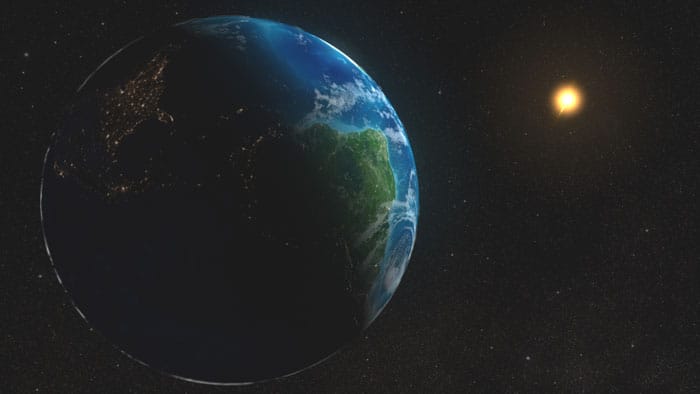
The habitable zone for complex life around many stars could be much smaller than previously thought once the concentrations of carbon monoxide and carbon dioxide on planets is considered. That is the conclusion of astrobiologists in the US, who say that high concentrations of these gases could completely preclude the existence of life on planets orbiting some stars.

The search for extraterrestrial life often focuses on what is known as the “habitable zone” of stars. This is commonly defined as the range of distances from a host star warm enough for liquid water, a key requirement for life, to exist on a planet’s surface. However, according to Edward Schwieterman, at the University of California, Riverside, and his colleagues that description works for basic, single-celled microbes, but not for more complex creatures – everything from simple sponges to humans.

They point out that substantially more carbon dioxide than present in Earth’s atmosphere is needed to maintain suitable temperatures over much of the traditionally-defined habitable zone. At the outer edge of the zone, concentrations of several bars would be required, they say, yet most complex aerobic life on Earth is limited by concentrations of just fractions of a bar.

Abundance of toxins

Another issue is carbon monoxide. On Earth this toxic gas does not accumulate, because the Sun drives chemical reactions in the atmosphere that destroy it quickly. Most exoplanets in the traditional habitable zone, however, orbit red dwarfs. These are cooler, smaller stars than the Sun, and are predicted to promote greater abundances of gases like carbon monoxide in the atmospheres of orbiting planets.

“Most previous investigations have focused either on climate, particularly the maintenance of temperatures above the freezing point of water, or on potential biosignature gases like oxygen or methane rather than gases that could be toxic,” Schwieterman says. “Folding in physiological limitations of complex life is another step that requires applying an additional knowledge base.”

To define a habitable zone for complex life (HZCL), the team used computer models to predict atmospheric climate and photochemical conditions around stars with spectral characteristics ranging from those of F-type stars to red dwarfs. To help classify this zone, they also looked at known toxicity limits for a range of organisms.

Complex organisms on Earth

Upper long-term physiological carbon dioxide tolerances from a range of complex organisms on Earth suggest that complex life might be able to tolerate carbon dioxide concentrations of up to 0.05 bar – although lower concentrations would be lethal for most animals. When the researchers assumed carbon dioxide tolerances for complex life of 0.01, 0.1, and 1 bar, they found that the HZCL around a Sun-like star is only 21%, 32%, and 50% as wide as the conventional habitable zone, respectively.

This means that many planets that would normally be within the habitable zone would be unsuitable for complex life. For example, the exoplanet Kepler-62f is within the habitable zone of its star, but the researchers believe that it would need carbon dioxide concentrations of 3–5 bar to maintain surface conditions for liquid water. This is approximately 1000 times greater than has occurred during the entire history of complex life on Earth.

When they considered carbon monoxide, they found that no safe zone at all exists around some red dwarfs. This includes two of our closest stars, Proxima Centauri and TRAPPIST-1. This is because the type and intensity of ultraviolet radiation that these stars emit can lead to high concentrations of carbon monoxide.

Schwieterman says that these results mean that we are less likely to find complex life on planets in the middle and outer habitable zone. “Planets in the outer region of the habitable zone require either carbon dioxide levels so high they’d be toxic to life like animals as we know them on Earth – or their surfaces would be frozen,” he explains. “Alternatively, other greenhouse gases could contribute to warming, but most of these gases are incompatible with high levels of oxygen, which is required for complex life as we know it. We can’t completely rule out alternative biochemistries that could compensate for extremely high carbon dioxide, but we have no reason to think they may exist either.”

According to Schwieterman the work can be seen as both pessimistic and optimistic. “On one hand, I think we should temper our expectations for the range of planetary conditions amenable for intelligent life,” he says. “On the other hand, we can optimize our search for intelligent life and stand a better chance of finding it if it’s out there.”

The research is described in The Astrophysical Journal.

New tennis ball tower, celebrating June Lindsey’s double-helix contributions, more physics slang

The amazing tennis ball towers made by Andria Rogava have been a surprise hit with Physics World readers. Now, the Georgian physicist has unveiled a brand-new tower design that has 30 balls in a 7-6-7-6-3-1 configuration that is six levels high (pictured above). Rogava’s towers are freestanding and held together by friction and gravity – no glue is involved.

In 1951 while working at the University of Cambridge, physicist June Broomhead published an important paper describing how she had used X-ray crystallography to work out the structures of adenine and guanine – nucleobases that contribute to the structure of DNA. This result was studied in detail by James Watson and Francis Crick, who relied on Broomhead’s insights when they famously solved the structure of DNA.

Watson and Crick shared a Nobel prize (with Maurice Wilkins) for their efforts. Broomhead married and emigrated to Canada – where as June Lindsey, she worked at the National Research Council for a few years in the early 1950s before quitting science to become a stay-at-home mother of two children.

Now at the age of 97, Lindsey’s contribution to one of the most important scientific discoveries ever is being celebrated by younger generations of Canadian scientists. You can read more in this article on the CBC website, where there is also an audio interview with Lindsey.

Symmetry, which is published jointly by Fermilab and SLAC, has been running an occasional series on common words that take on different meanings when used by physicists. The latest instalment looks at “uncertainty”, “signal”, “damping” and more.

Virtual biopsy device detects skin tumours

Virtual biopsy prototype

A team headed up at Rutgers University has developed a device that performs virtual biopsies of skin lesions, by combining optical coherence tomography images with stiffness measurements performed simultaneously using vibrational analysis. The technique, termed vibrational optical coherence tomography (VOCT), rapidly determines a skin lesion’s depth and potential malignancy, without using a scalpel (Skin Res. Technol. 10.1111/srt.12712).

The ability to analyse a skin tumour non-invasively could make biopsies much less risky and distressing to patients. Currently, physicians who perform surgical biopsies often don’t know the extent of a lesion, and whether it will be necessary to refer the patient to a specialist for extensive tissue removal or plastic surgery, until surgery has already begun.

VOCT creates a 3D map of the lesion’s width and depth under the skin using a tiny laser diode. It also uses soundwaves to assess the lesion’s density and stiffness, since tumours and cancer cells are stiffer than normal tissues. An inch-long speaker applies soundwaves against the skin to measure the skin’s vibrations and determine whether the lesion is malignant.

“This procedure can be completed in 15 minutes with no discomfort to the patient, who feels no sensation from the light or the nearly inaudible sound,” says lead researcher Frederick Silver. “It’s a significant improvement over surgical biopsies, which are invasive, expensive and time consuming.”

The researchers tested the device over six months on four skin excisions and eight volunteers without skin lesions. They found that precancerous and cancerous lesions were characterized by changes in both the morphology and stiffness of the cellular components of the skin. The prototype VOCT device, which awaits FDA approval for large-scale testing, could accurately distinguish benign and cancerous or precancerous lesions compared with normal skin and scar.

Further studies are needed to fine-tune the device’s ability to identify a lesion’s borders and areas of greatest density and stiffness, which would allow physicians to remove tumours with minimally invasive surgery.

Nanoscale optical imaging gets simpler and cheaper

The promise of optical imaging and its wealth of spectroscopic information at nanoscale resolution seems too good to be true, and for many labs it has been. Diffraction limits the resolution of conventional optical microscopy to around half the wavelength of the illuminating light – roughly 100s of nanometres for visible light. Although scanning near-field optical microscopy (SNOM) beats the diffraction limit, as Ming Liu and Ruoxue Yan and colleagues at the University of California at Riverside (UCR) point out in a recent report, the spiralling sophistication of tip, instrumentation and optical designs to get the technique to work well can take its toll on the technique’s versatility and accessibility. Their report suggests a lens-free set up to optimize the efficiency of the technique, which could make it accessible even for labs limited to basic scanning probe apparatus.

Other techniques, such as scanning tunnelling and atomic force microscopy, have been capable of a resolution far beyond the diffraction limit since the 1980s. However, imaging with light gives features spectroscopic detail from interactions like Raman scattering, an extra dimension to the resulting images akin to moving from black and white to technicolour. The interactions between light and vibrational modes in molecules that leave their mark on light scattered from a sample – Raman scattering – reveal such a level of detail about structures and their environments they are often described as the sample’s “fingerprint”. By incorporating their SNOM set up – essentially a silver nanowire and an optical fibre coated in gold, both tapered at the tips – Liu, Yan and colleagues have brought this technicolour imaging capability to a standard teaching-level scanning tunnelling microscope.

Coupling issues

SNOM gets around the diffraction limit by measuring the “near-field”, the component of light that hugs surfaces, instead of the diffraction-prone “far-field” light that propagates away from structures that scatter it. To capture this non-propagating near-field, one approach has been the use of optical fibres brought within nanometres of the surface. However, for fibres with sufficiently narrow ends to extract nanoscale resolution information, getting light down the fibre to the sample and back in again presents its own challenges.

“Sending light through a tiny pinhole a thousand-times smaller than the diameter of a strand of human hair is no piece of cake,” Liu said. “Only a few in a million photons, or light particles, can pass the pinhole and reach the object you want to see. Getting a one-way ticket is already challenging; a round-trip ticket to bring back a meaningful signal is almost a daydream.”

The challenge has prompted interest in “apertureless” SNOM, where a metal nanoscale tip scatters the near-field at the sample surface to collect the high-resolution optical imaging data. However the level of background noise to signal can still make it difficult to obtain high-quality nanoscale information with apertureless SNOM, resulting in elaborate set ups and procedures to make the technique work well, despite the use of materials and geometries to exploit near-field enhancements through lightning rod and “plasmon resonance” effects.

Plasmons describe the way electrons in some metals respond to incident electromagnetic fields in unison at resonant wavelengths. SNOM researchers often exploit photons coupled to these oscillating resonant electron excitations at metal surfaces – “surface plasmon polaritons” – to achieve highly localized concentrated electromagnetic fields that enhance interactions between samples and light to get better optical measurements. However large differences in wavenumber can make it difficult to couple the far-field propagating light and the highly confined localized-surface-plasmon mode.

Thinning out the differences

To tackle the wave number mismatch, the UCR researchers exploit the gradual decrease in the effective mode index of the fibre as it tapers, and the resulting increase in wavelength, which is inversely proportional to this index. “The wavelength of the far-field light slowly increases as it travels down a gradually thinning optical fibre, without changing its frequency,” says Yan. “When it matches the wavelength of the electron density wave in the silver nanowire lying on top of the optical fibre, boom! All energy is transferred to the electron density wave and starts to travel on the surface of the nanowire instead.”

The researchers identify what they describe as “the only mode without cutoff and that can be effectively focused on the apex of a tapered rod”, which is, the radial transverse magnetic fundamental mode TM0. They then use linearly polarized light in the optical fibre, which will couple to that mode.  The nanowire then tapers to just a few nanometres at the end to allow measurements with nanometre resolution. As well as increasing the intensity at the nanowire apex, effectively coupling this optical fibre light to TM0 SPP minimizes the background illumination.

Yan tells Physics World how as a graduate student in Peidong Yang’s group she worked on a device called a “nanowire endoscope”, which uses a tapered optical fibre to couple light into a tin oxide nanowire waveguide to guide visible light into intracellular compartments of a living mammalian cell. “The idea of coupling light to a plasmonic waveguide for tighter mode confinement and E-field enhancement for spectroscopy was sparked by the endoscopy work,” says Yan, emphasizing the challenge that bridging the momentum gap posed. “It was a long learning curve to understand this coupling system to single out the coupling condition for the high-efficiency excitation for the TM0 mode to synthetically modify to the tip morphology of the nanowire for high-resolution imaging, and to piece them all together.”

The researchers incorporate the approach on a standard scanning tunnelling microscope used for teaching, and image carbon nanotubes with 50% efficiency – 70% each for the fibre -nanowire-fibre coupling and for funnelling the light at the end of the nanowire.

They conclude in their report, “By offering an easy solution for efficiency light injection and/or extraction at a nanometre length scale, fibre-based near-field nanoscopy holds great potential as a plugin module for existing high-resolution measurement platforms to provide complementary and spatially correlated information on molecular compositions (for example, TERS), material properties (for example, inter- and intraband transitions) and optoelectronic device performance (for example, photocurrent mapping).”

Full details of Liu and Yan’s work alongside colleagues including Sanggon Kim, Ning Yu, Xuezhi Ma, Yangzhi Zhu, and Qiushi Liu are available in Nature Photonics. 


Arctic sea ice loss affects the jet stream

Did you shiver in a winter ice storm? Could you wilt in a protracted heatwave this summer? German scientists have just identified the guilty agency and delivered the evidence implicating the jet stream.

Blame it on Arctic warming, they conclude: the retreat of the sea ice over the polar ocean has distorted the pattern of flow of the stratospheric winds usually known as the jet stream.

It is not a new idea. But this time, scientists have employed artificial intelligence and a machine-learning programme to accurately model the changes in the jet stream and then link these to changes in the chemistry of the upper atmosphere, and increasing patterns of twisting waves in the high altitude winds which then distort seasonal weather in the northern hemisphere mid-latitudes. They describe their research in the journal Scientific Reports.

“Our study shows that the changes in the jet stream are at least partly due to the loss of Arctic sea ice. If the ice cover continues to dwindle, we believe that both the frequency and intensity of the extreme weather events previously observed in the middle latitudes will increase,” said Markus Rex, who heads atmospheric research at the Alfred Wegener Institute in Potsdam, Germany.

Cold bouts explained

“In addition, our findings confirm that the more frequently occurring cold phases in winter in the USA, Europe and Asia are by no means a contradiction to global warming; rather they are part of anthropogenic climate change.”

The jet stream – exploited by jet aircraft on the trans-Atlantic routes – is made up of westerly winds that, at an altitude of 10 km, stream around the planet in the mid-latitudes, at speeds of up to 500 km an hour, and push weather systems from west to east.

But researchers have already observed this: they have been changing, in response to global warming and in particular to the rapid warming of the Arctic, as greenhouse gas ratios in the atmosphere rise, and go on rising, in response to profligate human combustion of fossil fuels.

Rather than stick to a course more or less parallel to the Equator, these winds have been observed describing dramatic waves.

These twists of direction have been linked to blasts of Arctic air into regions that could normally expect relatively mild winters: in particular to the ferocious cold that hit the US Midwest in January 2019.

These winds have also weakened and been linked to prolonged drought and extremes of heat that hit Europe in 2003, 2006, 2015 and 2018.

But association is not the same as demonstration of cause-and-effect. The Potsdam scientists wanted surer evidence. And their new climate simulations now include a machine-learning component that accounts for ozone chemistry at high altitudes.

And what their new model found was that as the Arctic sea ice retreats, the atmospheric waves have warmed the polar stratosphere in ways that have been amplified by the behaviour of the ozone layer.

Ozone response

Since what powers the jet stream is the difference between the cold Arctic and the warm tropics, the jet stream has weakened, and begun to meander, like a river flowing across a flood plain towards the sea.

In effect, the new study introduces a new piece to the climate puzzle: the response of the ozone layer and its role in the play of winds around the planet. The pay-off could be a clearer picture of things to come.

“We are now for the first time employing artificial intelligence in climate modelling, helping us arrive at more realistic model systems,” said Rex.

“This holds tremendous potential for future climate models, which we believe will deliver more reliable climate projections and therefore a more robust basis for political decision-making.”

Strain switches 2D phase-change transistor

A new way to switch transistors could overcome the power consumption and undesirable current leakage problems encountered in conventional nanoscale field-effect devices. The new technique, which works by applying a voltage-induced strain to a 2D material so that it goes from being a semimetal to a semiconductor, could be used to control devices for ultrafast low-power non-volatile logic and memory.

Almost all transistors today rely on the electric-field effect to tune the conductivity of a semiconducting channel from its conducting “on” state to a non-conducing “off” state. As transistors become ever smaller, however, effects such as current leakage become more problematic.

Researchers at the University of Rochester in the US led by Stephen M. Wu have now put forward an alternative to field-effect switching in transistors. Their new technique makes use of electric-field induced strain to control a transistor channel made from a small flake (between 13 to 70 nm thick) of the 2D transition dichalcogenide molybdenum telluride (MoTe2). The MoTeflake is deposited on top of a single-crystal oxide substrate, up to 0.3 mm thick, made of the relaxor ferroelectric Pb(Mg1/3Nb2/3)0.71Ti0.29O3 (PMN-PT). This ferroelectric acts as the gate dielectric in the device.

Strain biasing

When the researchers apply a voltage to the gate, this strains the MoTeby the converse piezoelectric effect, causing it to stretch. “We use this effect in combination with static thin film stressors to achieve more strain than piezoelectrics or ferroelectrics alone can produce,” explains Wu. “The stretching itself triggers a phase change in the material, so that it goes from being a highly conductive semi-metallic material to a low conductivity semiconducting one. We call this effect ‘strain-biasing’, which allows us to extend the reach of strain-on-a-chip.”

Indeed, the researchers say they can achieve large non-volatile changes in the channel conductivity, Gon/Goff, of around 107 at room temperature with a strain of just 0.4%. To compare, a control device has a Gon/Goff of around 0.04.

“The concept presented in our work combines the best aspects of ferroelectric memory (that is, high-speed, low-power non-volatile operation) with the benefit of having large changes in conductivity at a very steep slope with respect to the applied gate voltage that isn’t limited by the way conventional field-effect transistors function,” says Wu.

More efficient

Normally, the subthreshold swing at which a device changes conductivity with applied gate voltage is limited to 60 mV/dec at room-temperature as a fundamental limit, but our device switches in a different way and so circumvents this problem, he explains. “This allows for much higher ‘on’, and much lower ‘off’, currents, making the device more power efficient,” he tells Physics World.

“Non-volatility also means that we do not have to input additional power to maintain the conductivity state, so this makes the transistor more energy efficient than a conventional device too.”

Low-power, high-speed memory could benefit

The technology could be used anywhere a normal transistor would, but especially in low-power, high-speed memory, he adds. And since the device has the same configuration as a traditional transistor, it could easily be adapted into current electronics – even though much more work is still needed before this can happen. At the moment, the device fails after just 70 to 100 on-off switching cycles.

Wu says he and his colleagues also need to find out how much strain can be applied to MoTe2, and indeed other 2D materials, before it breaks. “The ceiling seems to be high though, since the limits of operation of the individual ferroelectric and phase-change materials are themselves high.”

The researchers, reporting their work in Nature Nanotechnology 10.1038/s41565-019-0466-2, are now busy looking to extend this on-chip strain control of phase in 2D materials to other forms of order.

“There are a huge number of 2D materials out there, and strain could be used to control their optical, magnetic or superconducting properties, as well as their electronic ones,” explains Wu. “This is the ultimate goal of 2D straintronics (devices with unique properties that are engineered through the careful introduction of mechanical deformations in the material): taking all of the properties you couldn’t control before and being able to control them, just by stretching the material on a chip.”

Battle of the Elements round one, deep-sea dragonfish and Latino science podcasting

In the latest Physics World Weekly podcast, we present the opening round in our Battle of the Elements contest. To celebrate 2019 as the International Year of the Periodic Table, Physics World editors have been arguing the cases for their favourite elements over the past few weeks. First up, James Dacey makes the case for gold, Susan Curtis argues for silicon, and Matin Durrani throws his weight behind uranium. To cast your vote for one of these elements visit our Twitter page and three more Physics World journalists will make the case for their element next week.

Later in the podcast, we visit the University of Colorado to meet Nico Hernandez Charpak to talk about nanoimaging and latino science podcasting. As always, there’s the usual roundup of news, which this week has a special focus on biomaterial research – from polar bears’ transparent hair to the stealthy teeth of deep-sea dragonfish.

If you like what you hear then please subscribe via your chosen podcast app and we’re also available now to follow on Spotify.

PatcherBot robot frees humans from laborious lab work

An automated system for measuring the electrical properties of single cells can operate for hours without human input. Developed by the Precision Biosystems Laboratory at Georgia Institute of Technology and Massachusetts Institute of Technology, the “PatcherBot” combines machine vision, micromanipulators and a pipette-cleaning module to autonomously perform the patch-clamp technique, one of the more laborious tasks in biological research. By greatly increasing laboratory throughput, the device could speed up any investigation involving single-cell electrical recordings, such as drug development and neuronal connection profiling (J. Neural Eng. 10.1088/1741-2552/ab1834).

Some cellular properties are amenable to study by high-resolution, high-throughput techniques like fluorescence microscopy or photoacoustic microscopy. When it comes to the electrophysiology of single cells, however, researchers rely on the far more time-consuming patch-clamp method. In this technique, a glass pipette filled with an electrolyte solution is pressed against the membrane of the cell under observation. By applying a gentle suction to the cell, a seal is achieved and the voltage and current across the cell membrane can be measured.

“The user sucks on the end of a plastic tube coupled to the pipette to get the cell membrane to adhere to the tip,” says first author Ilya Kolb. “This is a very delicate process, which has led to the whole patch-clamp electrophysiology process being widely considered to be an artisanal skill in biological research.”

The difficulty of the operation means that even an experienced practitioner can typically characterize on the order of just ten cells per day. Partial automation of the technique has increased the efficiency of the process somewhat, but full automation has until now been stymied by two factors.

The first challenge is that tissues and cell cultures tend to deform as they are invaded by the pipette, turning the cell into a moving target. A human operator can deal with this complication, but automatic systems have so far lacked the necessary adaptability.

The team overcame this hurdle by equipping a commercial platform with a computer-vision system which operates on images acquired by a motorized microscope. When the user selects the cells to be studied, PatcherBot records their coordinates and appearance. The measurement sequence is decided automatically, and if a target cell has not drifted too far by the time the robot arrives at its last-known position, the image-recognition algorithm lets PatcherBot spot the cell in its new location.

The second challenge is that each procedure leaves a residue of cellular material, yet the surface of the pipette must be completely clean for the patch-clamp process to work properly. “The conventional wisdom is that pipettes can only be used once, so the main reason the technique has been manual for almost 40 years is that a trained user still had to replace used pipettes for fresh ones between every attempt,” says Kolb.

To solve this problem, the researchers fitted the robot with a chamber in which pipettes can be cleaned and rinsed automatically between procedures. With a detergent chosen specifically for its ability to remove proteins from glass, Kolb and colleagues found that a single pipette could be used dozens of times without affecting its performance.

Automating the whole process by emulating the actions of a laboratory worker in this way already makes the patch-clamp technique far less labour-intensive, but the robotic approach has even greater potential. Whereas a human operator must focus on just one cell at a time, PatcherBot can perform many patch-clamp procedures simultaneously, and is limited only by the logistical challenge of coordinating the movements of multiple manipulators and sharing microscope time between them. For short-period measurements, the researchers think four to six is the optimum number of manipulators that could be deployed at the same time.

Although none of the technologies underpinning PatcherBot are breakthroughs on their own, few laboratories have the necessary expertise to combine them into a single system. Kolb and colleagues therefore hope to disseminate the technique by licensing it to a commercial company. “This robot could enable labs and companies to screen drugs faster, and with an approximately tenfold reduction in manpower,” says Kolb. “Ultimately we hope that the broad adoption of PatcherBot in the pharmaceutical industry will speed up drug development and reduce side effects.”

Is black hole at the centre of NGC 4395 a primordial relic?

The mass of the smallest black hole known to exist at the centre of an active galaxy has been determined by an international team of astronomers, who argue that their result is “the best direct mass measurement for a galaxy of this size”. The researchers also say that their study could provide important clues about how the most massive black holes form.

The black hole lies 14 million light-years away in the spiral galaxy NGC 4395, which has an active galactic nucleus (AGN) that glows with radiation produced by matter falling into the black hole. NGC 4395 is one of the least luminous active galaxies known. This suggests that its black hole is relatively small compared to most other AGN’s, which can harbour supermassive black holes with masses millions of times that of the Sun.

Previous attempts to measure the mass of the NGC 4395 black hole yielded results ranging from 1000-400,000 solar masses. One reason for the differing results is that the black hole is surrounded in the sky by a large star cluster, and the two cannot be distinguished telescopically.

Cloudy reflections

To try to obtain a more accurate measure of the mass, a research team led by Jong-Hak Woo of Seoul National University in Korea measured how the fluctuations in the luminosity of the accretion disc of material around the black hole reflect off gas clouds much further out. The time delay associated with the reflection is 83 min, which give their distance from the black hole. This is combined with the range, or dispersion, in the velocities of the clouds orbiting the black hole, which is measured to be 426  km/s. Putting all of this together, Woo’s team calculate the black hole’s mass as 10,000 times that of the Sun.

This differs by a factor of 40 with a measurement made in 2018 by an international team led by Mark den Brok, now at the Leibniz-Institut für Astrophysik Potsdam in Germany. Their measurement of 400,000 solar masses was made by trying to optically resolve the centre of NGC 4395.

“Both determinations are heavily dominated by systematic effects,” cautions Michele Cappellari of the UK’s University of Oxford, who was a member of den Brok’s team. “I do not see the difference as too surprising or necessarily invalidating one of the two.”

Bulging correlations

If the mass measurement by Woo’s group is correct, then it is intriguing for a variety of reasons – including how it relates to a general correlation between the mass of a central black hole and the mass and therefore the velocity dispersion of a galaxy’s bulge. This correlation is ubiquitous in more massive galaxies, but even though NGC 4395 does not have a bulge, the correlation appears to have been maintained in the ratio of the mass of the black hole relative to the mass of the central part of NGC 4395.

“It’s surprising to see that the same correlation exists at this very low mass scale,” Woo tells Physics World.

The reason for this correlation is unclear, but a popular explanation is that the black hole and  bulge (or the central part of NGC 4395) grow at the same rate. Feedback effects, in the form of an outpouring of radiation from the active black hole, can also play a role in regulating the mass of a galactic bulge by heating and ejecting molecular gas from the centre of the galaxy, curtailing star formation in the process.

In such cases, the active black hole is being fed material that has found its way to the black hole by hierarchical formation – the idea that galaxies grow by absorbing smaller galaxies. However, NGC 4395 displays no evidence of having experienced such mergers, since they would have produced a central bulge in the galaxy around the black hole. Furthermore, although NGC 4395 has an AGN, its activity is so low that it produces minimal feedback. Although Cappellari warns against drawing conclusions from just one object, it could mean that while AGN feedback may still play a role in regulating the mass of larger galaxies, other mechanisms may also be at work.

Light or heavy seeds?

This has implications for how the most massive black holes form. “There are two scenarios suggested for the origin of supermassive black holes,” says Woo. Both begin with the earliest large black holes forming directly from the collapse of a giant gas cloud. Then these early black holes became the seeds for supermassive black holes. In the “light seed” scenario, these first black holes were born with masses 100-1000 times the mass of the Sun. In the alternative “heavy seed” scenario, the black holes were instead born with 10,000-100,000 solar masses.

“It is not clear which seed was the origin of NGC 4395’s black hole,” says Woo, “but if the heavy seed model is right, then it means that its black hole has not grown much.”

The lack of black hole growth would be surprising in such a gas-rich galaxy as NGC 4395, says Victor Debattista of the University of Central Lancashire, who is another of den Brok’s collaborators. “This probably implies that the seed black hole was relatively low mass,” he adds, but Woo argues that this is contradicted by the apparent lack of galaxy mergers experienced by NGC 4395, which would have perturbed the orbits of gas clouds to fall into the black hole, while also supplying a diet of intermediate-mass black holes that would merge to form the current black hole.

Instead, says Woo, we may be looking at a primordial relic – a leftover black hole seed that never got the chance to grow into a supermassive black hole.

The research is described in Nature Astronomy.

Copyright © 2026 by IOP Publishing Ltd and individual contributors