

Using light for good

What was your career like before you started M Squared?

I watched the first space shuttle launch when I was at school, and I remember sitting there thinking, “Geez, I don’t know what I want to do in life, but I want to do something like that.” I went on to study laser physics and optoelectronics as an undergraduate at the University of Strathclyde, UK, and my main motivation for choosing that course was that it looked like the industry of the future. It turned out that this was at least partly true, in lots of exciting ways that people might not have imagined back in the late 1980s.

I stayed at Strathclyde to do a PhD in solid-state lasers, and that’s when I met my co-founder and business partner, Gareth Maker. Our first business was a company called Microlase that spun out of Strathclyde in the early 1990s. We made short-pulse lasers for multiphoton excitation spectroscopy and deep-UV lasers for applications in things like optical data storage or semiconductor manufacturing, where you need a very small laser spot.

In 1997 Microlase partnered with Coherent, which was the largest public company in laser technology at the time. Then, in 2000 Coherent acquired our business – it’s now known as Coherent Scotland – and Gareth and I stayed on to grow it as part of a bigger multinational. This was before the telecoms bubble burst, when the optical backbone for the modern Internet was being developed, and there was a lot of innovation going on. The data rates we’ve now come to expect just wouldn’t have happened without that progress in lasers and fibre optics. Being inside a Silicon Valley company was also interesting, and we learned a lot about how they sold and marketed their products across multiple sectors.

By the mid-2000s, though, it was time to do something new. In going from Microlase to Coherent, we’d gone from being a couple of guys in a room with no windows to being a substantial part of a big corporation. I’m not quite sure how to describe it, but someone once told me that in life you get people who are “finders”, coming up with ideas for new things; people who are “grinders”, working out the details to make those new things happen; and people who are “minders”, keeping the process going once it’s started. For us, working at Coherent had become more of a minding than a finding or grinding job. We were doing more of the same things, but we weren’t getting the chance to explore and develop new ones. If I’d wanted to go further in my career at Coherent, I would have needed to relocate to Silicon Valley, and that just wasn’t me. So instead, we established M Squared to develop new ways of using light for good, opening up applications that have strong commercial potential while also addressing problems in areas that are important for society.

How did you decide what to focus on?

When Gareth and I left Coherent, we had a clean sheet of paper. That gave us the chance to step back and ask, “What does this industry need? What’s likely to be important in the future? And how is that different from what’s available now?” One of the answers we came up with was that lasers needed to be more reliable, so that customers could get them into their applications right away. That led us to focus on improving optomechanical stability and developing robust control systems. Those are big challenges, so we decided to tackle them using narrow linewidth lasers – a technology that was already familiar to us – and to start with the scientific research community as our customer base.
Science is like a signpost to the future. Having scientists for customers has given us the direction we need to understand where laser technologies will be important. For example, the first people we sold our lasers to were doing research in what’s now called quantum technologies. At the time, it was known as atomic, molecular and optical physics, and it seemed like a very niche part of the science base, but it’s now an important emerging field that’s making its way into very large commercial markets. So we picked an area that let us build on our core competencies, while also adding a couple of elements that we thought would be important for the company’s future. That’s helped us get the foundations right, so that as our product portfolio has grown, we’ve got the dependability that lets us get into bigger industrial applications.

Can you give me an example of those applications?

Our SolsTiS laser technology was used to calibrate the European Space Agency’s Sentinel-5P Earth observation mission, which has become the best instrument we have for measuring air pollution on a global scale. It’s producing beautiful maps of the way our industrial processes are affecting the health of the planet. We’re also involved in a project to measure carbon dioxide emissions from space, which will make it possible to see where people are producing CO2 and where it’s getting absorbed by forests and oceans.

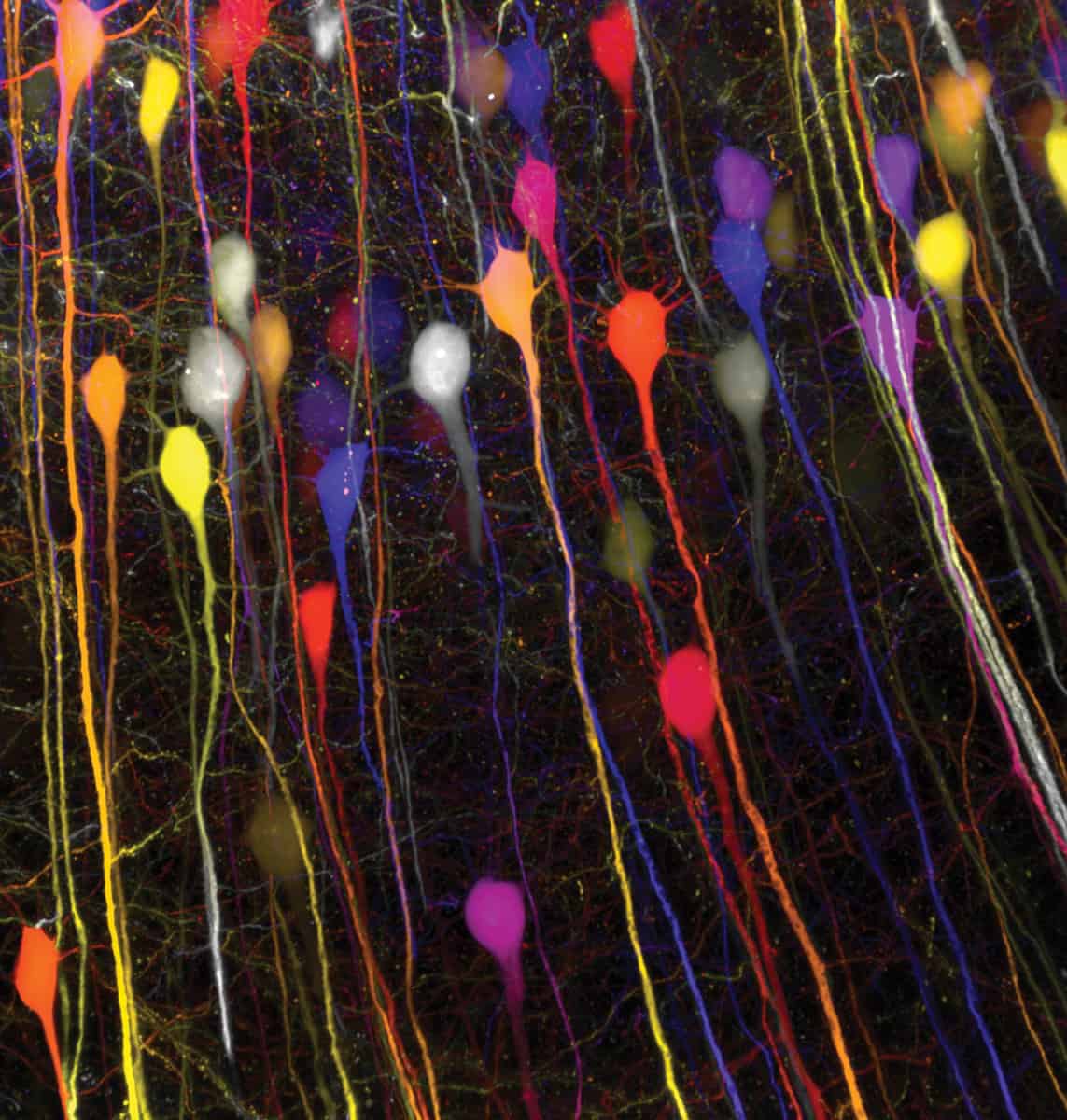
Over the last two or three years, we’ve also worked with researchers at the University of St Andrews here in Scotland to bring a new biological imaging technique known as Airy light sheet microscopy to market. This is a laser and digital imaging system that gives you resolution on the micron scale – small enough to look at the biochemical processes taking place inside cells (see image above) – over a relatively large area, several hundreds of microns on a side. That means scientists can use this microscope to look at large collections of cells and start to understand the processes of life better.

You and Gareth had started a company together before. Did that make it easier to get funding for M Squared?

The first time you start a company, everybody tells you that you need a track record to get funded. The second time around, they tell you it’s not quite as easy as that. But the thing we got right was to step back and ask what we needed funding for, how much we needed, and when. It can be easy to get on a perpetual treadmill of constantly raising funding to grow a business, but it’s a very time-consuming process, and Gareth and I have a very strong belief that you need to look after the fundamentals first.

So we had a period where we decided to keep things lean and invest some of our own money, in order to de-risk our business proposition by working around the core challenges and doing some detailed development. That way, when we were ready to seek funding, we could do so with our best foot forward. We also got strong support from Scottish Enterprise, and at the end of the first year we raised some money from a private-equity house in Edinburgh, Melville Capital. Angus Kennedy Morrison, who heads up Melville, has been a great supporter of our business, and he still sits on our board, so we made a good pick there.

For about five years after that, we took the view that the best people to fund the growth of our business were our customers. If what we were doing was valuable – and if we had a decent business model that created the right margins for the right level of investment – then end users and customers would pay for it. But there are also certain points in the life of a business where you need to raise capital to make step changes that you can’t otherwise make. We reached that point in 2011, when we raised £4m from the Business Growth Fund to develop a scaled-up factory and set up a sales and marketing team in North America, a region that now accounts for more than half of our business.

What was the most difficult part of developing M Squared?

The entrepreneurial journey is all about heading down a path where the scale of your vision and ambition is completely mismatched to your available resources. You’ve got to realize that. You’ve got this gaping chasm between what you’d like to do and what you are functionally able to do, and the challenge in any high-growth entrepreneurial business is to work out how you’re going to close that gap, step by step.

To me, the answer is, predominantly, by getting the best people to help you. In the early years, many of M Squared’s employees were people like ourselves who had been around the block in the laser industry, but we also had people working on electronics and control systems who came from a Glasgow company that made very high-end audio systems. Having that expertise is the essence to closing the capability gap. Today, about a third of M Squared’s staff come from outside the UK, and the importance and beauty of that diversity is that it gives you different insights, different types of creativity and a fundamental ability to do bigger, faster, more challenging things.

Any advice for someone starting a business in optics or photonics?

Don’t try and do it all yourself. Find things that other people can help you with and ask for help as often as you possibly can, because then you’ll move faster and avoid the pitfalls that other people have seen before. But the main thing I’d say is that I’m amazingly optimistic that we’re coming into a golden era of optics and photonics, where the industry is having a more and more positive impact on the world. That’s been a key part of M Squared’s story, but I think it’s becoming even more so as we begin to see the potential for some of these technologies.

  • Enjoy the rest of the 2019 Physics World Focus on Optics & Photonics in our digital magazine or via the Physics World app for any iOS or Android smartphone or tablet.


Selective logging will not be enough to sustain timber production in Amazonia

Amazonian forests are unlikely to provide enough timber to meet current demand over the long term, even with the use of improved logging practices.

That is a key finding of a new study led by the Tropical managed Forests Observatory (TmFO), published today in Environmental Research Letters (ERL).

Camille Piponiot, junior scientist from the University of French Guiana, is the study’s lead author. She explained: “In the Amazon Basin, around 20% of the total forest area is used for timber production. This is usually done through selective harvest of a few trees per hectare, followed by regrowth.

“Selective logging provides income and employment and allows the forest to retain most of the carbon stocks and biodiversity of old-growth forests. But with 30 million cubic metres of sawlogs being extracted from the Amazon’s 108 million hectares of natural production forests each year, decisions about the management of these production forests are of major importance.”

The Amazon rainforest spreads across nine countries, namely Brazil, Ecuador, Venezuela, Suriname, Peru, Colombia, Bolivia, Guyana, and French Guiana, making the concerted management of wood resources difficult in the region.

Senior author Bruno Hérault, from the French Agricultural Research Centre for International Development (Cirad), explained: “Many Amazonian countries have passed regulations for maximum logging intensities and minimum time intervals between harvests, to avoid depletion of timber stocks. But these national regulations are insufficient. Typically, the minimum time timber stocks are assumed to recover to pre-harvesting levels are 20–35 years, despite substantial evidence that without strong limits on logging intensities, this is not long enough to be sustainable.”

The research team used computer modelling to examine the timber sustainability levels under five different logging intensity and timber regrowth scenarios: an average logging intensity scenario with a standard 30-year cutting cycle; a low-intensity scenario with a 30-year cutting cycle; a high-intensity scenario with a 30-year cutting cycle; a short-cycle (15 years) scenario, with an average logging intensity; and a long-cycle (65 years) scenario, with an average logging intensity.

Piponiot said: “Our results show that with current cutting cycles and logging intensities, forest regrowth is too slow to recover timber stocks. The light scenarios (low intensity and long cutting cycles) do not provide enough timber and the heavy scenarios are not sustainable, as they do not allow volume recovery during a cutting cycle.”

With ongoing climate changes, the picture would get even worse. Hérault said: “In Amazonia, climate changes would lead to more frequent and severe droughts and wildfire events due to drier and hotter conditions. This would lead to increased tree mortality, especially of large trees (loggers’ main target) that are particularly sensitive to intense droughts. Timber stocks are therefore likely decreasing in Amazonian production forests, even when loggers comply with official regulations.”

Co-author Plinio Sist, leader of the Tropical managed Forests Observatory, said: “These results highlight the need for a re-evaluation of the strategy for future timber provision in Amazonia. We are in a period of transition that requires important forest policy decisions to promote diversification of timber sources, and a substantial shift in the objectives of Amazonian production forest management.”

Smartphones measure up for CT stroke assessment

In treatment of acute stroke, rapid and precise clinical assessment is essential to minimize long-term damage. Stroke may be ischaemic or haemorrhagic, and the appropriated treatment will depend on the patient’s diagnosis. In cases where a hospital with a stroke centre may not be nearby, the smartphones and mobile devices used by neuroradiologists represent a potential lifeline for patients with acute stroke symptoms. Both have been in use for telestroke head CT assessment for nearly a decade to make urgent diagnoses. However, governmental regulatory approval of this use varies among countries.

A team of radiologists and neurologists in Bogotá, Columbia, hope that regulatory agencies in resource-constrained countries will acknowledge the diagnostic capabilities of today’s smartphones and mobile devices. They conducted a detailed study comparing the diagnostic performance of a smartphone (Samsung Galaxy S8 Plus) and a laptop (Lenovo ThinkPad T460S) with a routine reading system: a medical workstation with Agfa IMPAX 6.5 PACS software. The smartphone and the laptop both had teleradiology viewer software (Agfa XERO Viewer 3.0) installed (J. Am. Coll. Radiol. 10.1016/j.jacr.2019.04.001).

The case cohort included 188 patients with symptoms of acute stroke admitted to the emergency department of the University Hospital Fundación Santa Fe de Bogotá between 2013 and 2018. This included 25 patients with haemorrhagic lesions, 49 with ASPECTS (Alberta Stroke Program Early CT Score) lower than six, 55 with hyperdense middle cerebral arteries (MCAs), 122 with MCA- or posterior circulation (PC)-territory ischemic lesions, and 68 with an acute ischemic lesion involving the MCA territory.

Four experienced neuroradiologists reviewed the cases using the three reading systems — the PACS diagnostic workstation, the laptop and the smartphone — collectively performing 2256 head CT interpretations. All readers had access to all relevant clinical data for each patient.

For each patient, the radiologists evaluated:

  • whether a case was haemorrhagic or not;
  • for non-haemorrhagic cases, the observer’s confidence in the presence of an ischemic lesion in the anterior cerebral artery (ACA), in the MCA and in the PC territory;
  • confidence in the presence of a hyperdense MCA and the presence of hyperdense PC arteries;
  • (in cases with high confidence of the presence of an ischemic lesion) whether the event is acute, subacute or chronic;
  • (in cases with acute ischemic lesions) the ASPECTS;
  • the presence of intra-axial neoplasms and any other imaging findings.

For each variable, the authors evaluated the sensitivity, specificity and area under the receiver operator characteristic (ROC) curve. They also performed analyses of variances.

Lead author Antonio Salazar, of the University of Los Andes, and co-authors reported that the shapes of the ROC curves were very similar for all of the reading systems, indicating similar observer performance. There was equivalent accuracy among the devices at a threshold of 10% for all the diagnostic criteria and at a 5% threshold for haemorrhagic lesions, hyperdense MCA, and acute ischemic lesions in the MCA territory. The authors note that there was no more than 30 s difference between the reading time of the mobile devices compared with the medical workstation.

Telestroke programmes

Data have not been published about the number of radiologists who make urgent remote diagnoses of stroke from head CT scans viewed on smartphones or mobile tablets. Two pioneering telestroke programmes, one launched at the University of Calgary and the other at Mayo Clinic-Arizona, helped legitimize smartphone use for this application in 2011 and 2012.

Researchers at both institutions independently conducted retrospective studies comparing neuroradiologists’ interpretations of non-contrast CT brain scans using a PACS diagnostic workstation and a smartphone. Both teams determined that the sensitivity, specificity and accuracy of detecting intraparenchymal haemorrhage were each 100% and that inter-rater agreement was excellent. However, the Mayo researchers acknowledged that their study was conducted without the pressures and time constraints of a real-world stroke emergency. The Calgary team recommended that additional research be conducted.

A Mayo clinic spokesperson confirmed that mobile devices are currently used when needed as part of its telestroke programme. The analysis by Salazar and colleagues provides a current comparison of diagnostic capabilities of the latest technology utilized in 2019 smartphones.

Solve for X

“For the average journalist,” particle physicist Bruno Mansoulié notes astutely, “equations just mean a vanishing audience.” Being one of those mathematics-adverse science writers myself, the task of reviewing Mansoulié’s book, All of Physics (Almost) in 15 Equations – which has recently been translated into English from its original French – offered the promise of a brilliant redemption narrative, for me at least. In the ultimate in immersion therapy, I imagined reluctantly allowing Mansoulié to expose me to the wonder of once-dreaded equations. My hope was that I should emerge, transformed and enlightened by the book. Unfortunately, that wasn’t the case, and Mansoulié has not quite cracked the formula for success.

The premise of this short volume is certainly sound. Each chapter introduces a fundamental equation from across the history of physics (or, in a couple of exceptions, a set of linked equations, or the concept of Feynman diagrams). The equation is then explained, and its importance contextualized. As one progresses through the book, the chosen equations become inherently more complex. The opening chapter, for example, contemplates Ancient Greek mathematician Euclid’s law of light reflection. Having explained the basics of how mirrors function, Mansoulié uses this as a launchpad to explore how we see – and the disconnect between the intuitive concept of actively “watching” and the passive receipt of light rays.

Later chapters ramp up the complexity, addressing such cornerstones as the ideal gas law, the Dirac equation and the matter–energy equivalence. I especially enjoyed a humorous aside in a chapter concerning Maxwell’s equations, in which Mansoulié joyfully imagines a secret society of special scientists lurking unknown among the physics community, all of whom have unbelievably managed to complete all the final exercises at the end of a particularly vexing textbook – Jackson’s Classical Electrodynamics. This joking sidebar is entirely frivolous, and yet delightful for how it blasts the stereotype of the humourless, perfectionist scientist clean out of the water.

But when it comes to the core body of the volume, All of Physics (Almost) in 15 Equations would have benefited from spending a little more time demonstrating its workings. While the slim chapters have a definite appeal in their bite-sized length, the exploration of each equation left me wanting more detail on the context and application of each concept. More time could have been employed explaining to the uninitiated how to read each chapter’s equation(s) – and, for those similarly unfamiliar with the manifold players in the history of physics, more care in introducing the names of important scientists would have been welcome. The average reader cannot be assumed to already know who, for example, Snell van Royen was, and context would have made for a more accessible and humanized narrative.

Similarly, it seems unreasonable to expect that anyone apart from a particle physicist would have the necessary background to understand the nature and importance of the Z0 particle, which becomes relevant to the latter half of the chapter on Maxwell’s equations. Yet, the text does little to explain this. The recurrence of esoteric knowledge and terminology from outside the realms of physics, in addition, hints at a more fundamental confusion as to the volume’s target audience, which the back cover claims to be “the interested general public”. Case in point: “appoggiatura”. This is “a grace note which delays the next note of the melody, taking half or more of its written time value”, according to the dictionary. The word may be a good target for one’s new word-of-the-day, but the average person might, unlike Mansoulié, struggle to squeeze it into natural prose twice within as many brief chapters.

In a work intended to induct a likely reluctant population into the wonders of physical equations, it is odd that Mansoulié so often pauses to interject that the equation being discussed is not a favourite of his. “I like most the equations which change my way of seeing the world, but this is not the case here,” he writes of the Navier–Stokes equation. “Despite its high-level appearance, its Greek letters and the ‘nabla’ operator with its esoteric look, the underlying physics is simple – nothing more than Newton.” The application might be beautiful, as he goes on to concede, but as a reader I would rather be introduced to those equations that the expert views as the crème de la crème.

As a reader I would rather be introduced to those equations that the expert views as the crème de la crème

Furthermore, the volume’s content seems beset by a few curious editorial decisions that left me with the impression of a work in need of further polish. A section on Newton’s second law makes the fundamental mistake of telling rather than showing, as Mansoulié describes a fascinating-sounding physical misunderstanding in a Renaissance draftsman’s depiction of a cannonball’s path through the air – wherein it took a straight trajectory before dropping straight downwards. How much better it would have been for the illustration itself to accompany the text (or at least a reference provided).

While perhaps intended poetically, Mansoulié’s prose has a shade of the purple about it – and repeated comparisons between physics and Buddhism are too easily read as being rather reductionist towards the latter. Singularly disconcerting is the decision to succeed the headline “The physics of the industrial revolution” with a not-inconsiderable summary of core aspects of particle physics, deferring any mention of said technological shifts until two pages later.

Special mention and unblemished praise must be given, however, to the enchanting illustrations of Lison Bernet, the presence of which graces the opening of each chapter. Full of whimsy, Bernet delightfully illustrates the context of each equation; painting, for example, Alice’s encounter with Schrödinger’s Cheshire cat in the forking forest path of a quantum wonderland; and a mash-up of Einstein’s equations with a melting clock in the style of Salvador Dali.

Perhaps I am overlooking the hidden value of All of Physics (Almost) in 15 Equations. Despite its superficial premise, the volume may be better viewed as an autobiographical character study; one of a scientist who, if not the best pedagogue, nevertheless cannot help but telegraph both his unabashed and poetic love for physics and the extent to which his relationship with the titular equations has intersected with every facet of his character. Such a frame would make far better use of Mansoulié’s anecdotes from across his physics education.

Taken in this adjusted context, the work is compelling and worthy of being perused – regardless of whether one sees in certain equations total personal revulsion or such aspects as, in the words of Mansoulié, “the sensuous curve of a ∂”.

  • 2019 World Scientific £25pb 156pp

Can grid-scale storage solve intermittency problem, asks Global Warming Policy Foundation

briefing paper from the Global Warming Policy Foundation (GWPF) dismisses the idea that grid-scale electricity storage can help bring about a UK renewables revolution. According to the paper’s author, Jack Ponton, an emeritus professor of engineering from the University of Edinburgh, current approaches are either technically inadequate or commercially unviable.

Some have suggested that “intermittent” power from wind turbines could be balanced with batteries or pumped hydro storage but, according to the GWPF press release, Ponton says this approach is unlikely to be viable: “You need storage to deal with lulls in wind generation that can last for several days, so the amount required would be impracticably large. And because this would only be required intermittently, its capital cost could probably never be recovered”.

He also thinks that hydrogen storage has been unjustifiably hyped: “A major problem with hydrogen is its low volumetric energy density. The only practical way of storing the large volumes required would be in underground caverns or depleted gasfields. We are already short of this type of storage for winter supplies of natural gas.”

The GWPF concludes that a lack of suitable storage technologies means that intermittent renewables cannot replace dispatchable coal, gas and nuclear power and so a sensible energy policy cannot be based on them. It quotes Ponton’s view that “wind and solar power are not available on demand and there are no technologies to make them so. Refusing to face these inconvenient facts poses a serious threat to our energy security”.

It can’t be done.

That is a fairly forthright conclusion, reinforced by the formal conclusions in the report itself:

(1) “There seems to be no possibility that any existing storage technology can handle the intermittency of wind generation and make it effectively dispatchable. There are not enough sites for pumped storage, batteries are likely to remain too expensive and both processing cost and availability of storage sites would rule out storage as hydrogen.

(2) Solar plus battery storage is probably already cost-competitive for locations in or near the tropics, where year-round load factors are acceptable and so only overnight storage is required. In the UK, low winter load factors mean that essentially no useful generation takes place in December and January. Only storage as hydrogen could provide summer-to-winter storage, but cost and lack of suitable storage sites would rule out this approach.

(3) The predictability and relatively short length of the tidal cycle make the combination of tidal stream generation and pumped storage worth consideration. However, the number of tidal sites with sufficient stream velocity to provide useful generation in the neap tide season may be limited. There are also questions about the reliability, maintainability and lifespan of turbines in a very hostile marine environment.”

Plenty of room

There are so many assertions here, and in the full text, that it’s hard to know where to start. But just taking the lack of cavern storage space issue, it’s interesting that a joint Edinburgh/Strathclyde University modelling study recently suggested that wind-derived power could be used to compress air for storage in porous sandstone strata offshore during the summer, ready for use to generate power again in the winter. It claimed that the potential storage capacity for the sites identified was equivalent to around 160% of the UK’s electricity consumption for January – February 2017 (77–96 TWh), with a round-trip energy efficiency of 54–59%. However, it would be expensive, at the very least doubling the cost of electricity. But no-one is seriously suggesting that we use that route for all UK spare variable power: it is just one of several options. Then again it might get cheaper. A 2014 study saw Compressed Air Energy Storage Systems (CAES) as offering “good performance, long lifetime, low net environmental impact and reasonable cost compared to rechargeable batteries”.

In addition, the Energy Technologies Institute has said that there are tens of GW-equivalent salt cavern sites in the UK, some of which could be used for hydrogen storage, and that could make the hydrogen production and storage route cheaper than pumped hydro storage. Ponton dismisses hydrogen electrolysis as too expensive, but as with many of his other claims, there are counterviews, with the “Power to Gas” (P2G)/hydrogen storage option now looking likely to be economic for widescale use. Similarly for P2G/electrolysis efficiency, which he says is too low. That’s about to be tested by ITM Power and others in a 100 MW power-to-gas project at Runcorn, including hydrogen storage in a salt cavern near Lostock. And moving away from direct power storage, what about solar heat storage and, indeed, heat storage generally? That, with combined heat and power (CHP), could provide useful flexibility. I could go on! For example, what about interconnectors, exporting surplus power and importing some back to meet lulls? But see the forthcoming new edition of my IOP book on Renewables for chapter and verse.

Ponton may be right about the limits of conventional batteries, at best offering short- term storage and frequency support: they are unlikely to ever be used for long-term bulk energy storage. However, as he admits, new ideas are emerging. For example, in terms of medium/large volume storage, what about the newly emerging large flow battery systems, like the 120 MW/700 MWh redox binary system using two salt caverns, each 100,000 cubic metres in volume, planned in Germany? Or the 200 MW/800MWh flow battery system planned in Dalian, China? Or for larger and longer-term storage, the 1 GW underground salt dome compressed air energy storage (CAES)/hydrogen/flow battery project in Utah, US.

Nuclear also needs back up

Ponton’s analysis, though offering surprisingly few references, is none the less worth reading to see how traditionalists think. Predictably, he seems to favour nuclear. That’s fair enough, views do differ, and it is not unusual from the GWPF stable. For example, the GWPF recently published a report by Capell Aris that claims that the newly emerging energy system, based increasingly on renewables, “will deliver significant carbon emissions cuts but will double electricity price”, whereas “a system based on gas and nuclear would deliver similar emissions cuts at around half the price”. The GWPF says the Aris report finds that “with a system based on gas and nuclear power, emissions reductions could continue out to 2030 while maintaining consumer power prices at their current level. This result holds even if the very high prices of the planned Hinkley C power station apply in practice.” That’s one assertion that takes a bit of swallowing.

So too does the claim by Aris that, in his proposed nuclear-dominated system, “all the ancillary service requirements could be served by the operation of the Dinorwig, Ffestiniog, Cruachan and Foyers pumped-storage stations at very low cost”. Nuclear plants can and do go offline unexpectedly, and sometimes for more than a few hours. We might need a lot more fast-start-up hydro pumped storage, or some other form of back-up, to cope with a large nuclear component.

That specific problem is not something that faces the very ambitious “100% by 2050” renewables scenarios produced by Jacobson et al. in the US, and by LUT in Finland and EWG in Berlin. See my last post. Although these scenarios have to provide flexible balancing systems for a range of renewables, to deal with their short- and long-term output variations, they do not need to have a large amount of instantly available back-up capacity to deal with sudden major nuclear plant shutdowns. Even so, although generation and storage/balancing costs are falling, there are still worries about the implementation costs of ambitious renewables programmes like this: see my next post.

Battle of the elements: gold has gleamed through the ages

Gold graphic

The ancient Egyptians believed their gods had shimmering skin made from gold. While the Aztec word for gold, teocuitlatl, literally translates as “excrement of the gods”. From ancient Rome to the California gold rush, this dense shimmering metal has been immutably connected with divine quality and the sense of opportunity. The reason for this is simple: gold is the most special element of them all.

Gold is so revered because of its irresistible combination of beauty and rarity. All the gold mined in the history of mankind would fit into an Olympic swimming pool, so they say. Today, we present our loved ones with gold rings to symbolize lifelong bonds. Governments hoard gold bars to safeguard their futures, and the finest athletes on the planet compete for gold medals. Even the idea of gold permeates our cultures, as we speak about “golden hearts”, “gold standards” and “golden opportunities”.

Gold standard for electronics

But it’s not just bankers and newlyweds that have a special relationship with gold. Scientists and engineers also covet gold on account of its superlative and complementary properties. Gold is a great conductor of electricity and heat, while being hard and resistant to corrosion. It’s also freakishly malleable, meaning a little can go a long way. According to the Encyclopaedia Britannica, an ounce of gold can be beaten into thin gold leaf sheets of 187 square feet. This winning combination is particularly useful in electronics for creating robust switches and connectors in the computers and phones that have transformed our societies.

In the emerging field of nanotechnology, gold is proving itself to be the gold standard once again. Due to their unique physio-chemical properties, gold nanoparticles (GNPs) are showing promise as a carrier for delivering drugs to tumours in a highly targeted manner. For energy applications, GNPs have also been used to improve the efficiency of solar cells. Particles embedded into polymer structures can trigger an effect known as surface plasmon resonance – collective excitations of electrons that interact very strongly with light.

We may snigger now to think that Egyptians and Aztecs believed gold had divine origins. But scientists have also struggled to fully understand the origins of gold, often with a desire to produce it for themselves. Indeed, despite revolutionizing our understanding of the mechanics of the universe, Newton actually spent a fair chunk of his time doing alchemy, seeking ways of converting less valuable base metals into gold.

Excreted from a kilonova

We know that gold – atomic number 79 – is present across the world in small quantities in igneous rocks, formed when molten material from the Earth’s interior finds its way to the surface. What scientists struggled to understand was how that gold came into existence in the first place. Some argued that heavy elements such as gold and platinum could form from lighter elements fusing together inside a supernova. Others argued that even the conditions inside an exploding star would not be sufficiently extreme for that process.

Remarkably, the answer only arrived in 2017 with the first ever detection of gravitational waves, by the LIGO and Virgo collaborations. Those waves were produced by the merger of two neutron stars in an event known as a kilonova. With the birth of multimessenger astronomer, astrophysicists pointed their optical telescopes at the source of gravitational waves to discover the signatures of gold and platinum in significant quantities. At long last, we had discovered our cosmic deity capable of excreting gold!

For their pioneering work in the LIGO/Virgo Collaboration, Rainer Weiss, Barry Barish and Kip Thorne were awarded the 2017 Nobel Prize for Physics. What did they receive at the award ceremony in Stockholm to acknowledge that their work shines above the rest?  A 175 g medal made from 23 carat gold. Of course.

South Asian monsoon ‘predictable’ one year in advance

The South Asian summer monsoon – the region’s primary source of water for agriculture – is predictable more than one year in advance, according to a scientist in the US. Monsoon rainfall is variable, and comparatively dry years can have devastating consequences for farmers.

“South Asian monsoon prediction has been a challenge that has exercised scientists for over a century, and has also led to much frustration, as some of the adopted methods have turned out not to work well,” says hydrologist Nir Krakauer of the City College of New York. “My research confirms that the monsoon is partly predictable, in fact well in advance, so that the effort to refine prediction methods and find ways for them to be usefully applied is probably justified.”

Krakauer compared different statistical methods for forecasting rainfall based on sea-surface temperatures. Predictions that are significantly better than chance can be made a year or more before the monsoon season starts, he found.

Today, monsoon predictions are typically made only up to three months in advance, says Krakauer.

“Better monsoon prediction at longer lead times could help farmers to make decisions about what to plant and what supplies to buy, as well as help governments trying to support them,” he adds. “They could also help, for example, reservoir managers decide how much water to release before the monsoon.”

In recent years, researchers have recognized the upper ocean’s heat content as the leading predictor of monsoon rainfall. But while they’ve constructed various statistical predictive models, says Krakauer, there have been few systematic comparisons to determine how far in advance the models can be applied.

After exploring various methods in statistics and data science to relate predictors to outcomes, Krakauer found two that could map sea-surface temperature patterns to rainfall anomalies. One of these methods was linear, assuming precipitation to be some multiple of past sea-surface temperature, and the other was non-linear, allowing the relationship with past sea-surface temperature to be more complicated.

Krakauer trained the models on data from 1901–1996, and tested them on data from 1997–2017, comparing them with an average climate baseline. Although the non-linear model was better, both models outperformed the climatology baseline at least one year ahead when considering precipitation in 0.5° grid spacings over South Asia.

Still, farmers don’t only care about levels of monsoon rainfall – they also mind when that rainfall comes. “I’m interested in whether it’s possible to predict the monsoon timing in addition to the total amount of rainfall, which should make this work more helpful for farmers,” Krakauer says.

Krakauer reported his findings in Environmental Research Letters (ERL).

Entropy plays an important role in how living cells form tissues

The process that causes living cells to club together to create tissues is driven by both biochemistry and thermodynamics, according to a new study by an international team of scientists. The group’s experiments and computer simulations could help scientists improve technologies for creating artificial tissues and organs.

Multicellular organisms from simple worms to complex mammals comprise tissues and organs that form via the organization of many single cells. This alignment of cells is driven by several processes, some that are biochemical and others that are related to cell-to-cell contact and other interactions with cell exteriors. While cellular alignment processes often have miniscule effects on individual cells, collectively they play a crucial role in the formation and health of tissues.

Alignment often occurs in response to the anisotropy of the cells’ environment, and this results in the migration of cells along a specific direction. This is called “contact guidance” and plays important roles in both tissue growth and tissue homeostasis – the latter being the process by which tissue is maintained in a steady state. While scientists know that contact guidance is important, the underlying mechanism has been poorly understood until very recently.

Biochemistry versus entropy

Now, researchers in the UK, Netherlands, Iran, and Italy have shown that contact guidance can be driven by both biochemical and entropy related processes, depending on the degree to which the cells are confined in an anisotropic environment. Led by Vikram Deshpande at the University of Cambridge, the team placed human muscle cells (myofibroblasts) on substrates containing micropatterned channels made of fibronectin. This is a large glycoprotein that makes up the extracellular matrix of tissues. As well as mediating cell interactions, it also plays roles in cell adhesion, growth and migration.

The cells were placed on the substrates at low densities so that cell-to-cell contact was avoided. The cells measure about 160 micron across and the team observed their behaviour in channels of three different widths – 50, 160 and 390 micron.

The team found that cells in the narrower channels were aligned more than those in wider strips. In the narrower strips, the team concluded that contact guidance occurred because the cells must change their shapes and energy to adjust to the narrower environment — processes that are driven by the biochemical processes within the cells.

What is happening is a little bit counterintuitive

Vikram Deshpande

What surprised the scientists, however, is that contact guidance also occurred in channels much wider than the size of the muscle cells. In this case, the researchers say that the process is driven by an increase in entropy – the thermodynamic tendency of the system to move towards disorder.

“What is happening is a little bit counterintuitive,” explains Deshpande, “You can think that in an aligned system is not maximally disordered, but actually in this case, the maximally aligned system is the most disordered one”.

He says that the phenomenon can be understood by imagining a few matches in a matchbox. If you shake the matchbox, instead of taking a random orientation, the matches would align themselves along the edges of the box. Analogously, cells aligned along the anisotropy of their environment represent a system with a higher entropy.

“There are certain factors that you can experimentally measure, such as the traction, or investigate the shapes to look at the size of their cytoskeletal arrangements. But there are certain features in understanding cellular behavior that are not directly measurable,” added Deshpande. “This is why we also simulated the Gibbs free energy of the cells, to go beyond the experiments.”

Critical width

The team combined the analysis of the cells’ shapes with a statistical analysis of their fluctuations not related to temperature. The resulting model also predicted, that upon increasing the channel width above a certain critical value, the cell orientation would not be driven by its internal biochemistry, but rather by entropy.

The results could have important implications for healthcare, medicine and tissue engineering – which could be achieved by manipulating the shape and organization of cells by changing the geometry of their environment. A better understanding of contact guidance could also help doctors predict the spread of diseases such as metastasizing cancer.

While the experiment was done on a flat 2D surface, the team is already working on expanding their research to encompass more life-like conditions. “In lots of cases inside the body, surfaces are not flat and the cells are not growing on a flat surface either,” says Deshpande. “We are really interested in understanding how effectively curvature is a driving cue for guiding cells and why do different kinds of cells respond differently to various surfaces and curvatures.”

According to Patrick McGarry from the National University of Ireland Galway, this study “provides a ground-breaking insight into the thermodynamics of biological cells”. McGarry, who was not involved in the research adds, “The seminal finding that entropy is a key driver of cell alignment is fundamental to the assembly and function of living tissue and has highly important implications for the field of regenerative medicine”. He adds, “The work provides a new paradigm for the fusion of thermodynamics, biology, and computational mechanics, leading to a new understanding of the active response of living matter to the surrounding physical environment”.

The results are reported in the Biophysical Journal.

US energy department cracks down on foreign recruitment programmes

The US Department of Energy (DOE) says it will ban its scientists from taking part in recruitment programmes sponsored by foreign governments. The action, which extends an order announced in January, is designed to stop scientists funded by the DOE from participating in programmes, such as China’s 1000 Talents initiative. The ban extends to individuals working for the DOE’s contractors, which means that more than 100,000 individuals are affected.

While the ban applies to all overseas governments, analysts have little doubt that it mainly targets China, with the US government having recently expressed concern that China is using the 1000 Talents programme to obtain information about secret technology and intellectual property from US institutions. Created in 2008, the programme aims to attract Chinese scientists who have studied or worked abroad back to China by offering them salaries and laboratory support. It also targets non-Chinese scientists who have the right skills to support China’s technological innovation.

Under suspicion

Before the latest crackdown, first reported by the Wall Street Journal, five Chinese life scientists faced being sacked from their institutions, while in April a grand jury in New York charged GE Power engineer Zhang Xiaoqing, an US citizen, with passing trade secrets to China. Then in late May, theoretical physicist Turab Lookman – an Indian-born, British-educated, former Canadian resident who is a naturalized US citizen – was charged by the Department of Justice with “making false official statements” about his contact with the 1000 Talents programme.

A former employee of the DOE’s Los Alamos National Laboratory for more than 18 years, Lookman pleaded not guilty. After paying a $50,000 bond and surrendering his passports, he is now being detained in his home in Santa Fe, New Mexico. The charge asserts that Lookman agreed to participate in the programme “for personal compensation”, but that he denied doing so three times – in a standard security clearance form in 2017 as well as in interviews with a counterintelligence officer and another government investigator last year.

They are trying to pick bones out of an egg

Xiaoxing Xi

Lookman’s lawyer, Paul Linnenburger, says that while Lookman had top-security clearance, most of his research has been made public. Linnenburger adds that the prosecutor, George Kraehe, failed to prove that Lookman had access to or downloaded any high-level security information before Los Alamos terminated his employment. Los Alamos spokesperson Kevin Roark told Physics World in a statement that the lab “has worked co-operatively with federal law enforcement throughout this investigation and will continue to assist as appropriate during the prosecution phase”.

Given that Lookman is not Chinese, the issue has reverberated through the Chinese-American scientific community. Several suspect an ethnic component in the crackdown that follows similar cases. In May 2015 Temple University physics professor Xiaoxing Xi was charged by the FBI with passing details of a restricted device to Chinese colleagues – only later did they concede that they had misidentified the device.

“When top law enforcement officials say that Chinese students and scientists are not welcome because they steal US secrets, I know from my own personal experience that it would mean the FBI is reading [their] emails and listening to [their] phone calls,” he told Physics World. “They are trying to pick bones out of an egg”.

Transcranial ultrasound opens a pathway through the blood–brain barrier

There are several thousand drugs available to treat a wide range of brain diseases, but they cannot penetrate the blood–brain barrier (BBB), which protects pathogens in blood from reaching the brain. The BBB also prevents most drugs from gaining access to the parenchyma, the brain’s functional tissue, impeding the treatment of neurodegenerative disorders such as Parkinson’s and Alzheimer’s disease.

A team led by Elisa Konofagou at Columbia University is developing a novel technique that could facilitate targeted drug delivery into the brain and enable drugs to treat brain diseases more focally. The researchers are using transcranial focused ultrasound (FUS) along with systemically administered microbubbles to create a localized and transient opening that allows drugs to cross the BBB.

Working with Serge Przedborski‘s group at Columbia University Irving Medical Center, the team has demonstrated that the combination of FUS and administration of neurotrophic factors (through protein or gene delivery) in a mouse model of Parkinson’s could partly restore dopaminergic pathways, the neurons in the brain that are affected in early Parkinson’s disease. Neither FUS alone nor delivery of neurotrophic factors without FUS had the same effect (J. Control. Release 10.1016/j.jconrel.2019.03.030).

“We found both behavioural and anatomical neuronal improvements in the brain,” says Konofagou. “This is the first time that anyone has been able to restore a dopaminergic pathway with available drugs at the early stages of Parkinson’s disease. We were able to curb the rapid progression of neurodegeneration while improving the neuronal function. We expect our study will open new therapeutic avenues for the early treatment of central nervous system diseases.”

For the study, the researchers developed a device that uses a neuronavigation system to direct the treatment in real time. The US Food and Drug Administration (FDA) has now assigned the team an investigational device exemption to use this device in clinical trials to test its safety in Alzheimer’s patients.

“Neurosurgeons use such systems all the time to guide neurosurgery,” says Antonios Pouliopoulos, who helped develop the clinical neuronavigation system. “Our group just replaced the surgical instrument with an ultrasound transducer to perform our non-invasive procedure.”

Konofagou’s is the only academic laboratory in the US to receive FDA approval for ultrasound-assisted BBB opening. The researchers note that, unlike other approaches under development, their technique is MRI-independent and does not require nanoparticles to facilitate drug delivery.

The treatment device uses a single-element transducer, making it smaller, faster and 10 times cheaper than current helmet-shaped, 1024-element transducer systems that employ MRI guidance. Because the system is portable, doctors will be able to treat patients anywhere in a hospital and, in future, even at a patient’s home. Treatment will take less than 30 min, compared with three to four hours for MRI-guided therapy, and can be monitored in real-time.

The first trial with the device will be with Alzheimer’s patients, after which Konofagou plans to work with Parkinson’s patients.

“We all have loved ones with neurodegenerative disorders,” Konofagou adds. “My grandmother has been suffering from dementia for more than five years, so I know first-hand how essential it would be to have a simple device that can be wheeled into the patient’s home and offer a higher quality of life, especially for our rapidly aging population. And there are so many deadly diseases like brain tumours that affect people of all ages, with no cure yet in sight. That’s why we want to bring our research so rapidly to the clinic.”

Copyright © 2026 by IOP Publishing Ltd and individual contributors