Laser collisions could boost proton-beam energies

The energies of proton beams produced by laser-driven particle accelerators could be doubled, without any increase in laser intensity. That is the suggestion of computer simulations done by Tünde Fülöp at the Chalmers University of Technology in Sweden. The technique involves splitting the laser beam in two, and if realized in the lab, it could find a wide range of applications. These include the development of compact accelerators that could make cancer treatment more accessible.

While conventional accelerators use externally-applied electric and magnetic fields to accelerate charged particles such as protons, it can also be done by firing ultra-intense laser pulses at targets such as thin, metallic foils. The laser light deflects negatively-charged electrons in the target, while the much heavier positively-charged atomic nuclei are not affected. This charge separation generates a huge local electric field in the wake of the pulse that can be used to accelerate charged particles.

An important benefit of laser acceleration is that it can be achieved in using compact table-top equipment. This is unlike conventional accelerators, which must be house-sized or larger to achieve comparable particle energies. However, challenges remain in creating practical laser systems that deliver enough particles at the energies required for medical and other applications. Simply boosting the intensity of the laser pulse does not result in a corresponding boost in particle energy, for example.

Standing waves

Fülöp and colleagues argue that the energy problem could be overcome by splitting the laser pulse into two equal-energy pulses, which then hit the target simultaneously at different, precisely calculated angles of incidence (see figure). Through simulations, the team showed that when the laser pulses collide, a standing wave forms inside the solid target that increases the peak electric field. With the same pulse intensity used in previous experiments, their calculations suggest that the technique can double the energy of the proton beam and produce five times as many protons — all with far more flexible control parameters than required before.

The team’s discoveries could lead to compact accelerators for wide variety of technologies, including materials analysis, and testing spacecraft for their resilience against cosmic radiation. They could also lead to new and compact systems for targeted cancer therapies.

“We need to achieve up to 10 times the current [proton] energy levels to really target deeper into the body,” says Fülöp. “One of my ambitions is to help more people get access to proton therapy. Maybe that lies 30 years in the future, but every step forward is important.”

The research is described in Communications Physics.

Metal ion separation speeds up

A new method to purify actinide elements that is much more efficient than conventional approaches could revolutionize metal ion separation. The method relies on siderophore-inspired ligands that can bind, with unprecedented selectivity, metallic cations based on the size and the charge of the metal.

Producing pure isotopes is crucial for many fields, including nuclear medicine, waste recycling, space exploration and, of course, fundamental research. All these applications call for high product purity, which means highly-efficient and cost-effective separation techniques. Purifying the target element by separating out contaminants can be difficult and time-consuming, however. These contaminants are often the target’s neighbour elements in the periodic table.

Researchers at the Lawrence Berkeley National Laboratory have been studying a class of hydroxypyridinone (HOPO) chelators for their ability to selectively bind metals with high efficiency. These molecules show promise for use in separation science thanks to their unique combination of properties; These are: their solubility in water; their structure consisting solely of H, C, N and O atoms; their ability to control metal oxidation states without the need for additional redox-active species; their extremely high charge-based selectivity; and their stability when bound to metals, even in strong acids.

Siderophore-based compounds

Gauthier Deblonde, Abel Ricano and Rebecca Abergel of Berkeley Lab have been focusing on synthetic siderophore-based compounds. Researchers have known about this class of ligands, comprising HOPO and catecholamide (CAM) derivatives, for decades but they have rarely, if ever, studied them for separation applications.

The team looked at the model compound 343HOPO, which is better than any known chelator in terms of charge-specific selectivity, and in particular for binding tetravalent ions. This means that it can be used to isolate charged ions – something that could come in useful for separating actinium/thorium ions (Ac3+/Th4+) or plutonium/americium ion (Pu4+/Am3+) mixtures.

The researchers began by testing 343HOPO on Ac-225. This isotope shows promise for targeted radiotherapy (alpha therapy), but its development and use are being hampered for lack of availability. They found that the separation factor (SF) is as high as 106 for isolating Ac from metal impurities. The SF is a measure of how well an element can be separated from a mixture. A high SF means that fewer steps and less solvents are needed in the separation process, making it faster and more cost-effective.

An alternative to current chemical processes

Using 343HOPO could be an alternative to current chemical separation processes under development. “With any production process, you need to purify the final isotope,” explains Abergel, who heads Berkeley Lab’s Heavy Element Chemistry group and is an assistant professor in the Nuclear Engineering Department of UC Berkeley. “Our method could be used right after production, before distribution.”

The researchers also purified two other actinides in their study, Pu and berkelium (Bk). An isotope of plutonium, Pu-238, is used for powering robots being sent to explore Mars. Pu isotopes are also present in waste from nuclear power plants, where they must be separated out from uranium. Bk, for its part, is important for fundamental research and as a target for discovering new elements.

Again, the researchers found extremely high SF values: an SF of 10for purifying Pu from uranyl ions and trivalent actinides or fission products, and an SF of more than 3 x 10for isolating Bk from adjacent actinides and fission products.

“Our proposed process appears to be much more efficient than existing processes, involves fewer steps and can be done in aqueous environments, and therefore does not require harsh chemicals,” adds Abergel.

The team, reporting its work in Nature Communications 10.1038/s41467-019-10240-x, will now try using its process on medical isotopes other than Ac-225. The method could be generalized as long as there are different charges on the metals being separated, explains Abergel. “Having a good separation process available could make everything easier in terms of post-production processing and availability,” she says.

What’s the best way to offset climate harm from the UN’s clean water goals?

Achieving UN Sustainable Development Goals for clean water and sanitation (SDG6) could also lower energy use in the water-sector, researchers have found.

In policy scenarios that limit warming to 1.5 °C, a development pathway that focuses on improving efficiency could lower energy costs for the water sector while increasing power-sector cooling costs, a global integrated assessment showed. Meeting SDG6 by expanding water supply instead would be significantly more expensive to both.

Section 6 of the UN’s Sustainable Development Goals declares the need to provide universal safe drinking water and access to sanitation, and to drastically cut the release of untreated wastewater. Because of the energy requirements for supplying and treating water, and the huge demand for water in energy generation, achieving these goals is unavoidably tied up with energy and climate-change mitigation policies. Yet interactions between the water and energy sectors are too often overlooked.

To quantify the effects of SDG6 policy on energy use, a team from Europe and North America started with developments anticipated under Shared Socioeconomic Pathway 2 (SSP2). This “middle-of-the-road” scenario from the climate change research community projects existing population and economic growth trends out to the end of the century, with no dedicated efforts made to meet SDG6 targets.

The researchers compared this baseline scenario with two separate policy approaches to SDG6: one that meets projected demand across all sectors by increasing supply, and one that manages demand by improving the efficiency of water usage. They also modelled the effects of each SDG6 strategy assuming the implementation of climate policies designed to meet the Paris Agreement’s more ambitious 1.5 °C warming target.

Meeting SDG6 under a 1.5 °C warming target implies large-scale electrification of transport and domestic heating systems, potentially increasing the need for thirsty energy generation methods like nuclear and biomass. This would mean that supply-focused approaches to SDG6 must accommodate rising demand for water – and rising expense – throughout this century. Conversely, implementing SDG6 policies that prioritize efficiency requires energy technologies like closed-loop or air-cooling systems, which are costlier and less efficient than water-intensive alternatives.

The outcome of this interaction, the researchers found, is that supply-based SDG6 policies would result in far greater electricity consumption by the water sector than the baseline or efficiency-improvement scenarios – whether the 1.5 °C target was adopted or not. Increasing efficiency instead would use less energy than the baseline scenario with and without climate mitigation policies, and would need the least overall investment in each case.

“Policy makers and infrastructure planners should weigh options for energy and water efficiency together in order to avoid trade-offs between climate change mitigation and clean water strategies,” says Simon Parkinson of the International Institute for Applied Systems Analysis, Austria, and the University of Victoria, Canada. “This is especially true in water-stressed regions, where there is potential for expanded water supply options such as desalination to increase energy demands and greenhouse-gas emissions.”

When it comes to integrating policies for energy and sustainable development, there are still a range of potential influences to model. Hydrological disruption caused by climate change – for example, the disappearance of glacial sources of drinking water – could mean that meeting SDG6 is made vastly more difficult if a stringent warming target is not adopted.

Parkinson and colleagues reported their findings in Environmental Research Letters (ERL).

Tumour-derived soft microparticles can treat cancer

The softness of microparticles influences their uptake by cancer cells, according to research recently published in Nature Biomedical Engineering, by scientists from the Huazhong University of Science and Technology in China and partner institutions. The results provide crucial knowledge for cancer research. What is more, the study shows that tumour cells themselves may provide microparticles with the right softness to improve their uptake.

The dose makes the cure

Clinicians often choose chemotherapy to help patients battle cancer. However, one of the major reasons this therapy sometimes works so poorly is that the chemotherapy drugs have difficulty entering the tumour. Therefore, the aim of anti-cancer drug studies is not only to find the best drug but also to find one that will readily accumulate inside the tumour – and only the tumour – to help selectively kill cancer cells.

The scientists conducting these studies now describe how microparticles ejected from tumour-repopulating cells (self-renewing cancer cells responsible for the initiation, promotion, and progression of tumour formation) are possible drug-delivery vehicles, whose softness can influence their delivery efficiency to the tumour.

Killing it softly

For some years now, scientists have shown great interest in using microparticles made by tumour cells as drug-delivery vehicles due to their high biocompatibility and high anti-cancer efficacy. Tumour cells that most often promote tumour formation and growth reside in the innermost parts of the tumour mass, far from vessels, making them hard to get to and eliminate. Researchers have been looking for ways of transporting drugs from the bloodstream so that they penetrate deep into the tumour mass.

The researchers report that microparticles that originate from tumour-repopulating cell cultures specially grown on a three-dimensional scaffold produce softer microparticles than cells grown in traditional two-dimensional cultures. The microparticles produced in the three-dimensional culture have a lower content of cytospin-A, a protein that supports the structure of cells. By modifying traditional two-dimensional cell cultures to reduce their cytospin-A production the researchers were able to demonstrate that this resulted in microparticles as soft as those produced by three-dimensional cultures.

The mechanical properties of these microparticles play a crucial role: the softer they are, the better they can penetrate into the tumour mass reaching cells further from the blood vessels, helping to fight the tumour. As the study shows, the softest microparticles are produced by tumour-repopulating cells. When these microparticles are loaded with anti-cancer drugs, they are more efficient in reaching and fighting the most active cells inside the tumour mass than other drugs. They can take the drugs straight to the tumour-repopulating cells themselves – an example of nature demonstrating how to “fight fire with fire”.

Why are water levels on the Great Lakes fluctuating so wildly?

Do you know the feeling you get when you see something familiar in unfamiliar circumstances? That is how I felt when I first saw the above photo of the west pier at Bronte Harbour on Lake Ontario – one of the Great Lakes of North America.

I spent a good deal of time in the late 1970s and early 1980s fishing off the end of that pier, and back then there was at least a metre drop from the top of the pier to the water. Now, the pier could easily be inundated by a small wave.

The Canadian harbour lies about 45 km south-west of downtown Toronto and the photo comes courtesy of resident Neil Olmstead. When I cast my line for salmon and trout in 1979, the level of the lake was about 74.8 m above sea level, which I believe is a bit below the long-term average. Today it is at a record breaking 76.0 m, shattering the previous record of 75.8 m, which was set in 2017.

Empire state of emergency

Most of the picturesque village of Bronte sits well above its harbour, so is unlikely to be significantly affected by the high water. So, if you are in the area, please don’t hesitate to stop for an ice cream and a stroll along the east pier. The situation is more serious elsewhere on the lake and on the US side, the governor of New York has declared a state of emergency. The video below shows flooding near Rochester, New York.

Water levels in Lake Ontario are far from static and undergo significant annual fluctuations of about 0.6 m. The level plunges in the winter as the drainage basin freezes and then rises rapidly in the spring and early summer as snowmelt and rainwater enter the lake. But unlike the other Great Lakes, its long-term level is normally fairly constant because it is controlled by a huge dam on the St Lawrence River.

So why not just let out more water? This dam is currently the focus of a dilemma involving people living upstream on the lake and downstream along the river in Montreal – which has been inundated with water flowing into the St Lawrence from a flooding Ottawa River. Because Lake Ontario is so large, reducing water levels by just a few centimetres would have a significant impact downstream in Montreal.

And it is not just Lake Ontario, the other Great Lakes are also full to the brim. But lovers of the Great Lakes (what’s not to love) will know that less than a decade ago there was growing concern that water levels were becoming too low.

So, what has changed and why have water levels fluctuated so wildly in less than 10 years? Drew Gronewold and Richard Rood of the University of Michigan argue that climate change has disrupted the balance between evaporation and precipitation in the Great Lakes region. You can read more in “Climate change is driving rapid shifts between high and low water levels on the Great Lakes”.

The top four priorities for AI research in medical imaging

© AuntMinnie.com

Bringing radiology artificial intelligence (AI) technology to routine clinical practice will require four major priorities: structured use cases, data sharing methods, validation and monitoring tools, and new standards and data elements, according to a report published online May 28 in the Journal of the American College of Radiology.

“An active AI ecosystem in which radiologists, their professional societies, researchers, developers and government regulatory bodies can collaborate, contribute and promote AI in clinical practice will be key to translating foundational AI research to clinical practice,” wrote a team of authors led by Bibb Allen Jr. of the American College of Radiology (ACR) Data Science Institute.

Following up on an initial medical imaging artificial intelligence roadmap published April 16 in Radiology, which covered the challenges, opportunities and priorities for foundational research in AI for medical imaging, Allen and colleagues turned their attention to the key priorities for translational research. Both articles were produced as a summary of last year’s US National Institute of Biomedical Imaging and Bioengineering (NIBIB) workshop on medical imaging, which was co-sponsored by the RSNA, the ACR and the Academy for Radiology & Biomedical Imaging Research.

In their latest report, the authors highlighted four key translational research priorities:

  • Create structured use cases to define and highlight the clinical challenges that AI could potentially solve.
  • Create methods to encourage data sharing to support the training and testing of AI algorithms. This would promote generalizability of these algorithms to widespread clinical practice and mitigate unintended bias.
  • Establish tools for validating and monitoring the performance of AI algorithms in clinical practice, to facilitate regulatory approval.
  • Develop standards and common data elements to facilitate seamless integration of AI tools into existing clinical workflows.

In defining and prioritizing AI use cases, the medical imaging community should describe exactly what’s important to radiology and what data scientists — including researchers and developers — can do to improve patient care, according to the authors.

“Those descriptions should go beyond narratives and flowcharts,” they wrote. “Human language should be converted to machine-readable language using standardized data elements with specific instructions for standard inputs, relevant clinical guidelines that should be applied, and standard outputs so that inferences can be ingested by downstream HIT resources.”

Standardized inputs would enable algorithms to run on the modality, on a local server or in the cloud. Meanwhile, application programming interfaces (APIs) could be developed based on these standardized outputs to integrate AI into any system or electronic resource, according to the researchers.

Furthermore, structured use cases should include specifications for data that should be collected to inform the developer how the algorithm performs in actual clinical use, according to the researchers.

“Understanding performance variances that occur in different patient populations, across different equipment manufacturers, or using different acquisition protocols can then be used to refine the algorithm, modify the use case specifications, or inform regulatory agencies,” they wrote.

  • This article was originally published on AuntMinnie.com. ©2019 by AuntMinnie.com. Any copying, republication or redistribution of AuntMinnie.com content is expressly prohibited without the prior written consent of AuntMinnie.com.

A global 100% renewable energy system

A new report by LUT University in Finland and the Energy Watch Group (EWG) in Germany outlines a cross-sector, global 100% renewable energy system, backing up the version it released last year. The full modelling study simulates a total global energy transition in the electricity, heat, transport and desalination sectors by 2050. It claims that a transition to 100% renewable energy would lead to a system that was economically competitive with the current fossil and nuclear-based system. It could also, the study says, reduce greenhouse gas emissions in the energy system to zero by 2050, or perhaps earlier, without relying on negative CO2 emission technologies.

LUT/EWG have also developed a range of national roadmaps for the transition to 100% renewable power. The new global 100% renewable study builds on that work, and earlier global studies, covering all sectors.

“The study’s results show that all countries can and should accelerate the current Paris Climate Agreement targets,” said Christian Breyer, professor for solar economy at LUT. “A transition to 100% clean, renewable energies is highly realistic – even today, with the technologies currently available.”

Hans-Josef Fell, former member of the German Parliament and president of the Energy Watch Group, added: “The report confirms that a transition to 100% renewables is possible across all sectors, and is no longer more expensive than the current energy system. It shows that the whole world can make the transition to a zero emission energy system. That is why all political powers around the world can and should do much more to protect our climate than they currently envision.”

The study’s key findings include:

  • The transition to 100% renewable energy requires comprehensive electrification in all energy sectors. The total electricity generation will be four to five times higher than electricity generation in 2015. Accordingly, electricity consumption in 2050 will account for more than 90% of the primary energy consumption. At the same time, consumption of fossil and nuclear energy resources in all sectors will cease completely.
  • The global primary energy generation in the 100% renewable energy system will consist of the following mix of energy sources: solar energy (69%), wind power (18%), hydro (3%), bioenergy (6%) and geothermal energy (2%).
  • By 2050, wind and solar will account for 96% of the total power supply of renewable sources, produced virtually exclusively from decentralised local and regional generation.
  • 100% renewables are more cost-effective: the energy costs for a fully sustainable energy system will decrease from € 54/MWh in 2015 to € 53/MWh in 2050.
  • The transition in all sectors will reduce the annual greenhouse gas emissions in the energy sector from roughly 30 Gt CO2-equivalent in 2015 to zero by 2050.
  • A 100%-renewable electricity system will employ 35 million people worldwide. The roughly 9 million jobs in the worldwide coal mining sector from 2015 will be phased out completely by 2050. They will be overcompensated by the over 15 million new jobs in the renewable energy sector.

The study concludes with political recommendations for a rapid integration of renewable energy and zero greenhouse gas emission technologies. Among the most important measures suggested are promoting sector coupling, private investments –which should ideally be incentivised with fixed feed-in tariffs, tax breaks and legal privileges with simultaneous discontinuation of subsidies for coal and fossil fuels. According to the report, the transition to a global energy system based on 100% renewables can be achieved before 2050 if a strong policy framework is implemented.

Radical agenda

This version of the LUT/EWG work was offered in support of the ongoing Fridays For Future movement initiated by young climate activist Greta Thunberg. In the foreword, Fell says that should “serve as a wake-up call for all of us to collectively do our best to hand over our planet to the next generation in the best condition possible”. We need to radically change the status quo in which we have put our planet and our children, who are “threatened by the challenges of climate change, air pollution, nuclear threats, conflicts over resources, poverty and refugee crises”, he adds. “With the scientific findings and elaborated set of policy measures of this study, we have developed a roadmap to achieve what our young generation calls for with great dedication and courage.”

The report certainly is very ambitious with, for example, photovoltaic (PV) solar expanding dramatically to supply 69% of primary energy by 2050 from a truly massive 63.4 TW. That is hard to imagine, given that PV is under 500 GW at present, but with PV system costs continually falling, rapid expansion is certainly very likely. The LUT/EWG report looks to wind playing the main role earlier on and PV then accelerating to around a 32% share of power generation by 2030 and to 73% by 2050. Whether that is credible remains to be seen. Other studies have been more cautious. One earlier 100% scenario from Jacobson et al had PV at around 6.8 TW by 2050 and another projected over 10 TW as possible, while yet another had 15 TW of PV installed by 2050. An earlier LUT/EWG scenario, just for the power sector, put it at around 22 TW. Cost falls since then might justify higher projections, and the 63.4 TW is for supplying all sectors but it is definitely pushing it to the maximum. It seems to be one result of opting for a heavily electricity-based system – for power, heat and transport. Arguably, a scenario in which non-electric renewables such as solar heat and biomass played more of a role might reduce the need for so much PV. But LUT/EWG are keen to avoid the widespread use of biomass and biofuels, while solar thermal heat only supplies 5% of primary energy in its 2050 scenario. Basically, on the basis of their cost analysis, LUT and EWG see PV solar, with cheap batteries, carrying all before it.

Leaving that issue aside, the proposals for balancing the large variable renewable inputs look reasonably credible, with energy storage meeting nearly 23% of electricity demand and approximately 26% of heat demand. Given that a key issue is meeting the relatively short periods of peak demand, that, along with other flexibility measures, may suffice. In the LUT/EWG mix, in addition to batteries for short-term storage, use is made for overall balancing and longer periods of “Power to Gas” (P2G) electrolytic conversion of surplus renewable output to storable hydrogen, along with methanisation, an approach being developed in Germany. Heat pumps are also widely used, along with bioenergy-fired combined heat and power (CHP) and extensive heat storage, offering further flexibility. In terms of transport, wide use is made of synthetic vehicle fuels and direct electricity, squeezing fossil fuel out entirely by 2050.

Positive visions

The devil, of course, is in the detail. There is plenty in the report for modellers to get stuck into, although it is just modelling — not as yet a detailed programme for developing the necessary systems in reality. However, modelling exercises like this do highlight some of the issues ahead and provide at least some confidence that ambitious plans might be technically possible — and economically viable — given the political will. Whether we could actually do it remains to be seen, with many technical issues still to be considered. Whether we will try also remains to be seen. But it is clear that something has to be done. This scenario maps out what is arguably one possible direction forward, as does a new study by Wärtsilä that laid out what might be done to balance 100% renewables, with inflexible generation being phased out and P2G taking over.

Mark Jacobson at Stanford University, meanwhile, is upgrading his group’s 100% all energy global scenario, with a new book out soon. The online extracts look very radical. Jacobson too sees no role for nuclear or carbon capture and storage (CCS) or direct air carbon capture and storage (DACCS) and even less of a role for biomass, but wind plays a bit more of a role than in the LUT/EWG scenario — although overall demand is reduced much more. Plenty to get stuck into.

The basic underlying “opportunity cost” argument used by both Jacobson and LUT/EWG is that the low and falling cost of renewables ensures that a fixed amount of capital spent on them reduces carbon dioxide and air pollution more than if the same money were spent on any of the other technologies. But, as ever, not everyone agrees and the debate over renewable system costs, and indeed technical viability, goes on. As my next post illustrates, in the case of grid-scale energy storage.


Rutherford’s legacy

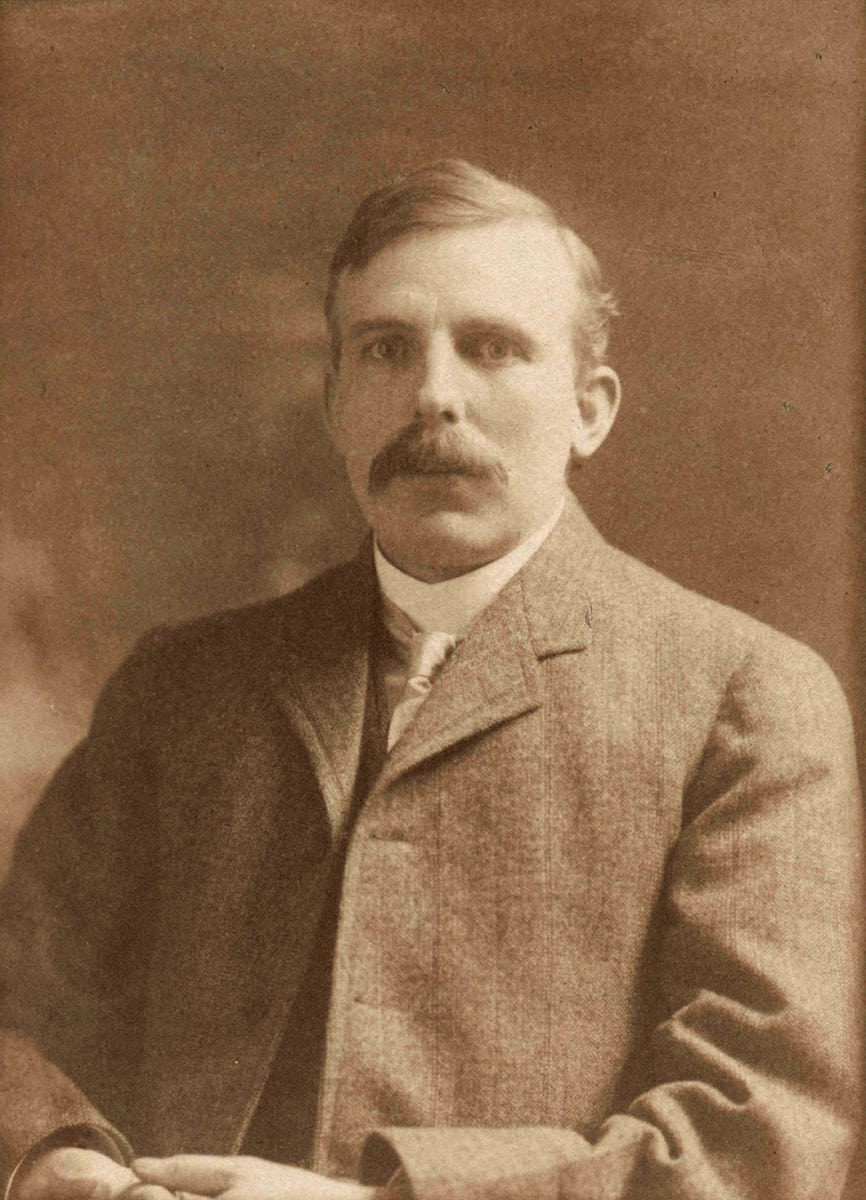
Ernest Rutherford 1909

“You proved that atoms have balls.” So went a letter by a group of Russian physics students to Ernest Rutherford in 1929, in which they asked him to become an honorary president of their physics club. The Russian theoretical physicist George Gamow had to explain to a rather puzzled Rutherford that “atomic nucleus” in Russian has the same derivation as “cannonball” – and that the students had picked the wrong word from their Russian-English dictionary. Rutherford went off to write a letter of acceptance, laughing heartily.

Today, some eight decades after his death in 1937, the great New Zealander is best known for his discovery in 1911 of the atomic nucleus. Yet Rutherford had many other claims to fame, including one we celebrate this year. Exactly a century ago, in June 1919, Rutherford published four key papers in Philosophical Magazine, one of which was “IV. An anomalous effect in nitrogen”. It describes how he had become the first person to split the atom, induce a nuclear reaction and be a successful alchemist. Rutherford had shown, for the first time, that protons were constituents of nitrogen and that he had changed nitrogen into hydrogen.

Divide and conquer

The breakthrough can be traced back to when Rutherford was working in Canada in the early 1900s, where he showed that heavy atoms were not necessarily stable entities. Rutherford discovered that when he passed a beam of alpha particles through atmospheric air, or a thin slice of mica, the beam became fuzzy. The alpha particles were scattered by some two degrees, indicating that atoms must be “the seat of very intense electrical forces”. On arrival in Manchester in 1907, Rutherford set his assistant, Hans Geiger, to accurately measure how many were scattered through small angles.

Two years later, Rutherford then gave an undergraduate student, Ernest Marsden, a project to see if alpha particles were scattered back from a block of metal. Everyone knew that happened for beta particles (electrons), but no one expected the heavier alphas to do so too (Rutherford had given the alphas and betas their names in 1898). Marsden quickly showed that back-scattering occurred for alpha particles even when the block of metal was replaced with the same thin gold foils that were used in Geiger’s small-angle transmission experiments. It was to explain this effect that Rutherford in 1911 famously produced his nuclear model of the atom.

With heavier nuclei, a head-on alpha particle scattered before it got anywhere near the nucleus. But Rutherford thought that for light atoms, the alpha particles would get much nearer, possibly even colliding. In 1913 Rutherford therefore asked Marsden to fire alpha particles at light nuclei such as hydrogen. Classical physics showed that, in a head-on collision, the hydrogen ion (H+) would recoil at a speed 1.6 times that of an alpha and thus travel in air some four times farther. Rutherford and Marsden then duly observed the weak flashes of recoiling H+ ions on their scintillation screens.

Unfortunately, the collaboration effectively ended when Marsden moved to New Zealand in 1915 and Rutherford was absorbed in work for the First World War (see February 2016 pp32–36). When Rutherford returned to his research in 1917, he wrote to Niels Bohr in December saying the he was “trying to break up the atom”, which he urged Bohr to regard as “private”. Rutherford studied alpha impacts on many light gases and light atoms in solid form, such as hydrogen in paraffin wax. Yet when he substituted dry nitrogen for dry air, he found an anomaly: more H+ ions were produced than expected.

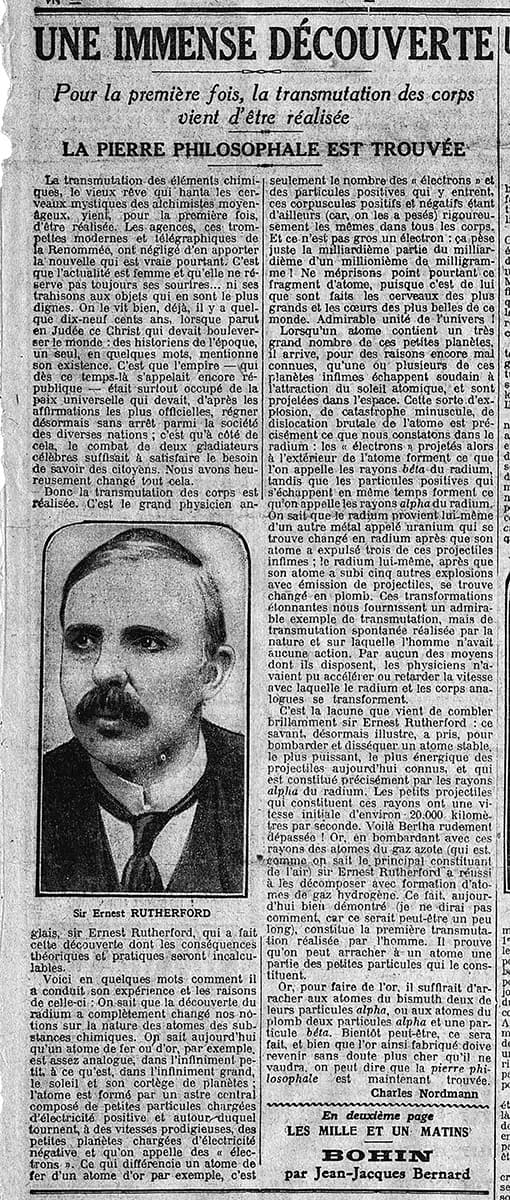
Le Matin, 8 December 1919

“We must conclude that the nitrogen atom is disintegrated under the intense forces developed in a close collision with a swift alpha particle, and that the hydrogen atom which is liberated formed a constituent part of the nitrogen nucleus,” he stated. “Considering the enormous intensity of the forces brought into play, it is not so much a matter of surprise that the nitrogen atom should suffer disintegration as that the α particle itself escapes disruption into its constituents”. And, he added, “if α particles – or similar projectiles – of still greater energy were available for experiment, we might expect to break down the nucleus structure of many lighter atoms”.

Rutherford submitted his four papers in April 1919 before leaving Manchester to succeed JJ Thomson as head of the Cavendish Laboratory in Cambridge. Paper “IV” initially did not create much public interest in Britain. That only occured when Charles Nordmann – a French astronomer and popularizer of science – visited Manchester in 1919 and wrote a front-page article for the Paris newspaper Le Matin on 8 December 1919 headlined “Une immense découverte” (“A tremendous discovery”), which was picked up by the Press Association. And when Rutherford delivered the Bakerian Lecture in 1920 at the Royal Society he predicted that the neutron must exist to account for isotopes and then began to construct atoms from their more fundamental building blocks.

With the advent of nuclear reactors and then high-energy particle accelerators, the 92-element periodic table of Rutherford’s day has now increased by 26 and includes an element named in his honour: Rutherfordium (Rf104). Indeed, the periodic table is expected to grow further in which each step requires adding one or more protons and neutrons – just as Rutherford suggested in 1920. As we celebrate the International Year of the Periodic Table of Elements in 2019, let us never forget the contribution of the man who not only pioneered our understanding of atoms – but also discovered that they could be split.

New research centre will study connection between radiation and immunotherapies

Researchers at Penn Medicine’s Abramson Cancer Center have received a $12 million grant to investigate next-generation cancer treatments based on immunotherapies and advanced radiotherapy techniques. The funding, from The Mark Foundation for Cancer Research, will be used to establish The Mark Foundation Center for Immunotherapy, Immune Signaling, and Radiation at the University of Pennsylvania.

Teams at the new centre will seek to better understand the interconnected relationship between novel forms of radiation therapy, important signalling pathways between cancer and immune cells, and the immune system’s ability to kill cancer. Five specific projects will bring together multidisciplinary teams of basic science and clinical researchers to answer these key questions.

“These projects have the chance to change the paradigm when it comes to cancer treatment,” says the centre’s director Andy Minn. “Understanding important and potentially targetable mechanisms of immunotherapy resistance and how to use novel radiation therapies to enhance immunotherapies carries enormous benefits for patients.”

Each of the five projects will converge on understanding the role of interferon (IFN) and pattern recognition receptor (PRR) signalling in enabling the immune system to fight cancer. IFNs normally protect cells from viruses, while PRRs are molecules that act as an alarm system that typically recognizes invaders. Two projects will identify the genetics behind IFNs and PRRs, including how they signal in cancer and immune cells, how they can be corrupted to do the bidding of cancer cells, and how vulnerabilities can be manipulated to improve response to immunotherapy.

Two other projects involve FLASH radiation, an ultrahigh-dose radiation delivery technique that can deliver an entire course of radiation therapy (which would typically be given over the course of weeks) in less than a second. Researchers will determine whether FLASH can more favourably impact IFN and PRR signalling than traditional radiation. They will also study whether FLASH makes a tumour more susceptible to attack by the immune system, while decreasing side effects normally associated with conventional radiotherapy.

The fifth project seeks to engineer chimeric antigen receptor (CAR) T cells capable of influencing IFN signalling in the tumour. The aim is to improve both the CAR T cells themselves, as well as initiate the “bystander effect” — engaging other immune cells that have not yet been activated to attack the tumour.

“When you combine Penn’s expertise in radiation oncology with our pioneering work in CAR T and immunotherapy, it’s clear these projects bring together the joint expertise of the Abramson Cancer Center in a way very few other institutions anywhere in the world can match,” says Penn’s James Metz.

Leaders of Penn Medicine and The Mark Foundation officially signed the grant establishing the centre on May 31.

Giant molecules the size of bacteria created in optical lattice

Giant diatomic molecules the size of small bacteria have been formed from pairs of Rydberg atoms, and then studied using an optical microscope. Physicists in Germany, led by Immanuel Bloch and Christian Gross at the Max-Planck Institute for Quantum Optics, achieved the result by manipulating Rydberg atoms trapped within an optical lattice. Their work could lead to new techniques for determining molecular properties.

While some basic properties of very simple molecules can be calculated using quantum theory, a complete understanding of common molecules such as water has eluded scientists. Part of the  problem is that most molecules are far too small to be imaged directly using light.

One way forward is to create molecules from huge Rydberg atoms – which have outer-shell electrons in highly excited states.  Whereas the diameters of most atoms are on scales of nanometres, the outer electron of a Rydberg atom can be microns away from the atomic nucleus. Rydberg atoms therefore have very large electric dipole moments. This allows the atoms to bind together to form molecules with extremely long bond lengths – which means that these Rydberg molecules can be imaged directly using light.

Quantum simulators

The idea is to use these giant molecules as analogues of much smaller molecules. These analogues could be used as quantum simulators of molecular properties.

The experiment involves loading a square 2D optical lattice with ultracold rubidium atoms. The atoms begin in their lowest energy (ground state) and are separated by a minimum distance of 0.54 micron. Ultraviolet laser light is fired at the atoms, which creates Rydberg atoms that can then bind together to form diatomic molecules. The molecules are then ejected from the lattice, leaving empty lattice spaces that can be observed using a microscope (see figure).

Microscope images show that Rydberg molecules are formed between adjacent atoms on diagonals of the square lattice. This means that the bond lengths of the molecules are about 0.7 micron, which is about the same size as a small bacterium.

By adjusting the polarization of the UV laser, the team can change the orientation of the molecules in the lattice. Furthermore, the relative orientation of the laser polarization and the molecule is to be dependent upon the vibrational state of the molecule. Indeed, the team can put the molecules into more 50 different vibrational states by fine-tuning the wavelength of the UV laser.

As well as being a significant step forward in the field of molecular imaging, the team says that its experiment sets the scene for rigorous new tests of the conditions under which Rydberg atoms can interact with each other. The techniques could also be used to develop simulations of quantum many-body systems using ultracold atoms.

The research is described in Science.

Copyright © 2026 by IOP Publishing Ltd and individual contributors