Across the universe

When you think about the universe, the stuff within it and just the sheer vastness of its grandeur, it is easy to find yourself simultaneously fascinated and overwhelmed by it all. However, something I have found with popular-science books that take on this overarching subject is that they pack too much into a limited number of pages, potentially leaving a reader with a blown mind that absorbed nothing once they have turned the final page.

But as soon as I finished the first chapter of Paul Parsons’ The Beginning and the End of Everything: From the Big Bang to the End of the Universe I realized this would be a different type of read. This is not so much a book, but a guided tour from the beginning to the present and on to the sobering end of the universe as we currently understand it. Indeed, Parsons’ offering stands apart from other such books because it educates as well as entertains, with light touches of humour interwoven throughout.

Parsons begins with a detailed introduction to the universe, which in the 13.8 billion years since its birth has gone from something smaller than a subatomic particle, to the unimaginably vast entity it is today, all thanks to a mysteriously cataclysmic event known as the Big Bang. However, this isn’t just a tale about the universe – it is an enlightening account of humankind’s journey towards understanding and explaining the origins of our universe and our place within it. The book touches on Ptolemy’s geocentric model – where the Earth sat at the centre of the universe while all celestial objects, including the planets, Sun and stars, orbited around it – and the heliocentric model that we have used since the 16th and 17th centuries, in which it is the Sun, not the Earth, that sits at the centre.

As Parsons brings to light, we have come a long way in our understanding of the universe since then, thanks to many curious minds. They include Isaac Newton and his formulation of his three laws of motion, which quantified the gravity between two objects and paved the way for Albert Einstein’s ground-breaking theories that laid the groundwork for modern cosmology.

The chapters in this book take on heavy subjects including the Big Bang, the birth of galaxies, the existence of dark matter, quantum theory and even the “Big Crunch” theory – a hypothetical scenario where our universe stops expanding, and instead begins to contract until all the matter in it collapses to a singularity. These are weighty topics and Parsons has a lot of ground to cover in fewer than 300 pages – but I found that each chapter provided the perfect amount of introductory information to act as a guide to those areas, without overloading the reader. Indeed, there was enough intrigue to make you want to go and learn more for yourself.

One subject that Parsons tackles is one of the biggest unsolved mysteries in astronomy: dark matter, a form of matter thought to make up 95% of the universe. As we are still unsure what constitutes dark matter, Parsons turns his attention to how the concept was first conceived, introducing us to the astronomers from Jan Oort and Fritz Zwicky, who proposed the concept in the 1930s, to American astronomer Vera Rubin’s studies on rotation curves of disc galaxies, uncovering the discrepancy between predicted angular motions of galaxies and observed motions. Her work led to the realization that there is matter we cannot see, which nevertheless influences how galaxies move. This chapter is short and sweet and those readers after something more in-depth on dark matter might feel short-changed. However, Parsons offers plenty to whet your appetite on the subject.

What Parsons has done with The Beginning and The End of Everything is take the reader on an eye-opening tour of the entire cosmology of the universe, adding the physics to support it, but without the maths and complicated details

What Parsons has done with The Beginning and The End of Everything is take the reader on an eye-opening tour of the entire cosmology of the universe, adding the physics to support it, but without the maths and complicated details. He also includes the history of the development of theories that have led to our current understanding of how the universe came to be and how it is currently evolving.

Parsons’ narrative is vast and involving, but told in a warm and engaging way from the perspective of a person who has not only a great knowledge of the subject, but also an enthusiasm that shines through each page. Clearly and accessibly, he explains the complex science of how the universe came into being and how it is likely to end. This book is a wonderful addition to the popular-science genre, and has taken a subject that normally sits firmly in the university lecture theatre, and bought it to life in a way that will appeal to both an experienced cosmologist and anyone looking for an introduction to the subject.https://www.mombooks.com/book/the-beginning-and-the-end-of-everything/

  • 2018 Michael O’Mara Books 288pp £16.99hb

Whole-body MRI gets cancer detection boost

© AuntMinnieEurope.com

Fresh evidence shows that whole-body MRI may be quicker and cheaper than standard imaging for detecting the spread of colorectal and non-small cell lung cancers, while being just as sensitive. The findings from two prospective trials involving nearly 500 patients across 16 UK hospitals were published on 9 May (Lancet Respir. Med. 10.1016/S2213-2600(19)30090-6 and Lancet Gastroenterol. Hepatol. 10.1016/S2468-1253(19)30056-1).

“Our results, obtained in a real-world NHS [National Health Service] setting, suggest that whole-body MRI could be more suitable for routine clinical practice than the multiple imaging techniques recommended under current guidelines,” said lead author Stuart Taylor, professor of medical imaging at University College London. “While demands on NHS MRI scanners are currently high, MRI can image the whole body in one hour or less. Adopting whole-body MRI more widely could save rather than increase costs, as well as reducing the time before a patient’s treatment can begin.”

Stuart Taylor

In patients with newly diagnosed colorectal and non-small cell lung cancer, Taylor and colleagues found that whole-body MRI scans reduced the average time to determine the size of tumours and how much they had spread by five days for colorectal cancer patients and six days for lung cancer patients. The treatments decided upon were similar because results from MRI were as accurate as those from standard investigations, but the costs per patient were reduced by nearly a quarter in the case of colorectal cancer and were almost halved for lung cancer.

Study details

In research funded by the UK National Institute for Health Research, the authors screened 1020 patients between March 2013 and August 2016 and recruited 370, of whom 299 completed the colon trial. Pathway sensitivity was 67% (95% confidence interval [CI]: 56% to 78%) for whole-body MRI and 63% (CI: 51% to 74%) for standard pathways, a difference in sensitivity of 4% (CI: -5% to 13%, p = 0.51). No adverse events related to imaging were reported. Specificity did not differ between whole-body MRI (95%, CI: 92% to 97%) and standard pathways (93%, CI: 90% to 96%, p = 0.48).

For the lung trial, the so-called Streamline L trial, 976 patients were screened for eligibility; 353 patients were recruited, of whom 187 completed the trial. Pathway sensitivity was 50% (95% CI: 37% to 63%) for whole-body MRI and 54% (CI: 41% to 67%) for standard pathways, a difference of 4% (CI: -7% to 15%, p = 0.73). No adverse events related to imaging were reported. Specificity did not differ between whole-body MRI (93%, CI: 88% to 96%) and standard pathways (95%, CI: 91% to 98%, p = 0.45)

Whole-body MRI

Taylor and colleagues also followed up patients after 12 months to better evaluate the accuracy of whole-body MRI compared with standard tests — e.g., to find out whether one approach was more sensitive than the other in detecting the spread of the primary tumour to other parts of the body. Based on the data, they were able to retrospectively evaluate what the optimal treatment decision should have been.

In the colorectal cancer trial, agreement with the final multidisciplinary panel treatment decision based on standard investigations and whole-body MRI were similar and high (95% and 96%, respectively), as were results for the lung cancer trial (99% for standard investigations and 98% for whole-body MRI).

Expensive technology?

The team was not really surprised about any of the major results but found it interesting that the costs of the whole-body MRI pathway were less than those of the standard pathway using English NHS cost tariffs, according to Taylor.

“Whole-body MRI is viewed as an expensive technology. The overall sensitivity of both staging pathways was at the lower limits of that reported in the literature but this reflects the pragmatic trial design and ‘real world setting’,” he told AuntMinnieEurope.com.

Taylor said he would like to have assessed the impact of dedicated workshop-based training of reporting radiologists. “However, a strength of the study design is that we replicated the likely training radiologists would undergo should whole-body MRI be more widely disseminated,” he pointed out.

Whole-body MRI

He thinks the results are equally applicable in the rest of Europe because cancer-staging protocols are largely uniform across the continent. Scan costs are likely to vary between different countries, but Taylor and his colleagues have provided a detailed breakdown of the actual scans performed so other researchers can easily do their own cost analysis.

Writing in a linked comment, Andreas Schreyer from Brandenburg Medical School in Germany stated the following: “MRI has faced considerable backlash within the medical community due to relatively high costs and the problems involved in finding a timely slot for imaging because of the high demand for this method. This is why it is particularly important to think outside the box and look out for new medical pathways and paradigms and not to be driven by prejudices.”

It could be more efficient to adapt the known therapeutic concept of hitting hard and early to diagnostic imaging to improve medical outcomes and economic performance, he added.

In terms of the limitations of the study, eight of the 16 hospitals in the colorectal cancer trial and 11 of the 16 hospitals in the lung cancer trial did not have the infrastructure to perform whole-body MRI. Furthermore, the authors noted that their findings are specific to colorectal and non-small cell lung cancer and might not be relevant to tumours arising in other parts of the body, and waiting times might not be representative of other UK hospitals or of hospitals in other countries.

Another limitation of the lung cancer trial is that sensitivity in detecting the spread of cancers — including the development of secondary tumours and the spread to lymph nodes — was low using both current standard imaging techniques and whole-body MRI. More research is needed to improve the performance of non-invasive imaging, the authors believe.

Also, more research is needed to determine how the results affect outcomes for patients. Appropriate treatment cannot be decided upon until the size of a tumour and the extent to which it has spread to nearby lymph nodes and other parts of the body has been determined, they noted. Standard NHS pathways often involve different imaging techniques — such as CT, PET/CT or focused MRI scans — which vary in accuracy in different organs, so several appointments and follow-up examinations may be necessary.

Future goals and plans

Looking ahead, Taylor hopes to examine the use of whole-body MRI treatment response assessment and cancer surveillance after curative treatments.

“At the moment, patients undergo surveillance scans after treatment for their cancer to look for recurrent disease,” he said. “Currently we use conventional tests such as CT. We do not know if surveillance of patients with whole-body MRI will be more effective both in terms of accuracy and cost-effectiveness that using standard scans.”

The group is working on setting up trials of staging whole-body MRI in other primary cancer sites, notably the breast. Also, they are collaborating with Andrea Rockall and her colleagues at Imperial College London to see if machine-learning techniques can help radiologists interpret whole-body MRI datasets.

  • This article was originally published on AuntMinnieEurope.com ©2019 by AuntMinnieEurope.com. Any copying, republication or redistribution of AuntMinnieEurope.com content is expressly prohibited without the prior written consent of AuntMinnieEurope.com.

Multiphoton laser therapy can close a single blood vessel

Researchers from Vancouver have developed a novel way to selectively close single blood vessels within tissue, using a highly targeted laser therapy called multiphoton photothermolysis. The technique could be used to treat a variety of vascular diseases and dysregulated blood vessels in conditions ranging from cancers to macular degeneration to port wine birthmarks (Sci. Adv. 5 eaan9388).

The treatment uses multiphoton absorption to selectively close targeted blood vessels. A focused beam from a near-infrared femtosecond laser is aimed at the centre of the targeted vessel, generating localized heating that spreads to the wall of the blood vessel and causes it to collapse. Multiphoton absorption is only induced at the focal point, where the power density from the laser is extremely high. Outside of this site, the power density is low, thus nearby vessels remain unaffected.

“The process of two-photon absorption has the advantage of absorption at the focal point only,” explains corresponding author Haishan Zeng from the BC Cancer Agency. “If you align the focal point with a microstructure you can treat the microstructure very precisely without generating any adverse effect to the surrounding tissues.”

Zeng and colleagues created an optical system that images, targets and closes a single blood vessel. The system employs a 785 nm diode laser to image the targeted blood vessel via reflectance confocal microscopy, and to confirm blood vessel closure after treatment. Treatment is delivered using a high-power Ti:sapphire femtosecond laser tuned to 830 nm. The researchers note that the use of near-infrared light enables deeper penetration than the visible wavelengths employed for single-photon absorption-based approaches.

Using a mouse ear model, the team demonstrated closure of single vessels of varying sizes ranging from capillaries to venules. They showed that the technique can close blood vessels deep within a tissue while preserving overlying superficial blood vessels. This would allow selective denaturation of certain vessels while sparing other vessels to preserve normal tissue physiology once the disease is healed.

The researchers also showed that vessels could be partially blocked instead of completely closed. In vivo confocal Raman spectroscopy of the treated sites revealed that the vessel closure was mediated by local coagulation of blood cells.

“We are the first to use the multiphoton process for therapeutic applications,” says Zeng. “We made the system very fast so that we can image at a video rate in real time, which is the  key to enable clinical application.”

The authors state that this precise microsurgical anti-vascular method holds particular promise for treating diseases in complex organs such as the eye (non-invasively) or brain, where high spatial selectivity is critical to prevent collateral effects on vision or central nervous system function.

“In this publication we’ve used [multiphoton photothermolysis] to close off blood vessels one at a time, but I can see a range of different targets and structures in the body that this would be very applicable to,” says co-author Harvey Lui. “Not only to blood vessels but any other type of cell or tissue structure.”

Quantum sunlight experiment could shed light on stellar astrophysics

The first unambiguous proof that light from a thermal source behaves quantum mechanically has been claimed by physicists in China. Their demonstration involved interfering single photons from one distant thermal source – the Sun – with photons from a semiconductor quantum dot here on Earth. They say that their work could help enable teleportation, cryptography and other quantum technologies, as well as provide new insights into stellar astrophysics.

While many properties of light can be understood in terms of classical electromagnetic fields, others require a quantum-mechanical description based on discrete photons. Among these is the behaviour of two indistinguishable single photons that meet at a 50:50 beam splitter. Each photon is as likely to be reflected from the apparatus as it is to pass through, and therefore there are in principle four possible outcomes – two of which involve the photons leaving through the same output port while in the other two they make separate exits.

Classically, the photons’ behaviour is totally random and as such the particles are expected to leave together 50% of the time. However, physicists at the University of Rochester in the US showed in 1987 that that is not what happens. Chung Ki Hong, Zhe Yu Ou and Leonard Mandel found that, if perfectly distinguishable, the particles always exit the experiment together as a pair. Explainable using the statistics of bosons, such interference is described as yielding complete “visibility” – in other words, two detectors placed behind the beam splitter will never register signals at the same time.

Quantum sunshine

In this latest work, Chao-Yang Lu, Jian-Wei Pan and colleagues at the University of Science and Technology of China in Shanghai have shown that such quantum-mechanical behaviour even occurs when one of the photons comes from the Sun – a thermal light source 150 million kilometres from Earth. To do so, the researches tracked the Sun using an electrically driven mount and guided the light that they collected along a 50 m stretch of fibre-optic cable to their laboratory. There they interfered the solar photons with others from a quantum dot – in effect an artificial single atom made from semiconductor cooled to just a few degrees above absolute zero.

Lu explains that the photons from the quantum dot come essentially ready-made for the experiment, being intrinsically single and also identical – including having exactly the same energy, timing information and polarization. The sunlight, in contrast, is “dirty”, having a very broad and complex spectrum that only gets more complex after passing through the Earth’s atmosphere. To prepare those photons, the researchers filtered them spectrally, temporally and spatially, and also polarized them.

Interference between the two sets of photons then yielded a visibility of 0.796. This is far greater than the classical maximum of 0.5 and the researchers say this is an unambiguous hallmark of quantum behaviour. Lu explains that the visibility is less than the ideal value of one mostly because of thermal light’s “multi-photon contribution”. The team also measured clear signatures of entanglement and a violation of Bell’s inequality, so ruling out local realism.

“Highly non-classical”

The researchers point out that photons from independent light sources have previously been shown to interfere quantum mechanically, but those sources – such as single atoms or trapped ions – are manmade. Meanwhile, they argue, earlier demonstrations of interference using thermal light were either explainable “within the framework of classical coherence theory” or yielded visibilities around 0.5. “Our result is the first time that [a] thermal light – requiring only classical optics for its description – is involved in a highly non-classical quantum-optics experiment,” they write in a preprint recently uploaded to the arXiv server.

According to Lu, the team’s work could contribute to building large-scale hybrid quantum information networks by allowing independent photon sources to interact with one another. One such application that might benefit, he says, is quantum teleportation. That involves transferring quantum states over long distances without the movement of physical particles. Teleportation requires that the sender interfere one half of an entangled group of photons with another group – those bearing the states to be transmitted.

Indeed, the researchers are currently setting up a new experiment that will teleport the quantum states of solar photons using entangled photons from a quantum dot. What is more, says Lu, the experiments could be extended to larger scales by using a telescope several metres in diameter to collect the feeble light from distant stars (and combining that with better single-photon sources). This could provide information on stellar processes such as sudden changes in magnetic fields and a better understanding of space weather.

For Ronald Hanson, a quantum physicist at Delft University of Technology in the Netherlands, the latest work is interesting because of its novel confirmation of existing theory rather than its implications for quantum technology. “It is very appealing because it uses the Sun as a light source in a quantum experiment!,” he says.

Big hydro uncertainties

Hydro is the largest renewable energy resource in use so far. There’s nearly 1.2 TW installed globally, which supplies about 16% of the world’s electricity. Continued expansion seems likely but may be constrained by environmental objections. There are certainly growing concerns about eco-impacts and also the wider social and economic issues. In that context it’s interesting to see that a new study by the Science and Technology Policy Research Unit (SPRU) at the University of Sussex, UK, and the International School of Management in Germany suggests that “current calls for substantial, global investment in hydropower installed capacity and generation, including those from major institutions such as the International Energy Agency, IRENA, IPCC and World Bank, must be closely scrutinized”.

The study compared the security, political governance, economic development and climate change performance of major hydropower states against oil-producing states and all other countries using 30 years of World Bank data. It found that, although net emissions were reduced, countries relying on hydro power saw poverty, corruption and debt levels rise and their economy slow at significantly greater rates than nations that used other energy resources. In addition, carbon reduction benefits were realized only over time, after an initial environmental impact from construction, while the financial benefits of major hydropower projects could take decades to emerge.

The report certainly presents some worrying accounts of hydro’s social and economic impacts. It notes that the World Commission on Dams estimated that about four million people were displaced each year by hydro construction or operation, while another study looking at global energy accidents over 100 years found hydroelectric dams were responsible for less than 1% of total energy accidents but caused 94% of reported fatalities and $9.7 billion in damages. The report also points to the large budgetary overspends often associated with major hydro projects. The SPRU press release even says that “the era of the awe-inspiring mega hydropower projects such as the Hoover Dam in the US and the Three Gorges in China should be coming to an end in favour of smaller projects”.

However, the report itself is more measured. It notes that the “shortcomings of dams, though real, may pale in comparison to the deleterious effects of other policies, programs and investments”, e.g. nuclear power or coal, given that hydro projects “generally perform better on selected indicators, especially carbon footprints and energy payback ratios”. And it also says “in some cases the benefits of hydroelectric dams outweigh their costs, though these benefits may occur in urban areas far removed from the dam itself”. So it rows back a bit.

Reduced emissions

In particular, the SPRU report says that the contention that hydro projects can lead to significant net environmental impacts was not supported by their data. It notes that hydro projects certainly can have negative impacts on habitats, water quality and environmental sustainability but they also have positive impacts in terms of avoiding emissions. Interestingly, the report cites the assertion that hydro reservoirs can “become virtual methane factories, with the rise and fall of the water level in the reservoir alternately flooding and submerging large areas of land around the shore; soft green vegetation quickly grows on the exposed mud, only to decompose under anaerobic conditions at the bottom of the reservoir when the water rises again. This converts atmospheric carbon dioxide into methane, with a much higher impact on global warming”. But it says that, overall net negative emission impacts were not found in the study — hydro “reduced greenhouse gas emissions per capita”.

Nevertheless, hydro is still a conflicted technology that attracts much opposition, large projects especially, not least due to the local disruption they can impose. As the report notes, “studies have suggested that in rural areas hydropower projects may exacerbate poverty by interfering with food security, especially the vitality of fisheries or availability of agricultural land”. Such projects can also “contribute to capture of resources by the elite, exacerbating concentration of wealth and/or marginalizing of ethnic minorities and indigenous groups”. The contention that hydro projects increased poverty levels was partly supported by the study’s data.

Which nations build dams, who benefits from them, and who suffers their costs—who wins and loses—must remain a central part of examining the promise—and peril—of hydropower

Benjamin Sovacool and Götz Walter

The risk of corruption was also likely to be high for large projects. The report cites the assertion by Transparency International that “the hydropower sector’s massive investment volumes and highly complex, customized engineering projects can be a breeding ground for corruption in the design, tendering and execution of large-scale dam projects around the world. The impact of corruption is not confined to inflated project costs, however. Large resettlement funds and compensation programs that accompany dam projects have been found to be very vulnerable to corruption, adding to the corruption risks in the sector”. That contention was also partly supported by the study’s data, as was the hypothesis that economic growth was also reduced, while debt levels were increased. The report notes that “many of the revenues from hydropower construction or operation flow out of national economies to foreign investors” while “cost overruns and diseconomies of scale frequently associated with hydropower projects are corrosive to fiscal discipline”.

Authors Benjamin Sovacool (SPRU) and Götz Walter (ISM) say the report should be a warning to the cheerleaders of major projects such as the Grand Inga Dam in the Democratic Republic of Congo, an $80 billion project costing twice the country’s annual GDP, who promise speedy and far-reaching economic impact on a transformational scale. While hydroelectricity brought countries improved energy access, economic development and positive spillover effects, the championing of large-scale dam projects to bring about industrialization was not supported by the data analysis.

Small future?

However, Sovacool added, “even though hydropower might not bring immediate and all-encompassing benefits to a country, it is still a vital source of renewable energy” and the report’s authors say that smaller-scale, run-of-river designs that operate without reservoirs, as deployed in Nepal, Tanzania and Sri Lanka, could be used more widely to limit the risk of corruption and environmental problems, and increase developmental outcomes while still producing sufficient energy to meet demand. So we could refocus on community-based mini, micro and even pico hydro.

That’s a view shared by many environmentalists and, up to a point, by some analysis but it does conflict to some extent with the role that hydro, especially pumped hydro storage projects with large reservoirs, might play in helping to balance variable renewables like wind and solar photovoltaics (PV). For example, there have been proposals to convert the giant Hoover dam in the US to pumped storage and many other projects around the world could be used that way.

There may be a need for some strategic trade-offs. The report concludes: “While our results suggest that hydropower dams do help in decarbonizing national economies, at least insofar as per capita carbon dioxide emissions fall, such a low-carbon pathway comes at a cost in terms of economic and sociopolitical dilemmas. In sum: the political economy of hydroelectricity is also about perpetually managing a series of pernicious risks, not always optimally. Which nations build dams, who benefits from them, and who suffers their costs – who wins and loses – must remain a central part of examining the promise – and peril – of hydropower.”

Hydro does seem to be at something of a crossroads. Apart from the issues discussed above, climate change is already having an impact on its reliability as a baseload power supply in some drought-prone regions. That will only get worse, while non-water-constrained renewables like wind and solar PV are accelerating ahead. Their combined capacity will soon overtake that of hydro. But they will need balancing capacity. In 2013 there was over 127 GW of pumped hydro storage capacity in use globally (in 2015 it represented 99% of global electricity storage capacity). And demand is rising, with more being built, usually small- to medium- scale. As already noted, some large existing hydro plants may also be converted for pumped storage use, as may some smaller projects, but it is unlikely that many very large new river-based hydro plants will be built just for pumped storage. A recent study suggested there were potential sites globally for 22 million GWh of new pumped hydro supply capacity. That’s much more – if it could be linked up appropriately –  than could ever be needed for grid balancing. However, most of that would be non-river-based “closed loop” systems, with water shifting between high and low reservoirs. In parallel, there could be growing demand for smaller run-of-the-river hydro projects to enhance the local decentralized mix — they can be built in areas unsuited to large centralized projects. Some new lower-impact mini-hydro technologies are also emerging. So there are plenty of technical options on the hydro agenda to enliven the strategic debate.

QB or not QB – that is the question for quantum physicists and philosophers

“It is a bad sign,” the Nobel-prize-winning theorist Steven Weinberg wrote recently, “that physicists who are most comfortable with quantum mechanics do not agree with one another about what it all means.”

Well, that’s Weinberg’s view. I don’t find those disagreements a bad sign – just a sign that philosophical issues are in play. Yes, quantum mechanics is full of puzzles. Is, for example, the wave function real or a book-keeping device? What does “reduction of the wave function” mean? And if the many-worlds idea is untestable, can it be true?

The meaning of quantum mechanics is made even more perplexing by several thought experiments that seem to reach impossible results. One is “Wigner’s friend”, in which an observer of a quantum measurement and an observer of that person are shown to make different statements about the quantum state being measured. Another is Schrödinger’s cat, in which quantum mechanics declares an unobserved feline to be half-dead, half-alive.

The meaning of quantum mechanics is made even more perplexing by several thought experiments that seem to reach impossible results.

One attempt to resolve these issues neatly is Quantum Bayesianism. Named after the 18th-century English statistician Thomas Bayes, Bayesianism is an approach to probability that’s been around theoretical physics ever since the US physicist Edwin Jaynes published a pair of papers in 1957. However, it only came to the wider attention of quantum physicists following a paper by Carlton Caves, Christopher Fuchs and Ruediger Schack in 2001 (Phys. Rev. A 65 022305).

In that paper, the authors reminded readers of Einstein’s conviction that quantum states don’t represent real states of affairs, only states of our knowledge. But rather than concluding that this reveals the incompleteness of quantum mechanics, as Einstein did, the authors embraced it. The probabilities derived from a quantum state, they said, are “subjective or Bayesian probabilities”. In 2010 Fuchs coined the catchy name “QBism” to describe things.

Probably true

To get a sense of what QBism is all about, remember that traditional – or “frequentist” – probabilities are objective and considered to represent states of the world. Walk into a casino and you’ll see this kind of probabilistic behaviour when balls land in a roulette wheel. In Bayesianism, by contrast, probabilities quantify degrees of belief or uncertainty – a simple example being rational betting behaviour.

Bayesianism is widely used in areas such as decision theory, behavioural economics, and artificial intelligence. When applied to quantum mechanics in QBism, it says, for example, that the probability of a measurement on a quantum system giving a certain result does not give us real information about the actual world. The probability is merely a guide to making the best decision about where, say, to find a particle.

One enthusiast is the US physicist David Mermin. In a 2013 interview, he said that probabilities in QBism “have a strategic aspect”. And since “strategy implies a strategist,” he continued, “in that sense quantum probabilities are subjective”. Measurements do not affect nature, but guide the measuring subjects in what to believe.

Quantum Bayesianism is thus a radical attempt to resolve quantum puzzles by treating its probabilities not as features of objective reality, but of subjective belief. It’s a participatory approach to physics. As Mermin declared in 2014 in Nature (507 421): “QBism put the scientist back into science.”

By regarding the wave function as less a real thing than an embodiment of available information, QBism eliminates a host of puzzles and paradoxes. The perplexing “reduction” of the wave function, for instance, is nothing more than an updating of information, a new quantitative guide to what it is possible to believe. The paradox of Wigner’s friend is resolved because Wigner and the friend have different information. As for Schrödinger’s cat, it is rescued from existential blurring because the wave equation only encodes what we non-cats currently know.

Access denied

Many physicists, though, aren’t sure about QBism. Michael Nauenberg from the University of California, Santa Cruz, for instance, has approvingly invoked Richard Feynman’s remark that, “Nature does not know what you are looking at, and she behaves the way she is going to behave whether you bother to take down the data or not”. QBists, Nauenberg charged, do not provide any experimental evidence falsifying this traditional view, nor any experiment confirming their own. “Quantum theory,” he concluded in 2015, “deals with the objective world as directly as does classical mechanics” (arXiv:1502.00123v1).

Philosophy, as I’ve said many times, can often be spotted in physics wherever an issue arises that can’t be resolved by more research. QBism is one such case. Though seemingly able to resolve puzzles in a straightforward way, it makes certain specific assumptions about the nature of reality – assumptions that philosophy can help to clarify and analyse.

Philosophy can often be spotted in physics wherever an issue arises that can’t be resolved by more research. QBism is one such case.

QBism, for instance, assumes that quantum mechanics is not about objective reality. QBists want to accept that there is a world beyond the scientist-subject, but also to say that, in the quantum realm at least, we can only have consistent beliefs about measurements of it. A scientist-subject can actively intervene in the world by taking measurements, yet in the quantum realm these interventions give rise only to theories that guide subjective beliefs by those scientists about the future results of interventions. As Fuchs put it in 2014, the statements of quantum mechanics “deal only with the object-subject relation” rather than with nature itself.

The critical point

QBism, philosophers would say, is “ontologically agnostic”. That basically means we are permanently denied access to whatever is “out there”; we’re stuck with only beliefs about interventions. QBism can, however, be clarified by comparing it with the philosophical approach known as “pragmatism”.

Both QBists and pragmatists hold that our interventions change the situations in which they take place, and that there is no final truth. Pragmatists point out that the beliefs of scientists are not entirely subjective, for they are constrained by the rigorous judgments and work of the scientific community. A pragmatist lens thus seems to bring some clarification to QBist assumptions, allowing us to come closer to agreement on what it’s all about.

Chocolate making relies on a rich mixture of physics

New insights into the physics of chocolate production have been gleaned by an international team of physicists, led by Wilson Poon at the UK’s University of Edinburgh. The researchers studied a process called conching, whereby a granular mixture of ingredients is transformed into a homogenous fluid. Conching plays an essential role in modern chocolate production and gaining a better understanding of the process could reduce the amount of energy required to make chocolate and other materials that involve complex mixtures.

In 1879 the Swiss chocolatier Rodolphe Lindt invented the conching process, whereby solid sugar, milk and cocoa powders are mixed with liquid cocoa butter. By subjecting the granular mixture to heat and hours of mechanical action, and adding oil dispersants at precisely timed stages, chocolatiers can transform the ingredients into a homogeneous, flowing liquid-solid suspension. This gives chocolate – which was grainy before conching was invented – its signature smooth texture.

Conching has been mastered for well over a century, but until now, there has been little knowledge of the physical mechanisms involved in the process. In their study, Poon and his team used a “simplified formulation” of chocolate and analysed the process in detail.

Irreversible deformation

The researchers identified and measured two key parameters underlying the process: the yield stress of the mixture (the stress at which the mixture begins to deform irreversibly) and its viscosity when subjected to high shearing. They found that both values are controlled by how far the mixture is from its jamming volume fraction – the point at which the fraction of solids in the mixture becomes too high for the mixture to flow freely.

By studying chocolate making, we have been able to gain new insights into the fundamental physics of how complex mixtures flow

Wilson Poon

In the first stage of conching, the team observed that mechanical action breaks down groups of solid particles. This raises the mixture’s jamming volume fraction, thereby increasing both the yield stress and high-shear viscosity in turn. After oil dispersant is added, the friction between the particles is reduced, further increasing the jamming volume fraction. Eventually, the jamming fraction becomes so high that the inhomogeneous, granular mixture transforms into a homogeneous fluid, where all solid particles are suspended evenly within the liquid.

The researchers say that their discoveries could lead to improvements in the efficiency of chocolate production. Similar processes like cement production and ceramic manufacturing could also benefit from the research. “We hope our work can help reduce the amount of energy used in the conching process and lead to greener manufacturing of the world’s most popular confectionery product,” Poon says. “By studying chocolate making, we have been able to gain new insights into the fundamental physics of how complex mixtures flow.”

The study is described in Proceedings of the National Academy of Sciences.

Engineered enzymes could help make new antibiotics

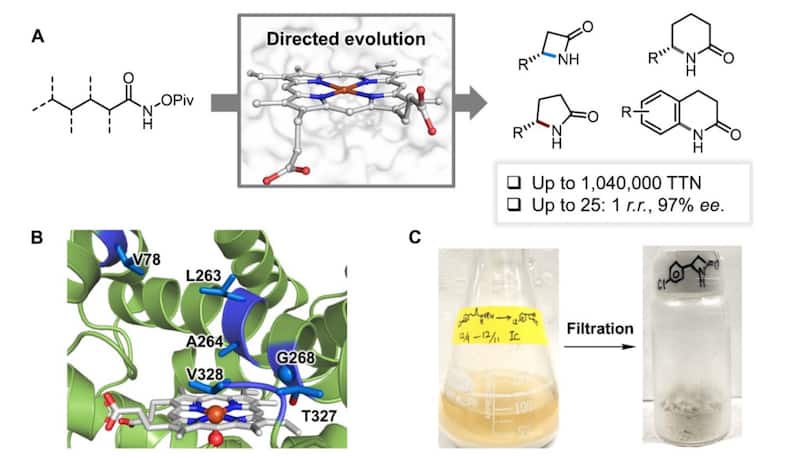
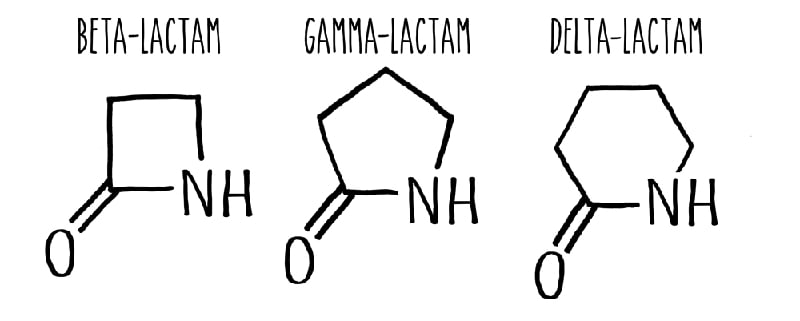
Enzymes can not only learn from synthetic chemistry but can also enable new chemistry that has never been realized before. So say researchers at the California Institute of Technology who have repurposed cytochrome P450 enzymes to produce β-lactams in a process called carbon-hydrogen (C-H) functionalization. The enzymes can also control which C-H bond in a substrate is functionalized, thus delivering other types of lactams, such as γ or δ-lactams. These molecules are important building blocks in organic synthesis and β-lactams are especially important in the pharmaceuticals industry – for example, to produce antibiotics such as penicillin.

C-H functionalization is one of the most sought-after strategies in synthetic chemistry. Since organic molecules often contain multiple similar C-H bonds, it is challenging to precisely control where along a molecule a reaction takes place. A promising approach is to make use of enzymes – the catalysts of the biological world – which are very site-selective for when it comes to biochemical transformations.

The reaction

Cytochrome P450

Researchers led by Frances Arnold have been studying cytochrome P450, a class of heme-containing terminal oxidase enzymes that oxidize C-H bonds to C-O bonds. In particular, they have been focusing on a natural cytochrome P450 from Bacillus megaterium (P450BM3) and how to repurpose it to accommodate new-to-nature chemistry.

In their latest work, they employed a substrate containing a nitrene precursor inspired by a natural intermediate in the biosynthesis of benzastatins, and provided it to engineered versions of P450BM3. “Most of the enzymes we used didn’t do anything productive with the substrate, but one made a small amount of β-lactam product,” explains team member Inha Cho. “We thus decided to engineer this parent enzyme.”

The P450BM3 constructs lactams through intramolecular C-H amidation, she says. “The substrate is a chain-like molecule with C-H bonds and a terminal nitrene precursor. The engineered enzymes use the precursor to form an iron-bound nitrene intermediate and loop it to a specific C-H bond. It is like taking one end of a string and tying it in a knot in the middle of the string.”

Lactams

“In traditional synthetic chemistry, we have to tack extra reactive groups onto molecules that we want to turn into β -lactams”, explains team member Zhi-Jun Jia. Without these, the knots will end up tied in varying spots, resulting in a mixture of large and small loops. This is not ideal when trying to manufacture a homogenous batch of antibiotics. What is more, adding these extra reactive functional groups only complicates the synthesis by introducing additional steps.

Engineered enzymes target a specific C-H bond

The Caltech researchers engineered several enzymes from the same parent in a process called directed evolution, a technique that Arnold developed in the 1990s and for which she received the 2018 Nobel Prize in Chemistry. Here, the genetic code of a useful enzyme is transferred into bacteria like Escherichia coli and the bacteria then start producing this enzyme as they grow and divide.

They found that each of their engineered enzymes could target a specific C-H bond to produce lactams with different ring sizes. One of their nitrene substrates (an “acyl-protected” hydroxamate) has three sets of reactive C(sp3)-H bonds and the enzyme variants LSb, LSg and LSsp3 formed β-, γ- and δ-lactams respectively by selecting specific C-H sites on the substrate. The γ-lactam is made up of a loop of four carbon atoms and one nitrogen atom while the δ-lactam, a loop of five carbon atoms and one nitrogen.

The engineered enzymes are also very efficient, says Jia, with each enzyme molecule producing up to 1 million lactam products.

“Our work shows that enzymes can innovate novel chemistry and help address important challenges in synthetic chemistry,” he tells Physics World. “We believe that they could realize many new-to-nature and even new-to-humankind reactions in the future. The technique we have developed could even help in the discovery and production of new antibiotics and pharmaceuticals, something that will be important especially as antibiotic resistance is becoming an increasingly important problem.”

The researchers, reporting their work in Science 10.1126/science.aaw9068, are now looking into industrial applications for their technology. “We will continue studying heme-containing enzymes, but are also trying to exploit non-heme ones to enrich our toolbox,” they say. “We hope that chemists will be able to use enzymes for synthesis in the future in the same way as they use small-molecule catalysts today.”

Summer weather extremes linked to stalled Rossby waves in the jet stream

Early summer heatwaves in Western Europe and North America set new temperature records in 2018, while other regions of the northern hemisphere were hit with torrential rain and severe flooding. Now researchers in the UK, Germany and the Netherlands say that these events were linked by a pattern of stalled waves in the jet stream. They add that this wave pattern appears to have increased in frequency and persistence in recent years and may occur more frequently in the future due to climate change.

The northern jet stream is a river of fast-moving air that circles the northern hemisphere in the mid-latitudes. Travelling from east to west at an altitude of around 10 km, these winds drive large-scale weather systems around the globe.

Jet-stream winds generally travel at the same latitude, but they can shift into a wave-like pattern, known as Rossby waves, where they meander from north to south and back again. When this happens, warm air fills the peaks of the wave, while cold polar air drops into the troughs. Rossby waves normally continue to move from east to west – shifting high- and low-pressure weather systems with them. However, they can also stall – which can lead to heatwaves, droughts and floods as the regions of hot and cold air hover over the same regions for days, or even weeks.

Severe temperatures and rainfall

In June and July 2018 extreme heatwaves hit North America, Western Europe and the Caucasus, while south-east Europe and Japan experience heavy rain and flash flooding. Norway set a new maximum temperature record and received just half of its average July rainfall, the United Kingdom experienced the second hottest July since records began, and various locations in the western United States broke temperature records. Meanwhile in Japan severe floods and landslides caused by heavy rain destroyed more than 10,000 houses.

In the past it has been suggested that such simultaneous events could be caused by a pattern of stationary Rossby waves around the northern hemisphere. Now, by studying climate data from the US National Oceanic and Atmospheric Administration, Kai Kornhuber, a climate scientist at the University of Oxford, and colleagues have showed that the heatwaves and floods of 2018 were linked by a stalled pattern of seven peaks and troughs in the jet stream. Writing in Environmental Research Letters, they also point-out that this “wave-7” pattern was also present during extreme weather events in the summers of 2003, 2006 and 2015.

“We can say with some confidence that these events have something in common,” Kornhuber told Physics World. “We identified a recurring pattern, the regions where high- and low-pressure systems rest are always the same. So, you have heat in Western Europe, over the Caspian Sea region and the western US, and rainfall on the east coast of the US and over the Balkans.”

Stalls becoming longer

Further analysis also showed that the number of these wave-7 events has increased significantly over the last twenty years, and that they appear to hang around for longer. In the two decades before 1999, there were no summers where this stalled system lasted for two or more weeks, but since then it has happened seven times.

Kornhuber believes that a high contrast between land and ocean temperatures, and the winds that develop along that gradient, favours the stalling of Rossby waves. This he explains, suggests a link with climate change, because this temperature gradient is predicted to get stronger as temperatures warm. Kornhuber adds, “We need more research to support this hypothesis. We see an increasing trend in these patterns, but the issue with that is that we have a relatively short record of reliable atmospheric data.” He warns, however, that even if these wave-7 patterns are not influenced by rising temperatures, they are still relevant to climate change. “If the frequency of these events is unchanged the extremes that are created by this circulation pattern will become more extreme just because of the mean temperature rise,” he explains.

Ted Shepherd, a climate scientist at the UK’s University of Reading, who was not involved with the research, agrees. He says, “It is an interesting scientific question if the waves themselves might get stuck even more, but even if they don’t it is still an important phenomenon to be aware of.”

Shepherd says that this recent work adds to the evidence for this stalled wave-7 pattern. He believes that the idea that these fixed waves will get more intense with climate change is “very plausible”. He adds, however, that “it would be nice to have a bit more of a rigorous theoretical basis for it, but that is something that is an area of investigation”.

Proton CT enables low‐dose patient alignment prior to proton therapy

Proton CT scanner

An international research team has demonstrated a proton CT (pCT) system for patient alignment prior to proton therapy. The researchers tested the technique by capturing fast, low-dose pCT pre-treatment images of a human head phantom and verifying them against an initial planning pCT image. Using protons instead of X-rays for planning and patient-positioning scans could improve treatment accuracy, as it avoids the need to convert X-ray attenuation to proton stopping power (J. Appl. Clin. Med. Phys. 10.1002/acm2.12565).

The concept of using protons for CT goes back to the 1960s. Early experiments were conducted in the 1970s, but only in the last few years have particle detectors with fast readout — developed for particle colliders such as CERN’s LHC — made it a practical possibility. Another recent trend that has enabled the technology is the widespread use of dedicated graphics processing units for image reconstruction, which are necessary to interpret the hundreds of millions of individual proton paths.

Combining expertise in the fields of high-energy physics, medical physics and high-performance computing, Reinhard Schulte of Loma Linde University and a team of researchers from Italy, Germany, Australia and the US constructed a device consisting of 16 individual silicon-strip detectors arranged in two pairs of planes. With a pair on each side of the patient (in this case, the head phantom), each set of detectors recorded the position and direction of protons before and after they passed through the imaged volume. Downstream from the phantom, a stack of five scintillators measured the protons’ residual energy, indicating the particles’ water-equivalent path length, a crucial measurement used to determine the range of the protons in the patient or phantom.

Radiotherapy typically begins with a treatment plan based on a detailed CT image. In this study, measuring the particle paths and energies for the planning pCT image required six one-minute rotations of the phantom within the scanner, with a further seven minutes for image reconstruction. The researchers expect future versions of the device to need just two or three rotations, and increasing computer power should bring the length of the reconstruction step down too.

Proton CT of a head phantom

With a plan ready to implement, clinicians acquire another CT image immediately before treatment commences, to ensure correct patient alignment. For the pre-treatment pCT images, Schulte and colleagues used a quicker, more approximate reconstruction algorithm and tested it under a range of radiation-dose scenarios. By discarding different proportions of the proton measurements, the researchers simulated pre-treatment pCT scans that delivered between 100% and 12.5% of the dose of the planning pCT.

To reproduce the kind of variation that arises from patient motion in the clinic, the team introduced rotational and translational discrepancies between the planning and pre-treatment images. Applying rigid and deformable image-registration algorithms to correct for these discrepancies, the researchers found that even the lowest-dose scan (with the smallest signal-to-noise ratio) yielded residual errors generally smaller than 1 mm, and never greater than 2 mm.

The most important advantages of using protons for planning and pre-treatment images are not in their imaging performance, however. When proton-therapy plans are produced from X-ray images, medical physicists have to convert the X-ray attenuation to relative stopping power for protons. Using protons instead avoids this uncertainty. pCT is also much less radiation-intensive for the patient: the planning pCT protocol used by Schulte and colleagues delivers less than 15% of the dose of the equivalent X-ray procedure.

As proton range in tissue depends on the initial momentum of the particles, applications for pCT are limited by accelerator energies. “Head, neck and thorax imaging is possible with existing therapeutic proton accelerators, but energies higher than 250 MeV are necessary to penetrate a lateral pelvis or the abdomen of an obese patient,” Schulte explains. Such energetic beams are only just becoming clinically available.

More distant but still possible is the prospect of replacing protons with heavier particles that are less susceptible to scattering from nuclei. “We have done experiments at the Heidelberg Ion Therapy (HIT) Center and our system also works well with helium,” says Schulte. “There is great interest at ion facilities that usually treat with carbon ions but also provide helium ions as well.”

Copyright © 2026 by IOP Publishing Ltd and individual contributors