Black-hole–neutron-star merger may have been spotted by LIGO–Virgo


Gravitational waves from the merger of a black hole and a neutron star may have been detected for the first time. That is the claim of scientists working on the LIGO and Virgo observatories, who have reported seeing five possible gravitational-wave signals since the upgraded detectors switched-on on 1 April 2019.

Speaking at a press conference today, representatives of the team said that they were also investigating whether a neutron-star merger was detected in April. If confirmed, this would be the second such event observed by LIGO and Virgo. The three other potential events are of merging pairs of black holes. Electromagnetic radiation was not detected from any of the five potential events.

LIGO first hit the headlines in February 2016, when scientists announced that the two interferometers – each with 4 km-long arms – had made the first-ever detection of gravitational waves. That signal came from the merger of two black holes and since then the observatories – located in Louisiana and the state of Washington – have spotted nine more black-hole mergers.

Multimessenger astronomy

The Virgo gravitational-wave detector is in Italy and an upgraded version of the observatory joined the hunt in 2017 – just in time to take part in the first-ever detection of gravitational waves from the merger of two neutron stars. Unlike previous gravitational-wave detections, which were not accompanied by electromagnetic signals, the neutron-star merger was observed by a number of telescopes over a wide spectrum from radio waves to gamma rays. This was the first (and so far, only) multimessenger astronomy observation that includes gravitational waves and provided a wealth of new information about what happens when neutron stars merge to create a black hole.

Shortly after the neutron-star detection, LIGO and Virgo shutdown for an upgrade before resuming their search for gravitational waves on 1 April. The potential neutron-star merger was spotted on 25 April and is believed to have occurred about 500 million light-years from Earth. Scientists had anticipated that the upgrade of the detectors would allow them to detect as many as one such merger per month, which seems to be confirmed by this detection. This was followed swiftly on 26 April by a possible signal from a black-hole–neutron-star merger, which appears to have occurred 1.2 billion light-years away. Scientists are still working to confirm the origins of these two events.

No electromagnetic signals

In both cases, telescopes worldwide looked for the electromagnetic radiation that is expected to be produced by mergers involving neutron stars – but so far, nothing has been seen. This could be because both events were much more distant that the 2018 neutron-star merger, which was 130 million light-years away. Also, one of  LIGO detectors was not running when the events were seen, which means that the LIGO–Virgo team was limited in its ability to tell astronomers where in the sky to look for the signals. Having three detectors spread out across the globe allows LIGO–Virgo scientists to give astronomers a pretty good idea of where to look in the sky for electromagnetic signals. Towards the end of this observing run, which will end in March 2020, a detector called KAGRA  will come on line in Japan. Having four detectors running should allow sources to be better pinpointed in the sky.

Giovanni Prodi, who is Virgo data analysis coordinator at the University of Trento in Italy, described April as an “incomparable scientific month”. Patrick Brady, spokesperson for the LIGO Scientific Collaboration and a professor of physics at the University of Wisconsin-Milwaukee, says that we are “just beginning to see the field of gravitational-wave astronomy open.”

Other events that could be spotted by the detectors include a supernova explosion within the Milky Way, which has the potential to be detected along with neutrinos and electromagnetic radiation.

  • In the above video, LIGO’s Amber Stuver explains how the huge interferometers detect gravitational waves.


How science can learn from the arts

We’re often taught to think that science and the arts are opposites. After all, isn’t science all about dispassionate truths while art appeals to our emotions? But is there really such a stark dichotomy between art and science? In the May 2019 issue of Physics World, physics professor Lincoln Carr explains how he’s helping science students use the ambiguity essential to the humanities to become better researchers.

Find out more about the May 2019 issue of Physics World and how you can access the complete magazine each month.

Mimicking squid skin to improve thermoregulating blankets

Engineers at the University of California, Irvine, have made a new and improved space blanket that allows users to control their temperature. The blanket, inspired by the adaptive properties of cephalopod skin, comprises a soft and stretchable polymer matrix that is transparent to infrared radiation covered with an array of infrared-deflecting metal domains anchored within the matrix.

Reflecting infrared radiation (heat) is important for many technologies, including electronic circuits, aircraft and spacecraft components, hospital warming devices, building insulation and speciality textiles and clothing. The drawback to most infrared-deflecting materials, however, is that they are static and unable to respond and adapt to changing environmental conditions. Although some adaptive systems have been developed, they are relatively expensive, energy inefficient and cumbersome.

Among passive thermal management systems, the “space blanket”, developed by NASA in the 1960s, is one of the most well-known. It generally consists of a plastic sheet overlaid with a thin continuous layer of metal such as aluminium. This hybrid structure, which has remained fundamentally unchanged since its conception, is very efficient at reflecting infrared radiation. It is thus routinely employed, in its various forms, in applications such as packaging and emergency covering.  Athletes also use it as a protective shield that prevents them from losing too much body heat after a race.

Inspiration from the colour-changing skin of coleoid cephalopods

A team led by Alon Gorodetsky has now taken inspiration from the dynamic colour-changing skin of coleoid cephalopods (squid, octopuses and cuttlefish) to make a new version of the classic space blanket. Squid skin, for example, consists of multiple layers, one of which contains embedded chromatophore organs that are packed with pigment granules. These cells can be switched by the muscle cells in between them to contract and expand from minute points to flattened disks, thereby changing the wavelengths of light that they absorb and reflect.

Gorodetsky and colleagues used a similar concept in their work and designed a composite thermoregulatory material made up of a soft and stretchable infrared-transparent polymer matrix covered with an array of infrared-deflecting metal domains stably anchored within the matrix via column-like nanostructures.

“In our design, the polymer matrix emulates the chromatophore-containing transparent dermal layer of squid, while the metal domains emulate the embedded chromatophore organs themselves,” explain the researchers.

In the relaxed state, the metal domains are densely packed and completely cover the underlying matrix in a way that is similar to how the expanded plate-like chromatophores overlap in squid skin. In this configuration, the materials reflect nearly all incoming infrared radiation. When stretched, however, the anchored metal domains move apart and uncover parts of the underlying polymer matrix – just like the contracted point-like chromatophores distance themselves from each other in squid skin. The material thus transmits a large part of the incident infrared radiation – again, in the same way that arrays of contacted chromatophores transmit much more visible light.

Promising properties and possible applications

The researchers say that their material boasts an on/off switching ratio of around 25 for light transmittance. It is also capable of regulating a heat flux of around 36 W/mwith a mechanical power input of just 3 W/m2. Finally, it can manage a quarter of the heat produced by a person at rest (their metabolic heat flux) and can modulate changes in the wearer’s body temperature by nearly 10-fold in real time. This means that it might be integrated into more advanced personal thermal management systems that are electrically or electromechanically actuated.

The material might find use in a host of applications, both traditional and emerging ones, says Gorodetsky. These include: reflective insulating inserts in buildings that adapt to different environmental conditions; tents that would help keep occupants at a comfortable temperature outdoors; and coatings to effectively manage the temperature of electronic components. Conformable electronic skin and untethered soft robots may also benefit.

Clothing would be a particularly fitting application for the new, bio-inspired material, he adds. Indeed, the team is already collaborating with athletic clothing manufacturer Under Armour Inc.

“The temperature at which people are comfortable in an office is slightly different for everyone. Where one person might be fine at 70 degrees, the person at the next desk over might prefer 75 degrees,” he says. “Our invention could lead to clothing that adjusts to suit the comfort of each person indoors. This could result in potential savings of 30 to 40 percent on heating and air conditioning energy use.”

The research is detailed in Nature Communications.

Novel MRI technique diagnoses and monitors kidney fibrosis

 ESMA MRI

An interdisciplinary team from RWTH Aachen University Hospital in Germany has developed a new method to image, diagnose and stage kidney fibrosis. The increased production of the protein elastin in diseased kidneys proved key to this finding. By using an MRI contrast agent specific to elastin, the group demonstrated the use of their technique for longitudinal diagnosis and monitoring of kidney fibrosis, which is currently not possible in a non-invasive manner (Sci. Transl. Med. 10.1126/scitranslmed.aat4865).

Chronic kidney disease (CKD) is a growing healthcare burden worldwide. The best current predictor of progression of CKD is fibrosis — the uncontrolled deposition of extracellular matrix protein in response to injury, which in itself can hamper tissue function. In CKD, kidney function is often assessed using the glomerular filtration rate (GFR), but this often does not accurately reflect the extent of fibrosis. Currently, the only method to assess fibrosis is via invasive tissue biopsies. This places a severe limitation on CKD diagnosis and staging, as fibrosis progression cannot be easily monitored over time. Consequently, development of anti-fibrotic drugs is also limited.

Alternatives to biopsies have already been sought, including serum and urinary biomarkers of kidney fibrosis. However, these are often not organ-specific, and are more indicative of organ function, rather than fibrosis progression. To date, there is no tool for longitudinal diagnosis of kidney fibrosis.

Going beyond biopsy

A team of researchers, led by Peter Boor and Twan Lammers, has now identified that the protein elastin is significantly over produced in fibrotic, diseased kidneys and can serve as a useful biomarker of fibrosis. Using a comprehensive list of 10 different mouse and rat models of renal fibrosis, they showed that elastin was significantly overexpressed in the medulla and the cortical interstitium of the kidney, the latter being particularly suitable for molecular imaging.

Likewise, the researchers identified significant elastin overexpression in 146 samples from human patients, which encompassed all major renal diseases. They used this increase in elastin production  in diseased and fibrotic kidneys as a basis to develop a novel imaging method to diagnose kidney fibrosis.

The group utilized the imaging agent ESMA, an elastin-specific MRI contrast agent that has already been demonstrated to target elastin when imaging atherosclerotic plaques or liver fibrosis. MR imaging with ESMA complemented the team’s previous findings and showed that animal and human kidneys with fibrosis and upregulated elastin expression can be non-invasively monitored by this new technique.

The researchers also analysed whether their method could be used to monitor intervention with anti-fibrotic drugs. Using two different treatment approaches and different animal models, they showed that anti-fibrotic agents reduced elastin expression and that this was closely reflected by EMSA MRI. The authors also showed that 95% of the imaging agent was eliminated  72 hours after administration, allowing longitudinal monitoring of fibrosis progression, as shown in a mouse model of fibrosis over a period of 21 days.

Importantly, the authors also compared their approach to the diagnostic tool most commonly used to assess kidney function, the GFR. In a model of reversible kidney disease, after an initial disease period, mice appeared to recover over 14 days, as indicated by normalization of their GFR. However, the researchers’ imaging method showed that fibrosis remained, as elastin remained elevated. This demonstrated that functional recovery differs greatly from the overall structural damage in kidney disease.

Taking ESMA to trial

The technique provides a potential tool for longitudinal diagnosis and staging of kidney disease, but the authors note two considerations for its translation. Firstly, a clinical trial should be designed to ascertain the sensitivity and specificity of ESMA MRI in many patients, and compare it to the gold standard, biopsies. The extensive animal model and patient samples that the authors used for validation of their technique is an excellent basis for this trial.

Secondly, it must be confirmed that the contrast agent (which contains gadolinium) does not lead to side-effects, in particular gadolinium-associated nephrogenic systemic fibrosis. To combat this, it could be possible to produce ESMA with other, safer contrast agents, such as gallium or indium.

The elastin MRI diagnostic tool for kidney disease has many benefits over current methods including: specificity for fibrosis and the organ-of-interest; non-invasiveness; the ability to perform longitudinal monitoring over time; its quantitative nature; and its high sensitivity. The group also conclude that a specific group of cells, PDGFR-β+ myofibroblasts, are the main culprit for elastin deposition, potentially opening an avenue for future therapy development.

Ultimately, this imaging breakthrough may lead to an improvement in kidney disease diagnosis and monitoring, which in turn could improve the development and translation of novel, specific and effective treatments.

A 3D view on 2D materials

When you and fellow Nobel laureate Andre Geim conducted the first experiments on isolated graphene in 2004 did you expect it would have so much impact?

 No – definitely not. We were quite excited and understood it was something worth investigating, but because at the time we were outside the carbon research community we could not imagine what a wave of interest it would launch. It was very exciting for us and we could never have predicted it.

Did you foresee that there would be so many other interesting 2D materials to investigate?

That we realized pretty fast. The first paper on graphene was 2004 and the next year we published a paper on 2D atomic crystals in which we noted that graphene is not alone and there are actually many other interesting 2D materials (Proc. Natl. Acad. Sci 102 10451). Yet that paper was largely ignored for about five years because people were so fascinated with the unique properties of graphene. It was only afterwards that they came back to the other materials mentioned in the paper.

 What is the current focus of your research?

Most of my research now is in heterostructures – 2D materials that are sandwiched together. Researchers have known about heterostructures for decades and a lot of good things have come from them. For example, many lasers and transistors are based on heterostructures of materials such as gallium nitride.

What is so interesting about them?

The range of opportunities. As it is possible to encapsulate unstable materials within the heterostructure “sandwich”, the breadth of materials available for study is greatly increased. Yet what is perhaps more interesting is that you can create devices and structures that cannot be made in any other way. For example, bringing conductive layers closer together than might otherwise be possible by separating them with an insulator layer. You can also do tunnelling experiments through very thin insulators or study magnetic barriers in tunnelling structures. There are many new experiments that become possible once you start creating these heterostructures.

Are these experiments motivated by fundamental science or applications?

Heterostructures allow you to go in both directions. You can explore the fundamental behaviour of structures and devices and interrogate the materials more thoroughly by subjecting them to a certain interaction. For example, because we can control the spacing on the atomic scale you can bring certain crystals together so that they start to interact, and then study this interaction. On the other hand, you can also create functional devices with heterostructures such as light-emitting diodes and photodetectors.

Are these heterostructures challenging to make?

That’s one of the complexities – you need to create clean interfaces and keep them clean as you assemble the structures. As you get better at fabricating high-quality heterostructures, you start to see new phenomena appear. One example is that the properties of the heterostructures depend not just on what materials you stack together but also how you stack them. For instance, if you twist them they start to show different properties. So the more control we gain in the fabrication of heterostructures, the more interesting phenomena we can see.

Do you see the effects of twisted heterostructures playing a key role in the future?

Twisting is one of the “knobs” to control the behaviour of heterostructures. But I am sure there are many more. You can strain 2D crystals, you can fold them and so on – so there are more opportunities.

What particular heterostructure features have you found interesting?

We work on various tunnelling heterostructures, heterostructures involving magnetic materials, and identify the tunnelling properties of these devices by the twisting angle. Tunnelling is one of the ways to investigate one-atom-thick magnetic materials, but for us it is currently a playground rather than a way to an application.

What heterostructure properties have the most potential for industry?

Several new types of devices have already been developed based on heterostructures. As to when they might start to make an appearance in industry, that’s a good question. Although we are reasonably proficient at making these devices in the lab, it will take some time before they can be created and mass produced by industry. But then again, 15 years ago no-one would have ever dreamed we would have mass-produced graphene, and now it is a routine operation.

What is the main challenge in translating these devices from the lab to industry?

We don’t have a definite method for how to make them – you can either grow these heterostructures or try to stack them together and it’s not clear which is the best method for industry. Just like graphene, there may be different types of applications, so the way to produce them may depend on that. I can imagine heterostructures being good for catalytic applications where you might have to grow them bottom up. Whereas for electronic applications you would try to produce them top down — preparing 2D crystals and then try to stack them together. What you need for industrial applications is some low-hanging fruit where the technology can be purified and polished, but I‘m not sure if we’ve got that at the moment.

Where do you see yourself working in the next 10 years?

I’m not an advocate for graphene or 2D materials. I’m doing this because the science is exciting. It’s good to see that developments in this area are turning into applications, but even if they didn’t, I would still be working on it because I find it interesting. But if something other than 2D materials becomes equally interesting I’ll do that instead.

Machine learning reveals links between climate misinformation and philanthropy

Over the 20 years to 2017, the network of actors spreading scientific misinformation about climate change has been increasingly integrated into US political philanthropy. That’s according to a study that used natural language processing to analyse connections between the two fields.

“The study introduces a new and broader pathway through which climate change misinformation travels, beyond the tendency of research to narrowly focus on the activities of think-tanks and fossil-fuel interests, often in isolation from mainstream American institutions like philanthropy,” writes Justin Farrell of Yale University, US, in Environmental Research Letters (ERL). “Yet, as this study also shows, the impact of funding from fossil-fuel sources still plays an important role, revealing that the strength of the relationship between the misinformation network and philanthropy is strongest for people and organizations directly tied to such funding.”

Farrell employed novel machine learning capabilities to recognise and classify repeating themes and links in lists of attendees and speakers at philanthropic meetings, millions of words of written materials, and lists of board members and lifetime achievement award winners.

The data reveal that in 1997 just 30 people from the misinformation network were present in the US philanthropic movement. Ten years later their presence had increased by 443%. Similarly, in 1997 just 20 misinformation organizations were present in the philanthropic movement but by 2006 their presence had grown by 345%. Integration of the misinformation network was most likely to occur via written publications rather than at in-person events and conferences, Farrell’s study showed.

Two of the most consequential developments affecting US politics are the growing influence of private philanthropy and the large-scale production and diffusion of misinformation, Farrell writes in ERL.

In a related paper in Nature Climate Change, Farrell and colleagues Kathryn McConnell from Yale University and Robert Brulle at Brown University identify potential strategies to confront the misinformation campaigns.

“There are numerous paid services that monitor environmental group activities, and these activities are integrated into opposition efforts,” says Brulle. “In order to be successful, the climate movement needs to take its opposition seriously, and develop meaningful actions to counter these activities.”

The research shows that society can “inoculate” against misinformation by exposing people to the facts before they hear the counter-facts. Although expensive, filing lawsuits against the spreaders of misinformation is effective, the team found, both because it cautions others from spreading misinformation, and because the media coverage and exposure of underhand tactics helps to further inoculate the public.

When it comes to influencing politicians, climate misinformation campaigns are adept. “I did a recent paper on lobbying expenditures, and in this paper, the renewable energy and environmental sectors are outspent 20 to 1,” says Brulle.

The researchers believe there’s a need for a greater understanding of how the political process is manipulated. Financial transparency will be key in order to expose who is spreading climate change misinformation and understand how they are spreading it; Farrell and his colleagues call for new legislation around the way that donations to philanthropic organisations can be made.

“Ultimately we have to get to the root of the problem, which is the huge imbalance in spending between climate change opponents and those lobbying for new solutions,” says Farrell. “Those interests will always be there, of course, but I’m hopeful that as we learn more about these dynamics things will start to change. I just hope it’s not too late.”

Newest doubly-magic nucleus shifts between two shapes

The first direct evidence that the nickel-78 nucleus is doubly magic has been obtained by an international team of physicists working at the Radioactive Isotope Beam Factory (RIBF) in Japan. The researchers have also found that when excited, the nucleus can exist in both spherical and deformed shapes. Further studies of nickel-78 could provide important information about the structure of nuclei.

Protons and neutrons in nuclei occupy discrete orbitals in much the same way as electrons do in atoms. Magic nuclei are those having the precise number of protons or neutrons required to fill a spherical set of related orbitals called a shell. Most nuclei with magic neutron or proton numbers are characterized by a stronger binding, greater stability, and, therefore, are more abundant in nature. In doubly magic nuclei, both proton and neutron shells are filled, making the binding even stronger.

Most known doubly-magic nuclei are stable to radioactive decay and have been studied extensively. In the past decade, however, physicists have discovered that some short-lived, neutron-rich nuclei are also doubly magic. Nickel-78 is a neutron-rich nucleus comprising 28 protons and 50 neutrons. The rare isotope was first observed in 1995 and since then theoretical studies and measurements on similar nuclei have suggested that nickel-78 is doubly magic.

Large energy gap

Now, the first direct study of nickel-78 has been done at RIBF in Wako, Japan. The nuclei were created in excited states, which decay to the “0+” ground state by the emission of gamma rays. Analysis of the gamma rays has revealed an energy gap of 2.6 MeV between the ground state of the nucleus and the first excited state, which is denoted 2+ because it has two quanta of intrinsic angular momentum and even parity.

This relatively large energy gap is strong evidence that nickel-78 is a doubly magic nucleus and the team has shown that this first excited state is spherical in shape. They also spotted another 2+ excited state at a slightly higher excitation energy of 2.9 MeV, which they say corresponds to a deformed shape. These observations are backed-up by theoretical calculations, which also predict a deformed 0+ excited state that was not observed.

In the experiment, nickel-78 was made by “knocking out” one proton from copper-79 or two protons from zinc-80. When one-proton knock out was used, only the spherical 2+ state was observed. Conversely, when two-proton knock out was used, only the deformed 2+ state was observed. The team is currently unable to explain this observation and further experimental and theoretical studies of nickel-78 promise to provide important insights into the structure of neutron-rich nuclei.

The study is described in Nature.

A stroll around the ESTRO show floor

There’s always plenty to catch the eye at an ESTRO trade show, from companies displaying full-scale treatment systems — often accessorized with real-life models posing as patients — to the myriad of smaller vendors showcasing their latest radiotherapy and oncology innovations. RaySearch’s booth always draws one’s attention, with its slick wood floors and illuminated equations, as does Accuray’s dancing CyberKnife.

A stroll around the show floor revealed that this year’s exhibition was no exception, with 100 or so companies vying for the attention of over 6000 delegates attending ESTRO 38 in Milan.

Accuray took the robotic display theme a step further this year with two “dancing” video screens — there to promote the launch of Synchrony motion tracking technology for its Radixact radiotherapy system. “We are the only company that can do real-time tracking, detection and correction of motion during treatment delivery,” Accuray’s Andrea Cox told me. “CyberKnife has been doing this for 15 years, now we’ve added it to Radixact.”

Synchrony works by taking 2D kilovoltage images during treatment delivery, recording 2–6 images per rotation, and using these to locate the target. It then corrects for target motion and synchronizes beam delivery to the moving tumour’s location in real time.

Synchrony motion tracking

For prostate treatments, for example, motion is corrected for using Radixact’s dynamic collimation system. For lung cancer cases, meanwhile, images are correlated with the patient’s breathing phase to create a predictive model of respiratory motion. As this approach does not require gating, this makes treatment delivery highly efficient. Cox notes that Synchrony is 510k FDA cleared, and the company expects the first clinical installation in the next few months.

Elsewhere, Dosisoft was displaying its software for quality assurance of external-beam radiotherapy and dosimetry of internal radiotherapy using radionuclides. CEO Marc Uszynski explained that while treatment planning systems are evolving to offer higher levels of sophistication and individualization in external-beam treatments, it’s often a case of “one size fits all” when it comes to internal radiotherapy.

PLANET Dose, the company’s treatment planning system for internal radiotherapy, aims to change this by introducing patient-specific treatment planning and in vivo control. Initially designed for targeted radionuclide therapy with yttrium-90, ESTRO saw Dosisoft launch of PLANET Dose for 177-lutetium targeted therapy — the first such offering on the market, Uszynski told me.

Another product on display was the new Xstrahl 150 system, billed as “the company’s most comprehensive superficial system dedicated to skin cancer treatments”. The system offers several features that enhance Xstrahl’s current 150 kV offering, including ion chamber-based integrated dosimetry, the ability of use with different applicators and increased manoeuvrability.

One theme permeating this year’s ESTRO conference was the introduction of artificial intelligence into radiation oncology. And this was echoed on the show floor. For example, Philips was showcasing the work-in-progress MRCAT brain, an extension of its MR-only radiotherapy simulation portfolio. Designed for brain radiotherapy, the system creates “CT-like” images from MR scans, using artificial intelligence trained to convert MR into CT data.

MRCAT takes a single high-resolution mDIXON MRI scan and, in just a few minutes, uses this to generate the electron density information that MRI cannot. The resulting CT-like image is used to perform dose calculations for treatment planning. The idea is to allow clinicians to employ a single imaging modality to provide MR images with high soft-tissue contrast for delineation, plus density information for dose calculations.

There were a few new features at the trade show this year. ESTRO 38 introduced “The Stage”, dedicated to industry pitches and meet-and-greets, as well as providing space for delegates to rest their weary feet. There was also a “Selfie Corner”, plus a spinning wheel that allowed attendees to determine their “wishes and dreams in the field of radiation oncology”.

Finally, the “Start-Up Corner” provided a dedicated area for start-up companies to present their new concepts and products. There were some highly novel ideas on show among the start-ups, and I’ll be publishing a dedicated report looking at some of these later this week. And keep an eye out for coverage of the ESTRO conference — including reports on innovative technologies and some lively debates.

US moves ahead on energy amid disagreement

After falling slightly for a time, overall greenhouse gas emissions in the US have started to rise again and there have been job losses, as Trump’s policies have hit solar. With that as a backdrop, much attention has been focused on the Green New Deal proposed by Representative Alexandria Ocasio-Cortez and other Democrats, which called for a shift to 100% renewables. Quite a big ask.

However, there have been some issues. Seeking to push matters ahead, 626 organizations, mostly environmental groups – including 350.org and Greenpeace USA – sent a letter to the US Congress urging lawmakers to consider a number of principles when crafting climate legislation like that outlined in the proposed Green New Deal, “to keep global warming below 1.5 degrees C”.  As it stood initially, the Green New Deal proposal looked to “meeting 100% of the power demand in the US through clean, renewable, and zero-emission energy sources”. But it didn’t say when, or how, or exactly which sources were included. Toughening the deal, the green lobby group letter called for, among other things, a phase-out of all fossil-fuel extraction and a transition in power generation to 100% renewable energy “by 2035 or earlier”, with nuclear, large hydro and biomass/waste combustion ruled out. Quite a radical exclusion list.

It was all too much for eight major US environmental groups, including the Sierra Club, the Natural Resources Defense Council, and the Environmental Defense Fund, who declined to sign the letter. It seems they took exception to some of the details. For example, the letter states, “in addition to excluding fossil fuels, any definition of renewable energy must also exclude all combustion-based power generation, nuclear, biomass energy, large scale hydro and waste-to-energy technologies”. It also said “we will vigorously oppose any legislation that … promotes corporate schemes that place profits over community burdens and benefits, including market-based mechanisms and technology options such as carbon and emissions trading and offsets, carbon capture and storage, nuclear power, waste-to-energy and biomass energy.”

So no market-based carbon tax or cap and trade systems; instead direct government regulation and intervention. A hard-line leftish view. Even the otherwise progressive Grist ran an article saying “to meet climate targets, we need every tool in the chest”, including nuclear and a carbon tax, which would presumably support it, at least to the extent that nuclear is low-carbon. Climate science pioneer James Hansen also, it seems, backs a carbon tax and a slower more incremental approach, including nuclear. Interesting then to see that, while public US views are reportedly split 50/50 on nuclear, there is generally more public backing for direct support for renewables (83%), as opposed to carbon taxes (47%), though the latter evidently appeals to some market-orientated economists and even to some greens.

Too aggressive?

The “100% renewable by 2035” target backed by the radicals would certainly be tough, especially so with no new nuclear, hydro or biomass. Some hydro is useful, for balancing variable renewables: there are plans to convert the 2 GW Hoover dam into a pumped storage project. Some biomass aerobic digestion is useful too, using wastes especially. Better than letting them rot in the air or in uncapped landfill sites. A bit of a rethink on those exclusions may be needed. But, although one new nuclear plant is being built with heavy subsidies (it recently benefited from an extra $3.7 bn Federal loan guarantee), nuclear is being killed off in the US by cheaper alternatives. So if that is what you agree with, arguably it hardly needs to be a major campaign focus, apart from pointing out that it is not a carbon-free option in case that wasn’t clear, and also resisting last-ditch attempts to provide emergency subsidies to keep a few old plants going.

That said, it is odd that the usually very progressive US Union of Concerned Scientists (UCS) has been backing interim support for some old nuclear plants. Steve Clemmer, its director of energy research, said “losing a low-carbon source of electricity like nuclear power is going to make decarbonization even harder than it already is. Nuclear has risks, it’s not a perfect technology, but there have to be trade-offs”. So UCS looked at the case for public subsidies to keep some nuclear plants going a bit longer. Not something most radical greens would be likely to support.

Commenting on the UCS report M V Ramana from the University of British Columbia, Canada, said that it was basically “a plea to keep the nuclear industry on life support by states providing subsidies to nuclear power plants that are not profitable”. However, he said the report did insist on some new rules, including a requirement that plant owners open their financial books and demonstrate need, and periodically assess whether continued support was necessary and cost-effective. He felt that “these requirements are not easy to meet”.

Ramana also noted that the old plants were likely to be replaced with renewables, not with fossil fuel, as UCS seemed to think. Maybe what’s needed, if campaigners are talking about transitional demands, is a formal requirement for that to be included as part of an agreed early-closure plan before being offered any sort of interim support.

Looking at the overall strategic debate on energy, it could be argued that, if you want to change an entrenched system, maximalist programmes may be unwise — they may just be ignored. Some “red lines” will no doubt always remain (it’s unlikely that the radical greens will want to compromise on nuclear, or back carbon trading/market approaches), but on the rest, maybe it is better to set priorities and a transitional programme.

Progress continues

The Green Deal bid took a hit in its first attempt but will no doubt reappear as the US Presidential election battles ramp up. While the politics gets thrashed out, technological and project progress continues, with renewables at over 245 GW and booming as costs fall. Wind, at over 94 GW so far, and PV solar, at over 50 GW, are now seen as clearly economically competitive with coal. Onshore wind is doing well, supplying 6.3% of US electricity overall and more than 10% of total electricity generation in 14 states — over 30% in Iowa, Kansas, Oklahoma, and South Dakota in 2017. It’s also proving to be popular, with a survey finding strong local support.

Onshore wind seems likely to continue to boom; there’s 35 GW more in the pipeline. The Department of Energy says the national average price of wind Power Purchase Agreements fell to ~2¢/kWh, and looks to capacity additions of 8000 — 11,000 MW/yr from 2018 to 2020 but market contraction is likely from 2021 as tax incentives are phased out. Despite Trump’s cuts, solar is also doing well, with over 188.5 GW of utility-scale PV projects in the pipeline by the end of 2017 and, in all, over 1.3 million distributed systems. A massive and continuing surge. It may be further boosted by California’s 100% clean power goal. The state aims to get 60% of retail electricity from renewables by 2030 and 100% by 2045.

Next up, after a long delay and some local political opposition, offshore wind is finally taking off in the US. According to the Department of Energy, the US now has a project pipeline of more than 25 GW of capacity, with nearly 2 GW expected to be in place by 2023, to follow up the 30 MW already installed. Almost all the expansion is set to be on the Eastern seaboard, spread across just a handful of states, led by Massachusetts, which has 11 bids in progress. Meanwhile, solar technology continues to develop. Looking further ahead, there has been something of an MIT-led “sun in a box” energy storage breakthrough. This uses molten silicon, heated via solar or other energy sources, to store energy and then generate power with photovoltaics run off its while hot glow.

Looking even further ahead, there has been a proposal for a North America–Europe subsea power grid link. But the shortest/easiest route would be from Canada to the UK…what would the US, and the EU, make of that? Even more fascinating, and geopolitically challenging, there is a new study of a North–South America supergrid interlink, which I will look at in my next post. An end to isolationism?


Pencil-beam protons protect memory in children with brain tumours

Treatment plans

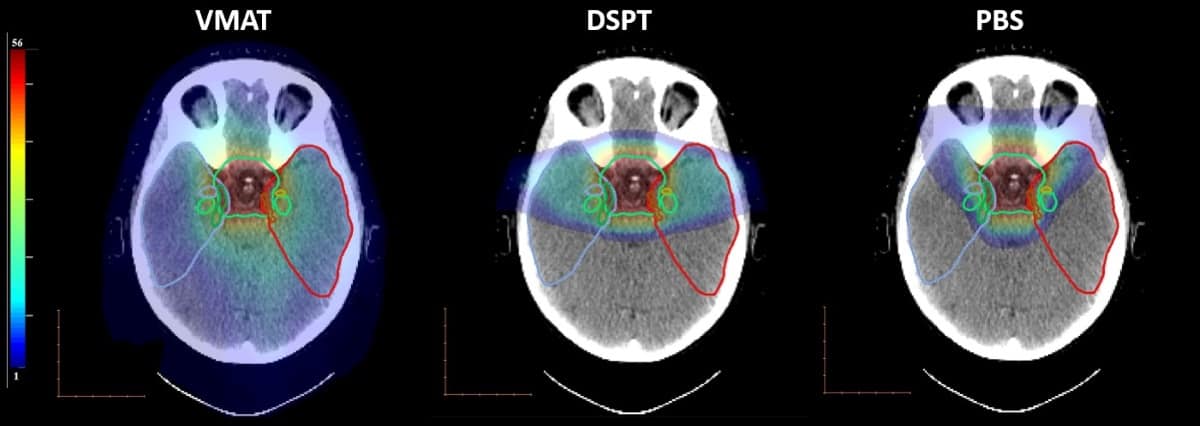
Children undergoing radiation therapy for brain tumours are at risk of cognitive impairment, as most tumours are located close to brain substructures associated with memory and thinking. Reducing radiation exposure to structures such as the temporal lobes could help minimize such side effects. Research presented at the ESTRO 38 conference in Milan shows that pencil-beam scanning (PBS) proton therapy delivers the lowest doses of radiation to the temporal lobes and hippocampus — offering the best hope of preserving cognitive function.

“Brain tumours are the second most common type of cancer in children. Survival rates have increased in recent decades and currently 75% of children diagnosed with a brain tumour will be alive five years later,” explains Laura Toussaint, a PhD student at Aarhus University Hospital, who presented the research. “Alongside surgery and chemotherapy, radiotherapy plays an important role in treating brain tumours in children, but we need to protect children’s developing brains from any unnecessary radiation. The more we learn about how to effectively target brain tumours while minimizing the dose to other parts of the brain, the better we can preserve children’s cognitive abilities and quality-of-life after treatment.”

Toussaint and colleagues used data from 10 children with the brain tumour craniopharyngioma. For each child, they created treatment plans using three types of radiotherapy: temporal lobe sparing volumetric-modulated arc therapy (VMAT); double-scattering proton therapy (DSPT); and PBS proton therapy. In each case, the three plans were optimized to deliver the same dose to the clinical target volume.

Previous research has shown that radiation exposure to particular areas of the brain, including the temporal lobes and hippocampus, have an impact on children’s cognitive outcomes, specifically memory functions. Toussaint and colleagues used these existing data to select 30 unique brain substructures associated with cognition to study.

They used CT and MRI scans to precisely delineate the structures in each patient’s brain. For every child, they then compared the three treatment plans see which plan better spared each of the 30 structures from radiation, categorizing the dose to each structure as low (V10Gy, V20Gy), intermediate (V30Gy, V40Gy) or high (V50Gy).

They found that doses to temporal lobe structures were lower with PBS, compared with both the DSPT and VMAT plans. For example, 41% of the left hippocampus volume received low doses of radiation with the DSPT plans, but was spared with PBS. Intermediate dose to the left amygdala was reduced from 43% to 24% for PBS compared with DSPT.

Using existing data and models on the impacts of radiation to these brain regions, the researchers predict that the proton therapies, particularly PBS, would result in less impairment of the children’s memory function.

“We have looked at three types of radiotherapy, which all aim to successfully treat brain tumours while doing as little damage to children’s brains as possible,” says Toussaint. “What we found was that pencil-beam scanning proton therapy seems to be by far the best at avoiding parts of the brain that are important in children’s memory. The next step would be to confirm this finding with clinical research in patients.”

“The aim of radiotherapy is to effectively treat cancer while causing as little damage as possible to the rest of the body. This aim could not be more important than when we are treating children’s brains,” comments Umberto Ricardi, President of ESTRO and head of the University of Turin’s oncology department. “Proton therapy is already being used in some hospitals to treat brain tumours in children, but this study offers evidence of the benefits it might bring in terms of protecting cognitive functions and quality-of-life. We hope this work will lead to more research in this vital area.”

Copyright © 2026 by IOP Publishing Ltd and individual contributors