

Clinical innovations focus on personalized therapy

At the end of April medical physicists and radiation oncologists will be converging in Milan, Italy, for ESTRO 38, the annual congress of the European Society for Radiotherapy and Oncology. Delegates will have the opportunity to share knowledge and advances in the field, with a particular focus this year on a multidisciplinary approach to patient care. With the tagline “Targeting optimal care, together”, the scientific programme emphasizes how medical professionals are working together to improve patient outcomes.

The vendor community is an important part of this professional ecosystem, with technology providers working in tandem with researchers and clinicians to deliver better systems for imaging and therapy. Delegates at ESTRO 38 will have an opportunity to see demonstrations of the latest products, and to engage first-hand with the leading equipment vendors in the field.

Radiation oncology for the next generation 

A new portfolio of radiation oncology solutions from Philips Healthcare promises to accelerate time from patient referral to the start of treatment. IntelliSpace Radiation Oncology, an intelligent patient management solution, is the latest addition to Philips’ renewed suite of radiation oncology systems and software. On show for the first time at ESTRO, the new portfolio includes Pinnacle Evolution treatment planning software, Big Bore RT, a dedicated oncology CT simulator, and the Ingenia Elition/Ambition MR-RT systems.

The Big Bore RT system from Philips

ESTRO delegates can also attend a satellite session hosted by Philips on 29 April. The hour-long session, which starts at 13.15 in Room Brown 3, features Ardie Ermers, who heads up Philips’ radiation oncology division, along with two speakers with extensive experience in the clinic: Dr Russell Banner from the South West Wales Cancer Centre in the UK, and Bas Raaymakers from the University Medical Center Utrecht in the Netherlands. More information about the session, and Philips’ other activities at ESTRO, is available on the company’s website.

You can find out more about Philips’ full suite of radiation oncology technology and integrated solutions at Booth #4000, or follow @PhilipsLiveFrom for updates throughout #ESTRO38.

Elekta Unity brings MR-guided radiotherapy to the clinic

Elekta will be running demonstrations of its full range of equipment for radiation therapy, radiosurgery and brachytherapy, and has provided an online tool for attendees to pre-book demonstrations of specific products. Most attention is likely to focus on the company’s Unity system for MR-guided radiotherapy, which is now available for clinical use in Europe and North America. The Unity system combines high-field 1.5 T MR imaging with radiation therapy to allow clinicians to see the effect of the treatment on the tumour, for the first time making it possible to adapt the treatment in real time.

Elekta Unity

Among the other products available for demonstration are the Monaco treatment planning system, the Versa HD for high-definition radiosurgery, and the MOSAIQ information management system for radiation oncology clinics. You can also register for a lunch symposium on 27 April to learn more about Elekta’s solutions and innovations, while the company is also running its first User’s Meeting at the event – which, unfortunately, is already fully subscribed.

Visit Elekta at Booth #3800, and pre-book a product demonstration via the company website.

Putting image-guided radiotherapy to the test

A novel motion phantom from Modus QA provides researchers with an accurate model for exploring the capabilities of image-guided radiotherapy for improving cancer treatment and neurosurgery. The programmable QUASAR MRI 4D motion phantom allows medical physicists to understand the effects of tumour motion, such as when a patient breathes or when there’s peristaltic motion through the digestive system.

Photo of the QUASAR motion phantom from Modus QA

Using the phantom in combination with dosimetry inserts allows scientists to calculate and measure the dose that is administered to a moving target, while also ensuring that they are hitting the moving target and not the surrounding healthy tissue. The phantom design is flexible, practical and easy to deploy, allowing researchers to gather as much data as possible for a range of possible patient scenarios.

Features of the QUASAR motion phantom include a spherical target that can mimic numerous trajectories of a tumour in the body, including those seen during breathing. “We can add not only linear motion in and out of the phantom, but we can also add twist and offset that sphere so that it follows a complex 3D path as time plays out,” says Enzo Barberi, Modus’ director of MR product development.

Visit Modus QA at Booth #3310 to find out more about the QUASAR phantom plus the company’s full range of QA solutions.

 

Artificial intelligence versus 101 radiologists

A commercial artificial intelligence (AI) system matched the accuracy of over 28,000 interpretations of breast cancer screening mammograms by 101 radiologists. Although the most accurate mammographers outperformed the AI system, it achieved a higher performance than the majority of radiologists (JNCI: J. Natl. Cancer Inst. 10.1093/jnci/djy222).

With the addition of deep-learning convolutional neural networks, new AI systems for breast cancer screening improve upon the computer-aided detection (CAD) systems that radiologists have used since the 1990s. The AI system evaluated in this study — conducted by radiologists and medical physicists at Radboud University Medical Centre — has a feature classifier and image analysis algorithms to detect soft-tissue lesions and calcifications, and generates a “cancer suspicion” ranking of 1 to 10.

The researchers examined unrelated datasets of images from nine previous clinical studies. The images were acquired from women living in seven countries using four different vendors’ digital mammography systems. Every dataset included diagnostic images, radiologists’ scores of each exam and the actual patient diagnosis.

The 2652 cases, of which 653 were malignant, incorporated a total of 28,296 individual single reading interpretations by 101 radiologists participating in previous multi-reader, multi-case observer studies. The readers included 53 radiologists from the United States, who represented an equal mix of breast imagers and general radiologists, plus 48 European radiologists who were all breast specialists.

Principal investigator Ioannis Sechopoulos and colleagues reported that the performance of the AI tool (ScreenPoint Medical’s Transpara) was statistically non-inferior to that of the radiologists, with an AUC (area under the ROC curve) of 0.840, compared with 0.814 for the radiologists. The AI system had a higher AUC than 62 of the radiologists and higher sensitivity than 55 radiologists.

The performance of the AI system was, however, consistently lower than the best performing radiologists in all datasets. The authors suggested that this may be because the radiologists had more information available for assessment, such as prior mammograms, for the majority of cases. However, the team did not have access to the experience levels of the 101 radiologists, and therefore could not determine whether the radiologists who outperformed the AI system also were the most experienced.

The researchers suggest that there may be several ways that an AI system designed to detect breast cancer could be used. One possibility is its use as an independent first or second reader in regions with a shortage of radiologists to interpret screening mammograms. It also could be employed in the same manner as CAD systems, as a clinical decision support tool to aid an interpreting radiologist.

Sechopoulos also thinks that AI will be useful for identifying normal mammograms that do not need to be read by a screening radiologist. “With the right developments, it could also be used to identify cases that can be read by only one radiologist to confirm that recalling the patient is necessary,” he tells Physics World. “These strategies could give radiologists more time to focus on more complex cases, and eventually could be part of the solution needed to implement digital tomosynthesis in screening programs. This is important because tomosynthesis takes considerably longer to read than mammography.”

When asked about future research, Sechopoulos suggests that a really interesting next step will be to compare the performance of AI against human performance in real screening conditions with the actual prevalence, or percentage of cases that are positive. “We need to gather that data first, and then do the comparison overall and also broken down by case characteristics, including lesion type, lesion location, and tumour characteristics,” he says.

Niobium telluride could be a topological superconductor

Researchers have seen intrinsic superconductivity up to a temperature of 0.72 K in the transition metal dichalcogenide niobium telluride (NbTe2). The superconductivity comes from spin-orbit coupling induced p-wave pairing, which suggests that the material might be a topological superconductor. They have also observed anisotropic magnetoresistance in the material and devised a model (which could be applicable to a variety of layered 2D compounds) to fit their observations. The findings could help advance future studies on topological superconductors for applications in quantum computation.

Transition metal dichalcogenides (TMDs) have the chemical formula MX2, where M is a transition metal (such as Mo or W) and X is a chalcogen (such as S, Se or Te). Most TMDs are made up of layers stacked together by relatively weak van der Waals interaction and some of these materials go from being indirect band-gap semiconductors in the bulk to direct band-gap semiconductors when scaled down to monolayer thickness. These monolayers efficiently absorb and emit light, and so might find use in a variety of optoelectronics device applications such as light-emitting diodes, lasers, photodetectors and solar cells. They might also be used to make circuits for low-power electronics, low-cost or flexible displays, sensors and even flexible electronics that can be coated onto a variety of surfaces.

Distorted 1T type materials

Among layered TMDs, “distorted 1T” type materials are particularly interesting, says Jian Wang of Peking University, who led this research effort. In a single layer, the 1T structure is unstable, he explains, and spontaneously distorts so that the periodicity of the metal chains in the material doubles up. This behaviour has already been seen in the TMDs tungsten telluride (WTe2) and molybdenum telluride (MoTe2).

The resulting single-layer structure is said to be 1T’ or 1T’’. In the former, the period doubling lowers the metal d orbital so that its energy level lies below the chalcogenide orbital. This leads to electronic band inversion and exotic behaviour, like the appearance of the quantum spin Hall insulator (QSHI) state.

NbTeis an example of 1T’’ structure, which is much less studied compared to 1T’, says Wang. Here, the distorted layers stack up in a monoclinic fashion and a quasi-1D triple metal chain forms that is different to the double chains in WTe2.

Inherent superconductivity

In previous experiments on the electronic structure of NbTe2, researchers found that the lattice distortion in the material comes from an effect called Fermi surface nesting, as well as electron-phonon coupling. Other studies showed that the material could be a semimetal with symmetry protected topological state. Indeed, magnetic susceptibility measurements have also pointed to the possibility of the material being superconducting.

Wang and colleagues have now measured the electron transport in high quality crystals of 1T’’ monoclinic NbTeprepared by a technique called chemical vapour transport and have clearly observed the onset of intrinsic superconductivity at a temperature of 0.72 K. “At this temperature, the resistivity of the material starts to drop sharply and reaches zero at around 0.64 K,” says Wang. “This resistivity drop can be suppressed by applying a perpendicular and parallel magnetic field, thus confirming that we have observed a superconducting state. It is intrinsic because our sample is neither doped or pressurized.”

The researchers say that the upper critical magnetic field Hin the parallel direction plotted against temperature shows unconventional quasi-linear behaviour. This indicates that spin-orbit coupling induced p-wave pairing contributes to the superconductivity in NbTe2.

And that is not all: they also found that the magnetoresistance of the material increases almost linearly with applied magnetic field of up to 50 Tesla – a result that confirms previous observations and provides stronger evidence for the existence of quantum limit transport. The magnetoresistance is anisotropic, which means that it varies depending on the direction of magnetic field.

A better model

“We devised a model for this anisotropic magnetoresistance that better fits our experimental data,” explains Wang. “This model is expected to be applicable to a variety of layered materials.”

The researchers, reporting their work in Chinese Physics Letters, say they would now like to fabricate monolayer or few-layer devices from NbTe2. “We would like to measure the superconductivity, linear magnetoresistance and Fermi surface anisotropy of these samples and see how these properties change with sample dimensions,” says Wang. “2D NbTeis predicted to be a Dirac semimetal so it is very intriguing to see superconductivity in this material,” he tells Physics World.

Supersolid behaviour spotted in dipolar quantum gases

Atomic systems that behave very much like supersolids have been created independently by teams of physicists in Italy, Germany have Austria. The teams have shown that dipolar quantum gases trapped by magnetic fields can spontaneously separate into arrays of coherent droplets, providing a system closer to the original conception of a supersolid.

The supersolid phase is a counterintuitive quantum state of matter that has both crystalline order and frictionless flow at very low temperatures. The phenomenon is related to superfluidity and was predicted 50 years ago by Soviet physicists Alexander Andreev and Ilya Lifschitz. However, supersolidity has proved frustratingly difficult to observe.

In a superfluid, the energy required to create a density modulation generally increases as the modulation’s wavelength gets shorter. At one characteristic wavelength, however, the energy takes a sudden dip – much as waves pass more easily through a crystal when the wavelength equals the separation between the atoms. If the superfluid were cold enough, Andreev and Lifschitz reasoned, the energy required would drop to zero at this wavelength. The superfluid would then spontaneously separate into tiny droplets, effectively forming an ordered crystal.

Difficult to observe

Early attempts at observing a superfluid focused on superfluid helium-4 and in 2004 physicists at Pennsylvania State University in the US reported evidence of helium-4’s supersolidity. Unfortunately, further investigation by the team revealed this to be an experimental error. Despite this setback, efforts to observe supersolidity in helium-4 are ongoing.

In 2017, two research groups – one at ETH Zurich, the other at Massachusetts Institute of Technology – independently observed supersolid phenomena in Bose-Einstein condensates (BECs) of atomic gases. These BECs do not have the natural energy dip at a specific wavelength present in helium-4, but both groups successfully engineered dips by coupling the atoms to a light field. This induced strong electric dipolar interactions between the atoms and consequent attractive interactions. When combined with the repulsive effect of the van der Waals’ interaction, this produced a single, coherent state that could exhibit a marked density modulation and yet still flow without friction. Nevertheless, explains Tobias Donner from the ETH group, “The interaction was imposed from outside – we designed an interaction with the help of light fields, which means the critical distance was given by the light-field wavelength.”

Magnetic interactions

Instead of exploiting electric dipole interactions, which must be imprinted using light, the latest three experiments use magnetic dipole interactions. When the atoms are placed in an external magnetic field, their magnetic dipoles align with it. When the field is low, repulsive van der Waals interactions and zero-point fluctuations dominate, and the system behaves as a standard BEC. However, higher fields can induce the atoms’ magnetic dipoles to align head to tail, causing the atoms to separate into individual droplets, whose distance increases with the field.

If the field is too high, each droplet remains in a separate quantum state and the system is not a supersolid. However, at intermediate fields, the droplets can be brought close enough to allow atoms to tunnel between them, keeping the state coherent. “The regime in which this happens is very narrow,” says Giovanni Modugno of the University of Pisa in Italy, who led the team that first observed the phenomenon.

Modugno’s team and, independently, researchers led by Tilman Pfau of the University of Stuttgart in Germany, used BECs of dysprosium-162. Unfortunately, to create the supersolid phenomena in dysprosium-162 requires tuning the magnetic field to a value that also maximizes the probability of atoms being knocked out of the trap by three-body collisions. The BEC was therefore lost rapidly, and supersolid phenomena could be observed for only a few tens of milliseconds. However, researchers led by Francesca Ferlaino of the University of Innsbruck in Austria used dysprosium-164 instead. This did not suffer from this problem, meaning the researchers could produce BECs lasting up to 150::ms using the same technique.

Longer lifetimes

Moreover, Ferlaino’s team also showed that a supersolid-like state of dysprosium-164 could be produced by cooling alone, producing even longer lifetimes: “After 400::ms the state is still very much alive and robust,” explains Ferlaino. “The properties are preserved for a time long enough to study the spectrum of excitations, the thermodynamic properties, the flow…long enough to really do something with the state.” This will be crucial in subsequent experiments to prove that the state is truly a supersolid.

Donner, who was not involved in the latest studies, looks forward to a study of the system’s properties: “What we are all hoping for, of course, is some effect that’s not predicted by theory – some unanticipated new avenue for research.”

Modugno’s team describe their work in Physical Review Letters and Tilman Pfau’s team’s in Physical Review X. Francesca Ferlaino and colleagues’ work is in press in Physical Review X and a preprint is available on arXiv.


First MRI-guided radiosurgery achieved near implanted defibrillator

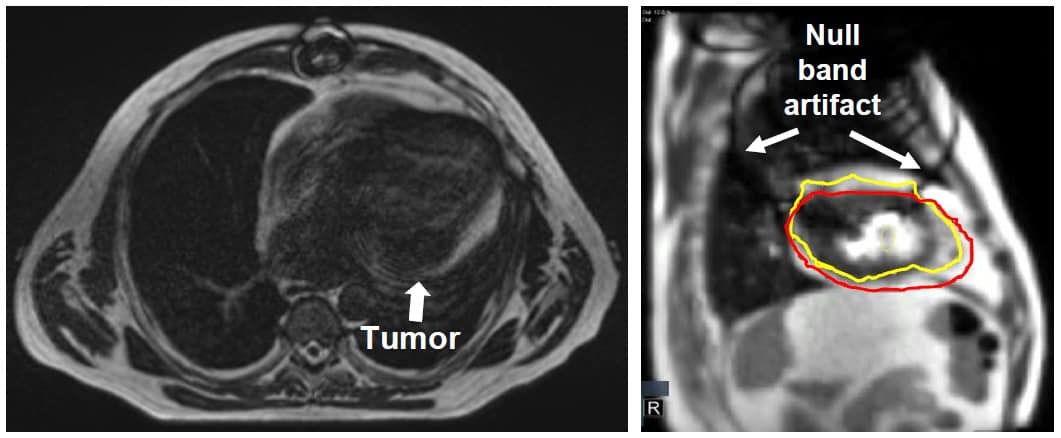
Researchers in the US have used MRI-guided radiation therapy (MR-IGRT) to treat a tumour in the heart of a patient fitted with an implantable cardioverter defibrillator (ICD). The first successful procedure of its type on record, the technique highlights some challenges that need to be addressed in the future. The results will help the technique become more commonplace over the next few years as the clinical availability of MRI-linacs increases (Pract. Radiat. Oncol. 10.1016/j.prro.2019.02.003).

After ten years in development, linear accelerators (linacs) integrated with MRI scanners moved into the clinic in 2017. At Washington University School of Medicine (WUSM) in St. Louis, one application that has been found for the MRI-linac’s excellent soft-tissue contrast and real-time guidance is the treatment of cardiac tumours. Now, H Michael Gach and colleagues from WUSM, Barnes Jewish Hospital and Loyola University Medical Center outline one such procedure that was more complicated than the norm.

The male patient was admitted for stereotactic radiosurgery for a cardiac fibroma. The tumour was assumed to be the source of the patient’s ventricular tachycardia (accelerated heartbeat) for which an ICD had been implanted.

0.35 T MRIs

Non-invasive stereotactic cardiac radiosurgery — in which radiation is delivered in a single fraction — has been shown recently to be effective in patients with ICDs in reducing ventricular tachycardia events, but has so far been achieved without real-time image guidance. MR-IGRT involving multiple dose fractions, on the other hand, has been used to treat cardiac tumours, but not in the presence of ICDs.

“The motivation was that we needed to tackle the challenge of MR-IGRT in a patient with a nearby ICD so we can extend MR-IGRT to treating tachycardias using non-invasive stereotactic cardiac radiosurgery, in which the patient typically has an ICD or pacemaker,” says Gach.

The challenge of integrating an MRI scanner with a linac lies in avoiding or overcoming the interference effects that arise when both subsystems are operating at the same time. Researchers have achieved this by shielding the linac from the MRI’s strong magnetic fields and shielding the MRI from the linac’s radiofrequency fields.

The problem is, subjecting the patient to a magnetic field is a fundamental part of the imaging process, so the ICD cannot be similarly shielded. The proximity of the ICD to the planning target volume means that some irradiation of the device by the radiotherapy beam is inevitable too.

To ensure the safety of the procedure, the team employed a pre-operation checklist detailing the conditions that had to be met before the procedure went ahead. One of these conditions was that the ICD must be confirmed to be robust to the magnetic field strengths, field gradients, and radiofrequency energy absorption rates associated with the treatment.

The ICD was also required to be tolerant of the radiation dose that would unavoidably be delivered to the device. The vendor set an accumulated dose threshold beyond which it might suffer damage, but even below this level, the device had to operate in a limited-function mode to meet MRI and radiation safety guidelines.

Those conditions having been met, the most significant problems that the team encountered were the appearance of artefacts in the MR images acquired during the radiation therapy, and an image gating latency of up to half a second.

The “null band” artefacts were due to magnetic inhomogeneities associated with the ICD and showed up as dark bands intersecting the target area. The researchers note that these artefacts could be minimized under alternative MRI pulse sequences, but not without sacrificing signal-to-noise ratio. A different sequence could also help speed up the image acquisition process, reducing gating latency and sparing healthy tissue.

Simulating life on Mars in China, the physics of the latest Stars Wars film

A Chinese-built Mars simulation base in the Gansu province opened its doors to visitors this week. The facility, dubbed Mars Base 1 Camp, comprises several interconnected modules that includes a greenhouse as well as a mock decompression chamber. The first visitors included 100 Chinese schools students who spent five hours touring the pretend space colony. Gansu province officials hope that Mars Base 1 Camp will boost tourism with a plan to invest 2.5 billion yuan ($374m) by 2030 to expand the site to 67 km2 and attract two million visitors a year.

While the backdrop for the Chinese Mars base looks eerily similar to that of the desert planet of Tatooine – the home of Luke Skywalker – many Star Wars fans would have been excited this week when the trailer for Episode IX was released. Rhett Allain over at Wired has been analysing the footage, taking a particular interest in one aspect of the trailer in which Rey supposedly backflips over a TIE fighter zooming towards her. You can read his analysis here. (Spoiler: the force is still strong.)

Glaciers’ global melt may leave Alps bare

Many of the planet’s most scenic – and most valued – high-altitude landscapes are likely to look quite different within the next 80 years: the glaciers’ global melt will have left just bare rock.

By the century’s end, Europe’s famous Alps – the chain of snow- and ice-covered peaks that have become a playground of the wealthy and a source of income and pleasure for generations – will have lost more than nine-tenths of all its glacier ice.

And in the last 50 years, the world’s glaciers – in Asia, the Americas, Europe, Africa and the sub-Arctic mountains – have lost more than nine trillion tonnes of ice as global temperatures creep ever upwards in response to profligate combustion of fossil fuels.

And as meltwater has trickled down the mountains, the seas have risen by 27 mm, thanks entirely to glacial retreat.

In two separate studies, Swiss scientists have tried to audit a profit and loss account for the world’s frozen high-altitude rivers, and found a steady downhill trend.

Glacial ice is a source of security and even wealth: in the poorest regions the annual summer melt of winter snow and ice banked at altitude can guarantee both energy as hydropower and water for crops in the valleys and floodplains.

In wealthy regions, the white peaks and slopes become sources of income as tourist attractions and centres for winter sport – as well as reliable sources of power and water.

Swiss focus

In the journal The Cryosphere, a team from the Swiss Federal Institute of Technology, almost always known simply as ETH Zurich, looked into the future of the nation’s own landscape, and beyond.

They made computer models of the annual flow of ice and its melting patterns and took 2017 as the reference year: a year when the Alpine glaciers bore 100 cubic kilometres of ice. And then they started simulating the future.

If humankind kept the promise made by 195 nations in Paris in 2015, to drastically reduce fossil fuel use, lower emissions of carbon dioxide, restore the forests and keep global warming to no more than 2 °C above historic levels, then the stores of high ice would be reduced by more than a third over the next eight decades. If humankind went on expanding its use of fossil fuels at the present rates, then half of all the ice would be lost by 2050 and 95% by 2100.

Time lag

But there will be losses in all scenarios: warming so far has seen to that. Ice reflects radiation and keeps itself cold, so change lags behind atmospheric temperature.

“The future evolution of glaciers will strongly depend on how the climate will evolve,” said Harry Zekollari, once of ETH and now at Delft University of Technology in the Netherlands, who led the research. “In the case of a more limited warming, a far more substantial part of the glaciers could be saved.”

The Alpine glaciers were made world-famous first by Romantic painters and poets of the 19th century, among them JMW Turner and Lord Byron. But their contribution to rising sea levels is, in a global context, negligible.

When Swiss researchers and their Russian, Canadian and European partners looked at the big picture, they found that the mass loss of ice from the mountains of Alaska,  Canada, parts of Asia and the Andes matched the increasing flow of water from the melting Greenland ice cap, and exceeded the flow of melting water from the Antarctic continent.

Europe’s modest melt

They report in Nature that glaciers separate from the Greenland and Antarctic sheets covered 706,000 square kilometres of the planet, with a total volume of 170,000 cubic kilometres, or 40 centimetres of potential sea level rise.

And in the five decades from 1961 to 2016, according to careful study of satellite imagery and historic observations, the seas have already risen by 27 mm as a consequence of increasing rates of glacial retreat. This is already between 25% and 30% of observed sea level rise so far.

Europe did not figure much in the reckoning. “Globally, we lose three times the ice volume stored in the entirety of the European Alps – every single year,” said Michael Zemp, a glaciologist at the University of Zurich.

He and his colleagues warn: “Present mass-loss rates indicate that glaciers could almost disappear in some mountain ranges in this century, while heavily glacierized regions will continue to contribute to sea level rise beyond 2100.”

Radioactive glaciers, Mars methane mystery, and more on the black-hole images

In this episode of the Physics World Weekly podcast, we’re looking in more depth at the biggest astrophysics story of the year so far – the first images of a black hole, which made headlines around the world last week. Physics World’s Hamish Johnston reports from Colorado, where he caught up with black-hole experts for a chat about the recent triumph of the Event Horizon Telescope. That’s the global network of telescopes that revealed those incredible first pictures of the black hole at the centre of the Messier 87 galaxy, 55 million light-years from Earth.

We’re also talking about some more earthly matters, as James Dacey and Liz Kalaugher have been in Vienna at the General Assembly of the European Geosciences Union. They discuss some of the key themes from that meeting, including plastics problem, the unexpected radiation threat relating to glaciers, and why the search for clues of life on Mars just got a bit more complicated.

If you enjoy what you hear you can subscribe via Apple podcasts, or your chosen podcast app. We’re also available now on Spotify.


Boost in the number of US female physicists and astronomers taking faculty positions

Around 40% of new astronomy faculty in US universities are women, while a quarter of new physics faculty recruits are female. That is according to data from a recent report by the American Institute of Physics (AIP), which also finds an increase in female representation at postgraduate levels as well as a boost in the proportion of Hispanic women taking physics.

The report — Women in Physics and Astronomy, 2019 — is based on several different surveys that were conducted at physics and astronomy departments across the US. The report finds that, at postgraduate level, the percentage of physics and astronomy doctorates earned by women has risen in the past decade, with 20% of physics and 40% of astronomy doctoral degrees awarded to women in 2017 — up from 18% and 28% in 2007, respectively.

We probably need to do more than just wait for the increase to happen to make many of the department cultures fully welcoming to women

Sapna Cheryan

There have also been increases among those employed in physics and astronomy departments. In 2014, some 16% of physics and 19% of astronomy faculty members were female, compared to just 10% in 2002 and 14% in 2003, respectively. Yet, of the 567 new faculty members hired in physics departments in 2016, 26% were women while 10 of the 25 new faculty positions hired in astronomy were female — for both fields, the greatest number of women were hired into tenure-track positions.

No leaky pipe

African-American and Hispanic women, however, remain under-represented in both physics and astronomy, the report says. According to the latest census data, 13% of women in the US are African-American and 16% are Hispanic, but in 2016 they were awarded just 4% and 7% of bachelor degrees in physics, and 3% and 13% of such degrees in astronomy, respectively.

The AIP finds, however, that the representation of Hispanic women has grown rapidly in recent years, with a doubling of bachelor degrees and increases in female Hispanic faculty members. In contrast, there has been no improvement among African-American women, with the report authors stating that furthers interventions are needed to encourage and retain their participation.

Despite the report noting the overall increase in the number of people taking physics, the proportion of female physics undergraduates in the US has stalled over the past decade, with women earning 21% of US physics bachelor degrees in 2017 — exactly the same percentage as a decade earlier. Indeed, the situation has worsened in astronomy, with just 33% of bachelor degrees in the US awarded to women, down from 40% in 2007.

The AIP’s report found little evidence of women leaving physics between undergraduate education and faculty employment. “Our pipeline analysis was done based on percentages of women at each academic career stage — undergraduate degree, graduate degree, faculty employment – and we found that there was no attrition in the percentage of women,” Anne Marie Porter, a survey scientist at the AIP told Physics World. “Some women and men may change careers, go into industry, or drop-out for other reasons, but we found no gender difference…men and women who leave physics seem to be doing it at the same rate.”

Sapna Cheryan, a psychologist at the University of Washington in the US who was not involved in the study, says that the conclusions about female retention are consistent with what she has seen in the data. She is unsure, however, that the increase in female doctorates will translate into an increase at faculty level. “[I am] curious whether women in physics in faculty positions are retained at the same rate as men,” adds Chervan. “My overall sense is that we probably need to do more than just wait for the increase to happen to make many of the department cultures fully welcoming to women.”

Holographic lenses focus ultrasound in the brain

Three-dimensional printed acoustic lenses that focus ultrasound beams to arbitrary shapes within the brain have been developed by researchers at the Technical University of Valencia. The lenses correct for beam aberrations caused by ultrasound transmission through the skull, and can be custom made to suit the anatomy of each patient. A less expensive focusing method than phased arrays — the current state-of-the-art — the technique could allow new treatments that open the blood–brain barrier or alter nerve activity, as well as offering greater control over ultrasound-induced hyperthermia.

Therapeutic focused ultrasound is firmly established in the medical mainstream, finding use in the fragmentation of kidney stones and the thermal ablation of tumours. There are good clinical reasons for wanting to apply it to the brain, too, since here the technique can achieve some very specific effects. One of these is the penetration of the blood–brain barrier — a membrane that keeps the brain and central nervous system (CNS) largely isolated from the circulatory system, making it difficult to treat the brain with drugs. Another emerging application is the use of ultrasound to manipulate brain activity, allowing insights into neural dynamics and potentially leading to treatments for certain brain pathologies.

These applications require ultrasound energy to be delivered precisely to irregular volumes in the brain. The problem is, such fine control is hindered by the skull, which effectively sound-proofs the brain by reflecting, refracting and absorbing acoustic radiation. Acoustic lenses and phased arrays of ultrasonic transducers have been used to compensate for this effect, but these still produce a single focal point.

Now, in a paper posted on arXiv, Sergio Jiménez-Gambín and colleagues at the Institute of Instrumentation for Molecular Imaging have shown that bespoke acoustic holographic lenses can overcome the aberrating effect of the skull while simultaneously achieving complex irradiation geometries (arXiv:1902.06716v1).

First, the team used the results of publicly available X-ray CT and MRI scans to produce a computer model of a patient’s skull and brain. The X-ray absorption data from the CT scan gave the team an approximation of the skull’s acoustic parameters. The MRI data provided the shape and location of the hippocampus, which was to be the target for the procedure.

Holographic lens schematics

Next, the researchers simulated acoustic sources with various shapes and amplitudes inside the brain. They chose three configurations, corresponding to three different target geometries: a pair of point sources, one on each side of the hippocampus; a set of 50 point sources describing an arbitrary curve; and a volume encompassing the entire right side of the hippocampus.

Simulated sound waves propagating outward from these sources were transmitted through the skull, emerging with a characteristic phase and amplitude profile. Acoustic waves propagate in a way that is time-symmetric, so the specific lens design that would restore the exiting sound waves to uniformity was the very same design that, with time reversed, would serve to focus a pristine ultrasound beam to the required geometry in the brain.

Armed with the knowledge of the lens configurations that would form the desired irradiation patterns, the team realised the designs using a 3D printer, and tested them in a 3D-printed skull phantom. The measured pressure fields agreed closely with the model, and although the phantom’s acoustic properties did not perfectly match those of a real human skull, the researchers are confident from their simulations that the results will hold in more realistic situations.

Because each of these acoustic lenses is produced for a specific set of target and delivery geometries, the method lacks the real-time adaptability of phased-array systems, which can be employed with simultaneous image guidance. It does have other advantages, however.

“Ultrasound phased arrays guided by MRI allow ultrasonic energy to be focused in a very precise point deep in the brain,” says Noé Jiménez, who collaborated on the research. “However, if the desired target is not a point but a complex volume, several sonications are needed. This new technique using acoustic holograms allows the ultrasonic field to be adapted to the desired target volume, minimizing the treatment time and optimizing the ultrasonic energy into the region of interest.”

Copyright © 2026 by IOP Publishing Ltd and individual contributors