Neutrons characteristic of nuclear fusion have been produced sustainably inside a device that is small enough to fit on a tabletop. Yue Zhang at the University of Washington and colleagues observed the neutrons following efforts to stabilize the accelerated plasma contained within a Z-pinch, a device that for decades has been used by astronomers to recreate the hot plasmas typical of a stellar interior. The new work offers a potential route towards compact fusion-energy generators, as an alternative to large-scale, tokamak-based devices.
A Z-pinch device works by running a strong current along a tube of accelerated plasma, inducing a Lorentz force that generates a strong magnetic field within the plasma. This field “pinches” the plasma by bringing particles closer together – increasing its pressure, and therefore, its temperature.
Physicists discovered in the 1950s that high-energy neutrons are generated in this process, and these neutrons could only have formed as a result of nuclear fusion. Initially, these observations raised hopes that the Z-pinch could be used as a highly compact fusion-energy generator, triggering numerous theoretical studies to understand the processes and conditions for fusion. However, unlike large tokamak devices – which can stabilize plasmas using strong magnetic fields – physicists haven’t yet managed to achieve the parameters that theorists say are necessary a create a stable plasma inside a Z-pinch.
Zhang’s team now aim to address these issues using the Fusion Z-pinch Experiment (FuZE). At just 1.5 metres in length, the cylindrical instrument is a modification to conventional Z-pinch devices, designed to stabilize plasmas by subjecting them to a radial shear force acting around its axis. Within FuZE, the physicists introduced a radially-sheared plasma composed of 20% deuterium and 80% hydrogen, subjected to a current of 200 kA.
For the first time, these parameters satisfied the conditions that theorists predict should allow nuclear fusion within a Z-pinch. FuZE was able to sustain a stable plasma for 16 µs, some 5000 times longer than the times achieved in static plasmas outside of a Z-pinch. To confirm that fusion had been achieved, Zhang and colleagues measured their plasma’s neutron yield using a plastic scintillator, which converts incident neutrons into photons, coupled to a photomultiplier. The setup revealed that a period of quasi-steady-state neutron production endured for around 5 µs during the time that a stable plasma was maintained.
Zhang’s team acknowledges that there is a very long way to go before they can realistically consider using a device based on FuZE as a fusion generator. However, their initial results show for the first time that devices that enable sustained nuclear fusion need not take up huge amounts of space.
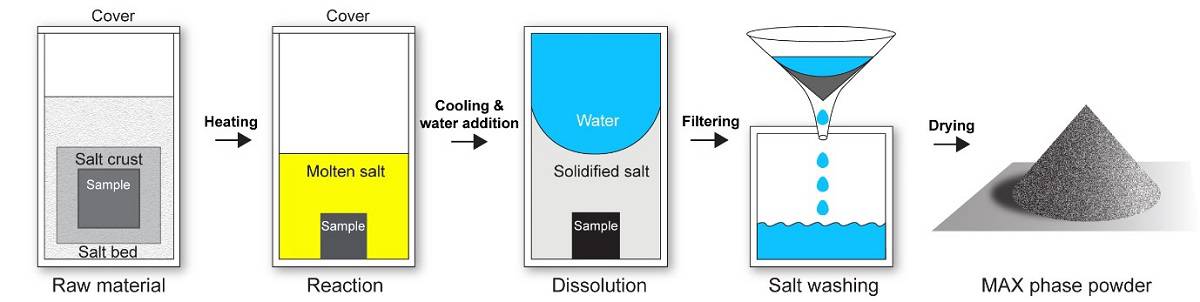
Non-oxide ceramics have many potential industrial applications due to their properties at high temperatures, including excellent corrosion resistance, stiffness and light weight. However, the synthesis of such materials, in particular MAX phase ceramics (where M stands for early transition metals, A stands for group 13 or 14 elements and X stands for either carbon or nitrogen atoms), is very costly. It requires processing temperatures above 1,000°C as well as extensive milling to create fine, workable powders from the large porous blocks that common solid-state synthesis methods produce. Furthermore, inert atmospheres or even vacuum are required during these high-temperature processes as the ceramics are subject to oxidation, increasing the cost of processing as well as the necessary equipment, and further limiting their use at an industrial scale. Now, however, researchers at Forschungszentrum Jülich GmbH in Germany led by doctoral student Apurv Dash, have developed a lower-temperature technique dubbed the ‘molten salt shielded synthesis/sintering’ process (MS3 process) which allows processing of high-purity MAX ceramics in air. The process may give this promising class of materials an environmentally friendly path to large-scale use in industry.
Schematic of the MS3 process. Credit: Apurv Dash/ Forschungszentrum Jülich GmbH
A briny synthesis process
The MS3 process involves encapsulating powdered elemental precursors for the ceramic or metal of interest within a salt matrix (potassium bromide, KBr). In this case the researchers used the metal titanium and the ceramic Ti3SiC2 as model cases. Although salt synthesis is no stranger to ceramics processing, previously non-oxide ceramics still needed an inert atmosphere to prevent oxidation. By using KBr, Dash and his colleagues could exploit its mechanical properties, which make it very ductile at room-temperature, and allow them to compress it to 95% its relative density by coldpressing, so that it forms a gas-tight seal around the sample and shields it from oxidation by the atmosphere. They then heat the salt and sample to high-temperatures to melt the salt, creating a molten salt bath, sintering the metal or synthesizing a new ceramic phase from the elemental precursors in the process.
To remove the salt the researchers then simply dissolve it in water, leaving a highly pure metal or ceramic sample behind. They could then recover the salt from the saline water to re-use it for further processing. The researchers estimate that just 3 l of water would be necessary to generate 1 kg of MAX phase ceramic.
The MS3 process gives great control over the properties of the sample of interest. It can make dense and porous metal samples, as well as fine ceramic powders, reducing the number of expensive and energy-intensive steps required in traditional processing methods.
Furthermore, MS3 allows a reduction in processing temperatures by approximately 100 °C compared with other common techniques. This technique could launch a class of promising materials into large-scale industrial use in a cheap, scalable and environmentally friendly way, potentially creating many applications in the aerospace and biomedical implant industries.
Shortlisted ideas will proceed to a pitching stage at a CSEOL bootcamp in the summer. They’ll have the chance to receive funding of €15,000–70,000, as well as training and support for a pilot phase.
The agency would like to spur innovation in citizen science projects based on Earth observation data. There are big challenges in climate change and sustainable development, Wehn said, and citizen science projects could help validate the science, build links with policy, educate or result in development of new commercial products and services. All submitted ideas will be protected by a non-disclosure agreement.
Wehn said the European Space Agency believes that Earth observation data have more potential than is currently being exploited, and is looking to bring in creativity from outside. “There’s so much more that could be done with it [the data],” she said.
Entry is open to teams with relevant experience from research institutions, NGOs and private companies; CSEOL will be able to match entrants with people with expertise in other areas. Successful projects could begin as early as September.
The waiting list for a kidney transplant grows each year and as a result, kidneys from higher risk donors are often included in the potential donor pool. Whilst the use of kidneys from these expanded criteria donors (ECD) has increased the number of transplants, transplant centres still discard a large proportion of ECD kidneys: nearly 45%, compared with just over 10% for standard criteria donor (SCD) kidneys.
These discards represent a largely untapped source of potentially viable kidneys. Current measures for assessing the viability of donor kidneys are mainly based on biopsies. But the relevance of rejecting a kidney based on biopsy results is contested. A US research team has now proposed that using optical coherence tomography (OCT) to image the tissue morphology of procured kidneys could provide additional information to supplement biopsy data in assessing viability and predicting post-transplant function (Biomed. Opt. Express 10.1364/BOE.10.001794).
OCT is an interferometry-based imaging modality that uses the light scattering characteristics of tissue to construct high-resolution images containing subsurface features. According to senior author Yu Chen, from the University of Maryland, OCT offers the ideal balance between resolution and penetration depth for assessing transplant kidneys.
“OCT possesses the resolution to discriminate fine kidney structures that are routinely assessed in traditional biopsies, and the penetration depth to image past the renal capsule and into the kidney cortex,” Chen explains.
Assessing viability
Chen and colleagues from Georgetown University Medical Center and Massachusetts Institute of Technology examined 169 kidneys: 66 from living donors and 103 from deceased donors. Of the deceased-donor kidneys, 88 were preserved using static cold storage and 15 using hypothermic machine perfusion, which is generally considered to be the superior storage method. In the static cold storage group, 26 kidneys were subcategorized as ECD and 62 as SCD; the hypothermic machine perfusion group included two ECD and 13 SCD kidneys.
The researchers used a 1325 nm spectral-domain OCT system to image all kidneys immediately before transplantation, and in vivo after reperfusion. Images were analysed automatically using MATLAB software. Analysis included segmenting the interface between the renal capsule and the kidney cortex, followed by segmentation of the kidney cortex and the lumen of proximal convoluted tubules (PCTs).
Potential donor kidneys are routinely evaluated for fibrosis, which may compromise graft viability. Fibrosis can cause flattening of PCT epithelial cells, leading to dilation of the lumen. Graft viability can also be compromised by acute tubular injury, which can induce dilation of the lumen or may manifest as swelling of the PCT epithelium due to ischemic damage. OCT can detect such swelling or dilation, and could provide a valuable tool for assessing kidney viability.
As such, the researchers assessed four measures of PCT morphology in each transplant group: lumen diameter; density (lumen area divided by the total area of quantifiable cortex); inter-lumen distance (which should increase as the epithelium swells); and inter-centroid distance (which may reflect changes in the interstitial space).
They then assessed the correlation between these parameters and patient outcome. Patients were categorized as having immediate graft function (IGF) if they did not require dialysis following transplant, or delayed graft function (DGF) if dialysis was required in the week after transplant.
Outcome prediction
The researchers ran two regression models for each transplant group: one using pre-implantation data to identify measurements that may predict post-transplant function and affect allocation or discard; and the other including all pre-implantation and post-reperfusion data, to find measurements that could influence post-operative care.
In the ECD subgroup, the model indicated that increased lumen diameter was the most predictive of developing DGF after transplant. When also including the post-reperfusion measurements, larger lumen diameter and higher density were most predictive of DGF.
In the SCD kidneys stored by SCS, there were no strong differences in measurements between IGF and DGF recovery groups. In SCD kidneys preserved by hypothermic machine perfusion, larger pre-implantation diameter was most predictive of DGF. When including all measurements, smaller post-reperfusion inter-lumen distance and lower post-reperfusion density were most predictive of DGF.
The results suggest that OCT measurements may be useful for predicting post-transplant function in ECD kidneys and kidneys stored by hypothermic machine perfusion. For OCT to be used effectively in a clinical setting, image analysis must be fast and reliable. The authors note that the fully automated system presented in this study could identify and segment the kidney microanatomy in OCT images with accuracy comparable to manual segmentation.
“This new kidney analysis technique will likely be of greatest use in assessing ECD kidneys,” says Chen. “These higher risk kidneys undergo the greatest amount of scrutiny, are routinely biopsied, and are most subject to discard. OCT could be employed to guide traditional biopsies, aid in interpretation of biopsies, and provide new information about the viability of the kidney.”
The researchers are now investigating the correlation between OCT images and the histology of biopsies captured at the imaging sites. Their aim is to show that OCT can non-invasively provide accurate measurements of kidney anatomy that mimic measurements of the biopsied tissue.
“Additionally, we are employing deep learning to develop a comprehensive classification model which will utilize OCT imaging data, together with patient and transplant data, to predict DGF,” Chen tells Physics World.
Crazy but true? US theorist Lee Smolin presents his own “realist” formulation of quantum mechanics. (Courtesy: Nicolle Rager Fuller, National Science Foundation/Science Photo Library)
Theoretical physicist and author Lee Smolin once presented an early form of his theory on quantum mechanics to Richard Feynman. While the famous physicist listened to him respectfully, Feynman ultimately told Smolin that his theory was unlikely to work out because it wasn’t crazy enough. Smolin interpreted that as an indication that his ideas didn’t go deep enough, but he seems at any rate to have taken the advice to heart, as his latest book Einstein’s Unfinished Revolution: the Search for What Lies Beyond the Quantumattests.
Smolin, 63, has gained something of a reputation for coming up with ideas that some find stimulating and provocative, while others would happily call them crazy. It’s a tradition particularly apparent in quantum mechanics, which has more than its share of mavericks: David Bohm, Hugh Everett, John Wheeler and Roger Penrose spring to mind. That’s how it should be though – quantum physics can look crazy, and it positively needs bold and even outrageous ideas, if only to shock us out of complacent acceptance of the innocent-looking mathematical formalism. So the flood of current books about quantum theory (and there are more are on the way) should not stop you finding room for this one.
While Smolin’s walk through some of the major existing interpretations of quantum mechanics reproduces much of what is done elsewhere – including Adam Becker’s What Is Real?and Anil Ananthaswamy’s Through Two Doors at Once – his explanations are especially lucid. He is particularly good at outlining the virtues and shortcomings of the pilot-wave idea first developed by Louis de Broglie and then by David Bohm, which deserved better treatment than it initially received as an illustration of how particles having particular properties and locations could be rescued from the quantum formalism. It is a “realist” interpretation, which insists, in Smolin’s own words, “that there is a real world out there, whose properties in no way depend on our knowledge or perception of it”. This sounds like the default position of science, but quantum physics seemed to Niels Bohr and many others to challenge that view.
Albert Einstein sought a realist view of quantum theory, and this is the “unfinished revolution” of the title – which Smolin hopes to complete. In opposition, he sets up the “anti-realists”, with Bohr at their head. The problem, though, is that they do not necessarily deny the realist position above. Some with Bohrian sympathies suggest only that our theories speak not to any underlying reality, but to our experience of it. This distinction is not always made clear.
Then there are the “magical realists”, whose view of realism says that what is “real” is very different from what we perceive. The “many worlds” interpretation, initiated by Everett in the 1950s, falls into this category – but Smolin gives the clearest account I have seen of why the probabilistic nature of quantum mechanics presents a hurdle that it still has not cleared. As he puts it, “the Everett hypothesis, if successful, would explain vastly too much, and also much too little”.
I remain troubled that so few physicists, both within and outside this interpretation, deem it important to engage with the thorny philosophical issues posed by “multiple selves”, instead blithely accepting a fictional Star Trek picture and seeing where it takes them. Smolin is more troubled that, if these other selves exist, some can be expected to live in a deeply unhappy state on “malevolent” branches of the quantum multiverse. Believing in such things without evidence or lack of alternatives is, he thinks, not a very healthy choice for physicists to make, and creates deep moral dilemmas.
Smolin has been working for years on a realist alternative that he calls the “real ensemble” formulation of quantum mechanics. It displays all his characteristically bold invention, starting from the principle that time is fundamental, but space is emergent. From the abstract proximity of objects’ interactional relationships with other objects, he suggests that a concept of spatial separation can emerge. Because there is nothing fundamental about that separation, there is scope for the nonlocality evident in quantum entanglement, which indeed makes a mockery of our conventional notion of space. One of the theory’s most striking conclusions is that physical law is at root created as it is in common law: by precedent. Things that have happened often in the past are more likely to happen again.
The theory still has gaps and speculative aspects but it has the virtue of being testable
The reader can infer that the theory still has gaps and speculative aspects, but it has at least the virtue of being testable. And regardless of whether the details pan out, it reflects a growing conviction among quantum foundationalists that there is a deep connection between nonlocality, causation and the structure of space–time – perhaps one that, if we’re lucky, will tell us something too about gravity.
Smolin’s determination to salvage realism from quantum mechanics is widely shared – he quotes quantum theorist Lucien Hardy as saying “It is the desire to understand what reality is like that burns deepest in the soul of any true physicist.” But I’m not convinced that the best framing of the problem is to line up Einstein’s realism against Bohr’s anti-realism. The Einstein–Bohr debate was an important and fascinating part of the history of the field, but those who would call themselves Copenhagenists today don’t necessarily subscribe to everything Bohr said, and indeed some are happy to blend aspects of several interpretations.
The role of decoherence in quantum theory has removed the need to make “measurement” a Bohrian black box, or to impose some fundamental quantum-classical “cut”. And one can be an operationalist about quantum mechanics – saying that it is a machinery for predicting observed outcomes – without denying that there is an underlying ontology to nature. Quantum mechanics might simply be the mathematical tool we humans need to navigate in a particular kind of world that is fully objective, but can be glimpsed only via the indirect clues granted to six-foot beings. Smolin suggests that quantum mechanics insists we can only know half of all there is to know from a realist perspective. An alternative view, however, is that there is plenty that is “real” but that living in a classical world primes us to expect more answers than nature can supply.
Yet Smolin is never less than an inventive and provocative thinker, as well as an engaging writer . His postscript is a searingly honest, impassioned and indeed moving view of the dilemmas of doing “fundamental” research. “It is not just that to try to invent a whole new physics is risky for my career and damaging to my emotional stability,” he writes. “I don’t even know how to begin… there is little as terrifying as putting aside the basic principles that form the foundation of our understanding of how we fit into nature.” But Smolin is doing that, and the effort is inspiring.
“Neutrino mass is the only palpable evidence of physics beyond the Standard Model,” which is why André de Gouvêa is a devoted fan of the neutrino. In a talk given this morning at the APS April meeting he explained how the unexpected mass of these very lightweight particles could point to physics beyond the Standard Model. He put forth three options.
Neutrino mass could arise through a yet-to-be-discovered coupling to the Higgs boson
It could arise through coupling with a different Higgs boson, which has yet to be discovered
It is the result of a completely new source of mass
Discovering any of the above would be very exciting, but how do we get a handle on the neutrino’s three mass states?
That was covered in a comprehensive talk by Susanne Mertens of the Technical University of Munich, who looked at two ways of measuring neutrino mass.
The first is cosmological, looking at neutrinos’ effect on the evolution of the universe. Individually, each neutrino has a very low mass — but they are a huge number in the universe and therefore have a huge impact on how structures form and evolve in the universe. By looking at the distribution of these structures, an upper limit of 10 meV for neutrino mass has been calculated. However, the accuracy of this result is dependent on which cosmological model is used to describe the evolution of the universe.
The second process is the beta decay of nuclei, which produces an electron and a neutrino. The mass of the neutrino can be determined by measuring the maximum amount of kinetic energy that can be taken by the electron. While this sounds easy, making a precise measurement of the upper limit on electron energy is very difficult and the best experiments constrain the mass of the neutrino to below 2 eV. Mertens, however, says that this could be reduced to as low as 10-2 eV in future experiments. Indeed, the KATRIN experiment in Germany has started taking data so a new and better limit should be available soon.
Mertens also spoke about neutrinoless double beta decay — a hypothetical process, which if detected, would provide profound insights into the nature of neutrinos. This process should only proceed if the neutrino is its own antiparticle, making the neutrino a Majorana fermion. This would make it unlike all fermions (such as the electron) described by the Standard Model, which are Dirac fermions and not their own antiparticles. Neutrinoless double beta decay is expected to be extremely rare, so physicists are looking for it in extremely sensitive detectors buried deep underground to shield them from cosmic rays.
Neutrinos make great probes of the cosmos, as Marcos Santander of the University of Alabama pointed out here at the April Meeting. One reason is that unlike electromagnetic radiation and charged particles, neutrinos are not deflected by the magnetic fields that permeate the universe — and therefore they point straight back to their source. This could make them useful in revealing the origins of very high energy cosmic rays, which could be produced by the same objects as high-energy neutrinos. Neutrinos can also be used to probe very dense objects, which they can pass through with ease.
The big challenge is detecting very high energy neutrinos from space, which is best done using cubic-kilometre volumes of water or ice — such as the IceCube detector at the South Pole. One amazing fact I learned from Santander is that the directional nature of these neutrino detectors is calibrated by observing how the Moon casts its shadow on the cosmic rays that are also seen in the detectors.
Despite their immense size, these detectors capture just a few very high energy neutrinos per year, so astronomers are very slowly building up a neutrino map of the sky. Santander says that astronomers are starting to get a “very preliminary understanding” of where these neutrinos are coming from.
The mechanical stresses induced in natural rock formations by the effects of the Sun and Moon have been measured in a new technique that exploits observations from a single seismic monitoring station. Devised by a pair of German researchers, the measurement technique has revealed the daily and annual stress cycles caused by solar heating and the tidal forces exerted by the Sun and the Moon, and the researchers believe that it could be used for applications ranging from the safeguarding of mines and construction sites to the monitoring of volcanoes and earthquakes.
The elastic properties of the minerals and rocks in the Earth’s crust are far from constant. When subjected to external forces, they undergo minute deformations that slightly alter their elastic moduli. In response to these strain variations, the velocities of seismic waves travelling through the crust – originating from sources including earthquakes, volcanoes, and ocean waves hitting the shoreline – are also subject to change.
In theory, researchers can explore the mechanical properties of complex subsurface rocks and minerals by monitoring changes in the velocities of seismic waves passing through them. So far, however, attempts to find the strain sensitivities of materials in the Earth’s crust have largely involved measuring these velocity variations within small samples of material in the lab, which can generate huge uncertainties when upscaling from small samples to geological formations.
To overcome this issue, Christoph Sens-Schönfelder at the GFZ German Research Centre for Geosciences, and Tom Eulenfeld at Friedrich Schiller University, analysed the ambient seismic vibrations observed over an 11-year period by a single seismometer: the Patache station in Chile’s Atacama Desert. By correlating repeated cycles of velocity variation in the waves, the duo identified several processes that cause geological elastic moduli to oscillate.
Regular oscillations revealed
Firstly, the researchers observed annual oscillations in seismic wave velocity, which they attribute to tidal forces induced in the crust as the Earth orbits the Sun. They also identified smaller, daily oscillations, caused by cycles of solar heating and night-time cooling of the Earth’s surface. In addition, the duo observed two separate oscillations of around 12 hours – a result of the lunar tidal influence, which varies due to the Moon’s slightly elliptical orbit.
Perhaps the most intriguing observations were small groups of velocity oscillations clustered around the specific frequencies that equate to the sums and differences of the lunar and solar signals. This has shown for the first time that the natural oscillation frequencies of completely different systems can interact with each other.
Sens-Schönfelder and Eulenfeld now hope to use this method to explore the mechanical properties of different rock and mineral types. In the future, they believe it could even be incorporated into planetary probes, enabling astronomers to explore the diverse geologies of the solar system.
Researchers in China have succeeded in engineering knee cartilage that, for the first time, mimics the anisotropic characteristic of native tissue. The fabrication technique employed, which involves simultaneously applying biochemical and biomechanical stimuli to stem cells seeded onto a biomimetic scaffold, causes fibrochondrocytes in the bioconstruct to differentiate into layers containing two types of collagen. When transplanted in the knee joints of rabbits the material not only improves tensile strength in the knee after 24 weeks but also reduces joint cartilage degradation.
Although tissue engineering has come along in leaps and bounds over the past decade, most techniques still cannot faithfully reproduce the anisotropic nature of physiological systems that consist of heterogenous masses of connective tissue cells and an extracellular matrix (ECM).
The knee meniscus, which is an example of an anisotropic tissue, is a pad of cartilage that absorbs shocks and protects the knee from friction. It cannot fully heal after being damaged or torn, so patients suffering from such injuries would benefit from transplants of a biomimetic cartilage material.
Complex structure
The structure of the knee meniscus is complex however and is made up of outer and inner regions. In the outer region, fibroblast-like cells are contained with an ECM that is mainly made up of type I collagen, which makes the cartilage resistant to tensile loads. The inner region contains chondrocyte-like cells embedded within an ECM mainly made up of type II collagen and glycosaminoglycans, which make the tissue resistant to compression.
Until now, most tissue engineering techniques to reconstruct the knee meniscus were only able to produce homogenous issue. This tissue cannot withstand tensile or compressive stress and so degenerates over time.
Researchers led by Dong Jiang from the Institute of Sports Medicine of Peking University Third Hospital in China has now developed a technique in which they culture bone-marrow-derived mesenchymal stem cells (BMSCs) on a biomimetic scaffold. During the culture they apply two synergistic biochemical growth factors (cytokines) to the tissue and a loading system that simultaneously exerts both tensile and compressive stresses. The method induces the stem cells to differentiate into sperate layers of type I and type II collagen, thus mimicking the anisotropy in natural knee cartilage.
Jiang and colleagues say they have successfully tested their material on rabbits by transplanting it into the knee joints of the animals.
Long-term knee chondroprotection
“To our knowledge, ours is the first study to apply orchestrated biomechanical and biomechanical cues to make an anisotropic knee meniscus, as well as the first in vivo demonstration of an anisotropic-engineered meniscus for long-term knee chondroprotection,” says Jiang.
‘Qin Se He Ming’. Courtesy: D Jiang, Institute of Sports Medicine of Peking University Third Hospital
“Interestingly, our approach has an analogy in the Chinese idiom ‘Qin Se He Ming’, which describes the harmonious concerto produced by the two traditional musical instruments, Qin and Se,” he tells Physics World. “The note produced by the instruments could be represented by the biochemical and biomechanical stimuli respectively. Here, the synergy between both promotes the proliferation and differentiation of the BMSCs and reconstructs the anisotropic structures of the knee meniscus.”
An artificial intelligence (AI) algorithm can provide automated quantitative analysis of gliomas on MRI examinations, yielding more accurate assessments of how well these brain tumours are responding to treatment than current manual methods, German researchers reported in Lancet Oncology (Lancet Oncol. 10.1016/S1470-2045(19)30098-1).
A team from Heidelberg University Hospital and the German Cancer Research Center (DKFZ) trained an artificial neural network (ANN) to recognize and localize brain tumours automatically on MRI scans, as well as volumetrically measure the tumour’s individual areas and precisely assess treatment response. In testing on a large multi-institutional dataset, the ANN outperformed conventional manual measurements.
Philipp Kickingereder of Heidelberg University Hospital.
“We were able to improve the reliability of the assessment [of treatment response] by 36%,” said first author Philipp Kickingereder of Heidelberg University Hospital in a statement from the DKFZ. “This can be crucial for the image-based assessment of therapy efficacy in clinical trials. The prediction of overall survival was also more precise with our new method.”
Precise response assessment
Determined on MRI, the growth dynamic of brain tumours is one of the essential criteria for precisely assessing the efficacy of a new therapy. However, manual measurement of tumour expansion in two planes on contrast-enhanced MRI scans is error prone and can lead to different results.
“This can have a negative effect on the assessment of therapy response and hence the reproducibility and precision of scientific statements based on imaging,” said co-author Martin Bendszus of Heidelberg University Hospital.
In an attempt to overcome the inherent limitations of manual tumour burden assessment, the researchers sought to develop an ANN-based framework to yield fully automated quantitative analysis. They first gathered a training dataset of MRI data from 455 non-consecutive patients with brain tumours receiving treatment at Heidelberg University Hospital. They then trained an ANN to identify and localize the brain tumours, as well as volumetrically measure the contrast medium-absorbing tumour portion and peritumoral oedema. It was also trained to precisely assess treatment response.
The ANN for tumour segmentation and quantitative volumetric tumour assessment is part of a scalable and fully automated processing pipeline for MRI exams implemented within the XNAT open-source imaging informatics software platform. (Courtesy: Philipp Kickingereder and Lancet Oncology)
After validating and testing the ANN on internal image data, the researchers analysed the algorithm’s performance on an independent dataset from the European Organisation for Research and Treatment of Cancer (EORTC) 26101 trial, a prospective, randomized phase II/III trial of patients with first progression of a glioblastoma after standard chemoradiotherapy. This dataset included 532 patients with 2034 individual MRI studies acquired from 16 different scanners at 34 institutions in Europe.
Excellent performance
The ANN yielded excellent performance for accurately detecting and segmenting contrast-enhancing tumours (median Dice coefficient, 0.91) and non-enhancing T2-signal abnormalities (median Dice coefficient, 0.93) on the EORTC dataset. What’s more, the researchers found that quantitative assessment of tumour response via the ANN (hazard ratio, 2.59) was a significantly better (p < 0.0001) surrogate end point for predicting overall survival than manual assessment based on the Response Assessment in Neuro-Oncology (RANO) working group criteria (hazard ratio, 2.07).
To assess the variability of the ANN, the researchers determined the agreement of the automated assessment versus the radiologist ground-truth assessments for quantitative volumetrically defined time to progression. For manual assessment, the researchers compared the agreement of RANO assessments performed at local institutions with RANO assessments calculated during the EORTC trial’s central review process.
The ANN had 87% agreement with radiologist ground truth, a 36% margin of improvement over the 51% agreement found between local and central RANO assessments. The difference was statistically significant (p < 0.0001).
“Overall, our results suggest that ANN can enable objective and automated assessment of tumour response and imaging biomarker discovery in neuro-oncology at high throughput, and could ultimately serve as a blueprint for the application of ANN in radiology to improve clinical decision-making,” the authors concluded.
Automated processing of multiple MRI exams from a representative patient. (A) Regular MRI sequences acquired as part of the clinical routine. (B) The automated processing pipeline generates a semi-transparent superimposed tumour segmentation mask on the individual MR sequences and a chart depicting the longitudinal volume dynamics for both contrast-enhancing tumour and non-enhancing T2 signal abnormality (C, magnified). (Courtesy: Department of Neuroradiology, Heidelberg University Hospital)
Ready for clinical use?
For now, the software is being used for research purposes only, and the researchers plan to use their technology for standardized, fully automated assessment of the treatment response of brain tumours in clinical trials. In the future, however, they would also like to see it adopted in clinical practice.
To accomplish that goal, the researchers developed and evaluated a software infrastructure that enables the integration of their method into existing radiological workflow. In testing on a simulation dataset of 466 patients with brain tumours and 595 MRI scans, the software infrastructure enabled automated on-demand processing and quantitative tumour response assessment to be completed in an average of 10 minutes per scan.
“In this way, we are creating the prerequisites for broad application and fully automated processing and analysis of MRI scans of brain tumours within a few minutes,” said senior author Klaus Maier-Hein of DKFZ in a statement.
Pressure plays an important role in materials science and engineering. It can influence how a material behaves. It can alter the material’s state or phase. Changes in pressure can be important for depositing materials atop substrates or taking accurate measurements of their surface properties. Extremely low pressures are often required to obtain high-resolution, nanometre-scale electron micrographs.
As it turns out, “pressure” is also a great way of thinking about the various funding streams available to support innovations based on advanced materials. For scientists who are used to working with the tools of materials science, the following pressure-based analogy may make the funding landscape seem a little bit more relatable – although note that none of this information should be taken in a vacuum (I know, I know, you’re groaning already).
Slow and steady
Grants are a great resource for very early-stage companies. I equate them to molecular beam epitaxy (MBE): a precise deposition method used to grow a range of materials, typically in ultrahigh vacuum at very low pressures. MBE is great at producing high-purity films and sharp interfaces, but deposition rates are typically quite slow, as it takes time for individual atoms to sublimate from a solid source and be deposited on a substrate.
Correspondingly, grants allow companies to make commercial progress – but not very quickly. Granting organizations often restrict how their funds can be used, and the financial-reporting process can be onerous for a small start-up. However, just as MBE may be exactly the right technique for building an expensive, over-engineered, one-off lab sample to test a novel device idea, so grants give new start-ups the funds they need to develop an interesting idea, lab result or initial technology into a working prototype.
The pressure to make progress from grant funding is certainly there. If you don’t, your chances of getting a second grant or additional funding from other sources will drop. However, the magnitude of this pressure is much lower than the pressure you will come under if you take money from friends and family, or from professional investors who want to see a return on their cash.
Strategic partnerships, in the form of funded joint development agreements (JDAs) or non-recurring engineering (NRE) funding, represent another good source of funding for a materials start-up. Well-crafted win–win partnerships can accelerate product development and bring forward the date of market launch.
Furthermore, collaborating with large, established players in the same field can help validate a start-up’s exciting but as yet unproven claims about how their technology will disrupt a market.
Turning up the heat: Start-ups that take funds from private equity firms come under intense pressure, just as carbon does when diamonds are formed in high-pressure, high-temperature chambers. (Courtesy: Patrice Latron/Eurelios/Look at Sciences/Science Photo Library)
I like to compare strategic partnerships to plasma-enhanced chemical vapour deposition (PECVD). Similar to MBE, CVD methods produce high-quality thin-film materials under vacuum. They are used extensively in the modern semiconductor industry. While CVD comes in various flavours, on average it is performed at higher pressures than MBE, albeit usually still well below atmospheric pressure in order to reduce unwanted reactions and improve film quality. In particular, PECVD uses plasma to increase the reaction rates of chemical precursors. This enables deposition to take place at lower temperatures – similar to how strategic partnerships can make it easier for a start-up to bring a saleable product to market. The downside is that these partnerships frequently result in a tailored solution that’s really only relevant to the larger entity that provided the funding. However, lessons learned from this funded work can often be applied to the technology platform more broadly.
Upping the ante
If you make your home on Earth – and if you’re reading this article, I presume you do – you’re accustomed to atmospheric pressure, even if you don’t consciously think about it or know offhand that the atmosphere at sea level exerts a mean pressure of 101,325 Pa (~14.7 psi).
I’m going to equate ambient pressure to funding by business “angels”. An angel investor is an individual who invests their own money in a start-up. Compared with venture capitalists (we’ll get to them in a moment), and especially to venture capital (VC) firms that actively invest in advanced materials and advanced material processes, angel investors are much more numerous. According to the US-based Angel Capital Association, around 300,000 people made an angel investment in the US in the last two years. To put this in context, there are at least two orders of magnitude fewer VC firms in the US today.
Angels typically invest less money and at earlier stages compared with VCs. Usually, the cheque is in the $25,000 to $100,000 range, although there are certainly exceptions where they invest less (or a lot more). Angels can be a great source of both funding and mentorship to guide a start-up in its commercial journey and nailing initial product-market fit. Whereas VCs typically want to see some concrete data points demonstrating that a company’s novel technology or service works today and is scalable, angels will often be willing to bet on a driven founder. They will also help the start-up iterate upon and further optimize its product offerings before trying to push it onto that hyper-growth curve.
Of course, if you visit the Dead Sea or the Himalayas, the ambient atmospheric pressure will change a bit. And just as our planet has different regions with different average pressures, angel investors have different preferences for how early they’re comfortable with getting involved in a start-up. Some want to see some market traction and early revenue. Others may just want to see an A+ team and a groundbreaking idea. These differences influence how angel investors weigh risk, evaluate investment decisions and craft milestones for a start-up after they fund it.
Once a start-up raises angel funding, the pressure is on to make tangible progress. Typically, taking outside funding makes it possible to hire more people and expand operations, but it also increases the cash going out the door (the “burn rate”). Cash is king in Start-up Land. Running out of money in the bank before meeting the milestones needed to unlock additional capital can mean the end of the company – or at the very least, a “bridge” financing round where the terms are typically heavily skewed in favour of the investors.
The heat is on
The next materials process in my analogy is hot isostatic pressing (HIP), which is used to reduce porosity and increase density of metal and ceramic components. Basically, HIP subjects a component to simultaneous high temperatures and pressures in a containment vessel using inert pressurizing gas. Pressure typically ranges from 10s to 100s of MPa, which is a few orders of magnitude higher than ambient conditions.
It’s often said that VCs “add fuel to the fire”. Generally, before writing their first cheque, VCs want start-ups to have a pretty good handle on how their product fits into the market and how they’re going to use venture capital money to become large, profitable businesses. To understand why this in and of itself adds a significant amount of pressure to a company and its management team, let’s take it back to thermodynamics fundamentals and the ideal gas law: PV = nRT.
As VCs look to increase temperature T by adding monetary “fuel”, the pressure P and/or volume V must increase to keep things balanced. Volume – in this case the size and magnitude of the initial idea or innovation – rarely changes much with the addition of venture money, so pressure must go up accordingly to keep our equation balanced. If VCs, who typically take seats on a start-up’s board of directors, don’t like the performance of the founder or key management personnel, it is their fiduciary responsibility to augment or even replace them with people who can get the job done. If a venture-backed company isn’t progressing by hitting the milestones the VCs have laid out, it’s likely going to be quite difficult for it to raise additional VC money and the proverbial bubble may burst. Avoiding over-pressurization by delaying a VC approach until the appropriate time can help mitigate this risk.
As intense as it may feel to work at (or manage) a VC-backed start-up, there is another funding option that involves even higher pressures: private equity (PE) and/or debt. This is the diamond manufacturing of the funding world. Synthetic diamonds can be produced in a few different ways, including via CVD at near-atmospheric pressure. However, the most common technique is the high pressure, high temperature (HPHT) method, which often means applying approximately 5 GPa – about 50,000 times atmospheric pressure – to the raw material.
Private equity firms often use their capital (along with debt) to purchase majority ownership positions in more mature companies. Usually, their goal is to improve the operations of the purchased company through restructuring, roll-up acquisitions, divestments and so on and, ultimately, to sell the company at a much higher price. As the “hold” periods (the amount of time PE firms hold on to portfolio companies before divestment) are typically shorter for PE firms than they are for VCs, the pressure ratchets up another notch. While VCs begrudgingly accept that there will be some ups and downs, and that most start-up activities will take longer and cost more than initially anticipated, private equity firms expect their portfolio companies to improve their performance every quarter. If not, aggressive reorganization or recruitment of a new, more proven management team is certainly in the PE playbook. This can leave entrepreneurial founders on the outside looking in. While the pressure to perform financially may not quite be the same as it is for a publicly listed company, where analysts can scrutinize most facets of a company’s operations, private equity money typically means it’s time for a company to rapidly grow and accrue value, aggressively reposition itself to a more favourable position in the value chain, or get ready to be sold off to the highest bidder.
The importance of pressure
The final part of my analogy borrows a key theme as well as some of the words from the classic film The Shawshank Redemption: “Geology is the study of pressure and time. That’s all it takes really. Pressure. And time. That, and a big goddamn [pile of money].” In many ways, advanced materials entrepreneurship is a lot like geology. Geology is all about the processes by which the Earth and its features change over time, and successful start-ups will similarly face significant transformations as they move from a clever idea or promising lab result to a fully-fledged operating company.
Successful commercialization requires an unflinching drive and internal pressure to succeed – similar to how gas molecules impart pressure on the walls of a pressurized vessel. Successful commercialization also requires delivering a solution to a pressing external need – similar to how some materials can efficiently attenuate external impacts. Finally, the commercialization journey requires you to successfully weather the various funding opportunities that pass over your radar like low- or high-pressure systems in the atmosphere – sometimes, alas, with about as much predictability.
As venture capitalists, we certainly hope that the start-ups we invest in will progress on a time scale that has more in common with meteorology than geology. If and when you or someone you know is ready to take on the higher-pressure VC funding route to move their business forward, we are eager to listen. Listening is, after all, reliant on sound: a pressure wave.
Enjoy the rest of the 2019 Physics World Focus on Nanotechnology & Nanomaterials in our digital magazine or via the Physics World app for any iOS or Android smartphone or tablet.