Amniotic membrane proves a promising scaffold for cardiac tissue regeneration

Cardiac sheets

A research team from India has successfully grown human-induced pluripotent stem cell (hiPSC)-derived cardiac muscle cells on human amniotic membrane (hAM). They found that hAM outperformed the commercial gelatine-based 3D matrix Matrigel in promoting the differentiation, function and spatial organization of these cardiomyocytes. These advances could play a role in cardiac research and represent a proof-of-concept for future preclinical studies (In Vitro Cell. Dev. Biol. – Animal 10.1007/s11626-019-00321-y).

Necrosis of cardiac tissue can occur following acute events such as heart attacks. This can result in heart failure, which represents a major cause of death worldwide. In recent years, researchers have developed several approaches for regenerating injured cardiac tissue: examples include the delivery of cardiac progenitor/stem cells, synthetic materials or a combination of both to the site of injury. In addition, a growing number of studies have evaluated the functionality of decellularized biological matrices for this purpose. In this work, Shagufta Parveen and colleagues investigated the capability of hAM to support hiPSC growth and differentiation to cardiomyocytes.

The use of biological matrices such as hAM as scaffolds represents one of the current frontiers in cardiac tissue engineering. However, complete recellularization of the substrate is often challenging. Another limitation is the lack of control of cardiomyocyte phenotype, while the generation of engraftable, fully differentiated and mature cardiomyocyte sheets still remains a challenge. Moreover, the use of synthetic materials and/or allogeneic cells is associated with graft rejection. Interestingly, human amniotic membrane has been shown to modulate the inflammation process, while the use of individual-specific hiPSCs reportedly bypasses the issue of graft rejection.

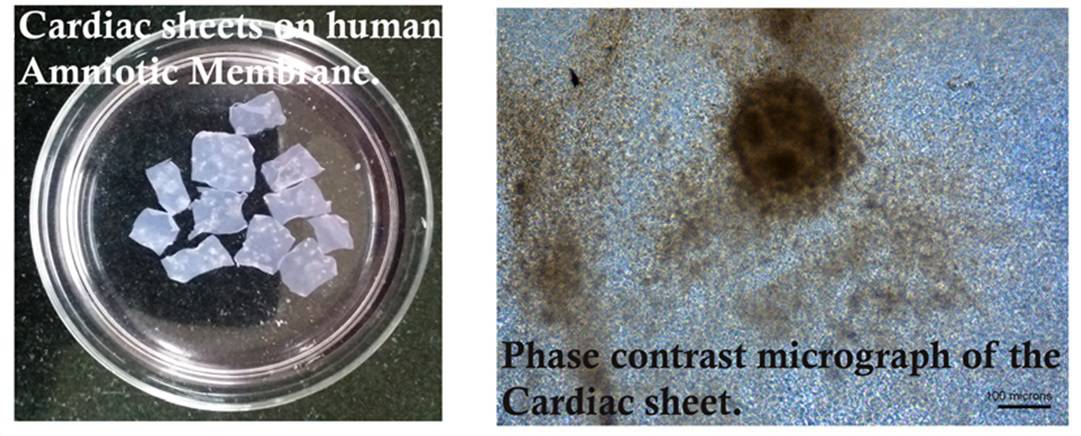
The researchers examined, for the first time, the use of hAM to support the growth of hiPSC-derived cardiomyocytes. They obtained hiPSCs by altering the gene expression of stem cells derived from human placenta. These hiPSCs were then seeded on hAM or Matrigel and subjected to biochemical stimulation by growth factors to trigger the cardiac differentiation pathway.

The team then compared the morphological and biochemical characteristics between the two conditions, as well as the expression of genes and proteins related to the different stages of differentiation to cardiomyocytes.

Cardiac markers

Importantly, cells grown in the presence of hAM demonstrated a higher functionality in terms of intracellular calcium transient frequency, mitochondrial organization and cellular alignmentmore closely resembling the features of cardiac muscle cells, than cells grown on Matrigel. Cells grown on hAM also exhibited an increase in the expression of protein markers related to cardiac differentiation compared with those grown on Matrigel.

The authors envision potential applications for their system within cardiac research and possibly, following appropriate preclinical studies, in clinical procedures for the treatment of heart failure.
Heat treatment turns melanin into an electrical conductor

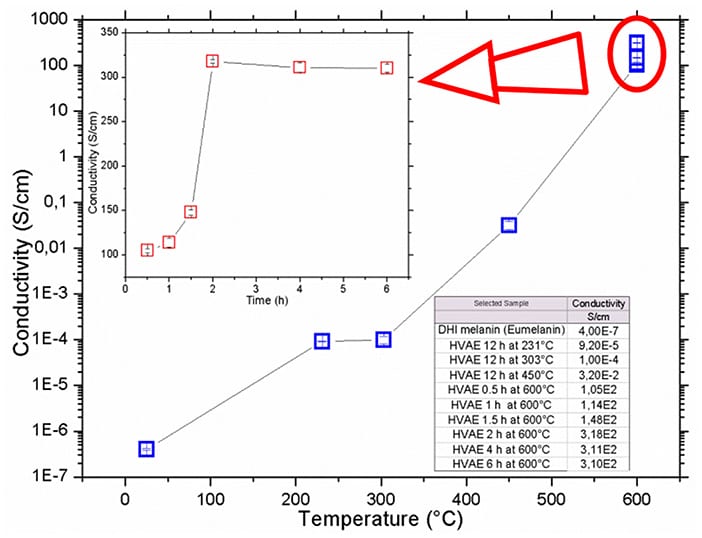
Researchers have succeeded in increasing the conductivity of eumelanin – the dark brown pigment that colours skin, hair and eyes – to a record value of up to 318 S/cm by simply annealing it at high temperatures in vacuum. The material could thus now be employed in a variety of melanin-based bioelectronics.

Eumelanin is a form of melanin and conducts electricity – albeit weakly – in its natural state. Researchers first discovered that the polyindolic pigment was a semiconductor in the 1970s and suggested that this behaviour comes from energy bands associated with a non-localized empty molecular orbital within the eumelanin polymer chain. They also suggested that the material might be used in biocompatible electronics, but unfortunately, and not for lack of trying, they have been unable to significantly improve the conductivity of either natural or synthetic eumelanin.

Useful range for bioelectronics applications

A team led by Alessandro Pezzella of the University of Naples Federico II and Paolo Tassini of the Italian National Agency for New Technologies, Energy and Sustainable Economic Development has now increased the conductivity of synthetic eumelanin to 318 S/cm from an initial value that lies between 10-13 and 10-5 S/cm. Although still much lower than most metal conductors (copper has a conductivity of around 10S/cm, for example), this value is well in the useful range for bioelectronics applications.

Conductivity of vacuum annealed eumelanin

The researchers obtained their result by annealing a thin film of the material at different temperatures (of 230, 300, 450, and 600°C) in a high vacuum of 10−6 mbar. The samples were annealed for 30 minutes to six hours.

Well-aligned layers that are conducting

According to the researchers, the increased conductivity of their High Vacuum Annealed Eumelanin (HVAE), as they have dubbed it, comes from the fact that the heat treatment rearranges the molecular sheets in the eumelanin films into well-aligned layers that are conducting. In its natural state, the sheets are stacked in a disordered, random fashion, making electron flow between them difficult. The researchers observed this change thanks to Grazing Incidence Wide Angle X-ray Scattering measurements, among others.

Since the annealing was performed in vacuum, the temperatures employed do not degrade the eumelanin or carbonize (burn) it, but the films do lose mass and become thinner (as confirmed by thermogravimetric analysis and thickness measurements). The higher temperatures also remove both weakly and strongly bound water from the material, as well as carboxylic groups, say the researchers, but don’t damage the molecular backbones of the eumelanin.

Unfortunately, when the films are rehydrated, they do lose some of their high conductivity.

This is in marked contrast to unannealed eumelanin, whose conductivity increases in water, because it conducts electricity via ions and well as electrons, explains Pezzella. “Further research is needed to fully understand the ionic vs. electronic contributions in eumelanin conductivity, which could be key to how eumelanin is used practically in implantable electronics.”

Biocompatible devices and sensors

Nevertheless, it is now possible to start thinking about new types of biocompatible devices and sensors based on the pigment for medicine and research, says Tassini. And they are many. “Some examples include: devices for treating Parkinson’s disease through deep stimulation of the brain; human-computer interfaces for controlling artificial limbs; generating neurons and synapses from undifferentiated stem cells grown on the eumelanin; sensors to study cells and tissue behaviour in vitro in response to drugs or other stimuli; or electrodes made of eumelanin integrated in intelligent fabric to monitor the health of patients.”

The researchers, reporting their work in Frontiers in Chemistry, say they are now looking to improve the stability of the material in water and designing real-world devices. “We are just at the beginning of our study,” Tassini tells Physics World. “We would now like to better understand the HVAE chemical and physical properties and succeed in fully exploiting them for applications. We also hope that our results will be useful for other groups around the world studying eumelanin for bioelectronics.”

Writer’s notes show climate impact on plants

Henry David Thoreau, author of the 1854 memoir Walden, or Life in the Woods, did more than just observe the oaks, the aspens, the “golden-rods, pinweeds and graceful wild grasses”; he left precise writer’s notes on the natural world he found during his wilful exile in the Massachusetts wilderness.

And thanks to these, US researchers now know that as the world warms, the native ecosystem that Thoreau observed and recorded is out of step.

At the close of winter, the trees now leaf at least two weeks earlier. But the wildflowers that depend on their moment in the sun for a head start now form leaves only one week earlier.

Researchers from Tennessee, Massachusetts, Maine and New York State report in the journal Ecology Letters that they combined observations around Walden in 1852 with a sequence of observations made in 37 separate years up to 2018, and with separate field experiments in a Pennsylvania forest, to conclude that wildflowers could not keep pace

“Combining our work from Pittsburgh with Thoreau’s data revealed an overlooked yet critical implication of how our changing climate is affecting native wildflowers beloved by so many people,” said Mason Heberling, a botanist at the Carnegie Museum of Natural History in Pittsburgh, who led the research.

Novel science

The Oxford English Dictionary cites Thoreau as an authority for words and meanings more than 600 times, but not for a new science. But in effect, and without intending it, Thoreau has become one of the giants of the science of phenology, a word not recorded in use until 1884.

Phenology is the study of when natural events happen: when buds burst, flowers bloom, birds nest, insects pupate, fruit falls and leaves drop.

Thoreau, first to use the imagery of those who march to a different beat (he wrote: “If a man does not keep pace with his companions, perhaps it is because he hears a different drummer”), has already been cited as a phenological authority.

More than five years ago scientists used his nature notes to confirm that woody plants around Walden Pond were leafing up to 18 days earlier, thanks to climate change driven by human use of fossil fuels that enrich the levels of atmospheric carbon dioxide and warm the world. Temperatures on average around Concord, Massachusetts have risen by around 3 °C since Thoreau vacated his cabin at nearby Walden.

If spring happens earlier for the trees of the canopy than it does for the shrubs of the understorey, then the wildflowers have less time for photosynthesis and are placed at a disadvantage in the competition for growth.

The evidence seems to suggest that climate change could already be limiting wildflower abundance: if fewer blooms ripen, there will be less seed for following years.

The asynchrony of leaf-out that could be changing the nature of Thoreau’s woods is likely to get more pronounced: by 2080, the north-eastern US temperatures could have risen another 2.5 to 4.5 °C.

It was Thoreau who memorably observed in one of his essays that “The mass of men lead lives of quiet desperation.” It could be even more desperate for his wildflowers.

Superconducting nanowires could shed light on dark matter

Superconducting nanowires could be used as both targets and sensors for the direct detection of dark matter, physicists in Israel and the US have shown. Using a prototype nanowire detector, Yonit Hochberg at the Hebrew University of Jerusalem and colleagues demonstrated the possibility of detecting of dark matter particles with masses below about 1 GeV/c2, while maintaining very low levels of noise. The team says it has already used its prototype to set “meaningful bounds” on interactions between electrons and dark matter.

While dark matter appears to make up about 85% of the matter in the universe, it has not been detected directly – despite the best efforts of physicists working on numerous detectors worldwide. So far, the search has been dominated by efforts to detect weakly-interacting massive particles (WIMPs) – hypothetical dark-matter particles that could be streaming through Earth in very large numbers. WIMP detectors are designed to look for particles with masses greater than 1 GeV/c2, and are not expected to be sensitive to lower-energy particles.

To extend the search to lower masses, physicists have used several different sensor technologies made from materials including graphene, polar crystals, and superfluid helium. Superconducting nanowires are already used to detect single photons, and Hochberg and colleagues at the Massachusetts Institute of Technology and National Institute of Standards and Technology believe that nanowires should join the hunt for dark matter. If a dark matter particle collides with an electron in a cold, current-carrying superconducting nanowire, the nanowire could heat-up and for a short time cease to be a superconductor.  The resulting spike in the nanowire’s resistance would reveal that a dark matter interaction has taken place.

Low noise

The physicists tested their proposal by building a tungsten-silicide nanowire prototype, which had a detection energy threshold of 0.8 eV. During 2.8 h of operation, the detector registered no unwanted background counts, which demonstrates a very low level of intrinsic noise.

The team says the technique has several advantages over other detectors, including ultra-fast detection speeds and very low levels of noise. In addition, the wires could potentially pick up dark matter particles with kinetic energies below 1 eV, which is extremely low for a dark-matter detector, and could also detect “dark photons” with energies less than 1 eV. Dark photons are hypothetical particles that could mediate interactions between dark matter.

The team says their early experiments have already placed meaningful bounds on the interaction between dark matter and electrons including the strongest terrestrial bounds on the absorption of sub-electronvolt dark photons.

In future studies, Hochberg and colleagues now hope to fabricate nanowires on larger scales, and with even lower detection thresholds. When coupled with other detection techniques, they believe their nanowires will allow them to probe for dark matter in previously-unexplored regions of mass and energy.

The research is described in a preprint on arXiv.

Emerging medical technologies, pentaquarks and borrowing heat from the Earth

In the latest episode of the Physics World Weekly podcast, Hamish Johnston is talking about the new pentaquark – an exotic hadron comprising five quarks – that’s been discovered by physicists working on the LHCb experiment at CERN.

Later in the show, Anna Demming discusses her highlights from the recent event at the UK House of Parliament called “What next for digital healthcare technologies?” You can hear interviews with a number of guests including Paul Drayson, the former Labour politician and current chief executive officer of Sensyne Health.

To close the podcast, James Dacey presents clips from his recent interview with Neil Lawson, a geoengineer involved in designing ground-source heat pumps. They discuss the underlying principles of these systems and the current outlook for the technology in the UK.

If you enjoy what you hear you can subscribe via Apple podcasts, or your chosen podcast app.

Technology innovations underpin condensed-matter research

At the beginning of April thousands of physicists from all over the world will be gather in Regensburg, Germany, for one of four spring meetings of the German Physical Society (DPG). The focus for this particular meeting will be condensed matter physics, with technical sessions covering everything from DNA nanostructures through to quantum systems and 2D materials.

Alongside the scientific programme, more than 100 companies will be showcasing the latest equipment for condensed-matter research. A few highlights are featured below.

Femtosecond fibre lasers target time-resolved microscopy and spectroscopy

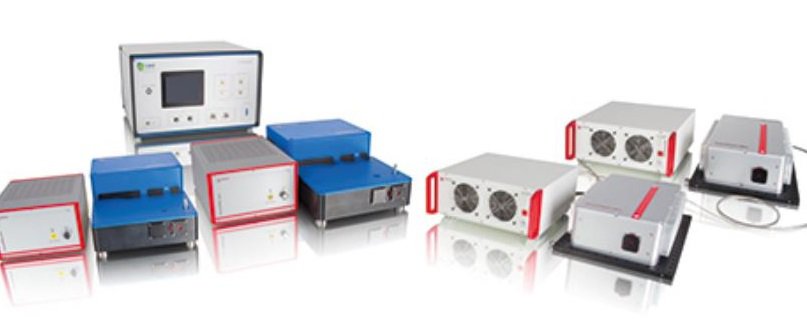
A series of femtosecond fibre-laser systems from TOPTICA offers the flexibility needed to support advanced applications such as femtosecond pump-probe spectroscopy, nonlinear microscopy, and terahertz spectroscopy. The key to this flexibility is the ability to connect different laser amplifiers to a common master oscillator, providing a modular approach to designing standard configurations as well as highly customized systems for specific applications.

The FemtoFiber product line from TOPTICA

An example of this approach is the FemtoFiber Quantum Microscopy system – based on a combination of the established FemtoFiber ultra and FemtoFiber pro series with an Asynchronous Optical Sampling (ASOPS) system from Laser Quantum – which is designed for time-resolved Faraday rotation of coherent spin dynamics in semiconductor nanostructures. The combination of the fiber-laser technology with sophisticated electronics for ASOPS provides highest flexibility in terms of laser parameters, pump-probe configurations, and data acquisition times.

You can find out more about TOPTICA’s FemtoFiber product line at Booth #2 (LH Wirtschaft/Recht).

Compact power supply drives magnetron sources

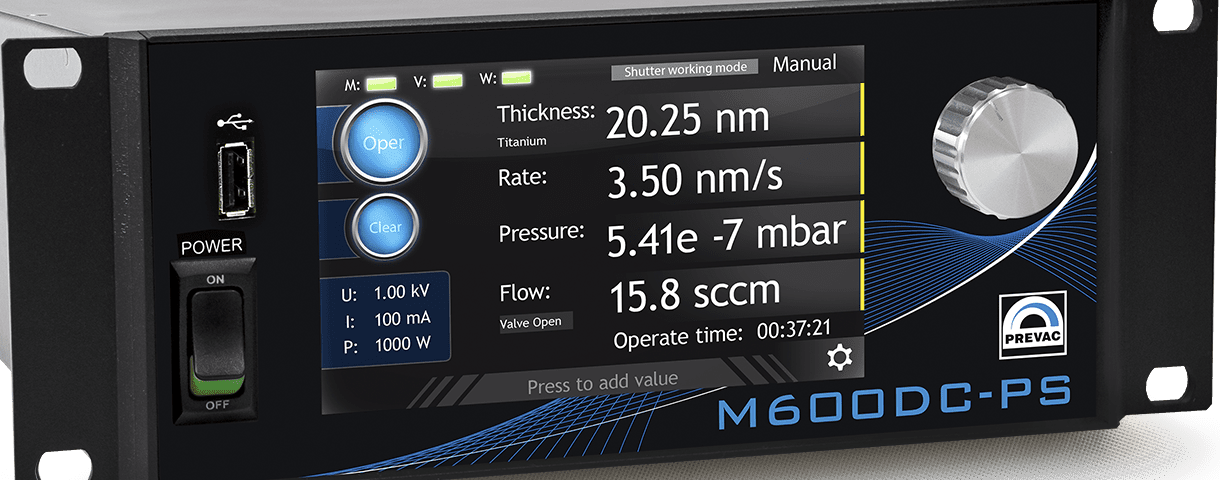
PREVAC, a designer and manufacturer of complete research systems for material deposition and analysis, will be demonstrating a compact switch-mode DC power supply for driving magnetron sputter sources. The M600DC-PS power supply delivers 600 W as standard, extendable to 1200/1800/2400 W with additional modules, and it can easily be switched between up to three magnetron sources.

The M600DC-PS power supply from PREVAC

All settings can be manually adjusted via a large touchscreen display, and the unit can also be controlled remotely using a variety of analogue or digital interfaces. Settings can be stored and recalled automatically when the unit is switched on, while it also features a built-in timer and automatic standby. During operation the power supply measures the thickness of the deposited layer, the rate of evaporation, plus the vacuum inside the deposition chamber.

You can find out more about PREVAC and its full product line at Booth #81 (Audimax – Foyer).

Discharge protection for low-temperature experiments

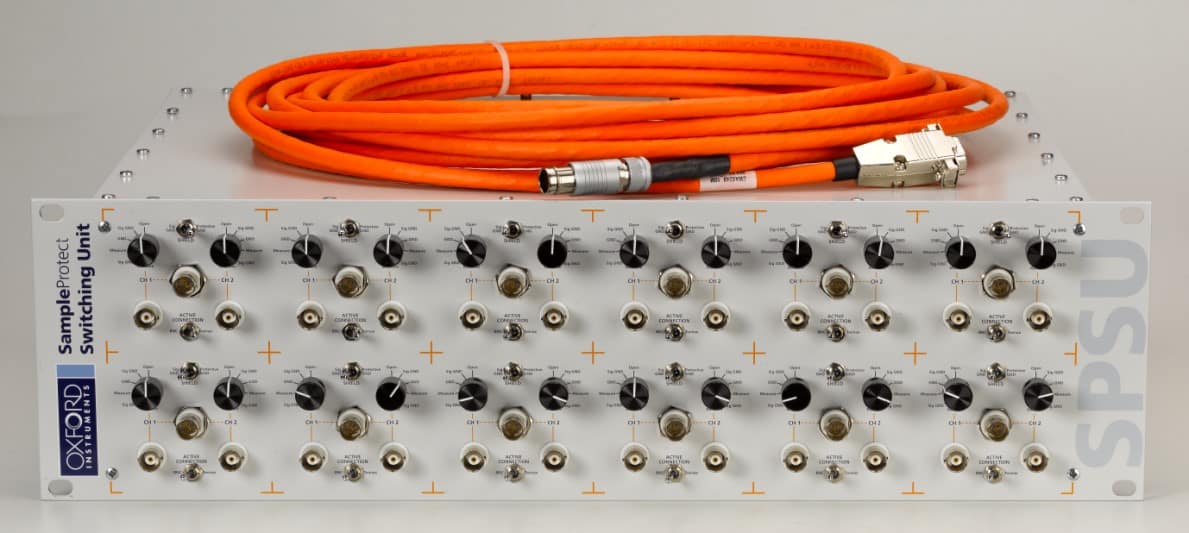
An innovative measurement system from Oxford Instruments has been designed to protect sensitive samples from being damaged by electromagnetic discharges. The SampleProtect system allows researchers to monitor or ground individual experiment lines via a signal access box, while samples can easily be changed in standard chip carriers or sample holders – providing discharge protection even when the sample is being moved.

The SampleProtect switching unit

The end-to-end system comprises a rack-mounted switching unit that is linked with measurement-grade cables and sample probes to sample holders that include an additional socket for an equipotential plug. Each probe can accommodate multiple types of sample holders, and sample holders can be transferred between probes or even to different ultralow-temperature inserts. This ensures that the system can be used across a wide range of temperatures.

Representatives from Oxford Instruments will be available to discuss the SmartProtect system at Booth #83 (Audimax – Foyer)

Precise positioning at cryogenic temperatures

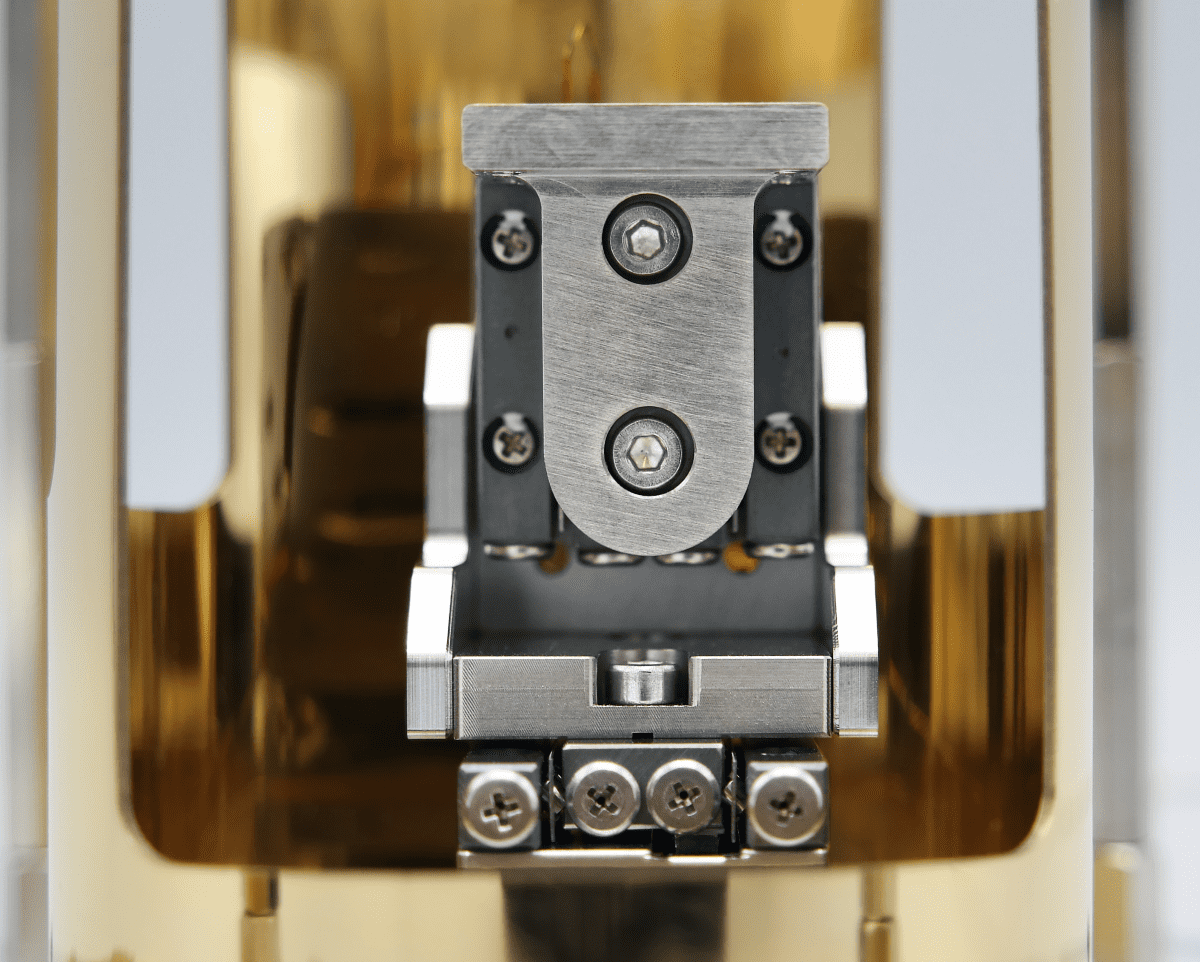
Cryogenic positioners from SmarAct allow samples in a cryostat to be manipulated with high precision in all conditions, ranging from atmospheric pressure through to ultrahigh vacuum. The company has developed stick-slip piezo actuators with low heat profiles, allowing sample positioning down to the milliKelvin regime. Resistive cabling is optionally available to reduce the heat load on the positioning stages, while complete systems can be customized to specific applications.

A three-axis cryogenic positioner from SmarAct

The positioners can also be used at temperatures of up to 330 K, just like the company’s standard UHV stages, and they are bakeable at temperatures of up to 150 °C. Non-magnetic versions are also available for use in high magnetic fields, while a linear design is also available for use in tight spaces. More recently, rotation stages have been introduced to combine linear and rotational sample manipulation in cryogenic temperatures.

SmarAct will be showcasing its full range of positioning equipment at Booth #51 (Audimax – Foyer)

Desktop computers can now simulate cardiac activity

Modelling the complex electrical waves that cause heart arrhythmias could be key to understanding and treating these abnormal heart rhythms. Until now, however, real-time modelling of cardiac dynamics within millions of interacting heart cells required access to powerful computer clusters and supercomputers, putting it out of reach for most physicians.

To make cardiac modelling more accessible, a team of US researchers has used graphics processing chips and software that runs on standard web browsers to move high-performance cardiac dynamics simulations onto less costly computers, and even high-end smartphones. This advance could enable clinicians to use 3D modelling data to design specific therapies or prevention strategies for their patients, and help scientists study a particular drug’s effect on heart arrythmias (Science Advances 10.1126/sciadv.aav6019).

“Being able to do real-time simulations in three dimensions could open the door to clinical applications where we could actually obtain patient geometries and solve these equations in the cells that are packed into the heart,” says Elizabeth Cherry from Rochester Institute of Technology. “We could see applications in the clinic that could individualize treatments on the basis of their specific heart geometries. We could actually test possible therapies to see what would work for each patient.”

Key to this development is the use of graphics processing units (GPUs) designed for gaming applications, which were developed to help computers display graphics and video. High-end smartphones can have up to 900 GPU cores, while high-end graphics cards for laptop or desktop computers may contain more than 5000.

“Over the past several years, GPUs have become really powerful,” explains Flavio Fenton from Georgia Institute of Technology. “Each one has multiple processors, so you can run problems in parallel like a supercomputer does. As many as 40 or 50 differential equations must be calculated for each [heart] cell, and we need to understand how millions of cells interact.”

To allow the simulations to run on any GPU, Georgia Tech’s Abouzar Kaboudian developed a versatile programming library that enabled the team to develop programs in WebGL that can run through common web browsers.

“If you have access to the Internet and a modern web browser like Firefox or Chrome, you can just go to a web link and the simulation will start running on the graphics card of your computer,” says Kaboudian. “Any problem that can be parallelized can run on the library that we have created. It will accelerate simulations on any computer by several hundred times.”

The researchers have developed ten different models based on their WebGL programming, and are planning to make the tools available for other researchers to use. Future enhancements will include the ability to run simulations on more than one GPU card to achieve even higher computational speeds.

“Models that might have been accessible to only a handful of researchers in the world will now be available to many more groups,” says Fenton.

Introducing a tiny, wireless, battery-free tissue oxygen sensor

Researchers in the US have designed a completely implantable, wireless, battery-free oxygen sensor to monitor tissue oxygen levels when implanted subdermally or even in deep brain regions. With these features, the newly fabricated oximeter supports in vivo tissue oxygen monitoring in awake and free-moving animals such as mice (Science Advances 10.1126/sciadv.aaw0873).

Oxygen levels in different regions of tissue represent the balance between oxygen demand and supply. Imbalance and abnormalities in tissue oxygen levels are of relevance to various physiological or pathological processes, such as neural activity, tissue perfusion, the tumour microenvironment and wound healing. Therefore, determining tissue oxygenation is of significant importance.

To ascertain regional tissue oxygen levels, existing methods either measure oxygen partial pressure or assess changes in the concentration of oxygenated haemoglobin. However, most approaches developed to date interfere with the natural behaviours of the test subjects (for example, by requiring physical tethers or anaesthetics). Unfortunately, these limitations can alter oxygenation levels and lead to inaccurate oxygen measurements. In addition, depth of operation in several tissues has remained a challenge for many existing oximeters.

Design and working principle

To overcome these restrictions and challenges, the researchers — led by John Rogers at Northwestern University — designed a thin, fully implantable wireless oximeter. Their design contains an injectable filamentary measurement probe connected to an electronic module. The filamentary probe performs the optoelectronic measurements, while the electronic module supports wireless data communication.

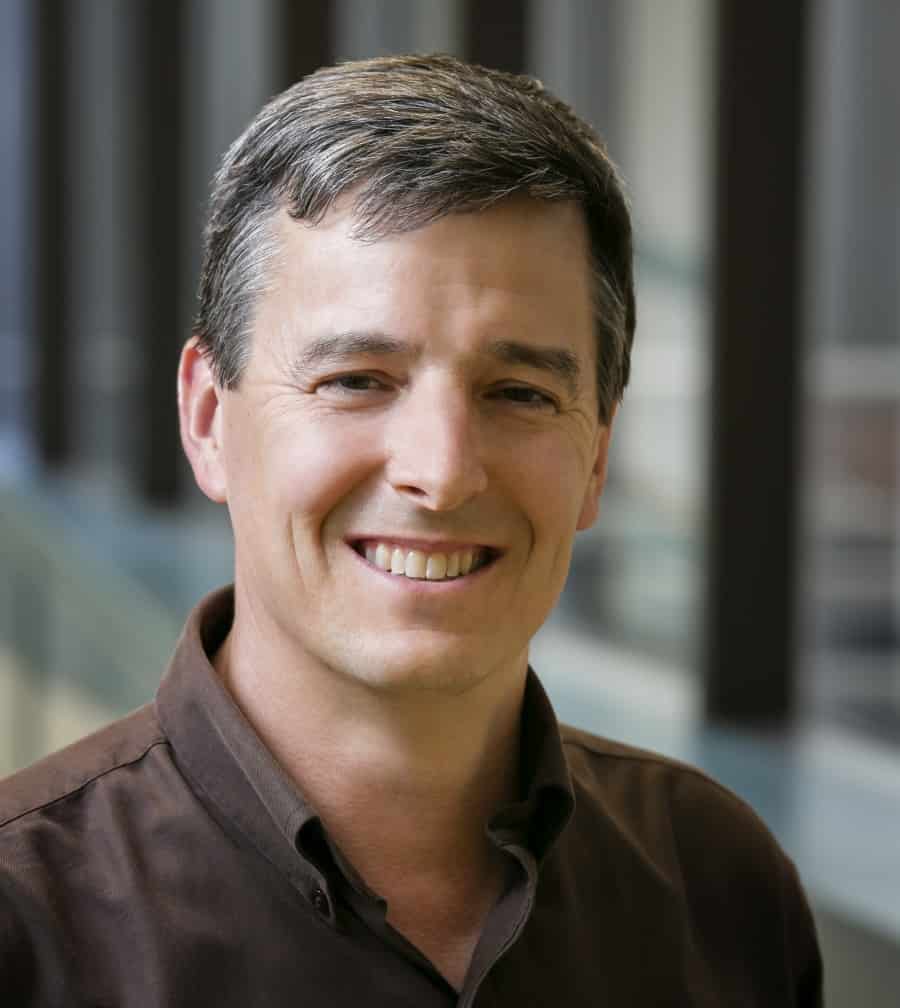
John Rogers

The sensing probe exploits differences in the optical properties of oxygenated haemoglobin (HbO2) and deoxygenated haemoglobin (Hb) to infer local changes in their concentrations. This quantification is then used to estimate regional tissue oxygen saturation (rStO2) levels.

The estimation of rStO2 levels depends on the absorption spectra of both oxygenated and deoxygenated haemoglobin in the visible and near-infrared spectral range. At high oxygen concentrations, the ratio of HbO2/Hb increases and at low oxygen concentrations (hypoxia), it tends to decrease.

Sensitivity to oxygenation of haemoglobin is manifested in the differences between the molar extinction coefficients of HbO2 and Hb. The measurable optical properties, such as light attenuation by haemoglobin, then define the rStO2 as a function of HbO2 and Hb concentrations.

Wireless data communication occurs via magnetic resonant coupling-induced power harvesting and infrared-enabled data transmission. To improve stable operation in chronic implants, and also shield the devices from biofluids, the researchers used bioinert coatings in which a conformal coating of parylene surrounds the device.

Device characterization

To assess the device’s functionality, the researchers tested their system in vivo, in deep brain regions of both anaesthetized and free-moving mice, as well as in artificial blood solutions. They observed that the assembled optoelectronic platforms demonstrated continuous, sensitive and localized rStO2 sensing at regions-of-interest.

The fabrication concepts and electronic designs could also enable implantable platforms with other functionalities, such as heart rate tracking. “Other extended options include the integration of the oximeter probes with other functional modules for optogenetic modulation or microfluidic drug delivery,” the authors speculate. “These multimodal systems with colocalization of stimuli and oxygenation detection could support unique capabilities in coupling the metabolism of specific tissue regions with external physiological or pathological challenges.”

Are circular economies the answer?

Throughout the 20th century the prevailing assumption was that the solution to pollution is economic growth. The trajectories followed by many developed nations – from widespread poverty through heavily-polluting industrialization to clean technology and good standards of living – support this simplistic relationship. But recent decades have revealed that matters aren’t this straightforward. Now a study has reviewed the links between pollution and economic development and investigates ways to transition towards a more sustainable economy.

Between 1970 and 2006, GDP in the US, adjusted for inflation, grew by 195%. The number of cars and trucks in the country doubled and the total number of miles driven grew by 178%. In theory air pollution should have skyrocketed. Technological innovations and new regulations, however, led to significant decreases in emissions of carbon monoxide (by 37%), nitrogen oxides (30%), sulphur dioxide (52%), particulates (80%) and lead (98%).

This is a classic example of the inverted-U-shaped environmental Kuznets curve. It suggests that economic development initially leads to environmental degradation but once average income reaches a certain point, the curve undergoes a turning point and the environment improves as wages rise further.

A circular economy requires us to mimic biological cycles in terms of re-using waste materials from industrial processes

The environmental Kuznets curve is a compelling hypothesis but there are lots of exceptions to the rule. Take deforestation. On paper many developed countries have their tree-felling under control and back to sustainable levels. More often the reality is that imports increase, exporting the deforestation elsewhere.

To understand the connections between the environment and economic development in more depth, Saleem Ali from the University of Delaware, US, and Jose Puppim de Oliveira from the São Paulo and Brazilian School of Public and Business Administration, Brazil reviewed six fundamental models.

Recent studies have revealed flaws in the environmental Kuznets curve. Rather than being shaped like an upside-down U, it more commonly has an upward flick at the end that represents the renewed rise of pollution once the easiest pollution challenges have been tackled.

“The key take-home message is that there is no generic environmental Kuznets curve which can be used for policy-making,” says Ali, “and therefore pollution policy is better determined by monitoring and enforcement of standards that are based on the environmental and social impact of pollution.”

Sometimes technology can enable countries to “tunnel through” the environmental Kuznets curve

Sometimes technology enables countries to “tunnel through” the environmental Kuznets curve, avoiding the environmental degradation associated with the first phase of economic development. The paper industry, for example, traditionally relied on mercury for electrolysis but now tends to use a membrane cell process. As a result, many developing countries can avoid the burden of mercury pollution associated with mass paper production.

If we really want to achieve sustainability, the research suggests we should strive for a “circular economy”.

“A circular economy requires us to mimic biological cycles in terms of reusing waste materials from industrial processes,” says Ali. “It is compatible with economic growth but focuses on reused, re-manufacturerd and recycled material rather than virgin materials.”

Such an economy would need policies that make waste more economically useful and a redesign of manufacturing processes. Finland has taken a leading role in driving its economy towards a circular structure but there are potential negative consequences. In particular, as systems become more resource-efficient, prices start to drop, which can cause a “rebound effect” as people consume more.

“The increased consumption could lead to environmental concerns such as increased greenhouse gas emissions,” says Ali.

There are ways to improve human well-being, achieve sustainable development goals and have a healthy economy but the research to date suggests that keeping a circular economy on track needs constant evaluation and refinement.

Ali and Oliveira reported their review in Environmental Research Letters (ERL).

LHCb bags another pentaquark

A new pentaquark – an exotic hadron comprising five quarks – has been discovered by physicists working on the LHCb experiment at CERN. LHCb scientists have also found that a feature in their data that had previously been associated with one pentaquark could be evidence for two pentaquarks with similar masses.

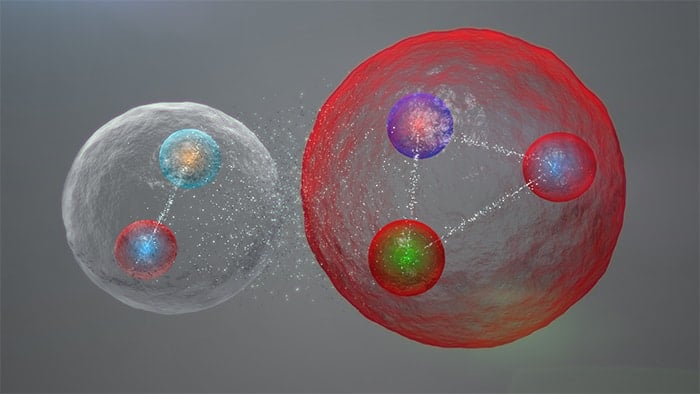
Preliminary analysis of the three pentaquarks suggests that they have a molecular structure that resembles a meson bound to a baryon (see figure). Gaining a better understanding of how pentaquarks are bound together could provide important insights into the strong force and quantum chromodynamics.

Hadrons are heavy particles that are made of two or more quarks held together by the strong force. Until the early 2000s, physicists had concrete evidence for only two types of hadron: baryons (such as protons and neutrons) containing three quarks and mesons, which contain a quark and antiquark.

Not surprising

Since then, physicists have discovered tetraquarks containing four quarks and pentaquarks containing five. This has not come as a complete surprise because when Murray Gell-Mann first proposed the quark model in 1964, he realized that quark–antiquark pairs could be added to mesons and baryons to create heavier particles.

The first tetraquark was discovered formally (with a statistical significance greater than 5σ) at Japan’s BELLE experiment in 2008. The first two pentaquarks – called Pc(4450)+ and Pc(4380)+ – were discovered in 2015 at LHCb using proton–proton collision data from Run 1 of the Large Hadron Collider (LHC). The four-digit number refers to the mass of the pentaquark in MeV/c2, which means that these pentaquarks are more than four times heavier than the proton.

Using new data from Run 2 of the LHC, physicists have discovered a third pentaquark called Pc(4312)+, which they have observed at a statistical significance of 7.3σ. What is more, they also have 5.4σ evidence that the mass peak in the Run 1 data associated with Pc(4450)+ is actually two peaks. They believe these correspond to two different pentaquarks, which they have dubbed Pc(4440)+ and Pc(4457)+.

LHCb team member Tim Gershon of the University of Warwick told Physics World that combining data from Run 1 and Run 2 means that the pentaquark peaks are now much better resolved than in previous studies. Gershon and colleagues found that the three peaks are narrow, which means that the pentaquark particles enjoy relatively long lifetimes before they decay.

Long lifetimes suggest that these pentaquarks resemble molecules that comprise a baryon and a meson bound together by the residual strong force – which is the force that binds neutrons and protons together in a nucleus. The mass of the Pc(4312)+, for example, is just below combined masses of a Ʃc+ baryon and a neutral D meson. Such a configuration is expected to be relatively stable and therefore correspond to a narrow peak.

Gershon says that the LHCb team is currently doing a much more sophisticated analysis on the collision, which should reveal the spin and parity of the pentaquarks. This would provide crucial information about the internal structures of the pentaquarks.

The recent discoveries were described in a talk by Syracuse University’s Tomasz Skwarnicki at the Rencontres de Moriond conference in Italy.

Copyright © 2026 by IOP Publishing Ltd and individual contributors