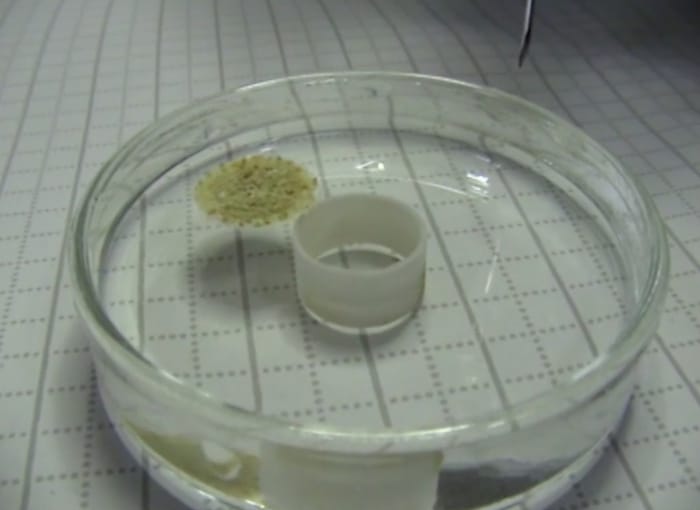
Hydrophobic or hydrophilic? Aero-gallium nitride is both

Hydrophobic-hydrophilic

Researchers have made the first ever highly porous, mechanically flexible and stretchable inorganic nanomaterial that is both hydrophilic and hydrophobic at the same time. The material, which consists of interpenetrating hollow gallium nitride tetrapods, has similar properties to a biological cell membrane and it could find use in applications such as sensors, microfluidic devices and microrobotics.

Biological cell membranes are made up of phospholipid building blocks that both attract and repel water. Phospholipids are hydrophilic thanks to their polar phosphate group “heads” and hydrophobic thanks to their nonpolar “tails” comprising fatty acid chains.

A team led by Ion Tiginyanu at the Technical University of Moldova and Rainer Adelung of Kiel University in Germany has now made the first inorganic nanostructure with such dual hydrophobic-hydrophilic behaviour. The researchers made their material from gallium nitride (GaN), which is the second most important semiconductor after silicon. They employed an epitaxial deposition technique known as hydride vapour phase epitaxy of GaN on tetrapodal microstructured templates of zinc oxide (ZnO) to produce GaN hollow microtetrapods. These are known as aerotetrapods or aerogalnite (aero-GaN).

Artificial pond skater

“We found that the GaN architecture of our structures contains a mixture of micron-scale and nanoscopic features,” explains Tiginyanu. “An individual GaN aerotetrapod in fact looks very much like an artificial pond skater when placed on the surface of water and interacts with the water in a similar way – that is, its down-positioned arms keep the tetrapod floating on the surface.”

The waterproof raft

The researchers say they weaved a waterproof raft from their material by grouping together a large number of these tetrapods. “Another animal analogy comes in useful here,” says Tiginynau, “in that the pods interact with other in the same way as fire ants powerfully grip each other during floods.” Indeed, the raft can carry liquid droplets hundreds of times heavier than itself and it boasts a durable architecture because of the electrostatic interactions between the nanoscale-thick walls of neighbouring tetrapods in the network.

“In the weaved raft, the arms of the hollow aerotetrapods become deformed, which induces electrical polarization of the walls thanks to piezoelectric and flexoelectric phenomena,” he explains.

Self-healing and self-propelled liquid marbles

And that is not all: the aero-GaN can also self-heal, he adds. “When we add an amount of liquid that exceeds a threshold amount, the aero-GaN raft texture generates a hole that allows part of the liquid to leak out. The raft appears to self-heal once this excess load has been removed.”

The researchers also found that when they rolled a water droplet onto a bed of GaN tetrapods, they could produce a liquid marble of GaN that covered the entire surface of the droplet. When a GaN marble fabricated using aqueous ethanol solution is placed in a Petri dish containing water, it propels itself on the water surface with a velocity as high as 750 rotations/minute.

Broadening the potential applications of GaN

The dual behaviour comes from the hydrophilic nature of the free ends of the aero-tetrapod arms, the closing plane of which coincides with the polar crystallographic c-plane of GaN, and the hydrophobicity of the external aero-GaN walls, explains Tiginynau. “This hydrophilic-hydrophobic feature of the aero-GaN allows it to skim over the surface like a flying water lily beetle, which is tethered to the water by four hydrophilic claws, the rest of its body being hydrophobic and thus repelled by the water surface,” he tells Physics World.

Our work considerably broadens the potential applications of GaN beyond its conventional use in solid-state lighting and high-frequency/high-power micro- and nanoelectronics, he adds. Energy-efficient self-propelled microelectromechanical structures, sensors, microfluids and microrobots are just some of the areas that might benefit.

“For example, energy-efficient self-propelled liquid marbles based on aero-GaN might be used to control chemical reactions in a confined space. And liquid droplets coated with aero-GaN could make bioreactors for culturing cells, especially considering the high chemical stability of GaN and its biocompatibility.”

Full details of the research are reported in Nano Energy 10.1016/j.nanoen.2018.11.049.

Financing renewables in the UK

As new technologies trying to compete with well-established technologies, renewables needed some interim help. In a new book, Renewable Energy in the UK: Past, Present and Future, I look at how that has been done.

What stands out is that, whereas some countries have gone for direct aid or guaranteed price feed-in tariff systems, succeeding UK governments have mostly decided that market-price competition should be the main driver of renewable development. Although wider targets have sometimes been set, the financial support mechanisms have had a strong market competition element, with varying degrees of success:

  •  Non-Fossil Fuel Obligation (1990–1998)

Introduced by Margaret Thatcher’s administration, the NFFO involved competitive auctions for renewable capacity based on price, within an overall capacity target set by the government. Companies could pass the extra cost of meeting the obligation targets to consumers.

The NFFO was, arguably, not very successful. Although costs were kept down, this was at the expense of capacity. Some very low bids won contracts but the developers were sometimes unable to deliver and the projects did not go ahead.

  • Renewables Obligation (1999–2017)

The RO replaced the NFFO system under the subsequent Labour administration, with overall capacity targets set and Renewables Obligation Certificates (ROCs) allocated to companies meeting them. Companies that managed to get more than was needed to meet their targets could sell ROCs to companies that could not get enough, so ROCs had value and a market for them emerged.

There were some problems. ROC prices varied unpredictably so, with their future cash flows uncertain, developers found it hard to obtain finance for new projects. The extra cost from the higher interest rates charged by lenders had to be passed on to consumers. Capacity growth suffered and the costs passed on to consumers rose. Despite some modifications, problems persisted although it did lead to some capacity growth

  • Contracts for Difference (2016–)

Introduced by the Conservative-Lib Dem Coalition government, the CfD system has competitive project auctions based on price, with contract strike prices agreed but subject to adjustment up or down to reflect project success and market changes. It is otherwise much like the NFFO, but with penalties for failure to deliver and tight overall cost caps set to limit the cost pass-through to consumers. That limits the overall level of capacity likely to go forward. The CfD was also meant to cover nuclear and carbon capture and storage (CCS), as well as renewables, which some saw as odd — they were all very different and at different stages of development, as were some of the renewables. Could one system cover all of them?

This hybrid market-intervention variable price system has had mixed results so far. The government has subdivided the auction process into separate technology groups, each with different outline capacity targets, price levels and caps, with some technologies – large PV and onshore wind — deemed to no longer need it and excluded from access. The Hinkley nuclear project was given a CfD contract but was not required to go through the competitive tendering process. CCS has not yet been supported.

  • Feed-in tariffs (FiTs)

The UK approach can be compared with that adopted in most of the rest of the EU, which has used guaranteed price FiTs. Projects are given fixed prices for power fed into the system, although the price levels fall over time to take account of likely improvements and market changes. The cost is passed on to consumers. After a long period of opposition to FiTs, the UK eventually adopted a small FiT scheme in 2010, but saw it as being marginal — the RO and then the CfD were to be the main support mechanisms.

FiTs have been very successful at getting capacity up and project costs down. For example, in Germany they helped to stimulate the rapid expansion of wind energy without high cost to consumers. Despite Germany’s wind regime being much less attractive than that in the UK, it managed to install 20 GW of wind plant by the end of 2006. The German FiT cost consumers 2.6 pence/kilowatt hour, compared to 3.2 p/kWh in 2005/6 under the UK’s RO system, which by this time had only led to under 2 GW of wind capacity being installed. Subsequently, the FiT system also helped to support the rapid expansion of PV solar in Germany and elsewhere, although its initial high cost did pass through higher charges to consumers.

  • Renewable Heat Incentive (RHI)

For completeness, mention should also be made of the support system introduced in the UK for renewable heat, covering biomass, solar and other green heat sources: the Renewable Heat Incentive (RHI). Unlike the renewables electricity support schemes, this is not based on a market mechanism but on the grant aiding of selected projects, although with competitive tests for eligibility. This makes it both simpler to administer, with no direct attempt made to measure actual heat supplied, but also more open to abuse, depending on how the eligibility and “deemed supply” rules are framed and operated, as was evidently found in the case in Northern Ireland with its version of the RHI.

If the aim is to expand renewables overall, and to do so rapidly, then continued support for the new technologies like wave and tidal power would be wise

Dave Elliott

Markets win out

The above short history of support schemes for renewable electricity and heat projects in the UK and EU can perhaps be taken to reflect an ideological conflict between those who support free market competition and those who prefer government intervention, although some of the schemes involve both elements.

What’s more, in all cases, market pressures have had an impact. With increasing economic constraints in the 2010s and a rapid fall in PV costs, cutbacks in FiT levels were imposed across the EU and there has been a move away from FiTs to contract auctions like the UK CfD. It remains to be seen whether this will lead to consumer cost reductions or simply to capacity growth reduction. Auctions have led to some very low bids winning contracts around the world, although it is not clear if these low prices are realistic and will lead to viable projects going ahead. As with the UK NFFO, some may have bid too low and won’t be able to deliver in practice.

What happens next? For good or ill, FiTs are on the way out across the EU and in the UK. Some see that as a mistake. It could be argued that FiTs did well in building capacity, with 42 GW of PV and 50 GW of wind in Germany by 2017, which in turn helped reduce technology prices, now at an all-time low. Although, with initially high-cost PV solar, this was at the expense of consumers. The UK’s small FiT scheme for microgeneration, mainly via PV solar, was heavily oversubscribed, leading to cutbacks in FiT support levels, given the overall cap on support. However, buttressed by support — until recently — for larger PV projects under the RO, by 2017 PV overall had moved up to over 12 GW in the UK. But, with costs falling, it was decided to close the FiT to new projects from April 2019.

However, it’s not just FiTs that are being cut. In parallel, no further new allocations under the CfD will be allowed, after one last round of auctions. Otherwise, all new spending on the various green levies is frozen until after 2025. The expectation seems to be that renewables like onshore wind and PV, and soon offshore wind, should be increasingly able to stand on their own feet without subsidies.

Cut all subsidies?

So why provide support for renewables any more? Subsidies were useful: project prices have fallen faster than they would have without the support systems. But now, in theory, the winners can move ahead without subsidies. That is debatable — they still need access to the market that the CfD provides. What’s more, what of the newer less-developed options? If the aim is to expand renewables overall, and to do so rapidly, then continued support for the new technologies like wave and tidal power would be wise, to reduce their costs. Unless, that is, you believe we should simply stick with the currently lowest-cost options — and that wave and tidal have missed the boat. I will look at wave power in my next post; it does seem to be moving forward very slowly.

Nevertheless, while short-termism has its appeal so does diversity, spreading risk across a wider range of options. New or improved technologies continue to emerge. They too may become cheap, as PV and wind have done. However, as my new book illustrates, forecasting likely “best bets” and making choices between options is hard. Indeed, some say it’s almost impossible to do rationally and that mostly we default to (or consciously welcome!) belief-based decision-making.


Dual detector combines nuclear and fluoroscopic imaging

Hybrid image

A flat-panel X-ray detector combined with a gamma camera allows simultaneous acquisition of fluoroscopic and nuclear images. Researchers at Utrecht University in the Netherlands constructed a prototype device to demonstrate its feasibility, and used Monte Carlo simulations to show how refinements could improve its performance. The instrument could provide clinicians with anatomical information not currently available using nuclear imaging alone (Radiology 10.1148/radiol.2018180796).

Usually, hybrid images that integrate two different modalities are produced by applying one technique after another. If the patient moves in between the two scans, the component images are misaligned. Capturing both frames at the same time ensures spatial correspondence between them.

A previous attempt at combining fluoroscopy and nuclear imaging for simultaneous acquisition saw four gamma cameras with pinhole collimators positioned around the X-ray source, on the opposite side of the patient from the X-ray detector. Under that arrangement, the distribution of the gamma emitter had to be reconstructed from four separate projections.

“This was computationally quite demanding, required complicated hardware integration, and resulted in a lower resolution of the nuclear images,” says first author Sandra van der Velden.

Van der Velden and colleagues have shown that useful images can be captured even when a single gamma camera and cone-beam collimator are placed behind the X-ray detector. Composite images acquired in this way are naturally co-registered, meaning that diagnostic and therapeutic radioisotopes can be monitored within the anatomical context provided by fluoroscopy.

Although the X-ray and gamma detectors are sensitive to different photon energies (30–120 keV X-rays versus 140 keV gamma rays), the fact that gamma rays are collected after passing through the X-ray detector in this setup means that system sensitivity is unavoidably compromised. To mitigate this, the researchers used a modified flat panel from which some lead shielding and structural aluminium had been trimmed.

Experiments using radioactive sources in moving phantoms showed that attenuation by the X-ray detector reduced the sensitivity of the gamma component by 45–60%, but the hybrid images were still useful and artefact-free. The spatial resolution of the gamma camera was unaffected, and the presence of a radioisotope in its field-of-view also had no effect on the performance of the X-ray detector.

As promising as these results are, the performance of the device could be improved with some realistically achievable modifications. When van der Velden and colleagues modelled the setup using Monte Carlo simulations, they found that a thinner flat-panel X-ray detector with a smaller thickness of aluminium could reduce the impact on system sensitivity to 27–35%. This would also allow the gamma camera to be moved closer to the patient, improving the device’s spatial resolution.

Benefits in the clinic

The ability to acquire nuclear and fluoroscopic images simultaneously could improve any treatment that involves radioisotopes, but the researchers propose a specific application in radioembolization for liver cancer. In this therapy, the tumour is irradiated and has its blood supply cut off by the injection of radioisotope-filled beads.

Currently, radioembolization is guided by fluoroscopy, and is preceded by a nuclear imaging procedure that predicts the uptake of the therapeutic radioisotope. These steps are conducted in separate locations, and there can be many days between them.

“We are currently working on a clinical prototype, which is at this moment being constructed,” says van der Velden. “We plan to perform a clinical trial with that prototype, to show that radioembolization procedures can be improved. This will open up the possibility to perform it in one day, instead of the current two-step process, which takes one or two weeks.”

Conducting the treatment over two visits is inconvenient for the patient, but also means that the catheter must be inserted anew each time. By conducting the entire procedure in a single day, the injection location for the imaging and therapeutic isotopes remains constant, making the pre-treatment step a more effective predictor of outcome.

Quantum tea and toast

What’s the first thing you think about in the morning? Do you picture interference patterns as you wait for the kettle to boil, or ponder the photoelectric effect as you go for a run? It’s unlikely that quantum mechanics is on your mind, but in his latest book Breakfast with Einstein: the Exotic Physics of Everyday Objects, author Chad Orzel makes an excellent case for why it should be, as he explains the “exotic” and “abstract” quantum origins of the seemingly mundane things we do each morning.

When it came to popular-physics books in 2018, quantum was the flavour of the year. Indeed, our book of the year was Philip Ball’s Beyond Weird, which dealt beautifully with some of the fundamental interpretations of quantum mechanics. Another currently popular genre is “everyday physics”, where authors show how much science is part and parcel of our daily lives. Notable examples include Helen Czerski’s Storm in a Teacup and James Kakalios’ The Physics of Everyday Things.

With Breakfast with Einstein, Orzel deftly combines the two, using a familiar morning routine to explain a variety of quantum phenomena and the historical context behind them. The book opens with Orzel describing his own typical morning: setting the kettle to boil on his induction hob; rooting through his fridge for breakfast, subtly mentioning his children’s artworks on the fridge door, held up by magnets; popping some bread into his toaster; and, of course, checking his social-media accounts and e-mail as he waits for his tea to cool. As you read this page-long description, you may be forgiven for thinking that the author has gone into too much detail, but worry not – each small feature is a jumping-off point for a different chapter.

An associate professor of physics at Union College, New York, Orzel is a blogger, science writer and author of a number of popular-physics titles including his bestseller How to Teach Quantum Physics to your Dog. Over the years, Orzel has developed a light and breezy writing style that makes for easy reading – a particularly useful trait while trying to explain that the sensor in a modern mobile-phone camera is, at a fundamental level, quantum mechanical, as it relies on the particle nature of light.

The first chapter opens with sunrise, or more accurately, light – an apt beginning for both a quantum primer and the morning. Orzel uses this as a launchpad to talk about the Standard Model of particle physics, powering through gravity, electromagnetism, the strong and weak nuclear forces – a somewhat tougher start than I expected, but a good set-up for the rest of the book. In my favourite chapter, “The heating element: Planck’s desperate trick”, Orzel talks about the red glow of the heating element on his stove-top, or the coil in his toaster, to explain thermal radiation and the colour of light emitted by a hot object.

Orzel goes into the history of one of the major conundrums that physicists in the late-1800s were dealing with – why all objects of different materials, heated to some temperature, glow that particular shade of red. At this stage, physicists were still trying to work out the intricacies of the spectrum of light, and they did not know why the light emitted by an object is independent of its composition. The author provides an excellent history and explanation of how Max Planck introduced his “quantum hypothesis” of light, suggesting that it could only be emitted in discrete chunks of energy, or “quanta”, that depend on the frequency of light, multiplied by a universal constant. This was truly the birth of quantum mechanics and I enjoyed Orzel’s succinct explanation, as well as the historical perspective.

In later chapters, Orzel uses the simple act of turning off his alarm clock to quickly delve into a history of time keeping, before talking about ever-more-accurate atomic clocks, which he describes as “deeply rooted in the quantum physics of atoms”. He looks in detail at radioactivity and quantum tunnelling by beginning with a smoke detector, and uses e-mails from his students to discuss encryption and quantum superposition. However, further into the book, he talks less about the everyday, apart from a few sentences at the start of each chapter. Instead, he gets more into the hardcore physics, which is a slight disappointment.

Despite this criticism, Breakfast with Einstein is charming and enjoyable. Orzel has tried to keep things simple and while lay readers may struggle with some sections, I assure them it is worthwhile. Professional physicists, conversely, may find some parts too basic but I still recommend this book to them as a lesson in how to explain your research to a general audience.

Poised on the brink of a new quantum revolution, it is time that everyone realizes how much quantum physics is a part of our existence, despite its seeming strangeness. And if anything can take the “exotic” out of quantum mechanics, surely it’s tea and toast.

  • 2018 Oneworld Publications £12.99pb 288pp

Quantum thermometer could probe Bose–Einstein condensates without destroying them

A design for a “quantum thermometer” that can probe the ultracold temperatures of Bose–Einstein condensates (BECs) without damaging them has been unveiled by physicists in Spain and the UK. The team, led by Mohammad Mehboudi at the Barcelona Institute of Science and Technology, validated their design by doing theoretical calculations but the technique has yet to be tested in the lab. If successful, the thermometer could lead to better quantum simulations.

BECs are atomic gases that have been trapped and chilled to ultracold temperatures so that nearly all the atoms condense into one macroscopic quantum state. BECs have a wide range of applications including simulating quantum states of matter and quantum metrology. These applications require the precise tuning of BEC properties including its temperature.

Today, the most accurate methods for monitoring BEC temperatures involve releasing the atoms from the trap and measuring their speeds. Although this method allows highly precise measurements of temperatures below 1 nK, it destroys the BEC. Less destructive techniques are also available, but these are not very accurate at nanoKelvin and lower temperatures.

Bose polaron model

Mehboudi’s team proposes that BEC temperatures could be measured both accurately and non-destructively by introducing impurity atoms to the atomic gas to act as temperature probes. This is described by the “Bose polaron model”, whereby measurements on an embedded impurity cause minimal disturbance of the BEC.

Using mathematical models of a 1D BEC, the researchers have shown that the BEC temperature could be determined by making repeated measurement of the speed and position of the impurity atoms. Their calculations suggest that this could be done without unduly affecting the BEC

The physicists calculated that for a potassium atom BEC between 200 pK and 2 nK, temperatures could be probed within an error of less than 14%, when using ytterbium atoms as impurities. Such a high level of accuracy would not only make the technique an order of magnitude more effective than existing non-destructive techniques; it could also compete directly with destructive measurements.

Mehboudi and colleagues believe that with further research, their technique could be extended to work with 2D and even 3D BECs in the future. They also stress that their design is within the experimental capabilities of many current physics labs, potentially allowing for BEC-based quantum simulations to become commonplace.

The research is described in Physical Review Letters.

PET tracer offers dual diagnosis

FTD patients

Researchers at the Wolfson Molecular imaging centre and the Sir Peter Mansfield Imaging Centre have reported on a new utility of the PET tracer florbetapir. They found that the tracer can distinguish frontotemporal dementia (FTD) from Alzheimer’s disease and the cognitively normal elderly.  This ability removes the need for a separate scan to identify FTD, which can cause significant stress in such patients  (Eur. J. Nucl. Med. Mol. Imaging 10.1007/s00259-018-4238-2).

FTD presents a unique diagnostic challenge. In particular, fibrous protein aggregates known as amyloid fibrils, which are closely associated with the onset and progression of Alzheimer’s and Parkinson’s disease, may or not be present in cases of FTD.

Current practice for distinguishing between different types of dementia usually requires two separate PET scans: a scan using a tracer such as florbetapir, which detects amyloid fibrils in Alzheimer’s disease, and a metabolism-sensitive scan using FDG. Patients with FTD often exhibit decreased cerebral blood flow, which can be detected using FDG.

Michael Asghar and colleagues tested whether the metabolic information could instead be obtained from a dual-phase florbetapir scan in patients with FTD, which would significantly reduce the patient burden. The researchers suspected that this metabolic information could be obtained from the activity distribution of florbetapir shortly after injection, and that the amyloid fibril information would become evident later.

Michael Asghar and Stephen F Carter

The researchers re-examined data from a previous study (J. Nucl. Med. 10.2967/jnumed.114.147454), compiling PET scans from eight FTD patients, 10 cognitively normal controls and 10 patients with Alzheimer’s disease.  Each subject had a florbetapir-PET scan and those with FTD received a second scan using FDG within 14 days.

Asghar and colleagues then compared the distribution of florbetapir during the first 2–5 minutes after injection with the FDG information and found significant correlation between the images. They also compared the early-stage florbetapir data from the FTD, cognitively normal and Alzheimer’s disease groups and found that analysis of the images by a clinical FDG expert matched the clinical diagnosis in 71% of cases.

“Early florbetapir frames provide important complementary diagnostic information to amyloid-beta deposition, shown by late florbetapir frames, which may be present not only in patients with Alzheimer’s disease, but also cognitively normal elderly and occasionally as secondary pathology in other neurodegenerative diseases, including FTD,” the researchers state.

This research places new value on the amyloid fibril biomarker, florbetapir, as a discriminative tool for neurodegenerative disorders.

The importance of innovation in physics

I started writing this column a year ago – on the request of the Physics World editors – to explain how and why physics is important to business. But during the last 12 months you could be forgiven for thinking I believe physics isn’t important to business. In April, for example, I quoted Geoffrey Nicholson – the father of the Post-it Note – who is alleged to have said, while working at the US adhesives giant 3M, that “research is the transformation of money into knowledge; innovation is the transformation of knowledge into money”.

In citing Nicholson, it might have seemed I was suggesting that research and innovation are completely unrelated activities. My point, however, was that innovation relies on research, but doing it well is far harder than you might realize. While musing about the Internet of Things in my November column, for example, I noted that the most promising applications might succeed for reasons that lie a long way from physics, with software and subscription services potentially holding the key.

Nevertheless, there can be no innovation without strong science. Physics is not just important for fundamental research but also underpins many of today’s business innovations and technologically-driven societal advances. Even last year’s Nobel Prize for Physics, which went for seemingly esoteric work in laser physics, has strong industrial applications. Incidentally, one of the winners – Donna Strickland – will be giving a lecture on her work at the new headquarters of the Institute of Physics (IOP) on 19 February.

A BIG impact

Each year, physics-based businesses – which include manufacturing, energy production, the automotive industry and many others – contribute more than £177bn and 23bn to the UK and Irish economies, respectively, while employing 6.7% of the workforce in the UK and 8.6% in Ireland. The IOP itself reflects this strength. According to a recent top-level survey, around half of IOP members work in business or industry, and (as I have discovered) the organization does a lot to support them.

Nevertheless, some physicists, especially in industry, have at times perceived the IOP as being too academically focused. While I now strongly disagree, it is true that one could always do more. That’s one reason the IOP set up a new group dedicated to Business, Innovation and Growth (BIG). Launched in October 2017 at the Business Innovation Awards reception in the Houses of Parliament, it sits alongside the IOP’s 40 or so existing groups for medical physics, women in physics, energy and so on.

The BIG group will, I hope, complement those other groups, by providing an opportunity for like-minded individuals to meet, network, share experiences and discuss common issues they face. In 2018 we held a number of events on topics such as intellectual property and the health of photonics, and the group’s membership is growing strongly as a result. I was particularly pleased with our launch event, where we encouraged business leaders and entrepreneurs to discuss their experiences – what went well, what went badly and what lessons they had learned.

We held the event under the Chatham House Rule, which allows participants to use any information received but not reveal the identity or affiliation of any speaker or participant. Those now successful entrepreneurs were encouraged to talk through their business journey and we specifically asked them to avoid the usual glossy presentations they might give if they were seeking money from investors. That approach can intimidate business newcomers and simply leave them wondering “how on earth could I do that?”. It was amazing and encouraging to hear how things did go wrong – but how perseverance, hard work and dedication paid off. Those entrepreneurs really didn’t have everything go all their own way!

Meeting of minds

This year promises to be even better and kicks off with the inaugural BIG conference at the IOP in London on 26 February supported by our “sector innovation champions” – Appleyard Lees, Rolls-Royce, Siemens and Unilever. I invite you to come along and hear how small, medium and large businesses have pioneered physics-based innovations and opened new and growing markets. The event ought to have something for everyone from physicists, innovators, entrepreneurs and R&D managers to open innovation experts, engineers, business directors, chief technology officers and chief executives.

Delegates at the conference will be able to hear from winners of last year’s IOP Business Innovation Awards – including EndoMag, Innovative Physics, Leonardo, PepsiCo, Plastipack and Sonobex – who will share the lessons learned and describe how they achieved success. There will be workshops to advance your skills and access new opportunities, including how to seek finance, access global markets, navigate the innovation landscape, avoid jargon and deal with the media. And, of course, there will be plenty of networking opportunities.

Most of all, I hope you will gain insights from our keynote speaker Sir Martin Sweeting, the founder and executive chairman of Surrey Satellite Technology. The firm, which was spun off from the University of Surrey in 1985, pioneered the use of commercial, off-the-shelf components rather than those designed only for space. In launching their first satellite with NASA in 1981, Sweeting and the rest of his founding team showed how their innovative approach could produce small and relatively inexpensive satellites.

Three decades on, the company now employs 500 staff and has launched more than 60 satellites, each of which has pushed the boundaries of science and innovation. It sits at the forefront of the global small-satellite industry with a market share of 40% in what is a highly competitive growth segment. SSTL is an example for us all. If you’re unable to attend the event, however, do join the BIG group as there will be many more opportunities on offer this year.

More details about the inaugural BIG conference are at big2019.iopconfs.org

How sustainable are bioplastics?

At face value, taxing consumption of materials derived from petrochemicals and subsidizing production of bioplastics both sound like they’d encourage sustainable consumption. But applying these policies to meet a hypothetical 5% target for bioplastics use reveals a different story, according to scientists in Germany.

Today, bioplastics have a market share of around 1%, but as this number rises so does the amount of sugar- and starch-based feedstock that must be grown.

The researchers found that land use changes to provide this feedstock — particularly, the conversion of managed forests into cropland, eliminating valuable carbon sinks — lead to an overall rise in greenhouse gas emissions.

Both taxes and subsidies help suppress the market for petroleum-derived plastics (by 0.37% and 0.07%, respectively). But subsidies increase competition for land, displacing other uses, and taxes risk economic penalties.

Calculations based on the tax scenario reveal a subsequent contraction of all sectors employing plastics, equivalent to an annual drop of 0.07% in global real GDP.

The group, based at the University of Bonn, is directing its analysis at policy makers and points out that it could take more than 20 years for bioplastic feedstocks to pay back the carbon lost through deforestation.

“Policy support to bioplastics via taxes or subsidies needs to be complemented by governance initiatives and conservation policies to prevent deforestation in those countries producing feedstock to be used for bioplastic production,” says Neus Escobar. “Our findings encourage research in advanced technologies which do not compete with food and feed uses, such as those based on algae or perennial crops cultivated in marginal land.”

Escobar adds that it’s important to focus on biodegradability and recyclability as much as on the origin of the feedstock.

“Just because a plastic is biodegradable, this doesn’t necessarily mean that it will be fully degradable in marine environments,” Escobar cautions.

The group’s results highlight shortcomings for both taxes and subsidies as policy tools for protecting the environment and mitigating climate change by promoting bio-based plastic consumption. So what should governments do instead?

Escobar endorses a stronger focus on recycling — of all plastics — and draws attention to the recently approved “European Strategy for Plastics” (European Commission 2018), which prioritizes recycling over biodegradation to simultaneously increase the sustainability of the plastic industry and curb plastic waste.

Critical to policy success in the future will be improved collection and disposal systems to drive much higher levels of recycling. With more reclaimed material in circulation, together with an evolution in the design of eco-plastics, the hope is that the consumption of virgin plastic will fall.

“Consumers and businesses can also contribute to this by using plastic sparingly,” says Escobar.

The team believes that its study is the first to quantify global greenhouse gas emissions on a global scale from an increased demand for bioplastics produced from arable crops, considering both direct and indirect land use change.

Escobar and colleagues published their findings in Environmental Research Letters (ERL).

Facebook sets challenge for future photonic chips

This map visualizes the connections between the users of Facebook – and its other social media platforms such as Instagram, WhatsApp and Messenger – as presented by Katherine Schmidtke in her plenary presentation at SPIE’s Photonics West. Schmidtke, who is responsible for optical technology strategy at Facebook, was making the point that rising usage across the globe, and in particular the trend towards sharing pictures and videos, is setting new challenges for the optoelectronic systems that power these social networks.

Although user-generated content is driving the growth, Schmidtke says that the overall demand for data processing is increasing even more as companies like Facebook build redundancy and resilience into their networks to safeguard their users’ information. As a result, Facebook has been building its own data centres since 2010, and now has dozens of sites in different parts of the world.

According to Schmidtke, the twin challenges for these data centres is to increase the bandwidth while minimizing the power usage. “Our data centres are designed to be as power efficient as possible,” she said. “The power footprint of each data centre is no more than 30 MW.”

And the big limiting factor lies in the optics. Separate pluggable modules are currently connected to the end of each optical fibre to convert photons into electrons, and Facebook has recently developed and deployed 100 Gb/s optical transceivers throughout its data centres. However, says Schmidtke, this approach cannot be scaled much further – not least because each data centre needs tens of thousands of transceivers, all of which must be connected by hand. Also problematic is that the current roadmap for higher bandwidth optical connectors suggests that they will consume far too much power to be a viable option. “The optics is currently a generation behind the electronics,” commented Schmidtke.

The only solution, she says, is to evolve the optical interconnect. “We need to integrate the optics with the switch electronics,” she said. “We can reduce the power by 20% by eliminating the internal IO functions, while co-packaging also improves reliability and enables more scalable manufacturing.”

Schmidtke also pointed out that the quantity of photonic integrated circuits that would be needed for data centre applications requires more scalable manufacturing techniques, similar to those already established for electronics. While CMOS processes are now largely automated and dominated by wafer-level processing, the manufacture of optical devices still requires significant manual intervention for post-production and packaging. The demand for photonic chips has not yet justified the huge investment needed for greater automation, but Schmidtke is now confident that “we now have the volume to move to CMOS-style manufacture for photonic integrated circuits”.

Laser fusion output is tripled by new computer algorithm

Inertial confinement fusion (ICF) experiments have been improved by a new computer algorithm that analyses statistical correlations between previous results. The program was created by researchers in the US, who have already used it to triple the energy yield in a small-scale ICF experiment. The researchers hope that the algorithm could be used to achieve “ignition” in future ICF experiments.

In ICF, a tiny pellet of hydrogen isotopes is compressed by powerful lasers to such high densities that the nuclei fuse into helium. In principle, the energy released from this reaction could be greater than the energy delivered by the lasers and the excess energy could be used to produce electricity. Achieving this in practice, however, depends on taming instabilities in the highly compressed plasma.

The details of ICF experiments vary, but they almost all begin with powerful lasers compressing a millimetre-size pellet of deuterium and tritium nuclei. As the pressure and temperature in the “hot spot” at the core of the pellet rise, nuclear fusion occurs. This, however, is the easy part. To produce a practical source of energy, the fusion at the centre would need to be sufficiently intense to ignite fusion throughout the rest of the pellet.

Sparking fusion

“When you ignite gasoline, you start from a spark – that would be the hot spot,” explains Riccardo Betti of the Laboratory for Laser Energetics (LLE) at New York’s University of Rochester. Betti, who was part of the team that created the algorithm adds, “If the spark is strong enough you get enough power to ignite the fuel, and then you get a lot of power. It’s the same for fusion.”

Achieving ignition has been a goal of researchers working at the National Ignition Facility (NIF) at Lawrence Livermore National Laboratory in California – which is the largest laser facility ever built.  Although much has been learned about ICF at NIF, it has yet to achieve this goal.

A central challenge is controlling instabilities that occur in the plasma under such extreme conditions. “You can change many things in an implosion,” says Betti, “You can change the target geometry and composition, you can change the laser pulse shape…The parameter space is so big and the number of shots you can take with a laser – especially NIF – is so limited, that you cannot just empirically sample the whole parameter space.”

Lack of resources

Computer models are essential to select which combinations of parameters are tested experimentally. In principle, the perfect computer model could determine the ideal combination of parameters, so researchers would only need to run one experiment. “If we could run the simulations with all the phenomena perfectly resolved in 3D in a reasonable amount of time, we could probably have already designed a high-performing target,” says the LLE’s Varchas Gopalaswamy. “Unfortunately, there’s nowhere on the planet with the computing resources to do this.”

Gopalaswamy and colleagues studied results from the LLE’s OMEGA laser, which can focus 30 kJ of energy onto a pellet. Since 2005, OMEGA has conducted about 80,000 experimental runs. The team compared computer simulations with the actual experimental results and developed a statistical program to extrapolate predictions of parameter combinations that could yield better results. The researchers then tested these new predictions, fed the new results back into the program and used an iterative process to find even better configurations.

“You guys are out of your minds!”

The researchers then ran experiments on OMEGA using parameters suggested by the algorithm and were able to triple the fusion yield relative to previous experiments. “The best performing run used a laser pulse that we would not have chosen from first principles,” says Michael Campbell, the LLE’s director, “When Riccardo and Varchas first showed it to me, I said ‘You guys are out of your minds!'”.

OMEGA cannot ignite a fusion reaction, but if similar experiments were done at NIF the researchers estimate that this could lead to a fusion yield of 500 kJ. This is several times higher than the present record, and well on the way to ignition. Betti cautions, however, that “NIF is not just bigger, it’s also different, so scaling to NIF will be tricky.”

Stefano Atzeni of the Sapienza University of Rome, an expert in modelling nuclear fusion, describes the research as a “new paradigm” that is needed because it has become apparent that ICF simulations are not as accurate as had been hoped.

The research is described in Nature.

Copyright © 2026 by IOP Publishing Ltd and individual contributors