Clinical trial to develop breath test for multiple cancers

Breath tests offer the potential for non-invasive detection of cancer at an early stage, when treatment is more likely to be effective. UK researchers have now launched a clinical trial — the PAN Cancer Early Detection Study — to develop a breath test that could indicate the presence of multiple cancer types.

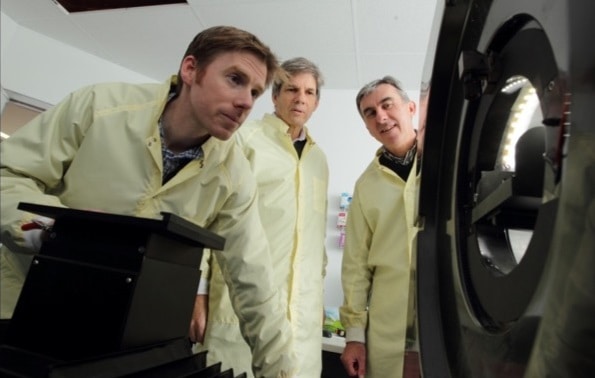
The trial will be run by Cancer Research UK Cambridge Centre in collaboration with Owlstone Medical, which developed the Breath Biopsy technology being used. Breath Biopsy measures volatile organic compounds (VOCs), gaseous molecules that can be sampled quickly from exhaled breath. The trial will evaluate whether Breath Biopsy can differentiate between patients with and without different cancers.

“We urgently need to develop new tools, like this breath test, which could help to detect and diagnose cancer earlier, giving patients the best chance of surviving their disease,” says lead investigator Rebecca Fitzgerald. “Through this clinical trial we hope to find signatures in breath needed to detect cancers earlier — it’s the crucial next step in developing this technology. Owlstone Medical’s Breath Biopsy technology is the first to test across multiple cancer types, potentially paving the way for a universal breath test.”

VOCs are produced as cells carry out biochemical reactions as part of their metabolism. If their metabolism becomes altered, such as in cancer and various other conditions, cells can release a different pattern of VOCs. The researchers aim to use the Breath Biopsy technology to identify these patterns and use them to characterize specific diseases.

The researchers plan to collect samples from 1500 participants, including healthy controls, to analyse VOCs in the breath for signals of different cancer types. Patients will breathe into the system for 10 minutes to provide a sample that will then be processed in Owlstone Medical’s Breath Biopsy laboratory. The trial will start with patients with suspected oesophageal and stomach cancers and then expand to prostate, kidney, bladder, liver and pancreatic cancers in the coming months.

VOCs originating from all parts of the body are captured in breath, making the approach applicable to a wide range of diseases. By looking across multiple cancer types, this trial will help determine whether cancer signals are similar or different, and how early these signals can be detected.

As the trial progresses, some participants will go on to be diagnosed with cancer, and their samples will be compared with those who don’t develop the disease. If the technology proves able to accurately identify cancer, the team hopes that it could in future be used in GP practices to determine whether to refer patients for further diagnostic tests.

“There is increasing potential for breath-based tests to aid diagnosis, sitting alongside blood and urine tests in an effort to help doctors detect and treat disease,” explains Owlstone Medical’s CEO Billy Boyle. “The concept of providing a whole-body snapshot in a completely non-invasive way is very powerful and could reduce harm by sparing patients from more invasive tests that they don’t need.”

David Crosby, head of early detection research at Cancer Research UK, notes that technologies such as this breath test have the potential to revolutionize the future detection and diagnosis of cancer. “Early detection research has faced an historic lack of funding and industry interest, and this work is a shining example of Cancer Research UK’s commitment to reverse that trend and drive vital progress in shifting cancer diagnosis towards earlier stages,” he says.
Holographic acoustic tweezers could be used to create 3D displays

A holographic acoustic tweezers (HAT) system has been used to suspend up to 25 objects in mid-air simultaneously. The feat was achieved by Bruce Drinkwater at the University of Bristol in the UK and Asier Marzo at the Public University of Navarra in Spain, who used a complex array of loudspeakers to create an intricate, controllable field of sound waves. The duo believes that their setup could have important medical applications in the near future,  and could also be used to create physical 3D hologram displays.

Optical tweezers were invented in 1986 by Arthur Ashkin, who shared the 2018 Nobel Prize for showing that small dielectric objects including bacteria and viruses can be levitated and manipulated with a focussed beam of laser light. Since then, holographic optical tweezers (HOTs) have been developed to manipulate multiple objects and assemble 3D microstructures. However, HOTs have several shortcomings. Since light can only travel through transparent media, HOTs are unable to operate within more opaque media, including human tissues. Another problem is that the lasers used to create HOTs deliver a significant amount of energy, which can damage objects such as living cells.

In contrast, HATs allow for manipulations of objects within a wide variety of liquid and solid media. HATs operate with over 100,000 times greater power efficiency than HOTs, which means that far less energy is delivered to the objects – resulting in less damage to the objects being manipulated. Furthermore, HATs are able to manipulate larger objects (up to the centimetre scale) than HOTs.

Intricate sound field

Drinkwater and Marzo have built a HAT system that offers the benefits of a HOT, while using far less energy. Their system is directed by an algorithm that creates an intricate sound field by the precise control of the phases of 40 kHz sound waves emitted by an array of 256 small loudspeakers.

They tested the setup, firstly by suspending up to 25 millimetre-sized polystyrene spheres in mid-air simultaneously. The researchers were also able to sew a length of thread into a piece of fabric, simply by attaching a polystyrene sphere to each end and precisely controlling their movements.

Drinkwater and Marzo are confident that HATs could soon be used to assemble objects on micron and millimetre scales. By creating yet more intricate fields of sound waves, their technology could be used to suspend large arrays of physical 3D pixels. This could be used to create tangible hologram displays in mid-air.

The duo will now work towards adapting their existing setup to manipulate objects within water; aiming to demonstrate the technology in around a year’s time. Soon after this demonstration, they hope that their methods will be adapted further, enabling the manipulation of objects within biological tissues, potentially allowing for intricate, non-invasive cell positioning and targeted drug delivery.

The HAT is described in Proceedings of the National Academy of Sciences.

New Horizons team rocks Brian May, Philip Ball takes on Jeremy Paxman

On Tuesday, Queen guitarist Brian May released “New Horizons” his first single in 20 years to coincide with the flyby earlier this week of Ultima Thule by NASA’s New Horizons mission. It turns out that May, who has a PhD in astrophysics, has been involved with the mission since 2015, when he analysed images of Pluto that were taken by the spacecraft.

May talks about his involvement in New Horizons in this interview in Time and Alan Stern – principle investigator for New Horizons – has just posted a video from 2015 of May being saluted by the team with an impromptu rendition of the claps and stomps that open “We will rock you”. You can watch that tribute in the tweet above.

The science writer Philip Ball is a regular freelance contributor to Physics World and his book Beyond Weird was our Book of the Year for 2018. This evening Ball could add another feather to his cap by winning the Christmas edition of the University Challenge television quiz. Ball is on the University of Bristol team (he is a graduate), which is up against Peterhouse Cambridge. Let’s hope that quizmaster Jeremy Paxman has a few physics starter questions. For those of you who can watch the BBC, the fun begins at 20:00 this evening.

Quantum spin liquid state pathway emerges

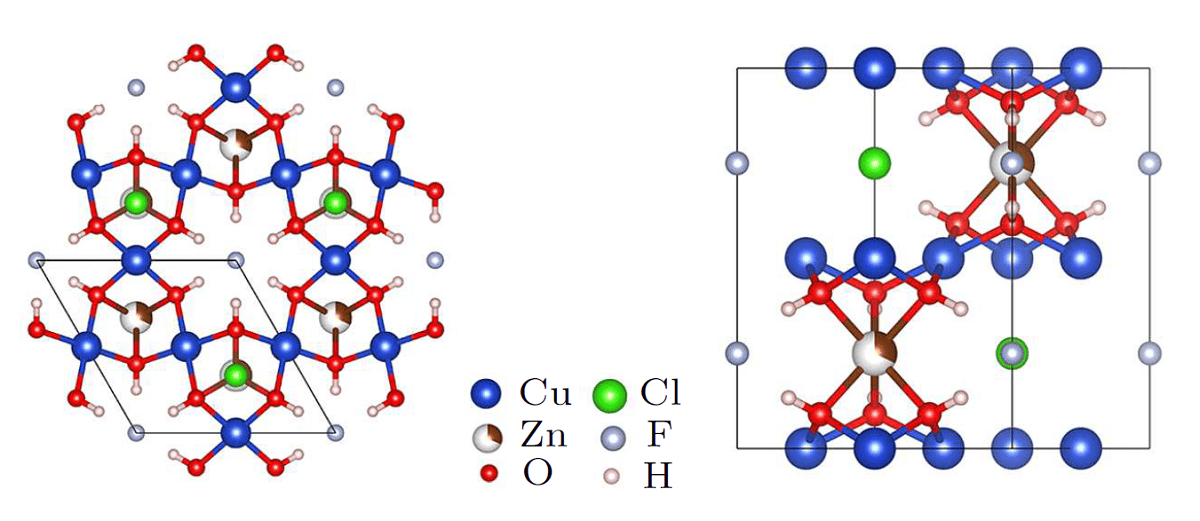
Structure of Cu3Zn(OH)6FCl. Left: Top view (𝑎𝑏 plane) of the structure of Cu3Zn(OH)6FCl. Right: Side view of the structure of Cu3Zn(OH)6FCl. Credit: Chinese Physics Letters

With potential roles in quantum computation, high-temperature superconductivity and a range of exotic anyonic states, it’s no wonder that quantum spin liquids (QSLs) are attracting so much research interest. However, a detailed understanding of the kagome lattice materials that might harbour QSL states has proved harder to come by. Reporting in Chinese Physics Letters, researchers in China and Japan have now identified QSL characteristics in a new candidate kagome lattice material. In addition, their investigations suggest possible pathways for the transition between QSL and magnetically ordered states, as well as insights into some of the anyonic excitations and other exotic properties predicted by theory.

Born from frustration

Nobel laureate Philip Warren Anderson first proposed the existence of QSLs in 1973, when he was studying the ground state of antiferromagnetically interacting spins on a triangular lattice. While the magnetic spins in more conventional ferromagnetic and antiferromagnetic materials align in parallel or antiparallel conformations at low temperatures, QSLs retain a type of magnetic spin disorder – analogous to the disorder of liquid atoms or molecules as compared with a crystalline solid.

With their “frustrated” spins, ground-state honeycomb, triangular or kagome lattice structures remain the primary hunting grounds for new candidate QSLs. And even in these structures, the interactions between layers must be minimal to prevent the onset of order between adjacent parts of the lattice. Kagome lattice materials with known QSL characteristics include Herbertsmithite ZnCu3(OH)6Cl2 and Zn-doped Barlowite Cu3Zn(OH)6FBr, but many other materials with similar structures have exhibited magnetic order at low temperatures, often alongside lattice distortion to accommodate spin alignment.

Bred from claringbullite

In this latest work Shiliang Li, Zi Yang Meng, and Youguo Shi at the Institute of Physics, Chinese Academy of Sciences in Beijing, China, and their colleagues synthesized Cu4(OH)6FCl, also known as claringbullite, and Cu3Zn(OH)6FCl, a similar kagome lattice material where most of the interlayer copper atoms are replaced with zinc. They then investigated the structure and temperature-dependent magnetic properties.

The researchers found that a perfect kagome lattice is preserved in Cu3Zn(OH)6FCl with magnetic order completely suppressed at temperatures as low as 0.8 K, whereas in claringbullite magnetic order sets in at temperatures below 17 K. They point out that recent neutron scattering experiments have revealed lattice distortions accompanying emerging magnetic order in Cu4(OH)6FBr, and further experiments are needed to determine whether claringbulliteis subject to a similar process.

The studies highlight similarities between Cu3Zn(OH)6FCl and previously studied herbertsmithite Cu3Zn(OH)6Cl2 and Zn-doped Barlowite Cu3Zn(OH)6FBr. “Looking into the future, the pathway from Cu4(OH)6FCl to Cu3Zn(OH)6FCl offers the opportunity to investigate the transition between magnetically ordered systems to QSL states,” conclude Li, Meng, Shi and colleagues in their report. They add that further neutron scattering experiments could also reveal theoretically predicted fractionalized anyonic excitations in the QSL ground state and “encourage further theoretical and experimental developments of the new paradigms of quantum matter”.

“Our materials have the advantage of continuously varying the Zn composition such that we are able to investigate the quantum phase transition from undoped parent compounds Barlowite (Cu4(OH)6FBr) and claringbullite (Cu4(OH)6FCl) to their corresponding quantum spin liquid children Cu3Zn(OH)6FBr and Cu3Zn(OH)6FCl,” Meng tells Physics World. “Not only the spin liquids themselves are important, but also the quantum phase transitions from magnetically ordered parent compounds to the magnetically disordered spin liquids have great theoretical significance in terms of fundamental theory at the frontiers of condensed matter physics – this is basically the phase transition from symmetry breaking phases to phases with topological order. Such phase transitions are beyond the conventional paradigm of Landau-Ginzburg, which is the cornerstone of our current understanding of phases of matter, and are therefore still under development and will be the new paradigm of quantum matter.”

Full details are reported in Chinese Physics Letters.

  • Edited 7th January 2019

Helium-3 could be bound-up with iron and oxygen deep within the Earth

The surprisingly high concentrations of helium-3 found at volcanic hotspots could be evidence for the existence of a rare helium-bearing chemical compound deep within the Earth. That is the conclusion of an international team of physicists who have calculated that crystalline FeO2He could exist at temperatures and pressures found at the boundary between the Earth’s core and mantle. They have also shown that the material has acoustic properties associated with parts of this boundary.

While helium is the second most abundant element in the universe, it is very rare on Earth. Indeed, the first evidence of helium was spotted in light from the Sun (where the element abounds) in 1868, nearly three decades before it was detected on Earth.

Nearly all the helium on Earth is helium-4 created by the ongoing radioactive decay of uranium and thorium deep underground. Some becomes trapped in the same places as natural gas – and this helium can be harvested for a range of uses from party balloons to cooling the superconducting magnets of magnetic-resonance imaging systems.

Volcanic hot spots

Helium-3 accounts for about 0.0001% of helium on Earth and physicists believe that most of it is primordial – meaning that the isotope was created by nuclear fusion in ancient stars before being incorporated into the Earth as it formed 4.5 billion years ago. Being a noble gas, helium does not easily form chemical compounds – and therefore any primordial helium-3 within the Earth should have floated off into space long ago. However, relatively high concentrations of helium-3 found at volcanic hot spots suggests that the isotope is somehow stored deep within the Earth and is released when helium-bearing rock is pushed up towards the surface.

While helium is not known to chemically bind with other elements, it can become incorporated within some crystalline materials at high pressures. Until now, however, none of these materials was expected to occur deep within the Earth.

In this latest work, Yanming Ma of Jilin University, Changfeng Chen of the University of Nevada and colleagues in the US, China and the UK used a search algorithm to look for iron- or magnesium-based materials that have lower energies when helium is incorporated into their crystal structures. These two elements were chosen because of their abundance inside the Earth.

Stable under pressure

No magnesium compounds were identified, but the algorithm did suggest that FeO2He is stable at 3000–5000 K and 135–300 GPa. These temperatures and pressures are expected to occur at the boundary between Earth’s core and mantle.

This could be a significant finding because geophysicists already suspect that FeO2 and its hydrides (FeO2Hx) exist in “ultralow velocity zones” (ULVZs) that lie directly above the core–mantle boundary. ULVZs are hundreds of kilometres in diameter and tens of kilometres thick and were discovered because of their effect on seismic waves travelling through the Earth.

To see if FeO2He has a similar effect on seismic waves, the team calculated how sound waves propagate through the crystalline material. They confirmed that its acoustic properties are consistent with seismic data related to ULVZs.

Writing in Physical Review Letters, the team describes FeO2He as the  “only helium-bearing compound viable at pertinent geophysical conditions, thus providing vital physics mechanisms and materials insights for elucidating the enigmatic helium reservoir in deep Earth”.

Open-field PET enables brain scans of rats in motion

University of Sydney researchers

Understanding how the brain responds to a changing environment requires measurement of functional outputs from the whole brain in response to external stimuli. High-resolution PET enables non-invasive imaging of brain function in small animals, and can provide a quantitative 3D map of blood flow, metabolism or receptor-ligand binding throughout the brain. Unfortunately, the need for anaesthesia to avoid motion artefacts not only perturbs many neurological parameters, but also precludes simultaneous brain imaging and behavioural analysis.

Now, a research team from the University of Sydney has developed a technique that enables PET imaging of the brain of an unrestrained rat, while simultaneously recording behavioural outputs following the delivery of stimuli (NeuroImage 10.1016/j.neuroimage.2018.11.051).

To achieve this, the researchers built an open-field PET system based on a commercial preclinical scanner, with a 120 x 200 mm animal enclosure attached to a robotic arm. The robot positions the enclosure in response to the animal’s motion, which is monitored via optical tracking devices at the front and rear of the PET gantry. The team tracked three markers: one attached to the animal’s forehead; one on the moving enclosure; and a reference marker on the gantry.

Open-field PET

Lead author Steven Meikle explains that there were three main technical factors that enabled this accomplishment: “Our development of the motion-adaptive observation chamber, which adapts to the animal’s head position within the PET field-of-view; our development of accurate and precise motion tracking of the animal’s head pose during the PET scan; and finally, the adaptation to our system of a motion-compensated list-mode image reconstruction algorithm.”

Receptor binding

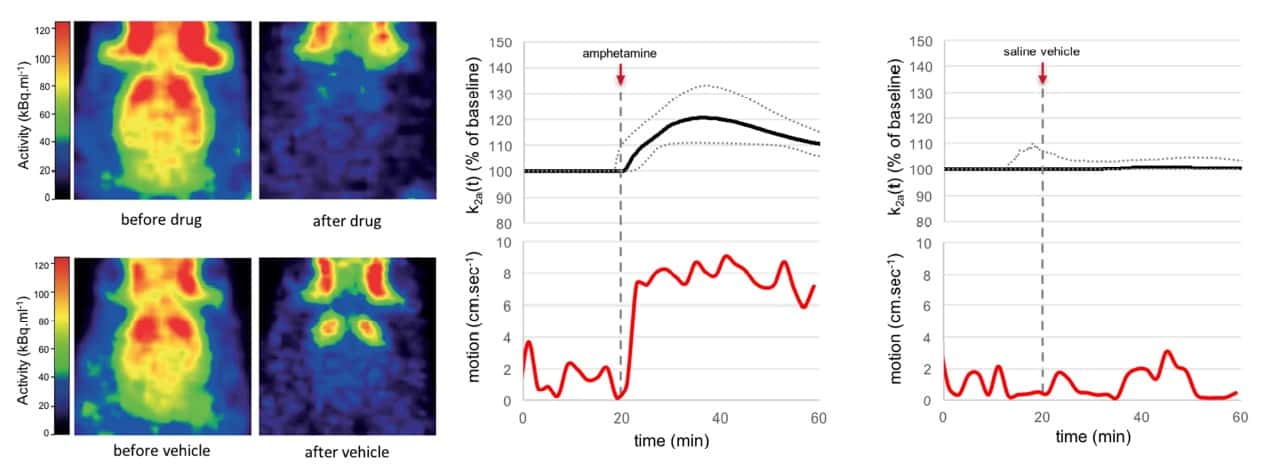
Meikle and colleagues first used the technique to estimate changes in binding of the drug raclopride, labelled with 11C, to the dopamine D2 receptor (D2R) in the brains of freely moving rats. They scanned four healthy rats on two consecutive days. For both scans, the rats were given 11C-raclopride (via an indwelling catheter in the right jugular vein) and imaged in the PET system for 60 minutes.

On the first day, 20 minutes after tracer injection, the animals were given unlabelled raclopride at a large enough dose to occupy almost all available D2 receptors and displace the tracer. On the second day, the rats received saline at 20 min instead.

The researchers used the pose information from the motion tracker to perform motion-compensated image reconstruction. PET images integrated over the first and last 20 minutes of the scan (before and after raclopride/saline injection) showed that the 11C-raclopride was indeed displaced by the unlabelled drug, but not by the saline. The estimated onset time of this displacement was 19.5 min on average, in agreement with the time of drug administration. Time-activity curves and displacement curves showed a high degree of inter-subject reproducibility.

The team also measured the average distance travelled by the animals 10 minutes before and after injection of drug or saline. They saw a slight reduction in locomotor activity after injecting unlabelled raclopride, while saline had no effect on behaviour.

Stimulating hyperactivity

Next, the researchers repeated the experiment using the psychostimulant drug amphetamine. While raclopride led to reduced motion, amphetamine stimulates release of dopamine, which competes with 11C-raclopride for the D2R binding sites and is expected to induce robust behavioural changes, such as hyperactivity and stereotypy.

They performed PET scans on three rats on two consecutive days. For each scan, they gave the rats 11C-labelled raclopride and imaged them for 60 minutes. Twenty minutes after tracer injection, they administered either saline (on the first day) or saline plus amphetamine (on the second). Motion-corrected PET images showed an appreciable reduction of the 11C-raclopride D2R binding signal in the striatum after amphetamine administration. The onset of this displacement was consistent with the time of drug administration and peaked 15-20 minutes later.

Amphetamine study

The amphetamine produced a clear increase in locomotor activity shortly after injection, for all three animals, with a pronounced and sustained increase (by 543%) in head motion. Saline did not change the D2R binding or the animal’s behaviour.

For this second experiment, the researchers also observed the rats every minute and scored them according to nine behaviours: sleeping; grooming; locomotion; head-up sniff; head-down sniff; non-specific mouth movements; chewing the chamber; perching on or near the chamber wall; and fast head bobbing.

In a representative animal, behaviour during the first 20 minutes was similar for both scans. After amphetamine administration, the rat showed a marked increase in repetitive locomotive behaviour, repeatedly adopting a perched position and alternately sniffing the base and top of the scanner. In contrast, after saline, the rat maintained moderate to low levels of sniffing in a non-perched position, as well as sleeping and grooming.

The team conclude that their technique can detect and quantify, in awake and freely moving animals, pharmacologically induced displacement of 11C-raclopride from D2 receptors, as well as enabling simultaneous measurement of the animal’s behaviour. These abilities could give rise to important applications in behavioural neuroscience.

“The next stage of this project is to develop a custom-designed high-resolution PET scanner with integrated motion tracking and behavioural response measurements,” Meikle tells Physics World.

Our universe has antimatter partner on the other side of the Big Bang, say physicists

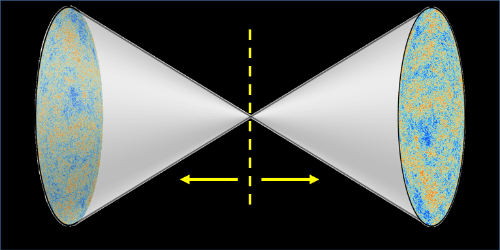
Our universe could be the mirror image of an antimatter universe extending backwards in time before the Big Bang. So claim physicists in Canada, who have devised a new cosmological model positing the existence of an “antiuniverse” which, paired to our own, preserves a fundamental rule of physics called CPT symmetry. The researchers still need to work out many details of their theory, but they say it naturally explains the existence of dark matter.

Standard cosmological models tell us that the universe – space, time and mass/energy – exploded into existence some 14 billion years ago and has since expanded and cooled, leading to the progressive formation of subatomic particles, atoms, stars and planets.

However, Neil Turok of the Perimeter Institute for Theoretical Physics in Ontario reckons that these models’ reliance on ad-hoc parameters means they increasingly resemble Ptolemy’s description of the solar system. One such parameter, he says, is the brief period of rapid expansion known as inflation that can account for the universe’s large-scale uniformity. “There is this frame of mind that you explain a new phenomenon by inventing a new particle or field,” he says. “I think that may turn out to be misguided.”

Instead, Turok and his Perimeter Institute colleague Latham Boyle set out to develop a model of the universe that can explain all observable phenomena based only on the known particles and fields. They asked themselves whether there is a natural way to extend the universe beyond the Big Bang – a singularity where general relativity breaks down – and then out the other side. “We found that there was,” he says.

The answer was to assume that the universe as a whole obeys CPT symmetry. This fundamental principle requires that any physical process remains the same if time is reversed, space inverted and particles replaced by antiparticles. Turok says that this is not the case for the universe that we see around us, where time runs forward as space expands, and there’s more matter than antimatter.

Model of a CPT-symmetric universe

Instead, says Turok, the entity that respects the symmetry is a universe–antiuniverse pair. The antiuniverse would stretch back in time from the Big Bang, getting bigger as it does so, and would be dominated by antimatter as well as having its spatial properties inverted compared to those in our universe – a situation analogous to the creation of electron–positron pairs in a vacuum, says Turok.

Turok, who also collaborated with Kieran Finn of Manchester University in the UK, acknowledges that the model still needs plenty of work and is likely to have many detractors. Indeed, he says that he and his colleagues “had a protracted discussion” with the referees reviewing the paper for Physical Review Letters – where it was eventually published – over the temperature fluctuations in the cosmic microwave background. “They said you have to explain the fluctuations and we said that is a work in progress. Eventually they gave in,” he says.

In very broad terms, Turok says, the fluctuations are due to the quantum-mechanical nature of space–time near the Big Bang singularity. While the far future of our universe and the distant past of the antiuniverse would provide fixed (classical) points, all possible quantum-based permutations would exist in the middle. He and his colleagues counted the instances of each possible configuration of the CPT pair, and from that worked out which is most likely to exist. “It turns out that the most likely universe is one that looks similar to ours,” he says.

Turok adds that quantum uncertainty means that universe and antiuniverse are not exact mirror images of one another – which sidesteps thorny problems such as free will.

But problems aside, Turok says that the new model provides a natural candidate for dark matter. This candidate is an ultra-elusive, very massive particle called a “sterile” neutrino hypothesized to account for the finite (very small) mass of more common left-handed neutrinos. According to Turok, CPT symmetry can be used to work out the abundance of right-handed neutrinos in our universe from first principles. By factoring in the observed density of dark matter, he says that quantity yields a mass for the right-handed neutrino of about 5×10⁸ GeV – some 500 million times the mass of the proton.

Turok describes that mass as “tantalizingly” similar to the one derived from a couple of anomalous radio signals spotted by the Antarctic Impulsive Transient Antenna (ANITA). The balloon-borne experiment, which flies high over Antarctica, generally observes cosmic rays travelling down through the atmosphere. However, on two occasions ANITA appears to have detected particles travelling up through the Earth with masses between 2 and 10×108 GeV. Given that ordinary neutrinos would almost certainly interact before getting that far, Thomas Weiler of Vanderbilt University and colleagues recently proposed that the culprits were instead decaying right-handed neutrinos.

Turok, however, points out a fly in the ointment – which is that the CPT symmetric model requires these neutrinos to be completely stable. But he remains cautiously optimistic. “It is possible to make these particles decay over the age of the universe but that takes a little adjustment of our model,” he says. “So we are still intrigued but I certainly wouldn’t say we are convinced at this stage.”

China’s Chang’e-4 spacecraft makes historic landing on far side of the Moon

The Chinese spacecraft Chang’e-4 has landed on the far side of the Moon and has begun relaying data and images back to Earth. It is the first mission to operate on the far side, which is the  hemisphere of the Moon that always faces away from Earth. This half of the Moon has a much more rugged and varied landscape than the hemisphere that is visible from Earth and studying its geology could provide important information about how the Moon and the rest of the solar system formed.

There is no direct line of sight from Earth to the landing sight and so all communications between the China National Space Administration’s Beijing Aerospace Control Center and Chang’e-4 are relayed via a satellite called Queqiao.

The lander contains several scientific instruments and a sealed “biosphere” containing plant seeds and insect eggs that scientists hope will hatch. The probe also has a rover that will explore the lunar surface.

Largest, deepest and oldest

Chang’e 4 landed in the Moon’s South Pole-Aitken Basin, which is a huge impact crater that is about 2500 km across and about 13 km deep. It is the largest, deepest and oldest basin on the Moon. Scientists already know that rocks in the basin floor have a different chemical composition than those in the surrounding highlands. One possible explanation is that some of this material was liberated from the Moon’s mantle when the crater was formed. Using the probe’s instruments to study these rocks could provide important insights into the interior composition of the Moon – and ultimately its origin.

The mission will also monitor low-frequency radio signals from space to establish whether the far side of the Moon is a good place to do radio astronomy. Astronomers believe it should be an ideal location for radio telescopes because the instruments would be shielded from radio signals originating from Earth.

Sharing its name with a lunar goddess of Chinese mythology, the Chang’e missions to the Moon began in 2007 with the launch of the Chang’e-1 orbiter. Chang’e-4 was originally designed as a backup for the Chang’e-3, which landed successfully on the nearside of the Moon in 2013. Chang’e-4 was then re-purposed and was launched on 7 December 2018. The communications relay satellite Queqiao was launched in May 2018.


Excessive withdrawals and oil and gas industry deplete groundwater

In many US aquifers, declining water tables and near-surface contamination are driving groundwater users to construct deeper wells. But a new study reveals that fresh groundwater is less abundant in several key US basins than previously thought, and drilling deeper wells to access fresh groundwater resources is not feasible extensively across the continent. Grant Ferguson and colleagues quantified the depths that aquifer systems transition from fresh to brackish, and where oil and gas activities are widespread in sedimentary basins across the US. Fresh-brackish transitions occur at depths of just a few hundred metres, they found, particularly in eastern US basins. According to the researchers, their findings illustrate that groundwater stores are depleted not only by excessive withdrawals, but due to injection, and potentially contamination, from the oil and gas industry in areas of deep fresh and brackish groundwater.

Find out more in this video abstract published in Environmental Research Letters (ERL) by Grant Ferguson et alERL comes to you from Physics World parent IOP Publishing.

Video courtesy CC-BY 3.0, Grant Ferguson et al 2018 Environ. Res. Lett. 13 114013 https://doi.org/10.1088/1748-9326/aae6d8

Quantum optics pioneer Roy Glauber dies at 93

Roy Glauber

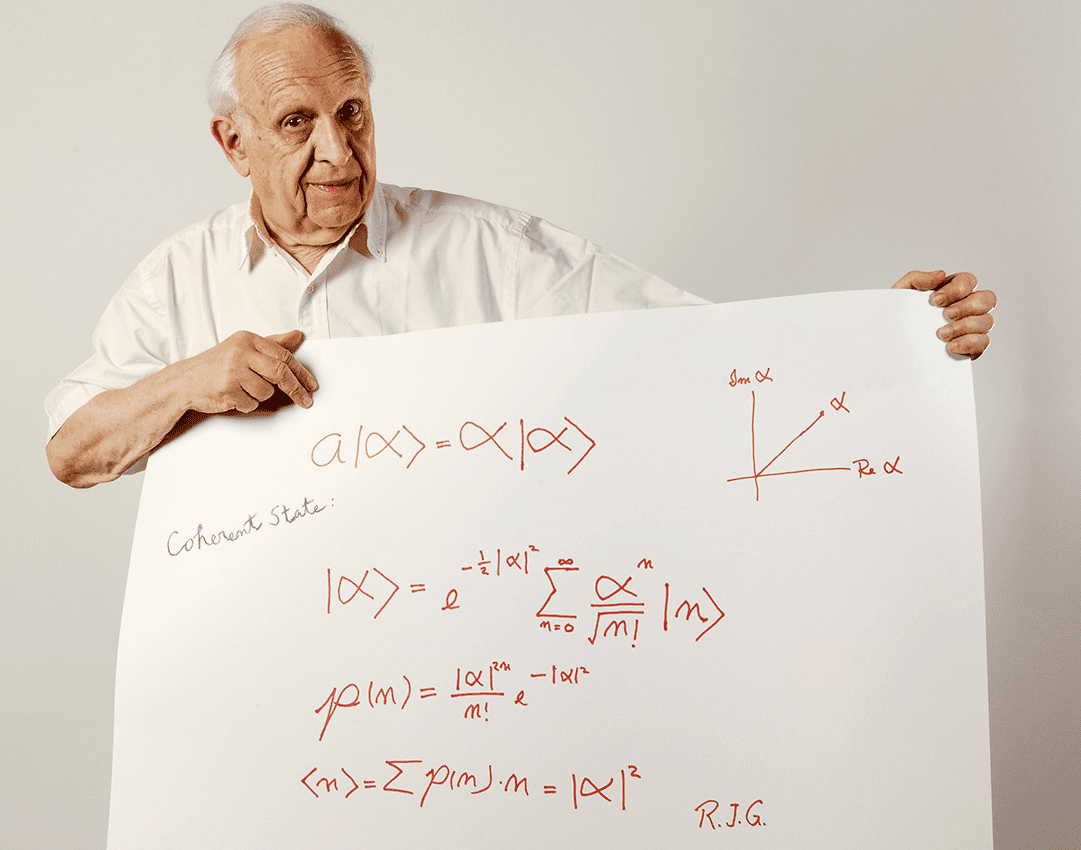
Roy Glauber, who shared the 2005 Nobel Prize for Physics, has died aged 93. A pioneer in the field of quantum optics, his work helped lay the groundwork for new technologies such as quantum cryptography. Glauber also worked on the Manhattan Project, joining the US effort to build nuclear weapons in 1943 when he was just 18 years old.

Glauber was born in New York City on 1 September 1925. He developed an interest in astronomy at age 12 and built his own telescope from scrap including the steering shaft of a car. He attended the Bronx High School for Science – a renowned institution that has produced seven physics Nobel laureates – where he was encouraged to study mathematics. His rapid advancement allowed him to enter Harvard University at just 16.

In October 1943, Glauber was asked to join the Manhattan Project at Los Alamos but did not know what he would be doing there. “I hadn’t guessed that Los Alamos was working to build a bomb,” he told Physics World in 2010, “and I was quite taken aback to learn that when I arrived”.

Witness to Trinity

He was a member of the Los Alamos theory group led by Hans Bethe and worked on problems related to neutron diffusion. On 16 July 1945, Glauber witnessed the first-ever detonation of a nuclear weapon at the Trinity Site in New Mexico. He was not with the small group of physicists who watched the explosion from a distance of 30 km, but saw the flash and some of the afterglow from about 200 km away.

Glauber returned to Harvard in 1946 to complete his undergraduate degree in physics before doing a PhD on quantum field theory with Julian Schwinger. He then went to the Institute for Advanced Study in Princeton, New Jersey where he worked for several years with Robert Oppenheimer and collaborated with Wolfgang Pauli. Glauber then had a brief stint at Caltech, where he stood in for Richard Feynman who was on sabbatical in Brazil. In 1952 Glauber returned to Harvard, where he remained for most of his of his professional career.

Quantum correlations

The development of the laser in the late 1950s inspired Glauber to think about the quantum nature of light. In 1963 he published a seminal paper in Physical Review Letters that used quantum mechanics to describe the observed correlated arrival of photon pairs in an intensity interferometer – dubbed the Hanbury Brown and Twiss effect. Glauber’s work helped create a framework for understanding the wave-particle duality of light and the difference between light emitted by hot objects and light emitted by lasers.

In 2005 he shared half of the Nobel Prize for Physics “for his contribution to the quantum theory of optical coherence”. The other half of the 2005 prize was shared equally by John Hall and Theodor Hänsch for their work on laser spectroscopy.

Glauber also had a long-standing affiliation with the Ig Nobel Prize ceremony, which is held annually at Harvard and celebrates humorous scientific research. Glauber was the ceremony’s “Keeper of the Broom”, who sweeps the stage clean of paper aeroplanes thrown by members of the audience.

Copyright © 2026 by IOP Publishing Ltd and individual contributors