Redefining the kilogram

On 16 November 2018 metrologists and policy-makers from 60 countries around the world gathered at the General Conference on Weights and Measures (CGPM) in Versailles, France. Member states made history by voting to adopt the most sweeping change to the International System of Units (Système International, or SI) since its inception in 1960. The change included new definitions for a number of fundamental units, perhaps most significantly the kilogram.

Find out more about the historic changes in this article by science writer Benjamin Skuse, taken from November’s Physics World. Find out how to access that issue here.


Fast and precise depth profiler delivers thin-film insights

Novel materials are the bedrock of today’s technology innovations, whether for better ways to harvest and store energy or for extending the lifetime of critical mechanical components. But creating the perfect structure for any particular application requires a precise and detailed understanding of various candidate materials – both in the bulk and when fabricated into layered structures.

One of the fastest techniques in the material scientist’s toolkit is glow-discharge optical electrical spectroscopy (GDOES), which takes just a few minutes to deliver a high-resolution depth profile of the elements present in a sample – which may be up to a few hundred microns thick. Initially developed in the 1970s for use in the steel industry, recent advances have extended the capabilities of the technique to reveal the elemental composition of many different materials and structures, including insulating and conducting layers, fragile and flexible samples, and organic and carbon-based materials. Unlike many other analysis techniques, GDOES delivers nanometre resolution without the need for an ultrahigh vacuum.

GDOES can measure lithium and other elements that are too light to be detected by other common spectrometry techniques

Patrick Chapon, HORIBA

The speed and ease-of-use provided by GDOES has made it a popular technique for optimizing the performance of thin-film solar cells, including the latest generation of perovskite and cadmium-telluride devices. “For thin-film photovoltaics it is important to analyse multiple samples to refine the manufacturing process and enhance the overall performance,” says Patrick Chapon, product manager for elemental analysis at HORIBA, which has become the market leader for GDOES analysis. “Depth-profile chemical analysis is crucial to match the bandgaps and optimize the process.”

Diverse applications

Chapon is the driving force behind SurfaceFest, a biannual gathering of scientists who rely on GDOES and other characterization techniques for their research. A quick glance at the line-up for the 2018 event, held in June in Bordeaux, France, reveals that the technique is now yielding valuable insights in such diverse applications as organic electronics, micro-LED displays, and corrosion-resistant coatings. In battery research, too, GDOES is uniquely positioned to reveal the movement of lithium ions from one electrode to the other.

“GDOES can measure lithium and other elements that are too light to be detected by other common spectrometry techniques,” says Chapon. “In addition, the layers involved in lithium-ion migration must be thick to generate enough current, so it is important to have a technique that is capable of probing thick layers.”

Indeed, in a single experiment GDOES can provide detailed information about both the uppermost atomic layers and much deeper interfaces – revealing, for example, whether any diffusion or contamination might have occurred between different layers. As well as lithium, the technique can detect the presence of hydrogen, oxygen, and other light elements at trace concentrations of parts-per-million or even less.

What has enabled these enhanced capabilities, says Chapon, is the use of a radio-frequency pulsed source to control the glow discharge. “GDOES is a destructive analysis technique that uses a plasma to sputter material from the surface of the sample,” he explains. “The atoms removed from the surface become excited inside the plasma, and an optical spectrometer can then be used to detect the light emitted as these excited species relax into their ground state.”

Pulsed discharge enhances the signal

A pulsed RF discharge makes it possible to reduce the thermal load on the sample, which improves the signal-to-noise ratio because higher sputtering powers can be used without damaging the sample. Time-resolved measurements using a fast-acquisition spectrometer also allow researchers to obtain information from measurements taken during the different phases of each pulse.

“The benefits of an increased signal-to-noise ratio is particularly important for nanometre-thick multilayer structures,” says Chapon. “But we have only been able to routinely implement pulsed RF operation in all our GD spectrometers since 2011, when we developed a patented technique to auto-match the RF source in both pulsed and non-pulsed modes.” HORIBA has also recently added differential interferometry profiling to directly measure the erosion rate and sputtering depth in real time, rather than inferring this information from complex calculations.

For organic and carbon-based materials, Chapon and his colleagues have found a way to replace the usual argon plasma gas with a combination of argon and oxygen. In this patented operation mode, known as UFS, the plasma becomes reactive and causes material to be removed from the surface more quickly – further improving the signal-to-noise ratio and speeding up the analysis time. Scientists at the Université Paris-Saclay in France have used this UFS mode to study a complex perovskite photovoltaic structure composed of an ITO-coated glass substrate covered with several organic and inorganic layers. “This made it possible for the first time to reveal the diffusion of some elements within the perovskite layer under a bias voltage,” says Chapon, who was a co-author of the study.

Strength in numbers

Despite the many advantages of GDOES, Chapon believes that some of the most interesting results can be achieved by combining it with other analysis techniques. While GDOES provides detailed chemical data through a depth of a sample, it has no lateral resolution – which means that surface techniques such as X-ray photoelectron spectroscopy (XPS) can provide complementary information.

“The strength of XPS is in its capability to look at chemical shifts and, for instance, to reveal the oxidation levels of a component or the binding between elements,” Chapon explains. “For depth profiling the practical limit of XPS is limited to less than 1 µm, but over the last few years we have shown how XPS can be used within the GD crater to provide a powerful tool to probe the chemistry of deep interfaces.”

Many of these advances were on display at SurfaceFest, which has grown rapidly since the first meeting for the GD user community was organized by HORIBA back in 2002. Chapon also hints that further improvements are in the pipeline, most likely by combining GDOES with other techniques. He has already co-ordinated an EU-funded project called EMDPA that combined a GD source with a time-of-flight mass analyser, with the aim of obtaining the entire mass spectrum at any depth. “We made an instrument after this project that has already sold a few units,” he says. “We have in HORIBA various technologies that could lead to new generation of instruments.”

More information about GDOES is available on the HORIBA website.

Climate impacts will seldom strike singly

By 2100, climate impacts will be felt by everyone and most people will experience at least three simultaneous hazards, inexorably made more hazardous by the build-up of greenhouse gases in the atmosphere.

And they could be the lucky ones: some people could be menaced by six different kinds of warming-related hazard simultaneously.

Camilo Mora of the University of Hawaii at Manoa and 22 colleagues report in Nature Climate Change that they read systematically through 3280 peer-reviewed papers on the subject of climate change, and compiled a matrix of 467 ways in which 10 major climate hazards – floods, droughts, heat waves, fires and so on – and six aspects of human dependency (health, food, water, etc.) could affect humanity.

They did, they say, identify some positive or neutral effects, but the overwhelming majority of climate impacts would create problems for human communities and their economies.

Medical prospects

Mora has established a reputation for thinking on the scale of global catalogue. Recently, the geographer and his fellow researchers looked at medical records and heat extremes and listed 27 different ways in which heat waves could kill.

In recent years he has been involved in studies that have tried to measure the challenge to the global harvest because of carbon dioxide accretion in the atmosphere as a consequence of fossil fuel combustion; the first years in which particular locations around the world could feel the impact of irreversible climate change; and then the proportion of humans at risk from heat extremes by the end of the century.

The latest study concludes that even if greenhouse gas emissions are dramatically reduced, most of the world would still be confronted by one hazard at a time: the worldwide average temperature rise of 1 °C has already started to change climates and heighten climatic extremes.

And if humans go on burning fossil fuels in what has become notorious as the business-as-usual scenario, then almost everybody could face three hazards at the same time. In some coastal regions some people could be hit by six.

The evidence of climate change impacting humanity is abundant, loud and clear … How many wake-up calls will it take to wake up?

Daniele Spirandelli

Higher atmospheric temperatures accelerate the evaporation of soil water. Normally dry places will be at risk of drought, heatwave and wildfire. Normally rainy places will face catastrophic downpour, and flood. Warmer ocean waters will evaporate at greater rates, so windspeed and rainfall from hurricanes will also increase. Sea level rise driven by water temperatures, and by glacial melting, will raise the risk of coastal flooding and storm surges.

Some of these impacts have already affected human health, bringing death, disease and mental illness. They have affected the supply of food on land and at sea; they have damaged electrical supplies, transportation, water and sewage infrastructure; they have damaged property and reduced labour productivity; they have triggered migration and sparked violence, and Mora and his colleagues have now compiled a database of more than 3000 documented examples.

“Greenhouse gas emissions pose a broad threat to humanity by simultaneously intensifying many hazards that have proved harmful in the past,” says Mora.

“Further, we predict that by 2100 the number of hazards occurring concurrently will increase, making it even more difficult for people to cope.”

List of impacts

The latest study simply looks at all the recent climate impacts recorded and assessed and categorises them in a range of ways.

These include the 33% loss of grain to drought and fire in Russia in 2010; the loss of three-fourths of all livestock during drought in Kenya in 2000; drinking water shortages for 33 million people in China in 2001; the rise in waterborne infectious diseases after the 2010 Indus floods overwhelmed sewage treatment plants in Pakistan; the cumulative damage by flood and storm to millions of homes in China, Pakistan, Bangladesh, Indonesia, the US and France; and – because of melting ice – the forced relocation of Inuit villages in Alaska.

Heatwaves caused blackouts for 670 million people in India in 2012, and 35 million in Saudi Arabia in 2010. After Hurricane Andrew in 1992 hammered the US east coast, a total of 12 insurance companies went bust.

The next step, having assembled the possible kinds of impact, was to model the way they would be amplified and intensified under various scenarios for global warming. Wealth and economic power offer no great protection. New York can expect at worst by 2100 to face at least four hazards; Sydney and Los Angeles three; Mexico City four, and the Atlantic coast of Brazil five.

Present danger

“The collision of cumulative climate hazards is not something on the horizon, it is already here,” Mora says. “Co-occurring and colliding climate hazards are already making headlines worldwide.

“Last year, for instance, Florida recorded extreme drought, record high temperatures, over 100 wildfires, and the strongest-ever recorded hurricane in its Panhandle: the category 4 Hurricane Michael.

“Likewise, California is currently experiencing ferocious wild fires and one of the longest droughts, plus extreme heatwaves this past summer.”

“The evidence of climate change impacting humanity is abundant, loud and clear,” says his co-author and colleague Daniele Spirandelli. “Clearly, the outstanding question is − how many wake-up calls will it take to wake up?”


Know your boundaries to progress materials science

A model guide: a technical note in Journal of Physics: Energy provides a guide for researchers to apply the latest tools for modelling energy materials and processes. Credit: Materials Design Group at Imperial College London

“We often focus on the bulk properties of materials for energy applications, such as light absorption for solar cells and ion diffusion rates for batteries, but the reality is that interfaces are critical,” says Aron Walsh, Professor of Materials at Imperial College London in the UK. His comments reflect a trend in energy materials research that is becoming increasingly focused at the boundaries, where one material ends and another begins.

According to Walsh the wealth of useful innovations for optimizing energy materials stemming from interface studies owes more to what is not known about these systems than what is. Identifying unexpected physical behaviour at the junction between compounds can provide insights into what might enhance or restrict the performance of a device.  In the first issue of of Journal of Physics: Energy researchers starting out in efforts to model these systems can benefit from a technical note by Walsh and colleagues at Imperial College London, the Rutherford Appleton Laboratory in the UK, and Yonsei University in South Korea.

“The technical note is a quick-start guide aimed for new researchers, while those established in the field may find some useful tricks or references,” says Walsh. “We don’t cover the deep challenges such as changes in structure, charge, and stoichiometry at junctions, which are the subjects of on-going investigations and model development. We illustrate how modern atomic and electronic structure techniques can provide valuable insights into the nature of materials interfaces at the atomic scale.”

Tinkering limitations

While it is possible to tinker with parameters here and there and luck out with fixes without really understanding why or how they work (an uncanny knack some people have that still impresses me) as Editor in Chief of Journal of Physics: Energy John Irvine also emphasizes, efforts to better understand the interfaces in new technologies are important for the field to progress. “For a lot of big devices, the important technology is actually at the nanoscale and the interfaces,” he says in a recent interview. “Take something like activation, where a physical or chemical process is triggered: If you engineer at the nanoscale you can actually improve performance by working on the interfaces between, say, the electrode and electrolyte. But you have to understand what’s going on at the nanoscale before you can apply that on a system scale.”

This kind of technical note is a relatively unusual journal article type. Walsh – a University Research Fellow of the Royal Society who in the past few years has been awarded the EU-40 prize from the European Materials Research Society, the Chemistry Society Reviews Emerging Investigator Lectureship for his work on the theory of next-generation materials for solar energy conversion, including halide perovskite photovoltaics, and the Philip Leverhulme prize in Chemistry – tells Physics World that the motivation for the technical note came from the encouraging track record in this field. “As materials modelling is becoming increasingly predictive, there are many researchers entering the field that want to apply the latest tools to energy materials and processes,” says Walsh. “My aim is to have a series of notes that will aid new researchers to get started by providing key references and technical workflows.”

Find the technical note in full at the Journal of Physics: Energy


Human bone growth is a thermodynamic process, reveals 3D printing study

Important insights into how human bones grow and crystallize on an atomic scale have been made by Martin Andersson and colleagues at Sweden’s Chalmers University of Technology. Inspired by their use of 3D printing to try to mimic bone structures, the team determined that bone development is a thermodynamic process, independent of other biological systems within the body. Their discovery could soon be used to develop treatments for bone-related diseases, and could also aid developments of more advanced prosthetic implants.

In our bones, new growth is initiated when spherical, disordered blobs of calcium phosphate are sent out from specialized cells to occupy the spaces in between strings of newly-formed collagen. When in place, these spheres transform from amorphous blobs into an orderly, crystalline substance known as apatite (see figure), which gives bone its unique mechanical properties. Exactly how this process plays out on a molecular scale had not been well understood.

The original goal of Andersson’s team was to create a 3D-printed material that accurately mimicked the mechanical properties of bone. Their goal was a material that would replace metal, plastic and other materials currently used in prosthetic implants, potentially improving patients’ mobility. Yet as the researchers optimized their material to imitate bone more precisely, they noticed their methods could also be used to explore the processes underlying bone development at unprecedented levels of detail.

Disorderly spheres

Using transmission electron microscopy to analyse their 3D printing process on an atomic scale, Andersson and colleagues observed for the first time how apatite is formed from disordered blobs of calcium phosphate. They found that when blobs reach the spaces in between collagen, nanometre-sized clusters of molecules migrate away from the blobs to occupy the lowest-energy locations on the bone’s growth front; eventually forming the solid, orderly structure of apatite.

From their results, Andersson’s team showed that this process is driven by the presence of humidity in bone-forming regions. Intriguingly, this would suggest that bone formation is not a biological process; rather, it represents the thermodynamic response of calcium phosphate to its surroundings, independent of other systems within the body.

The team believes the insight could lead to more effective treatments for diseases including osteoporosis, where patients’ bones break down at a faster rate than new apatite can crystallize. The researchers hope their discoveries will allow the advantages of current and newly-proposed osteoporosis treatments to be evaluated more accurately. In addition, they will continue to assess the effectiveness of different substances for stimulating new bone growth, and for improving prosthetic implants.

The research is described in Nature Communications.

Robust, flexible thermoelectric coils power miniature devices

Though thin film thermoelectrics have been of research interest for the last decade, scientists have struggled to develop them into solid-state devices in practical geometries due to the difficulty of maintaining a temperature gradient across films. Still, interest remains high as researchers pursue efficient, unobtrusive power sources for wearable technology and small medical devices. The thermoelectrics research group at Northwestern University presents a solution to this problem – turn the planar 2D energy harvester into a helical 3D coil.

According to Stephen Kang, a recent graduate of the group, thin films are unsuitable for miniature devices like wearable technology simply because they are too thin to maintain a temperature difference across their thickness.

“It’s maybe analogous [to] a situation of wearing thin clothes; the temperature of your skin will be almost the same as the atmosphere if your clothes are too thin. No temperature difference means no electrical voltage.”

The 3D array their group developed overcomes this issue by instead allowing the out-of-plane heat to travel through the in-plane direction of the film. The group’s experimental and computational finite element analysis studies show that the architecture provides stability even with a thin material.

Applicability over scalability

In principle, the array that the group developed can be scaled as large as processing capabilities will allow. The team claims, however, that the architecture is ideal for powering miniature devices.

“The idea of an energy harvester is that, for devices that have a very small operational power demand, you integrate the harvester with the device so that you can power the device from energy obtained from the device environment,” says Kang. “Then you don’t have to worry about changing the battery or plugging in a power cord.”

The group’s goal is to therefore focus on improving their efficiency, measured by the power supplied by a given area of an array, rather than scaling their technique for larger devices.

Material power

The efficiency of the 3D array depends on the material used. In their model system, the group chose silicon because of its well understood properties, rather than its potential as a thermoelectric – its figure-of-merit is low compared with commonly studied and more competitive thermoelectric materials like Bi2Te3 and Cu2Se. In bulk, however, it is difficult to modulate the properties of thin films of Bi2Te­3 and Cu2Se as the group did with silicon. Differences in mechanical properties could also hinder the geometry’s performance. According to Kang, this opens doors for organic or polymer materials as thermoelectrics.

“Our device design is a place where the mechanical properties of organic or polymer materials could offer a great advantage,” Kang said. “Although their inherent thermoelectric properties are inferior to inorganic materials (i.e. lower figure-of-merit), their mechanical properties will allow designs that can potentially get more power out of the harvester.”

More details can be found in the latest Science Advances.

Surface plasmons reveal their secrets

The physical properties of metal particles change the smaller they get and new phenomena such as localized surface-plasmon resonance, or LSPR, appear. The LSPR (which is responsible for the colour in nanocolloidal solutions or in some stained-glass windows) is a collective excitation of electrons and it can be tuned over a large spectral range depending on the material, its size and shape. Experiments to study this effect have so far produced conflicting results, however, but researchers in France say they may now be able to explain these earlier contradictions. Their work is not only important for our fundamental understanding of how quantum mechanics affects classical effects like LSPR, but it might also help advance applications such as photocatalysis, biomedical imaging or sensing, all of which exploit LSPR.

Surface plasmons are collective excitations of electrons at the surface of a metal that interact very strongly with light. They are thus interesting for technological applications as an interface between photonics and electronics. The light-matter interaction is strongest at the plasmon-resonance frequency, which is defined by the size and shape of an object and its charge density, and surface plasmons can generate strong electric fields at this frequency.

Inconsistent results so far

Research on LSPR so far has been beset with inconsistencies, however. “Some previous experiments to study LSPR reported on a particle-size-dependent plasmon shift, for example, but others did not,” explains Matthias Hillenkamp of the University of Lyon, who led this research effort. “We wanted to find out whether, and how, this shift is determined by the local environment of the nanoparticles.”

And this is exactly what the researchers did – by showing that in very small nanoparticles (<10 nm in diameter), the surface plasmon resonance is indeed influenced by quantum effects, but that these are sometimes quenched depending on the environment.

Electron spill-out and d-orbital electron screening

“The most important of these effects are electron spill-out (in which the electronic wavefunction extends beyond the radius of a particle) and reduced d-orbital electron screening at the particle surface,” says Hillenkamp. “These two effects are the opposite of each other: the first shifts the plasmon resonance towards the red part of the electromagnetic spectrum while the second shifts it to the blue. The actual spectral position of the resonance is a balance between the two, and it is affected by the environment.”

The researchers, reporting their work in Nature Physics 10.1038/s41567-018-0345-z, obtained their results by studying ensembles of silica-embedded silver nanoparticles using optical absorption spectroscopy, which is the most widely employed technique to investigate such particles in this context. They looked at particles ranging in size down to less than 1 nm diameter, which is where quantum size effects are expected, and found that all but the very smallest particles strongly absorb light at a bandwidth of 2.95 eV, irrespective of their size.

For nanoparticles in the same size range, they also performed single particle electronic spectroscopy in an electron microscope. This technique allows to correlate particle size and shape with the plasmon response of one single particle, down to sizes below 2 nm in diameter (which is just a little more than 100 atoms).

Semi-quantitative model

“At first, our results again seemed contradictory, but only after identifying that the electron beam alters the local environment, were we able to explain our findings with the help of a semi-quantitative model that takes into account the electron spill-out and reduced d-orbital electron screening effects mentioned earlier,” Hillenkamp tells Physics World.

The team, which includes researchers from the CNRS, Paris-Sud University and Aix-Marseille University, says that is now extending its investigations to more complex systems such as nanoalloys and to different physical effects like the volume plasmon. “This has been known for a long time but it is difficult to study since it is impossible to excite with light,” says Hillenkamp.

3D printed microstructures mimic human soft tissues

Varying lattice properties

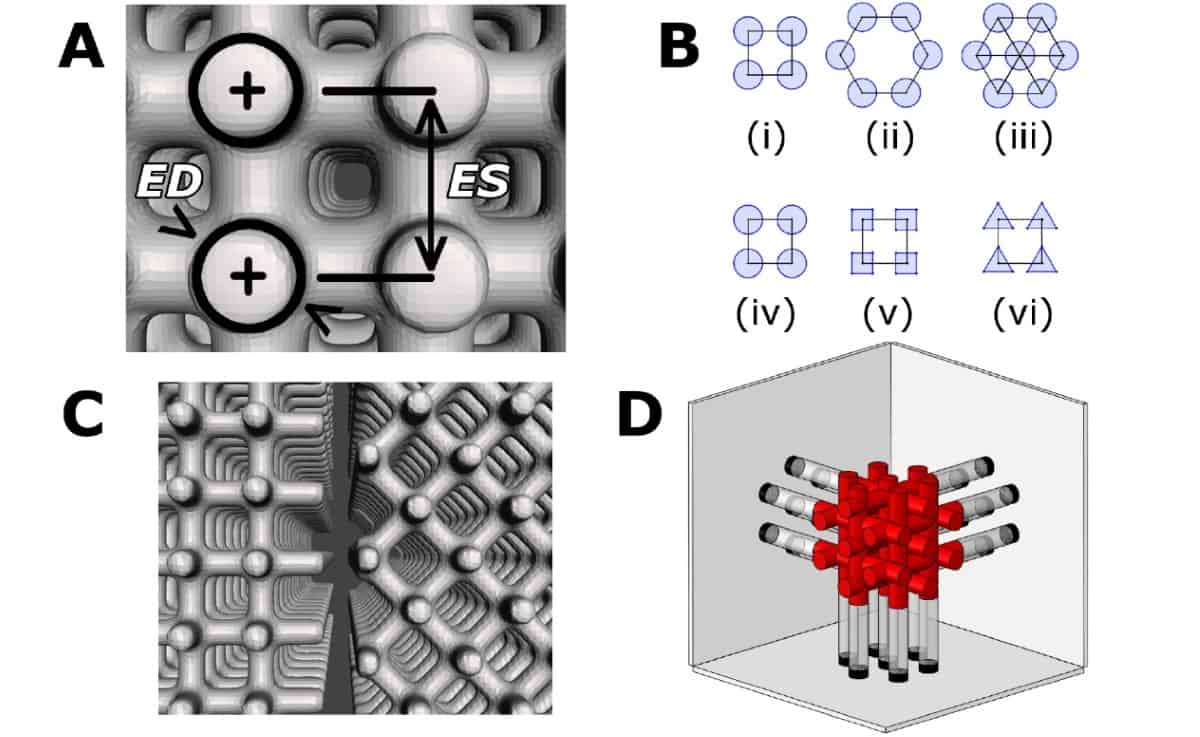
Three-dimensional (3D) printed lattice microstructures that mimic human soft tissues provide a building block towards developing anatomically realistic biomechanical testbed models. Researchers at the University of Washington have developed a method to print a lattice microstructure with the elastic profile of planar fat, the most challenging tissue in the foot to replicate. They have now published details of how varying the lattice properties can affect their stiffness profiles (Bioinspir. Biomim. 10.1088/1748-3190/aae10a).

3D printing of substances for biomechanical human testing could reduce the need for cadavers, which pose inherent difficulties for researchers. Locating a cadaver that has the desired pathologies can be time-consuming and challenging. Healing cannot be simulated. Altering normal specimens to simulate pathology — such as making a cadaveric foot mimic a condition like “flat foot” by releasing tendons and connective tissue — can be labour-intensive and difficult. And surgery on a cadaver may cause irreversible change, preventing an experiment being exactly replicated.

Creating physical model-based biomechanical testbeds by 3D printing, on the other hand, offers the ability to print multiple copies of patient-specific geometries, simulate the effects of healing and integrate sensors. The authors note, however, that materials capable of mimicking the elastic properties of very soft tissues have not yet been developed. For this reason, they are developing lattice microstructures that can increase the compliance of materials currently available for 3D printing.

Principal investigators Eric Rombokas and Patrick Aubin, also from the VA Center for Limb Loss and MoBility (CLiMB), and colleagues, based their method on varying the micro-scale structure of how the material is deposited to vary the macro-scale elastic properties of the object being printed. This enabled them, for example, to create a material with the stiffness profile of the very soft plantar fat.

Tailoring the tissue

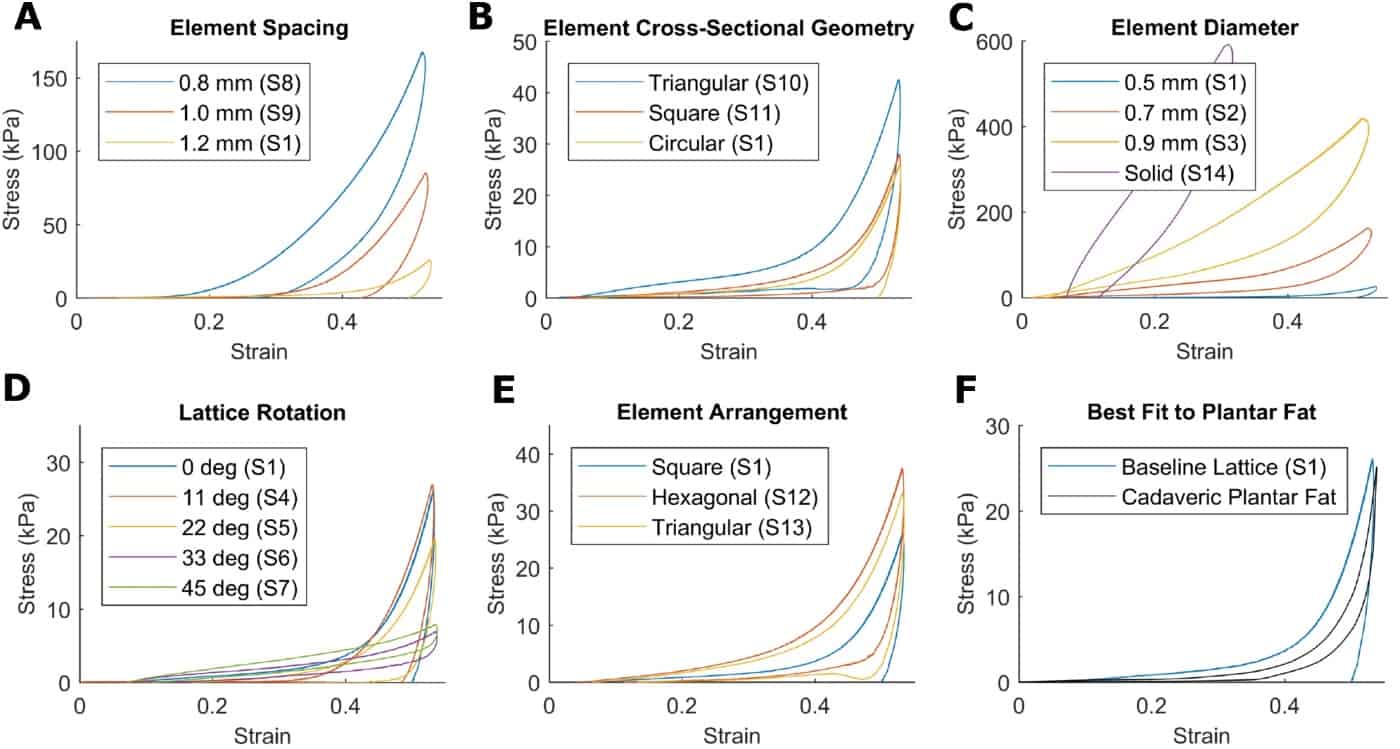
The researchers varied five lattice properties: element diameter, spacing, cross-sectional geometry and arrangement, and lattice rotation, to create 14 distinct lattice geometries. Having previously developed a baseline lattice that matched the mechanical properties of planar fat, they then created three to five different samples with incremental changes in one parameter, while the four remaining parameters were held constant.

The team printed the samples using the softest elastomeric material available for their 3D printer. They tested the printed samples using a compression protocol employed in a previous cadaveric study to characterize plantar fat. Each sample was tested for 15 cycles, and the team calculated engineering stress/strain values for all cycles.

Stress versus strain

The authors determined that element diameter and element spacing were the most important lattice properties for tuning the stress/strain profile, and that lattice rotation was important in tuning the profile linearity. A square arrangement of cylindrical elements (0.5 mm diameter columns with 1.2 mm spacing) had a stress/strain curve closest to that of cadaveric plantar fat.

This best-fit lattice had Young’s moduli of 7.55, 9.50 and 252 kPa, at 10%, 30% and 50% strain, respectively. By comparison, physiologic plantar fat at the same strain values has Young’s moduli of 1.08, 7.13, and 188 kPa. The authors attribute the discrepancies to different the damping properties of the 3D-printed material and actual fat.

Future plans

The researchers are now experimenting with gyroidal lattice microstructures, which distribute stress and strain very evenly throughout their structure. “We have produced a gyroidal lattice very similar to our plantar fat-mimicking lattice, but dramatically tougher,” Rombokas tells Physics World. “We are using it in some in-progress experiments recreating a full foot from biomedical images, including soft tissue, bones and tendon forces. We’re simulating orthopaedic surgeries and validating the system against cadaveric and computer models. We are also working on creating soft sensors suitable for integration with the latticed tissue models.”

Eric Rombokas

Rombokas explained that lattice microstructures will be valuable for studying targeted subsystems, such as intra-joint pressures in arthritis of the big toe. “Currently, joint-preserving surgeries are diverse and it can be difficult to choose the appropriate procedure,” he explains. “By making identical copies of a particular patient geometry and tissue profile, varying only in the surgical intervention, we will be able to better predict outcomes and inform the surgeons.” And by using thin-film force/pressure transducers in the intra-joint space, it should be possible to compare different surgeries in terms of relief of peak pressure and moving the pressures onto regions of the joint with healthy cartilage.

“Research using lattice microstructures is the next frontier in allowing us to simulate soft tissues,” Rombokas predicts. “The ingredients for a truly transformative robotic biomechanical model are steadily becoming possible. These robots will allow us to answer new kinds of questions. I also think they will have tremendous use outside of fundamental research, potentially as prosthetic limb technologies or robotic agents that can interact seamlessly with human biomechanical systems.”

Lessons learned from creating a physics graduate school

The role of a PhD programme is to train students for a career in research – be it at university or in industry. In our experience, almost all physics students who begin a PhD hope for an academic career, yet the overwhelming majority eventually move into industry where they contribute hugely to the research and development of firms. Although this picture seems to be accepted by those now embarking on a PhD, many students still have little idea how they could exploit their physics PhD beyond the narrow confines of their research project.

In 2008 – a difficult time for UK physics, which suffered funding cuts and department closures – nine university departments in the south east of England came together to form the South East Physics network (SEPnet). This collaboration helped revive physics in the region by focusing on outreach as well as student employability via a summer industry placement scheme. In 2013 SEPnet launched GRADnet to give PhD physics students greater awareness of opportunities outside academia and a broader set of the skills that are needed to exploit them.

Thriving school

Over the past five years, GRADnet has developed into a thriving graduate school offering around 30 days of bespoke training every year to more than 450 physics PhD students. There is only a handful of multi-institution, discipline-specific graduate schools in the UK but GRADnet is one of the largest, offering a mix of short workshops, web-based resources, residential schools and student-led conferences. The workshops cover topics such as research data management, entrepreneurship, intellectual property, outreach, preparing fellowship applications and advanced programming. One especially popular option is an introduction to publishing offered by a team from IOP Publishing, which publishes Physics World.

The online materials cover a wide range of topics, from explanations of theory to job-hunting, and have been prepared by students in their later years usually in response to “I’d wish I had known that earlier”. Pedagogic schools cover advanced physics topics such as cosmology in a friendly environment that helps develop collaborations. However, our flagship and most popular annual event is the four-day summer school “What next”, which explores job opportunities through employer-led workshops and challenges. The summer school is complemented by a winter school that focuses on leadership.

Creating GRADnet has been a steep learning curve and some elements have worked better than others. Two years after GRADnet was formed, we radically revised how we deliver material, if not our aims. We had initially carried out training via video conference, which had proved successful for established groups within SEPnet. Yet for GRADnet this was not a good way to bring new groups together. It required one- or two-hour time slots that broke up the day and it was too easy for students – and indeed staff – not to attend. Moreover, although we had state-of-art technology, it was not robust enough for a good learning experience.

We learned instead that three- or four-day schools work best. They disrupt timetables less, promote networking and give students the time and space to explore new ideas. For staff, schools can efficiently offer more varied teaching methods including interactive and hands-on sessions. So while each school has a predominant theme, for example experimental methods, it also covers many other aspects, such as writing skills in the guise of preparing a beam-time proposal.

Another issue for us has been intellectual property rights, which has plagued widespread open dissemination of our online materials. Indeed, the general problems of a multi-institution website – SEPnet is not a legal entity in its own right – with materials behind a login became so much that we have all but abandoned everything online that cannot be publicly open. Unfortunately, this means that some created materials have been lost. Others, however, can now be found on YouTube.

GRADnet was an experiment: could we deliver bespoke, discipline-specific, multi-institution researcher training? Our answer is yes – with more than two-thirds of PhD students in the region actively engaged. From July 2018, SEPnet and GRADnet have no longer received dedicated public funding, with financial support instead coming from its partners’ own resources. Employers, who find GRADnet an efficient and beneficial way to engage with students, now contribute about 30% of GRADnet teaching. This is hugely welcomed and appreciated. Indeed, GRADnet could not have succeeded without the invaluable support from more than 30 employers, such as Oxford Instruments.

Academic opposition

Yet the near universal support of employers is not always matched by PhD supervisors. It is unfortunate that some academics still regard broad researcher training as a distraction and an inconvenience. The worst even discourage students from attending.

GRADnet has already enabled some partners to establish a collaborative Centre for Doctoral Training in Data Science. These centres recognize that doctoral training is changing – no longer are students asked only to carry out their supervisor’s research. We believe that student-focused training should not be solely fixed on academia. If GRADnet is to continue to grow, it needs to shout this message even clearer to those that have not yet heard it.

Combustion-free propeller-free aeroplane takes flight

More than a century after the first controlled sustained flight of a heavier-than-air aircraft, aviation remains a noisy and heavily polluting business. With altitude effects exacerbating the environmental impact of emissions, mounting concerns over the carbon footprint have accompanied the rise in international travel and plane use. Drones tipped for increased use in coming years, particularly in urban areas to exploit their agility for traffic and air pollution monitoring, use the same propeller thrust as conventional planes and are prone to the same noise – a low hum that could rapidly grate as numbers increase. Is there another way? According to demonstrations of combustion-less propeller-less aeroplane flight at Massachusetts Institute of Technology (MIT) in the US, there is.

“This all started about eight or nine years ago,” said Steve Barrett, professor of aeronautics and astronautics at MIT, at a press conference on the recently reported breakthrough. “Looking back to my childhood I was a fan of Star Trek, and at that time the future looked like it should be planes moving silently with no moving parts – maybe a blue glow but certainly no propellers or turbines or anything like that. So I started looking for what physics would make flight with no moving parts possible and came across a concept called ionic wind.”

Ionic wind first made an appearance in a paper in the 1920s. Following a decades-long lag there was a second round of interest in the 1960s when it was written off as an unviable option for sustaining flight of a heavier-than-air aircraft. Barrett and his research group picked up the baton in the late 2000s and discovered a regime that did not feature in the original paper, and which showed much more promise for providing the thrust to fly a plane.

Conveniently in the intervening decades the requisite electronics for invoking ionic wind to fly a plane have also come a long way. As Dave Perreault, professor of electrical engineering at MIT points out, in the 1960s the transistor had only just been invented. A plane using ionic wind for thrust needs a number of electronic components in particular a power conversion system, which Perreault was tasked with making as light as possible. Fifty years ago not only were power converters cumbersome and heavy, but battery power was more limited.  The progress in battery power density since is evident in the rise of other battery-powered vehicles such as electric cars. “I think this is a piece of a broader revolution that you’re seeing in terms of moving towards electrification for all kinds of transport,” says Perreault.

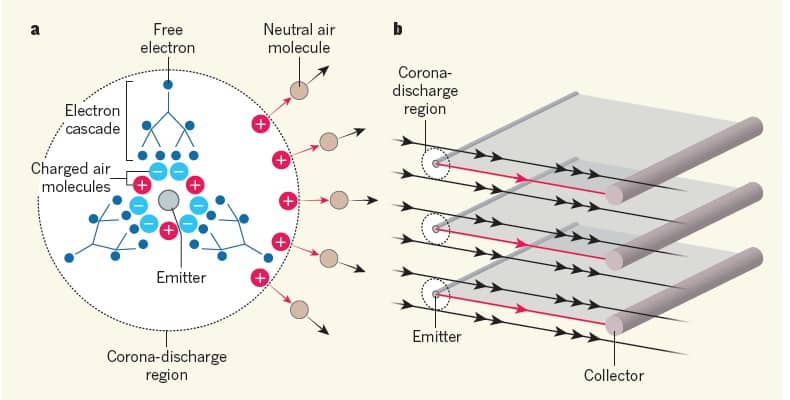
Ionic-wind propulsion. Xu et al.2 demonstrate that an aeroplane can sustain steady-level flight using air movement known as an ionic wind.

The ion age of flight

The ionic wind that powers the plane is generated by electroaerodynamics. An electric field ionizes atoms and molecules in the ambient fluid – such as nitrogen molecules in air – and then accelerates them by Coulomb force. The accelerated ions then couple their momentum with other neutral atoms or molecules they collide with, and this gives rise to the ionic wind.

In their electroaerodynamic plane the MIT researchers used electrodes shaped as filaments set at a +20,000 V at the front of the plane, which accelerate ions to aerodynamic foil-shaped opposing electrodes at -20,000 V sending an ionic wind towards the back of the plane. They then applied geometric programming to their design, an approach often used to optimize a given parameter for conventional aircraft. Barrett and colleagues used it to optimize the design of their plane for minimum wing span, which corresponds to a minimum aircraft weight. The result was a 5 m wingspan plane, which the researchers made from a combination of traditional materials – such as balsa wood and foam – and more high-tech carbon fibres and Kevlar.

The plane was powered by 54 3.7-V E-Flite 150 mAh lithium-ion polymer cells. Perreault describes the strategy for lightweight power conversion to achieve the 40,000 V potential difference as like using a thimble instead of a bucket to move water. A thimble may carry less but you can shuttle it to and fro with a higher rate of repetitions and keep size and mass to a minimum. Similarly the power conversion system in the electroaerodynamic plane takes advantage of higher frequencies.

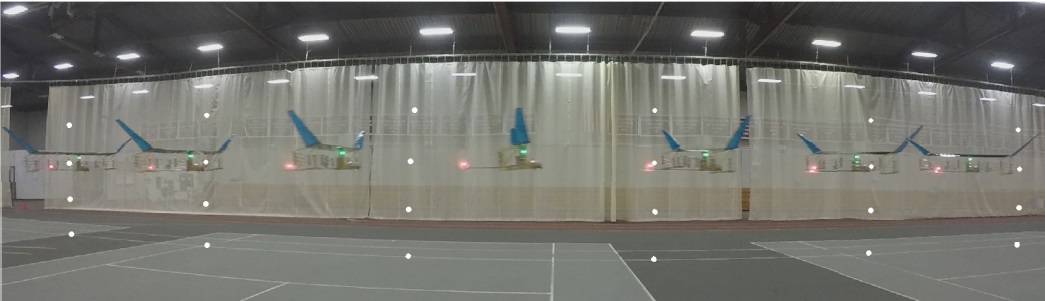
The researchers tested the plane in a 60 m long gym. As Barrett put it, trying to get permission from the aviation authorities to fly an untested plane design powered by a 40,000 V electric field outdoors was unlikely to meet with success. Still the researchers were able to demonstrate controlled sustained flight of a heavier-than-air aircraft powered by ionic wind over 45 m.

the future looked like it should be planes moving silently with no moving parts

Sustained and sustainable flight

The electroaerodynamic solid-state plane meets Barrett’s Star Trek-inspired prerequisites of silent flight with no moving parts or combustion engine. However, questions remain as to how it would cope with outdoor weather conditions and the net benefit for the environment.

Further tests are needed but it is possible the plane would cope with turbulence as well as conventional planes and may even benefit from avoiding the surge and stall mechanisms they are prone to. It is also possible that high precipitation levels may also be an advantage but again further tests are required. In addition, another research group at MIT is working on ways to make conventional planes potentially immune to lightning strikes and the researchers could apply those techniques to their solid-state plane.

Time-lapse image of the EAD aeroplane in flight. Credit: Nature

While there are environmental benefits from a combustion-free plane, Barrett flags up that the ionized nitrogen chemistry could lead to production of nitrogen oxide and ozone. Further studies are needed to establish what risks this poses and whether, as in combustion cars, mitigating technology can reduce this production to acceptable levels. From an energy saving point of view the electroaerodynamic plane is battery powered and so does not benefit from getting lighter during journeys as planes using up fuel do. The benefits of zero combustion emissions could outweigh this but for now the pros and cons are still in the balance.

What this kind of solid-state alternative to combustion engines does lend itself to is scaling down so it may be ideal for drones and small aircraft with applications that have not yet been thought of. For now the immediate benefits are apparent in larger aircraft so the focus is on attempts to scale up and determining whether there are any fundamental limits to the size and mass of an electroaerodynamic plane.

Olivier Praud, a researcher at Institut de Mécanique des Fluides de Toulouse in France – who was not involved in the current work but whose work on electrohydrodynamic ionic wind the researchers drew on to develop their electroaerodynamic plane – says:

“The physical mechanism behind ionic wind, which relies on the electrostatic air acceleration, has been known for a long time. However its poor electric-to-kinetic energy conversion efficiency (only a few per cent) remained a strong limitation for practical application. Using recent aircraft design algorithm and what is actually technologically possible using current materials and power electronics technology, the authors demonstrate that ionic wind propulsion could nowadays provide an alternative method of propelling planes into the air that does not require moving parts or combustion.

“Can ionic-wind propulsion fly conventional aircraft is still an open issue and improvement of the author propulsion system are certainly required, but the breakthrough toward future applications has been accomplished.”

Full details are reported in Nature.

Copyright © 2026 by IOP Publishing Ltd and individual contributors