In their study of the years 1979 to 2016, the destructiveness of the cyclones increased rapidly after 1998, rising 97% from the interval 1998–2003 to 2012–2016.
The researchers believe the shift results from the impacts of the strong La Niña weather phenomenon of 1998–2001, and the strong El Niño in 2014–2016.
Tropical cyclones in the western North Pacific have caused immense damage, disruption and loss of life. In 2013, for example, Typhoon Haiyan became the deadliest Philippine typhoon on record, killing over 6,000 people. Haiyan also holds the joint record for strongest tropical cyclone to hit land.
Many people fear that tropical cyclones are becoming more destructive, but studies have shown mixed results. In 2005, for example, Kerry Emanuel of the Massachusetts Institute of Technology, US, found an upward trend in cyclone destructive potential over the western North Pacific and North Atlantic basins since the mid-1970s. In 2015, on the other hand, I-I Lin of the National Taiwan University and Johnny Chan of the City University of Hong Kong found a downward trend of destructive potential over the western North Pacific for the past two decades.
Both Emanuel and the Lin and Chan team used a concept called the Power Dissipation Index (PDI), invented by Emanuel, to describe a tropical cyclone’s destructive potential. The PDI combines a cyclone’s wind speeds and duration to quantify its potential threat.
Jianjun Xu and colleagues at the Guangdong Ocean University re-examined the characteristics of tropical cyclones over the western Northern Pacific to determine whether there are distinct trends over the long-term. Between 1979 and 1997, they found a negligible increase in PDI, but from 1998 to 2016 there was a “remarkable increase”, mostly due to increased cyclone intensity.
Xu and colleagues do not believe the results contradict the earlier study by Lin and Chan, however. “This mutation of PDI around 1998 was not noted in their work due to the different research period [they covered],” says Xu.
Xu’s team found that the El Niño Southern Oscillation affected PDI in an inter-annual pattern throughout the period of the study. The Pacific Decadal Oscillation, on the other hand, modulated PDI only after 1998 and in an inter-decadal pattern. Yet it was a combination of a stronger La Niña and El Niño that led to the distinct regime shift.
The results do not suggest whether tropical cyclones will become more or less destructive in the future, but Xu and colleagues hope to investigate this next. “If the tropical belt expands further in the future with global warming, [that] may cause the potential damage of tropical cyclones to increase in higher latitudes of the western North Pacific region,” says Xu.
Diseases that affect the back of the eye (or retina) are difficult to treat because it is challenging to deliver drugs through the dense, vitreous tissue of the eye. A team of researchers led by Tian Qiu and Peer Fischer of the Max Planck Institute for Intelligent Systems in Stuttgart, Germany, has now made the first nanobots that can easily “swim” through this tissue. The devices, which are magnetic and measure 500 nm across, are shaped like propellers and are coated with a liquid layer that prevents them from adhering to eye tissue while they travel through it. They may be loaded with drugs or other therapeutic agents and could be steered to the targeted area using applied magnetic fields.
“Propelling objects through biological tissue is challenging, even though the majority component is water, because it consists of dense molecular networks that make it difficult for particles to penetrate,” explains Fischer. “The vitreous humour of the eye for instance contains a dense network of hyaluronan and collagen molecules. This network acts as a barrier to particles.”
Cork-screw-like propellers
The researchers made their nanopropellers using a vacuum-based technique called glancing angle deposition. They first patterned silica-based nanoparticles on a wafer and then placed this wafer in a vacuum chamber at an extreme angle while depositing either iron or nickel and silica material. “The shallow angle causes shadowing so that material only deposits on the nanoparticles,” Fischer tells Physics World. “Rotating the substrate during growth produces cork-screw-like helical propeller structures.”
The devices were then coated with a biocompatible, clinically-approved two-layered non-stick material containing liquid fluorocarbon. This coating is inspired by a liquid layer found on the “lip” of the carnivorous Nepenthes pitcher plant that uses it to catch insects. It greatly reduces the adhesive force between the nanorobots and the biological protein network in eye tissue and allows the devices to travel almost unimpeded through it.
The nanoparticles measure 500 nm across and are 2 μm long. This is comparable to the mesh size of the biopolymeric network and means that they are small enough to slip through without damaging this tissue.
The Max Planck scientists injected tens of thousands of these nanobots into a dissected pig eye using a needle. They then applied a magnetic field that rotates the bots so that they swim (at a speed of around 10 μm/s) in a specific direction through the eyeball and towards the retina, where they finally land. They monitored the devices’ trajectory using optical coherence tomography – a safe imaging technique routinely employed in diagnosing eye diseases. The whole process takes around 30 minutes, which is much shorter than the time it would take for a drug molecule to naturally diffuse to the retina.
The team, reporting its work in Science Advances 10.1126/sciadv.aat4388, says that it is now busy working on nanopropellers that can travel through dense tissues other than that of the eye – and deliver drugs to these tissues.
Last week’s launch of the €1bn European Quantum Flagship took place in glamorous surroundings amid a palpable buzz of excitement. But neither participants’ enthusiasm nor the elegance of the Zeremoniensaal in Vienna’s Hofburg palace could paper over disagreements about the flagship’s scope and purpose. The arguments centred around two questions: how much is a billion euros, and what exactly is “basic science”?
Quantum innovations are cheap compared to discoveries in experimental particle physics or astronomy. The most expensive pieces of lab equipment rarely stretch beyond the low five figures (in euros, pounds or dollars), and most of the work is done by modestly-paid PhD students and postdocs (I did my own PhD in a related field). Hence, by the standards of the quantum-science community, both the flagship’s billion-euro headline figure and its €132m initial phase are significant investments.
By other measures, though, the European Commission’s €500m bet (the rest of the money will come from individual member countries) looks less earth-shattering. A bill currently moving through the US Congress would earmark $1.2bn for a ten-year initiative in quantum computing and communications. In September, the German government announced its own five-year, €650m quantum-technologies programme. The UK government’s 2018 budget includes £235m for the country’s National Quantum Technologies Programme, which received its first £270m tranche in 2013. And among the scientists in the Zeremoniensaal, there was a widespread (if not always well-substantiated) consensus that however much Europe is spending on quantum science, China must be spending more.
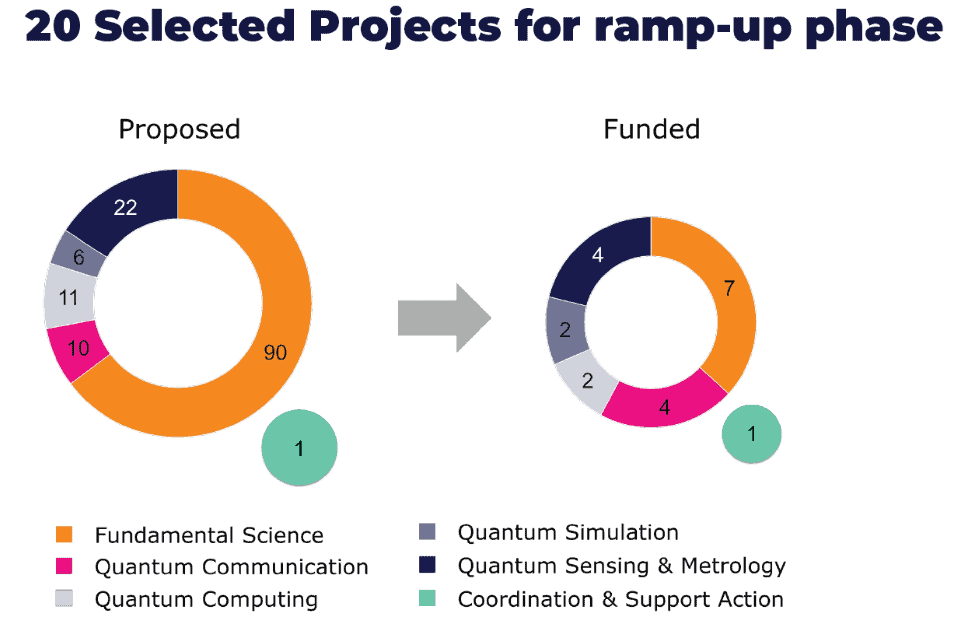
With any finite pot of money, debates about how to spend it are inevitable. At the launch of Europe’s Quantum Flagship, the major flashpoint was an apparent gap between what the academic quantum-science community wants to do, and what the flagship intends to support. Despite the flagship’s emphasis on fostering industrial applications, fully 90 of 140 proposals submitted were in basic science. Of these, only seven received the go-ahead – a far lower percentage than in other categories.
A comparison of the number of submitted (left) and funded (right) proposals in each category of the European Quantum Flagship.
The result was a storm of criticism. During an open-floor debate, Enrique Solano of the University of the Basque Country in Spain undoubtedly spoke for many when he asked, “Is the role of basic science through the flagship to disappear?” By the event’s second day, Nicolas Gisin, a physicist who pioneered quantum-key distribution (QKD) in his lab at the University of Geneva, Switzerland, was semi-seriously suggesting that “the only way to save basic science is to remove it from the flagship” entirely.
In the event’s satellite sessions, however, it emerged that some industry scientists also have concerns – in the opposite direction. Diego Lopez, a senior technology expert at the Spanish telecoms firm Telefonica, worried that the flagship will not help businesses make the transition from classical to quantum communications networks. Stephan Ritter, an applications specialist at the Germany-based laser firm Toptica Photonics, wondered aloud about how to convince people that there was a market for all these exciting new quantum technologies. And Grégoire Ribordy, CEO of the QKD firm ID Quantique (which spun out of Gisin’s lab), pointed out that despite all the discussion about basic science, the flagship’s initial phase does not include any QKD projects at a high TRL – a reference to the NASA-developed “technology readiness level” scale that delineates steps between basic research (TRL0) and operational products (TRL9).
The fundamental problem here was well articulated by Oxsana Mishina of the Technical University of Braunschweig, Germany. During the open debate, she noted that “basic science has a spectrum”, then explained that theorists, experimentalists and prototype developers all have different ideas of what constitutes basic science. The flagship, she suggested, was supporting only the last part of the spectrum. In Ribordy’s view, that is a good thing. “In a sense, the physicists have to let go of their baby to the engineers,” he told me. “It’s never easy to let your children go, and that’s something that is underpinning a lot of the discussions. But the physicists should move to the next quantum thing and not try to do engineering.”
This video highlights the technological firsts and measurement capabilities of the new F71 multi-axis and F41 single-axis teslameters, which are now available to order from Lake Shore Cryotronics. The video focuses on the instruments’ exclusive TruZero technology, designed to eliminate errors and so allow users to measure with confidence, and examines the innovative 2D Hall sensors at the heart of the technology.
These sensors allow for a wider operating temperature range, near-zero planar Hall effect, and better linear performance with more precise measurement of field than previous Hall sensors. The video also explains how Lake Shore has eliminated instrument warm-up time, as well as the teslameters’ intuitive touchscreen interface and unique TiltView screen, which allows for easy operation and viewing – especially when mounted at the bottom of a rack.
Researchers in Russia have developed a new method for diagnosing early-stage skin cancers far more efficiently than current techniques allow. Valery Zakharov and his team at Samara University achieved the result by combining readings from three devices that take a wide variety of spectral measurements of patients’ skin. The researchers believe their work will help to increase rates of successful diagnosis and treatment of skin cancers before they progress to dangerous later stages (Proc. SPIE 10.1117/12.2320483).
Skin cancers, including melanoma, can be treatable once diagnosed, but the rates at which clinicians can currently detect their symptoms are worryingly low. “Even high-tech traditional diagnostic methods are not effective enough,” Zakharov tells Physics World. “The probability of detecting oncology with their help is approximately 70%, and with examination by a doctor, it is no higher than 50%.”
The success of skin cancer treatments strongly depends on when their characteristic symptoms are first spotted. While 98% of patients who are diagnosed with early-stage melanoma are now successfully treated, for example, this figure drops to just 15% for those first treated when in the fourth stage of the disease.
“The effectiveness of therapy and cure increases many times when the disease is detected in the early stages,” Zakharov continues. “Prompt diagnosis allows a much less traumatic and highly effective treatment. The main problem is that most people go to the doctor too late, when the situation is becoming critical.”
To address this issue, Zakharov and colleagues aimed to develop new technologies that can efficiently detect early-stage skin cancers, without the need for flawed human intuition or invasive methods. “It would be more effective to quickly and accurately check a large number of people for the presence of a potential threat of cancer at the prevention stage,” he says. “Therefore, we set a goal to create a device that can accurately diagnose oncology in the early stages at a reasonable cost of the analysis.”
The researchers created their apparatus by combining the measurements of three portable, user-friendly imaging devices, each of which can take different spectral measurements of a patients’ skin cells. The first device could differentiate between malignant melanoma and other types of skin cancer by measuring the Raman scattering from tissue irradiated with a 785 nm laser, the spectrum of which varies depending upon the characteristic properties of each type of tumour.
Secondly, a dermatoscope uncovered the visual features of each tumour by illuminating them with the same laser, revealing characteristic anomalies in melanin distribution, haemoglobin and capillary structures in patients’ skin. Finally, a hyperspectral camera rapidly obtained many skin absorption spectra in the 800–950 nm range, further revealing the characteristic optical properties of abnormal skin growths.
By combining these measurements, Zakharov’s team could easily identify both healthy and cancerous skin cells, while differentiating between specific pathological changes. This allowed them to diagnose particular skin cancers quickly and accurately, without the need of chemical agents or other invasive, often ineffective techniques.
Over 400 patients have now been examined using the equipment over several months at Samara University. So far, these examinations have proven remarkably successful, with the team reporting a 97% efficiency in their early-stage skin cancer diagnoses.
“We have achieved our goal: our device is easy to use, affordable and medical facilities that conduct preventive examinations can be equipped with it,” Zakharov concludes. In the future, the researchers hope to improve their technique further by integrating fibre optics into their device, allowing them to diagnose tumours affecting internal organs, including the lungs and intestines.
US researchers studying high-temperature cuprate superconductors outside the superconducting regime have used cutting-edge X-ray scattering to detect long-predicted – but never previously observed – excitations called plasmons perpendicular to the material’s atomic planes. Researchers hope the findings may help theorists to understand these highly unusual materials better, and perhaps even guide the quest for room-temperature superconductors.
The cuprate superconductors are archetypal “strongly correlated” materials, which are difficult to describe using current approximate models. “In most theories we have today you try to catch the main interaction and treat the others as a small perturbation,” explains condensed matter physicist Wei-Sheng Lee of Stanford University in California, “But for these strongly correlated materials, all the interactions are equally important.”
The materials therefore baffle theoreticians. For example, whereas the established BCS theory of superconductivity predicts that the property should disappear above about 30 K, some cuprates remain superconducting at temperatures up to 130 K. Something seems to preserve the superconducting state at relatively high temperatures, but what it is remains unclear.
I suspect acoustic plasmons may be a necessary, but not sufficient, condition for high-temperature superconductivity
Ivan Božović, Lawrence Berkeley National Laboratory
The crystal structure of cuprate superconductors comprises well-defined planes of copper and oxygen atoms, as well as various dopants. In the non-superconducting state, they show much higher electrical conductivity along the planes than perpendicular to them. Each plane effectively contains its own two-dimensional electron gas, which means that researchers studying a material’s electrical properties often consider only a single plane. When the materials become superconductors, however, they show zero resistance in all directions. Some theorists have therefore suggested that the secret to high-temperature superconductivity may lie not within the planes but in the coupling between them.
Researchers such as Vladimir Kresin of Lawrence Berkeley National Laboratory and Ivan Božović of Brookhaven National Laboratory, both in the US, have suggested the inter-layer coupling could be mediated by quasi-particles called plasmons, which are formed from collective oscillations in the materials’ electron density. These could mediate the Coulomb interaction between the conductive planes, without electrons moving from one plane to the next. Actually detecting such plasmons, however, has previously proved impossible. Some experiments have revealed plasmons within the copper-oxide planes, but not between them.
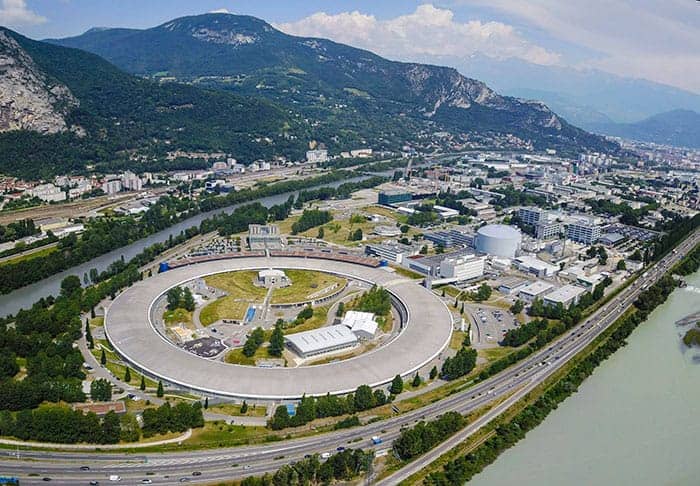
The European Synchrotron in Grenoble
In the new research, therefore, Wei-Sheng Lee and colleagues at Stanford University and elsewhere used a technique called RIXS (resonant inelastic X-ray scattering) to excite the plasmons. The technique advances the principles of traditional X-ray scattering, exploiting the ability of modern synchrotron radiation sources to produce a beam of X-ray photons with well-defined, tunable, energy and momentum.
The researchers bombarded samples of the electron-doped cuprate LCCO (lanthanum cerium copper oxide), held above its transition temperature, with X-ray photons from the European Synchrotron Radiation Facility in Grenoble, France. They varied the energies of incident photons and their momenta perpendicular to the copper-oxide planes, and then measured the effect on the proportion of photons absorbed by the sample, and the energies, momenta and polarizations of the scattered photons.
These experimental results were consistent with models that assume the planes interacted through acoustic plasmons. There was a clear absorption resonance, for example, at photon energies that would have excited a plasmon wavelength equal to the distance between the copper-oxide planes.
Raising the transition temperature
The researchers now plan to study hole-doped superconductors, some of which have been found to have higher transition temperatures than electron-doped ones like LCCO. “For electron-doped materials, it’s hard to investigate how the plasmons change as you go to the superconducting state because the transition temperature is much lower,” explains Lee. “But for hole-doped cuprates, the transition temperature is generally higher. Therefore it should be easier for us to investigate first whether this phenomenon is universal in the cuprate family and secondly how it changes as you enter a superconducting state. Hopefully we might get a clue about how to make a superconductor with an even higher transition temperature.”
Ivan Božović is intrigued: “I suspect acoustic plasmons may be a necessary, but not sufficient, condition for high-temperature superconductivity,” he says. He notes that a number of other materials such as nickelates, cobaltates and iridates have very similar structures to the cuprates but have shown no superconductivity at any temperature. He suggests it would be interesting to repeat the experiments with these materials to look for evidence of plasmons “Let’s see what’s common and perhaps what’s different,” he says.
“This puts on the map the peculiar, layered two-dimensional nature of these materials,” says Dirk van der Marel of the University of Geneva in Switzerland. “From that you get an entirely different interaction between the electrons. The ideas that this could be the source of the superconductivity have been worked out in some detail by the Nobel prize winner Tony Leggett, and I think this gives more fuel to those.”
On the outskirts of Paris, eight metres below ground in a climate-controlled vault, sits a 143-year-old platinum alloy cylinder. Standing just 39 mm tall, it has never been touched by human hands. Like a delicate Russian doll, the cylinder is caged inside three nested glass bells in a room that can be accessed only with three keys kept by three different people. Surrounding the mysterious object are “the witnesses”: six “identical” cylinders cast from the same platinum alloy.
Though preservation efforts rival those of the Turin Shroud, the cylinder is not a sacred religious object. It is the International Prototype Kilogram (IPK), the one and only true kilogram against which all others are measured. Housed in the Pavillon de Breteuil – home to the International Bureau of Weights and Measures (BIPM) – the IPK will soon lose its unique status and become a relic of a bygone age. It will then be as quaint as the International Prototype Metre (IPM) – a platinum alloy bar also housed at the BIPM – that served as the world’s official metre until 1960.
On 16 November 2018 metrologists and policy-makers from 60 countries around the world will gather at the General Conference on Weights and Measures (CGPM) in Versailles, France. Nothing unusual there, as the meeting convenes once every four years to discuss budgets and issues in metrology. But this meeting will be special. Member states will be voting on whether to adopt the most sweeping change to the International System of Units (Système International, or SI) since its inception in 1960. It is a change that will include new definitions of the kelvin, ampere and mole, but perhaps most significantly the kilogram.
Each member state will cast its one vote in a process that will be streamed live online. If the change is ratified (and all the signs are that it will be) the event will mark the end of basing units on objects – a practice dating back millennia. It will also finally fulfil a wish first voiced by James Clerk Maxwell, who predicted that measurement standards might somehow be defined by immutable constants of nature.
A solid foundation
Speaking at a meeting of the British Association for the Advancement of Science in Liverpool in 1870, Maxwell told delegates that “If…we wish to obtain standards of length, time and mass which shall be absolutely permanent, we must seek them not in the dimensions, or the motion, or the mass of our planet, but in the wavelength, the period of vibration, and the absolute mass of these imperishable and unalterable and perfectly similar molecules.”
With insiders seeing no hint of a negative outcome at the BIPM meeting this month, it is safe to assume that the resolution to reform the SI will pass unopposed and Maxwell’s desire for “absolutely permanent” standards will be realized. The new SI will then officially come into effect on 20 May 2019, precisely a dozen dozen (144) years after the first international treaty on units of measurement – the Metre Convention – which was signed on the same day in 1875. But why is it so important that units are based on constants of nature?
Units have been a staple of society since at least the time of the ancient Egyptians. They used different parts of the human body or objects in their environment as scales by which to measure things. Yet these standards could be wildly different from place to place. For natural philosophers in 17th- and 18th-century Europe, unit variability – particularly in length and mass – made it almost impossible to compare results for the same physical phenomenon if it had been measured in different places.
Various attempts were made at creating a universal measure and in 1799 France introduced the metric system, based on two units – the metre and the kilogram. Known as the Metre of the Archives and the Kilogram of the Archives, these two platinum artefacts were stored at the Archives Nationales in Paris to legally and practically define the units. These standards stood for 90 years until they were replaced by the IPM and IPK, which were physically harder and better designed.
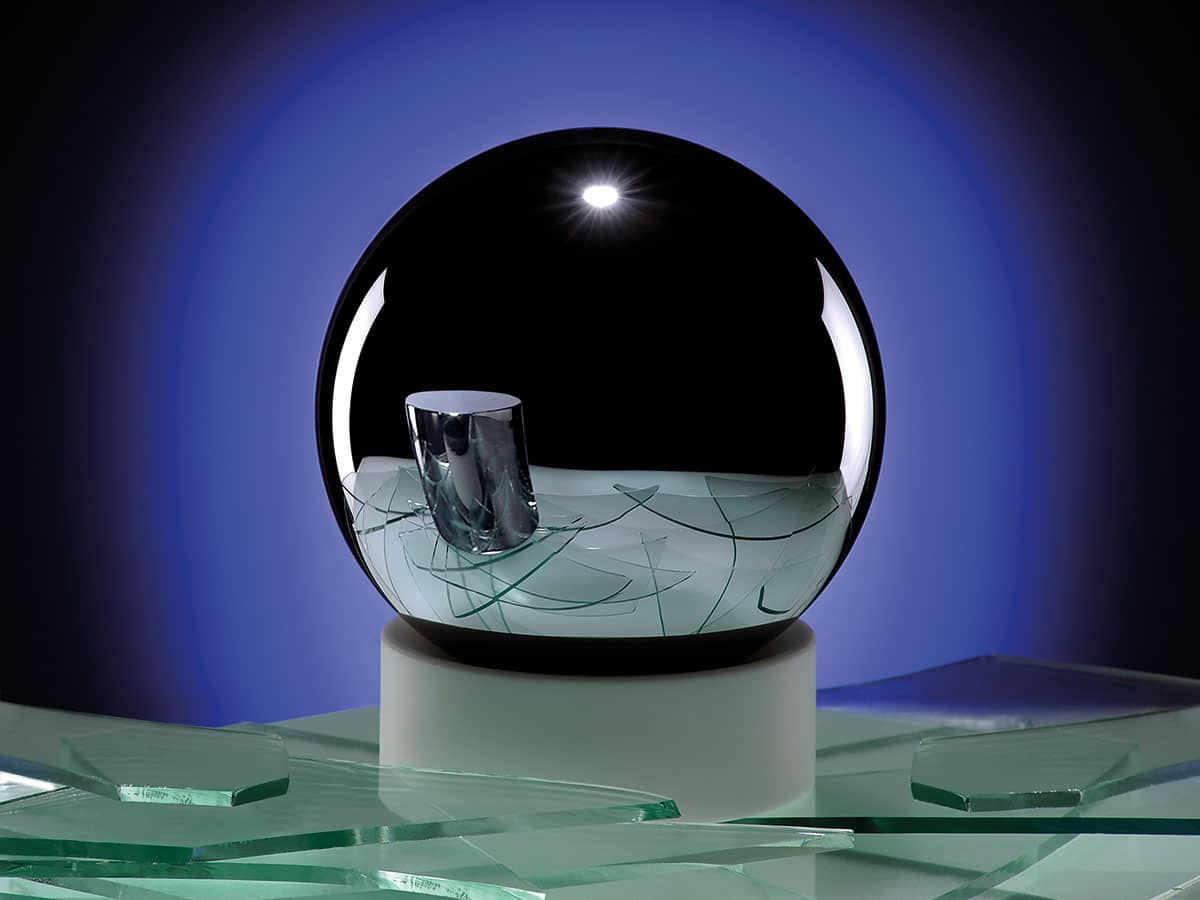
Precision physics: For the SI redefinition, several measurements of silicon spheres were used to determine the Avogadro constant. (Courtesy: Physikalisch-Technische Bundesanstalt/www.ptb.de)
Universal thinking
SI units have become entwined in science. From the energy-defining joule to the katal for measuring catalytic activity, all 29 named SI units can be defined by some combination of just seven base units: the second, metre, kilogram, ampere, kelvin, mole and candela. But as science became ever more precise in the 20th century, a new problem reared its head. Any unit based on something – an object, experiment or phenomenon – that is not universal will be unstable.
Consider the second. It is historically linked to the revolution of the Earth, which is defined as taking 24 hours, where an hour is 60 minutes, and a minute is 60 seconds. But what happens if the Earth starts to rotate more slowly, as it is doing albeit ever so slightly? A day will be longer, meaning a second will be longer in real terms too. It means a car registering 30 km/h will actually be travelling a little slower, a 30 W bulb will be a little dimmer and, even more absurdly, the universe will be expanding at a different rate.
If, however, the notion and duration of a second are kept but the Earth’s rotation is removed from the definition and replaced with something that never changes wherever and whenever it is measured in the universe, the second becomes stable. This was done in 1967, when the second was redefined as 9,192,631,770 times the period of the radiation corresponding to the transition between the two hyperfine levels of the ground state of the caesium-133 atom, Δν (see “A brief history of time-keeping” by Helen Margolis).
Later, in 1983, the metre was also redefined, as the length of the path travelled by light in vacuum during a time interval of 1/299,792,458 seconds. The exquisite precision with which scientists have since been able to measure time and distance has benefited society, not least by leading to satellite-based positioning systems, notably GPS.
Planck to the rescue
Despite having served society well for 143 years, defining the kilogram in terms of a single object is an inherently unstable notion. That’s because if the IPK becomes lighter or heavier, even by a tiny amount, the mass of the universe expressed in kilograms changes too – a mad proposition. Rather worryingly, the IPK has been changing. When metrologists measured it in 1988–1991, the IPK had a mass around 50 μg less on average than the six witnesses. By definition, this means that the witnesses had gained a tiny amount of mass somehow, perhaps by absorbing air molecules. But more probable – given that many national copies of the kilogram also appeared to be gaining mass – is that the IPK had lost mass. Or perhaps they had all gained or lost mass, just at different rates.
Metrologists saw no further drift between the IPK and the witnesses from 1991 until 2014, the last time measurements were made. But the fact there was no drift didn’t mean the mass of the IPK or the witnesses had not changed. They may simply have been losing or gaining mass in tandem. And that’s the problem: there is no way of telling because mass is always calibrated against the IPK.
“With the revised SI, we won’t have to worry about this stuff,” explains Richard Davis, a former head of the BIPM’s mass division who is now a consultant to the bureau. Instead of being defined by the mass of a cylinder of metal, in the new SI the kilogram will be based on a fundamental constant of quantum physics: the Planck constant.
Named after Max Planck, who developed the idea that energy comes in small packets called quanta, the Planck constant, h, relates the energy of one quantum of electromagnetic radiation to its frequency by the famous formula E = hν. The Planck constant is in turn linked to mass via Einstein’s E = mc2. Currently, h has a measured value of approximately 6.62607 × 10⁻³⁴ m2 kg s–1, but metrologists now want to fix its value in stone, with the kilogram defined in terms of this value.
It’ll therefore be goodbye to the IPK, which is a physically unstable object, and goodbye to uncertainty in the value of Planck’s constant. “After the redefinition, the unwavering Planck’s constant is fixed to a value, while the uncertainty is more appropriately shunted to the mass of the IPK,” says Stephan Schlamminger, a metrologist from the National Institute of Standards and Technology, US. “And with a fixed Plank constant, better devices will be able to realize a kilogram more and more precisely.”
Watt do you mean
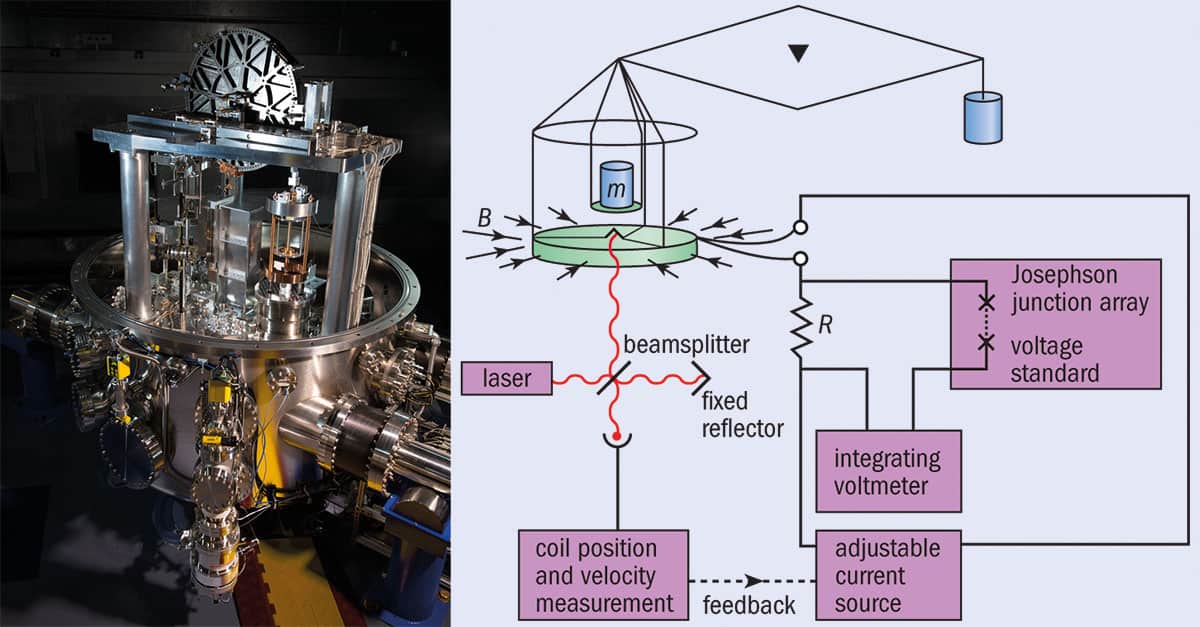
To start off on the right foot, it is important that the value at which Planck’s constant is fixed is measured as precisely as currently possible. This responsibility rests on measurements from two very different types of experiments. The first of these is called a Kibble balance, formerly called a watt balance but now renamed in honour of its inventor Bryan Kibble from the UK’s National Physical Laboratory, who died in 2016. Currently, only France, Canada and the US have Kibble balances capable of making the measurements needed to fix the Planck constant. However, many others are working on building balances of their own. Like a hi-tech set of scales, the Kibble balance uses electromagnetic forces provided by a coil of wire immersed in a magnetic field to balance a kilogram mass. The equipment lets metrologists take accurate values of current and voltage, from which the Planck constant can be derived (see box below).
The Kibble balance
(Courtesy: Jennifer Lauren Lee/NIST)
What is it? The Kibble (or watt) balance consists of a circular, horizontal coil of wire of length, L, hung from one arm of a balance. The coil is placed in a strong magnetic field, B, and an electric current, I, is passed through it generating a force, F = BIL, that can be adjusted to equal the weight of a mass placed on the same arm of the balance (mg). The mass is then given by m = BIL/g.
What’s the problem? Although I can be measured accurately, it’s hard to do the same for B and L.
So what’s the solution? Metrologists remove the mass and move the coil at speed u in the magnetic field to generate a voltage V = BLu. The device is termed a watt balance because, by rearranging the two equations, electrical power (VI) is balanced by mechanical power (mgu). In other words, m = VI/gu. As u is easy to measure and g (the acceleration due to gravity) is well known, the problems with measuring B and L have disappeared.
But what’s the link with the Planck constant, h? That’s the clever bit. The current is determined by passing it through a resistor and using the Josephson effect to measure the resulting drop in voltage. This effect describes the fact that if two superconductors are separated by a thin insulator, pairs of electrons in each layer couple so that microwave radiation of frequency, f, creates a voltage across the layer of V = hf/2e, where e is the charge on the electron. The resistance of the resistor can be measured because the electron flow in 2D systems at ultralow temperatures is quantized, with the conductivity increasing in multiples of e2/h.
So why is this good for metrology? Until now, a Kibble balance measured h in SI units. But when the definition of the kilogram is changed, the numerical value of h will be fixed in stone, allowing anyone to use the balance to measure mass with exquisite precision.
The second way of measuring h is called X-ray crystal density (XRCD) or the Avogadro experiment. It involves a uniform crystal of silicon-28 atoms that has been machined into almost a perfectly round 1 kg sphere. Using optical interferometry, metrologists first calculate the overall diameter – and hence the volume – of the sphere. Then, by combining optical interferometry with X-ray analysis, they can calculate the spacing between atoms, the volume each occupies, and thus the total number of atoms in the sphere. Finally, by weighing the sphere, they can determine the Avogadro constant. This approach defines how many atoms or molecules there are in one mole of a substance – a quantity quite different to mass, which will now define the mole itself. An equation from atomic physics that links the Avogadro and Planck constants then allows a precise value of the latter to be captured.
Laboratories across the world have used these two different techniques to measure the Planck constant with extraordinary precision to give a final, agreed value of 6.626,070,150 × 10–34 kg m2 s–1, with a relative uncertainty of only 10 parts per billion (2018 Metrologia55 L13). As for the Avogadro constant, it will be fixed at 6.022,140,76 × 1023 mol–1. And once the Planck and Avogadro constants are fixed, the complex experiments from which they were derived can be used as standards for measuring a kilogram and a mole.
Practical impact
The easiest way to spell out how this will work is to consider the Kibble balance. Until now, it has been used to measure accurate values of current and voltage that are then plugged into equations to yield the Planck constant. In the future, the Planck constant will be a fixed value and those same measurements will instead yield the mass on the balance. In other words, anyone with access to a Kibble balance can realize a perfect kilogram. The same principle will apply to the ampere and kelvin too, which will in future be given in terms of the charge on an electron, e, and the Boltzmann constant, k, respectively. Equipment designed to precisely measure these fundamental constants will now be turned on their heads to accurately realize the ampere and kelvin units (see box below). As for the metre, second and candela, their definitions will be tweaked but will remain effectively unchanged.
Out with the old, in with the new
SI mass unit: kilogram
Old: The kilogram is equal to the mass of the International Prototype Kilogram.
New: The kilogram (kg) is defined by taking the fixed numerical value of the Planck constant h to be 6.626,070,150 × 10–34 when expressed in the unit J s, which is equal to kg m2 s—1, where the metre and the second are defined in terms of c and ∆ν.
Translation: The kilogram will be defined in terms of Planck’s constant instead of the mass of a cylinder of metal called the International Prototype Kilogram.
SI electric current unit: ampere
Old: The ampere is that constant current which, if maintained in two straight parallel conductors of infinite length, of negligible circular cross-section, and placed 1 m apart in vacuum, would produce between these conductors a force equal to 2 × 10⁻⁷ N per metre of length.
New: The ampere (A) is defined by taking the fixed numerical value of the elementary charge e to be 1.602,176,634 × 10–19 when expressed in coulombs, which is equal to A s, where the second is defined in terms of ∆ν.
Translation: The ampere will be defined in terms of how many elementary electrical charges pass per second instead of by an imaginary and impossible experiment involving the force between two infinite parallel, current-carrying wires.
SI amount of substance unit: mole
Old: The mole is the amount of substance of a system that contains as many elementary entities as there are atoms in 0.012 kg of carbon-12.
New: The mole (mol) contains exactly 6.022,140,76 × 1023 elementary entities. This number is the fixed numerical value of the Avogadro constant, NA, when expressed in the unit mol–1 and is called the Avogadro number.
Translation: The mole will be defined in terms of a specific number of atoms or molecules, rather than by a quantity intimately connected to measuring the mass of a sample.
SI thermodynamic temperature unit: kelvin
Old: The kelvin, unit of thermodynamic temperature, is the fraction 1/273.16 of the thermodynamic temperature of the triple point of water.
New: The kelvin (K) is defined by taking the fixed numerical value of the Boltzmann constant k to be 1.380,649 × 10—23 when expressed in the unit J K1, which is equal to kg m2 s—2 K1, where the kilogram, metre and second are defined in terms of h, c and ∆ν.
Translation: The kelvin will be defined through the constant relating thermodynamic temperature to energy (Boltzmann’s constant), instead of by the point at which water coexists as a liquid, gas and solid.
Outside metrology, the new SI will have little immediate practical consequence, and will go unnoticed by most people. After all, the units may be defined differently, but the goal is always to keep their size the same. Yet defining the kilogram, kelvin, ampere and mole in entirely new ways based on constants of nature makes them invariant, accessible and practical. Therefore, scientists will be able to measure them at any place or time, and on any scale.
“For the first time, we will be able to measure tiny and huge quantities with the same very high precision because the fundamental constants don’t care about a scale,” adds Schlamminger. This is important. Before the metre was redefined, length could be measured only very precisely around a metre. But since its redefinition, high-precision applications like microelectronics have benefited enormously from the accuracy with which they can measure distance at tiny scales.
Similarly, the new kilogram will allow a kilogram, gram and milligram to be measured with identical precision, even to the point that atomic masses will be measured in kilograms. As long as there is an experimental connection to the Planck constant, mass will be able to be measured. Therefore, metrologists are racing to build tabletop Kibble balances and new devices that measure mass exactly at scales big and small. So the new mass unit and SI units generally are finally fit for the 21st century, and will remain so long into the future. As Schlamminger aptly concludes: “The new SI is a construction of beauty and logic.”
For more on the new SI definitions, check out the free-to-read Physics World Discovery ebook Redefining the Kilogram and Other SI Units by Stephan Schlamminger at www.physicsworlddiscovery.org
The Bank of England has announced that a scientist will be the new face of the £50 note. The note currently features the steam-engine pioneers James Watt and Matthew Boulton. But the bank has now asked members of the public to put forward suggestions for the face of the new polymer version with the only criteria being that the scientist is British and not alive.
Some early frontrunners include Dorothy Hodgkin – the only British woman to win a science Nobel prize – as well as Rosalind Franklin, who was instrumental in decoding the structure of DNA. Taking to Twitter, however, the particle physicist and TV personality Brian Cox put his weight behind Stephen Hawking, who died in March. “[Hawking] made invaluable contributions over half a century to our understanding of cosmology, the early universe and black holes,” notes Cox. “He also inspired thousands of scientists and millions of people, me included, through his books and lectures.”
Nominations, which can be made here, will be open until 14 December. A committee will then create a shortlist before making a final decision next year. It is not known when the new note will enter circulation, but it will be released after the new polymer £20 note in 2020 that will feature the painter JMW Turner.
Moving on to astronomy. Members of the International Astronomical Union (IAU) have voted in favour of changing the name of Hubble’s law. It will now be called the Hubble-Lemaître law to honour the contribution of the Belgian astronomer Georges Lemaître.
Born in 1894, Lemaître was a Catholic priest who taught at the Catholic University of Leuven. He published a paper on the expanding universe in 1927 – two years before Hubble’s more thorough account was published. Lemaître’s original paper was in French but when it was translated to English in 1931 key parts were missed out meaning that his contribution was overlooked for years.
Of the 4060 astronomers that voted in the IAU’s ballot, 78% were in favour of the change. The IAU is responsible for naming planets and moons as well as overseeing astronomers’ catalogue of star names. Yet it has no official mandate over the names of laws, so whether the change will be widely implemented remains to be seen.
Finally, this year’s winner of the Great British Bake Off is optical engineer Rahul Mandal. He was crowned 2018 champion this week after a dramatic final, in which he had to restart the last challenge – to create an “edible landscape” – after a glass jar shattered, spraying shards across his workbench.
Mandal moved to the UK in 2010 from India to begin a PhD in optical metrology at Loughborough University. Since 2015, Mandal has been a research associate at the University of Sheffield’s Nuclear Advanced Manufacturing Research Centre where he develops techniques to inspect components for contamination or flaws.
Speaking to BBC Radio 4, Mandal says that his baking is “quite sciency”. “I think baking is a science,” he adds. “It’s physics, chemistry and engineering.”
What if you could take cancer’s natural activity in the human body and turn it back on itself? That’s the premise behind RefleXion, which made its debut at last week’s ASTRO Annual Meeting with a PET-guided radiation therapy system.
Calling its technology biology-guided radiation therapy (BgRT), RefleXion’s system combines a PET/CT scanner housed with a linear accelerator in an oversized gantry. The premise is somewhat simple: As tumours give off photons from radiopharmaceutical uptake, those photons are detected by the system’s PET component. The linear accelerator takes that signal and then fires back photons of its own, designed to kill cancer in precisely targeted doses.
The biology-guided radiation therapy system from RefleXion.
The primary advantage of the system is that it can deliver treatment to multiple cancer sites at once, which is key in treating metastatic disease along with the primary tumour, according to Sam Mazin, RefleXion’s founder and chief technology officer. The RefleXion system can treat five to 10 cancer sites in a single session, versus one to three sites for a conventional radiation therapy unit. While BgRT is best suited for metastatic disease, it can also be used for single-site cancer.
Mazin believes that PET is uniquely suited for guiding radiation therapy, as the modality detects the biological activity of cancer rather than just its structural outline. Also, thanks to PET guidance, there’s no need for fiducial markers, motion management, or gating to guide treatment. The system’s gantry also rotates much faster than in a conventional radiation therapy system, at 60 RPM, versus 1 to 6 RPM for a conventional linear accelerator.
The RefleXion system is fully automated in targeting sites for treatment, which raises the question of how the unit deals with nonspecific radiation uptake — that is, radiotracer signal that appears outside of a tumour due to natural biological activity. The solution is simple: Prior to treatment sessions, users draw boxes on CT planning images that confine the system’s treatment to predefined areas. The process also helps automate workflow.
Mazin conceived the BgRT technology while he was a postdoctoral fellow at Stanford University 10 years ago. He founded RefleXion in 2009, with ASTRO 2018 marking the firm’s coming out party. A network of 11 sites are working with its software; when full gantries are available, it plans to install working systems at three to four locations.
RefleXion has also begun staffing up, hiring five new executives earlier this month, including a chief financial officer and several vice presidents to spearhead manufacturing and operations efforts. The Hayward, CA, firm has raised money through several investment rounds to commercialize the technology, and it counts among its investors pharmaceutical giants such as Pfizer and Johnson & Johnson.
RefleXion plans to file a 510(k) application with the US Food and Drug Administration by the end of 2018, with sales beginning in late 2019.
Some of the planet’s most historic sites could by 2100 face damage or outright destruction in a warming world. Scientists who surveyed 49 World Heritage Sites in the Mediterranean report that 47 of them are at some degree of risk from future sea level rise.
As ever-higher levels of carbon dioxide enter the atmosphere to warm the planet, so global sea levels creep ever higher. And this constant threat of attrition by ever-higher tides and storm surges poses an ever-higher risk to a suite of cities, sites and ruins declared by UNESCO, the UN Educational, Scientific and Cultural Organisation, to be of global importance, and in need of careful preservation.
The locations most at risk include the city of Venice, the medieval city of Rhodes, the old city of Dubrovnik, and the ruins of Carthage in Tunisia.
The researchers considered the hazard of what is now a once-in-a-century storm surge occurring, as the seas rise by almost 1.5 metres by 2100. By then, they found, storm surges that now occur once a century could be happening several times every year.
Increasingly, coastal flooding and erosion could damage, deface or completely obliterate landmarks that played a pivotal role in world history. All the sites have important intangible value as icons of civilisation; many of them are popular tourist destinations, and their disappearance could only mean huge economic losses as well.
Such studies are launched to alert governments, civic authorities and communities to the need for action. Venice, in particular, has been a subject of national and international concern for decades. The surprise in the latest research, in the journal Nature Communications, is that of the 49 sites investigated, 37 are vulnerable to storm surge, 42 to coastal erosion − and many of them to both.
“In the Mediterranean, the risk posed by storm surges, which are 100-year storm surges under today’s conditions, may increase by up to 50% on average, and that from coastal erosions by up to 13% − and all this by the end of the 21st century under high sea level rise,” said Lena Reimann of Kiel University in Germany, who led the study.
“Individual World Heritage Sites could even be affected much more, due to their exposed location.”
Low-lying coastal sites
The researchers started with a database of all the low-lying UNESCO coastal sites: they noted the distance of each site from the coast, whether the terrain was rocky or sandy, and the chance that a build-up of silts from the Nile, the Rhone or the Po rivers might offer protection. They took as their danger baseline a predicted 1.46 m rise in the level of the Mediterranean by the century’s end.
A rise as high as this has a low probability, but cannot be ruled out. And since the stakes are high − a city like Venice cannot be relocated, and the engineering challenge of protecting its lagoon from flooding is huge − even a one-in-20 hazard is taken seriously.
The latest study warns that by the end of the century, only two of the 49 sites would be at risk from neither erosion nor flooding. And more than 90% of the sites identified are, the researchers say, already at risk under current conditions, “which stresses the urgency of adaptation in these locations.”
And, they say, action and adaptation should start now. There are plenty of other historic sites to think about.
“Cultural heritage not inscribed in the World Heritage list will receive much less attention and many of these heritage sites will slowly disappear with sea level rise, even though these sites are important parts of human history as well,” they conclude.