Further evidence that a giant moon the size of Neptune is orbiting a Jupiter-sized planet 4000 light-years away has been put forth by astronomers using the Hubble Space Telescope.
Hints of what could be the first known exomoon (moon outside the Solar System) first came to light in 2017, after Alex Teachey and David Kipping of Columbia University in New York found some unusual behaviour in its parent planet, Kepler-1625b. NASA’s Kepler Space Telescope discovers planets by watching for the small dip in starlight as the planet moves across the face of its parent star. These dips are periodic as the planet orbits the star, but Kepler-1625b’s transits seemed out of kilter. Sometimes the transits would occur a little earlier, or a little later, than predicted.
Such events are called transit timing variations (TTVs). They are usually seen in compact planetary systems, such as those around red dwarf stars, where the planets are very close together and are able to gravitationally tug upon one another to affect the timing. However, Kepler-1625 is a Sun-like star and there is no evidence for another nearby planet. Some other object is therefore pulling on Kepler-1625b, with Teachey and Kipping reasoning that it must be a moon. The only snag is that to impart such a large TTV, the moon must have a mass similar to Neptune.
Complex motions
Despite the exomoon’s huge size, proving its existence has been difficult. This is partly because the transits of moons are more complex than planets, says Teachey, who points out that “the moon can show up before the planetary transit, or after, but never in the same place twice, unless you observe a large number of transits”.
The planet’s wide orbit means that Kepler only saw three transits of the planet during its original four-year mission. The system appears faint in the sky so no ground-based telescopes have been able to make follow-up observations. So enter the Hubble Space Telescope.
Using Hubble for 40 h in October 2017, Teachey and Kipping were able to observe another transit of the planet with the space telescope’s greater resolution, which is four times sharper than Kepler’s. Sure enough, the planet was observed to transit 77.8 min late, but most intriguingly there was a hint of a smaller object transiting just after the main transit of the planet had ended. This secondary transit could be a exomoon.
Inclined orbit
Teachey and Kipping compared the observations to a range of various models – including some that did not include a moon – that could potentially explain the data. They found the best match to be a Neptune-sized exomoon, named Kepler-1625b i, on an inclined orbit at a distance of 35 to 45 planetary radii from Kepler-1625b.
“I’m not sure if we can call it ‘surprising’, since we have no other examples of exomoons so far, but I didn’t expect to find an inclined moon,” says Teachey. This inclination of 45° to the orbital plane of the planet is far greater than the 5.1° inclination of Earth’s Moon. It could be a hint as to the exomoon’s origin. However, given that the existence of such a large, oddball moon had not even been predicted until now, astronomers will struggle to explain how it got there.
An obvious question is: can an object with the diameter and mass of Neptune truly be classed as a moon, or is the pair a ‘double planet’? The location of the centre of mass in the system may define this, but Teachey is nonplussed about the debate.
“The mass ratio that we derive [between the moon and the planet] is only about 1.5%, so I’d call it a moon,” he says. “But I’m not too hung-up on this distinction – it’s a semantic argument as far as I’m concerned.”
Dearth of detections
Astronomers have been sifting through data from Kepler for evidence of exomoons since the planet-finding mission launched in 2009. Kepler-1625b i is the first to be claimed, but the long wait and dearth of other detections has “not surprised” Michelle Hill of the University of Southern Queensland, Australia, who earlier this year was the lead author of a paper calculating the possibility that there could be more moons in habitable zones around stars than there are planets.
“I feel we are on the cusp of an era of exomoon detection and that once our instrument sensitivity improves there will be a wealth of moon detections,” says Hill. That could begin with NASA’s new Transiting Exoplanet Survey Satellite (TESS) mission, which is charged with looking at much brighter stars in the sky, and could offer better opportunities for spotting exomoons.
Researchers have discovered a way to place light-absorbing nanoclusters of gold inside a non-photosensitive bacterium to produce a catalytic photosynthetic biohybrid that can generate fuel from sunlight. The new system generates a higher yield of chemical products than a previous model and works continuously for several days.
During photosynthesis, plants harness solar radiation and convert it into energy. Most artificial photosynthesis systems try to mimic this natural process. “Photosynthetic biohybrid systems, for example, aim to link preassembled biosynthetic pathways with inorganic light absorbers,” explains Peidong Yang of the University of California at Berkeley, who led this research effort. “This strategy makes use of both the light-harvesting efficiency of solid-state semiconductors with the superior catalytic performance of whole-cell micro-organisms.”
Non-photosensitive bacterium carries out artificial photosynthesis
In their new work, Yang and colleagues have used ultrasmall gold nanoclusters as biocompatible photosensitizers and placed them inside a non-photosynthetic bacterium, M. thermoacetica. The researchers are familiar with this micro-organism since they had already studied it as the first ever non-photosensitive bacterium to carry out artificial photosynthesis. “In this previous work, we attached light-absorbing nanoparticles made of cadmium sulphide (CdS) to the bacterial membrane and turned M. thermoacetica into a tiny photosynthetic machine that converts sunlight and carbon dioxide into useful chemicals,” says Yang.
“We have now found a way to place light-absorbing gold nanoclusters (AuNCs) inside the bacterium and have made a catalytic biohybrid that yields a higher quantity of chemical products than its predecessor.”
The researchers originally chose CdS because it absorbs visible light. This semiconductor is toxic to bacteria, however, so the nanoparticles had to be attached extracellularly to the bacterial cell membrane. When sunlight excites a CdS nanoparticle, an electron is generated and this electron then passes through the cell wall before being injected into the CO2 reduction cycle inside the bacterium.
“As these photogenerated electrons travel though the bacterium, they interact with multiple enzymes to trigger a cascade of reactions that eventually turn CO2 into acetic acid, which is a valuable chemical intermediate for making solar fuels,” says Yang. “However, in the extracellular setup, the electrons end up interacting with other chemicals that play no part in this important CO2 reduction process. As a result, some electrons are lost during this transfer process and never reach the enzymes.”
Intracellular photosensitization
“To improve the bacterium’s ability to produce acetic acid from CO2 each time it gains an electron (a performance metric also known as its ‘quantum efficiency’), we used another semiconducting material in the form of Au22nanoclusters,” he tells Physics World. “This material also efficiently absorbs light but we can place it inside the bacterium and so photosensitize its interior. The electrons from these intracellular Au nanoclusters can be directly passed onto the so-called Wood–Ljungdhal CO2 reduction pathway, so bypassing the problems encountered in our previous system.”
And that is not all: the AuNCs also inhibit reactive oxygen species (ROS) such as H2O2and OH, which are generated from the photooxidative process associated with this photosynthesis. “As these ROS accumulate, they become harmful for the bacteria. Inhibiting these ROS thus allows the micro-organisms to remain viable for a longer period (six days) and continuously produce biofuel over this time,” says Yang.
The 2018 Nobel Prize for Chemistry has been awarded to Frances H Arnold, George P Smith and Gregory P Winter for “harnessing the power of evolution”. Arnold takes half the prize for “the directed evolution of enzymes”, which may be used to produce catalytic proteins that enable safer greener industrial chemistry for pharmaceuticals and green fuels. Smith and Winter take a quarter of the prize each for “the phage display of peptides and antibodies”, which may be used to produce human antibodies that may be used to neutralize toxins, counteract autoimmune diseases and treat metastatic cancer.
Frances H. Arnold was born in Pittsburgh in the US in 1956 and completed her PhD at the University of California, Berkeley in 1985. She is currently the Linus Pauling Professor of Chemical Engineering, Bioengineering and Biochemistry, at the California Institute of Technology, Pasadena, USA.
George P. Smith was born in 1941 in Norwalk, in the US. He received a PhD in 1970 at Harvard University in the US, and is currently the Curators’ Distinguished Professor Emeritus of Biological Science at the University of Missouri in the US.
Sir Gregory P. Winter was born 1951 in Leicester, UK. He studied for his PhD at the University of Cambridge, UK, graduating in his doctorate in 1976. He remains at Cambridge as research Leader Emeritus, at the MRC Laboratory of Molecular Biology.
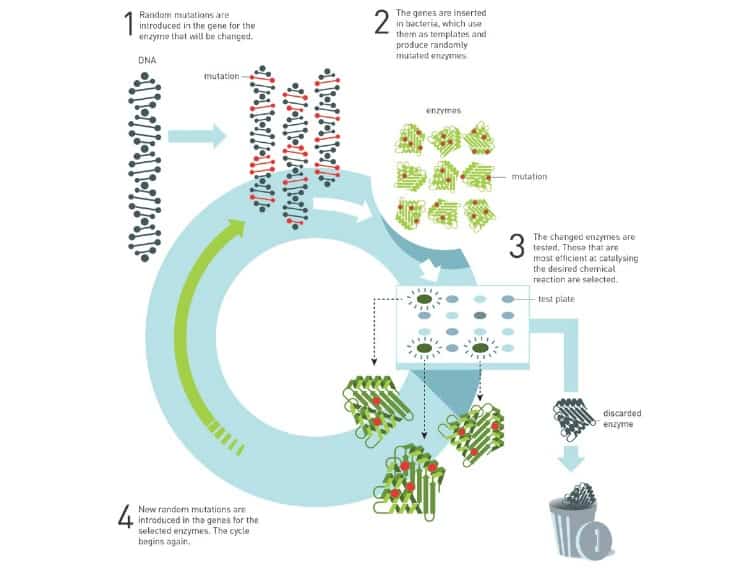
The work flow for the directed evolution of enzymes. Credit Nobel Foundation
Taking the reins in enzyme evolution
The directed evolution of enzymes takes its inspiration from the process nature uses to arrive at the panoply of proteins required for all the biological processes in a healthy, and evolutionarily competitive organism: genes that program better functioning organisms are more likely to survive and proliferate into the next generation than lesser performing prototypes. While for millennia farming and agriculture have intercepted the process with the selection and breeding of livestock and crops with features that are specifically desirable for human needs, directed evolution takes the process from the field to the lab and expedites it. This way refining a characteristic can take place over the course of a single experiment rather than several generations of breeding.
Manfred Eigen proposed an iterative algorithm for “Evolutionary molecular engineering based on RNA replication” in Pure Applied Chemistry in 1984. He suggested a procedure that began with production of a mutant spectrum of self-reproducing templates, followed by separation and cloning of individual mutants, amplifying and then expressing the clones, and then a test for optimal phenotypes and identification of optimal genotypes before the procedure is repeated to optimize an enzyme. Ten years later Arnold and her co-workers were able to demonstrate directed evolution of the enzyme subtilisin E to obtain a variant, which was active in unnatural conditions that would normally denature it, that is, high concentrations of the polar organic solvent dimethylformamide (DMF).
Practical implementation of directed enzyme evolution raises a series of challenges. Careful selection is needed for the initial enzyme to ensure that it has some low level of activity for the desired reaction, the DNA sequence library must cover the right subsets, the right selection criteria and the approach to make them more stringent between rounds are crucial, and the diversification to create new DNA sequences with new subsets – the component that introduces the controlled element of randomness that mimics evolution – must also perform on point.
Since their report of “Enzyme engineering for nonaqueous solvents” using directed evolution in 1991, Arnold’s lab and others around the world have published extensively on ways to improve on each step of the process of extended evolution. Arnold has also used directed evolution to demonstrate tolerance to two opposing extremes of conditions within the same catalyst, something that nature would usually cover in two separate enzymes, such as one for extreme heat and one for extreme cold. She and co-workers have also produced enzymes to catalyse reactions where no enzyme was previously available, including adjusting the activity of cytochrome P450 to catalyse the industrially significant reaction cyclopropanation.
The work bears an extensive legacy in pharmaceuticals where it is used in the production of a number of taste enhancers, drugs to tackle diabetes and vascular plaques and lower lipids. Application of directed evolution in mass-produced chemicals include detergents and biocatalysts, which have replaced some chemical catalysts to provide green alternatives for industrial synthesis, and work continues for catalysts in new fields such as protein synthesis.
Selection of high-affinity binding proteins from phage display libraries. Credit: Nobel Foundation
Manipulating phage display
A phage – also known as a bacteriophage – is a virus that infects and replicates inside bacteria. They encapsulate DNA. Certain proteins encoded by the DNA are presented on the surface of the phage, which has been used for screening. In 1985 Smith showed that he could change a peptide in one of these surface proteins and that the peptide would maintain interactions with its target antibodies. What is more he showed that the phages “displaying” the desired peptide could be enriched so that their concentrations were increased by a factor of 1000.
The work has led to directed evolution of binding proteins by physically coupling the phenotype (high affinity high selectivity binding protein) and genotype (DNA sequence). Smith’s insight also revealed the potential for exploiting phage display in vaccines. Because phage display can identify antigens, reversing the procedure has provided a route towards identifying new therapeutic antibodies.
Phage fragment display
In 1990 Winter developed work on phage display to demonstrate a phage displaying a folded and fully functional antibody fragment. In the first demonstration Winter and co-workers displayed scFv derived in immunized mice against hen egg-white lysozyme in fusion with the filamentous phage protein III. The binding was so specific that while the scFv -phages bound to hen egg-white lysozyme, they would not bind to human or turkey egg-white lysozyme. The scientists attributed the very high specificity to the functional folded form of scFv displayed on the phage surface. They were able to achieve an enrichment in the phage carrying the antigen-binding fragment over other phages by a factor of a million in just two rounds of affinity purification with intervening amplification of the retained phages.
Phage display technology is now used in improved immunisations, the boosted antigen affinity it can achieve allows subcutaneous administration of drugs that would previously require intravenous injections at a doctor’s surgery. Clinically approved drugs derived from phage display include Adalimumab (2002) which binds to TNF -α , a pro-inflammatory cytokine, and is used to treat rheumatoid arthritis, psoriasis and inflammatory bowel disease, among other conditions.
Full details of the awards and recipients are available at the Nobel Foundation.
Having worked as news editor of Physics World for over a decade, much of what I do is report on the here and now – be it covering the latest delay to the James Webb Space Telescope or examining the impact on physicists of the UK leaving the European Union (EU). But to mark Physics World’s 30th anniversary, I decided instead to look back at the top news stories in 1988 and see how they have moved on over the past 30 years.
As I trawled through the first few editions of Physics World – as well as the last few issues of the magazine’s predecessor Physics Bulletin – it struck me just how many topics covered in the late 1980s still affect physicists today. Those range from countries wrestling with the cost of international scientific projects to worries over the impact of nuclear power.
Before I delve a little deeper into those topics, it’s worth noting some conspicuous absences in Physics World’s news section in 1988. There was almost nothing about China, which is currently one of the powerhouses of physics. Nor was there much on efforts to make physics a more diverse and inclusive discipline – no doubt because few such initiatives existed.
Let’s start, though, with Britain’s political ambivalence to European integration. As one UK staff member working at the CERN particle-physics lab near Geneva noted in 1988 when a lack of funding was threatening Britain’s membership of the organization: “If Britain leaves it will be unpleasant, but at least we’ll know what the position is.” Given the UK’s impending exit from the EU, you would be hard pushed to decide if that quote was taken from a news story today or back in 1988.
The issue at stake was the UK’s desire to cut the amount of cash it paid to be a member of CERN. Subscription levels to the lab used to be totted up every three years using gross domestic product, but the UK said this method hurt it. In June 1988 the CERN Council therefore approved a new way of calculating contributions every year and applying an exchange rate at the time.
While some countries, notably Italy, dragged their feet over accepting the changes, particle physicists in the UK were worried that – if a deal could not be reached quickly – Britain mighty simply pull out and become an “associate member” of the lab. “We’d be a laughing stock if we tried to join as an associate member instead,” one anonymous particle physicist told Physics World. “We have to pay up or get out.”
The uncertainty for CERN was also hitting staff morale, with another source claiming that workers at CERN were “fed up with the sword of Damocles hanging over them”. In the end, the UK did not pull out of CERN, but the question mark over Britain’s involvement with European institutions will resonate with many physicists today.
With Brexit negotiations still ongoing, there is huge uncertainty over the UK’s membership of EU research activities, such as the Horizon Europe programme. And while the UK is likely to remain a member of many non-EU organizations such as CERN, which has an open-door policy for members outside the EU, there remains much insecurity for British physicists, who have done exceptionally well from the UK’s close ties with Europe.
In the Framework 7 programme, which ran from 2007 to 2013, for example, researchers from the UK won €1.7bn in grants from the European Research Council – 22.4% of the total and more than any other nation. Yet with only five months to go before the UK formally pulls out of the EU, it seems unbelievable that Britain’s European collaboration should, once again, be so illogically endangered, just as it was in 1988.
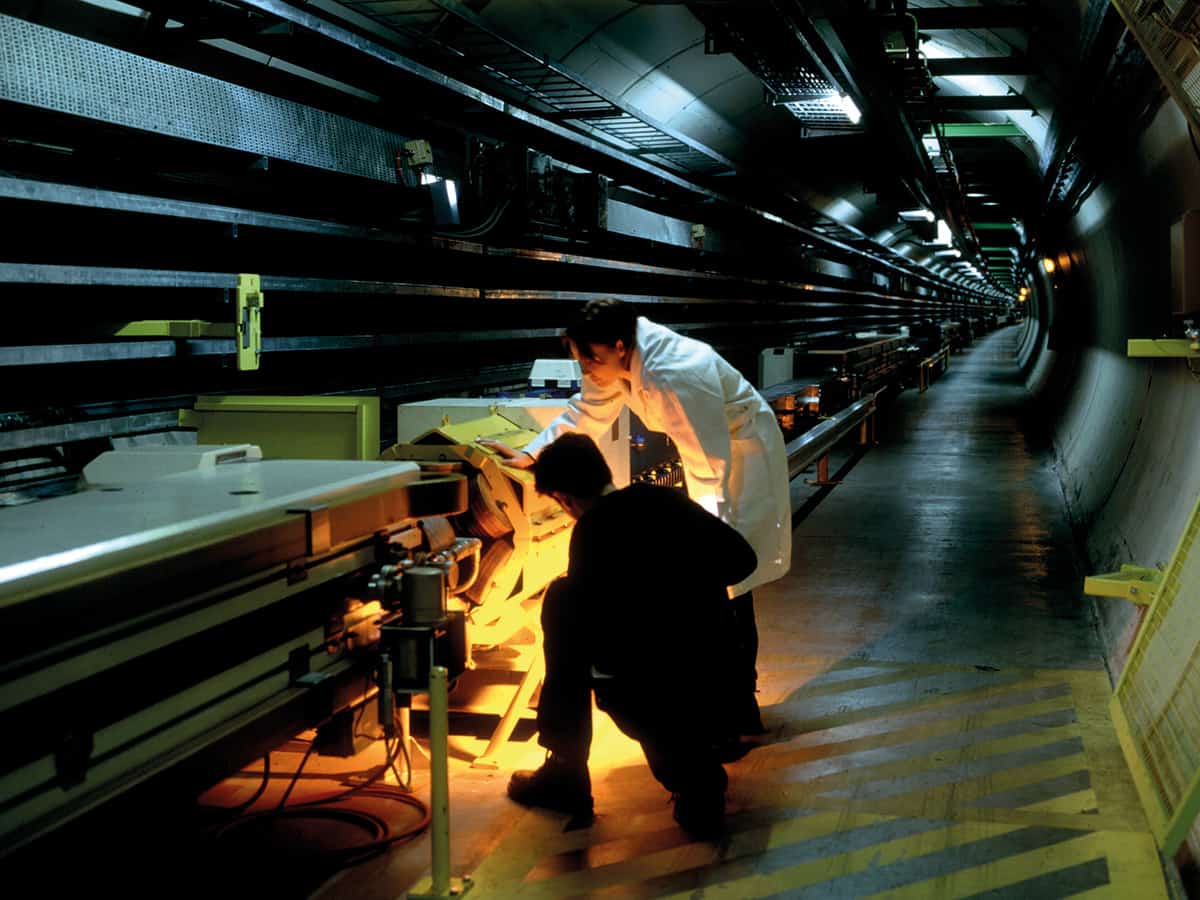
Mean machine: Open in 1989, the Large Electron–Positron Collider made precision measurements of the W and Z bosons. (Courtesy: CERN)
Particles and politics
While CERN was grappling with the UK’s threat to quit, there was more positive news in the late 1980s for the lab, which was making steady progress building the Large Electron–Positron collider (LEP). The 27 km circular machine, which accelerated electrons and positrons to around 100 GeV, was an amazing feat of engineering and technology. Switched on in August 1989, LEP was to prove a remarkable success. It operated for more than a decade and spawned many breakthroughs in particle physics, notably making precise measurements of a host of Standard Model particles including the mass of the Z and W boson.
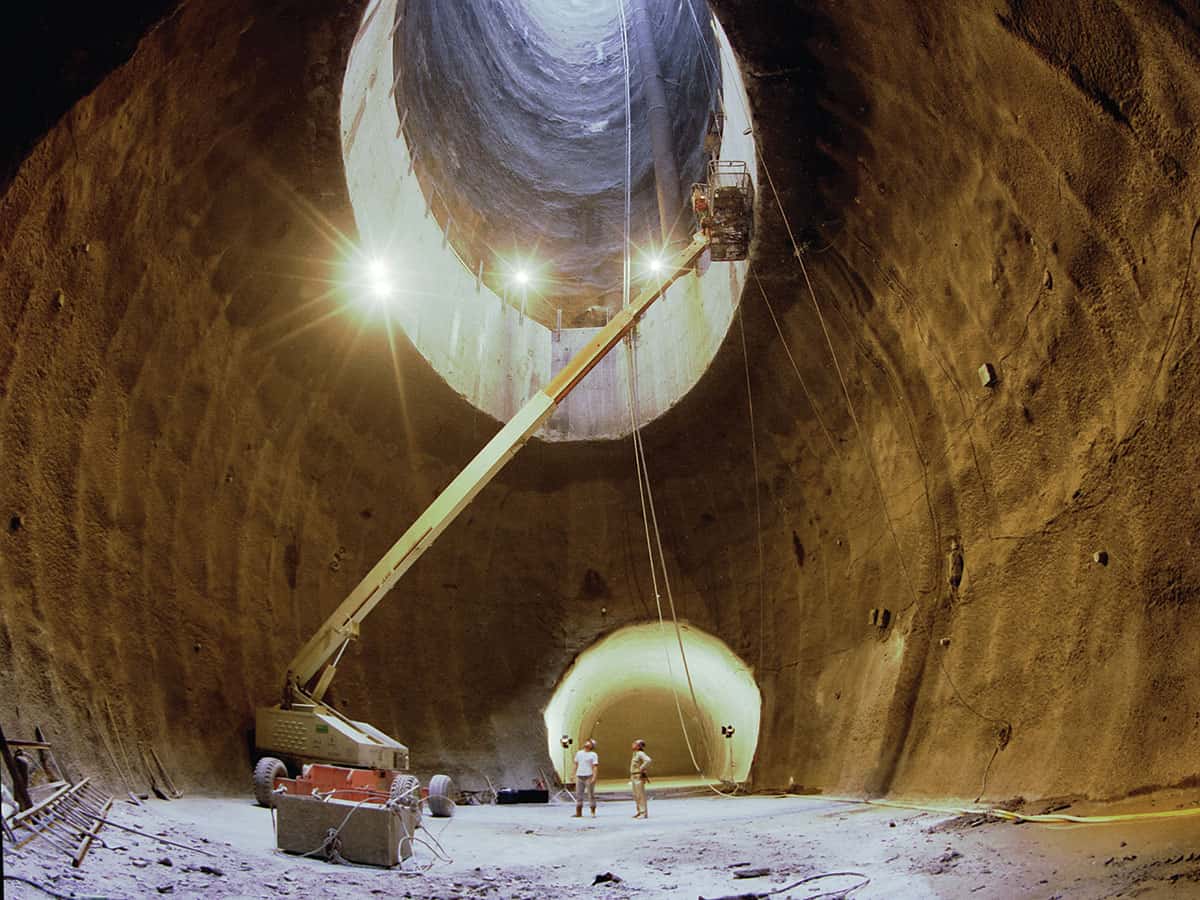
Yet just as LEP was firing up, over in the US, storm clouds were gathering over particle physics. In late 1988 George H Bush had just been elected as the 41st US president, beating his Democrat rival Michael Dukakis. Two days following the election, the US Department of Energy announced that the $4.4bn Superconducting Super Collider (SSC) would be built in Waxahachie, Texas. The SSC was to be an incredible 87.1 km circumference circular collider that would accelerate protons to 20 TeV – roughly three time more than LEP’s successor at CERN, the Large Hadron Collider (LHC).
Texas had beaten a site proposal from Fermilab, which would have been cheaper given that the Illinois lab was already home to the Tevatron – a proton–antiproton collider that at the time was ramping up its accelerator to an energy of 900 GeV. Back in the late 1980s there was much talk about how the SSC could lead to particle physicists from Fermilab upping sticks to Texas. Even the Nobel laureate Leon Lederman, who was then director of Fermilab, noted that the lab could undergo a “loss of the kind of feeling you have when you are the best”. In the end, those concerns proved immaterial: despite some $2bn being spent on digging parts of the SSC’s underground tunnel and constructing some of the buildings, the SSC was cancelled in 1993, by which time the project’s estimated final price tag had almost trebled to $12bn.
The decision to axe the SSC was a huge blow for US particle physics but recently, Fermilab has had to face its own future once more. Following the closure of the Tevatron in 2011, the “energy frontier” in particle physics now lies again in Europe. Although there are many particle physicists in the US who work at CERN, the US physics community has been forced to pursue the so-called “intensity frontier”, which involves repurposing Fermilab’s accelerator complex to produce an intense beam of neutrinos.
Such particles will then be sent some 1300 km away to detectors placed at the Deep Underground Neutrino Experiment (DUNE) belonging to the Sanford Underground Research Facility. Physicists hope to use DUNE to investigate charge–parity violation in neutrinos, which could shed light on why there is more matter than antimatter in the universe.
The LHC, meanwhile, has been successfully running for almost a decade – the highlight being its discovery of the Higgs boson in 2012 – and an upgrade is already planned. When complete in the early 2020s, the high-luminosity LHC (HL-LHC) will give physicists a greater chance of spotting particles beyond the Standard Model of particle physics.
It is too early to tell what will come beyond the HL-LHC, but it seems likely that there will be another global power shift. This time it will not see the baton being swapped between Europe and the US, but instead will involve Asia taking the leading role through a Higgs factory – a dedicated machine to study the Higgs boson in detail. It will be built in either Japan or China – or most likely with one rival facility in both nations. Japan could decide later this year to go ahead with the International Linear Collider, while China may, in the coming years, give the green light for the China Electron Positron Collider. Support for these projects is high within their respective communities, but let us hope neither suffers the same fate as the SSC did 30 years ago. As always with big-science projects, money and politics are the key to success.
Mixed fortunes: Construction of the Superconducting Super Collider was cancelled in 1993 due to the project’s pricetag trebling to $12bn. (Courtesy: SSC)
Down in the dumps
The launch of Physics World in 1988 occurred only two years following the Chernobyl nuclear disaster in the now abandoned town of Pripyat in the former Soviet Union. Nuclear power, however, was then in a period of overall strength, at least in the UK. The number of nuclear plants peaked at 16 in 1988 with 11,000 MWe of installed capacity producing around 20% of the country’s demand.
Today, the UK has only 7 nuclear plants, and although nuclear power still accounts for about a fifth of UK electricity supply – with roughly 9000 MWe of installed capacity – almost half of the UK’s nuclear capacity is to be retired by 2025. Germany, meanwhile, is abandoning nuclear altogether. Currently the only approved new-build nuclear power station in the UK is Hinkley Point C in south-west England. It is set to generate 3200 MWe – about 7% of the UK’s electricity needs – but will not open until the mid-2020s, some 30 years after the last British nuclear power station, Sizewell B, came online.
The headlines have not been kind to Hinkley Point C or the first two units of its kind at Olkiluoto in Finland and Flamanville in France, which are also facing costly construction delays, partly due to new rules around safety following the Fukushima Daiichi accident in 2011. In the planning stages for almost a decade, Hinkley Point C has also been hit by fights over funding and the price of the electricity it would generate.
While nuclear power certainly has a role to play in the energy mix, there is still uncertainty about what to do with the high-level and long-lived radioactive waste it produces. Little seems to have changed since 1988 when Britain’s House of Lords published a report throwing its weight behind the deep geological burial of waste. Their recommendation followed that of the independent Radioactive Waste Management Advisory Committee (RWMAC), which condemned the UK’s government’s “vacillation” over developing a policy on disposal. “The question of how and where [waste] should be disposed cannot be postponed indefinitely,” the RWMAC warned in 1988. The Lords complained that the RWMAC’s expertise had “not been treated with respect” adding that postponing such a move was “irresponsible”.
Successive UK governments have, however, failed to heed the advice from 30 years ago, with the country still unable to decide where to permanently store radioactive waste from its reactors. Many other countries are struggling with the issue too. In the US, the Yucca Mountain Nuclear Repository located about 150 km north of Las Vegas in Nevada was chosen the year before Physics World launched as the site to store waste from American nuclear plants. Yet despite some test tunnels having been built, it still has not received the official go-ahead.
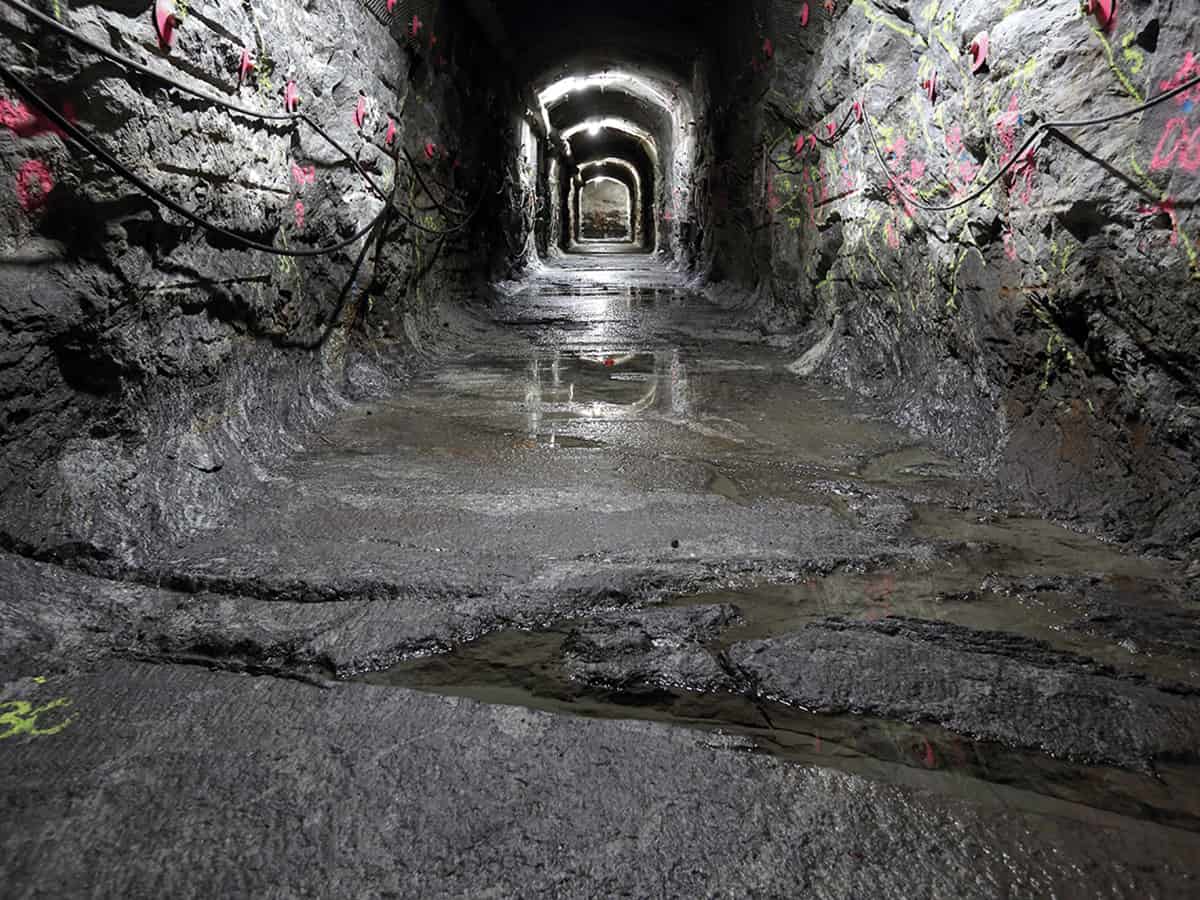
Another underground project – a repository for nuclear waste in Olkiluoto, Finland – is expected to be completed in the early 2020s. (Courtesy: POSIVA)
One country that has taken action on deep disposal of nuclear waste is Finland. Following a three-decade search, in 2015 its government approved construction of an underground facility to permanently store spent nuclear fuel. Based on Olkiluoto island off Finland’s west coast and due to open in the early 2020s, the €3bn ($3.2bn) repository – the first of its kind in the world – will bury up to 6500 tonnes of uranium in copper canisters placed some 400 m underground in tunnels hewn from granite rock. Officials estimate that the repository will be sealed off in 2120, when it should be able to hold waste for tens, if not hundreds, of thousands of years.
Size is everything
What is the best size for a university physics department? That vexing question was on the minds of many UK physicists 30 years ago as they awaited the outcome of an investigation being carried out under the leadership of the late theoretical physicist Sam Edwards from the University of Cambridge. Commissioned by the University Grants Committee, the eight-man Edwards panel (and, yes, they were all men) had been asked to examine the state of research and teaching in UK universities.
Released in late 1988, the “Edwards report” recommended that a “viable” physics department – defined as one that can “stretch and fulfil good students” as well as maintain high-quality research – should have a minimum of 20 full-time-equivalent (FTE) staff and 200 FTE undergraduate and postgraduate students. For departments below that limit, Edwards recommended they either enlarge, merge with other departments or shut altogether, transferring staff to another department or nearby university. Universities that had departments greater than 400 should, according to the committee, consider a hiring freeze.
The report proved explosive and was quickly attacked by the UK physics community, not least for the allegedly arbitrary way that those thresholds for acceptable departments sizes were drawn up. The effects of Edwards were to reverberate for years, with notable physics departments such as those at the universities of Reading and Newcastle closing their doors, though the latter thankfully reopened in 2015.
Education and jobs were also central themes of a major report published in 1988 by the European Physical Society (EPS). The society was celebrating its 20th anniversary that year and physicists looking for a job had reason to be optimistic. The EPS found that there was “virtually” no unemployment of physicists on the continent, with demand set to rise sharply.
Yet that same report highlighted what has become a perennial issue for physics – teacher shortages – that remains with us today. The EPS estimated that only around 15% of European physicists were teaching in schools, with the same fraction doing university teaching and research, 30% working in industry, 10% in government work and the remaining 30% involved in “small industries and computer firms”. As more physicists moved into industry, teaching would suffer, the EPS warned – a situation underlined by a report also released in 1988 by the Institute of Physics (IOP), which publishes Physics World. The IOP report found a third of the 2700 or so that graduate in physics each year in the UK went into industry, notably aerospace, telecommunications and nuclear technology, with only 5% of UK physics undergraduates going into teaching. Those statistics have changed little today, with barely 4% of British physics undergraduates becoming teachers, around 40% going to work in industry and over 50% taking higher degrees.
Staying relevant
None of us can perhaps remember that in 1988 the UK was about to make a huge 25% cut to its fusion programme and was resisting a 5% annual hike for the European Space Agency.
If anything can be concluded by my venture into the past, it is that physics now, as then, still needs to show its relevance to society. Competition for funds will never disappear and physicists, more than ever, need to break out of their ivory tower whether by promoting the use of evidence-based decision making, campaigning for adequate funding, or by inspiring the next generation.
But as one anonymous physicist told Physics World back in 1988: “In so many areas money seems to be having a louder say than science these days.” Some 30 years on, the details of our concerns as physicists may be different but the fundamental issues sadly remain the same.
10 things from 1988 that changed the world
Intel inside: Computer processor speeds reached 10 MHz in 1988. (CC BY Pauli Rautakorpi)
NASA climate scientist James Hansen uses the term “global warming” in testimony to the US Congress, sparking worldwide interest.
The Intergovernmental Panel on Climate Change – a scientific and intergovernmental body – is created under the auspices of the United Nations.
University of Cambridge physicist Stephen Hawking publishes A Brief History of Time.
Canadian astronomers Bruce Campbell, Gordon Walker and Stephenson Yang publish radial-velocity observations suggesting that an extrasolar planet orbits the star Gamma Cephei. Its existence is finally confirmed in 2002.
Leon Lederman, Melvin Schwartz and Jack Steinberger bag the 1988 Nobel Prize for Physics for discovering the muon neutrino.
Adobe Photoshop graphics-editing software debuts.
US entrepreneur Robert Morris creates the Morris worm – considered the first notable computer worm to be distributed via the Internet.
The first transatlantic fibre-optic cable, carrying 280 Mbits, is created between the US, UK and France.
Intel releases its i960 processor with a clock speed of 10 MHz and containing 250,000 transistors.
Philips and Sony publish the first specification of a compact disc that can be written once and read many times (CD-R).
A US research collaboration has successfully adapted an ArrayIt Spotbot, usually used to monitor protein activity, to print bacteria. In doing so, the researchers have delivered an experimental platform for testing computational models of communal microbial behaviour on unprecedented small scales (Biomed. Phys. Eng. Express4 055010).
Bioprinting is a type of 3D printing that uses cells or other biomaterials instead of ink to create biological structures. William Hynes, from SUNY Polytechnic Institute and Lawrence Livermore National Laboratory, and colleagues used the protein microarray machine to position small bacterial colonies in growth medium with high precision.
Traditional cell culture methods have not thus far provided the necessary control of the spatial distribution of cells to test predictive models of microbial interactions. This has hindered the study of communication between bacterial colonies, which underpins behaviours such as biofilm development and diffusion-based metabolite sharing.
The researchers used their novel experimental set-up to validate the computational predictions of a bacterial growth model, Computation of Microbial Ecosystems in Time and Space (COMETS). COMETS estimates the biomass of a bacterial colony as a function of time by balancing the internal cell metabolism with the external flux of metabolites. It has been tested experimentally on the macro scale, but not on the small scale used in this study.
The team used two strains of bacteria, Salmonella enterica (S. Enterica) and an Escherichia coli (E. Coli) mutant, that depend upon one another for the production of metabolites in a growth medium devoid of specific chemicals. In a control experiment, the individual strains showed little or no growth in isolation.
Each colony was made to express a fluorescent protein. The researchers showed that microbial biomass was approximately proportional to the fluorescence intensity in the imaging volume. They used this as a means of measuring bacterial biomass in vitro.
Hynes and colleagues first used the COMETS software to predict the growth of microbial biomass as a function of the separation of the two partner colonies, with colony separation varying from 1–3.5 mm. Such separations are much smaller than those used in experiments prior to this work. The research team reported good qualitative agreement between the simulation and experiment in this scenario.
The group then investigated a more complex “eclipse” scenario, in which a competitor bacterial colony is placed between the two partner colonies. The competitor was chosen to compete directly with either one of the partner colonies or with both. The team then varied the position of the competitor colony to generate different eclipse scenarios for validation.
In these more complicated scenarios, the team reported encouraging results with respect to the general trends of in silico modelling versus in vitro experiments. However, the data possess some notable disparity, including a consistent overshoot in simulations of the relative growth of E. coli, in most scenarios.
This work highlights the importance of seeking a means of validating computational models of bacterial growth across multiple length scales. It also demonstrated that bioprinting could provide a means of achieving this.
The versatility of the ArrayIt Spotbot is not limited to tightly controlling the positioning of small bacterial colonies on growth media. “For my work in developing a diagnostic assay to detect Lyme disease, the robotic pin spotter (Spotbot) is useful for making highly multiplexed protein microarrays on different surfaces,” says Eunice Chou, a PhD student working under Nathaniel Cady at SUNY Polytechnic Institute. “Here, I am using a gold-coated silicon chip, which I spot with various proteins present on the surface of Lyme disease bacteria.”
Some technologies win, others lose, at least in the short term. The UK tidal power industry has been taking stock after the UK government decision not to proceed with the 320 MW Swansea lagoon as it saw it as too costly. “We saw no appetite from government to think differently, which suggests there’s a systemic obstacle to innovation,” said Tidal Lagoon Power Ltd. Richard Graham, MP for Gloucester, UK, and chair of the All-Party Parliamentary Group on Marine Energy & Tidal Lagoons, reckons the government needed to be clearer about how it would compare the costs of different energy sources: “How do you compare a price for marine energy relative to sources around for almost 60 years (nuclear) or much shorter periods (wind), but which have reached their current price after c.£18 billion of subsidy? If everything is priced from the latest offshore wind bids of CfD [contract for difference] of £55 per kWh, the chances of much marine energy being added to the mix are very modest.”
For good or ill, a new dynamic is taking over from the climate response motivation
Dave Elliott
Atlantis, which didn’t get a CfD for its next set of turbines for the 398 MW MeyGen tidal stream project in the Pentland Firth in the last round, is also facing problems. It is also seen as too expensive at present. This reflects the UK’s CfD competitive contract auction arrangements – they make it hard for novel technologies to break in, as Richard Graham indicates. But it’s not just in the UK; the novel Open Hydro tidal stream project in France has also been cut back. So it may be a generic problem of new technologies in the tidal area, and for wave energy technologies too. Some remain convinced that these will follow wind and photovoltaics (PV) to lower prices, but that is taking a while.
Falling costs
However, there are also problems in other areas, for those technologies that are already seen as economically competitive, like wind and PV solar. There is no question that they are becoming cheap globally. The Levelized Cost of Energy (LCOE) for utility-scale solar has dropped 86% in the last eight years. For wind, the figure is 67%. In 2017, the international average cost for wind power was $51/MWh, and for PV solar $54/MWh. For comparison, while renewable projects were between $35 and $54/MWh, fossil fuels were between $49 and $174/MWh in the G20 countries in 2017, according to a survey by the Kaiserwetter consultancy.
Costs are still falling, with some solar projects in favourable – sunny — locations getting down to near $20/MWh or less. For example, solar auctions in Mexico yielded an unheard-of average price of $20.57/MWh, including a $17.7 bid by Enel. These cases may be exceptional and the competitive “race to the bottom” may perhaps undermine further development: as developers scramble to under-bid one another, some fear the price war may eventually erode the quality that is deliverable, always assuming that the low-bid projects can actually deliver at all. Some say these winning low-cost projects are speculating against future cost falls, a risky strategy. However, for good or ill, that is how market competition works, and it certainly has led to some cost reductions across the board.
The “race to the bottom” issue does present potential problems, but they are common in many areas of market competition: all other things being equal, if prices fall, there is less incentive for new investment, given the reduced profit margins. It’s sometimes called “price cannibalism”. Essentially, it’s a problem of success: once you’ve won and destroyed your rivals, it’s hard to do better. However, as I noted in my last post in relation to storage, if overall market demand is expanding, as is the case for most renewables, then there are still commercial gains to be made, so growth can continue. For once, the growth driver in capitalism can be beneficial, up to a point.
There are presumably limits, and at some stage we would have built enough renewable capacity to suffice, meeting most energy needs, and then only need replacements and upgrades to reduce costs. That is some way off. Even on the most optimistic scenarios, it would take up to 2050 to get to 100% renewables. In the meantime, however, costs will fall. One recent study even suggested that renewable power will essentially be free by 2030.
It might be wise to be wary of over-optimistic views, and it seems likely that the overall cost of making the transition to renewables will be relatively high — although not as high as the cost of not doing so. But it’s true that costs for some technologies can fall dramatically and fast. At one time, for example, DVD players cost many hundreds of pounds, but they gradually fell to tens of pounds before being replaced by downloading at, in effect, zero cost; the profit is now made mostly by selling the content and software, not the hardware. The pattern in the energy area may be different, but with PV costs falling fast, it may be that software for smart grid use and peer-to-peer trading will become the dominant cost.
Best option?
That is all to come. But looking more broadly, in terms of energy system development, it might be argued that, for good or ill, a new dynamic is taking over from the climate response motivation. Renewables are getting so cheap they are being adopted for purely commercial reasons: they are the most economic option in some places. While that may be true in some contexts, at least part of the reason has been earlier support under climate policy-inspired subsidies. Now, arguably, the situation has moved on and new projects are going ahead in some locations on the basis of their own merits with, in the UK, there being talk of subsidy-free solar and wind projects.
With the Feed-in Tariff scheme closed and new support under the CfD limited until 2025, that may be the only way ahead for a while, and some are quite optimistic about what can be achieved, even if that might still need some form of zero subsidy CfD, Power Purchase Agreements or debt financing arrangements.
Of course, in the short term, there could be limits as to how much this approach can prosper, given that rival energy options might still be subsidized, most obviously nuclear but also in some countries coal still, while in the UK shale gas fracking is getting strong government support — as well as facing strong local opposition.
Though some, reasonably enough, have lamented the lack of a level playing field, it is perhaps inevitable that emergent technologies have an uphill fight against incumbents. But some unfair aspects — what are sometimes called “market failures” — can be reduced to open the way for the new technologies. There certainly seems to be demand for it, with 50% of UK households evidently wanting to install solar PV. In that context, it does seem odd to shut down the FiT scheme, which provided a framework for managing PV, including an export tariff. If we are to move towards the widespread use of new smart energy systems at all levels, using cheap PV and the like, there will be a need for some sort of replacement for the FiT. As well as for some system to help the less developed renewables, like wave and tidal power, to progress. Assuming, that is, that wind and PV don’t wipe all else off the map.
New robot jellyfish could be the key to monitoring and caring for fragile parts of the world’s oceans without damaging them.
The robots were developed by a team of US scientists, from Florida Atlantic University (FAU) and the US Office of Naval Research. They were designed to be able to swim freely, steer from side to side, and swim through narrow openings.
The researchers set out their findings in the journal Bioinspirationand Biomimetics.
Corresponding author Erik Engeberg, from FAU, said: “Studying and monitoring fragile environments, such as coral reefs, has always been challenging for marine researchers. Soft robots have great potential to help with this.
“Biomimetic soft robots based on fish and other marine animals have gained popularity in the research community in the last few years. Jellyfish are excellent candidates because they are very efficient swimmers.
“Their propulsive performance is due to the shape of their bodies, which can produce a combination of vortex, jet propulsion, rowing, and suction-based locomotion.”
To harness this performance, the researchers used the shape of the moon jellyfish (Aurelia aurita) during the larvae stage of its life cycle. Whereas prior robot jellyfish designs used a variety of different propulsion mechanisms, the team’s design for their new jellyfish used hydraulic networks for propulsion.
Engeberg said: “A main application of the robot is exploring and monitoring delicate ecosystems, so we chose soft hydraulic network actuators to prevent inadvertent damage. Additionally, live jellyfish have neutral buoyancy. To mimic this, we used water to inflate the hydraulic network actuators while swimming.”
To allow the jellyfish to steer, the team used two impeller pumps to inflate the eight tentacles. The impeller pump design produced an open circuit of water flow, where water from the environment was pumped into the soft actuators to produce a swimming stroke. When the pumps were not powered, the elasticity of the tentacle actuator silicon rubber material constricted the actuators to push the water back into the environment during the relaxation phase.
This elasticity is like the passive elasticity demonstrated by live jellyfish after bell contractions. The design also removed the need for valves, reducing control complexity, space requirements, and cost.
The team 3D printed five different robot jellyfish, using silicon rubber for the actuators. Each jellyfish had a varying rubber hardness to test the effect it had on the propulsion efficiency.
They also tested the robots’ ability to squeeze through narrow openings, using circular holes cut in a plexiglass plate.
Engeberg said: “We found the robots were able to swim through openings narrower than the nominal diameter of the robot. In the future, we plan to incorporate environmental sensors like sonar into the robot’s control algorithm, along with a navigational algorithm. This will enable it to find gaps and determine if it can swim through them.”
“There’s no doubt that the basis of everything I do is grounded in the fundamentals of physics,” says traffic-flow researcher Brian Wolshon in this video interview with Physics World. Wolshon – who is based at Louisiana State University in the US – is interested in the dynamics of traffic management particularly in evacuation situations, such as those triggered by hurricanes from the Gulf of Mexico.
In a wide-ranging interview, Wolshon speaks about the tricky relationship between planning systems, physical infrastructure, and the unpredictability of human behaviour. Of course, the big difference between studying particles and people is that people have free will and do not always behave in the way transport researchers can predict.
Wolshon talks about Hurricane Katrina in 2005 – the aspects of the evacuation that worked well and the aspects that clearly failed. He also looks at how transport planning might benefit from technology innovations, including autonomous vehicles and connected communication systems.
Urban resiliance
Courtesy: iSeeChange
For more information about how the US is responding to flood risk, see the Physics World short documentary, Testing the Waters in New Orleans. The film explores how scientists are working with residents in the Gentilly district of New Orleans to help make their neighbourhood more resilient to flooding.
The 2018 Nobel Prize for Physics has been awarded to Arthur Ashkin, Gérard Mourou and Donna Strickland for their “groundbreaking inventions in the field of laser physics”.
The prize is worth SEK 9m (about £870,000) and half goes to Ashkin for his work on “optical tweezers and their application to biological systems”. Mourou and Strickland will claim one quarter of the prize money each “for their method of generating high-intensity ultrashort optical pulses”. The winners will receive their medals at a ceremony in Stockholm on 10 December. Strickland is the first woman to win the prize in 55 years.
Ashkin was born 1922 in New York City, US. He completed a degree in physics from Columbia University in 1947 followed by a PhD from Cornell University in 1952. After his PhD, he moved to Bell Labs in New Jersey where he remained for the rest of his career until he retired in 1992. At 96, he is the oldest person ever to receive the physics Nobel prize.
Mourou was born in Albertville, France, in 1944. He completed a degree in physics from the University of Grenoble in 1967 followed by a PhD in 1973 from Paris VI. After his PhD, Mourou went to the University of Rochester in the US, before heading to the University of Michigan, Ann Arbor, where he became founding director of the Center for Ultrafast Optical Science in 1991. In 2004, Mourou returned to France to become director of the Laboratoire d’ Optique Appliquée at ENSTA-Ecole Polytechnique.
Strickland was born in 1959 in Guelph, Canada. She completed a degree in engineering physics at McMaster University in 1981 followed by a PhD in optics at Rochester in 1989 where Mourou was her doctoral supervisor. Strickland was a research associate at the National Research Council of Canada until 1991 before spending a year at the Lawrence Livermore National Laboratory. In 1992, she moved to Princeton University’s Advanced Technology Center for Photonics and Opto-electronic Materials before joining the physics department of the University of Waterloo in 1997.
Strickland is only the third woman to win the physics prize, the others being Marie Curie in 1903 and Maria Goeppert Mayer in 1963. Speaking shortly after the award was announced, Strickland seemed surprised that she is only the third female physics laureate. “I thought there might have been more,” she said. “Obviously we need to celebrate women physicists because we’re out there. I’m honoured to be one of those women.”
Gradient force
In 1970 Ashkin showed that forces generated by laser beams can trap tiny dielectric particles in air or water. The scattering of light pushes the particles in the direction of beam propagation so two counter-propagating beams will stop a particle from moving along the axis of propagation. Crucially, Ashkin showed that a particle with an index of refraction greater than that of the medium is drawn toward the centre of the beam. This is the result of the intensity gradient that exists between the edge and the centre of the beam. This effect provides the trapping forces in the other two dimensions, creating a 3D optical trap.
A major improvement came in 1986, when Ashkin showed that it is possible to trap particles using just one laser beam – rather than a counter-propagating pair. This involves bringing the beam to an extremely sharp focus that creates a component of the gradient force that opposes the scattering force. This incarnation of the optical trap became known as optical tweezers and could trap particles ranging in size from tens of nanometres to tens of microns.
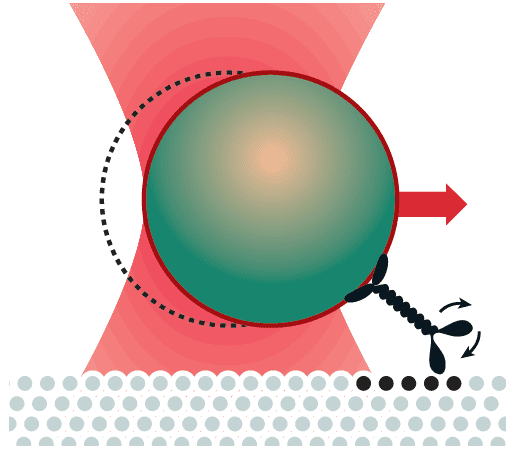
Do the twist: the force exerted by a molecular motor is measured by attaching it to a surface and a trapped polystyrene ball. (Courtesy: Nobel Foundation)
This size range includes viruses, bacteria and other biological cells and Ashkin immediately realized that optical tweezers could be used to trap and manipulate living organisms. This involved switching from green to infrared light to minimize damage to the subjects.
Optical tweezers have proved invaluable to biophysicists, who have used them to measure the forces involved in biological processes such as the transport of organelles within living cells and how bacteria are propelled by rotating flagella. The latter was done by attaching one end of the molecular motor to a trapped polystyrene ball (see figure). The technique has also been used to study how forces affect large biological molecules such as DNA. This can involve attaching ends of the molecule to two polystyrene balls, which are held in two different optical tweezers – allowing the molecule to be stretched.
Powerful pulses
It was in the mid-1980s at Rochester that Mourou and Strickland devised the technique of chirped-pulse amplification (CPA). Enabling physicists to create petawatt laser pulses that are orders of magnitude more powerful than were achievable without it, CPA now lies at the heart of most high-powered laser facilities in the world.
CPA uses an off-the-shelf table-top laser source to generate pulses that are a femtosecond in length. These pulses only have a small amount of energy – about a nanojoule – which needs to be increased by a factor of about 1012 to get a high-powered petawatt beam. However, as the energy of a short-pulse laser beam is amplified, the refractive index of the medium it is passing through starts to change. Once the power of the beam goes beyond a few gigawatts, nonlinear effects in the medium can lead to so-called self-focusing – damaging the optics in the process. To keep the intensity of laser pulses below the nonlinear threshold, laser systems had to be very large and expensive, and the peak power of laser pulses was still limited to a few terawatts for very large multibeam facilities.
Powerful pulses: illustration of the chirped pulse amplifications process. (Courtesy: Nobel Foundation)
In 1985 Mourou and Strickland, developed CPA to get around the nonlinear effects. It works by taking the short pulse and passing it through a pair of gratings that stretch the pulse in time by a factor of 100,000. The gratings are arranged so that the low-frequency component of the laser pulse travels a shorter path than the high-frequency component does, so the high-frequency component lags behind the low-frequency component and the pulse spreads out in time.
As the pulse is longer, its power is lower and its energy can then easily be increased by passing the pulse through an amplifier such as a titanium– sapphire crystal. The amplified pulse is then passed through a second pair of gratings that reverse the dispersion – forcing the high-frequency component of the laser pulse to travel a shorter path and the low-frequency component to travel a longer path, so the pulse then “recombines” into a short femtosecond pulse at petawatt power levels.
Practical applications of CPA include laser eye surgery and laser micro-machining.
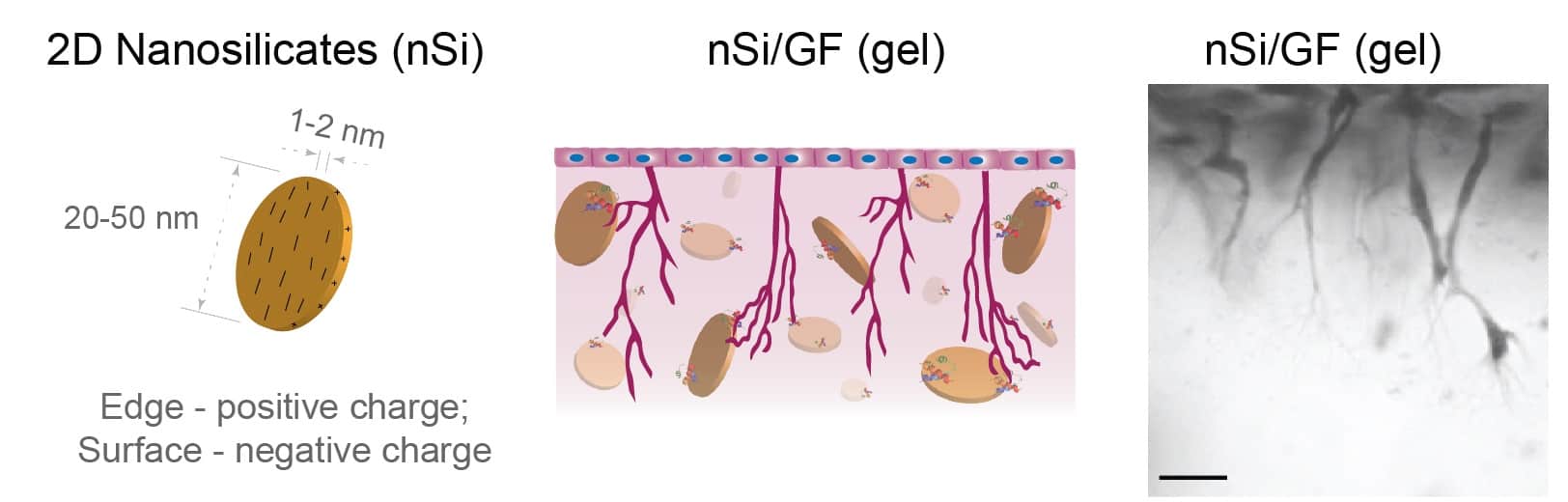
Schematic of nanosilicate; growth factor-loaded nanosilicates; the resulting invading structures. (Courtesy: Wiley; D Howell et al. Adv. Biosys. 10.1002/adbi.201800092)
Stimulation of angiogenesis — the growth of new blood vessels — can be used to treat heart disease or promote wound healing. Meanwhile, inhibition of angiogenesis can be used as a therapeutic for cancer, ophthalmic conditions and other diseases. The delivery of proangiogenic therapeutics is thus a significant area of interest in the drug delivery research field. In this context, synthetic 2D nanomaterials are emerging as ideal structures for regenerative medicine applications, due to their biocompatibility and homogeneous physical and chemical characteristics.
Corresponding author Akhilesh Gaharwar.
With this in mind, a team of researchers from Texas A&M University are investigating the use of 2D nanosilicates as a platform technology to deliver proangiogenic growth factors to stimulate angiogenesis. This platform has the potential to be broadly used for growth factor delivery and release (Adv. Biosys. 10.1002/adbi.201800092).
Nanosilicates are 2D disc-shaped nanoparticles that interact with biomolecules. The interaction is electrostatic and results in the adsorption of the molecules on the surface of the nanosilicates. The authors confirmed this by adding proteins into a nanosilicate solution. The results suggested that the proteins adsorbed onto the nanosilicates and were released slowly over a course of weeks.
Next, the authors used a 3D invasion assay to examine the effect of growth factor-loaded nanosilicates on the sprouting step of angiogenesis. They did this by including proangiogenic proteins (such as VEGF, FGF and PDGF) to stimulate the invasion of endothelial cells into a basal 3D collagen matrix (the nanosilicates were incubated with growth factors and then mixed into collagen matrices).
The results indicated that the minimum concentration of nanosilicates required to sequester growth factors is 0.015%, and that at this concentration, the cells penetrated the collagen matrices and formed sprouting structures.
The researchers also tested the effect of nanosilicates on the mechanical properties of collagen matrices, concluding that a low concentration of nanosilicates (0.015%) does not affect the mechanical properties of the matrices. Thus, they examined the effects of nanosilicates in the 3D collagen invasion system, observing that growth factors appear to release from the nanosilicates quickly and were homogenously localized throughout the collagen matrix. These results indicate the ability of the nanosilicates to deliver angiogenic factors in specific combinations and efficiencies to direct cellular invasion.
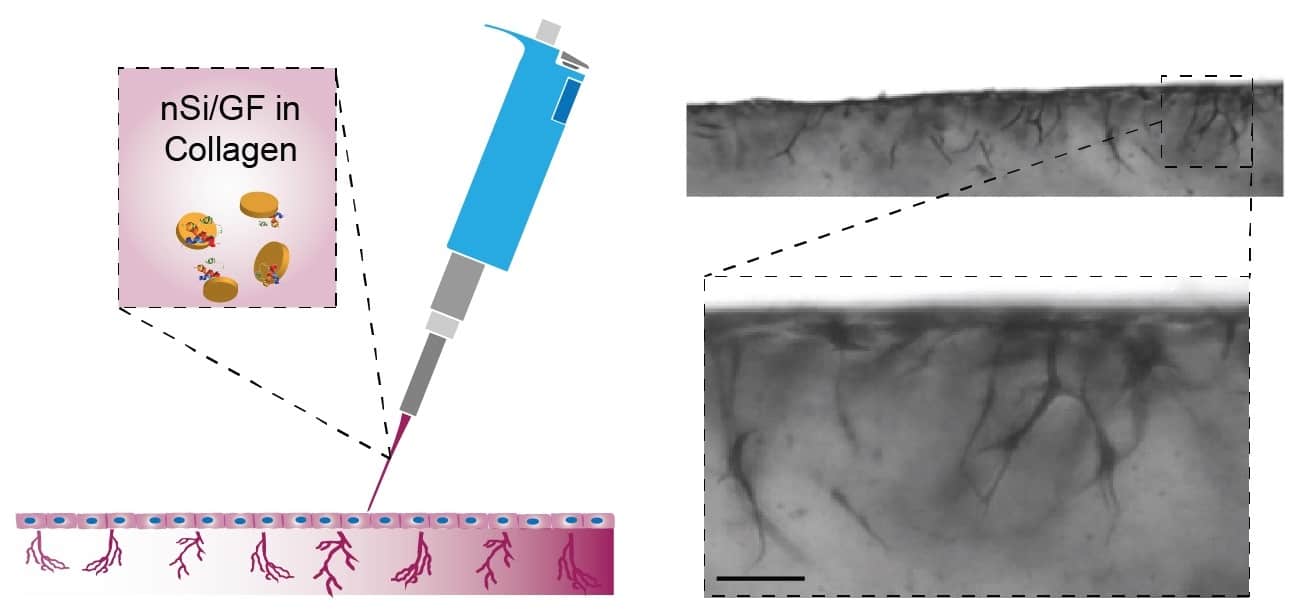
Nanosilicates offer the unique ability to pattern the delivery of growth factors. (Courtesy: Wiley; D Howell et al. Adv. Biosys. 10.1002/adbi.201800092)
In another interesting development, the authors fabricated injectable collagen-based scaffolds that could be patterned by the inclusion of growth factors, and observed the invasion of endothelial cells. This method has potential applications in tendon or ligament repair.
The study demonstrates the ability of nanosilicates to deliver growth factors to induce an angiogenic response. The results also show the huge potential of nanosilicates for delivering biomolecules, thus paving the way for new therapeutics.