Researchers perform first real-time visualization of human embryo implantation

Human reproduction is an inefficient process, with less than one third of conceptions leading to live births. Failure of the embryo to implant in the uterus is one of the main causes of miscarriage. Recording this implantation process in vivo in real time is not yet possible, but a team headed up at the Institute for Bioengineering of Catalonia (IBEC) has designed a platform that enables visualization of human embryo implantation in the laboratory. The researchers hope that quantifying the dynamics of implantation could impact fertility rates and help improve assisted reproductive technologies.

At its very earliest stage, an embryo comprises a small ball of cells called a blastocyst. About six days after fertilization, this blastocyst starts to embed itself into the walls of the uterus. To study this implantation process in real time, the IBEC team created an ex vivo platform that simulates the outer layers of the uterus. Unlike previous studies that mostly focused on the biochemical and genetic aspects of implantation, the new platform enables study of the mechanical forces exerted by the embryo to penetrate the uterus.

The implantation platform incorporates a collagen gel to mimic the extracellular matrix encountered in vivo, as well as globulin-rich proteins that are required for embryo development. The researchers designed two configurations: a 2D platform, in which blastocysts settle on top of a flat gel; and a 3D version where the blastocysts are placed directly inside collagen drops.

To capture the dynamics of blastocyst implantation, the researchers recorded time-lapse movies using fluorescence imaging and traction force microscopy. They imaged the matrix fibres and their deformations using light scattering and visualized autofluorescence from the embryo under multiphoton illumination. To quantify matrix deformation, they used the fibres as markers for real-time tracking and derived maps showing the direction and amplitude of fibre displacements – revealing the regions where the embryo applied force and invaded the matrix.

Quantifying implantation dynamics

In the 2D platform, 72% of human blastocysts attached to and then integrated into the collagen matrix, reaching a depth of up to 200 µm in the gel. The embryos increased in size over time and maintained a spherical shape without spreading on the surface. Implantation in the 3D platform, in which the embryo is embedded directly inside the matrix, led to 80% survival and invasion rate. In both platforms, the blastocysts showed motility in the matrix, illustrating the invasion capacity of human embryos.
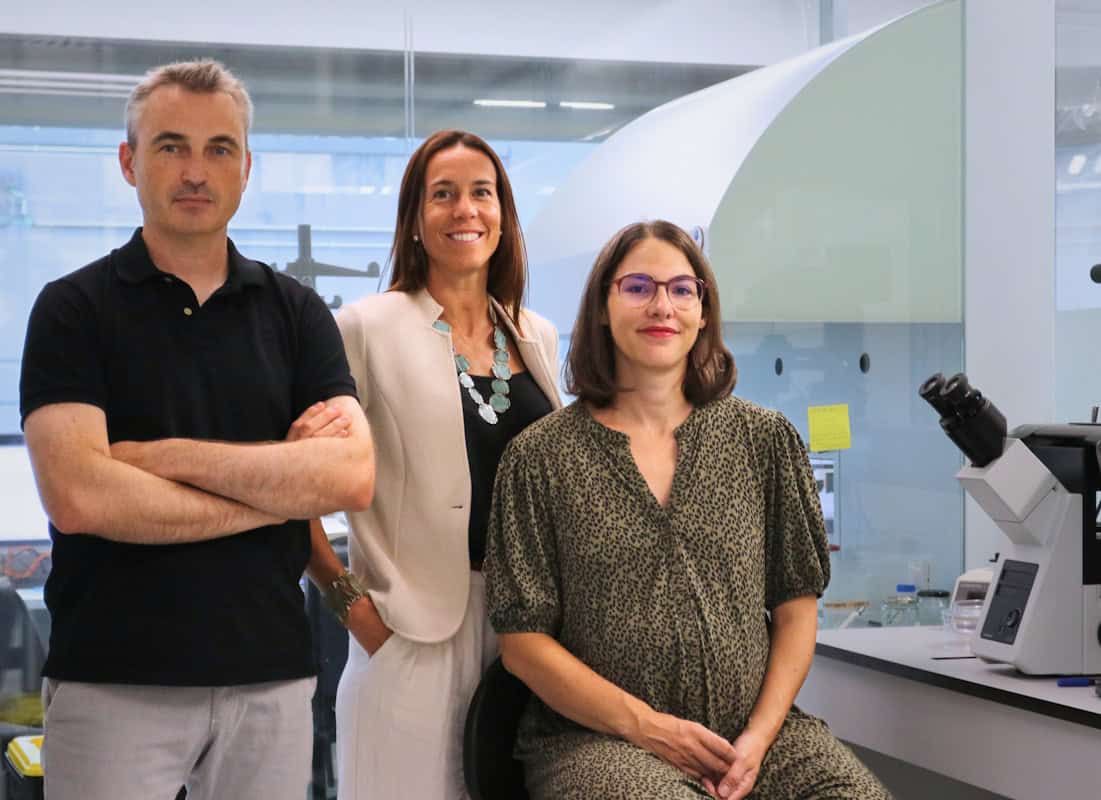
Samuel Ojosnegros, Anna Seriola and Amélie Godeau

The researchers also monitored the traction forces that the embryos exerted on the collagen matrix, moving and reorganising it with a displacement that increased over time. They note that the displacement was not perfectly uniform and that the pulling varied over time and space, suggesting that this pulsatile behaviour may help the embryos to continuously sense the environment.

“We have observed that human embryos burrow into the uterus, exerting considerable force during the process,” explains study leader Samuel Ojosnegros in a press statement. “These forces are necessary because the embryos must be able to invade the uterine tissue, becoming completely integrated with it. It is a surprisingly invasive process. Although it is known that many women experience abdominal pain and slight bleeding during implantation, the process itself had never been observed before.”

For comparison, the researchers also examined the implantation of mouse blastocysts. In contrast to the complete integration seen for human blastocysts, mouse embryo outgrowth was limited to the matrix surface. In both platforms, initial attachment was followed by invasion and proliferation of trophoblast cells (the outer layer of the blastocyst). The embryo applied strong pulling forces to the fibrous matrix, remodelling the collagen and aligning the fibres around it during implantation. The displacement maps revealed a fluctuating pattern, as seen for the human embryos.

“By measuring the direct impact of the embryo on the matrix scaffold, we reveal the underlying mechanics of embryo implantation,” the researchers write. “We found that mouse and human embryos generated forces during implantation using a species-specific pattern.”

The team is now working to incorporate a theoretical framework to better understand the physical processes underlying implantation. “Our observations at earlier stages show that attachment is a limiting factor at the onset of human embryo implantation,” co-first author Amélie Godeau tells Physics World. “Our next step is to identify the key elements that enable a successful initial connection between the embryo and the matrix.”

The study is reported in Science Advances.
Melting ice propels itself across a patterned surface

Researchers in the US are first to show how a melting ice disc can quickly propel itself across a patterned surface in a manner reminiscent of the Leidenfrost effect. Jonathan Boreyko and colleagues at Virginia Tech demonstrated how the discs can suddenly slingshot themselves along herringbone channels when a small amount of heat is applied.

The Leidenfrost effect is a classic physics experiment whereby a liquid droplet levitates above a hot surface – buoyed by vapour streaming from the bottom of the droplet. In 2022, Boreyko’s team extended the effect to a disc of ice. This three-phase Leidenfrost effect requires a much hotter surface because the ice must first melt to liquid, which then evaporates.

The team also noticed that the ice discs can propel themselves in specific directions across an asymmetrically-patterned surface. This ratcheting effect also occurs with Leidenfrost droplets, and is related to the asymmetric emission of vapour.

“Quite separately, we found out about a really interesting natural phenomenon at Death Valley in California, where boulders slowly move across the desert,” Boreyko adds. “It turns out this happens because they are sitting on thin rafts of ice, which the wind can then push over the underlying meltwater.”

Combined effects

In their latest study, Boreyko’s team considered how these two effects could be combined – allowing ice discs to propel themselves across cooler surfaces like the Death Valley boulders, but without any need for external forces like the wind.

They patterned a surface with a network of V-shaped herringbone channels, each branching off at an angle from a central channel. At first, meltwater formed an even ring around the disc – but as the channels directed its subsequent flow, the ice began to move in the same direction.

“For the Leidenfrost droplet ratchets, they have to heat the surface way above the boiling point of the liquid,” Boreyko explains. “In contrast, for melting ice discs, any temperature above freezing will cause the ice to melt and then move along with the meltwater.”

The speed of the disc’s movement depended on how easily water spreads out on to the herringbone channels. When etched onto bare aluminium, the channels were hydrophilic – encouraging meltwater to flow along them. Predictably, since liquid water is far more dense and viscous than vapour, this effect unfolded far more slowly than the three-phase Leidenfrost effect demonstrated in the team’s previous experiment.

Surprising result

Yet as Boreyko describes, “a much more surprising result was when we tried spraying a water-repellent coating over the surface structure.” While preventing meltwater from flowing quickly through the channels, this coating roughened the surface with nanostructures, which initially locked the ice disc in place as it rested on the ridges between the channels.

As the ice melted, the ring of meltwater partially filled the channels beneath the disc. Gradually, however, the ratcheted surface directed more water to accumulate in front of the disc – introducing a Laplace pressure difference between both sides of the disc.

When this pressure difference is strong enough, the ice suddenly dislodges from the surface. “As the meltwater preferentially escaped on one side, it created a surface tension force that ‘slingshotted’ the ice at a dramatically higher speed,” Boreyko describes.

Applications of the new effect include surfaces could be de-iced with just a small amount of heating. Alternatively, energy could be harvested from ice-disc motion. It could also be used to propel large objects across a surface, says Boreyko. “It turns out that whenever you have more liquid on the front side of an object, and less on the backside, it creates a surface tension force that can be dramatic.”

The research is described in ACS Applied Materials & Interfaces.

Android phone network makes an effective early warning system for earthquakes

The global network of Android smartphones makes a useful earthquake early warning system, giving many users precious seconds to act before the shaking starts. These findings, which come from researchers at Android’s parent organization Google, are based on a three-year-long study involving millions of phones in 98 countries. According to the researchers, the network’s capabilities could be especially useful in areas that lack established early warning systems.

By using Android smartphones, which make up 70% of smartphones worldwide, the Android Earthquake Alert (AEA) system can help provide life-saving warnings in many places around the globe,” says study co-leader Richard Allen, a visiting faculty researcher at Google who directs the Berkeley Seismological Laboratory at the University of California, Berkeley, US.

Traditional earthquake early warning systems use networks of seismic sensors expressly designed for this purpose. First implemented in Mexico and Japan, and now also deployed in Taiwan, South Korea, the US, Israel, Costa Rica and Canada, they rapidly detect earthquakes in areas close to the epicentre and issue warnings across the affected region. Even a few seconds of warning can be useful, Allen explains, because it enables people to take protective actions such as the “drop, cover and hold on” (DCHO) sequence recommended in most countries.

Building such seismic networks is expensive, and many earthquake-prone regions do not have them. What they do have, however, is smartphones. Most such devices contain built-in accelerometers, and as their popularity soared in the 2010s, seismic scientists began exploring ways of using them to detect earthquakes. “Although the accelerometers in these phones are less sensitive than the permanent instruments used in traditional seismic networks, they can still detect tremors during strong earthquakes,” Allen tells Physics World.

A smartphone-based warning system

By the late 2010s, several teams had developed smartphone apps that could sense earthquakes when they happen, with early examples including Mexico’s SkyAlert and Berkeley’s ShakeAlert. The latest study takes this work a step further. “By using the accelerometers in a network of smartphones like a seismic array, we are now able to provide warnings in some parts of the world where they didn’t exist before and are most needed,” Allen explains.

Working with study co-leader Marc Stogaitis, a principal software engineer at Android, Allen and colleagues tested the AEA system between 2021 and 2024. During this period, the app detected an average of 312 earthquakes a month, with magnitudes ranging from 1.9 to 7.8 (corresponding to events in Japan and Türkiye, respectively).

Detecting earthquakes with smartphones

Animation showing phones detecting shaking as a magnitude 6.2 earthquake in Türkiye progressed. Yellow dots are phones that detect shaking. The yellow circle is the P-wave’s estimated location and the red circle is for the S-wave. Note that phones can detect shaking for reasons other than an earthquake, and the system needs to handle this source of noise. This video has no sound. (Courtesy: Google)

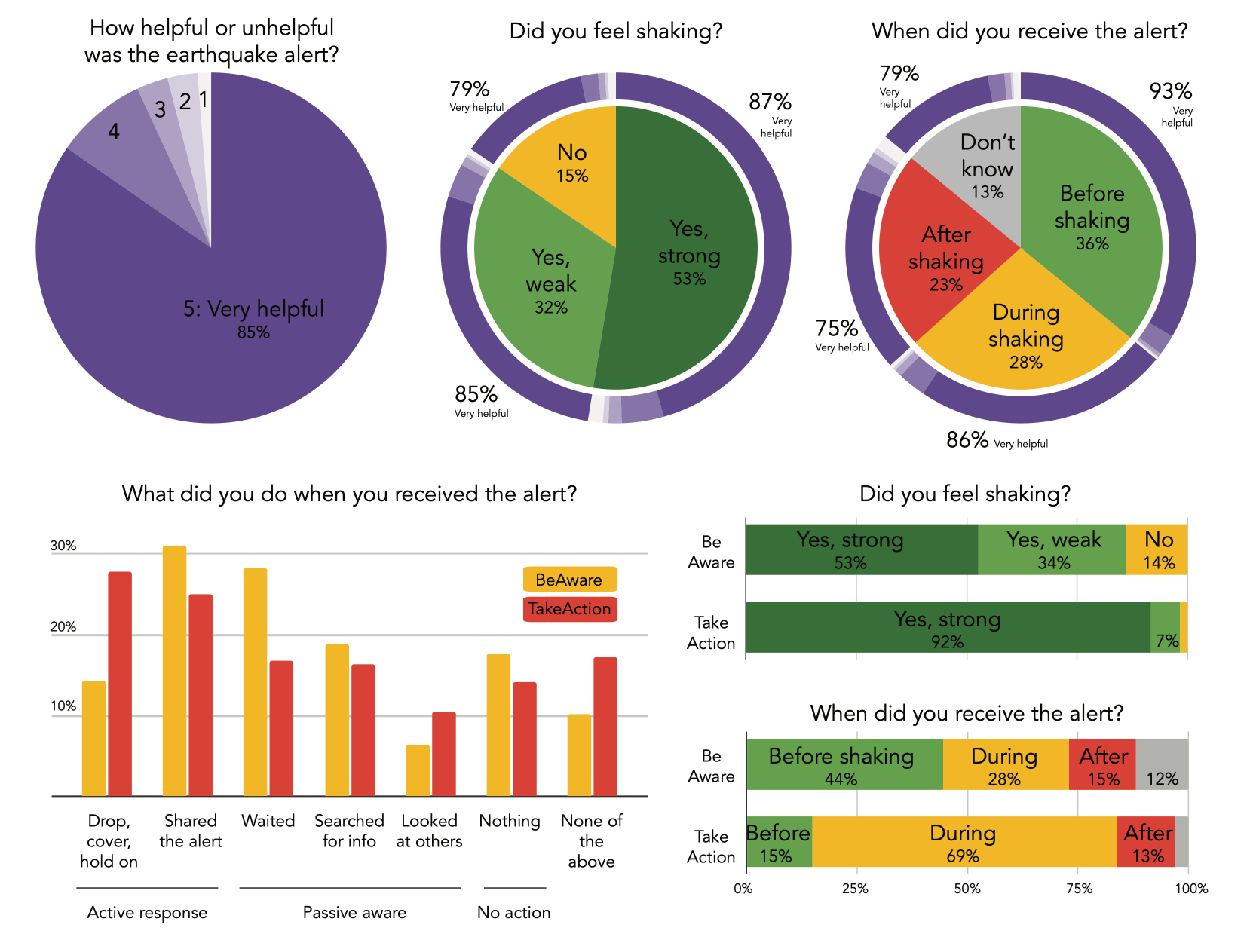
For earthquakes of magnitude 4.5 or higher, the system sent “TakeAction” alerts to users. These alerts are designed to draw users’ attention immediately and prompt them to take protective actions such as DCHO. The system sent alerts of this type on average 60 times per month during the study period, for an average of 18 million individual alerts per month. The system also delivered lesser “BeAware” alerts to regions expected to experience a shaking intensity of 3 or 4.

To assess how effective these alerts were, the researchers used Google Search to collect voluntary feedback via user surveys. Between 5 February 2023 and 30 April 2024, 1 555 006 people responded to a survey after receiving alerts generated from an AEA detection. Their responses indicated that 85% of them did indeed experience shaking, with 36% receiving the alert before the ground began to move, 28% during and 23% after.

Graphic showing responses to survey on the effectiveness of the AEA and users' responses to alerts

Principles of operation

AEA works on the same principles of seismic wave propagation as traditional earthquake detection systems. When an Android smartphone is stationary, the system uses the output of its accelerometer to detect the type of sudden increase in acceleration that P and S waves in an earthquake would trigger. Once a phone detects such a pattern, it sends a message to Google servers with the acceleration information and an approximate location. The servers then search for candidate seismic sources that tally with this information.

“When a candidate earthquake source satisfies the observed data with a high enough confidence, an earthquake is declared and its magnitude, hypocentre and origin time are estimated based on the arrival time and amplitude of the P and S waves,” explains Stogaitis. “This detection capability is deployed as part of Google Play Services core system software, meaning it is on by default for most Android smartphones. As there are billions of Android phones around the world, this system provides an earthquake detection capability wherever there are people, in both wealthy and less-wealthy nations.”

In the future, Allen says that he and his colleagues hope to use the same information to generate other hazard-reducing tools. Maps of ground shaking, for example, could assist the emergency response after an earthquake.

For now, the researchers, who report their work in Science, are focused on improving the AEA system. “We are learning from earthquakes as they occur around the globe and the Android Earthquake Alerts system is helping to collect information about these natural disasters at a rapid rate,” says Allen. “We think that we can continue to improve both the quality of earthquake detections, and also improve on our strategies to deliver effective alerts.”

Predicted quasiparticles called ‘neglectons’ hold promise for robust, universal quantum computing

Quantum computers open the door to profound increases in computational power, but the quantum states they rely on are fragile. Topologically protected quantum states are more robust, but the most experimentally promising route to topological quantum computing limits the calculations these states can perform. Now, however, a team of mathematicians and physicists in the US has found a way around this barrier. By exploiting a previously neglected aspect of topological quantum field theory, the team showed that these states can be much more broadly useful for quantum computation than was previously believed.

The quantum bits (qubits) in topological quantum computers are based on particle-like knots, or vortices, in the sea of electrons washing through a material. In two-dimensional materials, the behaviour of these quasiparticles diverges from that of everyday bosons and fermions, earning them the name of anyons (from “any”). The advantage of anyon-based quantum computing is that the only thing that can change the state of anyons is moving them around in relation to each other – a process called “braiding” that alters their relative topology.

Photo of a blackboard containing a diagram of anyon braiding. Writing on the blackboard says "Quantum gates are implemented by braiding anyons" and "Key idea: Quantum state evolves by braiding output only depends on the topology of the braid, *not* the path taken"

However, as team leader Aaron Lauda of the University of Southern California explains, not all anyons are up to the task. Certain anyons derived from mathematical symmetries appear to have a quantum dimension of zero, meaning that they cannot be manipulated in quantum computations. Traditionally, he says, “you just throw those things away”.

The problem is that in this so-called “semisimple” model, braiding the remaining anyons, which are known as Ising anyons, only lends itself to a limited range of computational logic gates. These gates are called Clifford gates, and they can be efficiently simulated by classical computers, which reduces their usefulness for truly ground-breaking quantum machines.

New mathematical tools for anyons

Lauda’s interest in this problem was piqued when he realized that there had been some progress in the mathematical tools that apply to anyons. Notably, in 2011, Nathan Geer at Utah State University and Jonathan Kujawa at Oklahoma University in the US, together with Bertrand Patureau-Mirand at Université de Bretagne-Sud in France showed that what appear to be zero-dimensional objects in topological quantum field theory (TQFT) can actually be manipulated in ways that were not previously thought possible.

“What excites us is that these new TQFTs can be more powerful and possess properties not present in the traditional setting,” says Geer, who was not involved in the latest work.

Photo of a blackboard containing an explanation of how to encode qubits into the collective state of a neglecton and two Ising anyons, which are quasiparticle vortices in a 2D material. The explanation includes a diagram showing the neglecton and the Ising anyons in a 2D material placed in a vertically oriented magnetic field. It also includes sketches showing how to perform braiding with this collection of particles and create 0 and 1 ket states

As Lauda explains it, this new approach to TQFT led to “a different way to measure the contribution” of the anyons that the semisimple model leaves out – and surprisingly, the result wasn’t zero. Better still, he and his colleagues found that when certain types of discarded anyons – which they call “neglectons” because they were neglected in previous approaches – are added back into the model, Ising anyons can be braided around them in such a way as to allow any quantum computation.

The role of unitarity

Here, the catch was that including neglectons meant that the new model lacked a property known as unitarity. This is essential in the widely held probabilistic interpretation of quantum mechanics. “Most physicists start to get squeamish when you have, like, ‘non-unitarity’ or what we say, non positive definite [objects],” Lauda explains.

The team solved this problem with some ingenious workarounds created by Lauda’s PhD student, Filippo Iulianelli. Thanks to these workarounds, the team was able to confine the computational space to only those regions where anyon transformations work out as unitary.

Shawn Cui, who was not involved in this work, but whose research at Purdue University, US, centres around topological quantum field theory and quantum computation, describes the research by Lauda and colleagues as “a substantial theoretical advance with important implications for overcoming limitations of semisimple models”. However, he adds that realizing this progress in experimental terms “remains a long-term goal”.

For his part, Lauda points out that there are good precedents for particles being discovered after mathematical principles of symmetry were used to predict their existence. Murray Gell-Man’s prediction of the omega minus baryon in 1962 is, he says, a case in point. “One of the things I would say now is we already have systems where we’re seeing Ising anyons,” Lauda says. “We should be looking also for these neglectons in those settings.”

The research is published in Nature Communications.

Graphite ‘hijacks’ the journey from molten carbon to diamond

At high temperatures and pressures, molten carbon has two options. It can crystallize into diamond and become one of the world’s most valuable substances. Alternatively, it can crystallize into graphite, which is industrially useful but somewhat less exciting.

Researchers in the US have now discovered what causes molten carbon to “choose” one crystalline form over the other. Their findings, which are based on sophisticated simulations that use machine learning to predict molecular behaviour, have implications for several fields, including geology, nuclear fusion and quantum computing as well as industrial diamond production.

Monitoring crystallization in molten carbon is challenging because the process is rapid and occurs under conditions that are hard to produce in a laboratory. When scientists have tried to study this region of carbon’s phase diagram using high pressure flash heating, their experiments have produced conflicting results.

A better understanding of phase changes near the crystallization point could bring substantial benefits. Liquid-phase carbon is a known intermediate in the synthesis of artificial diamonds, nanodiamonds and the nitrogen-vacancy-doped diamonds used in quantum computing. The presence of diamond in natural minerals can also shed light on tectonic processes in Earth-like planets and the deep-Earth carbon cycle.

Crystallization process can be monitored in detail

In the new work, a team led by chemist Davide Donadio of the University of California, Davis used machine-learning-accelerated, quantum-accurate molecular dynamics simulations to model how diamond and graphite form as liquid carbon cools from 5000 to 3000 K at pressures ranging from 5 to 30 GPa. While such extreme conditions can be created using laser heating, Donadio notes that doing so requires highly specialized equipment. Simulations also provide a level of control over conditions and an ability to monitor the crystallization process at the atomic scale that would be difficult, if not impossible, to achieve experimentally.

The team’s simulations showed that the crystallization behaviour of molten carbon is more complex than previously thought. While it crystallizes into diamond at higher pressures, at lower pressures (up to 15 GPa) it forms graphite instead. This was surprising, the researchers say, because even at these slightly lower pressures, the material’s most thermodynamically stable phase ought to be diamond rather than graphite.

“Nature taking the path of least resistance”

The team attributes this unexpected behaviour to an empirical observation known as Ostwald’s step rule, which states that crystallization often proceeds through intermediate metastable phases rather than directly to the phase that is most thermodynamically stable. In this case, the researchers say that graphite, a nucleating metastable crystal, acts as a stepping stone because its structure more closely resembles that of the parent liquid carbon. For this reason, it hinders the direct formation of the stable diamond phase.

“The liquid carbon essentially finds it easier to become graphite first, even though diamond is ultimately more stable under these conditions,” says co-author Tianshu Li, a professor of civil and environmental engineering at George Washington University. “It’s nature taking the path of least resistance.”

The insights gleaned from this work, which is described in Nature Communications, could help resolve inconsistencies among historical electrical and laser flash-heating experiments, Donadio says. Though these experiments were aimed at resolving the phase diagram of carbon near the graphite-diamond-liquid triple point, various experimental details and recrystallization conditions may have meant that their systems instead became “trapped” in metastable graphitic configurations. Understanding how this happens could prove useful for manufacturing carbon-based materials such as synthetic diamonds and nanodiamonds at high pressure and temperature.

“I have been studying crystal nucleation for 20 years and have always been intrigued by the behaviour of carbon,” Donadio tells Physics World. “Studies based on so-called empirical potentials have been typically unreliable in this context and ab initio density functional theory-based calculations are too slow. Machine learning potentials allow us to overcome these issues, having the right combination of accuracy and computational speed.”

Looking to the future, Donadio says he and his colleagues aim to study more complex chemical compositions. “We will also be focusing on targeted pressures and temperatures, the likes of which are found in the interiors of giant planets in our solar system.”

Building a quantum powerhouse in the US Midwest

In this episode of the Physics World Weekly podcast I am in conversation two physicists who are leading lights in the quantum science and technology community in the US state of Illinois. They are Preeti Chalsani who is chief quantum officer at Intersect Illinois, and David Awschalom who is director of Q-NEXT.

As well as being home to Chicago, the third largest urban area in the US, the state also hosts two national labs (Fermilab and Argonne) and several top universities. In this episode, Awschalom and Chalsani explain how the state is establishing itself as a burgeoning hub for quantum innovation – along with neighbouring regions in Wisconsin and Indiana.

Chalsani talks about the Illinois Quantum and Microelectronics Park, a 128-acre technology campus that being developed on the site of a former steel mill just south of Chicago. The park has already attracted its first major tenant, PsiQuantum, which will build a utility-scale, fault-tolerant quantum computer at the park.

Q-NEXT is led by Argonne National Laboratory, and Awschalom explains how academia, national labs, industry, and government are working together to make the region a quantum powerhouse.

  • Related podcasts include interviews with Celia Merzbacher of the US’s Quantum Economic Development Consortium; Nadya Mason of the Pritzker School of Molecular Engineering at the University of Chicago; and Travis Humble of the Quantum Science Center at Oak Ridge National Laboratory

Courtesy: American ElementsThis podcast is supported by American Elements, the world’s leading manufacturer of engineered and advanced materials. The company’s ability to scale laboratory breakthroughs to industrial production has contributed to many of the most significant technological advancements since 1990 – including LED lighting, smartphones, and electric vehicles.

Richard Muller: ‘Physics stays the same. What changes is how the president listens’

Richard Muller, a physicist at the University of California, Berkeley, was in his office when someone called Liz showed up who’d once taken one of his classes. She said her family had invited a physicist over for dinner, who touted controlled nuclear fusion as a future energy source. When Liz suggested solar power was a better option, the guest grew patronizing. “If you wanted to power California,” he told her, “you’d have to plaster the entire state with solar cells.”

Fortunately, Liz remembered what she’d learned on Muller’s course, entitled “Physics for Future Presidents”, and explained why the dinner guest was wrong. “There’s a kilowatt in a square metre of sunlight,” she told him, “which means a gigawatt in a square kilometre – only about the space of a nuclear power plant.” Stunned, the physicist grew silent. “Your numbers don’t sound wrong,” he finally said. “Of course, today’s solar cells are only 15% efficient. But I’ll take a look again.”

It’s a wonderful story that Muller told me when I visited him a few months ago to ask about his 2008 book Physics for Future Presidents: the Science Behind the Headlines. Based on the course that Liz took, the book tries to explain physics concepts underpinning key issues including energy and climate change. “She hadn’t just memorized facts,” Muller said. “She knew enough to shut up an expert who hadn’t done his homework. That’s what presidents should be able to do.” A president, Muller believes, should know enough science to have a sense for the value of expert advice.

Dissenting minds

Muller’s book was published shortly before Barack Obama’s two terms as US president. Obama was highly pro-science, appointing the Nobel-prize-winning physicist Steven Chu as his science adviser. With Donald Trump in the White House, I had come to ask Muller what advice – if any – he would change in the book. But it wasn’t easy for me to keep Muller on topic, as he derails easily with anecdotes of fascinating situations and extraordinary people that he’s encountered in his remarkable life.

Richard Muller

Born in New York City, Muller, 81, attended Bronx High School of Science and Columbia University, joining the University of California, Berkeley as a graduate student in the autumn of 1964. A few weeks after entering, he joined the Free Speech Movement to protest against the university’s ban on campus political activities. During a sit-in, Muller was arrested and dragged down the steps of Sproul Hall, Berkeley’s administration building.

As a graduate student, Muller worked with Berkeley physicist Luis Alvarez – who would later win the 1968 Nobel Prize for Physics – to send a balloon with a payload of cosmic-ray detectors over the Pacific. Known as the High Altitude Particle Physics Experiment (HAPPE), the apparatus crashed in the ocean. Or so Muller thought.

As Muller explained in a 2023 article in the Wall Street Journal, US intelligence recovered a Chinese surveillance device, shot down over Georgia by the US military, with a name that translated as “HAPI”. Muller found enough other similarities to conclude that the Chinese had recovered the device and copied it as a model for their balloons. But by then Muller had switched to studying negative kaon particles using bubble chambers. After his PhD, he stayed at Berkeley as a postdoc, eventually becoming a professor in 1980.

Muller is a prominent contrarian, publishing an article advancing the controversial – though some now argue that it’s plausible – view that the COVID-19 virus originated in a Chinese lab. For a long time he was a global-warming sceptic, but in 2012, after three years of careful analysis, he publicly changed his mind via an article in the New York Times. Former US President Bill Clinton cited Muller as “one of my heroes because he changed his mind on global warming”. Muller loved that remark, but told me: “I’m not a hero. I’m just a scientist.”

Muller was once shadowed by a sociology student for a week for a course project. “She was like [the anthropologist] Diane Fosse and I was a gorilla,” Muller recalls. She was astonished. “I thought physicists spent all their time thinking and experimenting,” the student told him. “You spend most of your time talking.” Muller wasn’t surprised. “You don’t want to spend your time rediscovering something somebody already knows,” he said. “So physicists talk a lot.”

Recommended recommendations

I tried again to steer Muller back to the book. He said it was based on a physics course at Berkeley known originally as “Qualitative physics” and informally as physics for poets or dummies. One of the first people to teach it had been the theorist and “father of the fusion bomb” Edward Teller. “Teller was exceedingly popular,” Muller told me, “possibly because he gave everyone in class an A and no exams.”

After Teller, fewer and fewer students attended the course until enrolment dropped to 20. So when Muller took over in 1999 he retitled it “Physics for future presidents”, he refocused it on contemporary issues, and rebuilt the enrolment until it typically filled a large auditorium with about 500 students. He retired in 2010 after a decade of teaching the course.

Making a final effort, I handed Muller a copy of his book, turned to the last page where he listed a dozen or so specific recommendations for future presidents, and asked him to say whether he had changed his mind in the intervening 17 years.

Fund strong programmes in energy efficiency and conservation? “Yup!”

Raise the miles-per-gallon of autos substantially? “Yup.”

Support efforts at sequestering carbon dioxide? “I’m not much in favour anymore because the developing world can’t afford it.”

Encourage the development of nuclear power? “Yeah. Particularly fission; fusion’s too far in the future. Also, I’d tell the president to make clear that nuclear waste storage is a solved problem, and make sure that Yucca mountain is quickly approved.”

See that China and India are given substantial carbon credits for building coal-fired power stations and nuclear plants? “Nuclear power plants yes, carbon credits no. Over a million and a half people in China die from coal pollution each year.”

Encourage solar and wind technologies? “Yes.” Cancel subsidies on corn ethanol? “Yes”. Encourage developments in efficient lighting? “Yes.” Insulation is better than heating? “Yes.” Cool roofs save more energy than air conditioners and often better than solar cells? “Yes.”

The critical point

Muller’s final piece of advice to the future president was that the “emphasis must be on technologies that the developing world can afford”. He was adamant. “If what you are doing is buying expensive electric automobiles that will never sell in the developing world, it’s just virtue signalling in luxury.”

I kept trying to find some new physics Muller would tell the president, but it wasn’t much. “Physics mostly stays the same,” Muller concluded, “so the advice mainly does, too.” But not everything remains unvarying. “What changes the most”, he conceded, “is how the president listens”. Or even whether the president is listening at all.

NASA launches TRACERS mission to study Earth’s ‘magnetic shield’

NASA has successfully launched a mission to explore the interactions between the Sun’s and Earth’s magnetic fields. The Tandem Reconnection and Cusp Electrodynamics Reconnaissance Satellites (TRACERS) craft was sent into low-Earth orbit on 23 July from Vandenberg Space Force Base in California by a SpaceX Falcon 9 rocket. Following a month of calibration, the twin-satellite mission is expected to operate for a year.

The spacecraft will observe particles and electromagnetic fields in the Earth’s northern magnetic “cusp region”, which encircles the North Pole where the Earth’s magnetic field lines curve down toward Earth.

This unique vantage point allows researchers to study how magnetic reconnection — when field lines connect and explosively reconfigure — affects the space environment. Such observations will help researchers understand how processes change over both space and time.

The two satellites will collect data from over 3000 cusp crossings during the one-year mission with the information being used to understand space-weather phenomena that can disrupt satellite operations, communications and power grids on Earth.

Each nearly identical octagonal satellite – weighing less than 200 kg each – features six instruments including magnetomers, electric-field instruments and devices to measure the energy of ions and electrons in plasma around the spacecraft.

It will operate in a Sun-synchronous orbit about 590 km above ground with the satellites following one behind the other in close separation, passing through regions of space at least 10 seconds apart.

“TRACERS is an exciting mission,” says Stephen Fuselier from the Southwest Research Institute in Texas, who is the mission’s deputy principal investigator. “The data from that single pass through the cusp were amazing. We can’t wait to get the data from thousands of cusp passes.”

Jet stream study set to improve future climate predictions

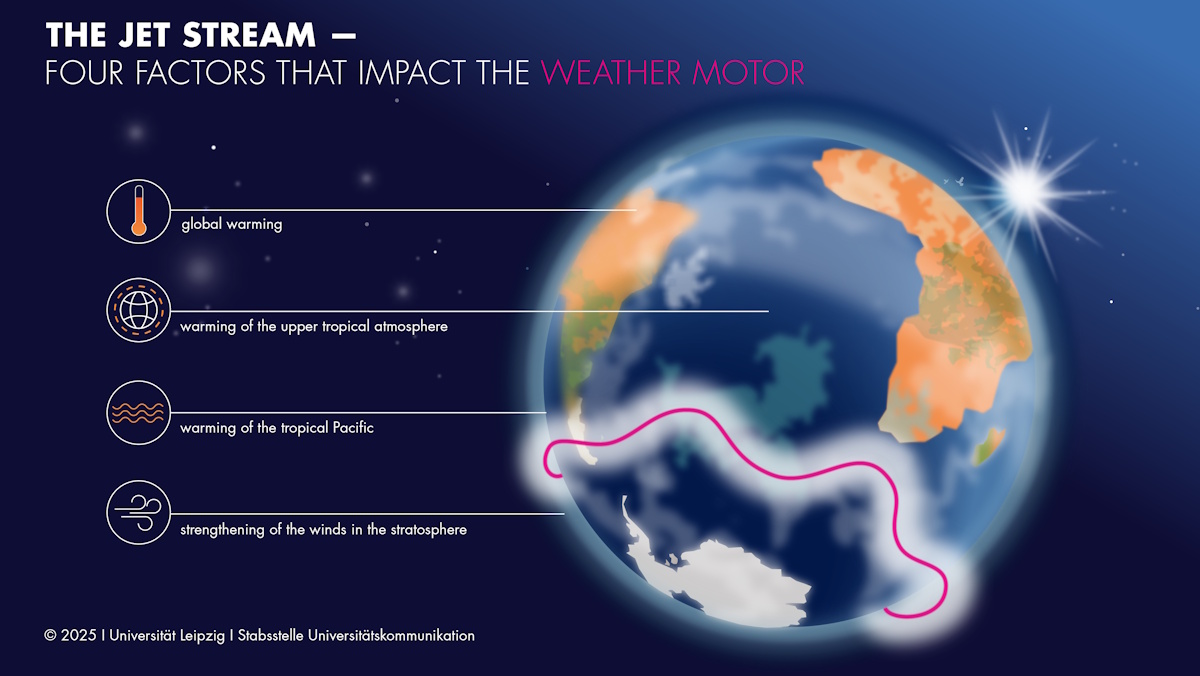
Factors influencing the jet stream in the southern hemisphere

An international team of meteorologists has found that half of the recently observed shifts in the southern hemisphere’s jet stream are directly attributable to global warming – and pioneered a novel statistical method to pave the way for better climate predictions in the future.

Prompted by recent changes in the behaviour of the southern hemisphere’s summertime eddy-driven jet (EDJ) – a band of strong westerly winds located at a latitude of between 30°S and 60°S – the Leipzig University-led team sifted through historical measurement data to show that wind speeds in the EDJ have increased, while the wind belt has moved consistently toward the South Pole. They then used a range of innovative methods to demonstrate that 50% of these shifts are directly attributable to global warming, with the remainder triggered by other climate-related changes, including warming of the tropical Pacific and the upper tropical atmosphere, and the strengthening of winds in the stratosphere.

“We found that human fingerprints on the EDJ are already showing,” says lead author Julia Mindlin, research fellow at Leipzig University’s Institute for Meteorology. “Global warming, springtime changes in stratospheric winds linked to ozone depletion, and tropical ocean warming are all influencing the jet’s strength and position.”

“Interestingly, the response isn’t uniform, it varies depending on where you look, and climate models are underestimating how strong the jet is becoming. That opens up new questions about what’s missing in our models and where we need to dig deeper,” she adds.

Storyline approach

Rather than collecting new data, the researchers used existing, high-quality observational and reanalysis datasets – including the long-running HadCRUT5 surface temperature data, produced by the UK Met Office and the University of East Anglia, and a variety of sea surface temperature (SST) products including HadISST, ERSSTv5 and COBE.

“We also relied on something called reanalysis data, which is a very robust ‘best guess’ of what the atmosphere was doing at any given time. It is produced by blending real observations with physics-based models to reconstruct a detailed picture of the atmosphere, going back decades,” says Mindlin.

To interpret the data, the team – which also included researchers at the University of Reading, the University of Buenos Aires and the Jülich Supercomputing Centre – used a statistical approach called causal inference to help isolate the effects of specific climate drivers. They also employed “storyline” techniques to explore multiple plausible futures rather than simply averaging qualitatively different climate responses.

“These tools offer a way to incorporate physical understanding while accounting for uncertainty, making the analysis both rigorous and policy-relevant,” says Mindlin.

Future blueprint

For Mindlin, these findings are important for several reasons. First, they demonstrate “that the changes predicted by theory and climate models in response to human activity are already observable”. Second, she notes that they “help us better understand the physical mechanisms that drive climate change, especially the role of atmospheric circulation”.

“Third, our methodology provides a blueprint for future studies, both in the southern hemisphere and in other regions where eddy-driven jets play a role in shaping climate and weather patterns,” she says. “By identifying where and why models diverge from observations, our work also contributes to improving future projections and enhances our ability to design more targeted model experiments or theoretical frameworks.”

The team is now focused on improving understanding of how extreme weather events, like droughts, heatwaves and floods, are likely to change in a warming world. Since these events are closely linked to atmospheric circulation, Mindlin stresses that it is critical to understand how circulation itself is evolving under different climate drivers.

One of the team’s current areas of focus is drought in South America. Mindlin notes that this is especially challenging due to the short and sparse observational record in the region, and the fact that drought is a complex phenomenon that operates across multiple timescales.

“Studying climate change is inherently difficult – we have only one Earth, and future outcomes depend heavily on human choices,” she says. “That’s why we employ ‘storylines’ as a methodology, allowing us to explore multiple physically plausible futures in a way that respects uncertainty while supporting actionable insight.”

The results are reported in the Proceedings of the National Academy of Sciences.

Festival opens up the quantum realm

quantum hackathon day 1 NQCC

The International Year of Quantum Science and Technology (IYQ) has already triggered an explosion of activities around the world to mark 100 years since the emergence of quantum mechanics. In the UK, the UNESCO-backed celebrations have provided the perfect impetus for the University of Edinburgh’s Quantum Software Lab (QSL) to work with the National Quantum Computing Centre (NQCC) to organize and host a festival of events that have enabled diverse communities to explore the transformative power of quantum computing.

Known collectively as the Quantum Fringe, in a clear nod to Edinburgh’s famous cultural festival, some 16 separate events have been held across Scotland throughout June and July. Designed to make quantum technologies more accessible and more relevant to the outside world, the programme combined education and outreach with scientific meetings and knowledge exchange.

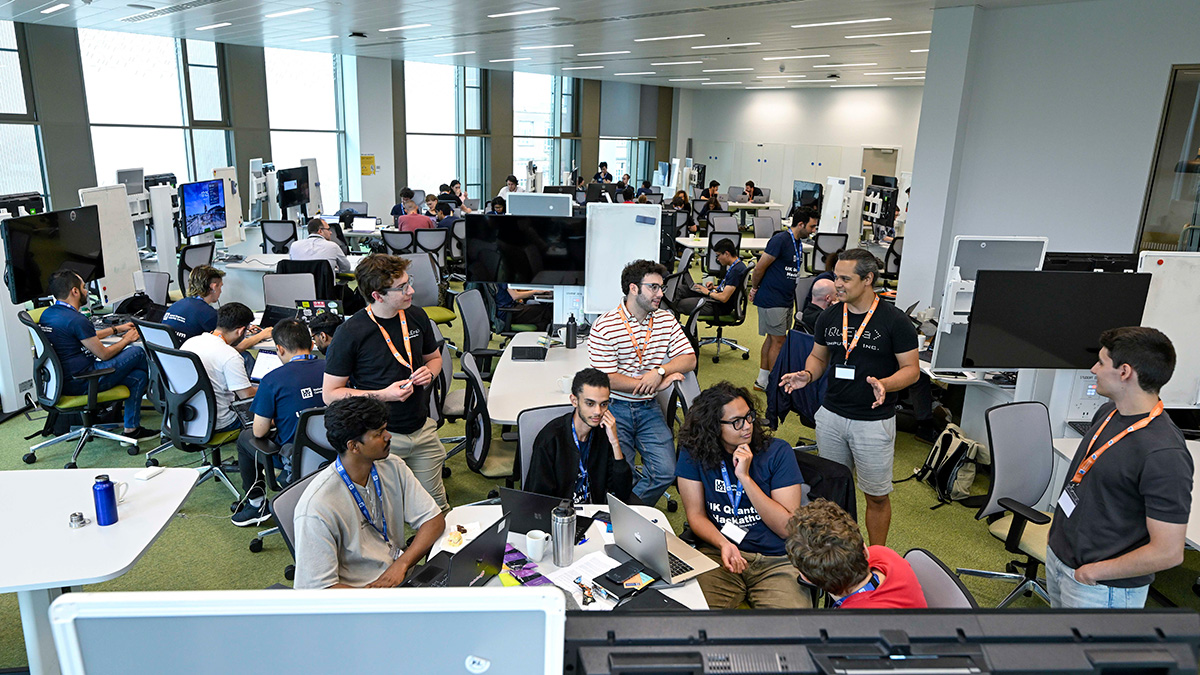
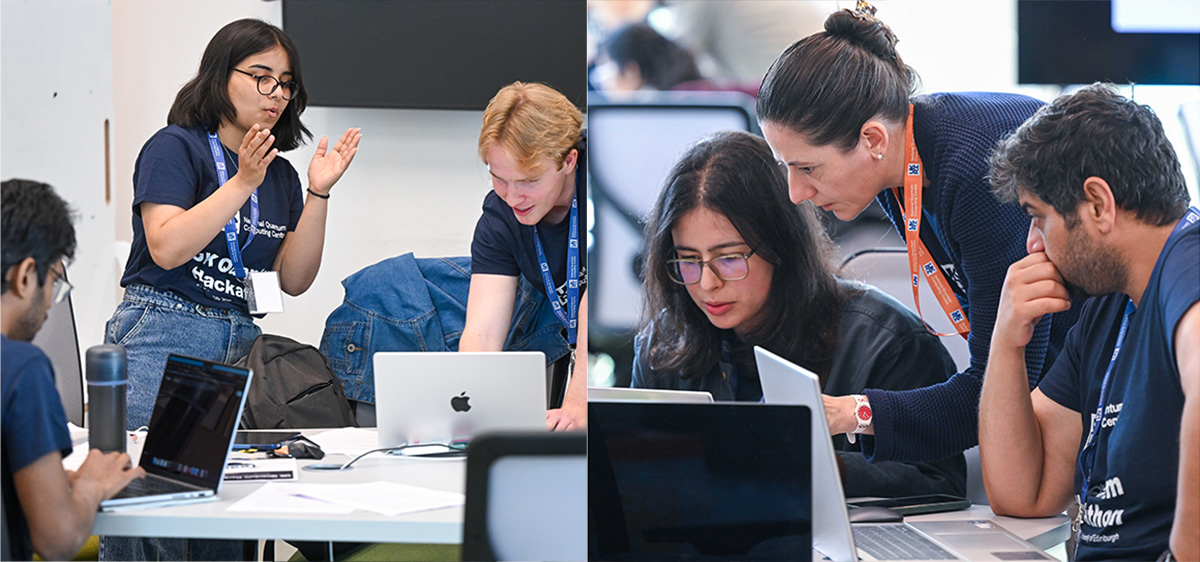
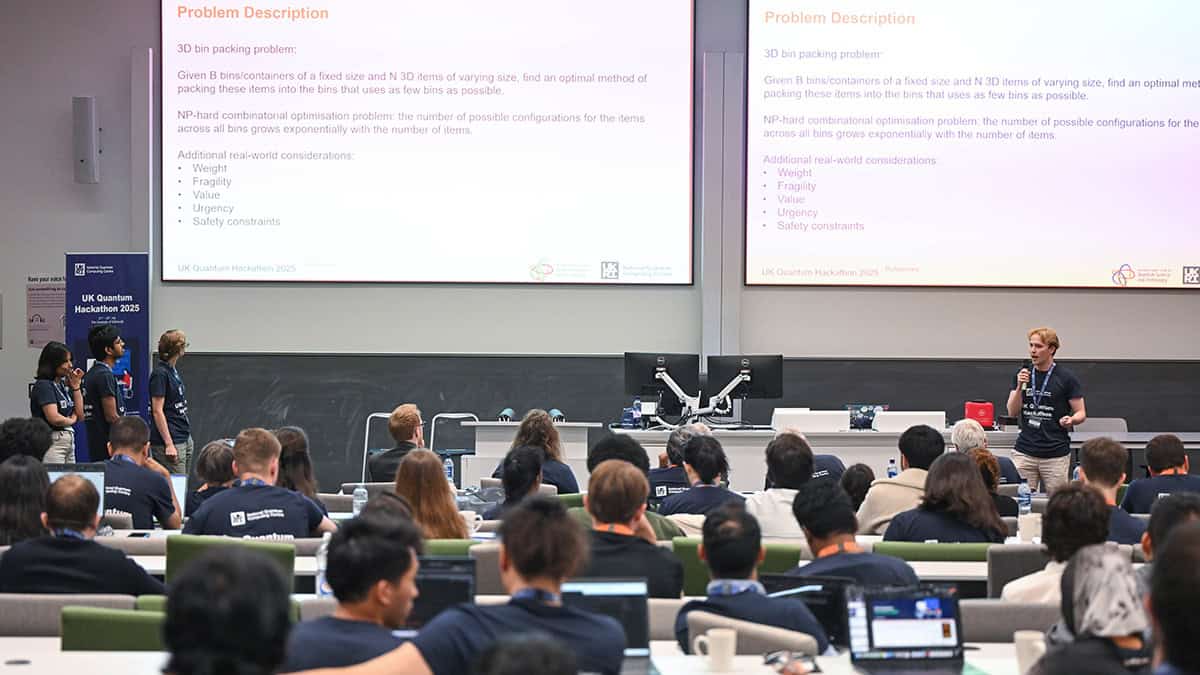
The Quantum Fringe programme evolved from several regular fixtures in the quantum calendar. One of these cornerstones was the NQCC’s flagship event, the UK Quantum Hackathon, which is now in its fourth consecutive year. In common with previous editions, the 2025 event challenged teams of hackers to devise quantum solutions to real-world use cases set by mentors from different industry sectors. The teams were supported throughout the three-day event by the industry mentors, as well as by technical experts from providers of various quantum resources.

quantum hackathon - NQCC

This year, perhaps buoyed by the success of previous editions, there was a significant uptick in the number of use cases submitted by end-user organizations. “We had twice as many applications as we could accommodate, and over half of the use cases we selected came from newcomers to the event,” said Abby Casey, Quantum Readiness Delivery Lead at the NQCC. “That level of interest suggests that there is a real appetite among the end-user community for understanding how quantum computing could be used in their organizations.”

Reflecting the broader agenda of the IYQ, this year the NQCC particularly encouraged use cases that offered some form of societal benefit, and many of the 15 that were selected aimed to align with the UN’s Sustainable Development Goals. One team investigated the accuracy of quantum-powered neural networks for predicting the progression of a tumour, while another sought to optimize the performance of graphene-based catalysts for fuel cells. Moonbility, a start-up firm developing digital twins to optimize the usage of transport and infrastructure, challenged its team to develop a navigation system capable of mapping out routes for people with specific mobility requirements, such as step-free access or calmer environments for those with anxiety disorders.

During the event the hackers were given just two days to explore the use case, formulate a solution, and generate results using quantum simulators, annealers and physical processors. The last day provided an opportunity for the teams to share their findings with their peers and a five-strong judging panel that was chaired by Sir Peter Knight, one of the architects of the UK’s National Quantum Technologies Programme and co-chair of the IYQ’s Steering Committee a prime mover in the IYQ celebrations. “Your effort, energy and passion have been quite extraordinary,” commented Sir Peter at the end of the event. “It’s truly impressive to see what you have achieved in just two days.”

From the presentations it was clear that some of the teams had adapted their solution to reflect the physical constraints of the hardware platform they had been allocated. Those explorations were facilitated by the increased participation of mentors from hardware developers, including QuEra and Pasqal for cold-atom architectures, and Rigetti and IBM for gate-based superconducting processors. “Cold atoms offer greater connectivity than superconducting platforms, which may make them more suited to solving particular types of problems,” said Gerard Milburn of the University of Sussex, who has recently become a Quantum Fellow at the NQCC.

quantum hackathon day 3 NQCC

The winning team, which had been challenged by Aioi R&D Lab to develop a quantum-powered solution for scheduling road maintenance, won particular praise for framing the problem in a way that recognized the needs of all road users, not just motorists. “It was really interesting that they thought about the societal value right at the start, and then used those ethical considerations to inform the way they approached the problem,” said Knight.

The wider impact of the hackathon is clear to see, with the event providing a short, intense and collaborative learning experience for early-career researchers, technology providers, and both small start-up companies and large multinationals. This year, however, the hackathon also provided the finale to the Quantum Fringe, which was the brainchild of Elham Kashefi and her team at the QSL. Taking inspiration from the better-known Edinburgh Fringe, the idea was to create a diverse programme of events to engage and inspire different audiences with the latest ideas in quantum computing.

“We wanted to celebrate the International Year of Quantum in a unique way,” said Mina Doosti, one of the QSL’s lead researchers. “We had lots of very different events, many of which we hadn’t foreseen at the start. It was very refreshing, and we had a lot of fun.”

One of Doosti’s favourite events was a two-day summer school designed for senior high-school students. As well as introducing the students to the concepts of quantum computing, the QSL researchers challenged them to write some code that could be run on IBM’s free-to-access quantum computer. “The organizers and lecturers from the QSL worked hard to develop material that would make sense to the students, and the attendees really grabbed the opportunity to come and learn,” Doosti explained. “From the questions they were asking and the way they tackled the games and challenges, we could see that they were interested and that they had learnt something.”

From the outset the QSL team were also keen for the Quantum Fringe to become a focal point for quantum-inspired activities that were being planned by other organizations. Starting from a baseline of four pillar events that had been organized by the NQCC and the QSL in previous years, the programme eventually swelled to 16 separate gatherings with different aims and outcomes. That included a public lecture organized by the new QCi3 Hub – a research consortium focused on interconnected quantum technologies – which attracted around 200 people who wanted to know more about the evolution of quantum science and its likely impact across technology, industry, and society. An open discussion forum hosted by Quantinuum, one of the main sponsors of the festival, also brought together academic researchers, industry experts and members of the public to identify strategies for ensuring that quantum computing benefits everyone in society, not just a privileged few.

Quantum researchers also had plenty of technical events to choose from. The regular AIMday Quantum Computing, now in its third year, enabled academics to work alongside industry experts to explore a number of business-led challenges. More focused scientific meetings allowed researchers to share their latest results in quantum cryptography and cybersecurity, algorithms and complexity, and error correction in neutral atoms. For her part, Doosti co-led the third edition of Foundations in Quantum Computing, a workshop that combines invited talks with dedicated time for focused discussion. “The speakers are briefed to cover the evolution of a particular field and to highlight open challenges, and then we use the discussion sessions to brainstorm ideas around a specific question,” she explained.

Those scientific meetings were complemented by a workshop on responsible quantum innovation, again hosted by the QCi3 Hub, and a week-long summer school on the Isle of Skye that was run by Heriot-Watt University and the London School of Mathematics. “All of our partners ran their events in the way they wanted, but we helped them with local support and some marketing and promotion,” said Ramin Jafarzadegan, the QSL’s operations manager and the chair of the Quantum Fringe festival. “Bringing all of these activities together delivered real value because visitors to Edinburgh could take part in multiple events.”

Indeed, one clear benefit of this approach was that some of the visiting scientists stayed for longer, which also enabled them to work alongside the QSL team. That has inspired a new scheme, called QSL Visiting Scholars, that aims to encourage scientists from other institutions to spend a month or so in Edinburgh to pursue collaborative projects.

As a whole, the Quantum Fringe has helped both the NQCC and the QSL in their ambitions to bring diverse stakeholders together to create new connections and to grow the ecosystem for quantum computing in the UK. “The NQCC should have patented the ‘quantum hackathon’ name,” joked Sir Peter. “Similar events are popping up everywhere these days, but the NQCC’s was among the first.”

Copyright © 2026 by IOP Publishing Ltd and individual contributors