Specialists gather at World Renewable Energy Congress

The World Renewable Energy Congress (WREC) is a long running bi-annual gathering of academics and practitioners, linked via the World Renewable Energy Network (WREN). Although based in the UK, its bi-annual sessions, and other regular sub-gatherings, take place all over the world. This year, however, for its 18th session, WREC returned — for a second time — to Kingston University in suburban Surrey. Big hitters included David Renné, president of the International Solar Energy Society, who offered an inspiring overview of pathways to 100% renewable energy, and Rainer Hinrichs-Rahlwes, vice-president, European Renewable Energies Federation (EREF), and board member of the German Renewable Energy Federation (BEE), looking critically at Europe’s 2030 targets: the EU is trying, he said, but needs to do better.

Controversially, WREN director Donald Swift-Hook argued that energy storage was mostly irrelevant

Dave Elliott

Wherever it’s held, WREC always attracts significant international participation, including from Africa, with this year a range of technical papers presented, e.g. on mini-grids and rural electrification. At the more general policy level, my Open University colleague Terry Cook and I relayed some ideas from our new book, Renewable Energy – From Europe to Africa, focussing on the impact of market-based private investment approaches to renewable development in Africa. The new “trade not aid” approach being adopted by the EU aims to stimulate private sector investment to create new markets, something that China was already good at, although often with less emphasis on the social and environmental aspects.

Big in Japan?

There were also several good presentations on developments in Asia, including one on the state of play with offshore wind in Japan. It was reported that there were or had been ten projects, 40 MW in all, incorporating some 2 MW floating systems and some now at 5 and 7 MW. But though the potential was very large (hundreds of GW for both offshore and on-shore wind), there were problems with developing wind power in Japan. It has cumbersome environmental impact assessment (EIA) procedures that can take four years, and three separate regional electricity supply bodies in the east and six in the west, making grid integration of outputs from on-shore wind, which is mainly in the north, hard. Floating offshore projects might, however, circumvent some of the bureaucratic issues and supply power direct to load centres like Tokyo.

Integration is clearly an increasingly important issue, with storage being part of that. Controversially, WREN director Donald Swift-Hook argued that energy storage was mostly irrelevant — and that renewables were best seen as direct (fossil) fuel savers. So, if they were available, and especially at increasingly low cost, then just use them. Other times, use gas! Turning surplus renewables into gas (PtG) would evidently be too expensive. So post-generation storage of renewable outputs was basically not needed or viable in Swift-Hook’s eyes: “Commercial storage of energy on a power system works by arbitrage, buying cheap electricity [typically in the middle of the night] and selling it when electricity is dear [during the day-time or evening]. If fuel-saving renewables are stored, the round-trip losses from putting their electricity into store and taking it out again wastes some of the fuel already saved. There is no difference in fuel costs around the clock, so storing electricity from renewable fuel savers cannot be arbitraged or commercially justified.”

To store or not to store

Reinhard Haas from the energy economics group at the Technical University of Vienna also looked at the storage issue, in the context of dealing with surplus outputs from renewables, and their short- and long-term variations. Batteries were OK for short-term balancing, and they reduced the strain on the grid. But pumped hydro was needed for longer term storage, though its cost would rise as new sites became scarce. However, Power to Gas (PtG hydrogen/methane) would get cheaper. But there are diminishing returns — each storage success makes it less economically attractive to store more. Or as Haas put it: “Every additional storage unit makes this one and every other less cost-effective”. That’s the so-called “principle of self-cannibalism in energy economics”, which, as far as I can see, means that the cheaper anything gets the less profit can be made from going for more of it. But that’s surely only if the market remains the same size — if it’s expanding, so will the opportunity to make profits from meeting it. However, Haas says that, while local batteries might do well for short-term storage, “in a dynamic market framework the costs of all centralized long-term storage technologies will finally be too high to become competitive”, and he sees competition with demand-response options and demand-side management challenging storage as well.

So, decentralised batteries apart, the final conclusion from Haas is quite grim, almost as grim as Swift-Hook’s: “with respect to all centralized long-term storage technologies, the future perspectives will be much less promising than currently indicated in several papers: new long term hydro storages will not become economically attractive in the next decades [and] for PtG-technologies it will become very hard to compete in electricity markets, despite a high technological learning potential”. Though Haas does say that, “for hydrogen and methane there might be prospects in the transport sector”.

Focus on solar

There were, as ever, many papers on specific technical and operational issues and developments (over 170 in all), with the PV solar field heavily represented, including a paper from Oman, on the impacts of dust, and a nice historical paper on the use of PV by the US Vanguard satellite. A lot to take in, but with some overall very positive messages. For example, it was suggested that PV may surpass 1 TW globally by 2022. It was also suggested that new luminescent wavelength down‐shifting materials could boost PV productivity significantly. That would make PV more valuable in less sunny areas — the paper on that came from Ireland. Arguably, it might then be clearly even more preferable to biomass in land-use terms. It was claimed that, given the low energy conversion efficiency of bio-photosynthesis compared to PV cells, PV could already generate 40-80 times more power output per acre than biomass crops. Of course, the difference would be less if it was biomass waste that was being used, an issue also well covered at WREC. However, overall PV does seem to be romping ahead in many areas, both at the large and small scale, with, for example, PV being used in refugee camps and in Afghanistan’s reconstruction, and hybrid PV-thermal playing a role in desalination.

WREC was held in the midst of the sweltering UK summer and there were some timely papers on cooling and ventilation. These included, significantly, some from China, where this is becoming a major issue for the rapidly-growing more affluent urban population. Much of the Middle East and Africa also has increasing air-con demand and this will rise everywhere as climate change progresses. Fortunately, some new technologies are emerging that may help, including systems using high-heat-capacity phase-changing materials. As some papers from the UAE noted, these can also be used with Concentrating Solar Power systems. So maybe high temperatures are not always a problem — although I still would not like to be trapped on the 100th floor of a Dubai high-rise when and if the currently still mostly fossil-derived power supply fails, and there are no lifts or air con… But it was good to hear that some progress is being made on greening buildings and power in the UAE.

However, as everywhere, there is a lot more to do. As Ali Sayigh, the indefatigable chair of WREC, put it, “many countries in the world are now embracing renewable energy not only because it is clean and cost effective but also because it reduces energy imports and creates local jobs…Now it is up to you, the participants in this Congress, to continue to spread and develop all forms of renewable energy, and to commit yourselves to the very urgent reduction of the climate change effect”.

  • Key papers will be published by Springer/WREN in due course.
Video guide to Physics World Careers 2018

There is no doubt  that a degree in physics can set you up for a diverse range of careers. But this broadness of the discipline can also make it difficult to select a career path. That is where the Physics World Careers guide can help to focus your mind: helping you to pursue your ambitions while using those hard-earned skills from your degree. Find out more about the 2018 guide along with stacks of other useful advice and case studies in our careers collection.

Superconducting and diamond qubits get a boost

Important challenges in creating practical quantum computers have been addressed by two independent teams of physicists in the US. One team has created a new way of reading-out superconducting quantum bits (qubits), while the other has come-up with a new way to get spin qubits in diamond to interact with each other.

Any viable quantum computer needs isolated quantum states that can store qubits of information for relatively long periods of time. It must also be possible for these qubits to interact with each other at appropriate times so that the information can be processed and the results read-out. It is these often-conflicting requirements that made it very difficult to create a practical quantum computer

In one of two papers published in Science,  Robert McDermott of University of Wisconsin-Madison and colleagues in Wisconsin and New York describe a new detector for reading-out superconducting qubits. These qubits are superconducting circuits containing Josephson junctions that are cooled to millikelvin temperatures and function as quantized oscillators. The qubit can be switched between two quantum states by a photon at the oscillator’s resonant frequency. The circuits also interact strongly to process information.

Complicated measurement

However, reading a qubit’s state is difficult because it involves coupling the oscillator to a resonant cavity. “If the qubit is in the ground state, you’ve got a cavity resonance at one frequency; if it’s in the excited state you’ve got a cavity resonance at a different frequency,” explains McDermott. Reading the state can therefore be done by measuring the cavity resonance, which involves probing the cavity with microwaves and detecting the phase of the reflected or transmitted waves. This requires low noise amplifiers and separate circuitry at both cryogenic and room temperatures – making it impractical for scaling-up in a practical quantum computer.

Instead, the group coupled the qubit’s resonant cavity to a second cavity connected to another Josephson junction with two easily-distinguishable states: a metastable state loaded with photons and an empty ground state. If the qubit is in one specific state, the photons remain trapped in the metastable state. However, if the qubit is in the other state, the photons will tunnel immediately to the ground state.

“It’s a very simple circuit,” says McDermott. The researchers detected the qubit states with a fidelity of 92%. They are confident that, with optimization, they can get to over 99%. While other qubit technologies can also reach this fidelity, McDermott’s qubits could be easier to scale-up to create a practical quantum computer.

Diamond vacancies

In a second paper in Science, Mikhail Lukin and colleagues at Harvard University used two silicon-vacancy centres (SiVs) in diamond as two qubits. A SiV occurs when two neighbouring carbon atoms in the diamond lattice are replaced by one silicon atom. The spin of the SiV makes a good qubit because it is isolated from electrical noise yet interacts with light at certain frequencies.

The challenge is getting SiVs to interact with each other. The team placed two SiVs in an optical cavity, which dramatically increases the probability that they would interact: “The two SiVs are a bit like two people in a dark room trying to send Morse code signals to each other using dim flashlights,” explains Harvard’s Ruffin Evans, “If you form a cavity by placing mirrors back-to-back on each wall, the light bounces back and forth and gives the people many more chances to see the signal.” When tuned into resonance at the same frequency, states from the two silicon vacancy centre states were mixed by the interaction to form a super-radiant “bright” state and a non-radiant “dark” state.

Creating two interacting qubits is not new and other researchers have gone further and created working quantum-logic gates using different qubit technologies. Evans explains, “The novelty of our work is that, even though the interaction between light and matter is normally very weak, we’ve still been able to create an interaction between these two silicon vacancy centres using light. The next step is to harness this interaction to create a real quantum gate.” Such a device system should lend itself naturally to the creation of a “quantum internet” that uses photon-based qubits sent long distances through fibre optic cables.

“Beautiful scheme”

Barry Sanders of the University of Calgary in Canada told Physics World that both teams’ research is significant – but for different reasons. He believes the McDermott group’s work has clear potential for direct application to quantum computation if the measurement fidelity can be increased. “Superconducting circuits are generally regarded as the most promising direction towards making scaleable quantum computing, but a big drawback has always been the lack of single photon detection,” he says. “This is a beautiful scheme and it looks scaleable to me.”

The relevance of Lukin group’s work to quantum computation is less clear but it may have unforeseen applications. Sanders says, “For a long time, we’ve got away with treating multi-atom systems as a single atom with an effective background. When we get to phenomena like super- and sub-radiance, we’re talking about two-body effects with atoms sharing photons between them. These guys have done everything just right that they’re able to tune into and out of this collective behaviour.  It’s a huge challenge in fabrication and control and their results are convincing and elegant.”

Putting image-guided radiotherapy to the test

Upcoming techniques based on magnetic-resonance guided radiotherapy (MRgRT) could enable clinicians to compensate for patient movements to a much higher degree, thanks to the clarity offered by MR imaging. Real-time tracking methods that can pinpoint changes in the position of a tumour translate to improvements in dose conformality by keeping radiation on target and sparing healthy tissue.

As vendors, early adopters and clinicians bring new ideas to fruition, a key part of their success depends on having the right development tools, which includes motion (or 4D) phantoms. Accurate models give researchers the chance to safely explore solutions for overcoming hurdles that can be faced in the clinic as a result of tumour motion. Scenarios include when a patient breathes, causing organs and tumours to move, or when there’s peristaltic motion through the digestive system.

We’ve designed our system to be compatible and expandable, and even – to a certain degree – customizable

Enzo Barberi, director of MR product development at Modus QA

Tumour movement has always challenged cancer treatment and manufacturers have worked hard to mitigate the issue as much as possible.

“Image guidance for radiation therapy has been around for well over a decade and most linacs have some form of cone-beam CT or EPID imaging that allows to them to roughly see where the target is,” says Enzo Barberi, director of MR product development at Modus QA – a developer and manufacturer of quality assurance tools for advanced radiotherapy and medical imaging. “But those imaging techniques provide little information about soft tissue.”

In contrast, MR imaging can reveal soft tissue in exquisite detail, which – when linked to a radiotherapy system – shines a welcome light on where the cancer is at any moment in time.

Barberi, who’s been working in this field for almost three decades, confirms that it’s a very exciting time in terms of the technology and the clinical development of next-generation techniques exploiting MR linacs. “In both systems that are available today, you can image while you are applying radiation,” he points out.

Real-time imaging hits the target

On-board MR imaging offers numerous possibilities for advancing radiotherapy treatment. For example, if gas happens to pass through the intestinal tract of a patient during radiation treatment, real-time MR imaging can detect whether the tumour has moved. And, if the target is now positioned outside the safety margins, the beam can be turned off until the gas has passed through and the tumour moves back into position.

“It’s a dramatic example of how the combination of these two techniques in parallel and in real-time can make a big difference in terms of accuracy in hitting the target when it’s moving,” Barberi comments. Real-time imaging using MR could also see the end of so-called gating, where patients are required to hold their breath to keep their chest stationary – a development that could speed up treatment as well as reducing discomfort.

Bringing these new techniques into the clinic requires reliable tools for quality assurance (QA). MRI-compatible models make it possible to test the ability of novel imaging sequences to track a wide range of movements – such as those resulting from respiration. Verification is important too.

“Using phantoms like Modus’ programmable QUASAR MRI 4D motion product in combination with dosimetry inserts allows early adopters to calculate and measure the dose that is administered to a moving target and ensure that they are actually hitting this moving target and not the surrounding healthy tissue,” says Barberi.

These early adopters are important beta-testers for Barberi and his team, as they are at the frontier of MRgRT. Users require a phantom design that’s flexible, practical and easy to deploy, allowing them to gather as much data as possible for a range of possible patient scenarios.

“Modus focuses very heavily on workflow as we understand that time on the system is valuable,” Barberi comments. “If we can make our QA tools and QA procedures fast and efficient then sites are not only more likely to use them, but they will also appreciate the fact that we’re not taking up a lot of their magnet and linac time simply for setup or integration or when they have to switch over from one mode of measurement to another.”

Early adopters drive development

Features of the QUASAR motion phantom include a spherical target that can mimic numerous trajectories of a tumour in the body, including those seen during breathing. “We can add not only linear motion in and out of the phantom, but we can also add twist and offset that sphere so that it follows a complex 3D path as time plays out,” Barberi explains.

His team acknowledges that different investigators will have different demands, such as when it comes to dosimetry. “Users may wish to use ion chambers or film dosimetry or 3D gel dosimetry,” Barberi notes. “So we’ve designed our system to be compatible and expandable, and even – to a certain degree – customizable.”

Barberi’s group is already working on a second wave of inserts for the MR-safe motion phantom, thanks to the early-adopter programme. The new inserts will focus not just on soft tissue sites, but also modelling deep organ areas and more complex types of motion.

There is no shortage of challenges coming down the pipeline, but Barberi has a great team and is confident in Modus’ approach – having seen its flagship products develop successfully along a similar path. “Working with many different clinicians, physicists and OEMs over the years, we have families of different inserts that we can draw upon,” he says.

Barberi describes MRgRT as a “game changer”, and companies such as Modus are part of a big global effort to support upcoming advances that serve to accelerate the adoption of MR-linac systems for clinical treatment. Initiatives include STARLIT (System Technologies for Adaptive Real-time MR image-guided Therapies), a consortium developing techniques for next-generation motion compensation that includes two large equipment vendors – Elekta and Philips – along with small- and medium-sized companies and academic centres. “We are also equally proud to be a partner with ViewRay, supporting the requirements of an equally respected vendor, and their early adopting customers,” he says.

For more information about the QUASAR phantom, visit https://modusqa.com/mri/motion

Expert opinions vary on earthquake risk from enhanced geothermal systems

Enhanced geothermal systems (EGS) that retrieve heat from dry rock could add to the renewable energy mix but we don’t fully know the geological impact of pumping water deep underground. Given that the systems could lie close to large populations, it’s prudent to solicit expert opinion on the risk of inducing seismic activity. The range of responses from such a panel, however, can be surprisingly diverse.

Scientists in Switzerland and the US convened a panel of 14 international experts and presented them with a hypothetical EGS plant and its geological context. The experts provided their individual judgements in one-on-one interviews with a member of the research team.

“Best-guess” probabilities for the likelihood of a magnitude three, or larger, earthquake occurring during six days of stimulation to create an 80 million m3 reservoir at a depth of 5 km ranged from 0.2% to 95%. When considering 30 years of plant operation, the range of “best-guess” estimates for induced seismicity widened even further.

“As the [EGS] technology is relatively new and there are still deep uncertainties about induced seismicity, we wanted to complement the usual approach of quantitative risk assessment with insights from expert elicitation,” says Evelina Trutnevyte, now at the University of Geneva, Switzerland. “By observing the discussions among seismologists, we had already sensed that some judgements on how high the induced seismicity hazard and risk are would be different. However, we were still very much surprised how different the judgements were for the same hypothetical scenario.”

As well as observing a wide range of probability estimates, Trutnevyte and colleagues noted that responses also diverged on what influences induced seismicity and how it could be better assessed and managed. Based on these findings, the researchers have the following advice for those reviewing a potential EGS project.

“This diversity [in the range of responses] has important implications on how induced seismicity is managed,” says Trutnevyte. “For example, multiple experts should be recruited to make sure that different perspectives are represented, or induced seismicity hazard and risk assessments should be commissioned from several sources that use different methodologies.”

For the study, the team recruited experts working in science, consultancy, public administration and industry. More than half of the recruits reported their primary or secondary disciplines as seismology. Other specialisms included geotechnical and structural engineering; petroleum and production engineering; and rock physics.

“When looking for the experts to participate in our study, we found that we could recruit seismologists relatively easily, perhaps because induced seismicity is a hot topic in their field at the moment,” says Trutnevyte. “However, it was harder for us to find structural engineers who had experience working on induced seismicity damage to buildings, infrastructures and populations nearby.”

Organizations such as the Swiss Competence Center for Energy Research – Supply of Electricity have set up work packages to extend fundamental knowledge of geothermal power production, which could help in bringing opinions closer together.

Trutnevyte and colleagues described their study in Environmental Research Letters (ERL).

Modelling the Mississippi

If a picture’s worth a thousand words, then the 1000 m2 physical model of the lower Mississippi river at LSU Center for River Studies must seem like a treasured tome to hydrologists. In this video, LSU researcher Clint Willson explains why the Mississippi model is such a useful tool for scientists, policy makers and the general public.

Located at the Baton Rouge Water Campus, it is one of the world’s largest movable bed physical models – 20 high-definition projectors illuminate the model and bring the river and coast to life. Being highly dynamic, the model is used to study the geography and hydrology of the Mississippi under different scenarios. That includes visualizing rising water levels during hurricanes, as well as longer-term impacts of sea-level rise on coastal lands.

In addition to its role in scientific studies, the model can also be used by authorities including land-use and evacuation planning. Unsurprisingly, the facility is also popular for education and outreach, to help spark an interest in environmental research in a part of the world with its fair share of environmental challenges.

Urban resiliance

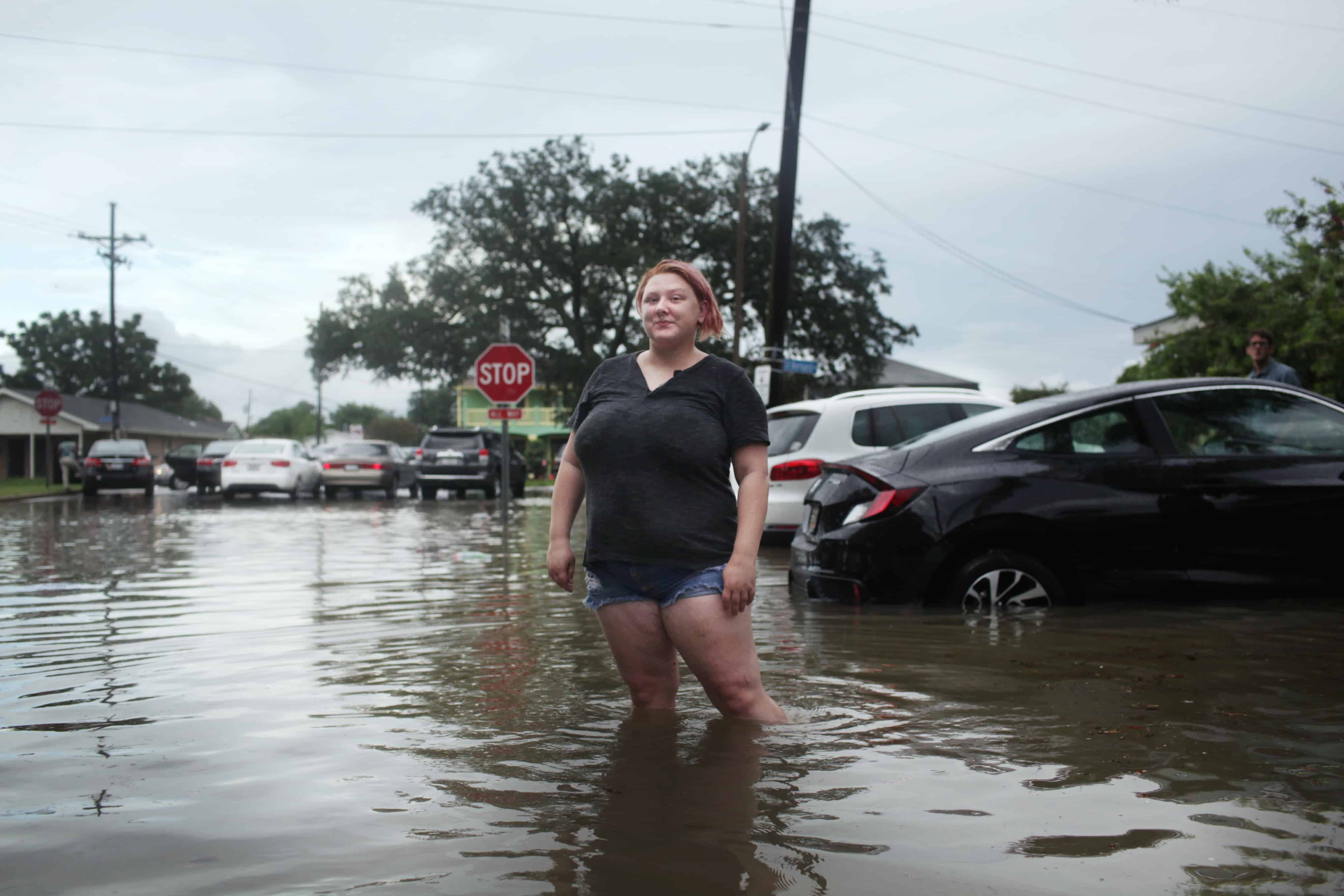
New Orleans resident during a flood event

For more information about how the US is responding to flood risk, see the Physics World short documentary, Testing the Waters in New Orleans. The film explores how scientists are working with residents in the Gentilly district of New Orleans to help make their neighbourhood more resilient to flooding.

First UK radiation treatment using MR-guided linac

The Royal Marsden and the Institute of Cancer Research (ICR) in London have performed the first treatment in the UK using an MR-linac – the Elekta Unity system.

The Elekta Unity, which received its CE mark in June 2018 and is being clinically implemented in European cancer centres, combines high-field (1.5 T) MR imaging, precision radiation therapy and intelligent software to deliver MR-guided radiotherapy.

“It’s hugely exciting to be able to trial this technology here at the ICR and The Royal Marsden,” says Uwe Oelfke, head of the Joint Department of Physics. “Together we’ve made world-leading advances in radiotherapy through our research and we expect Elekta Unity to allow us to make another step change in improving cancer treatment. This trial is for prostate cancer, but we anticipate Elekta Unity will help us improve radiotherapy for a wide range of cancers, including hard-to-treat forms such as lung and pancreatic cancer.”

The patient received treatment as part of the PRISM clinical trial, which will assess the feasibility of delivering radical radiotherapy for prostate cancer using the MR-linac. The patient had a localized prostate cancer and started hormone treatment in May 2018. His PSA (prostate-specific antigen) level indicated that he was ready to start radiotherapy and he was offered treatment on the Elekta Unity.

“Tumour shape and position relative to healthy tissue evolve over the course of treatment and can change during an individual treatment session,” explains Alison Tree, who is leading the PRISM trial. “The ability to detect those changes and adapt therapy in real time allows us to improve the precision of radiation therapy, more effectively treating the tumour while preserving healthy tissue.”

Tree notes that the Elekta Unity will also enable radiation treatment of patients who would not be candidates using more traditional radiation delivery systems.

“For decades, the radiation oncology community has dreamed of the day when we could see what we treat in real time just as our surgical colleagues do, and we are excited that this day has arrived,” says Oelfke. “Radiotherapy is important to the treatment of around 40% of the people who are cured of cancer. But if we want to fully unlock the potential of radiotherapy by making it even more precise, we need to be able to see a patient’s tumour while we deliver the radiation treatment. The MR-linac will make this possible.”

The Royal Marsden and the ICR are founding members of Elekta’s MR-linac Consortium, a collaborative industrial–academic partnership that Elekta founded with seven centres and technology partner, Philips, in 2012.

Neuromodulation helps paralysed man take independent steps

A patient with complete lower limb paralysis can independently step again following a combination of electronic spinal cord stimulation and rehabilitation therapy, reports a study from Mayo Clinic and UCLA (Nature Medicine 10.1038/s41591-018-0175-7).

Severe spinal cord injuries can functionally disconnect the higher brain centres that guide movement from the spinal cord circuitry, located below the injury, that interacts with skeletal muscle – causing chronic paralysis. In this study, the subject had injured his spinal cord in the middle of his back in a snowmobile accident.

The subject first participated in 22 weeks of physical therapy and then had an electrical spinal stimulation device surgically implanted by co-principal investigator Kendall Lee and his neurosurgery team. The implant was located in the epidural space — the outermost part of the spinal canal — at a specific location below the injured area.

The man next underwent 113 sessions of task-specific, multimodal rehabilitation training over next 43 weeks. In the first week, he used a harness to lower his risk of falling and provide upper body balance. Trainers were positioned at his knees and hips to help him stand, swing his legs and shift his weight. Because he did not regain sensation, he initially used mirrors to view his legs, and the trainers described leg position, movement and balance.

“It was a very rigorous and intensive protocol, but we do believe that this had an impact on the recovery, and think it was very important for recovery,” says co-principal investigator Kristin Zhao, director of Mayo Clinic’s Assistive and Restorative Technology Laboratory.

By week 25, the man did not need a harness, and trainers offered only occasional help. At the end of the 43-week programme, and with the stimulator turned on, the patient was able to produce intentional contraction of the leg muscles that could support standing and stepping. He was able to step using a front-wheeled walker and on a treadmill, and walked with assistance for a total of 16 minutes, achieving a total of 331 steps and a distance of 102 m. However, when stimulation was off, the man remained paralysed.

“The amount of steps that he was able to take was pretty significant. The total distance was about the length of a football field,” notes Lee, director of Mayo Clinic’s Neural Engineering Laboratories. “I think this is a very important study. If you look at the research that’s been done over the past 50 years in trying to regain functional control, there’s not been much success. Therefore, even though this study was only one patient, being able to regain intentional control is highly significant.”

Lee notes that from a neural engineering side, the team learnt a tremendous amount about the most suitable location for the implant, the surgical procedures involved, the parameters to test and how to program these. “And from this research, we are now able to step back and re-engineer the device – which was initially used for helping patients with pain – to help patients with paralysed limbs,” he explains. “The study gives hope to people faced with paralysis that functional control may be possible.”

The authors conclude that additional research is required to investigate how the rehabilitation training interacts with the electrical stimulation to recover lost motor functions and to confirm whether this approach could be successful in patients with different types or durations of injury.

“We are very early in the research,” says Zhao. “The next stage is [to understand] how this is working, why it is working and who can we help. We hope to continue this line of research at Mayo.”

In a separate study, University of Louisville researchers report that two participants with motor complete spinal cord injury achieved over-ground walking after epidural stimulation paired with daily locomotor training. In addition, these and two other participants achieved independent standing and trunk stability when using the stimulation and maintaining their mental focus (NEJM 10.1056/NEJMoa1803588).

This research was also based on two distinct treatments: epidural stimulation and locomotor training. The epidural stimulation involves application of continuous electrical current at varying frequencies and intensities to specific locations on the lumbosacral spinal cord. The locomotor training, meanwhile, aims to ultimately retrain the spinal cord to “remember” the pattern of walking by repetitively practicing standing and stepping.

Journals award ‘best paper’ prizes

The Medical Physics and Engineering Conference (MPEC), held last week in York, saw the presentation of two illustrious awards: the Roberts prize for the best paper published in Physics in Medicine & Biology (PMB) during the previous year, and the Martin Black award for the best paper published last year in Physiological Measurement (PMEA). These annual prizes are jointly awarded by the journals’ publisher, IOP Publishing, and their owner, the Institute of Physics and Engineering in Medicine (IPEM).

Preclinical protons

The Roberts prize was awarded to Eric Ford and colleagues at the University of Washington for their development of a preclinical proton irradiation system (Phys. Med. Biol. 62 43). The paper, “An image-guided precision proton radiation platform for preclinical in vivo research”, describes a novel instrument that combines a proton beam produced by a medical cyclotron with a commercial CT-guided X-ray irradiator.

The researchers were motivated by the relative lack of in vivo preclinical data on the radiobiological effects of therapeutic protons. Noting the impact that precision preclinical X-ray irradiators have had on the understanding of radiation and molecular biology in cancer, they hoped that a precision proton irradiator would confer similar benefits.

Ford believes that the paper was chosen for the award due to the novelty of this platform, which integrates both image-guidance and precision proton beams. “Though image-guided radiators have been available now for about ten years and precision proton beams have been developed in some laboratories, this is a unique combination of these technologies,” he explains. “I think there is recognition of the novel experiments that can be done with such technology.”

The paper describes the technical aspects of the image-guided proton irradiator. Following its publication, the team has moved onto the “really important work” says Ford: the biological experiments. “We have an array of ongoing projects examining differential effects in tumours, potential enhancement with nanoparticles and radiation-mediated immunotherapy. We hope to develop collaborations with other groups outside the university. Since this is a unique platform in many ways, it would be useful to share resources.”

The researchers are also continuing technical development of the platform, and have recently created a micro-irradiator that deliver small slits of protons beams for experiments on spot or grid therapy.

“This award is a huge honour and recognition of hard work by a lot of people in our group,” Ford tells Physics World. “I am elated.”

Improved foetal monitoring

The Martin Black prize went to a team from Eindhoven University of Technology (TU/e), Philips Research and Máxima Medical Center, for the paper “Improved ultrasound transducer positioning by fetal heart location estimation during Doppler based heart rate measurements” (Physiol. Meas. 38 1821).

The award-winning paper describes a method to help clinicians in the positioning of an ultrasound transducer to measure foetal heart rate. Doppler ultrasound is the most common method used to measure foetal heart rate, but if the foetal heart is not accurately located within the ultrasonic beam such measurements may fail, necessitating time-consuming repositioning of the transducer.

To address this problem, the researchers developed a maximum likelihood estimation algorithm that provides information on the foetal heart location using the power of the Doppler signals received in the individual transducer elements. Simulations and experiments demonstrated that heart location could be accurately determined with an error of less than 7 mm within the measurement range of the transducer. This accuracy is high enough to help clinical staff position the transducer centrally above the foetal heart.

“The described method has the potential of really improving clinical workflow,” explains lead author Paul Hamelmann from TU/e. “In an often understaffed clinical environment, more robust measurements of the foetal heart rate can take the burden off the clinician’s shoulders, such that they can focus on the well-being of the mother and of the baby.”

Since the paper was published, Hamelmann and colleagues have improved their algorithm by making it more robust for measurements with low signal-to-noise ratio. This could be especially useful for mothers with a high BMI, where the quality of the Doppler signal drops due to increased ultrasound attenuation. The team has also developed a new flexible ultrasound array that could fully remove the need for well-positioned transducers as it measures foetal heart rate independently of foetal heart location.

“It is a great honour to receive this prestigious price and it motivates us to continue with this research,” says Hamelmann. “It clearly shows that the problems we are trying to solve are being recognized and that our work could have a real clinical impact.”

Acoustic waves reveal that some stars spin faster at the equator than at the poles

An international team of astronomers has observed latitude-varying rotation in the outer layers of 13 Sun-like stars and shown in great detail that the Sun is not alone in displaying this curious behaviour. Othman Benomar at New York University, Abu Dhabi and his colleagues made the discovery by measuring distinctive patterns of acoustic oscillations in the stars. Their discovery could help to advance our understanding of the elusive mechanisms which play out deep within the Sun and other stars.

By observing the movements of sunspots across the Sun’s surface, astronomers have known for some time that our host star’s equator rotates 30% faster than its poles – a phenomenon known as “differential rotation”. More recent observations have revealed that this latitude-varying rotation occurs throughout the Sun’s convection zone, which extends to 200,000 km below its surface.

Differential rotation is believed to play a role in the Sun’s vibrant magnetic activity, which can sometimes affect Earth as solar storms. So far, however, astronomers have gained little understanding of the mechanisms that generate and sustain differential rotation.

Acoustic waves

To explore the effect further, Benomar’s team looked at differential rotation in other Sun-like stars using asteroseismology – the technique that originally revealed differential dynamics throughout the Sun’s convection zone. Asteroseismology involves analysing the resonant frequencies of the acoustic waves that form within the bodies of stars. The waves arise from the convective motion of material in the outer layers of stars. The precise nature of these waves depends upon the depth at which they travel. Furthermore, the frequencies of the waves are sensitive to latitude-varying rotation speeds. allowing researchers to accurately quantify differential rotation in different stars.

The astronomers made their observations using NASA’s Kepler Space Telescope – its capability for high-precision, long-duration measurements making the telescope ideal for performing asteroseismology on nearby stars. Overall, Benomar and colleagues searched for the resonant frequencies indicative of differential rotation in 40 stars with similar masses, temperatures, and compositions to our Sun. They inferred rotation speeds which varied strongly with latitude in 13 of the candidates, with the equators of some stars rotating around twice as fast as their mid-latitudes. Even in stars where the effect was less pronounced, the researchers identified no cases where equatorial rotations were slower than those in higher latitudes.

Although we know that latitude-varying rotation is not exclusive to the Sun, many questions remain about the origin of the phenomenon. The shear forces they observed in the convection zones of some stars were far stronger than those predicted by numerical simulations, suggesting our current theoretical models of stellar interiors are far from complete. The team’s observations could now inform studies aiming to understand the mechanisms underlying stars and their magnetic fields in greater detail.

The research is described in Science.

Copyright © 2026 by IOP Publishing Ltd and individual contributors