Schematic diagram of Li deposition for Li foils coated with a GZCNT interfacial layer.
Lithium has been the material of choice for lithium battery anodes on account of the ultrahigh theoretical capacity of 3861 mAh g-1. However, despite successful use of lithium in primary batteries, in practice the performance of lithium falls far short of its theoretical potential. One of the main factors is the formation of dendritic structures on the lithium anode during the repeated plating or stripping processes, which inhibits its cyclability and leaves it prone to short-circuiting and hazardous thermal failure.
One possible way to manipulate the deposition of lithium during cycling to avoid dendrite formation is by constructing an interfacial layer that gradually fades from lithiophilic to lithiophobic properties, which has now been studied by a research collaboration in China. Liqiang Mai, Yan Zhao from Wuhan University of Technology and Hao Zhang from the Research Institute of Chemical Defense worked with colleagues at Beijing Institute of Technology and Beijing University of Chemical Technology in China. They studied the performance of lithium anodes with a range of different interfacial layers, including carbon nanotubes, zinc oxide loaded carbon nanotubes, graphene, carbon black and carbon fibre.
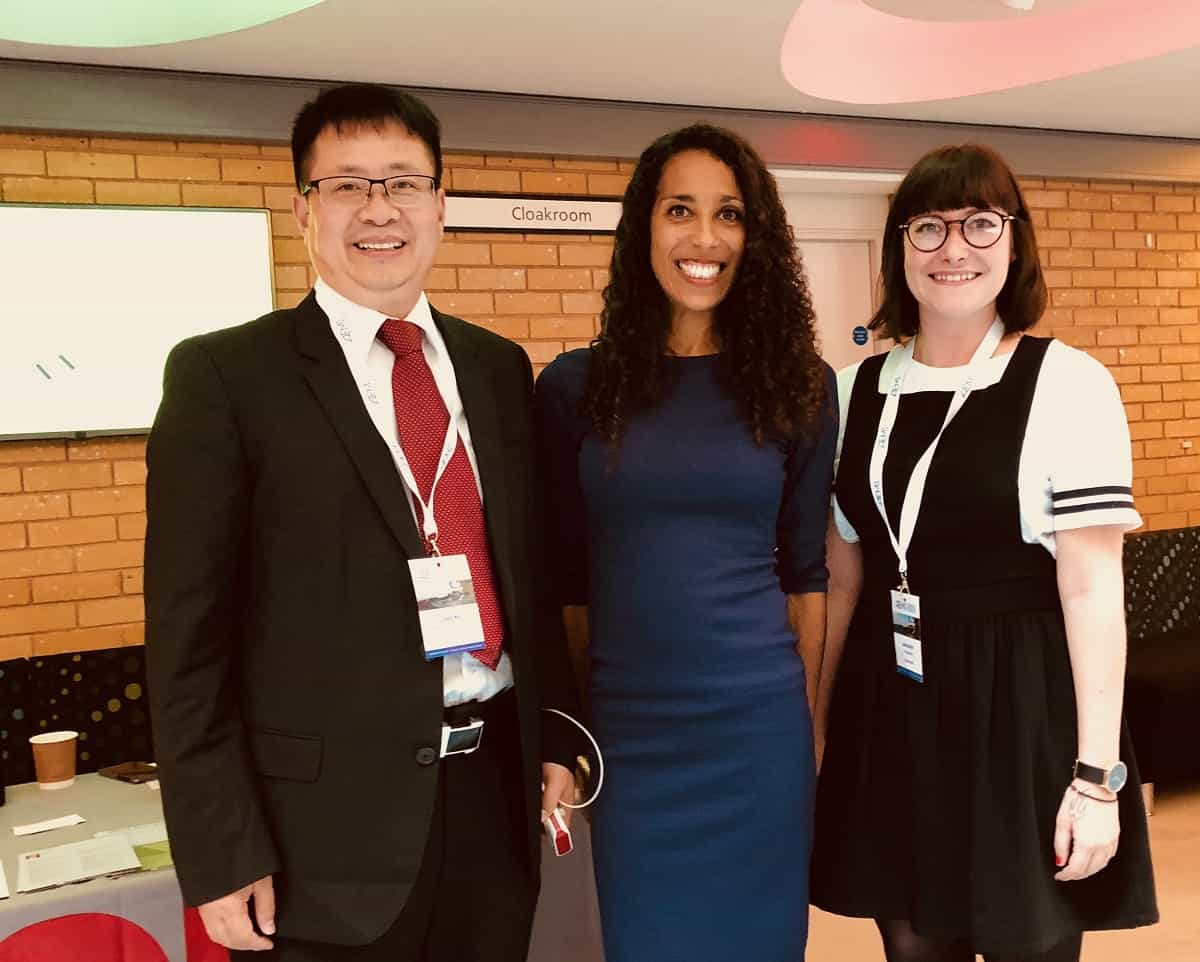
Liqiang Mai talks to IOP Publishing Editors about his latest research at AEM 2018
From their observations they could conclude that suppressing dendrite formation requires an interfacial layer that is lithiophobic, mechanically robust, and allows favourable Li ion diffusion. As a lithiophobic layer carbon nanotubes proved effective at blocking dendrites to a certain degree, but Mai and colleagues found that long-term cycling eventually cause mossy lithium deposits to build up under the interfacial layer inhibiting the battery’s performance.
To guard against both the formation of dendrites and mossy deposits, the researchers incorporated carbon nanotubes loaded with gradually increasing quantities of ZnO, which changes the carbon nanotubes from lithiphobic to lithiophilic. The gradually faded blend of materials further improved the deposition behaviour of lithium during cycling, leaving the battery stable after 520 cycles – whereas the nanotube-coated cell started to show signs of voltage divergence after 400 cycles. The differences in behaviour became more apparent at higher current densities of 5 mA cm−2 and 10 mA cm−2.
Using scanning electron microscopy, the researchers confirmed that lithium deposited on the electrode with a gradient interface layer had no crevices or dendrites, and there were no lithium deposits on the upper carbon nanotube layer, even after 520 cycles. They also demonstrate the success of the gradient lithiophilic-lithiophobic interface strategy in lithium-sulphur batteries.
“I think this is a very good strategy for getting a long-cycling battery,” Mai tells Physics World. “So it’s a very good candidate for companies developing this strategy for large-scale application.”
Charles Kao, the electrical engineer who shared the 2009 Nobel Prize for Physics with Willard Boyle and George Smith, has died in Hong Kong aged 84. Kao was awarded half of the 2009 prize “for ground-breaking achievements concerning the transmission of light in fibres for optical communication.”
Kao was born on 4 November 1933 in Shanghai, China. He studied electrical engineering at Woolwich Polytechnic (now the University of Greenwich) and received his PhD in electrical engineering from University College London in 1965 under the supervision of Harold Barlow. While pursuing his PhD, he was employed by Standard Telephones and Cables (STC) at the firm’s Standard Telecommunication Laboratories (STL) in Harlow, UK.
Crucial step
While working at STL in 1966, Kao realized that optical fibres made from high-purity glass could be used to transmit light signals over long distances. A few years later, he showed that fibres made of fused silica had the required purity and could also be easily manufactured. This was a crucial step towards the development of fibre-optical telecoms networks, which provide the backbone to the Internet.
In 1970, Kao was granted a four-year leave of absence from STL to help create a new electronics department at the Chinese University of Hong Kong (CUHK).
Kao moved to the US in 1974 to work for International Telephone & Telegraph (ITT), which owned STC. At ITT, he focussed on boosting the capacity of optical networks and rose to become director of research at ITT in 1985 – just as the company was selling its research division to Alcatel of France.
He returned to Hong Kong in 1987 to become vice-chancellor of the CUHK, where he oversaw a huge expansion of the university. Enrollment increased from 7000 on his arrival to 13,000 by the time he retired in 1996. He later published an autobiography entitled A Time and A Tide.
Kao had Alzheimer’s disease for 16 years before his death and in 2010 he co-founded the Charles K Kao Foundation for Alzheimer’s Disease with his wife, Gwen Kao. The foundation aims to raise the public awareness of Alzheimer’s disease in Hong Kong.
Hamish Johnston talks about the life of Charles Kao in the Physics World Weekly podcast.
Most economic theorists assume that energy efficiency—the biggest global provider of energy services—is a limited and dwindling resource whose price- and policy-driven adoption will inevitably deplete its potential and raise its cost. Yet, argues Amory Lovins, empirically, modern energy efficiency is, and shows every sign of durably remaining, an expanding-quantity, declining-cost resource. Its adoption is constrained by major but correctable market failures and increasingly motivated by positive externalities. Most importantly, in both newbuild and retrofit applications, its quantity is severalfold larger and its cost lower than most in the energy and climate communities realize. This analytic gap makes climate-change mitigation look harder and costlier than it really is, diverting attention and investment to inferior options.
Find out more in this video abstract published in Environmental Research Letters (ERL) by Amory Lovins. ERL comes to you from Physics World parent IOP Publishing.
Video courtesy CC-BY 3.0, Amory B Lovins How big is the energy efficiency resource? 2018 Environ. Res. Lett.13 090401 /doi.org/10.1088/1748-9326/aad965
“In the atmosphere, aerosols act as cloud condensation nuclei,” says Juergen Burkhardt of the University of Bonn, Germany. “Deposited aerosols on leaf surfaces act almost the same way but attract water from inside the plant.”
Plants have developed sophisticated mechanisms for taking up carbon dioxide from the air for photosynthesis without losing too much water but, as the scientists note, it’s a delicate balance. And one that appears to be upset by rising levels of airborne particles.
“Global aerosol concentrations have roughly doubled compared with natural conditions, and the concentration increase over the continents is even higher,” says Burkhardt. “Our results show that aerosols deposited on leaves interfere with this delicate balance, pointing to a direct mechanism by which air pollution can reduce the drought tolerance of plants.”
Burkhardt and colleagues grew three species of tree — Scots pine, silver fir and common oak — for two years in two greenhouses, one ventilated with ambient air and the other fed with air filtered to remove 99% of aerosols. Seedlings grown under filtered conditions had superior drought tolerance to those raised in ambient air, the team found.
Unraveling the exact mechanism by which air pollution decreases drought tolerance has proven difficult because the hygroscopic particles change their form once on the leaf and this has pushed aerosols out of the spotlight until now.
“Most aerosols are below one micron in diameter, and you need an electron microscope to see them,” says Burkhardt. “But hygroscopic aerosols, which are mostly salts, become liquid on transpiring leaves and are not single entities any more — in the electron microscope, they appear as salt crusts.”
These crusts were present on trees grown in ambient air but were missing on the samples raised in filtered air, the researchers discovered.
Burkhardt hopes that the work will raise awareness of the aerosol issue and suggests that forest monitoring programmes should look out for the symptoms identified by his team.
He adds that a reduction in aerosol concentration would likely benefit the health of both humans and forests.
Proton pencil-beam therapy reduces damage to surrounding tissue compared with conventional radiotherapy, because protons stop at a certain distance within the tissue, whereas photon beams continue through the patient. Therefore, proton beams are used to treat tumours in critical organs of the body, such as the brain.
Particle accelerators deliver a dose of protons at energies sufficient to reach the entire tumour. However, accuracy in proton delivery is limited by uncertainty surrounding the proton beam range.
“Currently we have to irradiate an area with a margin of error around the tumour, to make sure that we actually get the whole tumour,” explains Joost Verburg from Harvard Medical School. “If you are able to precisely measure [protons], you could create a dose distribution that is more focused on the tumour and avoids nearby organs.”
The team’s system detects prompt gamma rays – radiation produced by proton interactions with atomic nuclei within the patient. Roughly 10% of the protons undergo a nuclear reaction that instantaneously emits gamma rays, which escape from the tissue causing no damage to the patient. This provides a real-time, external signal that the researchers wanted to harness for proton range detection. However, Verburg explains, the conditions for detection were “very challenging”.
“In normal gamma ray experiments we get 1000 to maybe 50,000 gamma rays per second, but in this case we get many millions per second. None of the current commercially available gamma ray detection technologies are designed to perform accurate and quantitative measurements under such conditions, so we had to develop a very different type of detection technology.”
The team customized a scintillation detector, upscaling from their original prototype, to increase the efficiency of gamma ray capture. The gamma rays are converted into visible light, from which the energy and arrival time are calculated. Another important part of the machine, the tungsten collimator, focuses the detector on a specific point on the patient, increasing the proton beam spatial reconstruction accuracy.
The researchers also had to make major developments in detector software, to enable the complex processing of each gamma ray detected and subsequent models to calculate the deposited range and dose of protons.
Modelling nuclear interactions
“We went back to first principles of nuclear physics and tried to model exactly what’s going on in the patient,” says Verburg. “We separately resolved all the different nuclear reactions by looking at the gamma ray energies.” Based on this, the team built a detailed model and used it to predict reaction probabilities from proton energies. This informed Monte Carlo simulations (accelerated on a graphics processing unit) of the absolute range of proton pencil-beams.
The detector was tested in the proton beam therapy centre at Massachusetts General Hospital, with different types of plastic blocks used as phantom patient tissue. The detector was able to predict each spot of the distal energy layer to within a mean precision of 1.1 mm, with 95% confidence. This is the first time that this level of accuracy has been achieved under clinically realistic conditions and Verburg describes it as an “exciting” development.
Moving into the clinic
The team is now working on the finishing touches to integrate their detector into the clinical workflow. This includes finalizing the assembly of a positioning robot upon which the detector will be mounted for patient alignment, and conducting a final validation study using an anthropomorphic head phantom in preparation for the upcoming clinical brain tumour trial, expected to begin in late 2018 or early 2019.
“The first time we use this in patients, we’ll just take in vivo measurements and make sure it really works. The next step is to change the treatment plan along the course of the treatment,” says Verburg. To enable clinicians to easily check the treatment plan, and maximize organ sparing, the group will superimpose the calculated proton range and dosage onto CT scans.
“The long-term goal is to use the device to give real-time feedback to the proton therapy system and then fine tune the proton beam in real time,” Verburg tells Physics World.
Spintronics devices, which exploit the spin of an electron as well as its charge, could be ideal for use in high-density data storage devices and for next generation information processing. One promising technology involves using magnetic solitons, such as nanoscale domain walls and magnetic skyrmions, which can function as mobile bits, to encode information, and then moving these bits using a current in devices known as racetracks. The main challenges here are to make smaller bits and then efficiently move these at high speeds. Until now, researchers mainly focused on ferromagnetic materials to make such bits, but these unfortunately have their limitations for when it comes to how small they can be made and the speed at which they can be moved. Material scientists and physicists in the US and Germany say they have now found a way to overcome this problem by using ferrimagnets instead. This new class of materials allow for order-of-magnitude improvements in speed and size and means that the technology might now be brought to market in a reasonably short timeframe.
“We have succeeded in driving domain wall motion with a speed of 1.3 km/s in ferrimagnetic Pt/Gd44Co56/TaOxfilms using an applied current,” says Geoffrey Beach of the Massachusetts Institute of Technology (MIT), who led this research effort. “We have also found that the material hosts room-temperature-stable skyrmions as small as 10 nm in size.”
Racetrack memory
Racetrack memory is a relatively new technology that involves moving magnetic domain walls or skyrmions along structures like magnetic nanowires using small spin-polarized current pulses. It is radically different to conventional computer hard drives (which use a motor to rotate glass discs on which magnetic bits are stored in a thin film) in that it uses electric currents to move the magnetic domain walls or skyrmions in the nanowire without displacing any atoms at all.
Magnetic domain walls are narrow boundaries between regions in a material in which the magnetic moments point “up” on one side of the wall and “down” on the other. In a racetrack memory, data are stored as a sequence of magnetic domains along a nanowire and individual bits are stored and retrieved by moving the sequence along the nanowire and across magnetic read and write devices.
Skyrmions, for their part, are quasiparticle magnetic spin configurations with a whirling vortex-like structure and could be ideal as storage bits in racetrack memories and logic devices because they can be made much smaller than the magnetic domains used in modern disk drives. Conventional domains require considerable power to flip all of the spins in the domains (to switch a device’s memory state from 1 to 0, for example) but skyrmions require fewer spin flips to switch. Another advantage is that the final spin state is not easily disrupted either, which makes these skyrmion structures more stable than their conventional cousins.
Ferromagnets good, ferrimagnets much better
“The key challenges in realizing such memories today are to make smaller bits and then move them at high speed through the racetrack,” explains Beach. “Until now, most research has focused on ferromagnets for making such bits but these materials do suffer from several fundamental problems. These include stray magnetic fields from individual bits, which in spintronics devices can be a serious impediment because they can perturb the spin states of neighbour bits. These magnetic fields are often the limiting factor in how small and densely packed magnetic bits can be. And while magnetic skyrmions can, in principle, be extremely small and stable, in practice all skyrmions seen at room temperature so far have been very large, due to the fact that the ferromagnetic materials used to make them have large stray fields.
“In magnetic materials, the atomic magnetic moments on each lattice site align with their neighbours,” he continues. “In ferromagnets, neighbouring moments are parallel to one another whereas in antiferromagnets, they are anti-parallel, which leads to the net magnetization cancelling. Since magnetic moments originate from the angular momentum (spin and orbital) of an electron, the total angular momentum of an antiferromagnet is always zero. In this case, we can achieve exceptionally fast domain wall dynamics because reorienting the magnetic moments does not require a change in the net angular momentum.”
The researchers say they realized this behaviour in the lab by using a ferrimagnetic material, which is similar to an antiferromagnet but in which the neighbouring atoms are different (Co and Gd in this case). “In the material we studied we can adjust the temperature such that either the net magnetization is zero, which is known as the magnetic compensation temperature (TM), or such that the net angular momentum is zero, which is known as the angular-momentum compensation temperature (TA),” Beach tells Physics World. “Doing this allows us to directly examine the effect of total angular momentum on the dynamics of the material. We found that when it is zero, we can move magnetic domain walls at more than 1000 m/s just by injecting a small current.
“We can also tune the temperature so that the net magnetization is zero and we engineered our material so that this happens near room temperature. This allows for stable, ultrasmall skyrmions, the likes of which cannot be realized in conventional materials. Before now, cryogenic temperatures and applied magnetic fields of more than 1 Tesla were needed.”
The team, which includes researchers from the Max-Born-Institut in Berlin, the Technische Universität Berlin and Deutsches Elektronen-Synchrotron (DESY) in Hamburg, details its research in Nature Nanotechnology 10.1038/s41565-018-0255-3.
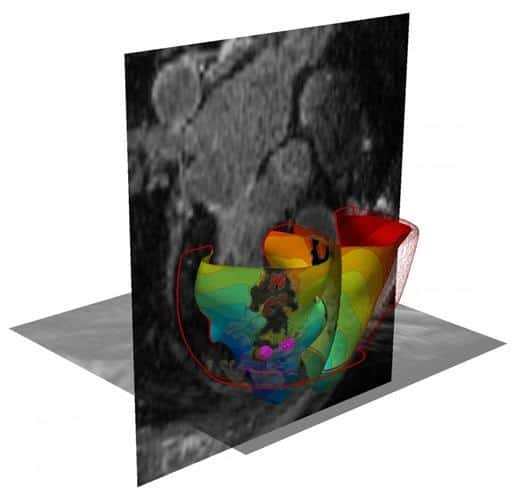
Researchers from Johns Hopkins University used a proprietary 3D virtual heart simulator to preoperatively identify areas of cardiac tissue that required surgical treatment for an irregular heartbeat, according to an article recently published in Nature Biomedical Engineering. The method may improve cardiac ablation procedures.
The group, led by senior author Natalia Trayanova of Johns Hopkins, developed the “virtual heart” model using a combination of cardiac imaging and computational modelling. The researchers believe this technology could assist in the management of ventricular tachycardia — a heart rhythm disorder characterized by rapid, irregular heartbeats.
3D virtual heart. (Courtesy: Johns Hopkins University)
Traditionally, clinicians treat ventricular tachycardia through cardiac ablation procedures, which involve threading a catheter through the heart and using radiofrequency waves to destroy the tissue that is triggering the arrhythmias. The invasive surgery is complicated by the guesswork and variability involved in pinpointing the exact site causing the arrhythmia, and it’s only successful approximately 50% to 88% of the time, the authors noted.
Seeking to improve the situation, Trayanova and colleagues acquired MRI scans of patients’ hearts and then used computer software to convert the scans into patient-specific 3D virtual heart models. The software incorporated mathematical equations to predict the electrical signalling pattern of each cell in the heart. This allowed the investigators to simulate an ablation on any area of the virtual heart to confirm the presence or absence of an arrhythmia (Nature Biomed. Eng. 10.1038/s41551-018-0282-2).
They used this technique to locate arrhythmias retrospectively in 21 patients who had previously undergone a cardiac ablation procedure between 2006 and 2017. Using the 3D virtual heart model, the group was able to correctly identify the precise region of problematic heart tissue for every one of the patients. In several cases, they discovered that the area requiring ablation was actually 10 times smaller than the area the surgeons had treated.
In a subsequent prospective case study, Trayanova and colleagues used their 3D simulation method to facilitate cardiac ablation procedures for five patients with ventricular tachycardia. Their method proved successful for all three of the patients who underwent cardiac ablation; the three patients remained free of irregular heartbeats several months after treatment. The clinicians determined that the procedure would not be feasible for the other two patients.
“Our new study results suggest we can remove a lot of the guesswork, standardize treatment, and decrease the variability in outcomes, so that patients remain free of arrhythmia in the long term,” Trayanova said in a press release from the university.
Implementing the 3D virtual heart simulation technique may reduce the amount of time patients need to spend undergoing invasive surgery, as well as reduce the likelihood of complications and repeat procedures, she noted. The proof-of-concept study affirms the need for additional clinical trials.
The researchers have already received an investigational device exemption (IDE) for their technology from the US Food and Drug Administration (FDA). They plan to continue testing their approach on patients with advanced cardiac disease who may have arrhythmias in multiple areas of the heart.
When I first travelled to China in 2002 I clearly remember telling my wife that there was no way I could ever see us moving there. Eight years later we found ourselves on a flight to Beijing, greatly anticipating our new life in an environment where opportunities appeared to be boundless. Beijing, my wife’s home city, had achieved a level of development I could not have envisioned during that first visit. Cranes dominated the city’s skyline and there appeared to be no let-up in the rapid pace of progress.
My reason for moving to Beijing in 2010 was to take up a post as senior scientist at the Kavli Institute for Astronomy and Astrophysics – a prestigious new international research centre on the campus of Peking University. I spent eight years in the city, which flew by like a whirlwind, fast-paced and full of excitement. China – and especially Chinese science – is still on an upward trajectory and I benefited tremendously from unparalleled access to some of the brightest young minds in the country, if not the world.
I will, however, no longer be integral to these developments, having earlier this year relocated to Macquarie University in Sydney, Australia, where I am now an associate dean. Professionally, I will really miss Peking University: my group of students and postdocs were consistently one of the most productive research teams at the institute. I established an excellent track record in attracting external research funding, and there was no shortage of bright young talent to assist us in pursuing the great scientific challenges of the day.
But I would not have been happy doing more of the same for the next 20 years; I am still ambitious and keen to play a positive role on a more global scale. And although I fully intend to maintain the strong collaborations and friendships resulting from my deep engagement with the Chinese scientific community, a number of incidents contributed to my decision to leave China. While the Kavli Institute’s senior leadership supported my ambitions, over the years there were moments where I – as a foreigner in China – clearly felt the presence of a proverbial glass ceiling.
I was explicitly told on multiple occasions that my ambitions had been cut short because of my foreign citizenship. Once, for example, I applied for – and was offered – an appointment as associate dean for international relations at the University of the Chinese Academy of Sciences (UCAS). The dean liked me, but the university’s vice-president said that he could not approve awarding the job to a foreigner. Other knock-backs occurred when I sought top-level government funding opportunities. Several times I also received informal feedback that prestigious honorary appointments and awards had not gone my way because I was not Chinese.
A clean break
Having moved internationally a number of times over the course of my career, I also became increasingly keen to have a stable income that I could draw on following the mandatory retirement age of 60 in China. So when I was offered an appointment at Macquarie University the decision to relocate was easy. Although I am no longer based at a top global research university, I am sufficiently well established in terms of my career that this perceived disadvantage is offset by the many rewards of living in one of the most beautiful cities in the world. In particular, as a former Beijing resident, I love the excellent air quality that Sydney routinely enjoys: only once so far has it dropped below that of Beijing, and that was because of forest fires in the city’s immediate vicinity. (I should note that the Beijing government’s efforts to clean the city’s air have led to noticeable recent improvements: the “airmageddon” of January 2013 is unlikely to be repeated.)
Despite China’s rise to scientific prominence there have been a worrying number of cases involving plagiarism and other forms of scientific misconduct, which have often led to China’s achievements being called into question. To me the incessant scrutiny of the country’s scientists by the international news media – with the expectation that flagrant abuses of the system are the norm rather than the exception – is rather unfair. Nevertheless, it is fair to say that these examples of misconduct are a symptom of a bigger issue in Chinese science.
Productivity – and sometimes even one’s salary – is determined almost exclusively on the basis of the number (but not necessarily the quality) of research articles that one has published in international peer-reviewed journals either as first author, or as corresponding author on a student’s paper. Rewards (monetary and otherwise) also depend to some extent on the journal’s impact factor, which is a measure of how often papers in it get cited. This pressure to publish is most likely behind the excesses we read about on whistleblowing sites such as retractionwatch.com.
Can do, will do
Carving out a scientific career in China is largely enjoyable and mostly exciting. As a rapidly growing research superpower there are numerous reasons for ambitious young researchers to consider China as their potential destination. For one thing there are many opportunities to get involved in big science projects such as the Thirty Meter Telescope, China’s own Large Optical Telescope, the Chinese Space Station’s telescope, the next-generation particle accelerator and many more. Chinese scientists are also very keen to embrace international collaborations, which has led to a pervasive, opportunistic can-do attitude. At Peking University I was continually and enthusiastically encouraged to make a name for myself and for the institution. The sky is literally the limit to the ambitions of our Chinese colleagues. As a result the Chinese scientific community is vibrant, attractive and ever-more internationally competitive.
Science is also seen as a valuable pursuit by the higher echelons of Chinese society. Numerous government officials and many of the country’s senior leaders, for example, have science or engineering degrees. In the West, in contrast, you’ll be hard pressed to find anyone at a senior level in government or policy circles with a background in science or engineering (with a few honourable exceptions including German Chancellor Angela Merkel). Because of the presence of scientists in positions of power – coupled with a Chinese economy that is still relatively strong – the funding landscape for both basic and applied research is healthy.
That’s not to say it’s easy to win funding in China: internal, institutional politics play a role too and you still need to submit high-quality proposals to stand a chance at a piece of the funding pie. With a few exceptions, however, international scientists based in China appear to thrive and they also seem happy in their personal lives. I would find it odd therefore talking to friends and colleagues abroad, who often could not understand why I had gone to China and sometimes were even hostile about anyone moving there to do research.
Stay visible
One potential practical impediment facing junior scientists coming to China is that they need to stay visible on the international research scene in case they one day want to leave the country for a more senior position elsewhere in the world. If you’re an early-career scientist in this position my advice would be to establish yourself first before applying for a job in China, which is best done by networking in your international community. Establishing such ties from scratch once you’re already in China will be a much more daunting prospect simply because China is geographically so far from many institutions in the rest of the world. Postdocs considering a move to China should therefore think carefully about what the potential advantages and disadvantages might be.
Another practical issue facing many young scientists is that they are likely to have a partner or family, whose wellbeing they will have to consider. Few international couples will want to commit to a career-long stay in China (or anywhere else for that matter), probably envisioning relocating somewhere else again at some point. Unfortunately, if you have children, international schools in China’s main cities are unaffordable on a postdoc’s salary. Sadly, there is not an easy answer to this problem.
Despite such difficulties if you are a postdoc or have just obtained a PhD, I wholeheartedly recommend you spend a few years of your career in China before moving on to a permanent appointment elsewhere in the world. More senior scientists, in contrast, will have to decide for themselves whether the advantages outweigh the downsides. As for me, would I do it again? Perhaps, but I realize now more than ever that my boundary conditions – both professional and personal – would certainly all need to be met, comfortably and fully.
Relativistic electrons have been used to carry out “ghost imaging” of a sample for the first time. The research was done by Siqi Li at SLAC National Accelerator Laboratory and colleagues, who used a clever way of getting around the problem of producing two correlated electron beams. The technique could be used to improve analysis techniques that use beams of electrons to probe the properties of materials.
Optical ghost imaging is a useful tool that can spatially resolve the characteristics of a sample using just a single-pixel detector – rather than the multipixel arrays found in digital cameras. The technique involves splitting a beam of light into a pair of correlated beams called the signal and reference beams. The signal beam strikes the sample before hitting the single-pixel detector. The reference beam goes directly to a conventional, multipixel detector. By measuring the correlation between the intensities of the beams as they hit their respective detectors, an image of the sample can be reconstructed using data from the multipixel detector, without directly imaging the sample itself.
Recent studies have explored how ghost imaging could also be done using X-rays or even beams of atoms, with applications ranging from medical imaging to tests of quantum mechanics. Now, Li and colleagues have turned to relativistic electrons with energies greater than about 10 keV. These are used in a range of experimental techniques to characterize various properties of materials.
Low radiation doses
Their motivation is that ghost imaging could reduce both image acquisition times and sample radiation doses for these techniques. The team also argues that ghost imaging could be useful for experiments for which there are no easily-implementable spatially resolved detectors – including electron spectroscopy and time-resolved electron scattering.
The big challenge, however, is coming-up with a way of splitting a beam of relativistic electrons to create two beams suitable for ghost imaging.
Li and colleagues avoided this problem by using a laser to modulate the output of the photocathode that they used as their source of electrons for the signal beam. Knowing how the signal beam is modulated provides the required information that would normally be obtained from the reference beam.
The team tested their ghost imager by firing the signal beam at metal ring sample. By correlating the intensity of the electron beam picked up by a single-pixel detector with the laser beam, the physicists could reconstruct an image of the ring in a multipixel light detector. Furthermore, the twin benefits of a short image acquisition time and little radiation damage in the sample were also achieved.
The team now hopes to extend their techniques to other beam types including relativistic ions, plasmas, and neutrons.
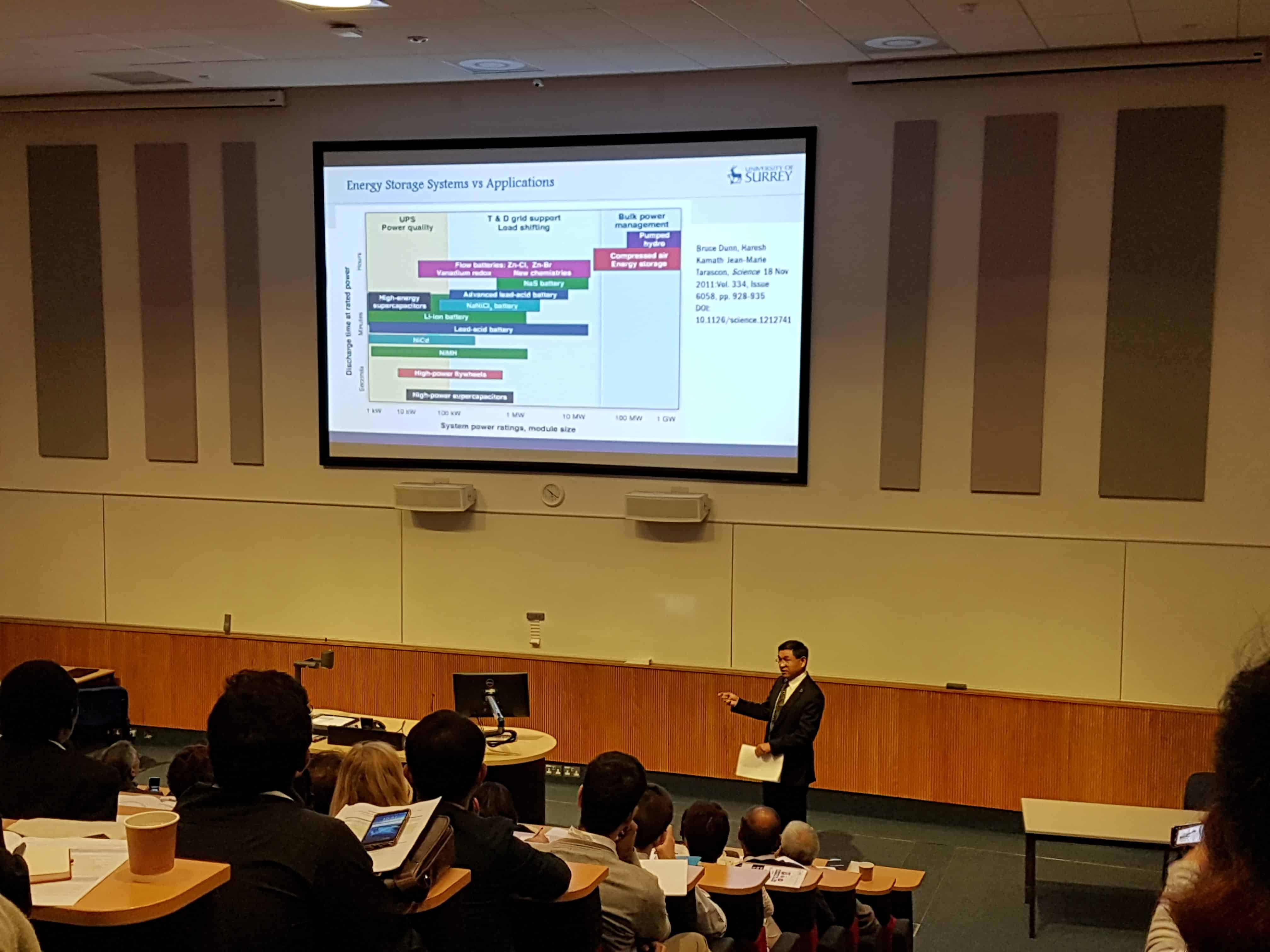
“Energy is the biggest business in the world,” Max Lu, president and vice-chancellor of the University of Surrey, told attendees of Advanced Energy Materials 2018 at Surrey University earlier this month. But as Lu, who has held numerous positions on senior academic boards and government councils, pointed out, the shear scale of the business means it takes time for one technology to replace another. “Even if solar power were now cheaper than fossil fuel, it would be another 30 years before it replaced fossil fuel,” said Lu. And for any alternative technology to replace fossil fuels, some means of storing it is crucial.
Batteries beyond lithium ion cells
Lithium ion batteries have become ubiquitous for powering small portable devices, but as Daniel ShuPing Lau, professor and head at Hong Kong Polytechnic University, and director of the University Research Facility in Materials pointed out, lithium is rare and high-cost, prompting the search for alternatives. He described work on sodium ion batteries, where one of the key challenges has been the MnO2 electrode commonly used, which is prone to acid attack and disproportionation redox reactions. Lau described work by his group and colleagues to get around the electrode stability issues using environmentally friendly K-birnessite MnO2 (K0.3MnO2) nanosheets, which they can inkjet print on paper as well as steel. Their sodium ion batteries challenge the state of the art for energy storage devices with a working voltage of 2.5 V, maximum energy and power densities of 587 W h kgcathode−1 and 75 kW kgcathode−1, respectively, and a 99.5% capacity retention for 500 cycles at 1 A g−1.
Metal air batteries are another alternative to lithium-ion batteries, and Tan Wai Kan from Toyohashi University of Technology in Japan described the potential of using a carbon paper decorated with Fe2O3 nanoparticles in a metal air battery. They increase the surface area of the electrode with a mesh structure to improve the efficiency, while using solid electrolyte KOHZrO2 instead of a liquid helped mitigate against the stability risks of hydrogen evolution for greater reliability and efficiency.
A winning write off for pseudosupercapacitors
Other challenges aside, when it comes to stability, supercapacitors leave most batteries far behind. Because there is no mass movement, just charge, they tend to stay stable for not just hundreds but hundreds of thousands of cycles and they are already in use in the Shanghai bus system and the emergency doors on some aircraft as Robert Slade emeritus professor of inorganic and materials chemistry at the University of Surrey pointed out.
He described work on “pseudocapacitance”, a term popularised in the 1980s and 1990s to describe a charge storage process that is by nature faradaic – that is, charge transport through redox processes – but where aspects of the behaviour are capacitive. MnO2 is well known to impart pseudocapacitance in alkaline solutions but Slade and his colleagues focused on MoO3. Although MnO3 is a lousy conductor, it accepts protons in acids to form HMoO, and exploiting the additional surface area of nanostructures further helps give access to the pseudocapacitance, so that the team were able to demonstrate a charge-discharge rate of 20 A g-1 for over 10,000 cycles, which is competitive with MnO2 alkaline systems. “So don’t write off materials that other people have written off, such as MoO3, because a bit of “chemical trickery” can make them useful,” he concluded.
Down but not out for solid oxide fuel cells
But do we gain from the proliferation of so many different alternatives to fossil fuels? According to John Zhu, professor in the School of Chemical Engineering at the University of Queensland in Australia, yes. “For clean energy we need more than one solution,” was his response when queried on the point after his talk. In particular he had a number of virtues to espouse with respect to solid oxide fuel cells (SOFCs), which had been the topic of his own presentation. Besides the advantage of potential 24-7 operation, SOFCs generate the energy they store. As Zhu pointed out, “With a battery energy the source may still be dirty – so you are just moving the pollution from a high population density area to a low one.”
In contrast, an SOFC plant generates electricity directly from oxidizing a fuel, while at the same time it halves the CO2 emission of a coal-based counterpart, and achieves an efficiency of more than 60%. If combined with hot water generation more than 80% efficiency is possible, which is double the efficiency of a conventional coal plant. All this is achieved with cheap materials as no noble metals are needed.
Too good to be true? It seemed so at one point as promising corporate ventures plummeted, one example being Ceramic Fuel Cells Ltd, which was formed in 1992 by the Commonwealth Scientific and Industrial Research Organisation (CSIRO) and a consortium of energy and industrial companies. After becoming ASX listed in 2004, and opening production facilities in Australia and Germany, it eventually filed voluntary bankruptcy in 2015.
So “Are SOFCs going to die?” asked Zhu. So long as funding is the lifeline of research apparently not, with the field continuing to attract investment from the US Department of Energy – including $6million for Fuel Cell Energy Inc. Share prices for GE Global Research and Bloom Energy have also doubled in the two months since July 2018, but Zhu highlights challenges that remain.
At €25,000 to install a 2 kW system he suggests that cost is not the issue so much as durability. While an SOFC plant’s lifetime should exceed 10 years, most don’t largely due to the high operating temperatures of 800–1000 °C, which lead to thermal degradation and seal failure. Lower operating temperatures would also allow faster start up and the use of cheaper materials. The limiting factor for reducing temperatures is the cathode material, as its resistance is too high in cooler conditions. Possible alternative cathode materials do exist and include – 3D heterostructured electrodes La3NiO4 decorated Ba0.5Sr0.3Ce0.8Fe0.3O3 (BSCF with LN shell).
Photocatalysts all wrapped up
Other routes for energy on demand have looked at water splitting and CO2 reduction. As Lu pointed out in his opening remarks, the success of these approaches hinge on engineering better catalysts, and here Somnath Roy from the Indian Institute of Technology Madras, in India, had some progress to report.
“TiO2 is to catalysis what silicon is to microelectronics,” he told attendees of his talk during the graphene energy materials session. However the photocatalytic activity of TiO2 peaks in the UV, and there have been many efforts to shift this closer to the visible as a result.
Building on previous work with composites of graphene and TiO2 he and his colleagues developed a process to produce well separated (to allow reaction space) TiO2 nanotubes wrapped in graphene. Although they did not notice a wavelength shift in the peak catalytic activity to the visible due to the graphene, the catalysis did improve due to the effect on hole and electron transport.
There was no shortage of ideas at AEM 2018, but as Lu told attendees, “Ultimately uptake does not depend on the best technology but the best return on investment.” Speaking to Physics World he added, “The route to market for any energy materials will require systematic assessment of the technical advantages, market demand and a number of iterations of property-performance-system optimization, and open innovation and collaboration are the name of the game for successful translation of materials to product or processes.”
Whatever technologies do eventually stick, time is of the essence. Most estimates place the tipping point for catastrophic global warming at 2050. Allowing 30 years for the infrastructure overhaul that could allow alternative energies to totally replace fossil fuels leaves little more than a year for those technologies to pitch “the best return on investment”. Little wonder advanced energy materials research is teaming.