Entangled histories: women in quantum physics

Writing about women in science remains an important and worthwhile thing to do. That’s the premise that underlies Women in the History of Quantum Physics: Beyond Knabenphysik – an anthology charting the participation of women in quantum physics, edited by Patrick Charbonneau, Michelle Frank, Margriet van der Heijden and Daniela Monaldi.

What does a history of women in science accomplish? This volume firmly establishes that women have for a long time made substantial contributions to quantum physics. It raises the profiles of figures like Chien-Shiung Wu, whose early work on photon entanglement is often overshadowed by her later fame in nuclear physics; and Grete Hermann, whose critiques of John von Neumann and Werner Heisenberg make her central to early quantum theory.

But in specifically recounting the work of these women in quantum, do we risk reproducing the same logic of exclusion that once kept them out – confining women to a specialized narrative? The answer is no, and this book is an especially compelling illustration of why.

A reference and a reminder

Two big ways this volume demonstrates its necessity are by its success as a reference, a place to look for the accomplishments and contributions of women in quantum physics; and as a reminder that we still have far to go before there is anything like true diversity, equality or the disappearance of prejudice in science.

The subtitle Beyond Knabenphysik – meaning “boys’ physics” in German – points to one of the book’s central aims: to move past a vision of quantum physics as a purely male domain. Originally a nickname for quantum mechanics given because of the youth of its pioneers, Knabenphysik comes to be emblematic of the collaboration and mentorship that welcomed male physicists and consistently excluded women.

The exclusion was not only symbolic but material. Hendrika Johanna van Leeuwen, who co-developed a key theorem in classical magnetism, was left out of the camaraderie and recognition extended to her male colleagues. Similarly, credit for Laura Chalk’s research into the Stark effect – an early confirmation of Schrödinger’s wave equation – was under-acknowledged in favour of that of her male collaborator’s.

Something this book does especially well is combine the sometimes conflicting aims of history of science and biography. We learn not only about the trajectories of these women’s careers, but also about the scientific developments they were a part of. The chapter on Hertha Sponer, for instance, traces both her personal journey and her pioneering role in quantum spectroscopy. The piece on Freda Friedman Salzman situates her theoretical contributions within the professional and social networks that both enabled and constrained her. In so doing, the book treats each of these women as not only whole human beings, but also integral players in a complex history of one of the most successful and debated physical theories in history.

Lost physics

Because the history is told chronologically, we trace quantum physics from some of the early astronomical images suggesting discrete quantized elements to later developments in quantum electrodynamics. Along the way, we encounter women like Maria McEachern, who revisits Williamina Fleming’s spectral work; Maria Lluïsa Canut, whose career spanned crystallography and feminist activism; and Sonja Ashauer, a Brazilian physicist whose PhD at Cambridge placed her at the heart of theoretical developments but whose story remains little known.

This history could lead to a broader reflection on how credit, networking and even theorizing are accomplished in physics. Who knows how many discoveries in quantum physics, and science more broadly, could have been made more quickly or easily without the barriers and prejudice women and other marginalized persons faced then and still face today? Or what discoveries still lie latent?

Not all the women profiled here found lasting professional homes in physics. Some faced barriers of racism as well as gender discrimination, like Carolyn Parker who worked on the Manhattan Project’s polonium research and is recognized as the first African American woman to have earned a postgraduate degree in physics. She died young without having received full recognition in her lifetime. Others – like Elizabeth Monroe Boggs who performed work in quantum chemistry – turned to policy work after early research careers. Their paths reflect both the barriers they faced and the broader range of contributions they made.

Calculate, don’t think

The book makes a compelling argument that the heroic narrative of science doesn’t just undermine the contributions of women, but of the less prestigious more broadly. Placing these stories side by side yields something greater than the sum of its parts. It challenges the idea that physics is the work of lone geniuses by revealing the collective infrastructures of knowledge-making, much of which has historically relied not only on women’s labour – and did they labour – but on their intellectual rigour and originality.

Many of the women highlighted were at times employed “to calculate, not to think” as “computers”, or worked as teachers, analysts or managers. They were often kept from more visible positions even when they were recognized by colleagues for their expertise. Katharine Way, for instance, was praised by peers and made vital contributions to nuclear data, yet was rarely credited with the same prominence as her male collaborators. It shows clearly that those employed to support from behind the scenes could and did contribute to theoretical physics in foundational ways.

The book also critiques the idea of a “leaky pipeline”, showing that this metaphor oversimplifies. It minimizes how educational and institutional investments in women often translate into contributions both inside and outside formal science. Ana María Cetto Kramis, for example, who played a foundational role in stochastic electrodynamics, combined research with science diplomacy and advocacy.

Should women’s accomplishments be recognized in relation to other women’s, or should they be integrated into a broader historiography? The answer is both. We need inclusive histories that acknowledge all contributors, and specialized works like this one that repair the record and show what emerges specifically and significantly from women’s experiences in science. Quantum physics is a unique field, and women played a crucial and distinctive role in its formation. This recognition offers an indispensable lesson: in physics and in life it’s sometimes easy to miss what’s right in front of us, no less so in the history of women in quantum physics.

  • 2025 Cambridge University Press 486 pp £37.99hb
A new milestone in particle physics with tau lepton pair production

Tau leptons are fundamental particles in the lepton family, similar to electrons and muons, but with unique properties that make them particularly challenging to study. Like other leptons, they have a half-integer spin, but they are significantly heavier and have extremely short lifetimes, decaying rapidly into other particles. These characteristics limit opportunities for direct observation and detailed analysis.

The Standard Model of particle physics describes the fundamental particles and forces, along with the mathematical framework that governs their interactions. According to quantum electrodynamics (QED), a component of the Standard Model, protons in high-energy environments can emit photons (γ), which can then fuse to create a pair of tau leptons (ττ⁻):    γ γ → ττ

Using QED equations, scientists have previously calculated the probability of this process, how the tau leptons would be produced, and how often it should occur at specific energies. While muons have been extensively studied in proton collisions, tau leptons have remained more elusive due to their short lifetimes.

In a major breakthrough, researchers at CERN have used data from the CMS detector at the Large Hadron Collider (LHC) to make the first measurement of tau lepton pair production via photon-photon fusion in proton-proton collisions. Previously, this phenomenon had only been observed in lead-ion (PbPb) collisions by the ATLAS and CMS collaborations. In those cases, the photons were generated by the strong electromagnetic fields of the heavy nuclei, within a highly complex environment filled with many particles and background noise. In contrast, proton-proton collisions are much cleaner but also much rarer, making the detection of photon-induced tau production a greater technical challenge.

Notably, the team were able to distinguish QED photon collisions from QCD (Quantum Chromodynamics) collisions by the lack of the underlying event. They demonstrated tau particles were being produced without other nearby tracks (paths left by particles) using the excellent vertex resolution of their pixel detector. To verify the technique, the researchers did careful studies of the same processes in muon pair production and developed corrections to apply to the tau lepton processes.

Demonstrating tau pair production in proton-proton collisions not only confirms theoretical predictions but also opens a new avenue for studying tau leptons in high-energy environments. This breakthrough enhances our understanding of lepton interactions and provides a valuable tool for testing the Standard Model with greater precision.

Machine learning for quantum systems

Understanding the behaviour of atoms and molecules at the quantum level is crucial for advances in chemistry, physics, and materials science. However, simulating these systems is extremely complex.

Traditional methods rely on mathematical functions that must be smooth and differentiable. This limits the types of models that can be used—especially modern machine learning models.

In order to remove this requirement, a team of researchers from Tel Aviv University have developed a new approach by combining a stochastic representation of many-body wavefunctions with path integrals.

Their work opens the door to using more flexible and powerful machine learning architectures, such as diffusion models and piecewise transformers.

They demonstrated their method on a simplified model of interacting particles in a 2D harmonic trap. They were able to show that it can accurately capture complex quantum behaviours, including symmetry breaking and the formation of Wigner molecules (a type of ordered quantum state).

The approach is computationally efficient and scales better with system size than traditional methods.

Most importantly though, this work allows for more accessible and scalable quantum simulations using modern AI techniques, potentially transforming how scientists study quantum systems.

Read the full article

Determinant- and derivative-free quantum Monte Carlo within the stochastic representation of wavefunctions – IOPscience

Liam Bernheimer et al. 2024 Rep. Prog. Phys. 87 118001

Not sure what to do with your physics degree? Our expert panel give their careers advice

Studying physics can be so busy and stressful that deciding what you should do after graduating is probably the last thing on any student’s mind. Here to help you work out what to do next are four careers experts, who took part in a Physics World Live panel discussion earlier this year. They all studied physics or engineering – and have thought long and hard about the career opportunities available for physics graduates.

The four experts are:

The career options for physicists are wide but can also seem overwhelming – so what advice do you have for people starting out on their career journey today?

Crystal Bailey: Finding a fulfilling career means trying to find something that matches your values. I don’t just mean what you’re interested in or what you like – but who you are as a person. So the first step always starts with self-assessment and self exploration, exploring what it is you really want from your life.

Do you want a job that has good work–life balance? Do you want something with a flexible schedule? Or do you want to make money? Making money is a very righteous and noble thing to want to do it – there’s nothing wrong with that. But when I give careers talks and ask the audience if they’ve asked themselves those questions, almost nobody raises their hand.

So I encourage you to reflect on a time when you’ve been really happy and fulfilled. I don’t just mean were you doing, say, a quantum-mechanics problem, but were you with other people? Were you alone? Were you doing something with your hands, building something? Or was it something theoretical? You need to understand what will be a good match for you.

After you’ve done that self-assessment and understand what you need, I advise you do “informational interviews”, which basically involves getting in touch with somebody – online or in person – to ask them what they do day-to-day. What advice do they have? Where’s their sector going?

You’ll get real insider knowledge and, more importantly, it’ll help you build your network – especially if you follow-up, say, every six months to thank them for advice and update them of your situation. It’ll keep that relationship fresh and serve you later when you’re actually looking for jobs in a more targeted way.

Tamara Clelford: You need to understand what it is you enjoy. Are you a leader or do you like to be managed? Do you prefer to be told what to do? Do you like working in a team or working alone? Are you theoretical or more experimental? Do you prefer research or the real world? Maybe you just want to work with, say, aeroplanes, which is a perfectly valid reason to do so.

You also need to ask yourself where you want to work. Do you want to work in a big company, a medium-sized firm, or a small start up? I began in a large defence company, where I could easily switch jobs if something wasn’t the right fit. But in a big firm you often get taken off work as priorities change, so I now work for myself, which is fabulous.

Araceli Venegas-Gomez: The hardest thing is finding out what you like. Your long-term goal might be to get rich or have your own company. Once you work that out, you’ll need a short-term plan. It’ll probably change but having a plan is a great start. Then ask yourself: are you good at it? That self-assessment – understanding your skills and talents – is really important.

Next, find out what companies are there. Create a LinkedIn profile. Talk to people. Expand your network. Go to careers events. Do mock interviews – maybe not for your dream job but to help you learn how to do them. Learn how to do a CV and apply for jobs. Use all the resources available to you.

Tushna Commissariat: My advice is don’t leave your job search until just before you graduate. Start looking at internships and summer jobs as early as you can. I recall interviewing one physicist who sent an e-mail to NASA and got an internship at the age of 15. But on the other hand, remember that even if you land your perfect job, it might not work out, and it’s always okay to change your mind.

Our expert panel

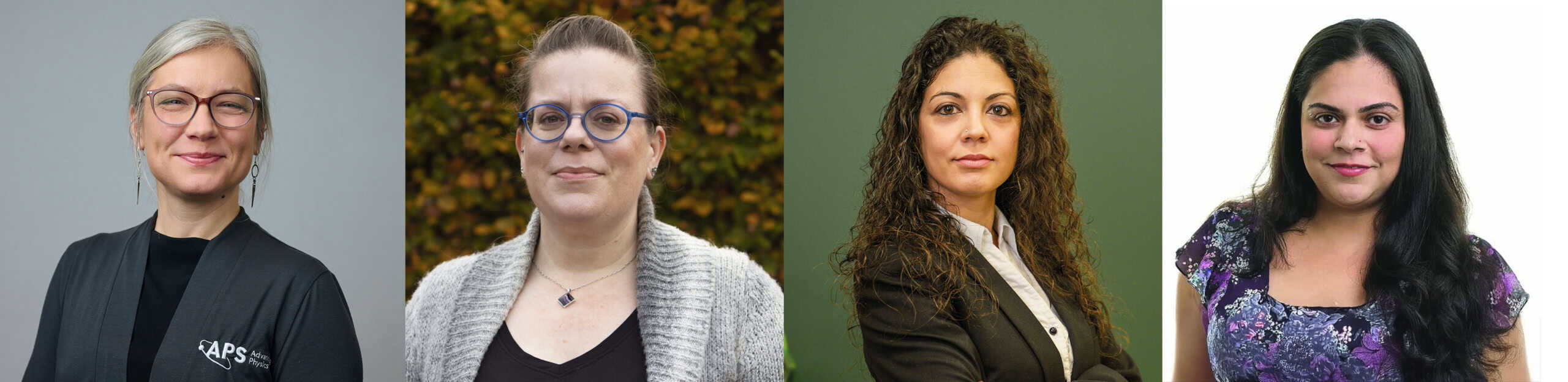
Crystal Bailey, Tamara Clelford, Araceli Venegas-Gomez and Tushna Commissariat

After getting interested in science at high school, Crystal Bailey majored in electrical engineering at the University of Arkansas in Fayetteville but soon realized that “physics was the most beautiful thing ever” and did a PhD in nuclear physics at Indiana University in Bloomington. A chance encounter with someone who was in her Morris-dancing group led to Bailey working as career-programme manager at the American Physical Society, where she now serves as its director of programmes and inclusive practices.

Having declared aged five that she wanted to be a nuclear physicist, Tamara Clelford studied physics and astrophysics at the University of Sheffield in the UK. She has a PhD in antenna design and simulation from Queen Mary, University of London. After a year teaching physics in secondary schools, Clelford then spent a decade working as an antenna engineer in the defence industry. Following a short spell in a start-up, she now works as a freelance physics consultant in the aerospace sector.

Araceli Venegas-Gomez always wanted to work in science or technology and studied aerospace engineering at the Universidad Politécnica de Madrid, before getting a job at Airbus in Germany. However, she always had a passion for physics and in her spare time did a master’s in medical physics via distance learning. After taking an online course in quantum physics at the University of Maryland, Venegas-Gomez did a PhD in quantum simulation at the University of Strathclyde, UK. Her experience of business and academia led her to set up QURECA in 2019, which offers resources, careers advice and education to people who want to work in the burgeoning quantum sector.

Tushna Commissariat grew up in Mumbai, India, where gazing up at the few stars she could make out in the big-city skies inspired her to study science. While doing a bachelor’s degree in physics at Xavier’s College, she did a summer astrophysics placement in Pune, where she quickly realized she wasn’t cut out for academia. Instead, Commissariat did a master’s in science journalism at City, University of London. After an internship at the International Centre for Theoretical Physics in Trieste, Italy, she joined Physics World in 2011, where she now works as careers and features editor.

What is the number one skill – over and above technical knowledge – that physicists have that will help them in their career?

Crystal Bailey: Physicists often go into well-paid jobs that have “engineering” in the title, working alongside other STEM graduates. In fact, physicists have many of the same scientific and technical skills that make engineers and computer scientists so attractive to employers. But what sets physicists apart is a confidence that they can teach themselves whatever they need to know to go to the next step.

It’s a kind of “intellectual fearlessness” that is part of being a physicist. You’re used to marching up to the edge of what is known about the universe and taking that next step over to discover new knowledge. You might not know the answer, but you know you can teach yourself how to find the answer – or find somebody who can help you get there.

Tamara Clelford: It might not help us narrow down where we want to work, but physicists are capable of solving a huge range of problems. We can root around a problem, look for its fundamental aspects, and use mathematical and experimental skills to solve it. Whether it’s a hardware problem, a software problem or the need to derive an equation, we can do all that.

As physicists, we have the ability to upskill, to improve and to solve whatever problem we want

Tamara Clelford

If we’re not an expert in a particular area, we know we can go and get the relevant expertise. As physicists, we know where our limits are. We’re not going to make stuff up to sound better than we are. We have the ability to upskill, to improve and to solve whatever problem we want.

Araceli Venegas-Gomez: As physicists, we have a multidisciplinarity that we often don’t realize we have. If you’re, say, a marine engineer, you’re going to work in marine engineering. But as a physicist, you can work anywhere there’s a job for you. What’s more, physicists don’t only solve problems; we also want to know why they exist. It might take us a bit longer to find a solution, but we look at it in a way that engineers might not.

Tushna Commissariat: One of the brilliant things about physicists is that they’re absolutely confident that they can come in and fix a problem. You see physicists going into biology and saying “Oh cancer, I can do that”. There are physicists who’ve gone into politics and into sport. I’ve even seen physicists improving nappies for babies.

At the same time, there’s almost a joy in failure: if something doesn’t work or goes wrong, it means something exciting and interesting is about to happen. I remember Rolf-Dieter Heuer, who was then director-general of CERN, saying it’ll be more exciting if we don’t find the Higgs boson because it would have meant the Standard Model of particle physics is broken – which would open up a wealth of possibilities.

What do you know today that you wish you’d known at the start of your career?

Crystal Bailey: When I went to grad school, I liked physics and thought “I’m good at it and I want to keep doing physics”. But I didn’t really having a clear reason for staying in academia. I was just doing what I thought was expected of me and didn’t even want a career in academia. So I wish I had had more of a sense of ownership and a little more confidence about my career.

Don’t doubt yourself. Don’t let anybody tell you that you can’t do something

Crystal Bailey

The key message is: don’t doubt yourself. Don’t let anybody tell you that you can’t do something. It’s your life – and what you want is the most important thing. I just wish I had been given a little more encouragement and a little more confidence to go in new directions.

Tamara Clelford: In life, your priorities change and it’s very difficult to project into the future. At any particular time, you have certain experience and knowledge, on which you make the best decision you can make. But if, in five or 10 years’ time, you realize things aren’t working, then change and do something else. Trust your instincts – and change when you need to change.

Araceli Venegas-Gomez: I wish I’d known at the start of my career that everything’s going to be okay and there’s no need to panic. If you’re doing a PhD and you don’t finish it, that’s fine – I don’t think I’ve ever met a single physicist who’s ended up jobless. There are millions of options so remind yourself that everything is going to be okay.

Tushna Commissariat: When you’re studying, it’s easy to feel you’re in a kind of bubble universe of exams, practicals or labs. Set backs can feel like the end of the world when they really aren’t: your marks on a particular test won’t determine your entire future. Remember that you gain so many useful skills while studying, whether it’s working with other people or doing outreach work, which might seem a waste of time but are great for your CV.

Quantum thermochemical engine could achieve high power with near-maximum efficiency

The engines in everyday devices such as cars, vacuum cleaners and fans rely on a classical understanding of heat, energy and work. In recent years, scientists have designed (and in some cases built) new types of engines that incorporate unique quantum features. In addition to boosting performance, these features allow quantum engines to perform tasks that classical machines cannot.

Vijit Nautiyal from the University of New England, Armidale, New South Wales, Australia has now proposed a new type of quantum engine that exchanges not only heat, but also particles, with thermal reservoirs. The advantage of Nautiyal’s proposed quantum thermochemical engine, as described in Physical Review E, is that it combines near-maximum efficiency with high power output. “It’s equivalent to driving a Ferrari at the running cost of a Toyota,” Nautiyal explains. “You enjoy the thrill of high power while saving on fuel efficiency.”

Classical and quantum engines

Car engines typically operate in a four-stroke (Otto) cycle. In the intake stroke, the piston moves downwards, drawing air and fuel into a cylinder. The compression stroke then causes the piston to move upwards, compressing the mixture and increasing its temperature and pressure adiabatically (that is, without losing or gaining heat). Next comes the expansion stroke, when heat is added in the form of an igniting spark, causing the gas to expand adiabatically and performing work on the piston. Finally, during the exhaust stroke, the piston moves up, expelling the spent exhaust gases out of the cylinder.

Nautiyal’s proposed quantum engine replaces the fuel in a car engine with a weakly interacting one-dimensional Bose-Einstein condensate, or Bose gas, in a harmonic trap. Here, the ignition and exhaust (thermalization) strokes are equivalent to coupling the Bose gas to a surrounding cloud of thermal atoms that serves as a hot or cold reservoir. Because the Bose gas (the working fluid) can exchange both heat and particles with this reservoir, the setup can be considered an open quantum system. During the two work strokes (compression and expansion), the gas is instead treated as an isolated quantum many-body system.

The piston in this quantum engine is the strength of inter-atomic interactions in the gas. To  move the piston, Nautiyal’s scheme calls for abruptly increasing this interaction strength during the compression stroke and abruptly decreasing it during the expansion stroke.

Engine operations

When Nautiyal’s system exchanges only heat with the hot and cold reservoirs, it cannot operate as an engine because its beneficial output work is less than the input work. However, if it also exchanges particles with the reservoirs, it operates as a thermochemical engine with output work greater than the input, compensating for any quantum friction experienced during the process.

Like the classical Otto engine cycle, Nautiyal’s quantum engine experiences a trade-off between power and efficiency. In classical engines, operating the cycle at a faster speed increases engine power; however, it also typically decreases efficiency because dissipative effects such as heat and friction increase irreversible losses. Similarly, in quantum engines, driving the system faster during the work stroke produces losses in the form of non-adiabatic energy excitations.

These excitations can be suppressed if the work strokes are performed extremely slowly (a quasi-static quench), leading to maximum efficiency. However, this comes at the cost of null power output due to extremely long driving time. Optimizing this trade-off between power and efficiency is thus one of the main goals of this field of finite-time quantum thermodynamics.

The upper bound on the work and efficiency produced by Nautiyal’s thermochemical engine is set by an adiabatic quantum thermochemical engine operating at zero temperature. Remarkably, this engine can operate at near maximum efficiencies while maintaining high power output even in the sudden quench, out-of-equilibrium regime. This is because instead of increasing efficiency by extending cycle time, one can increase it by boosting the flow of particles from the hot reservoir, which raises the internal energy of the working fluid. The additional energy can then be converted into mechanical work during the expansion stroke.

Asked about possible applications of his quantum engine, Nautiyal referred to “quantum steampunk”. This term, which was coined by the physicist Nicole Yunger Halpern at the US National Institute of Standards and Technology and the University of Maryland, encapsulates the idea that as quantum technologies advance, the field of quantum thermodynamics must also advance in order to make such technologies more efficient. A similar principle, Nautiyal explains, applies to smartphones: “The processor can be made more powerful, but the benefits cannot be appreciated without an efficient battery to meet the increased power demands.” Conducting research on quantum engines and quantum thermodynamics is thus a way to optimize quantum technologies.

Honor Powrie: ‘So what has networking ever done for me?’

Dear Physics World readers, I’m going to let you in on a secret. I get anxious every time I see the word “networking” on a meeting or conference agenda. I’m nervous whether anyone will talk to me and – if they do – what I’ll say in reply. Will I end up stuck in a corner fiddling on my phone to make it seem like I want to join in but have something more important to do?

If you feel this way – or even if you don’t – please read on because I have some something important to say for anyone who attends or organizes scientific events.

Now, we all know there are many benefits to networking. It’s a good way to meet like-minded people, tell others about what you’re doing, and build a foundation for collaboration. Networking can also boost your professional and personal development – for example, by identifying new perspectives and challenges, finding a mentor, connecting with other organizations, or developing a tailor-made support system.

However, doing this effectively and efficiently is not necessarily easy. Networking can also soak up valuable time. It can create connections that lead nowhere. It can even be a hugely exploitative and one-sided affair where you find yourself under pressure to share personal and/or professional information that you didn’t intend to.

Top tips

Like most things in life, what you get from networking depends on what you put in. To make the most of such events, try to think about how others are feeling in the same situation. Chances are that they will be a bit nervous and apprehensive about opening the conversation. So there’s no harm in you going first.

A good opening gambit is to briefly introduce yourself, say who you are, where you work and what you do, and seek similar information from the other person. Preparing a short “elevator pitch” about yourself makes it easier to start a conversation and reduces the need to think on the spot. (Fun fact: elevator pitch gets its name from US inventor Elisha Otis, who needed a concise way of explaining his device to catch a plummeting elevator.)

Make an effort to remember other people’s names. I am not brilliant at this and have found that double checking and using people’s names in conversation is a good way to commit them to memory. Some advance preparation also helps. If possible, study the attendee list, so you know who else might be there and where they’re from. Be yourself and try to be an active listener – listen to what others are saying and ask thoughtful questions.

Don’t feel the need to stick with one person or group of people for the whole the time. Five minutes or so is polite and then you can move on and mingle further. Obviously, if you are making a good connection then it’s worth spending a bit more time. But if you are genuinely engaged, making plans to follow up post event should be straightforward.

Decide the best way to share your contact details. It could be an iPhone air drop, taking a photo of someone’s name badge, sending an e-mail, or swapping business cards (seems a bit unecological these days). If there are people you want to meet, don’t be afraid to seek them out. It’s always a nice compliment to approach someone and say: “Ah, I was hoping to speak to you today; I’ve heard a lot about you.”

On the flip side, avoid hanging out with your cronies, by which I mean colleagues from the same company or organization or people you already know well. Set yourself a challenge to meet people you’ve never met before. Remember few of us like being left out so try to involve others in a conversation. That’s especially true if someone’s listening but not getting the chance to speak; think of a question to bring that person into the discussion.

Of course, if someone you meet doesn’t seem to be relevant to you, don’t be afraid to admit it. I’m sure they won’t be offended if you don’t follow up after the meeting. And to those who are already comfortable with networking, remember not to hog all the limelight and to encourage others to participate.

A message to organizers

Let me end with a message to organizers, which – I’ll be honest – is the main reason I’m writing this article. I have recently attended conferences and events where the music is so loud that people, myself included, have gone with the smokers to the perishing cold outside simply so we can hear each other speak. Am I getting old or is this defeating the object of networking? Please, no more loud music!

I also urge event organizers to have places where people can connect, including tables and seating areas where you can put your plates and drinks down. There’s nothing worse than trying to talk while juggling cutlery to avoid a quiche collapsing down the front of your shirt. Buffets are always better than formal sit-down dinners as it provides more opportunity for people to mix. But remember that long queues for food can arise.

So what has networking ever done for me? Over the years the benefits have changed, but most recently I have met some great peer mentors, people whom I can share cross-industry experience and best practice with. And, if I hadn’t been at a certain Institute of Physics networking event last year and met Matin Durrani, the editor of Physics World, then I wouldn’t be writing this article for you today.

I’ll let you, though, be the judge of whether that was a success. [Editor’s note: it certainly was…]

Deep-learning model outperforms cardiologists in identifying hidden heart disease

Evaluating electrocardiogram (ECG) traces using a new deep-learning model known as EchoNext looks set to save lives by flagging patients at high risk of structural heart disease (SHD) who might otherwise be missed.

SHD encompasses a range of conditions affecting millions worldwide, including heart failure and valvular heart disease. It is, however, currently underdiagnosed because the diagnostic test for SHD, an echocardiogram, is relatively expensive and complex and thus not routinely performed. Late diagnosis results in unnecessary deaths, reductions in patient quality-of-life and an additional burden on healthcare services. EchoNext could reduce these problems as it provides a way of determining which patients should be sent for an echocardiogram – ultrasound imaging that shows the valves and chambers and how the heart is beating – by analysing the inexpensive and commonly collected ECG traces that record electrical activity in the heart.

The EchoNext model was developed by researchers at Columbia University and NewYork-Presbyterian Hospital in the US, led by Pierre Elias, assistant professor at Columbia University Vagelos College of Physicians and Surgeons and medical director for artificial intelligence at NewYork-Presbyterian. EchoNext is a convolutional neural network, which uses the mathematical operation of convolution to generate information and make predictions. In this case, EchoNext scans through the ECG data in bite-sized segments, generating information about each segment and subsequently assigning it a numerical “weight”. From these values, the AI model then determines if a patient is showing markers of SHD and so requires an echocardiogram. EchoNext learns from retrospective data by checking the accuracy of its predictions, with more than 1.2 million ECG traces from 230,000 patients used in its initial training.

In their study, reported in Nature, the researchers describe running EchoNext on ECG data from 85,000 patients. The AI model identified 9% of those patients as being in the high-risk category for undiagnosed SHD, 55% of whom subsequently had their first echocardiogram. This resulted in a positive diagnosis in almost three-quarters of cases; double the rate of positivity normally seen in first-time echocardiograms.

EchoNext also outperformed 13 cardiologists in making diagnoses based on 3200 ECGs by correctly flagging 77% of structural heart problems while its human colleagues were only 64% accurate – a result so good that it shocked the researchers.

“The really challenging thing here was that from medical school I was taught that you can’t detect things like heart failure or valvular disease from an electrocardiogram. So we initially asked: would the model actually pick out patients with disease that we were missing? I have read more than 10,000 ECGs in my career and I can’t look at an ECG and see what an AI model is seeing,” enthuses Elias. “It’s able to pick up on different sets of patterns that are not necessarily perceptible to us.”

Elias instigated the EchoNext project after an upsetting incident in which he was unable to save a patient transferred from another hospital with critical valvular heart disease because they had been diagnosed too late. “You can’t take care of the patient you don’t know about. So we said: is there a way that we can do a better job with diagnoses?”

EchoNext is now undergoing a clinical trial, based in eight hospital emergency departments, that ends in 2026. “My number one priority is to produce the right clinical evidence that is necessary to prove this technology is safe and efficacious, can be widely adopted and has value in helping patients,” says Elias.

He stresses that it is still early days for all AI technologies, but that even in these trial phases EchoNext – which was recently designated a breakthrough technology by the US Food and Drug Administration (FDA) – is already improving patient lives.

“It’s a really wonderful thing that every week we get to meet the patients that this helped. Our goal is for this to impact as many patients as possible over the next 12 months,” states Elias, adding that since EchoNext is successfully detecting 13 types of heart disease, a similar system should be useful in other healthcare domains too. “We think these kinds of AI-augmented biomarkers can become something that is routinely ordered and used as part of clinical practice,” he concludes.

Feynman diagrams provide insight into quasiparticles in solids

Artist's impression of a polaron

Electron–phonon interactions in a material have been modelled by combining billions of Feynman diagrams. Using a modified form of the Monte Carlo method, Marco Bernardi and colleagues at the California Institute of Technology predicted the behaviour of polarons in certain materials without racking up significant computational costs.

Phonons are quantized collective vibrations of the atoms or molecules in a lattice. When an electron moves through certain solids, it can interact with phonons. This electromagnetic interaction creates a particle-like excitation that comprises a propagating electron surrounded by a cloud of phonons. This quasiparticle excitation is called a polaron.

By lowering the electron’s mobility, while increasing its effective mass, polarons can have a substantial impact on the electronic properties of a variety of materials – including semiconductors and high-temperature superconductors.

However, physicists have struggled to model polarons and it would be extremely helpful for them to represent polarons using Feynman diagrams. These are a mainstay of particle physics, which are used to calculate the probabilities of certain particle interactions taking place. This has been challenging because polarons emerge from a superposition of infinitely many higher-order interactions between electrons and phonons. With each successive order, the complexity of these interactions steadily increases – along with the computational power required to represent them with Feynman diagrams.

Higher-order trouble

Unlike some other interactions, each higher order becomes more and more important in representing the polaron as accurately as possible. As a result, calculations cannot be simplified using standard perturbation theory – where only the first few orders of interaction are required to closely approximate the overall process.

“If you can calculate the lowest order, it’s very likely that you cannot do the second order, and the third order will just be impossible,” Bernardi explains. “The computational cost typically scales prohibitively with interaction order. There are too many diagrams to compute, and the higher-order diagrams are too computationally expensive. It’s basically a nightmare in terms of scaling.”

Bernardi’s team – which also included Yao Luo and Jinsoo Park  – approached the problem with the Monte Carlo method. This involves taking repeated random samples within a space of all possible events contributing to a process, then adding them together. It allows researchers to build up a close approximation of the process, without accounting for every possibility.

The team generated a series of Feynman diagrams spanning the full range of possible electron–phonon interactions. Then, they combined the diagrams to gain precise descriptions of the dynamic and ground-state properties of polarons in real materials.

Statistical noise

One issue with a fully-random Monte Carlo approach is the sign problem, which arises from statistical noise that can emerge as electrons scatter between different energy bands during electron–phonon interactions. Since different bands can contribute positively or negatively to the interaction probabilities represented by Feynman diagrams, these contributions can cancel each other out when added together.

To avoid this, Bernardi’s team adapted the Monte Carlo method to evaluate each band contribution in a structured, non-random way – preventing sign cancellations. In addition, the researchers applied a matrix compression approach. This vastly reduced the size and complexity of the electron–phonon interaction data, without sacrificing accuracy. Altogether, this enabled them to generate billions of diagrams without significant computational costs.

“The clever diagram sampling, sign problem removal, and electron–phonon matrix compression are the three key pieces of the puzzle that have enabled this paradigm shift in the polaron problem,” Bernardi explains.

The trio hopes that its technique will help us understand polaron behaviours. “The method we developed could also help study strong interactions between light and matter, or even provide the blueprint to efficiently add up Feynman diagrams in entirely different physical theories,” Bernardi says. In turn, it could help to provide deeper insights into a variety of effects where polarons contribute – including electrical transport, spectroscopy, and superconductivity.

The research is described in Nature Physics.

Too-close exoplanet triggers flares from host star

A young gas giant exoplanet appears to be causing its host star to emit energetic outbursts. This finding, which comes from astronomers at the Netherlands Institute for Radio Astronomy (ASTRON) and collaborators in Germany, Sweden and Switzerland, is the first evidence of planets actively influencing their stars, rather than merely orbiting them.

“Until now, we had only seen stars flare on their own, but theorists have long suspected that close-in planets might disturb their stars’ magnetic fields enough to trigger extra flares,” explains Maximilian Günther, a project scientist with the European Space Agency’s Cheops (Characterising ExOPlanet Satellite) mission. “This study now offers the first observational hint that this might indeed be happening.”

Stars with flare(s)

Most stars produce flares at least occasionally. This is because as they spin, they build up magnetic energy – a process that Günther compares to the dynamos on Dutch bicycles. “When their twisted magnetic field lines occasionally snap, they release bursts of radiation,” he explains. “Our own Sun regularly behaves like this, and we experience its bursts of energy as part of space weather on Earth.” The charged particles that follow such flares, he adds, are responsible for the aurorae at our planet’s poles.

The flares the ASTRON team spotted came from a star called HIP 67522. Although classified as a G dwarf star like our own Sun, HIP 67522 is much younger, being 17 million years old rather than 4.5 billion. It is also slightly larger and cooler, and astronomers had previously used data from NASA’s Transiting Exoplanet Survey Satellite (TESS) to identify two planets orbiting it. Denoted HIP 67522 b and HIP 67522 c, both are located near their host, but HIP 67522 b is especially close, completing an orbit in just seven Earth days.

In the latest work, which is detailed in Nature, ASTRON’s Ekaterina Ilin and colleagues used Cheops’ precision targeting to make more detailed observations of the HIP 67522 system. These observations revealed a total of 15 flares, and Ilin notes that almost all of them appeared to be coming towards us as HIP 67522 b transited in front of its host as seen from Earth. This is significant, she says, because it suggests that the flares are being triggered by the planet, rather than by some other process.

“This is the first time we have seen a planet influencing its host star, overturning our previous assumptions that stars behave independently,” she says.

Six times more flaring

The ASTRON team estimate that HIP 67522 b is exposed to around six times as many flares as it would be if it wasn’t triggering some of them itself. This is an unusually high level of radiation, and it may help explain recent observations from the James Webb Space Telescope (JWST) that show HIP 67522 b losing its atmosphere faster than expected.

“The new study estimates that the planet is cutting its own atmosphere’s life short by half,” Günther says. “It might lose its atmosphere in the next 400‒700 million years, compared to the 1 billion years it would otherwise.”

If such a phenomenon turns out to be common, he adds, “it could help explain why some young planets have inflated atmospheres or evolve into smaller, denser worlds. And it could inform how we see the demography of ‘adult planets’.”

Astrobiology implications

One big unanswered question, Günther says, is whether the slightly more distant planet HIP 67522 c shows similar interactions with its host. “Comparing the two would be incredible, not only doubling the sampling size, but revealing how distance from the star affects magnetic interactions.”

The ASTRON researchers say they also want to understand the magnetic field of HIP 67522 b itself. More broadly, they plan to look for other such systems, hoping to find out how common they really are.

For Günther, who was not directly involved in the present study, even a single example is already important. “I have worked on exoplanets and stellar flares myself for many years, mostly inspired by the astrobiology implications, but this discovery opens a whole new window into how stars and planets can influence each other,” he says. “It is a wake-up call to me that planets are not just passive passengers; they actively shape their environments,” he tells Physics World. “That has big implications for how we think about planetary atmospheres, habitability and the evolution of worlds across the galaxy.”

Third age careers for physicists: writing and the arts beckon

Many of us will have careers with three distinct eras: education, work and retirement. While the first two tend to be regimented, the third age offers the possibility of pursuing a wide range of interests.

Our guest in this episode of the Physics World Weekly podcast is the retired particle physicist Michael Albrow, who is scientist emeritus at Fermilab in the US. He has just published his book Space Times Matter: One Hundred Short Stories About The Universe, which is a collection of brief essays and poems related to science.

Much of the book comes from a newspaper column that Albrow wrote earlier in his retirement and he has also been involved in collaborations with visual and musical artists. In this podcast he talks about this third age of his career as a physicist and gives some tips for your retirement.

Copyright © 2026 by IOP Publishing Ltd and individual contributors