Injectable mesh electronics opens up a new window into vision research

Mesh electronics, a macroporous network of components with mechanical properties similar to that of biological tissue, is a relatively new technology that can be used to probe activity in the brain. Now, researchers at Harvard University in the US have developed an injectable mesh that can record the neural activity of mouse eyes in vivo. The device, which does not interfere with eye movement or light-processing, could help neuroscientists study the fundamental properties of primary vision input retinal ganglion cells (RGCs) and how these cells connect with other vision-related brain regions for the first time. The work could also help in the development of retinal prosthetics for restoring vision through non-surgical procedures.

“Mesh electronics is a submicron-thick, large-area macroporous network,” explains team leader Charles Lieber. “We fabricate the meshes as flat 2D sheets using standard semiconductor photolithography-based techniques and suspend them (like a colloid) in aqueous solution. Our specific design, which we first reported on back in 2015, enables mesh electronics to be rolled up into a tubular structure and drawn into a syringe needle.”

 On the scale of a single neuron

“We can deliver these structures into specific brain regions with a spatial precision of 20 microns (which is on the scale of a single neuron) using the controlled injection approach we developed. This allows us to control the rate at which we withdraw the needle during injection and means that the mesh structure remains fully extended in the dense tissue of the brain during injection and does not crumple.”

In their new work Lieber and colleagues “non-coaxially” injected the mesh electronics onto the highly curved retinal cup of the eye. As the structure unrolls it forms a stable recording interface to RGCs, which process visual information received by photoreceptors (rods and cones). The researchers then did a series of experiments.

Monitoring the activity of the RGCs

“First, we monitored the activity of the RGCs using the device and were able to measure the response of different subtypes of these cells in a chronically stable manner,” explains team member Guosong Hong. “We found that some RGCs respond to light intensity while others respond to other visual cues, such as gratings comprising alternating black-and-white stripes and moving in specific directions. We were able to monitor individual RGCs repeatedly over a two-week period.

“Next we monitored the RGCs at four-hour intervals over several day-night cycles and found that some of the cells fire with a higher activity during the day-time circadian phase than during the night time phase, while some others do the opposite. This reveals, for the first time, the idiosyncrasy of circadian behaviours of different RGCs.”

The retina, which processes visual information and sends it to the brain, is an excellent model for studying neural circuitry. Until now, however, most retina studies meant killing laboratory animals and then removing their retinas to analyze. This meant that the information obtained was limited.

First high-resolution measurement of the retina in awake animals

“Existing techniques to measure in vivo neural activity in retinas typically make use of metal microwire electrodes to record from a few RGCs in anaesthetized animals with relatively large eyes over a short period of time,” says team member Tian-Ming Fu. “Or they rely on electroretinography (ERG) to measure the collective activity of a population of neurons in the retina with limited spatiotemporal resolution. Our method is the first high-resolution chronic measurement of the retina in awake animals.”

The researchers, reporting their work in Science DOI: 10.1126/science.aas9160, now have several new projects under way. “For one, we would like to map the entire visual pathway, from the retina through to the lateral geniculate nucleus (LGN), which is a relay centre in the thalamus, to the visual cortex and higher-level brain regions at the single cell level,” Lieber tells Physics World. “We would also like to apply the non-coaxial mesh electronics injection technique, demonstrated for the first time in this work, to other parts of the nervous system, such as the spinal cord and the neuromuscular junction.”
Quantum simulation, water at the nanoscale and physics start-ups

What do a toaster and a quantum simulator have in common? Lincoln Carr of the Colorado School of Mines explains in this episode of Physics World Weekly. Carr, who has worked as a professional actor, also explains why scientists should have a good grounding in the humanities.

Also in for a chat this week is Physics World’s nanotechnology expert Anna Demming, who talks about an exciting new measurement that confirms yet another amazing property of water.

Next up is our industry guru Margaret Harris, who has interviewed many physicists who have become successful entrepreneurs. She shares her insights into what it takes to take a great idea and make it into a viable business.

If you enjoy what you hear, then you can subscribe to this podcast on iTunes and other podcast directories.

Graphene-based bolometer runs at ultrafast speeds

A new graphene-based bolometer has been created by Dmitri Efetov and colleagues at the Massachusetts Institute of Technology. A bolometer measures the power of incident electromagnetic radiation and the team says that the new device is much faster and more sensitive than current bolometers – and does not need to be chilled to ultracold temperatures. It could have a wide variety of applications, including heat monitoring in buildings, astronomical observations and quantum information processing.

Conventional bolometers measure the power of incident electromagnetic radiation by measuring temperature changes in a metal sheet as it absorbs energy from the radiation. This setup has important limitations; no matter what metal is used, the bolometer will have a limited sensitivity, and will only be able to detect radiation with wavelengths within certain ranges. Furthermore, in order to achieve a reasonable signal-to-noise ratio, the metal sheet must be connected to a thermal reservoir that is maintained at ultralow temperatures – which makes the devices expensive to run.

Efetov’s team say they have solved these problems by replacing the metal with a single sheet of graphene – a material just one atom thick that contains a 2D gas of electrons. “Unlike a traditional bolometer, the heated body here is simply the electron gas, which has a very low heat capacity, meaning that even a small energy input due to absorbed photons causes a large temperature swing,” Efetov explains. When the graphene is coupled to a photonic nanocavity, the signal is amplified further, allowing for precise measurements of photon energy.

Rapid heating

Graphene-based bolometers offer a host of advantages over their metal counterparts, say the researchers. While metals take a long time to heat up, electron gases can heat up in just picoseconds, allowing the bolometer  to operate at ultrafast speeds. Electron gases are also sensitive to photons of all wavelengths, giving the device a much greater bandwidth than previous bolometers. Finally, any incoming radiation will have a far greater influence over the electron gas than the surrounding temperature, meaning the graphene does not need to be kept at ultralow temperatures to minimize noise.

Efetov, who is now at the Institute of Photonic Sciences in Barcelona, is confident that the device will be used for a broad range of applications in the near future. The bolometer’s ability for room-temperature operation means it could be used in thermal sensors for buildings, monitoring heat escaping from poorly insulated houses. In astronomy, it could fill in missing wavelength bands like the terahertz gap, allowing for observations of previously unobtainable signals. The device’s ability to sense tiny changes in radiation could allow for new kinds of quantum sensing and information processing devices. “We believe that our work opens the door to new types of efficient bolometers based on low-dimensional materials,” Efetov says.

The new bolometer is described in Nature Nanotechnology.

NASA’s James Webb Space Telescope delayed yet again – to 2021

NASA has announced that the James Webb Space Telescope (JWST) will be launched on 30 March 2021, delaying the mission by a year. The postponement will add another $800m to the cost of the craft, boosting it to $8.8bn. This extra cash will first have to be agreed by the US Congress, which in 2011 capped the cost of the JWST at $8bn.

A report by the US Government Accountability Office (GAO) in February stated that the JWST was unlikely to meet its then launch date of 2019. Engineers at Northrop Grumman Aerospace Systems in California – the main contractor involved in building the telescope – had been grappling with a number of issues such being able to safely deploy the craft’s huge 21 x 14 m sunshield without tearing the ultrathin fabric.

In March, NASA announced that the launch would be put back to May 2020 at the earliest and established an independent review board, chaired by NASA veteran Thomas Young, to investigate the impact of the delays. In the 63-page report, released yesterday, the independent review board discovered a number of technical issues that have hit the development schedule, including human errors. That includes using the wrong solvent to clean fuel valves and not tightening the sunshield’s fasteners properly, which keep it furled up before the craft reaches space.

The report offers several recommendations, which NASA already has or will implement, including bringing in a “world-class” system engineer as a dedicated commission manager who would already have the experience and technical knowledge of the JWST’s design. “Webb is vital to the next generation of research beyond NASA’s Hubble Space Telescope,” notes NASA Administrator Jim Bridenstine. “Despite major challenges, the board and NASA unanimously agree that Webb will achieve mission success with the implementation of the board’s recommendations, many of which already are underway.”

Analysis: a decade of disappointment

The launch of the James Webb Space Telescope (JWST) was starting to feel within touching distance. Set to blast off next year, excitement was brewing in the community with astronomers writing proposals for observing time on the JWST’s four scientific instruments. But following the telescope’s delay until March 2021, once again it feels a distant prospect.

Initially expected to cost $500m with a launch date of 2007, since then the JWST has had its departure rescheduled on more than 10 separate occasions. To adapt a term widely used by critics of nuclear fusion, the launch always seems a year away and who is to say that it won’t be postponed yet again. And while the US Congress capped the cost of the mission at $8bn, that limit has now been smashed – costs set are to rise by a massive $800m with NASA force to take its begging bowl to Congress.

The engineering challenge to build the JWST is huge. The behemoth can easily be categorized as a “civilization-class” mission – pushing the forefront of engineering. The JWST’s sunshield, for example, which keeps the instruments cool and in a stable environment, is a massive 20 × 14 m while its 6.5 m mirror is made up of 18 hexagonal segments, giving the telescope a collecting area of 25 m2. Both the mirror and the sunshield are folded away for launch and will then unfurl following take-off.

NASA has been burnt before when launching similar civilization-class projects. Weeks after the Hubble telescope was launched in April 1990, images from it were blurred. The culprit was spherical aberration due to the telescope’s primary mirror having been polished to the wrong shape. Given that Hubble was in orbit around the Earth, astronauts were fortunately able to repair the probe in December 1993.

But it still wasn’t easy – it took 11 days and five space walks, a record at the time. Like Hubble, the JWST is expected to open a new vista on the cosmos. Yet the problem for NASA is that the JWST will instead be placed at Lagrange Point 2 – a place 1.5 million kilometres from Earth in the opposite direction to the Sun. No astronauts will be making a trip there if the telescope encounters any problems.

Space science has seen some incredibly successful and daring missions in recent years, including the landing of the Curiosity rover on Mars in 2012 and the European Space Agency’s Philae lander touching down on comet 67P/Churyumov–Gerasimenko in 2014. The JWST will add to that list. Given the amount of money already spent and the delays, NASA can’t afford to get it wrong. This is especially so if the agency wants Congress on its side to fund future large scale missions such as the Wide Field Infrared Survey Telescope, which US president Donald Trump has already tried to defund in his 2018 budget request.

The JWST is a mission too big to fail. It seems wise to delay the launch until NASA can do all it can to make it a success. The question is, what impact will all these delays and cost overruns be for future programmes?

Cell-based test could spot head-and-neck cancers earlier

Oral squamous cell carcinomas (OSCCs) are the most common head-and-neck cancers, but are often diagnosed late. Now, researchers in Germany have developed a new cell-based test that could help provide earlier and more reliable diagnosis of OSCCs. They tested the mechanical properties of OSCC cells, and found they were “softer” than benign cells (Converg. Sci. Phys. Oncol. 4 034001).

Lead authors Josef Käs and Torsten Remmerbach, from the University of Leipzig, said: “Early diagnosis and treatment of OSCCs is essential to enabling recovery. But in up to 60 per cent of cases the diagnosis is late because the growth has not been recognised, or has been mistaken as harmless.”

The researchers examined whether the mechanical properties of cells could be used as a marker for malignancy. They used an optical stretcher to analyse the properties of the cells. Their experiments revealed that cells of primary OSCCs were deformed by 2.9%, rendering them softer than cells of healthy mucosa, which were deformed only by 1.9%.

“This new way of drawing distinction between malignant and benign cells could enable an early confirmation of cancer diagnoses, by testing cell samples of suspect oral lesions,” said Remmerbach.

As well as being softer than benign cells, the team saw that cancer cells exhibited a faster contraction than their benign counterparts when testing the relaxation behaviour after stress release. This finding suggests that deformability and relaxation behaviour can be used as distinct parameters to evaluate differences between benign and malignant cells.

“What we found also has implications for the way studies in cancer research are carried out,” explained co-author Jörg Schnauß. “Many studies are performed with cancer cell lines rather than primary cells. When comparing the mechanical properties of both, our results showed that long time culturing leads to softening of cells. This softening in the culturing process could potentially affect the significance of test results. Because of that, we suggest that future research uses primary cells to ensure accuracy.”

Bright ideas

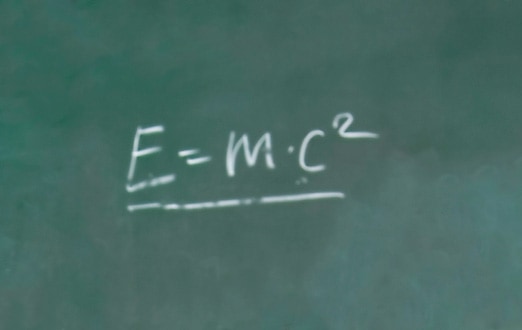
e = mc2

Books about Einstein – the man, the myth and the theories (both special and general) – pop onto my desk so often that, in most cases, I simply set them aside. But I must admit that the neon-orange book, titled How to Understand E = mc2, caught my eye. Part of Quercus’ “Little Ways to Live a Big Life” collection – which includes titles such as How to Land a Plane and How to Count to Infinity – this tiny tome (coming in at just over 50 pages) packs quite a punch.

Written by University of Cambridge theoretical physicist and mathematician Christophe Galfard, the book gives a short, sweet and succinct explanation for what it describes as “the most famous theory of all time”. Even though the title mentions only the famed equation, Galfard does a commendable job of providing a quick (if potted) history of early 20th century ideas and discoveries that led to Einstein developing his special and general theories of relativity. I particularly enjoyed the reference to Danish astronomer Ole Rømer, who in 1676 made the first calculation of the speed of light, after his observations of the Jovian moon Io led him to realize that light does not travel instantaneously.

The book also covers key concepts, such as “frames of reference”, as well as how objects behave at light speed. An unexpected but very welcome chapter was one on antimatter. Under the section on “consequences” of relativity, Galfard smoothly segues into how Paul Dirac deduced the existence of antiparticles, before describing how these ideas ultimately led to the development of the atomic bomb. Considering the book’s length, it is impressive that Galfard manages to give such a complete, if basic, explanation of this most beloved of equations, E = mc2.

  • 2017 Quercus 56pp £9.99hb

Movie physics

Time illustration

Science(ish) started life as a podcast, explaining this book’s conversational tone, sometimes stretched to the point of teasing banter between its two authors. Rick Edwards (author and TV presenter) and Michael Brooks (science writer, journalist and consultant) bring humour, enthusiasm and insight to “The Peculiar Science Behind the Movies”, taking 10 major sci-fi films as their jumping-off point. To distinguish themselves from the many other related books now available, they break each film down to three scientific questions and then answer them. For example, “Can we travel in time?”, “How do we build a time machine?” and “Could you erase yourself from history?” might sound like a flippant look at a not-very-scientific sci-fi film, but actually, Back to the Future forms the kicking-off point for explaining special relativity, general relativity, wormholes, cosmic strings and Crispin Glover’s weird slide show.

Okay, so it does get silly at times, and it does contain spoilers if you haven’t seen the films already. You will get much more from this book if you are familiar with the films covered. But it’s a decent introduction to some basic science concepts and some very complex, very current scientific questions, such as de-extinction (Jurassic Park) and human settlement on Mars (The Martian).

There isn’t space to cover issues in depth, which does lead to a few bum notes, such as the chapter on Gattaca failing to grapple at all with the moral and ethical issues surrounding genetic screening and manipulation. I also found that the plethora of illustrations, infographics, cartoons of the authors, footnotes and box-outs on related topics tend to interrupt the flow of reading. I was also annoyed that of the many scientists (past and present) referenced, the women could be counted on one hand. But overall, the authors’ forthrightness (directly calling people who dismiss evolution “idiots”) and sheer love for the films they are discussing made this a really enjoyable read.

  • 2017 Atlantic Books 272pp £12.99hb

Contact lenses monitor glucose in tears

In 2014, over 422 million people worldwide were suffering from diabetes mellitus. Three types of diabetes exist, and all affect the production of insulin, either because the pancreas cannot produce enough insulin, or due to an inappropriate response of the cells to insulin, a hormone that is secreted in response to high glucose in the blood.

Diabetes, due to high levels of glucose in the blood, can cause neurologic, ophthalmologic, nephropathic and cardiologic disorders, as well as birth defects in infants born from diabetic mothers. Diabetic patients need to assess their glycaemia several times per day, using a blood glucose self-testing device. Despite the existence of non-invasive devices, this is challenging for the patient. An alternative to blood glucose monitoring would be of great interest for diabetic patients.

With this aim, Joseph Lakowicz and his team at the University of Maryland have developed a more convenient way to read glucose, from tears, using glucose-sensitive silicone hydrogel contact lenses. Glucose concentration in tears follows the concentration in blood within five minutes, so such measurements should be accurate (J. Biomed. Opt. 23 057005).

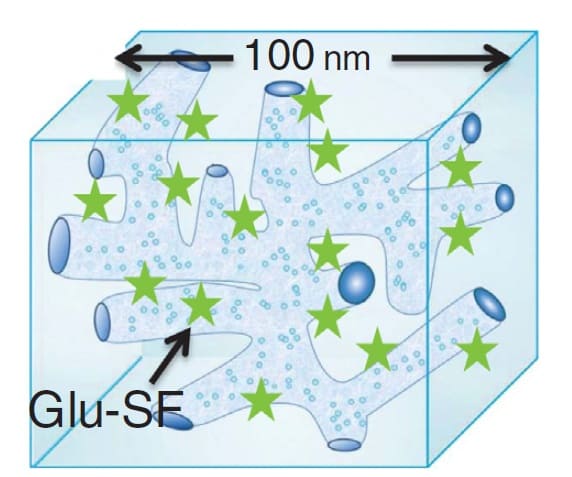
The presence of an interface between the silicone and water regions in a typical silicone hydrogel lens provides the opportunity to create the glucose-sensitive lenses. The water regions act as channels for tear fluid transport and the silicone-rich regions allow a high transport of oxygen, since the capacity of the lens to transport oxygen defines the duration of its wearability by the patient.

Silicone hydrogel

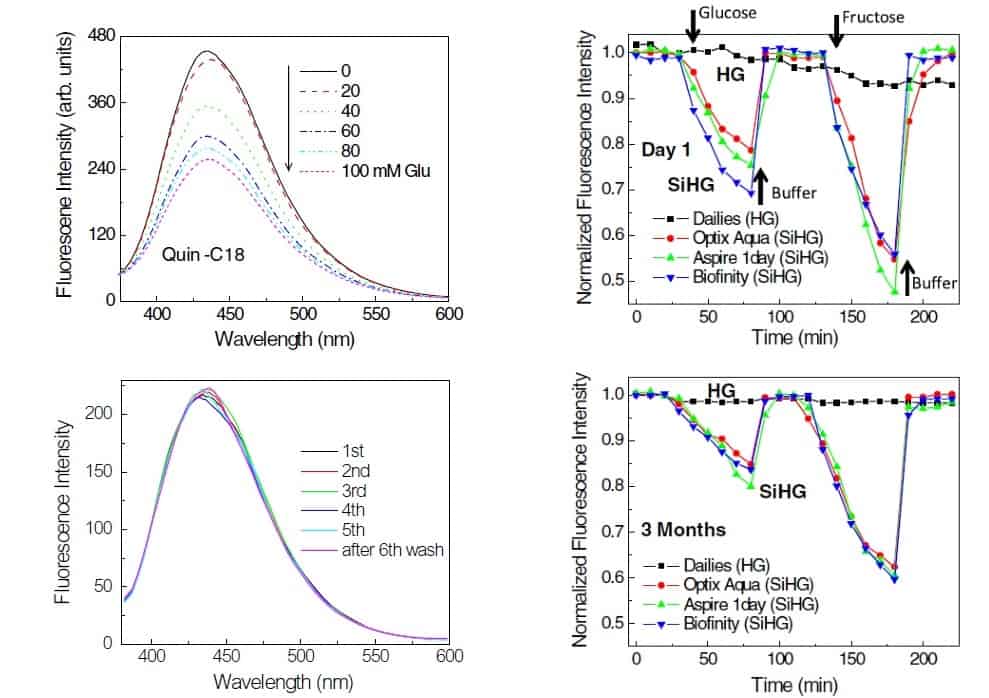
 The system works thanks to the glucose-sensitive fluorophore Quin-C18, which contains a boronic acid that binds sugars. Quin-C18 fluorescence can be observed under an ultraviolet lamp. However, the device that will be used to detect the fluorophore in the lens is not yet determined. New technology such as a complementary metal–oxide–semiconductor (CMOS) camera could be used.

Lakowicz, and co-authors Ramachandram Badugu and Edward Albert Reece, observed that the fluorescence of the fluorophore Quin-C18 decreased when the concentration of glucose increased. There was no signal loss from the fluorophore after multiple rinses. Also, long storage (three months) did not seem to affect the lens’ response to glucose.

The researchers also demonstrated that glucose binding is reversible, by looking at the binding of fructose, which has a high affinity for boronic acid, after glucose binding. However, the minor amount of fructose in tears is not expected to affect the glucose measurements.

Glucose parameters

Besides their important potential for monitoring glucose in tears of diabetic patients, these lenses could also be used to detect other molecules or pathologies of the eye, for example for diagnosis of dry eye disease.

Nutrient pollution threatens coral reefs

Nutrient pollution from man-made sources such as sanitation and agriculture threatens a variety of habitats around the world. Now US researchers have shown that nutrient pollution can make corals more vulnerable to global ocean acidification.

Coral reefs survive as long as they grow faster than erosion wears them away. Organisms that build the reef, like corals, are calcifiers; they lay down calcium carbonate they have gathered from the water to build their skeletons. Other organisms break down the reef structure physically, while it will also dissolve if the seawater becomes slightly acidic. One cause of ocean acidification is increased atmospheric carbon dioxide levels emitted by humans, a problem projected to worsen in the future.

To investigate how increased nutrient levels affect coral reefs, Nyssa Silbiger of California State University, US, and colleagues added nitrates and phosphates – common components of fertiliser – to aquaria containing coral, algae such as seaweeds, and organisms living in coral-free rubble and sand, all important components of reef communities. They measured activities critical to the healthy functioning of a reef – calcification, dissolution, respiration and photosynthesis –  and combined the results to achieve a picture of the whole community.

When nutrient levels were high, both photosynthesis and respiration rates increased across the community, including in the coral’s symbiotic algae. But calcification by corals reduced. This may be because both calcification and photosynthesis compete for dissolved inorganic carbon. The corals, however, also became less able to use carbonate dissolved in seawater, their raw material for calcification. An increase in dissolved carbonate usually means more calcification but under elevated nutrient conditions this relationship collapsed; calcifying organisms did not lay down as much more, or, in some cases, any, carbonate under higher dissolved carbonate levels. Acidified seawater shrinks the reef in these conditions; it dissolves faster than the corals can build it.

Occasionally, the elevated nutrient levels used in this study have occurred naturally in the Pacific. They are set to become more widespread if pollution in the seas continues to increase. Nutrient run-off could become a serious problem in marine communities as human developments spread along coastlines, increasing the coastal population and the amount of waste it produces. These new results lay bare the threat such pollution causes to already beleaguered coral reef ecosystems, potentially tipping them from net growth into decline.

Silbiger and colleagues from the University of Hawai’i at Mānoa, University of Rhode Island and the University of California, San Diego published their findings in Proceedings of the Royal Society B.

In situ measurements reveal cobalt-decorated graphene behaviour

Credit: Graphene istock

Combining electronic and magnetic properties could open up a vista of opportunities to exploit for data storage and computations. In particular there is keen interest in embellishing graphene’s uniquely impressive electronic properties by decorating it with magnetic atoms. So far it has been difficult to study these systems because of interference from the environment. Now Chao-Yi Cai from Peking University in Beijing, China, and Jian-Hao Chen at Peking University and the Collaborative Innovation Center of Quantum Matter in Beijing have developed homemade apparatus that allows them to measure the quantum transport properties of decorated graphene in situ after depositing the cobalt atoms.

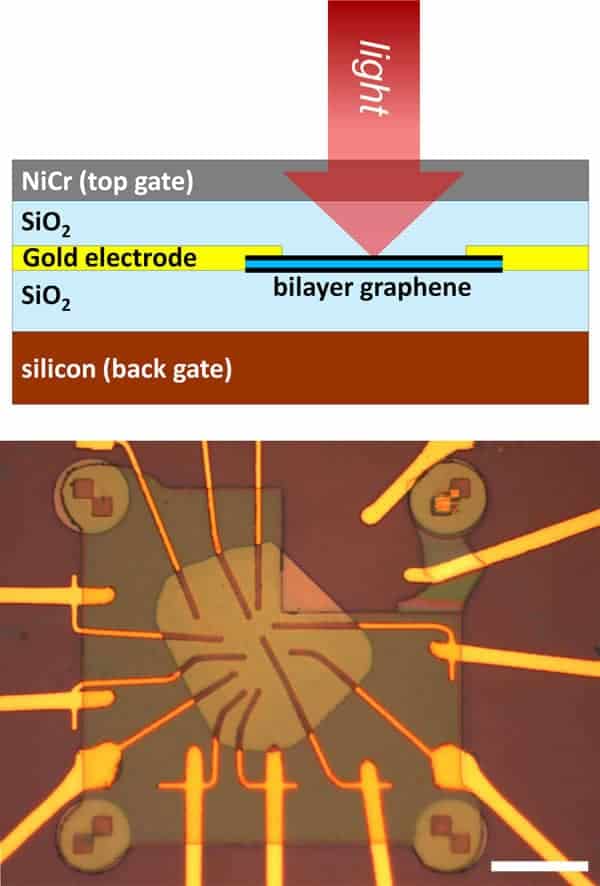
Cai and Chen fabricated devices from exfoliated graphene, which they adhered to SiO2/Si substrates before affixing gold electrodes plated with chromium in a four-wire configuration. They then transferred these devices to their ultrahigh-vacuum quantum transport measurement apparatus, where they ran several cobalt deposition procedures, measuring the device behaviour in situ after each run. They focus on cobalt atoms in particular, since as they point out in their report of the work, “A previous theory predicted that among the traditional ferromagnetic elements (Fe, Co, and Ni), only Co atoms can induce magnetism in graphene.”

Cobalt atoms like to cluster

The researchers noted a decrease in conductivity, a shift in the minimum gate voltage and a decrease in the minimum conductivity as the number of cobalt deposition runs increased. These trends are consistent with what might be expected from charged particle scattering and the researchers attribute them to n-doping from the cobalt atoms.

However they also noticed additional gate-dependent resistivity that did not behave as expected for scattering from point-like charges. Further investigation revealed that the cobalt atoms were forming clusters on the surface, even on graphene at cryogenic temperatures where there is little energy for atoms to move along the surface.

The next surprise was the observation of an increasingly temperature-dependent resistivity. Graphene has notoriously low resistivity, which has very little temperature dependence, but once decorated with cobalt atoms Cai and Chen observed insulator behaviour, particularly at low temperatures and around the Dirac point, where graphene’s conically shaped valence and conduction band meet.

Persistent quantum interference

Finally the researchers applied a magnetic field perpendicular to the device. In pristine graphene the magnetoresistance – where a material’s electrical resistance changes in response to a magnetic field – oscillates as the field increases. These “Shubnikov-de-Haas” oscillations disappeared as they deposited more and more cobalt atoms. They also observe negative magnetoresistance behaviour that cannot be explained simply as the cobalt atoms conferring ferromagnetic behaviour on the sample. Instead the researchers attribute the negative magnetoresistance behaviour to the appearance of weak localization effects, which are more pronounced in 2D materials.

“In systems with weak localization, application of the magnetic field perpendicular to the sample breaks the time-reversal symmetry between forward and backward hopping paths, destroying the quantum inferences thus generating a negative magnetoresistance,” they explain in their report.

Cai and Chen highlight that even at magnetic fields as high as 9 Tesla the electrons have a large “cyclotron radius”, which describes their circular trajectory in a magnetic field. When the cyclotron radius becomes much lower than the phase decoherence length the quantum interference is suppressed leading to classical behaviour. However these conditions are not met in their cobalt-decorated graphene sample even at 9 Tesla, so that the negative magnetoresistance behaviour remains unsaturated.

Full details are available in Chinese Physics B.


Copyright © 2026 by IOP Publishing Ltd and individual contributors