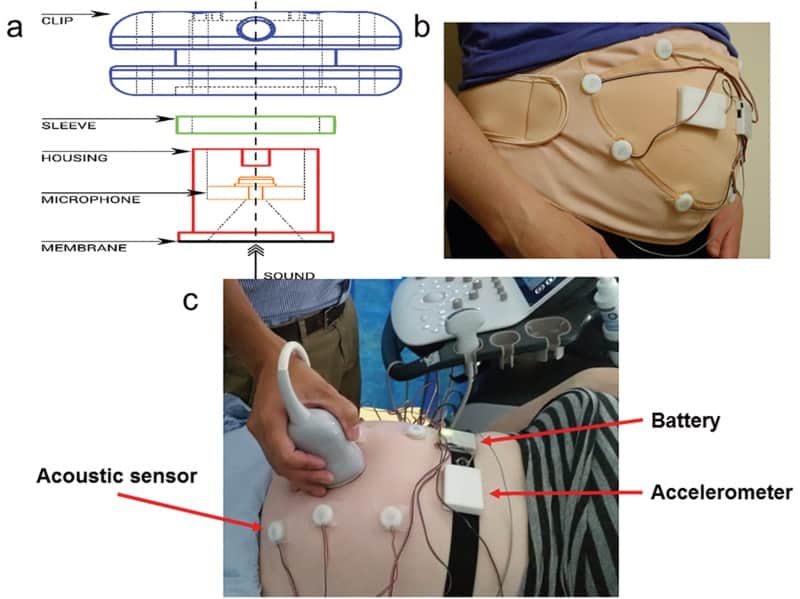
The foetal monitoring system. (a) The design of the sensors; (b) the system being worn; (c) an ultrasound-compatible version. (Courtesy: PLoS ONE doi: 10.1371/journal.pone.0195728, under CC BY 4.0)
UK researchers have developed a prototype wearable system for pregnant women, to detect foetal movements over long periods of time. The Nowlan and Vaidyanathan groups at Imperial College London, piloted the system in 44 pregnant women and managed to discriminate short bursts of movement (startles) from other general movements and breathing, as well as distinguish maternal artefactual movements. The team also set up an analysis framework and clinical protocol that can be used in future studies of upgraded monitoring systems (PLoS ONE doi: 10.1371/journal.pone.0195728). This is a first step towards the production of cheap, safe and wearable tech for monitoring foetal movements.
Measures of foetal movement are often self-reported by the mother, typically by counting the number of kicks over a period of time. However, this is not a robust way to measure foetal activity; any reduction of movement may not be noticed, and if it is, it may be too late to intervene. A standardized measure would be invaluable for tracking foetal movements. Here, researchers provide a prototype device, worn by the pregnant mother, which can be used to collect data even during maternal movement. The system is low-cost and non-transmitting (and hence safe for the foetus).
Hardware development
The team collected 15 hours of data from 44 pregnant women (mean gestation of 31 weeks), using a custom-made inertial measurement unit consisting of eight acoustic sensors (used to detect vibrations from the foetus moving) and an accelerometer (which measured maternal acceleration in three axes).
Acoustic sensors, in a sealed chamber covered by a diaphragm, detect pressure changes when the outer membrane is perturbed by low-frequency vibrations caused by foetal movements. The research team also developed an ultrasound-compatible version, with sufficient field-of-view for the medical exam.
Detection and discrimination
The researchers correlated an ultrasound physician’s notes with three different movement types (breathe, general (whole-body) and startle). A detection was confirmed when observed movements during a 5 s window were in agreement with the sensors’ movement detection.
They found that 78% of startle (short, quick and directed) movements were detected correctly by the system. The detection was highly dependent on the proximity to a sensor, since startles may only be registered by a few sensors. The detection rates for whole-body movements and breathing were lower (53% and 41%, respectively), indicating that the system is only sensitive to startles.
The team also noticed a large variance between different scans; an inflated false positive rate meant that so far, the system cannot detect levels of foetal activity alone. The researchers suggest that the highly sensitive nature of the sensors makes it more susceptible to noise.
For the detected movements, the researchers employed principal component analysis (PCA) to reduce the dimensionality of the data. Machine learning classifiers were used to generate confusion matrices. Essentially, this procedure correlated the sensors’ detected movement to the physician’s observed movement, and hence output a percentage that described how well the classifier discriminated different movements.
Generally, startles were well discriminated from whole body movements (72.1% accurate) and breathing (66.6% accurate). However, the classifier did not discriminate well between whole-body movements and breathing.
Future prospects
The researchers plan to add more sensors to improve the specificity of foetal activity detection. Additionally, further optimization regarding placement and number of sensors should lead to improvements in detection and discrimination of movements. Given that detection of breathing and general movements were poor, the authors suggest that any wearable sensor would be unlikely to detect these movements.
This work has shown that foetal movements can be detected using acoustic sensors, and that the signal can be isolated from maternal artefacts captured by the accelerometer. For the first time, detection of startles and their discrimination from other movements using a wearable device has been described.
A team of researchers at the University of Florida in the US have devised a new “printing-then-gelation” fabrication technique that exploits a granular microgel as a support material for liquid 3D structures that are later solidified. The novel two-step approach, which the team described last year in the IOP journal Biofabrication, can produce a much wider range of soft biomaterials than is possible with conventional printing techniques (Biofabrication 8 025016). Physics World spoke to Yong Huang, the lead researcher, to find out more.
How does the new “printing-then-gelation” method work?
During conventional “gelation-while-printing” processes, the printed material is gelled or solidified in situ to retain the shape that is formed during printing. This approach requires bioinks to be cross-linkable in a short period of time, which limits the types of biomaterials that can ultimately be printed.
Our alternative “printing-then-gelation” method involves first extruding a liquid hydrogel precursor (an alginate solution) through a nozzle tip that is located within a fluid support material (Carbopol granular microgel). This process creates liquid three-dimensional structures in a support bath, which can then be gelled afterwards. The technique allows us to successfully print a variety of bioinks directly – even those that are difficult to print – and allows free-form fabrication of complex structures without gravitational constraints.
How have you developed the technique, and what challenges still remain?
Since the initial demonstration of the technique, we have also shown that we can print various soft or biological structures from these difficult-to-print materials using two-step or even multi-step gelation processes (MRS Bulletin doi.org/10.1557/mrs.2017.164). There is still a problem to overcome here though, since the granular gel support we use is sensitive to the ionic strength of the fluid transport material, and so is limited to certain fluids. We are now looking into alternative support materials so that the new approach might be more widely implemented.
How does your work fit in with your wider research programme?
Many researchers view this free-form fabrication of soft structures as a critical step towards the holy grail of organ printing – that is, the on-demand design and fabrication of 3D human organ constructs for implantation and regenerative medicine. Our techniques are one step towards this goal. Material extrusion in particular is a platform 3D printing method that can be used to produce engineered tissue. High-performance support materials are also obviously invaluable here for facilitating the printing processes.
What feedback have you received from the research community?
Many research groups have contacted us following the publication of our Biofabrication paper to discuss the feasibility of the printing-then-gelation methodology and to see whether they could use the approach in their projects to make complex 3D biological constructs.
What other breakthroughs have you made since last year?
Our technique relies on innovative support materials, like Carbopol, to effectively stabilize the liquid structure during fabrication until it is ready to be gelled. Ideally, such materials should flow freely when subject to an external force that is higher than their yield stress, but they should also maintain their form and cease to flow when subject to weaker forces.
Although the granular gel is an excellent support for some types of bioink, it is limited to the types of bioinks it can work with, so we have been looking at other potential support materials. One specific material that comes to mind here is our new nanoclay system, in which nanoclay is used both as a support bath and as an internal scaffold material.
What are the next stages in your research?
Our priority is to continue to look for new, more versatile yield-stress support fluids. We will also be investigating the fundamental processes at play behind 3D bioprinting and the physical properties and behaviour of bioprinted structures. For example, how do they mature to form tissues and what mechanical properties do they have? These studies will be important, in particular, for vascular tissue substitution.
Read our special collection “Frontiers in biofabrication”to learn more about the latest advances in tissue engineering. This article is one of a series of reports highlighting high-impact research published in the IOP Publishing journal Biofabrication.
By the end of the century, hurricanes could be a lot wetter, as well as slightly stronger and slower moving. That’s according to an analysis of how 22 recent hurricanes would differ if temperatures had been 5°C warmer and the climate wetter.
On average, the rainfall rate from the simulated future storms increased by 24%. As a group, these storms had 6% stronger average hourly maximum wind speeds and moved 9% slower. Their average radius remained the same.
Each storm had a unique pattern, however, with some becoming slightly weaker or moving slightly faster. None became drier.
“This study shows that the number of strong hurricanes, as a percent of total hurricanes each year, may increase,” said Ed Bensman of the National Science Foundation, which supported the study. “With increased development along coastlines, that has important implications for future storm damage.”
The 2017 hurricane season caused an estimated $215 billion in losses according to Munich RE. It was the most expensive on record.
There’s a trade-off when investigating hurricanes between resolution and computing resources. The climate models that run on a global scale over decades or centuries don’t have high enough resolution to pick out hurricanes but high-resolution weather models need a lot of computing power and aren’t generally run over the long-term.
Gutmann and colleagues used a new data set created at NCAR by running the Weather Research and Forecasting (WRF) model at 4-km resolution over the US for two 13-year periods –2001-2013 and a period with a climate about 5°C warmer, as could occur by the end of the century if greenhouse gas emissions continue unabated. The simulations took roughly a year.
The team found 22 named storms that had similar tracks in the historic and future simulations, making them easy to compare.
“Some past studies have also run WRF at a high resolution to study the impact of climate change on hurricanes, but those studies have tended to look at a single storm, like Sandy or Katrina,” Gutmann said. “What we find looking at more than 20 storms is that some change one way, while others change in a different way. There is so much variability that you can’t just study one storm and then extrapolate to all storms.”
It could be that fewer storms form in the future due to increasing atmospheric stability or greater high-level wind shear.
“It’s possible that in a future climate, large-scale atmospheric changes would make it so that some of these storms might never be able to form,” Gutmann said. “But from this study we get an idea of what we can expect from the storms that do form.”
“It’s not maths that makes physics a science. It’s the fact that you measure things,” says Michael de Podesta in this week’s Physics World Weekly podcast. De Podesta is in conversation with Physics World’s Anna Demming, who visited the UK’s National Physical Laboratory (NPL) ahead of World Metrology Day on 20 May.
Later this year, the General Conference on Weights and Measures (CGPM) will vote for new definitions for some of the fundamental units of measurement. That includes the kilogram, which is currently defined by a reference mass kept at a secure location in the outskirts of Paris. Demming investigates these key developments in metrology – the science of measurement.
While at NPL, Demming meets a range of other scientists whose research is contributing to diverse fields. She discovers the techniques being used to characterise the properties of graphene, a process needed to define standards within this emerging technology area. She also learns how NPL researchers are contributing to medical physics and improving the performance of fuel cells.
As usual, there is also a round up of some of the other key stories making the headlines this week on the Physics World website.
If you enjoy the podcast then you can subscribe via iTunes or your chosen podcast service. Join us again for another instalment next week. In the meantime, you can also listen to our longstanding monthly podcast, Physics World Stories.
The minimum amount energy needed to erase a quantum bit (qubit) of information has been measured for the first time. Using a trapped ion as a qubit, Mang Feng of the Chinese Academy of Sciences in Wuhan and colleagues have confirmed that “Landauer’s principle” applies to quantum information as well as classical information.
Devised in 1961 by the German–American physicist Rolf Landauer, the principle says that the irreversible erasure of information involves the dissipation of heat. This confirmation in the quantum realm could lead to the development of practical erasure systems for quantum computers.
One important example of Landauer’s principle is the “reset-to-one” process, whereby a bit of information, which can be either 0 or 1, is reset to 1. As the bit can no longer have one of two possible values, its entropy – or randomness – is reduced. And given that the bit and its surroundings are physical entities that must obey the laws of thermodynamics, the entropy must therefore be transferred from the bit to its surroundings as heat.
Tiny amount of heat
Landauer’s principle says that a minimum amount of heat – about 10-21 J per erased bit – must be dissipated when information is destroyed. This is a tiny amount of energy and it was not until 2012 that physicists in Germany and France were able to confirm the principle, using a tiny silica bead trapped in optical tweezers as an unlikely datum bit.
While a classical bit can be either 0 or 1, a qubit can be in a combination of both states at the same time. However, Landauer’s principle should also apply, predicting a similar minimum amount of heat dissipated.
Now, Feng and colleagues have verified this notion by storing and then erasing information held in a single ion of calcium-40 that is trapped at ultracold temperatures using magnetic fields. Information was stored in terms of whether the ion is in one of two internal quantum states dubbed 0 and 1. The ion can vibrate within the trap and can therefore exchange heat energy with its surroundings via transitions between its quantized vibrational modes.
Maximally mixed
Using a series of laser pulses, the ion qubit was first put into a quantum state in which the 0 and 1 states are equally populated. This is a state of maximal entropy called a “maximally mixed state”. A laser pulse then couples the internal states of the ion to its vibrational motion, which allows the ion togive up energy to its surroundings. This process results in the partial erasure of the quantum information as well as the conversion of entropy into heat.
By repeating the process many times while monitoring the internal quantum state and vibrational modes of the ion, Feng and colleagues were able to confirm that Landauer’s principle applies in the quantum regime.
Writing in Physical Review Letters, the team describes its work as “an imperative step towards better understanding of the fundamental physical limitations of irreversible logic operations at the quantum level”. The researchers also hope that their work will aid in the design of an “artificial quantum reservoir” that would initialize quantum computers of the future by rapidly removing encoded information from large numbers of qubits. They caution, however, that the development of a practical erasure system will be a challenge because quantum erasure requires more heat to do than in classical systems – because of correlations between the qubit and the heat reservoir.
Germany is continuing with its nuclear phase-out, while pushing renewables strongly, with well over 100GW of wind and solar so far. Renewables overall, including hydro and biomass, should soon be supplying nearly 40% of the country’s electricity. That has been helped by the fall in the costs of wind and PV technology and by continued support from consumer self-generation, mainly using PV, and locally owned projects, including wind. For example, the result of the first competitive German onshore wind tender in 2016 had prices ranging between 52 and 58 €/MWh for 807 MW. That’s down from €80/MWh under the the old FiT support system. 65 of the 70 successful projects were community-driven or co-operative schemes.
The fall in prices continued in the next round, hitting a new low at €42.8/MWh average in the second on-shore wind auction, 25% down from the first round. The third 2017 onshore wind contract auction, following the first (0.8 GW) and second (1 GW) rounds, was for 1 GW. It was vastly oversubscribed, with 2.5 GW of bids, leading to even lower winning bids than in previous rounds, with an €38/MWh average. The lowest bid was at €22/MWh.
Germany plans to allocate support for 2.8 GW of new onshore wind projects annually through tenders up to 2019, followed by an annual 2.9 GW from 2020 on and it is now pushing ahead with offshore wind, with over 5 GW so far in place. PV solar has also been steadily increasing, up from 42 GW in 2017, though wind still leads, passing 50 GW in 2017.
Public support remains very high. In a poll, 95% of the sample saw expansion of renewables as important or extremely important – up from 93% in 2016. But there are still some big policy issues. While renewables are growing, so has coal use. Although national-level use of energy from coal is now falling, gas imports are rising, with Russia keen to help.
Gas plants can be used to balance variable renewables, so there is a case for them, but there is a push towards the use of green gas, generated from wastes or via Power to Gas conversion of surplus renewable electricity. With CCS all but abandoned, the continued use of carbon-intense coal is much more provocative, given Germany’s climate protection ambitions. However, it is lucrative. With renewables taking some of the market, Germany now has regular surpluses of power, despite the phase-out of nuclear, and that surplus, mostly in effect from coal plants, is being exported very profitably. Coal use is being fought by environmentalists, and indeed was a key issue in the initial phase of the post-election negotiations, with the Greens requiring action on it as the price of their membership of a coalition with Merkel. Sadly, that didn’t work out. Phasing out coal use and coal mining is certainly a tough call, although it is happening.
However, despite these setbacks, it does not seem to be the case, as some insist, that Germany is replacing nuclear with coal, so that emissions are rising. The 2017 World Nuclear Industry Status report notes that, between 2010, the last year prior to the post-3/11 shutdown of the eight oldest nuclear plants, and 2016, ‘the increase of renewable electricity generation (+84.4 TWh) and the noticeable reduction in domestic consumption (–20.6 TWh) were more than sufficient to compensate the planned reduction of nuclear generation (–56 TWh), enabling also a slight reduction in power generation from fossil fuels (–13 TWh) and a threefold increase in net exports’.
Though it is the case that German emissions have been growing slightly, that’s mainly due to increases from transport. That clearly needs attention. Electric vehicles are beginning to be popular in Germany, as elsewhere, and that may help – perhaps using some of the surplus renewable power from wind at night-time. However, some of that could also be used for other purposes. For example, Siemens Gamesa Renewable Energy is developing the use of power from wind turbines to heat rockfill for heat storage at 600 °C. A steam turbine then runs a generator, converting the heat back into electricity. Its first full scale FES ‘Future Energy System’ project at the Trimet SE aluminum smelter site in Hamburg-Altenwerder will have 1000 tonnes of rockfill, which, when heated, would provide 30 MWh via a 1.5 MW generator.
Storage is clearly a key new issue. A 200 MW rated pumped hydro storage system is to be developed using an old coal mine in Germany. And another novel approach goes beyond conventional compressed air storage in caverns and uses large hollow concrete spheres mounted on the seabed, with excess power from offshore wind turbines used to pump water out of them. When power is needed, water is allowed back in, and it will be at high pressure, given the deep water siting, driving a separate turbine generator. But the big storage option may be Power to Gas (P2G), using surplus electricity from wind and PV to make storable hydrogen gas by the electrolysis of water, to be used to make power again when wind and solar inputs are low and demand high. There are many projects underway. DENA, the German Energy Agency, wants there to be 1 GW of P2G capacity in place by 2022.
So the German Energiewende programme continues, with new ideas constantly emerging. This is despite a degree of retrenchment on the policy side – a renewables slowdown. Germany is phasing out FiTs in favour of competitive auctions, ostensibly in the belief that they will cut costs. Although costs are falling, the FiT cuts will impact on PV especially, including prosumer projects. There have also been attempts to limit support for citizen-based wind power development, so as to cut costs. For the 2018 wind auction round, the rules were revised to limit citizen-based projects. In earlier rounds they could bid for projects as yet without permits and were given up to 4.5 years before start-up, as opposed to 2.5 years for commercial projects. They were also automatically awarded the highest winning auction bid. Unsurprisingly, they did well, but in the next rounds, these privileges were removed. As a result, in the February 2018 auction round, of the 83 winning projects, only 19 (22%) were citizen energy initiatives, a big drop from the 98% in the previous round in November, in which 61 projects got through. That change has pushed the average winning wind contract prices up to €46/MWh.
Opponents of these market-oriented policies say that they may well cut the cost to consumers (compared with FiTs), but may push up overall costs and slow the building up of capacity. However, it is complicated. The technology is getting cheaper. You could say that the FiTs in Germany and elsewhere had in fact done their job, building a market so that prices fell – so they were no longer needed. But the drastic FiT cut-backs, mirrored across the EU, seem to have been more about slowing down the rapid growth of renewables, PV especially, which otherwise some governments evidently felt would get out of control, imposing unacceptable costs on consumers. Either way PV growth looks likely to be less than it would have been, and the same for wind. Certainly, although growth continues, the overall rate of renewables growth in Germany does seem to have fallen, with the funding cuts being at least partly responsible. Last year, investment in clean energy fell by 26%. So there have been fears that Germany might not reach its climate targets, and calls for it to change tack.
What does not seem to be in contention is the nuclear phase-out. With Gundremmingen B now closed, there are 7 plants left – all to go by 2022. But some nuclear plants are meanwhile trying to ramp up and down to stay in the game i.e. by offering balancing services. Though that can have its problems.
With renewables expanding, there is no shortage of issues – upgrading grids to help with balancing being key, especially given local opposition to new lines. Although some bold plans are still going ahead. There are limits being imposed on biomass use, but renewables supplied over 36% of annual electricity needs in 2017, 40% of it from wind, 36% from biosources.
However, some worrying policy changes emerged from the final phase of the horse trading on a new Christian Union and Social Democrat coalition. Nevertheless, while it was accepted that the 2020 climate target might be missed, under the proposed deal, the 2030 target will stay, with the renewable electricity target to be raised from 50% to 65%. That seems likely to put a squeeze on coal.
And so the longer-term target of getting to 80% of electricity from renewables by 2050 still seems realistic, though that, and even more so, the 60% by 2050 energy target, with energy use cut by 50%, will take some fighting for. Certainly transport is a key sector as is heat, and coal is still an important issue. Even so, the latest overall emission figures look good – a 0.5% fall.
For an analysis of the German Energiewende see this book on Conceptualizing Germany’s Energy Transition. It’s all a world away from what’s happening in the US – see my next post.
Antiferromagnetic materials have a lot going for them for high-density fast-operating memory applications. As Tsinghua University researcher Song Cheng points out they have no net magnetic moment, exhibit ultrafast spin dynamics with characteristic frequencies in the terahertz range, produce negligible stray fields, and they are robust against magnetic perturbations. Now Song and colleagues in China and the US have reported a previously unobserved switching mechanism in NiO on platinum that could broaden opportunities for exploiting antiferromagnetic switching for data storage.
Switching the Néel order
In an antiferromagnetic material the magnetic moments of neighbouring atoms – determined by the electron spins – are aligned antiparallel to each other, an arrangement described as Néel order. To use this antiferromagnetic order in memory applications some way of manipulating it is crucial, and one option is using spin-transfer effects that arise on applying a current to the material.
In fact Peter Wadley and Bryn Howells at Nottingham University in the UK alongside a group of researchers across Europe previously reported antiferromagnetic switching in CuMnAs in response to a current. Here the current gave rise to a spin-orbit torque, switching the spin polarizations in the sublattices of the crystal. While the work signified an important step forward for antiferromagnetic memory applications, the mechanism of the switching – known as the Edelstein effect – is only possible for a very limited range of materials where the crystalline structure has specific symmetries.
A switch for all crystal structures
Instead Song and colleagues made use of an “antidamping” spin-orbit torque to switch the antiferromagnetism. “In this work, spin currents, generated from the spin Hall effect in the heavy metal (i.e., platinum), are used to trigger the antiferromagnetic moment oscillation and to switch the adjacent Néel order of the antiferromagnet at room temperature,” Song explains.
Although there have been previous proposals of an “antidamping torque” that could switch the antiferromagnetic order in these kinds of structures regardless of crystal symmetry, until now there had been no observations of it. Song and colleagues’ studies focused on the (001) crystal plane of NiO on platinum, and they were able to observe switching in the direction of the current from measurements of the spin Hall magnetoresistance of the material.
The antidamping torque switching is highly reversible and could be used to write 0s and 1s for digital memory. “This finding could be readily generalized to ubiquitous biaxial antiferromagnets, providing broad opportunities for all-electrical writing and readout in antiferromagnetic spintronics,” adds Song.
There was a time when keeping on top of your health, activity and diet was archaically analogue: you’d waste time waiting for follow-up appointments to monitor recovery, obsessively check food labels to keep track of your diet, and fastidiously log exercise when preparing for sporting events. But with the help of wearable gadgets, these time-consuming problems are becoming a thing of the past. Nowadays, there are “smart” watches, rings, necklaces, bracelets and even headphones that can keep track of your steps, heart rate, sleep, stress and so much more. But despite consumer enthusiasm – 38 million wearable devices were shipped worldwide at the end of 2017 – market growth is slowing, and sophisticated shoppers are looking for more.
So far, the functionality of commercial wearable devices has been limited: they rely on rigid electronic components mounted in plastic, and few are biocompatible, washable or breathable. Future innovations will exploit softer electronics, and indeed we are already starting to see energy-harvesting threads woven into beach towels, sweat-resilient piezoelectric components embedded into running shoes and responsive textiles that can release controlled doses of medicine. Thanks to recent advances in material design, manufacture and fabrication, researchers are exploring new platforms and creating more malleable electronic devices.
To obtain reliable and detailed health metrics, it is vital that wearable and implantable sensors make constant contact with the skin or cells, and not irritate the wearer. With these details in mind, here are my top eight technologies-in-the-making that could continue revolutionizing how we track and maintain our health.
Weaving electronics: Conductive threads can be woven into fabric to create clothing that, for example, stores data collected by wearable devices. (Courtesy: Mi Jung Lee)
1 Woven data storage
The more data we collect with our wearable devices, the more space we’ll need to store that information. To solve this problem, Mi Jung Lee at Kookmin University in South Korea and colleagues are using conductive threads to weave data storage into our clothing. Lee’s technology is based on resistive random access memory (RRAM), in which a dielectric material changes its resistance under a strong electric field or current. They use carbon fibres and aluminium-coated cotton, where the metal forms aluminium oxide in air, which is stable and resistant to washing (Adv. Funct. Mater.27 10.1002/adfm.201605593).
For Lee’s fabric, bipolar resistive switches form at the interface between the aluminium oxide and the carbon threads. The aluminium oxide acts as the resistive switching layer, in which an applied voltage triggers an electrochemical redox reaction that creates conducting pathways between the aluminium and carbon electrodes. The threads switch from a low- to a high-resistance state, which can be used to write (or erase) information. To convince themselves of the reproducibility and scalability of their memory system, which is non-volatile, Lee’s team demonstrated that these data-storage fibres could be woven using a recommissioned commercial loom, after the team refused to learn how to knit.
Handy tech: An integrated “skin electronics” system allows health monitoring at home. (Courtesy: 2018 Takao Someya Research Group)
2 Fabric photovoltaics
If we are going to functionalize our fabrics, we’ll need to harness energy from the textiles themselves. According to Takao Someya’s group at the University of Tokyo in Japan, the answer is washable, stretchable and ultrathin photovoltaics. These solar cells are created from a blend of polymers and small molecules sandwiched between two carefully chosen elastomers that protect the active layer from water, while also being able to stretch and have good optical transmission. Light absorbed by the polymer creates bound electron-hole pairs (known as excitons), which are separated at the interface with an acceptor molecule and then navigated through the device to be collected at the electrodes. Someya’s devices maintain an efficiency of 8%, and can survive even if mechanically compressed and dunked for up to 100 minutes in water.
3 Cell monitors
Sticking sensors and electronic components into biological tissue can trigger inflammation and wound healing (a “foreign-body” response), preventing the tissue from properly contacting the device. Róisín Owens from the University of Cambridge in the UK and her team of tissue engineers are therefore seeking to understand the mechanisms by which cells can stick to and move across polymer surfaces. In particular, she is building organic electrochemical transistors (OECTs), which can measure the health of individual cells.
As organic materials can be transparent, Owens’ devices are able to measure conductivity and take images of cells at the same time. OECTs include an organic polymer film in contact with an electrolyte, where a gate electrode controls the doping level within the polymer (Nat. Rev. Mat.3 17086). The transistors can be used to sense low levels of metabolites (such as glucose) continuously and in vivo. The biorecognizing enzymes used for sensing aren’t usually very good at transporting electrons to neighbouring electrodes, but organic electronic materials can help. They can operate in severe biological environments and are able to store biorecognizing enzymes, allowing for fast conduction pathways to nearby electrodes. Owens’ team is trying to identify the precise mechanisms of cell adhesion and migration on polymer surfaces, which are crucial for next-generation medical diagnostic devices and toxicology.
4 Bionic eyes
Rylie Green from Imperial College London is one of eight researchers to win a share of last year’s £8m Healthcare Technologies Challenge fund from the UK’s Engineering and Physical Sciences Research Council (EPSRC). She’s combining conducting polymers with proteins to mediate the interactions between implants and tissues. When implants are rejected, the formation of non-conductive scar tissue destroys the conducting interfaces with cells or neurons. Instead of having inert implants, Green is developing organic polymers that can regenerate the tissues around them.
The surface of the electrodes can be coated with a functional tissue layer, which, for neuroprosthesis, could build synaptic connections and change the way devices are driven (Adv. Funct. Mat.28 1702969). Her electrode coating has a bilayer of conducting and biosynthetic hydrogels, which supports the development of neural tissues at the interface with an electrode while protecting it from high voltages across the electrode. The work could help with artificial eyes.
5 Artificial muscles
Carbon-based materials are stretchy, soft, cheap and simple to process, making them perfect candidates for exploring innovations in wearable technology. And as they can transport electrons, holes and ions, such materials are compatible with conventional solid-state electronics as well as being able to interface with biological systems. The conductivity of organic materials arises from their sp2 carbon bonding, in which overlapping pz electron orbitals along a conjugated polymer chain permit the delocalization of π-electrons. This type of bonding means that organic polymers are intrinsically anisotropic and – in some cases – that thermal expansion along one axis is therefore not the same as along another.
In Sweden, Ali Maziz of Linköping University and co-workers are using conjugated polymers to weave artificial muscles. The “textile actuators” are formed from polymer-coated fabrics that are immersed in an electrolyte, which provides a sea of mobile ions. When the polymer is chemically reduced by applying a current, positively charged cations from the surrounding electrolyte move in to the threads, making them expand. When the current is reversed, the polymer is oxidized and the ions move out, causing the thread to shrink and the fabric to contract. Textile muscles can be used in limb prosthetics and exoskeletons, providing silent and soft movement at low current.
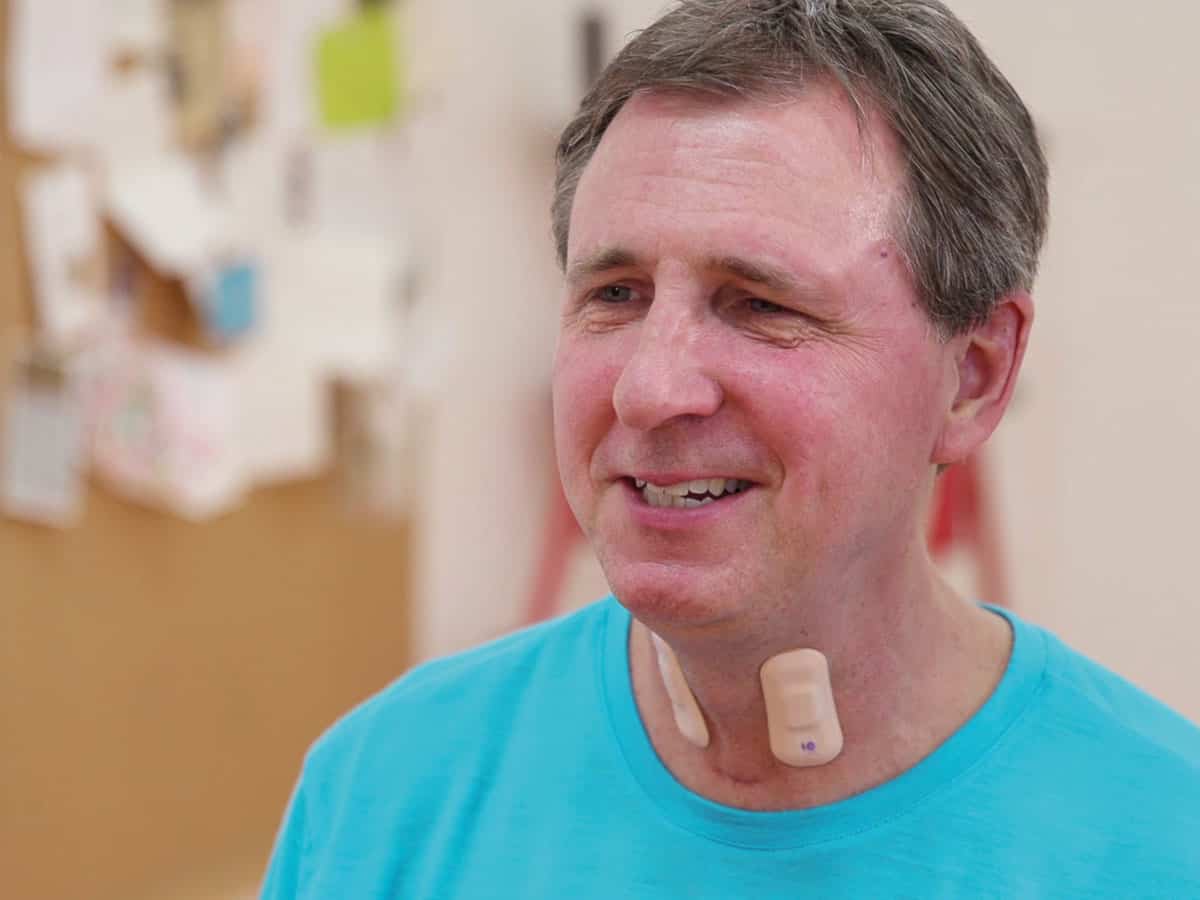
Digital stickers: A throat sensor (above) that uses stretchable electronics to monitor the recovery of stroke patients, giving doctors remote access to real-time data (below). (Courtesy: Elliott Abel/Shirley Ryan)(Courtesy: Elliott Abel/Shirley Ryan AbilityLab)
6 Throat sensors
John Rogers and colleagues at the Center for Bio-Integrated Electronics at Northwestern University in the US have been creating biosensors since they first developed techniques to stretch ultrathin layers of silicon in 2006. Their most recent inventions are stretchable, stick-on sensors that help with the rehabilitation of stroke patients. The sensors are lightweight – with mass densities as low as the outer layer of your skin – and can be attached to the throat to monitor a patient’s muscle movement and the vibrations of their vocal chords.
Specifically, the sensors detect mechano-acoustic waves – mechanical waves from natural physiological activity that move through tissues and fluids in the body. The sensors include a commercially available low-power accelerometer, low-pass and high-pass filters, a preamplifier and capacitive electrodes, all sandwiched between an ultralow-modulus elastomer (stretchy polymer) shell (Sci. Adv.2 10.1126/sciadv.1601185). Working with a rehabilitation lab in Chicago, the stretchable sensors can send real-time data about a patient’s swallowing and patterns of speech back to their doctors, who can monitor progress and set up alerts for when their patients are in trouble.
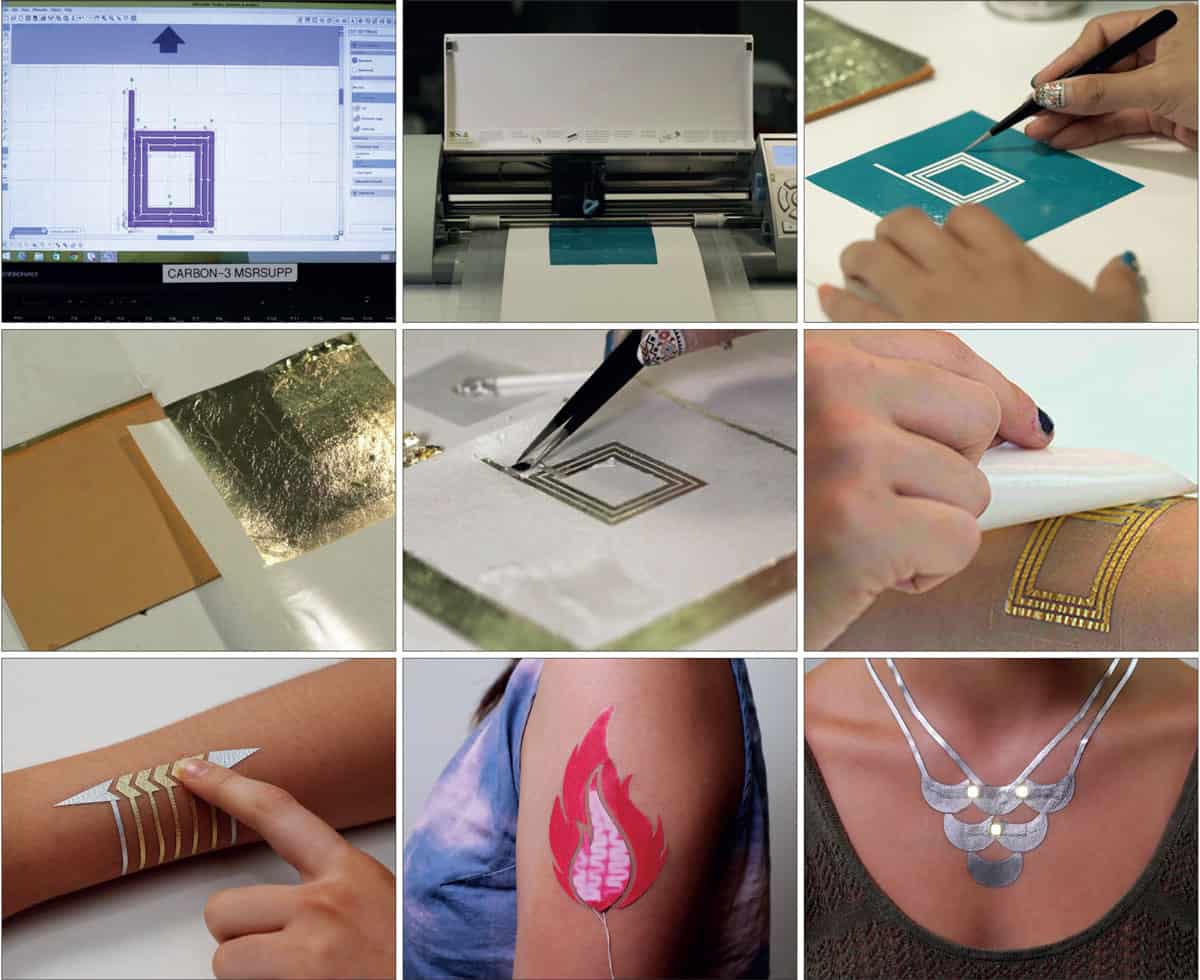
Stuff of sci-fi: DuoSkin’s fabrication process. (Microsoft Media/MIT Media Lab; Jimmy Day/DuoSkin)
7 Skin interfaces
We are not far from having instant digital access to our own detailed health information – but what if you can’t work out how to use the interface? An ageing population means that those who are most in need of regular health updates will struggle the most to interpret them. For them, Someya and his group in Tokyo have designed a flexible and deformable skin display. A micro-array of light-emitting diodes (LEDs) mounted onto a breathable nanomesh electrode and attached to a lightweight sensor can visualize vital signs and relay them to friends, family members or nearby medical staff.
In an attempt to make skin-based technology more accessible in and outside the medical field, Cindy Hsin-Liu Kao at the MIT Media Lab has created do-it-yourself temporary tattoos called DuoSkin. Made from gold leaf available at any craft store, the tattoos turn bodies into an interface. Once applied to the skin, they can sense touch input, display an output, and share data with other devices using near-field communication technology. The team behind DuoSkin is collaborating with Microsoft Research, and has shown how users can design their own tattoos, which are durable and skin-safe. The group even launched DuoSkin at New York Fashion Week, where they sent information about clothing to the smart phones of audience members (PNAS115 3504).
8 Epilepsy treatments
Anyone who has been diagnosed with epilepsy will have probably had an electroencephalogram (EEG), in which electrodes are attached to your scalp to detect electric fields from the action potentials speeding along your neurons. While EEG is good at indicating when events occur, it cannot easily pinpoint exactly where in the brain the signals are coming from and the skull isn’t a very good conductor of electricity. Epileptic seizures are typically controlled with anti-convulsant drugs, but despite advances in pharmaceutical design, about a third of sufferers have epilepsy that is resistant to medicines.
When drugs cannot penetrate the blood–brain barrier, treatment options are highly invasive and can include having one or more parts of the brain removed. Unfortunately, these “epileptogenic zones” cannot be extracted if there are too many of them, or if they’re inaccessible or hard to locate. That’s where organic electronic devices could do wonders. Working with Magnus Berggren of Linköping University, George Malliaras from the University of Cambridge has developed a microfluidic ion-pump system that can deliver targeted anti-epileptic drugs on demand (Adv. Mater.27 3138). Malliaras’ team uses brain-penetrating sensors that continuously monitor neural signals, detect hyperactivity and immediately release a charged neurotransmitter through organic ion pumps. Both the sensor and pump use organic materials, which, like the EEG, feel the electric field of hyperactive neurons and begin to pump the drug with high spatiotemporal precision. So instead of sticking a bunch of electrodes on top of your head to tell you that some part of your brain has had a seizure, Malliaras’ system will detect and treat the seizure as soon as it happens.
The future is now
Technology will undoubtedly transform medical diagnostics, combining sensitive sensing with precise therapeutics. It will revolutionize the lives of patients, help doctors and encourage the advancement of science. To succeed, interdisciplinarity is essential – and that means engineers, life scientists and physicists talking to each other more than ever before. The result could be clothes, tattoos and implants that help us live long and healthy lives.
The Christie in Manchester is the site of one of the UK’s two new NHS-funded high-energy proton therapy centres, and will start treating patients this autumn. It will also play host, in its research room, to one of the most complex medical imaging systems ever developed – a scanner that uses proton beams to create 3D images of the internal anatomy of cancer patients.
Currently, proton treatments are planned based upon X-ray CT images of the patient. However, the required conversion of Hounsfield units to proton stopping power is a major source of inaccuracy. Proton CT images, on the other hand, provide a direct measure of proton stopping power, reducing this uncertainty and enabling more accurate tumour targeting. Having proton imaging in the treatment room also enables changes in a patient’s anatomy to be monitored throughout the course of treatment, with a view to adaptive proton therapy.
Nigel Allinson from the University of Lincoln.
The scanner is being developed by the OPTIma (Optimising Proton Therapy through Imaging) project, funded by a £3.3 million grant from the UK’s EPSRC and led by Nigel Allinson from the University of Lincoln. OPTIma builds on previous work by Allinson and his team on the PRaVDA project, which constructed the first fully solid-state prototype proton imaging system and last year produced clinical-quality proton CT images of biological tissue (see: Proton CT moves closer to the clinic).
For this latest proton CT scanner, the OPTIma team has to address several design considerations, such as increasing the scannable area up to 40 cm2. “It is costly and impractical to construct an instrument with such a large aperture – and inefficient too,” said Allinson. “Our solution is to use small sensors that are synchronized to pencil-beam movement. Simulations and experimental work indicate that higher quality imagery is possible with a small spot rather than a broadened beam.”
Imaging with the pencil-beam generated by The Christie’s ProBeam proton therapy system presents its own challenges, however. These include dealing with a higher proton flux in the beam spot and, as the sensor moves to remain centred on the spot, ensuring that the sensor lifetime is not affected by radiation damage.
To achieve this, the OPTIma detectors are based on the same type of silicon microstrip sensors used in the ATLAS experiment at the Large Hadron Collider. “The high rate of protons needed to deliver the required dose in the required timeframe makes it important to have very fast detectors, as well as detectors that can withstand the accumulated dose over many years of operation,” explained Phil Allport, from University of Birmingham and the ATLAS experiment at CERN, who is leading the proton beam detector element of the project.
Allinson notes that new scanner was designed with an emphasis on reducing cost and complexity, and providing much faster calibration and set-up times. The system also requires the ability to operate for widely different time structures of the proton beams, and to produce calibrated proton radiograms in real-time.
The proton CT scanner will be used initially for research. “There is a full range of experiments to do – optimizing all instrument parameters, imaging complex phantoms and biological samples and use in very accurate calibration of clinical phantoms to enhance quality control on existing proton therapy sites,” said Allinson. “There will also be ‘dummy runs’ on clinical planning, as we need to understand the workflows in an operational centre.”
The project at The Christie will begin later this year, and will be the first time that a proton imaging system is installed in an operational proton therapy centre. “We will start in September 2018 and then it will take about two years to design, build and test. So we’re probably looking at installation in the last quarter of 2020,” Allinson told Physics World.
“Over the past century we have already experienced a one degree increase in global temperature, so achieving the ambitious targets laid out in the Paris Agreement will not be easy or cheap,” said Marshall Burke of Stanford University, US. “We need a clear understanding of how much economic benefit we’re going to get from meeting these different targets.”
Current national emissions pledges made before the UN climate talks in Paris in 2015 look set to bring global warming of 2.5–3 °C. Burke and colleagues estimate this could reduce global GDP by as much as 15–25% by the end of the century relative to a world without warming above 2000–2010 levels.
“It is clear from our analysis that achieving the more ambitious Paris goals is highly likely to benefit most countries – and the global economy overall – by avoiding more severe economic damages,” said Noah Diffenbaugh of Stanford University.
Reaching emissions levels in 2030 that are consistent with the 1.5 °C aspirational goal will need around $300 billion in additional abatement costs compared to meeting the 2 °C commitment, according to a recent estimate. These costs are more than 30 times smaller than Burke and colleague’s median estimate of mid-century avoided damages.
“For most countries in the world, including the US, we find strong evidence that the benefits of achieving the ambitious Paris targets are likely to vastly outweigh the costs,” said Burke.
The researchers made their projections by analysing how economic performance in the form of GDP over the past 50 years correlated with changes in temperature. Then they combined these findings with climate model projections of future temperatures to calculate how overall economic output may change under different warming scenarios.
“The countries likely to benefit the most are already relatively hot today,” said Burke. “The historical record tells us that additional warming will be very harmful to these countries’ economies, and so even small reductions in future warming could have large benefits for most countries.”
The world’s three largest economies – the US, China and Japan – should all benefit if warming remains below 1.5 °C.
Higher temperatures are likely to increase costs from dealing with extreme events, reduce agricultural productivity and harm health.
The study may underestimate the costs of higher levels of climate change if the Greenland or Antarctic ice sheets see rapid melting, or if extreme weather events intensify beyond historical observations, the researchers believe.