Europe picks exoplanet mission for launch

The European Space Agency (ESA) has announced it will launch the first probe dedicated to studying the chemistry of exoplanet atmospheres. Costing €450m, the Atmospheric Remote‐sensing Infrared Exoplanet Large‐survey (ARIEL) mission will launch in 2028 and will observe 1000 exoplanets over a four-year period.

ARIEL beat off two other missions vying for ESA’s latest “medium-class” launch slot. One was the Turbulence Heating Observer, designed to study the interaction of the solar wind with Earth’s magnetic field. The other was the X-ray Imaging Polarimetry Explorer to investigate X-ray emissions from high-energy sources such as supernovas, galaxy jets, black holes and neutron stars.

ARIEL will be launched from French Guiana by an Ariane 6-2 rocket and will be placed at Lagrange Point 2 – a gravitational balance point some 1.5 million kilometres beyond the Earth’s orbit around the Sun. The location will also be home to the James Webb Space Telescope, which is currently set to launch in 2019.

Ariel is a logical next step in exoplanet science

Günther Hasinger

From there ARIEL will study exoplanets that range in size from Jupiter to Earth focussing on hot planets that are in orbits close to their stars. Such intense temperatures keep molecules circulating in the atmosphere and stop them forming cloud layers where they are harder to detect remotely. ARIEL’s 1.1 x 0.7 m primary mirror will collect visible and infrared light while its spectrometer will determine the various gases in a planet’s atmosphere. A photometer will capture information about the presence of clouds and help to point to the target star with high precision.

“Although we’ve now discovered around 3800 planets orbiting other stars, the nature of these exoplanets remains largely mysterious,” says astronomer Giovanna Tinetti from University College London, who is ARIEL’s principal investigator. “ARIEL will study a statistically large sample of exoplanets to give us a truly representative picture of what these planets are like. This will enable us to answer questions about how the chemistry of a planet links to the environment in which it forms, and how its birth and evolution are affected by its parent star.”

Understanding Earth’s place in the universe

ARIEL has been developed by a consortium of over 60 institutes from 15 countries belonging to ESA. “Ariel is a logical next step in exoplanet science, allowing us to progress on key science questions regarding their formation and evolution, while also helping us to understand Earth’s place in the universe,” says Günther Hasinger, ESA’s science director.

ARIEL will now join a number of dedicated exoplanet missions that will launch in the coming decade. Next month, NASA is expected to launch its Transiting Exoplanet Survey Satellite, which will survey the brightest stars near the Earth for exoplanets over a two-year period. ESA, meanwhile, will launch a small mission to study exoplanets – Characterising Exoplanet Satellite –  later this year as well as an exoplanet observatory, dubbed Plato, in 2026.
European XFEL welcomes UK as member state

, which is an X-ray free electron laser located in Hamburg, Germany. Although British scientists have already been involved in constructing and operating the multidisciplinary research facility, the UK will now have a greater say in its future.

The UK will contribute €26m towards the cost of building of the facility, which was completed last year. This is about 2% of the total construction cost of €1.22bn (all figures in 2005 equivalent prices). The UK is the twelfth country to join the European XFEL and will also pay for 2% of the future operating costs of the facility.

The European XFEL is a 3.4 km-long underground facility that produces X-rays by accelerating pulses of electrons in a 2.1 km superconducting linear accelerator to 17.5 GeV. The pulses are sent through undulators, where the electrons are accelerated back and forth causing the emission of intense laser-like pulses of coherent X-rays.

Chemical movies

The X-rays are then sent to experimental stations, where they can be used for a wide range of studies in physics, biology, chemistry and materials science.  The facility generates 30,000 X-ray pulses per second, with each pulse lasting less than 100 fs. This ultrafast capability allows researchers to create “movies” of processes such as chemical bonding and vibrational energy flow across materials.

The UK has been involved with the European XFEL since 2008 through technology collaborations and user consortia. The X-ray camera used in the facility’s Femtosecond X-ray Experiments (FXE) experimental station was designed and built by the UK’s Science and Technology Facilities Council (STFC).

The UK’s Diamond Light Source in Oxfordshire hosts an “XFEL hub” where UK users of the European XFEL are given support in terms of training, sample preparation and data processing. There are also plans to create a dedicated fibre link between Diamond and European XFEL so that users can analyse data in the UK.

Giant planets

The Central Laser Facility of the Science and Technology Facilities Council (STFC) in Oxfordshire is currently building a nanosecond high-energy laser for the High Energy Density (HED) experimental station at European XFEL. Dubbed DiPOLE, the laser will be used to compress matter to extreme pressure to recreate conditions found within giant planets such as Jupiter. X-rays from XFEL will then be used to study this compressed matter.

“The UK science community has been very active in the project since the very beginning, and their contribution of ideas and know-how has been always highly appreciated,” said Martin Meedom Nielsen who is chair of the European XFEL. Speaking at a ceremony earlier this week at the British Embassy in Berlin to welcome the UK, he added “Together, we will maintain and develop the European XFEL as a world leading facility for X-ray science”.

Also at the ceremony was STFC chief executive Brian Bowsher, who said “As the UK becomes a full member of XFEL it opens up areas of research for British scientists at the atomic, molecular and nanoscale level that are currently inaccessible”.

Ethnic diversity boosts scientific impact

The impact of scientific work is boosted when it features co-authors who have a diverse range of ethnicities. That is according to an analysis of nine million scientific publications by six million authors carried out by researchers based at Khalifa University in Abu Dhabi, United Arab Emirates. The study looked at five types of diversity — ethnicity, gender, discipline, affiliation and academic age – finding that ethnic diversity is the strongest predictor of scientific impact.

The ethnicity of authors’ in the study was determined using a machine-learning technique that analysed author names. The researchers – Bedoor AlShebli, Talal Rahwan and Wei Lee Woon — looked at two types of ethnic diversity. One type, dubbed “group level”, is the variety among the author list of a paper. The other — “individual level” — is the variety in a researcher’s own set of collaborators.

The study found that group level has a greater effect on scientific impact than individual level. “This matters as it implies that an author’s open-mindedness and inclination to collaborate across ethnic lines is not as important as the mere presence of co-authors of different ethnicities on a paper,” the study says.

AlShebli, Rahwan and Woon say in their study that they were surprised by the findings because other forms of diversity, such as affiliation, are thought to be more related to technical competence. But it turns out that by bringing together people from different cultures and social perspectives could have more of a payoff than just an ethical one.

Missing the point

One limitation of the new study, however, is the method used to determine ethnicity. Although the researchers used a machine-learning technique with a large database of names to classify authors’ ethnicity, this could still result in mistakes creeping in. Another issue is that the study is restricted to papers whose authors are based in the US, UK, Canada and Australia, missing the literature published elsewhere in English and other languages.

[The] underlying message is an inclusive and uplifting one

“There are a number of problems in the study and essential information is missing,” says Ludo Waltman, deputy director of the Centre for Science and Technology Studies at Leiden University in the Netherlands. For instance, he points out that the authors focus on the study’s statistical significance but do not consider the size of the effects. Although there are many benefits of using a large sample of papers, one downside, he notes, is that it is likely to almost always yield statistically significant results.

The authors declined to comment publicly about the study but note that the “underlying message is an inclusive and uplifting one”. “In an era of increasing polarization and identity politics, our findings may contribute positively to the societal conversation and reinforces the conviction that good things happen when people of different backgrounds, cultures, and yes, ethnicities, come together to work towards shared goals and the common good,” they write.

The work backs up another analysis published last year that found that researchers who migrate to other countries and work there are on average cited more than those who do not.

Improving the detection of foetal distress

The health of a foetus is monitored during labour to check for signs of foetal distress. Currently, this is performed using cardiotocography (CTG), a technique that monitors the foetal heart rate (FHR) and uterine activity. CTG is interpreted visually, however, and suffers from high inter- and intra-observer variability and low specificity.

Foetal heart rate variability (HRV) can also provide information on foetal distress, but it is strongly influenced by uterine contractions, particularly during the second stage of labour. A Dutch research team is now investigating whether measuring HRV separately during contractions and rest periods can improve detection of foetal distress (Physiol. Meas. 39 025008).

“In our study, we focused on foetal distress related to oxygen deficiency,” explained Guy Warmerdam from Eindhoven University of Technology. “During labour, uterine contractions can temporarily block of oxygen supply to the foetus. Normally, the foetus can handle such stress well. However, if oxygen deficiency is severe and prolonged this can lead to oxygen deficiency in the central organs of the foetus, potentially damaging them.”

Case comparisons
The researchers studied FHR signals from 20 cases with adverse foetal outcome and 80 healthy cases. Foetal outcome was based on the acid-base balance in the foetal blood after birth (which is related to the oxygen concentration in the foetal blood), with an adverse outcome defined as a pH below 7.05 and healthy as above 7.20. As the effects of oxygen deficiency increase as labour progresses, they only considered FHR segments recorded up to a maximum of 45 minutes before birth.

For each 10 minute FHR segment, they calculated a series of HRV features. These included standard deviation (SD) and root mean square of successive differences (RMSSD), sample entropy (SampEn), a scaling exponent (α) and deceleration capacity (DC) – the average response to a deceleration in heart rate. Using spectral analysis of the FHR, they also calculated power in the low-frequency (LF) and high-frequency (HF) bands, total power (TP) and normalized frequency powers LFn and HFn.

In addition to examining the entire FHR segment, the researchers also calculated HRV features separately during contractions and rest periods and determined the ratios between these. As the length of a contraction or rest period was often less than one minute, this analysis was limited to four features: SD, RMSSD, HF and SampEn. They observed that these features were all higher during contractions than during rest periods.

To select the best combination of HRV features to detect foetal distress, the researchers employed a genetic algorithm (GA). For this, they used the 10 minute FHR segment closest to birth for each foetus, and examined three data sets: S1, HRV features calculated over the entire FHR; S2, only contraction-dependent features; and S3, the combination of features from S1 and S2. Due to the relatively small dataset, they repeated the GA process 50 times using different data splits, generating 50 subsets of HRV features for S1, S2 and S3.

The HRV features most frequently selected by the GA were TP, LFn, HFn and DC for S1; SDratio and RMSSDuc for S2; and SDratio and HF for S3. The top most selected feature was TP for S1, and SDratio for S2 and S3. Both TP and SDratio are related to the presence of heart rate decelerations. SDratio also contains information about how the foetus recovers from contractions: a high value indicates that the foetus recovers quickly and stabilizes its cardiovascular system during rest periods, while a low ratio indicates that the foetus is unable to recover.

The researchers used support vector machines (SVMs) to determine the classification performance of these HRV feature sets. They trained the classifier using the geometric mean (g), which represents a balance between classification accuracy of the healthy majority class (specificity) and the minority class (sensitivity). The average cross-validation performance, g, for classification of FHR segments closest to birth improved from 70% for S1 (which did not include contraction-dependent data), to 76% for S2 and 79% for S3.

Early intervention
The earlier that foetal distress can be predicted, the more useful the information for clinical intervention. Thus, the researchers examined classification performance over time. They trained a classifier for each feature subset using the FHR segments closest to birth, then used the trained classifiers to determine foetal distress for all segments from 45 minutes before until the time of birth.

For all three data sets, the classification performance, g, increased towards the time of birth. The sensitivity also increased nearer to the birth time, while the specificity decreased. At 15 minutes before birth, g was 60% for S1, 69% for S2 and 72% for S3.

“This work showed that separating contractions from rest periods improves HRV analysis for the detection of foetal distress during labour,” said Warmerdam. “The dataset we used contained a relative small number of foetuses with poor outcome; a larger dataset is required to gain more insight into which combination of features works best.”

“In this study, we focused on the second stage of labour, the stage of active pushing. It would be interesting to examine the performance during the first stage of labour,” he told medicalphysicsweb. “Finally, our study was limited to binary classification (good versus bad outcome). Before a classifier can be used in clinical practice, a future study should use a dataset containing all foetal outcomes.”

From nature, with love: a new model of microfluidic chip

An organ-on-a-chip is a microfluidic device with continuously perfused chambers in which cells are cultured to obtain functional units that mimic organ functions. The organ-on-a-chip stands out as a model for investigating the basic mechanisms of physiology and disease.

Since the design of the microfluidic system is key to better control of fluid flow through the organ, a team from Stanford University and Xi’an Jiaotong University have introduced a novel, leaf-templated, microwell-integrated, microfluidic chip. The chip combines a leaf venation layer (the lines on the leaf are called “leaf veins” and are responsible for water, nutrient and sugar transport, together with biomechanical support and protection) for fluent fluid flow, and a microwell-array layer for cells to reside (Biofabrication 10 025008). This leaf-templated design provides a novel tool for high-throughput cell experiments.

When envisioning a novel strategy for developing a microfluidic chip, the authors of this study were inspired by nature. More specifically, they imagined that leaf venation, which represents a hierarchical network involved in flow throughout the entire leaf, could be used as a vascular system for cell experiments. This report is the first to introduce a chip with a leaf as a template.

Device design
The leaf chip is made up of a PDMS (polydimethylsiloxane, the most widely used silicon-based organic polymer) layer with leaf-templated microfluidic channels fabricated through replication of a leaf venation skeleton, and another layer containing microwell arrays, fabricated through PDMS casting on a 3D printed resin mould. These layers are assembled to form the pathway that provides a flowing culture medium for the microwells in which cells are grown.

The microwells are connected to the leaf-templated microfluidic channels so that the cells can receive nutrition and oxygen. The structure of the device was analysed using specialized software, which allows the extraction of statistics concerning the dimension, position and connectivity of all veins in the network.

Testing the device
First, by using a solution of nanobeads, the authors tested the perfusion of medium flowing into the microwells, and confirmed that the culture medium is perfused throughout the entire leaf venation network. To verify the feasibility of the device, they inoculated cells in the microwell arrays and cultured them in a perfusion platform consisting of a syringe pump and a medium reservoir. The authors noticed that the microwells were uniformly seeded with cells and that after two days of perfusion, cells were viable and grew.

Cells in a microwell

The results of this study suggest that the leaf-templated venation microfluidic chip is capable of supporting cell growth, thus offering a novel method for the fabrication of microfluidic chips that meet the requirements of high-throughput experiments and have applications in pharmacological studies.

European cities could suffer under climate change

Climate change could push European cities to breaking point, warns a new study in Environmental Research Letters (ERL). In the largest undertaking of its kind, a team from Newcastle University, UK, looked at all 571 cities in Europe.

Their models showed unprecedented increases in drought, heatwaves and flooding, with some areas set to face intensification of more than one hazard. The team made continent-wide comparisons possible for the first time by applying a consistent method.

Under the highest impact scenario, no city is immune from stronger and more frequent heatwaves by the end of the century, the researchers found. Although southern Europe may see more heatwaves per year, central European cities will be affected by the most dramatic temperature increases – of up to 14°C. For the first time, the team also brought to light possible worsening of drought in northern cities.

The increased risk of flooding to the British Isles was one of the report’s most striking findings. Even under the most optimistic scenario, 85% of UK cities are projected to face more flooding. Cities including Cork, Carlisle and Wrexham could see more than a 50% increase in peak river flow. In the worst-case scenario, only 9 cities in the study are immune to a greater flood risk.

Previously, projections of river flooding changes for Europe have been inconsistent. By using a longer analysis interval of 50 years, and one-in-ten year, rather than one-in-100 year, floods, Selma Guerreiro and colleagues teased out a strong north-south divide.

The team used results from climate model runs forced with a high greenhouse gas emissions trajectory known as Representative Concentration Pathway (RCP) 8.5, which assumes a forcing of 8.5 W/m2 by the year 2100. Under this scenario, the emissions curve begins to flatten only after mid-century.

“We used RCP 8.5 because we wanted to assess the impact of climate change in European cities if severe emission reductions do not happen,” said Guerreiro. “The work started in 2013, when there was no international agreement in place. However, it is still relevant since the national commitments from the Paris agreement imply a global temperature increase of around 3 degrees, well within the temperature range covered by RCP8.5.”

The response of the Earth system to climate forcing is still uncertain. To explore the full range of possible outcomes, the team used the whole ensemble of climate projections from the fifth Coupled Model Intercomparison Project (CMIP5), presenting the data in low (10%), medium (50%) and high (90%) impact categories. These represent the percentiles for each hazard for each city, indicating the range of outcomes rather than probability.

The team was particularly concerned about the findings for dramatic increases in drought in southern Europe. They describe a picture of “a fundamentally different climate” for the region, a scenario that present infrastructure may not be prepared for.

Now the group is combining its work on hazards with research into vulnerability. This will build up a complete picture of risk under unmitigated climate change, helping decision makers prioritise investments for adaptation.

Planar nanostructure provides giant chirality

Intrinsic chirality is typically a property of 3D objects that lack a plane of mirror symmetry. A team of researchers in the USA and Singapore have manipulated the electric, magnetic and toroidal moments in a 2D dielectric chiral nanostructure to generate a large chiroptical response at optical frequencies, illuminated under normal incidence, with an easily fabricated design.

Manipulating the polarization of light is fundamental to many emerging areas of physics. It allows the creation of holograms, helps in producing ultra-compact, flat lenses and paves the way to digital and programmable metasurfaces. In this pursuit, chiral structures are crucial, but before now no efficient and easily fabricated devices have been produced for optical frequencies.

Chiral structures lack mirror symmetry and are found across all length scales in biology and chemistry. Chirality is typically detected through a differential response to left- and right-handed circularly polarized light (LCP and RCP). This is measured as either circular dichroism (a difference in transmission intensities) or circular birefringence (a rotation of the plane of linearly polarized light). Generally termed chiroptical responses, these tend to be very small in naturally occurring chiral materials. Recent work on manufacturing artificial chiral structures, such as arrays of 3D helices or 2D gammadions, has led to some improvement. However, 3D structures are difficult to manufacture for optical frequencies, and 2D materials only work at oblique incidence due to fundamental symmetry considerations, and are considered extrinsic chiral objects.

However, researchers at Harvard University and the National University of Singapore have reconsidered this problem, and found a neat solution by inducing high-order multipole resonances in a 2D chiral structure that replicate the symmetry of a 3D chiral structure.

Interacting electric and magnetic moments

A chiroptical response originates from the interaction of electric and magnetic moments. In 2D structures, electric currents are constrained to be tangential and lie in the plane of the structure, so magnetic moments (which are orthogonal to the electric ones) are always out of the plane. Therefore typically the way to achieve overlap between the electric and magnetic moments is to illuminate these 2D structures at an oblique angle, thereby realizing an extrinsic chiral response.

In contrast, 3D chiral structures, such as helices, support electric currents out of the plane of the array. These give rise to in-plane magnetic moments that can interact strongly with the electric moments, producing strong intrinsic chiroptical activity under illumination at normal incidence.

The key to the structure proposed and studied in this recent work is that it is made of a dielectric with a high refractive index; titanium oxide. In high-index dielectric structures of a thickness comparable to the wavelength, out-of-plane electric displacement currents exist. These displacement currents mean that electric and magnetic moments can overlap, even at normal incidence in a planar structure.

Chiroptical activity from high-order multipoles

The researchers created a 2D array of planar gammadions using electron beam lithography and atomic layer deposition of TiO2. The notion that a 2D planar structure with a plane of mirror symmetry can exhibit a large chiroptical response at normal incidence is counter-intuitive. However, the out-of-plane displacement currents and associated magnetic moments provide the necessary broken symmetry. The circular dichroism measured experimentally was around 80%, with a circular birefringence of 100,000 degrees per unit length at 540 nm wavelength. These results far exceed the chiroptical responses of any natural materials and go beyond other state-of-the-art artificial chiral structures.

When 87% of RCP light is transmitted in the zeroth diffraction order, almost all LCP light is transmitted in the first diffraction order at ±460. A waveguide layer is included in the structure to increase the transmission in the zeroth diffracted order, but it does not contribute to the chiroptical response.

The large chiroptical response is attributed to higher-order multipoles excited in the gammadions, thanks to careful tuning of the geometry. This is in contrast to most systems, whose predominant electromagnetic response is a dipolar one. A dipole dominated system intuitively radiates at normal incidence, and thus cannot support the diffracted modes under LCP illumination. A quadrupole or higher dominated system primarily radiates off-axis, so it can accommodate this behaviour. In a chiral structure the light couples to these multipoles differently depending on the helicity, thereby giving rise to a difference in the RCP and LCP transmitted intensities.

For more information, read the full article at Light: Science & Applications.

Artificial intelligence: is there anything to fear?

Artificial intelligence (AI) bots are going to replace our jobs.

AI cars are not to be trusted, they will drive us off a cliff

AI machines will inevitably conspire to kill us all.

These are exaggerated versions of three fears commonly associated artificial intelligence (AI). Even the late Stephen Hawking spoke about a potential future in which humans could be superseded by advanced forms of artificial intelligence. But these concerns are not so present in the mind of Nathan Myhrvold, the former chief technology officer at Microsoft who once worked in Hawking’s theoretical physics group at the University of Cambridge.

AI representation

Myhrvold is the co-founder of Intellectual Ventures, which develops and licenses intellectual property. Having also written a several tomes about modernist cooking techniques, Myhrvold does not shy away from lofty academic pursuits. Earlier this year, the Seattle-born polymath presented the annual Tacitus Lecture in London with a talk entitled “Cyber-Trade: Will AI Displace or Enhance our Work?”

In our latest podcast, Andrew Glester reports from the event where he spoke to Myhrvold, who explained why he is optimistic that AI can be a force for good in the world. You will also hear clips from that lecture, a few words on the topic from Hawking himself, and a fruity anecdote from Prue Leith one of the judges from the popular TV show The Great British Bakeoff. All will be revealed!

Tale of the atom tamers

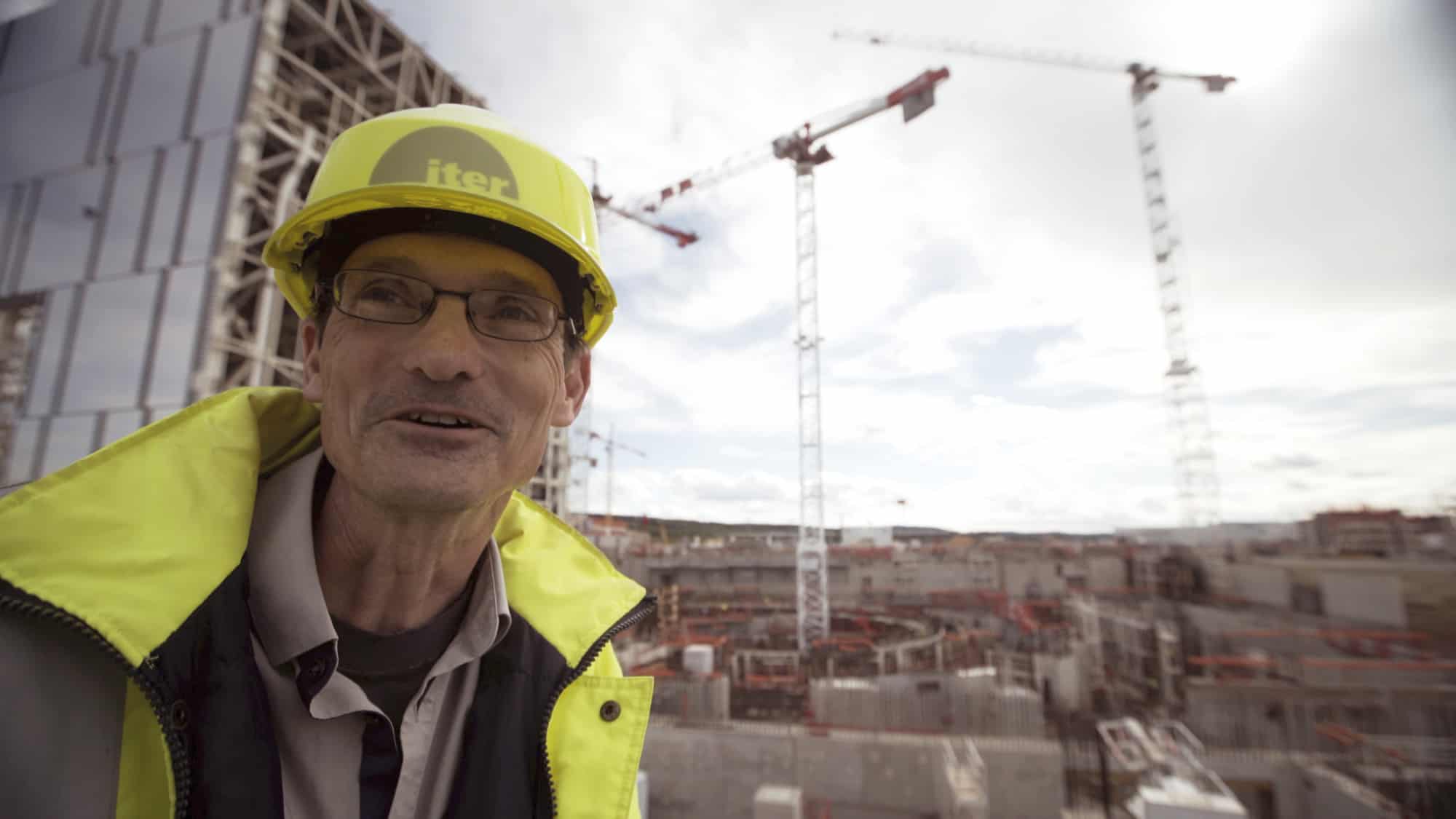
“Imagine putting the Sun in a bottle…that’s what we’re trying to do.” As an opening line in a film it’s a powerful one. Nuclear fusion is often sold as a panacea, and while it would indeed be a clean and seemingly endless source of energy, achieving and sustaining fusion in lab conditions is no mean feat. Written and directed by film-maker Mila Aung-Thwin, Let There Be Light: the 100 Year Journey to Fusion tells the story of our ongoing quest for fusion here on Earth, with a prominent focus on the science and the scientists behind ITER – the International Thermonuclear Experimental Reactor – based in France, as well as a few other fusion companies too. ITER was first proposed in 1985, as the first inkling of such technology was shared during the Cold War, when the Soviet Union’s Mikhail Gorbachev and US president Ronald Reagan agreed to collaborate “in obtaining this source of energy, which is essentially inexhaustible, for the benefit for all mankind”. Today, ITER encompasses not only the US and Russia but China, the European Union, India, Japan and Korea too.

Before going further into the film, I must point out a pet peeve of mine in documentaries, which is not knowing who is speaking for vast chunks of the film. As a viewer I dislike hearing a disembodied voice with no knowledge of who it is (as this often means a loss of context), and this was the case for the first 10 minutes or so of Let There Be Light. Apart from that small misgiving, I enjoyed the mix of artistic visuals, footage from ITER, on-screen graphics and schematics, and animated historical scenes. One of the first actual faces we meet in the film is Michel Laberge, founder and chief inventor of the private Canadian company General Fusion. He explains nuclear fission and fusion, succinctly wrapping up the whole fusion story by saying

The film also does a good job of explaining the basics of the science involved, from tokamak technology, to the toroidal magnets needed to hold the 150 million kelvin plasma, to how a gyrotron (the part that heats up the plasma) functions. This scene was particularly charming as ITER physicist Mark Henderson attempts to explain how the device works, using an analogy of creating resonance by blowing across the top of a Coke bottle. To better illustrate this fact, he sends a colleague off to buy a bottle only for the colleague to return with a (useless) can. “Man… you call yourself a physicist!” Henderson exclaims.

Ken Blackler, who oversees assembly and operations at the experiment, says that “ITER is going to be built from a million pieces so it’s a real nightmare to know where pieces are.” He goes on to explain that a tokamak is built bottom up and so it is crucial that each piece is available at the right time – this involves a considerable planning effort with all of ITER’s member states, who provide different bits. Indeed, one of the big challenges that ITER faces is its complex organizational politics. Others are its ability to receive continued funding (the project in its entirety will likely cost tens of billions of euros) and the need to stay on schedule. Indeed, ITER was supposed to achieve its “first plasma” in 2016; that date has been pushed multiple times and is now likely to be 2025, as it struggles to make sure that fusion doesn’t become one of the most “expensive failures in scientific history”.

Just as I was beginning to bemoan the lack of a single woman on screen, Sabina Griffith – ITER’s communications manager – pops up, lamenting the public’s lack of awareness when it comes to ITER. She rightly points out that taxpayers around the globe allow this project to move forward, and so ITER maintains a very “transparent” communications strategy. It’s interesting to watch Griffith coach Henderson on what to say, and not to say, when it comes to funding (or the lack thereof) from its members, especially the US. She advises that instead of complaining in official reports about how funding has decreased since the 1970s, they should instead say that “it is difficult” and remind people that to achieve fusion by the middle of this century, continued funding is key. Griffith points out that if ITER does not succeed, then “fusion will be dead, forever or at least for a very very long…nobody will bet on fusion for a long time”.

Towards the end of the film, we join Henderson as he visits the tokamak pit for the first time, and chats to some of the construction workers on site, asking if they know what they are building. “The mole­cules and what they do is not really our department…our job is making the structure,” says one of workmen. After a quick explanation, Henderson tells them this has been his dream since he was 14 and they are helping to make it a reality. As they say their goodbyes and thank-yous, one of the workmen adds that “My dream would be that all countries in the world can benefit…that’s my dream.”

I must admit that despite writing about physics for the last seven years, I’ve never been completely clear on ITER and what goes into making fusion energy a reality. While it’s not the most slick or engaging science documentary I’ve watched, Let There Be Light goes a long way to shedding light on this epic scientific endeavour. Laberge complains that there still isn’t enough excitement about fusion, and that people don’t mention fusion when talking about alternate energy sources – “windmills, tide, solar, chicken shit, whatever… but never fusion” he grumbles. But not before adding that he will “work on this all my life until this works”.

  • Available worldwide for rent or purchase on the Vimeo platform, in English and French
  • 2017 EyeSteelFilm, dir. Mila Aung-Thwin

Evidence mounts for liquid-liquid transition in supercooled water

More evidence that supercooled water exists in two distinct liquid phases has surfaced in experiments done by Austen Angell and colleagues at Arizona State University (ASU) and the University of Amsterdam. The idea of two liquid phases was proposed 25 years ago to explain the thermodynamic properties of supercooled water, but physicists had been unable to cool water to low enough temperatures to observe a transition between the phases.

The physics of water is a rich and active field of research because the substance has many poorly-understood physical properties that do not fit the mould of a normal liquid. “Water is a rather unique liquid,” says Angell. For instance, liquid water exhibits negative thermal expansion below 4 °C, meaning that its volume expands as it cools instead of contracting like most liquids.

One hotly-debated issue for scientists studying water is the “second critical point hypothesis”. This suggests that at low temperatures liquid water makes a transition from its familiar liquid phase to a lower density phase that is also more viscous.

Adding antifreeze

Angel and colleagues study supercooled water by adding the antifreeze hydrazinium trifluoracetate to pure water to create a water-like liquid that can be chilled to temperatures below -90 °C without freezing. This was necessary because pure water can only be supercooled to around -40 °C and the team believed that the transition occurred well below this temperature.

A few years ago, Angell and his ASU colleague Zuofeng Zhao noticed that when the solution was cooled to about -80 °C it suddenly gave off heat – something that is consistent with a phase transition. The new liquid was much more viscous than water and Angell and Zhao could reverse the transition by increasing the temperature. What they could not do at the time was to confirm that the water molecules in the new phase are arranged differently than in conventional liquid water.

Now, the ASU researchers have teamed up with Sander Woutersen and colleagues in Amsterdam to probe the structure of the new phase using infrared spectroscopy. They found that the lower density liquid phase has stronger and more ordered hydrogen bonds around the water molecules, which make the liquid stiffer and therefore more viscous. Further analysis revealed that the hydrogen bonding patterns involved in the transition between the two liquid phases are analogous to those observed in a different transition between two glassy states of pure water ice.

Purity issues

While this lends credence to the idea that results from the study expose the hidden liquid phase of pure water, the fact that the liquid is not pure water was always likely to lead some to question whether the antifreeze could have some influence on the results.

“The work is certainly very interesting,” says Alan Soper of the UK’s Rutherford Appleton Laboratory. “But liquid–liquid transitions are often observed in mixed systems, so how this relates to the properties of pure water I am not clear.” Soper also questions the use of infrared measurements to infer what is happening at the molecular level, when there might be other explanations for the data.

Yet evidence is mounting that a liquid–liquid transition may indeed occur in supercooled water. Earlier this year researchers in Sweden, Japan and Korea used ultrafast X-ray scattering to measure the properties of -44 °C supercooled water droplets and concluded that supercooled water could exist in two different liquid phases with different densities.

Angell and colleagues describe their latest work in Science.

Copyright © 2026 by IOP Publishing Ltd and individual contributors