Abdus Salam: Pakistan’s first (and so far only) Nobel prize-winner
Matin Durrani looks at the work of Abdus Salam, who was born a century ago this year.
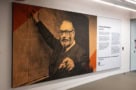 Read article: Abdus Salam: Pakistan’s first (and so far only) Nobel prize-winner
Matin Durrani looks at the work of Abdus Salam, who was born a century ago this year.
Read article: Abdus Salam: Pakistan’s first (and so far only) Nobel prize-winner
Deciding where a prize winner is from can be tricky, but Hamish Johnston tries his best
 Read article: How long did it take for countries to claim a Nobel laureate?
We make our prize predictions for 2026
 Read article: Is this the year for a Nobel prize in condensed matter, or maybe particle physics?
It would have been the earliest example of space weather impacting human technology, but an international team of researchers found a slight problem
 Read article: Did space weather delay a train in 1841?
Discover how big science is playing its part to tackle the climate crisis
 Read article: The free-to-read Physics World Big Science Briefing 2026 is out now
The sculpture forms part of Pavel’s sculptural series devoted to figures in science and culture
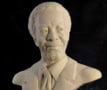 Read article: Belarusian sculptor unveils artwork honouring US physicist Jim Gates
While energy usage could be met, water would cause some issues
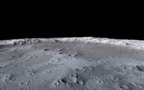 Read article: Moon’s water reserves insufficient to sustain a lunar city, astronomers find
Debate spans atomic and particle physics
 Read article: Doubts cast on ‘superradiant neutrino laser’ proposal
Astronomers estimate the decagon-shaped wave may still be evolving
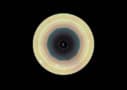 Read article: Astronomers discover unusual 10-sided atmospheric wave on Saturn
Subir Sarkar finds that AI was a hot topic among the over 800 delegates
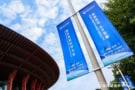 Read article: AI dominates the 4th International Congress of Basic Science in Beijing