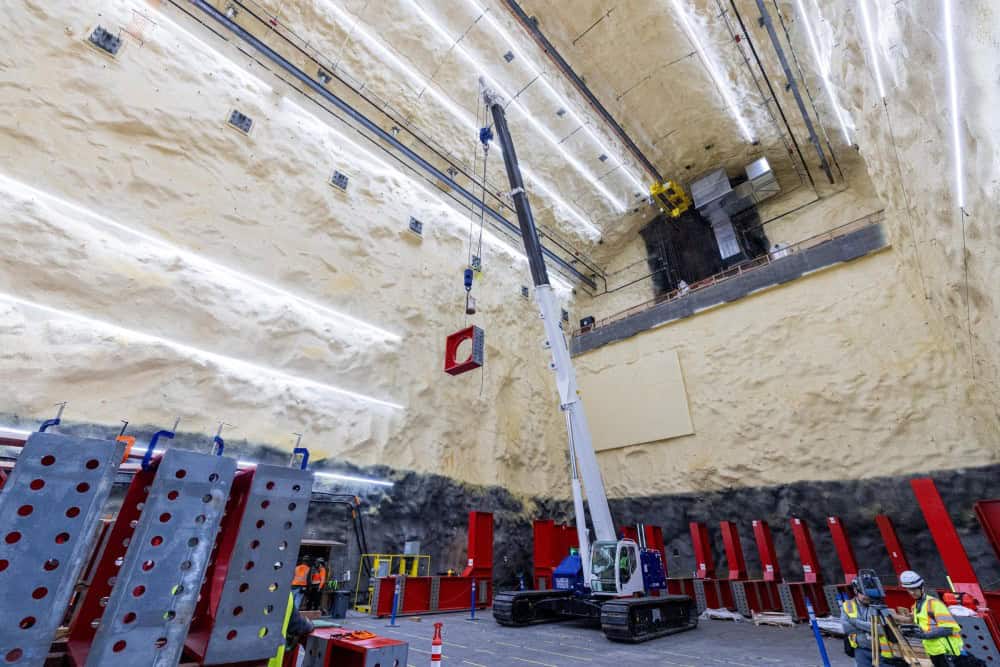
Engineers have begun installing the infrastructure that will be used to house the giant cryostats belonging to the $3.3bn Deep Underground Neutrino Experiment-Long-Baseline Neutrino Facility (DUNE-LBNF).
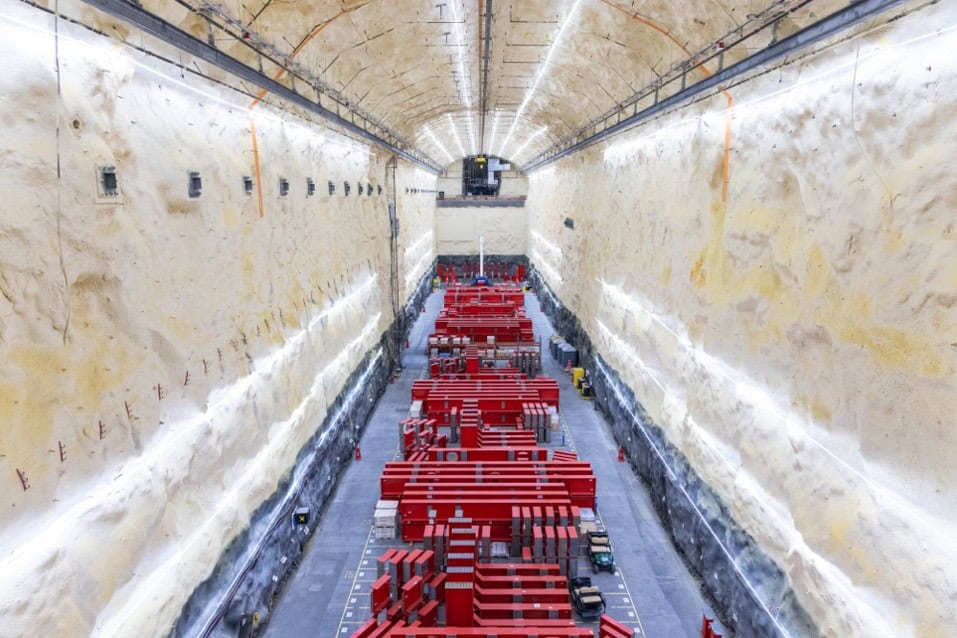
Located 1.6 km underground at the Sanford Underground Research Facility in South Dakota, DUNE will be located in two huge underground spaces that are both some 150 m long and seven storeys tall.
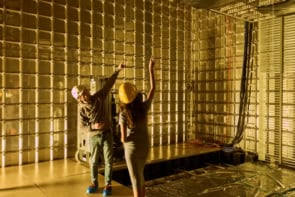
They will be used to house DUNE’s four neutrino detector tanks that will be each filled with 17,000 tonnes of liquid argon and cooled to 88 K.
The cryostat modules will be held in place with some 6200 tonnes of steel that began to be lowered underground in May.
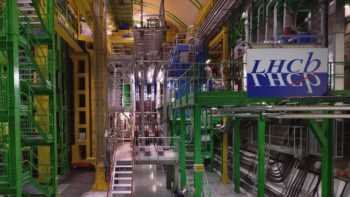
The CERN particle-physics lab near Geneva is leading the design, construction planning and installation of the cryostats. It is the first time that CERN has made such significant contributions to an experiment happening outside of Europe.
“Collaboration is in CERN’s DNA, and our contribution to DUNE is a brilliant example of cross-organizational partnership,” notes CERN director general Mark Thomson. “After years of planning and careful coordination, I am thrilled to see that we are ready to start installation.”
The detector apparatus is planned to be completed by 2030 and beginning in 2031 DUNE will measure the neutrinos that are generated by Fermilab’s accelerator complex, which lies around 1300 km away just outside Chicago.
When fully operational, DUNE-LBNF will aim to study the properties of neutrinos in unprecedented detail, as well as the differences in behaviour between neutrinos and antineutrinos.
“DUNE is Fermilab’s top priority,” notes Fermilab director Norbert Holtkamp. “Once underway, DUNE has the potential to help us broaden our fundamental understanding of our universe, as well as potentially open the door to new technological advances.”