Following a career in academia specializing in electron microscopy, Ian Griffiths is now a sales executive at microscope and spectrometer provider JEOL UK
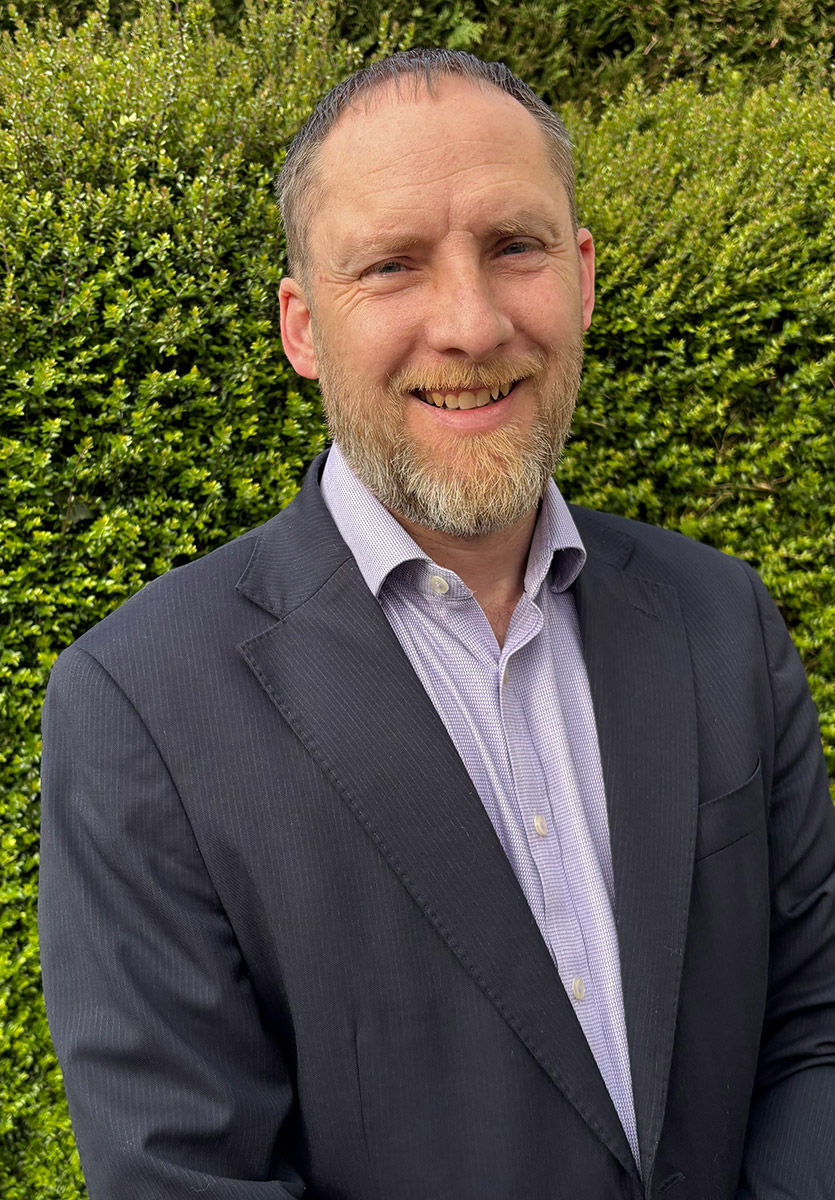
Ian Griffiths studied physics at the University of Bristol in the UK, followed by a PhD in transmission electron microscopy (TEM). He remained at Bristol to do an EU-funded postdoc focusing on 3D gallium nitride LEDs, collaborating with academic and industrial partners in Germany, Spain and Poland. He also worked with the University of Oxford and the University of Southampton on an aberration-corrected scanning transmission electron microscope (STEM).
Following a brief period at the South West Nuclear Hub, Griffiths moved back to Oxford as a support scientist in the David Cockayne Centre for Electron Microscopy, where he managed and trained users on the high-end TEM, and supported electron microscopy research in the Department of Materials. In 2023 Griffiths joined microscope and spectrometer provider JEOL UK as a sales executive, supporting the electron microscope business across the south of England.
What skills do you use every day in your job?
Working in a sales role for a multinational company specializing in high-end microscopy equipment often involves collaborating with a wide range of users and customers. Communication and listening are key to ensuring the correct instrument is configured and offered to a customer.
Having been in academia specializing in physics and materials analysis, it’s easy to see electron microscopy as a technique for studying traditional metallic or semiconductor samples. In my current role, however, I interact with a whole spectrum of samples, from geological to future battery anodes to cryogenically cooled biological materials. It is important to be able to adapt my perception of the technology and also see the similarities between the techniques.
Above all, the main skill I use every day is to be approachable and understanding. The nature of the instruments I offer to customers means they are large value items that will form the basis of their work or research for years to come, and they have often put in a personal commitment to the project and are invested in finding the best solution to their problem.
What do you like best and least about your job?
The best aspect of my job is visiting a user to see their new instrument installed at their facility. It’s the culmination of a long process – from initial discussions, to visits and demonstrations, to ordering – and the excitement from the customer as they talk about future work they’ll be doing is great to see. Being part of their journey and helping them achieve it is a huge positive for me.
Another great part of my job is going to conferences and exhibitions to meet users and hear about the latest research. I’m lucky enough to sit on the organizing committee for the Royal Microscopical Society’s annual UK and Ireland electron microscopy meeting. The event aims to not only present the latest community updates, but also highlight the work of research technical professionals and facility staff in academia to give them greater recognition for the work they do in supporting students and researchers.
One of the parts I like least is discussing projects with users who are constrained with budgets and funding, and hearing about university departments that are sadly struggling for funds and being forced to reduce staff levels. Central facilities – both electron microscopy and other analytical techniques – are often key to the research output of a department but are also hard to maintain without effective central support.
What do you know today that you wish you knew when you were starting out in your career?
I wish I’d known earlier in my career that the most important aspect of a role is to enjoy it. If you find yourself no longer being challenged, look for something new to motivate you. I’ve enjoyed the different challenges and roles I’ve done since starting my physics degree, and while changing jobs is a daunting task, it has always been worthwhile.
On another note, I think I underestimated the role and progress that technology and AI would have in everyday aspects of our jobs. These will continue to change and progress, and it’s a good idea to be up to date on the latest innovations in your area.