Type 2 diabetes, and the obesity that often accompanies it, affects more than 2.5 billion people worldwide. Current therapies involve lifelong drug-based management of blood glucose or body weight that, while effective, can be limited by side effects, low patient adherence or incomplete metabolic control. A research team headed up at ETH Zurich is developing an alternative approach, based on an implantable device that directly removes excess glucose from the bloodstream.
“Most patients with type 2 diabetes are treated with glucose-lowering medications, including metformin, SGLT2 inhibitors or GLP-1 receptor agonists, while some also require insulin injections,” explains project leader Martin Fussenegger. “Our approach explores a fundamentally different possibility: regulating blood glucose through an electronically controlled chemical reaction rather than administering a drug.”
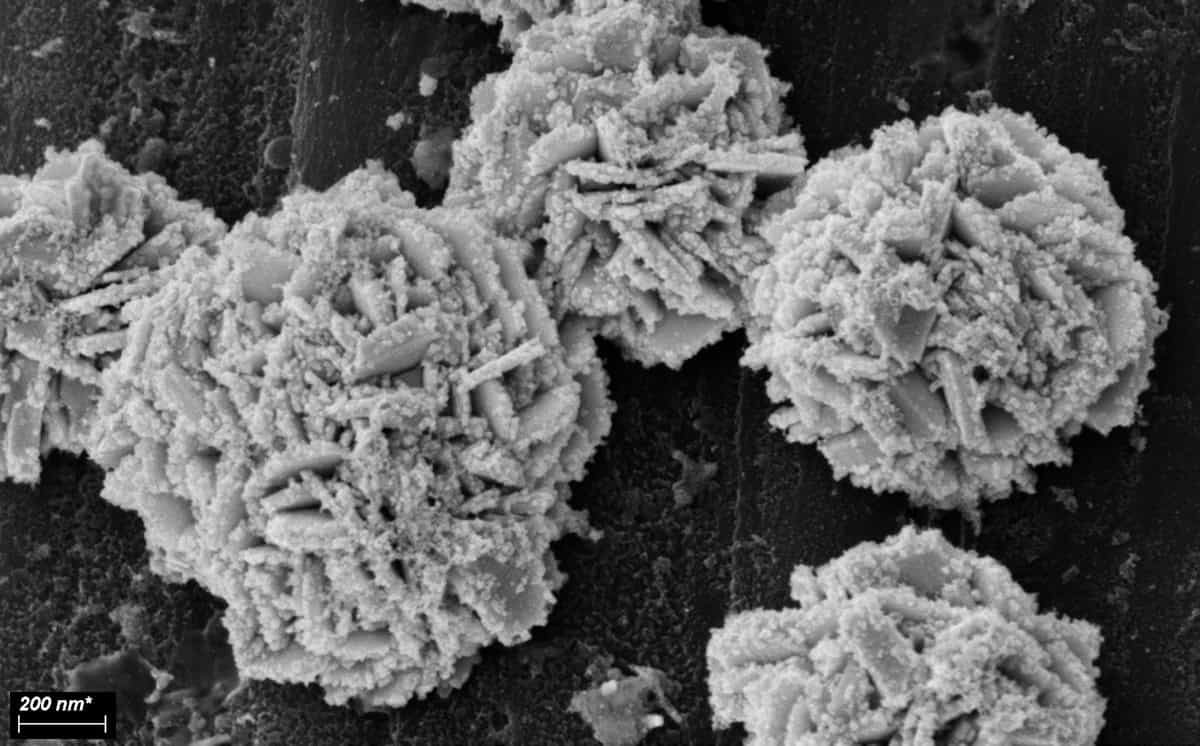
The new technique is based on electrocatalysis, using a catalyst created from gold nanoclusters dusted with platinum particles and embedded in a conductive porous graphite felt. The researchers assembled this catalyst – along with control electronics and a wireless receiver for power transfer – into a 3D-printed polyamide casing, encapsulating the entire device in biocompatible cellulose-alginate-albumin.
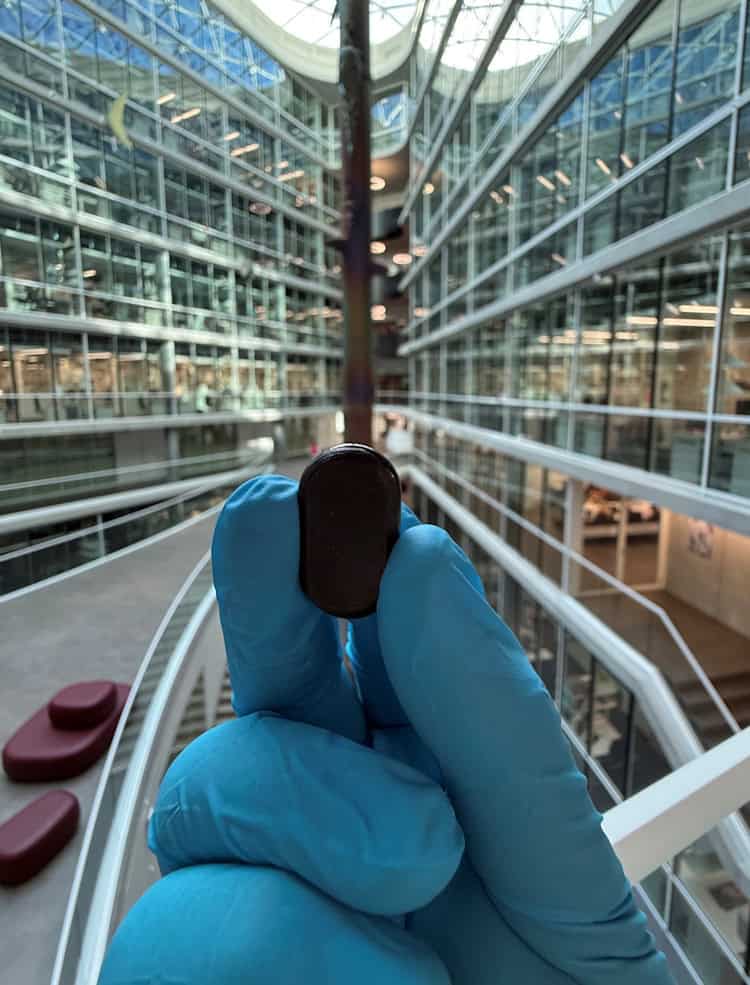
The resulting electrocatalytic closed-loop health optimization (ECHO) device is designed to be implanted under the skin. When wirelessly powered, the device oxidizes glucose in the blood into gluconate, which is then cleared through the kidneys. Importantly, the catalyst does not need to be in direct contact with circulating blood, instead interacting with glucose in the surrounding interstitial fluid (which continuously exchanges glucose with the bloodstream).
“Conventional closed-loop insulin delivery systems still depend on a supply of insulin, whereas our system removes excess glucose directly through electrocatalysis, without requiring stored drugs, engineered cells or replenishable therapeutic reservoirs,” says Fussenegger. “This could ultimately provide a more autonomous approach to glucose management.”
In vivo assessment
To test ECHO in vivo, Fussenegger and colleagues implanted devices in obese type 2 diabetic mice. Using various applied voltages and currents, they found that low-power activation at 0.75 V and 10 mA could restore elevated blood glucose to the normal range within 1 h. Repeated ECHO activation for 60 min per day maintained glucose control in the mice for at least six weeks, without detectable hypoglycaemia (blood glucose below normal levels).
Lowering blood glucose levels in this way shifted the animals’ whole-body metabolism from glucose-based toward the use of stored fat. Treated mice lost up to 10% of their body weight and exhibited lower levels of circulating triglycerides (a type of fat found in the blood), with no change in food intake. The mice tolerated the implant well, showing no adverse physiological, inflammatory or behavioural effects, and no signs of electrical or thermal tissue damage. The implanted device remained functional and operated reliably during the six-week treatment.
The ECHO device can connect to wearables or smartphones for real-time monitoring and closed-loop operation. In such a set-up, the device activates automatically when glucose concentrations exceed a predefined threshold and switches off once normal levels are restored. To demonstrate this, the team constructed a dynamic, closed-loop system by wirelessly linking implanted devices to a commercial continuous glucose monitor. The monitor tracked glucose concentrations in real time, sending the data to a smartphone, which activated the ECHO implant if glucose levels were too high.
The researchers assessed the system at threshold glucose concentrations of 5 to 15 mM, using 5 to 30 min ECHO activation cycles. They found that the device worked at all of these thresholds and that 5 min activation cycles could provide stable glucose control without hypoglycaemic episodes, over the licensed lifespan of the glucose monitor (12 days).
Towards clinical translation
The team’s long-term goal is to develop the system into a clinical device. Fussenegger notes that one of the main challenges is scaling up the electrocatalytic capacity to accommodate the far greater glucose turnover in humans. “To explore this, we have already conducted experiments using a 5 l fluid volume, corresponding approximately to the total blood volume of an adult human, providing encouraging evidence for the scalability of our approach,” he says.
Focused ultrasound: a potential treatment for type 2 diabetes?

The researchers now plan to evaluate glucose regulation, long-term safety and device performance in larger animals, which have closer physiological conditions to those in humans. In parallel, they are working to further optimize the electrocatalytic efficiency, durability and miniaturization of the implant – vital steps towards translation into a clinical device.
“More broadly, we are exploring the emerging field of electrocatalytic medicine, in which electronically controlled chemical reactions could eventually complement or even replace conventional drug treatments for selected metabolic diseases,” Fussenegger tells Physics World.
The researchers describe the ECHO device in Science.