The former site of the University of Cambridge’s physics department is now being demolished. Mićo Tatalović is one of the last journalists to get access
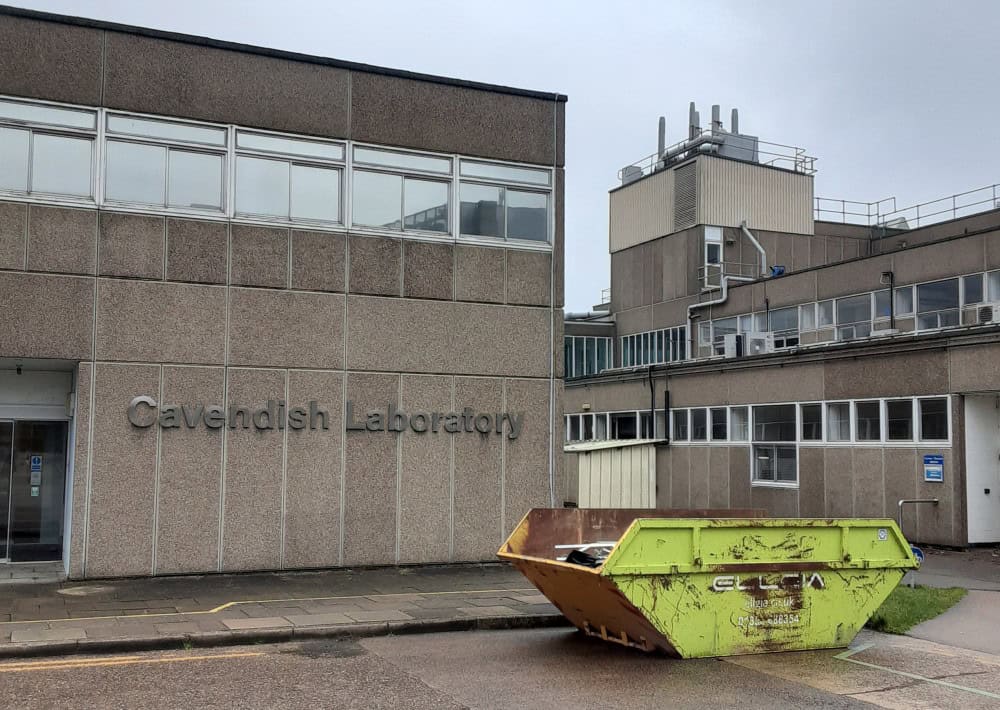
The prestigious Cavendish Laboratory at the University of Cambridge in the UK has an iconic status in the history of science.
The university’s physics department was initially based in central Cambridge. It is where Francis Crick and James Watson famously worked on the double-helix structure of the DNA molecule.
Yet in 1974 – 100 years after its foundation – the Cavendish moved to a new home on the outskirts of the city.
The building was built in a drab style, covered in grey-brown pebble dash, and featured a maze of interconnected blocks. It was home to generations of physicists, and many thousands of students over the last 50 years.
But the outdated and crammed structure is no longer deemed fit for use and in October last year the lab moved to the nearby larger, brighter and airy purpose-built Ray Dolby Centre. The new centre has been designed to encourage meetings and exchanges with a single entrance, common foyer and centralized café, which are also open to the public.
The move to the Dolby Centre took almost a year to complete, during which time about 180 truckloads moved 3000 m3 of research equipment, crates and furniture belonging to the lab’s 31 research teams.
This included specialized equipment such as 47 cryostats, 98 optical tables, various molecular beam epitaxy set-ups as well a teaching laboratory and museum collection, which includes the model of DNA created by Watson and Crick as well as the cathode ray tube that was used to discover the electron. Green concrete: paving the way for sustainable structures
Pending chemical and asbestos decontamination, the old building will now be demolished by third-party contractors.
Once complete, the site will host a cycle route until plans are developed for the future use of the site.
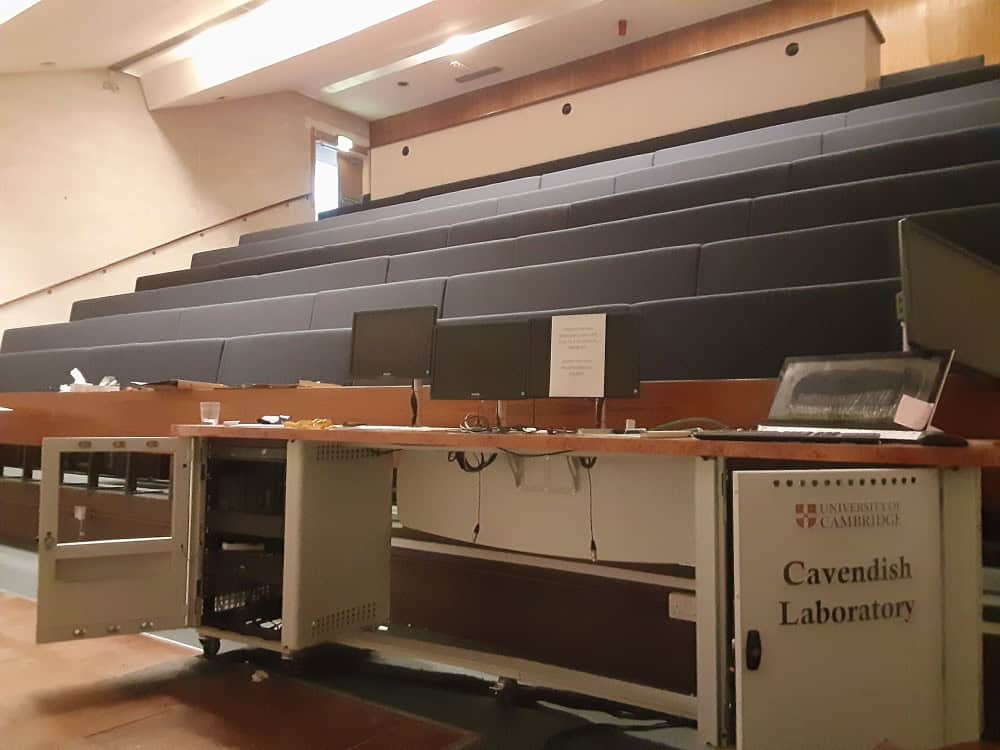
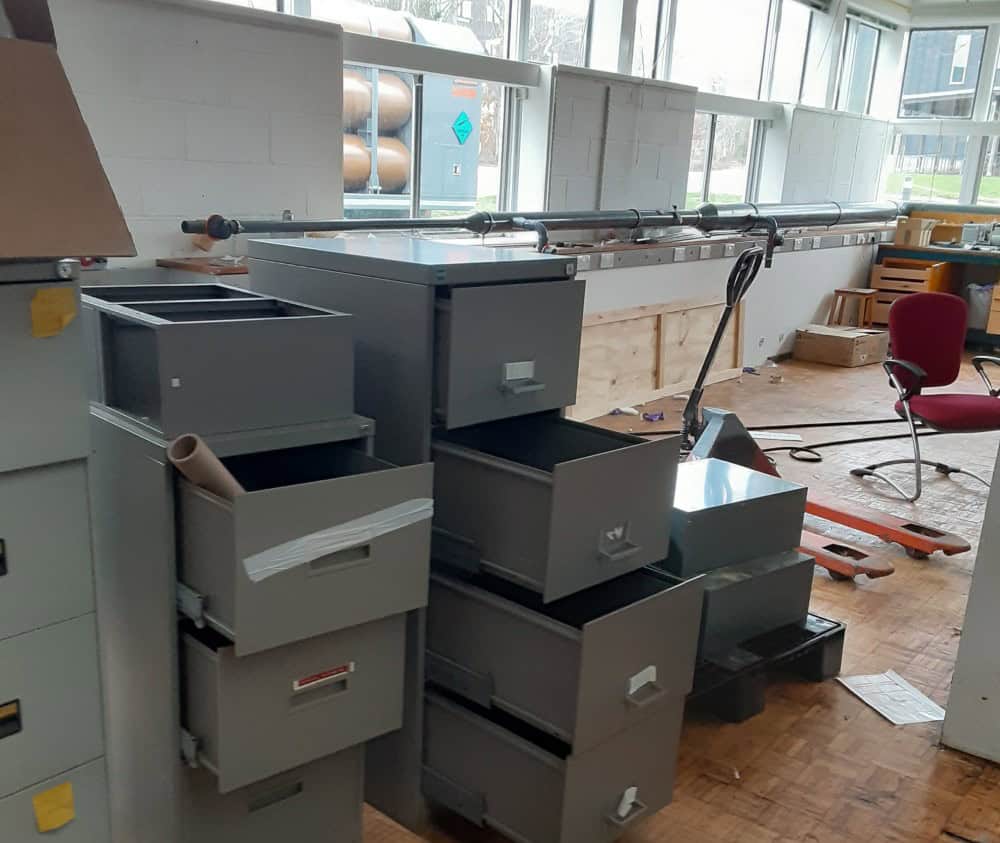
Physics World visited the old building in February and this article presents a selection of images from the site.
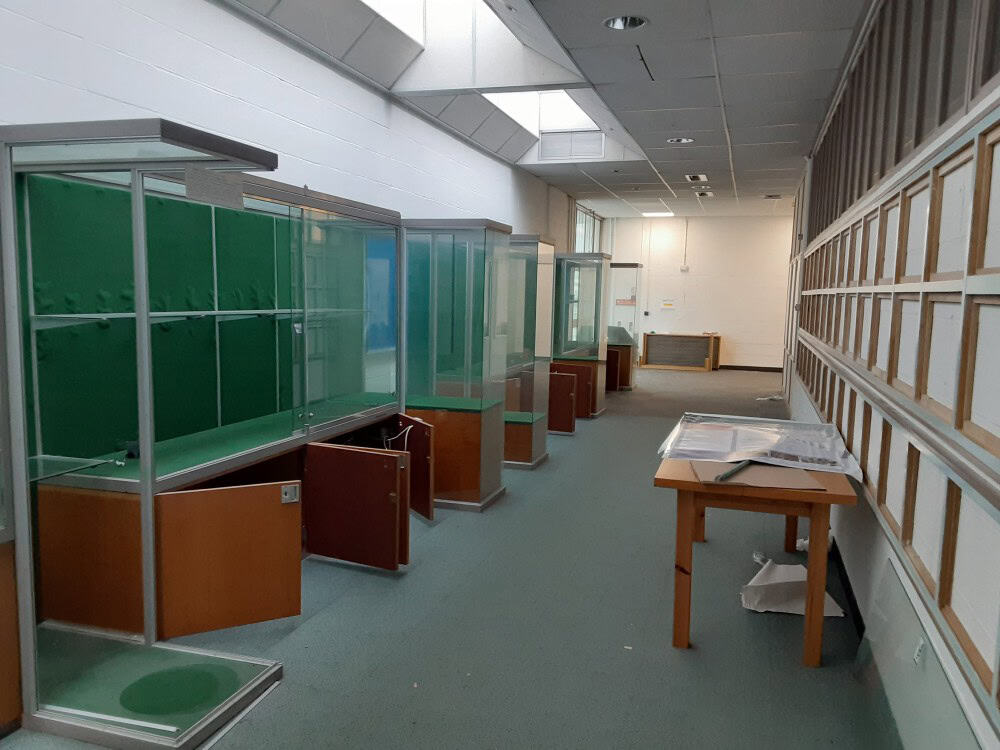
“An eerie” feel to what was once a bustling world-class laboratory
Following the move to the state-of-the-art Dolby Centre, it’s unlikely that the old building of the Cavendish Laboratory will be missed, except perhaps for its picturesque park and pond.
When I visited the building in February, a few bikes clung to the racks to be disposed of if unclaimed, while a sooty barbecue stood in a corridor.
The silent, empty library and still glowing “lecture in progress” sign in a long-abandoned lecture theatre lent an eerie atmosphere to the place.
Among the emptied, abandoned labs a few areas seemed untouched by the move.
Some offices were still adorned with books, pictures and lab coats, while white boards were filled with equations.
Some of the old equipment left by researchers has been donated to schools and charities, with remaining materials destined for the skip that is placed at the main entrance.
A couple of areas were wet, with water dripping from the ceiling – an indication that it is time to move on.
As I entered a communal area, half-empty liquor bottles line up on a windowsill, a reminder that good times were once had.
Mićo Tatalović