Matin Durrani reveals the main messages from the Careers in Quantum event at the University of Bristol, UK
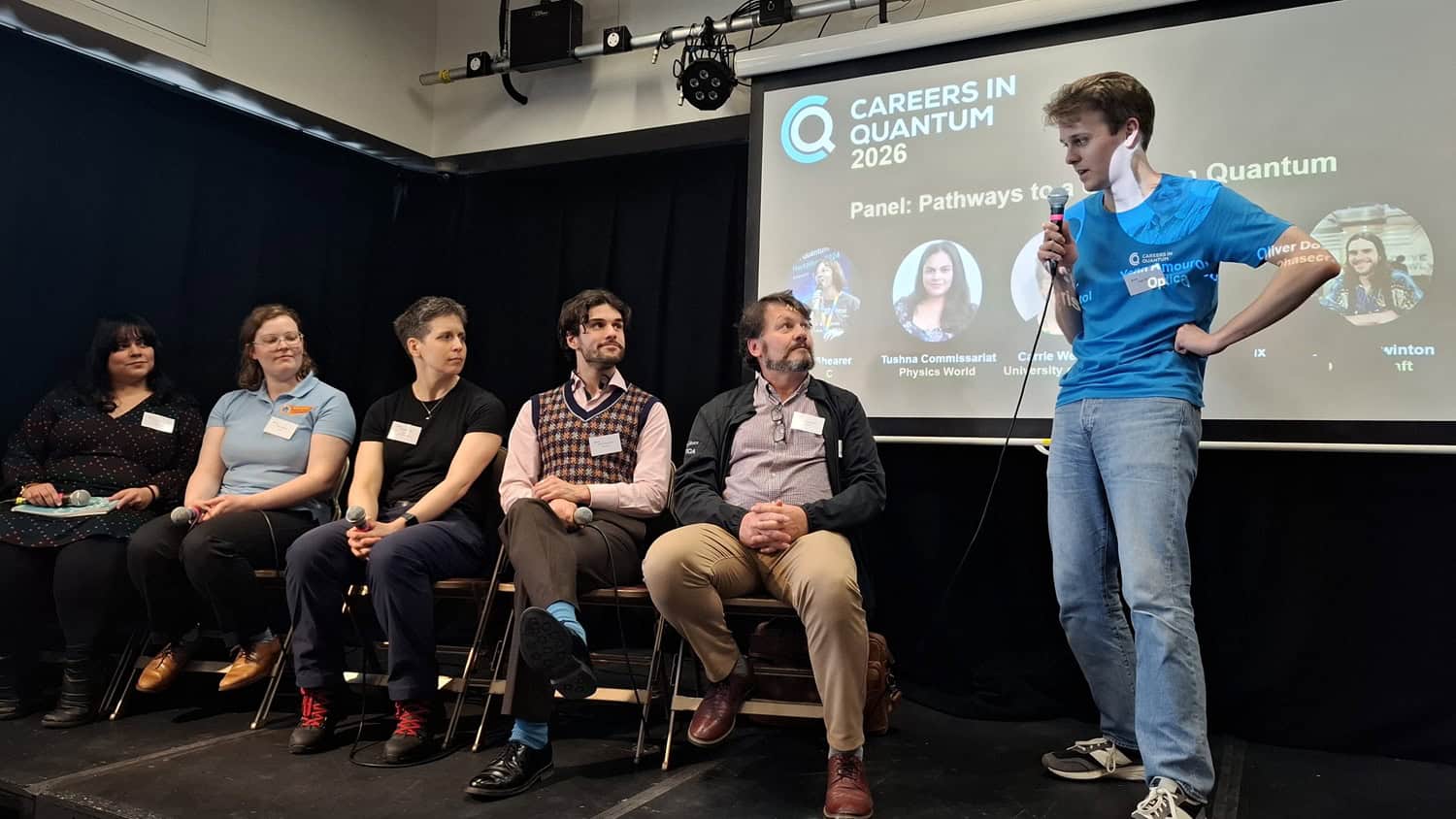
Careers in Quantum, which was held on 5 March 2026, is an unusual event. Now in its seventh year, it’s entirely organized by PhD students who are part of the Quantum Engineering Centre for Doctoral Training (CDT) at the University of Bristol in the UK.
As well as giving them valuable practical experience of creating an event featuring businesses in the burgeoning quantum sector, it also lets them build links with the very firms they – and the students and postdocs who attended – might end up working for.
A clever win-win if you like, with the day featuring talks, panel discussion and a careers fair made up companies such as Applied Quantum Computing, Duality, Hamamatsu, Orca Computing, Phasecraft, QphoX, Riverlane, Siloton and Sparrow Quantum.
IOP Publishing featured too with Antigoni Messaritaki talking about her journey from researcher to senior publisher and Physics World features and careers editor Tushna Commissariat taking part in a panel discussion on careers in quantum.
The importance of communication and other “soft skills” was emphasized by all speakers in the discussion, but what struck me most was a comment by Carrie Weidner, a lecturer in quantum engineering at Bristol, who underlined that it’s fine – in fact important – to learn to fail.
“If you’re resilient and can think critically, you can do anything,” said Weidner, who is also director of the quantum-engineering CDT. She warned too of the dangers of generative AI, joking that “every time you use ChatGPT, your brain is atrophying”.
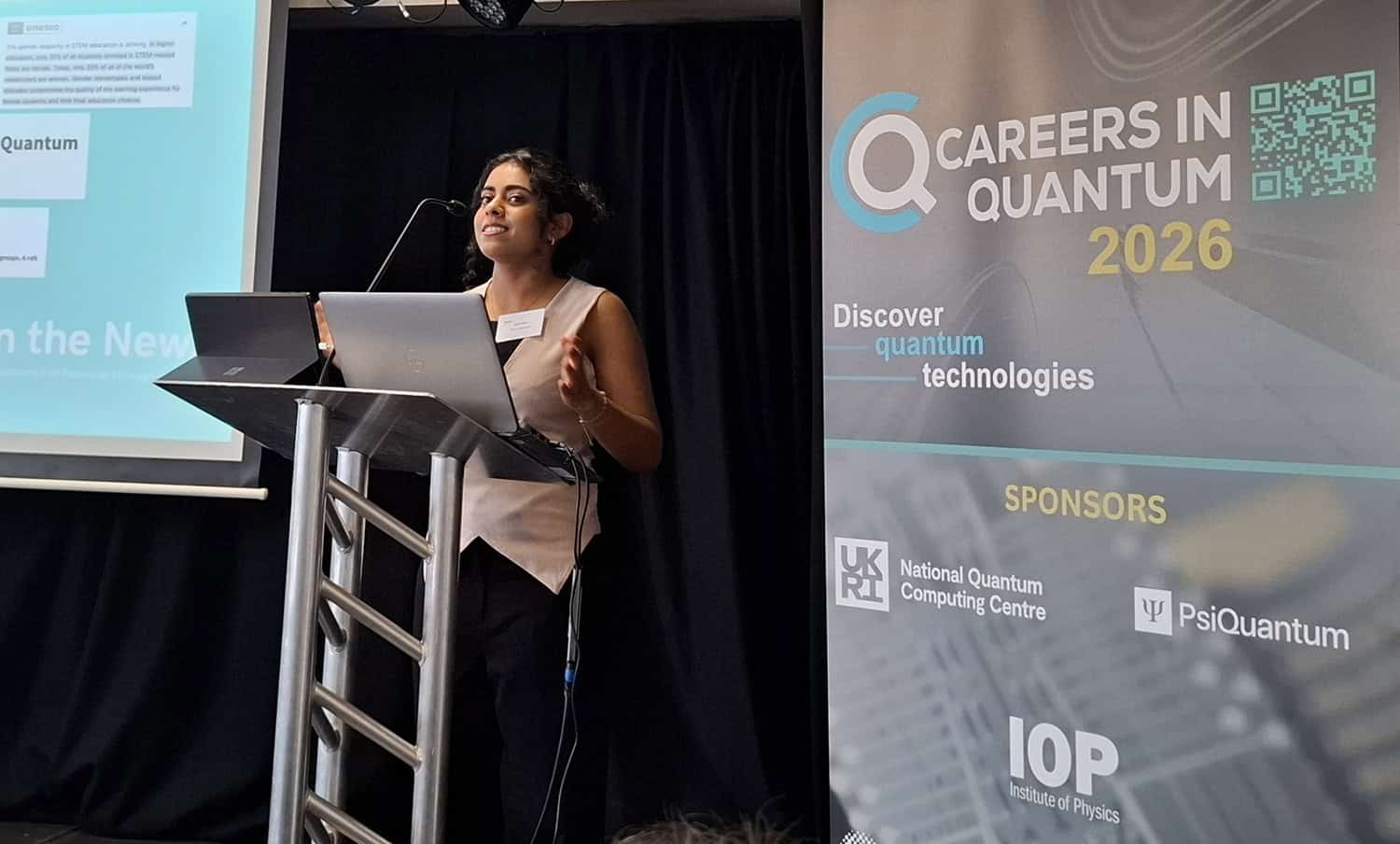
Another great talk was by Diya Nair, a computer-science undergraduate at the University of Birmingham, who is head of global outreach and UK ambassador for Girls in Quantum.
The organization is now active in almost 70 countries around the world, with the aim of “democratizing quantum education”. As Nair explained, Girls in Quantum does everything from arrange quantum computing courses and hackathons to creating its crowdfunded quantum-computing game called Hop.
The event also included a discussion about taking quantum research “from concept to commercialization”. It featured Jack Russel Bruce from Universal Quantum, Euan Allen from eye-imaging tech firm Siloton, Joe Longden from Duality Quantum Photonics, and Stewart Noakes, who has mentored numerous companies over the years.
Quantum computing on the verge: correcting errors, developing algorithms and building up the user base

Noakes emphasized that all hi-tech firms have three main needs: talent, money and ideas. In fact, as he explained, companies can sometimes suffer from having too much money as well as too little, especially if they grow too fast and hire people on big salaries who might then need to be let go if funding dries up.
Bruce, though, was positive about the overall state of the quantum-tech sector. “For me, the future is bright,” he said. But as all speakers underlined, if you want to join the industry, make sure you’ve got good communication skills, an open-minded attitude – and a willingness to learn on the go.
- If you’d like more information about careers in quantum, do check out the 2026 Physics World Careers Guide (now in its 10th year) and explore Physics World Jobs, which has up-to-date vacancies across physics.