Honor Powrie pays tribute to the work of tribologists – the unsung heroes of science and engineering who literally help keep the world moving
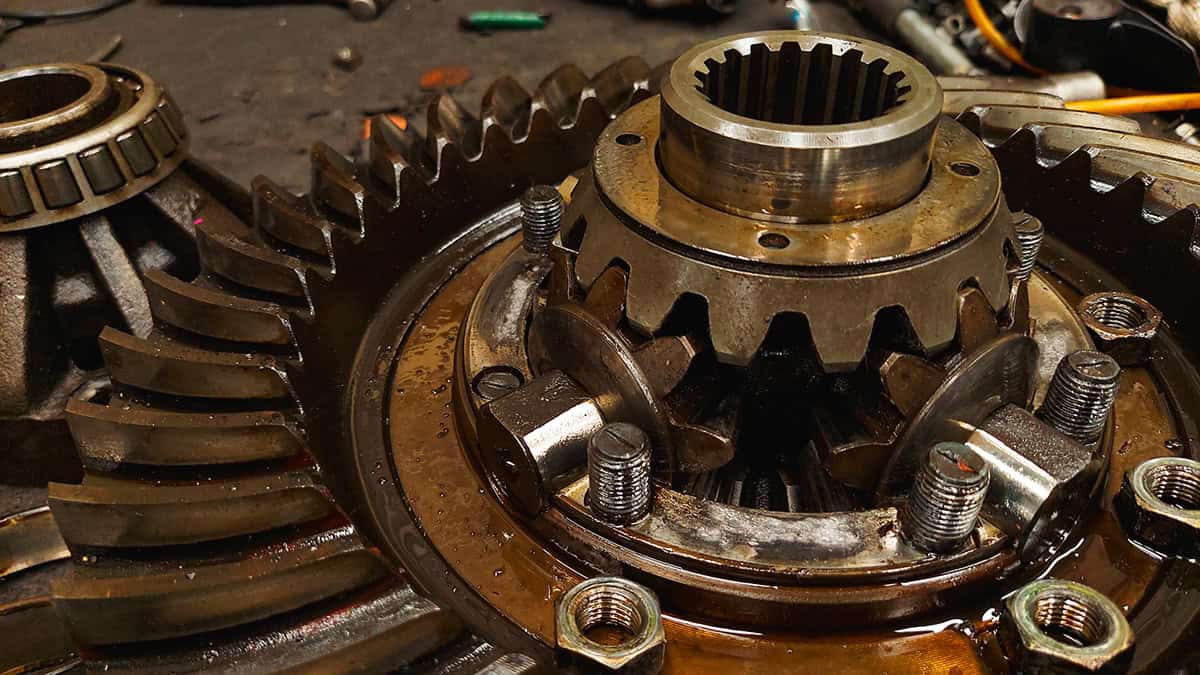
I have been involved in tribology for most of my working life, but even today it can feel like a well-kept secret. A highly interdisciplinary field with close ties to materials science, tribology is essentially the science and technology of friction, lubrication and wear between any moving surfaces. But tribology encompasses in part one age-old challenge.
I’m talking about the use of bearings, which dates back to at least 4600 BCE, when ancient Egyptians used wood log rollers to move large stone blocks during the construction of their pyramids. In 1500 Leonardo da Vinci used ball bearings in his conceptual helicopter design, while in 1740 the clock maker John Harrison invented caged roller bearings for his marine chronometer.
It was not until the mid-1960s that the word tribology was coined by the British engineer and entrepreneur Peter Jost after discussions with the then editor of the Oxford English Dictionary
The first patent on a ball bearing was granted to Philip Vaughan, an ironmaker from Carmarthen, Wales, bringing tribology firmly into the industrial world. But despite all the history, it was not until the mid-1960s that the word was coined by the British engineer and entrepreneur Peter Jost. After discussions with the then editor of the Oxford English Dictionary, the Greek word “tribos” – meaning rubbing – was suggested as a basis for describing the discipline.
This resonated with Jost, because the terms “tribo-chemistry” and “tribo-physics” were already in use. In an interview with the magazine Machinery Lubrication in 2005, Jost explained how “tribo science and tribo technology” then simply became shortened to tribology. “I felt that because it had a Greek basis, it could easily be adopted into a number of languages by most Western countries,” Jost recalled.
Wear’s the rub?
For the most part, the aim of tribology is to minimize friction and wear between components, which involves a knowledge of both materials and lubrication. Initially, the focus of the field was on moving parts in industrial or mechanical machines, such as bearings, gears, brakes and clutches. Indeed, one reason that the term came about was a conference in Cardiff in 1964 organized by the Iron and Steel Institute and the Institution of Mechanical Engineers (IMechE).
At the conference it became apparent that significant failures in plant machinery, which were being attributed to poor lubrication, were in fact due to a lack of fundamental design knowledge. These findings led to Jost chairing a UK government committee into lubrication education and research and the needs of industry. The resulting study – generally known as the “Jost report” – came out in 1964.
Now all this may seem like ancient history, which I suppose it is, but I was intrigued to discover that delegates to that 1964 conference visited the Llanwern steelworks at nearby Newport. As some of you may recall me describing, I also visited this site during my own student days, where I saw the steel rolling line in action. It was a truly impressive sight.
The total failure was remarkable, underlining just what can happen when moving parts fail without warning
From the viewing platform, I could see a massive volume of red-hot steel thunder along the rollers when, suddenly, there was a bang. Something failed and the steel landed in a crumpled mess all over the plant floor. We were safe but the total failure was remarkable to witness, underlining just what can happen when moving parts fail without warning.
An illuminating, if imperfect, celebration of friction

The knock-on effect of this failure would have been costly and sustained. As well as a steel rolling line being out of action, new parts would have had to be sourced and old ones repaired. There’d have been quality concerns to address, safety reviews to be undertaken and the root cause of the problems to be worked out. Quite possibly all those jobs would have needed to be completed before production could restart.
What’s more, the failure of the machine’s moving parts, which depends on tribology, would have damaged the company’s reputation and led to customers annoyed with delays and late deliveries. It is this kind of event that those involved in tribology are trying to prevent, or at least minimize. By understanding tribology, in other words, engineers can design better machines and components.
What it says on the tin
This was made clear in the 1964 Jost report, which said that adopting good tribological practices could save the UK between 1% and 1.4% of its gross domestic product (GDP). In today’s money, that would amount to some £30bn, given that country’s GDP is a shade over £3 trillion. Put simply, designing and maintaining industrial equipment, based on a solid understanding of tribology, yields significant economic benefit.
More recently, a 2017 study by Kenneth Holmberg from the VTT Technical Research Centre of Finland and Ali Erdemir of the Argonne National Laboratory in the US (Friction (5 263) suggests that 20% of the world’s energy consumption originates in tribological contacts. And by the application of best practice, as much as 40% of this could be saved.
Rubbing along nicely
It’s generally accepted that there are three key ingredients for tribology:
- Friction: the resistance encountered when one surface moves over another.
- Wear: the loss or material from or damage to the surface due to continuous movement or contact.
- Lubrication: the use of fluids or other substances to reduce friction and wear.
As a truly cross-functional discipline, tribology has strong overlaps with several fields, including:
- Materials science: developing wear-resistant and self-lubricating materials.
- Lubrication: design, additives, management.
- Surface engineering: contact mechanics, adhesion, coatings, treatments.
- Wear mechanisms: erosion, corrosion, tribo-corrosion.
- Physics, chemistry and biosciences: medical, food and cosmetics applications.
More than 60 years after the publication of the Jost report, the influence of tribology continues to grow. Alongside its impact on transportation and manufacturing, tribology is also relevant to extreme environments from aerospace, nuclear power, marine and subsea to space technology, high-voltage electrical systems and even the human body. There are also applications in nano-tribology, cosmetics, food, computational, digital, tribotronics, geotribology, hydrogen and green tribology.
Tribology will help to reduce our carbon footprint and counter climate change
As chair of the IMechE’s tribology group committee and a member of the tribology group committee of the Institute of Physics, naturally I am biased. Still, I feel privileged to be part of the tribology community and the amazing things it achieves. Whether it’s making products more energy efficient, creating green lubricants, or making plant-based protein more palatable to meat eaters, tribology will help to reduce our carbon footprint and counter climate change.
So next time you brush your teeth, comb your hair, switch on a light or ride on a bus, spare a thought for tribologists and their dedication to making the world run smoothly. It’s hard to think of anything that doesn’t involve tribology at all.
- The Institute of Physics is hosting the 5th Tribology and Net Zero seminar on 6 November in London co-organized with the Institution of Mechanical Engineers, the Royal Society of Chemistry, and the UK student chapter of the Society of Tribologists and Lubrication Engineers.