

Light can behave like a magnet
Photons behave like magnetic dipoles at absolute zero temperatures in new quantum simulator
 Read article: Light can behave like a magnet

Photons behave like magnetic dipoles at absolute zero temperatures in new quantum simulator
Read article: Light can behave like a magnet
The pigment might find use in a host of bioelectronics applications
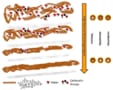 Read article: Heat treatment turns melanin into an electrical conductor
AGXX® has been tested on contamination-prone surfaces with success
 Read article: Antimicrobial coating kills multi-resistant pathogens on the ISS
The origin of these angles in twisted bilayer graphene may be fundamentally connected to the quantum Hall effect, say Harvard researchers
 Read article: Researchers solve magic angle mystery
A micro-organism in the gut of C. lapagei degrades lignin, a phenomenon that might be extendable to other bacteria and other types of polluting waste, such as plastic
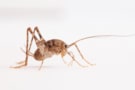 Read article: Cricket bacteria break down recalcitrant waste
New six-bit algorithm system is an important milestone in constructing a universal DNA-based computing device
 Read article: Reprogrammable self-assembly makes molecular computer
Unexpected result will have implications for electronic device cooling
 Read article: Thermal transport goes ballistic across 2D thin films
New photothermal threshold quantum yield measurements reveal near-unity light emission for CdSe quantum dots
 Read article: Nanocrystals show near-perfect photoluminescence
Nanobots could help diagnose and treat cancer
 Read article: Multipole magnetic tweezers measure organelle mechanical properties
New “unambiguous” test could help verify quantum computer calculations and even shed more light on what happens to quantum information when it falls into a black hole
 Read article: Quantum state teleportation verifies information scrambling