

Magnetic beads help treat preeclampsia
New technique can reduce the concentration of harmful sFlt-1 molecules in blood by 40%
 Read article: Magnetic beads help treat preeclampsia

New technique can reduce the concentration of harmful sFlt-1 molecules in blood by 40%
Read article: Magnetic beads help treat preeclampsia
Device could be an important add-on to scanning tunnelling microscopes
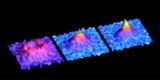 Read article: Single-molecule magnetometer images spin interactions
Exploiting the tunnelling current between the AFM tip and a sample allows the tip to closely follow the topography of the sample during imaging
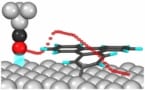 Read article: Atomic force microscopy goes 3D
Caltech researchers have repurposed cytochrome P450s to produce gamma- or beta-lactams
 Read article: Engineered enzymes could help make new antibiotics
Electrochromic structures can be fabricated using a simple bottom-up solution technique
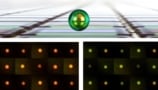 Read article: Nanoparticle-on-mirror constructs could help make colour-changing displays
And perhaps even help explain why the magnetic fields of Uranus and Neptune are so different from Earth’s
 Read article: New superionic ice phase could shed more light on icy giant cores
New technique overcomes a major obstacle in tissue bioengineering
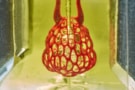 Read article: Food dye helps 3D-print vascular networks
Researchers of the QUPLAS collaboration have performed the first ever double-slit-like experiment on antiparticles
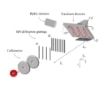 Read article: Antimatter quantum interferometry makes its debut
New material could be used to cool electronic circuits, in smart clothing and in building insulation
 Read article: Mimicking squid skin to improve thermoregulating blankets
New technique could help in scaling up the production of these devices
 Read article: Caffeine boosts perovskite solar cells