

Upconverting nanophosphors make good radiotracers
NaYF4 particles could be ideal in theranostic applications and targeted in vivo imaging
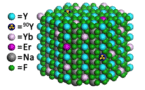 Read article: Upconverting nanophosphors make good radiotracers

NaYF4 particles could be ideal in theranostic applications and targeted in vivo imaging
Read article: Upconverting nanophosphors make good radiotracers
IBM team measures the energy levels of single molecules on insulators for the first time
 Read article: Atomic force microscope makes single-electron current meter
Fabricating scaffolds from two different materials replicates the complex mechanical and structural properties of interfacial tissue
 Read article: Artificial scaffolds target bone-ligament interfaces
First ever BEC of light coupled with metal electrons might find use in information processing and imaging
 Read article: Bose–Einstein condensate forms in a nanoparticle lattice
1D zirconium telluride wires could be used to make the tiniest interconnects and transistor channels
 Read article: Van der Waals nanoribbons carry current
Devices made from perovskite nickelate materials would operate electronically
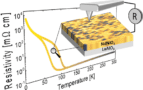 Read article: Phase-separated state could make nanoscale switch
No more finger-pricking blood tests thanks to a sensor array that draws fluid across a single hair follicle
 Read article: Graphene-based skin patch measures glucose levels
Technique could be a general way to analyse technologically important functionalized 2D carbon materials
 Read article: AFM detects heteroatoms in graphene nanoribbons
New finding could help in the development of next-generation bioactive materials for stem-cell therapies
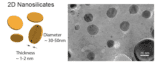 Read article: Nanosilicates stimulate growth of bone and cartilage tissue
Experts at Stanford University review the latest progress and emerging applications for bioprinting, and look ahead to future research directions
 Read article: The past, present and future of 3D bioprinting