

Perovskites help windows become solar cells
New structures could be integrated into smart buildings, cars, large-screen displays and potentially many other technologies
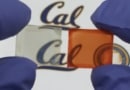 Read article: Perovskites help windows become solar cells

New structures could be integrated into smart buildings, cars, large-screen displays and potentially many other technologies
Read article: Perovskites help windows become solar cells
Metagenomic analyses of large groups of microorganisms shed more light on how bacteria and other microbes behave when exposed to nanomaterials
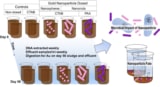 Read article: Bacterial DNA sequencing could help design ‘friendlier’ nanoparticles
New DNA-based device can be driven by electrical fields alone and can move 100,000 times faster in solution than other such machines
 Read article: How to better control a nanorobotic arm
It can also detect an object’s position in space
 Read article: Magnetosensitive e-skin senses objects without touching
Nanoimprinted germanium thin films boast broadband light absorption
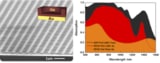 Read article: Nanostructured semiconductors become superabsorbers
Vacuum-ultraviolet photovoltaic device might be used to study interstellar objects
 Read article: Graphene makes good VUV photodetector
On-chip devices made from intercalated graphene exploit the mechanism of kinetic inductance
 Read article: Engineers reinvent the inductor after two centuries
New device might be used to record action potentials from multiple neurons as well as electrical signals on the nanoscale – for example, across just one synapse
 Read article: Semiconductor nanosensor measures membrane potential
Researchers have made the first “passive” optical devices from Ti3C2Tx and C60 that allow for one-way transmission of light
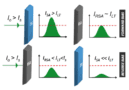 Read article: 2D MXenes make photonic diodes
The devices, which are based on ferromagnetic helical nanostructures integrated with silver nanoantennas that produce mechanical force in response to light, could find use in applications such as lab-on-a-chip technology, microfluidics and nanoscale assembly
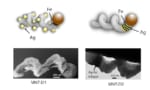 Read article: Mobile nanotweezers move sub-micron particles