

Schwinger effect appears in a 2D superfluid
Physicists model vacuum tunnelling in a simple system
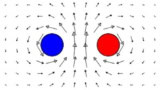 Read article: Schwinger effect appears in a 2D superfluid

Physicists model vacuum tunnelling in a simple system
Read article: Schwinger effect appears in a 2D superfluid
Effect could come in useful for a host of practical applications that call for fluid control
 Read article: Meniscus size and shape affect how liquid waves move through barriers
Diamond-based magnetic sensor is small enough for use in endoscopy and keyhole surgery
 Read article: Compact diamond magnetometer detects metastatic tumours
Cosmologically coupled black hole hypothesis also confirms that dark energy is evolving
 Read article: Unconventional approach to dark energy problem gives observed neutrino masses
New measurements on Bose–Einstein condensate could help us better understand how objects transition from being quantum and ordered to classical and chaotic
 Read article: Quantum gas keeps its cool
A qubit encoded in a fluorescent protein could act as a sensor to measure quantum properties inside living systems
 Read article: Protein qubit can be used as a quantum biosensor
New finding advances our understanding of complex topological quantum systems and could help in the development of next-generation memory and storage devices
 Read article: Quantum fluid instability produces eccentric skyrmions
New topotactic oxide material could be used in some clean energy technologies including fuel cells
 Read article: ‘Breathing’ crystal reversibly releases oxygen
Explosive technique images collective quantum fluctuations
 Read article: Zero-point motion of atoms measured directly for the first time
Observation of the Meissner effect could spur the development of highly sensitive quantum detectors that operate under high-pressure conditions
 Read article: Quantum sensors reveal ‘smoking gun’ of superconductivity in pressurized bilayer nickelates